Showing posts with label medicine. Show all posts

Tuesday, February 16, 2016

Flu Season in Jane Austen's Time

By Lauren Gilbert


Recovery from Sickness, An Allegory by Sir Joshua Reynolds

Here we are in the depths of winter.  We all know someone who has it, has recovered from it, or is trying hard not to get it.  What might “it” be?  That miserable cold, the awful flu, whatever it is that is going around.  Interestingly enough, it was all going around in Jane Austen’s time, too.  However, the seriousness of the winter ailments and their effects in the late 18th and early 19th century is frequently forgotten or overlooked today.


In the early part of the 19th century, medicine had improved dramatically.  Superstition was waning - people no longer believed that the ruler’s touch could heal a form of tubercular infection called scrofula (or “King’s Evil”).  Bathing was becoming more common.  Vaccination with the cowpox vaccine was making inroads on that dreaded scourge, smallpox.  However, bleeding, laudanum and bathing in or drinking spa waters were still standby treatments for many illnesses.


Two of the winter ailments in Jane Austen’s time were the “epidemic cold” and the “putrid sore throat.”  The epidemic cold appears to be basically the same as it is today; a virus resulting in sneezing, sore throat, coughing, slight fever, and so forth.  It would appear that the standard treatment was staying in, keeping warm, and getting plenty of rest, as it is today.  (It must be noted that, in Miss Austen's time, the stricture to get plenty of rest would have been reinforced with a few drops of laudanum, if necessary!) 

The second ailment, the “putrid sore throat,” was much more serious, indeed life threatening.  This term appears to cover a variety of ailments, all manifesting in the throat.  At its most basic, a putrid sore throat seems to be a sore throat complicated by serious infection resulting in any or all of these: accumulation of pus, ulceration and sloughing of soft tissue at the back of the throat, and even gangrene.  In trying to identify this illness with modern diseases, it has been linked to tonsillitis, diphtheria, bronchitis, and even a form of streptococcal throat infection, as well as scarlatina or scarlet fever, and possibly measles.  Obviously, this would be a very painful condition.  

Scarlet fever, measles, diphtheria, and strep are also quite contagious.  It is also worth noting that all of these conditions frequently resulted in death or disability, such as damage to the heart.   While most are considered childhood diseases, adults can also contract these illnesses.  Lacking knowledge of germs, bacteria and other microorganisms, as well as the issues of sepsis, these conditions could sweep through a household (or a neighborhood), creating havoc if not outright death. 

Diphtheria produces fever and weakness, and causes the formation of a thick gray membrane in the throat, causing difficulty breathing and swallowing.  Scarlet fever and scarlatina result from infection with type A strep bacteria, and are characterized by a fever, sore throat, and a bright red rash; there is also flushing from high fever.  Tonsillitis is the inflammation of tonsils resulting from infection by a virus or bacteria, with symptoms including fever and sore throat; if the result of a bacterial infection, this can be contagious.  Measles also manifest with fever, sore throat, a rash. 

Treatment of illness and high fevers included blisters (which literally raised blisters on the head or other part of the body where applied), broths made of various materials (some harmless, some not), poultices, patent medicines of questionable value and homemade remedies.  Mercury and other toxic substances were considered medicinal and may have been included in many concoctions. CULPEPER'S COMPLETE HERBAL AND ENGLISH PHYSICIAN included many herbs with medicinal properties.  

Willow was considered cooling and a tea made of willow bark was used for fever.  Sorrel was also cooling, useful for skin conditions (including itching) and good for sores or ulcers in the mouth when used as a rinse or gargle.  Pennyroyal  was recommended for phlegm, headache and cough.  While these and similar herbal tonics might have ameliorated some symptoms, they were unlikely to effect a cure.  They also depended on availability-not everyone had access to an apothecary or the means to buy herbs, if they did not have their own gardens or stillrooms.


The similarities of the symptoms of these diseases, as well as the fact that they were all common in Jane Austen’s time, make the question of pinning down an exact definition of what disease constituted a putrid sore throat very difficult.  The real issue is that the lack of modern medical treatment, some of which evolved later in the 19th century, made treatment very difficult, infection hard to contain, and recovery as much a matter of luck and a good constitution as anything else.  The discovery of how disease spreads, improved vaccination for more diseases, and antibiotics have drastically reduced, if not eliminated, these conditions today, and the resulting damage that these conditions can cause, which include heart damage, blindness, deafness, and even brain damage from an uncontrolled high fever.  
  
Thanks to modern medicine, our concept of “flu season” is much more an uncomfortable inconvenience; in Jane Austen’s time, it was truly a major threat.
~~~~~~~~~~
Sources include:
CULPEPER'S COMPLETE HERBAL, AND ENGLISH PHYSICIAN.  Manchester: J Gleave and Son, Deansgate, 1826.  Facsimile edition reproduced by Harvey Sales, 1981.  (Nicholas Culpeper published THE ENGLISH PHYSICIAN in 1652, and the COMPLETE HERBAL in 1653.  Numerous editions were published.)
Olsen, Kirstin.  DAILY LIFE IN 18th CENTURY ENGLAND. Westport, CT: Greenwood Press, 1999.
“18th Century Medicine.” by Tim Lambert.  LIFE IN THE 18th CENTURY. HERE
19th Century Diseases. HERE 
Bader, Ted, “Mr. Woodhouse is not a Hypochondriac!” PERSUASIONS On-Line, V. 21 , No. 2 (Summer 2000). HERE 
“Health and Medicine in the 19th Century,” by Tim Lambert.  LIFE IN THE 19th CENTURY.   HERE
Landers, John.  DEATH AND THE METROPOLIS Studies in the Demographic History of London, 1670-1830.  Cambridge Books On-Line.  The Autumn Diseases and the ‘putrid sore throat’ pp. 363-364.  HERE
MedicineNet.com.  HERE
English Glossary Causes of Death and other Archaic Medical Terms. HERE 
Image is in the Public Domain via Wikimedia Commons.


~~~~~~~~~~~~~
Lauren Gilbert published her first book, HEYERWOOD: A Novel, in 2011 and her second, A RATIONAL ATTACHMENT, is in process.  She lives in Florida with her husband.  Visit her website at www.lauren-gilbert.com

Monday, February 3, 2014

Literary Greats: Write On, Homeopathy!

by Dana Ullman

The primary principle of homeopathy, called the law or principle of similars (“treating like with like”), is actually an ancient understanding that great thinkers and healers have acknowledged and utilized since early written history.... Hippocrates, the father of medicine and an early medical historian, once asserted, “Through the like, disease is produced, and through the application of the like it is cured.”

Even Shakespeare wrote about treating “like with like” in his famed play Romeo and Juliet (Act I, scene ii), when Benvolio gives comfort and advice to lovesick Romeo, saying:


"Tut, man, one fire burns out another’s burning;
One pain is lessened by another’s anguish,
Turn giddy and be holp by backward turning;
One desperate grief cures with another’s languish.
Take thou some new infection to the eye,
And the rank poison of the old will die."

The eminent British poet, John Milton (1608–1674), made direct reference to the concept of the treatment of “similars” in the preface to Samson Agonistes (1671): “Things of melancholic hue and quality are used against melancholy, sour against sour, salt to remove salt humors.”

Johann Wolfgang von Goethe (1749–1832) is considered one of the greatest Western literary figures of all time. A German poet, novelist, playwright, courtier, and natural philosopher, Goethe was a contemporary of homeopathy’s founder, Samuel Hahnemann, MD (1755–1843), and they both were Freemasons. When Goethe was given an amulet containing a very small gold ornament (September 2, 1820), he wrote: “The jewelers of Frankfort must have heard of the Leipsig Dr. Hahnemann’s theory—now, certainly a world-famous physician— … and taken the best of it from their own purposes … now I believe more than ever in this wonderful doctor’s theory as I have experienced … and continue to experience so clearly the efficacy of a very small administration.” And in another letter he strongly proclaimed himself a “Hahnemannian disciple” (Haehl, 1922, I, 113).

Goethe not only espoused the virtues of homeopathy in his letters to friends and colleagues, but even in his most famous play, Faust, in which his lead character, Mephistopheles, asserts the homeopathic credo, making specific reference to the homeopathic principle of similars: “To like things like, whatever one may ail; there’s certain help.”

Goethe was also a close friend with Karl Wesselhoeft, the owner of a large German publishing company of literary works, and Goethe was a frequent visitor in the Wesselhoeft home. Wesselhoeft’s son, William, became Goethe’s protégé. As a result of Goethe’s influence and due to later correspondence with German doctors who had become homeopaths, the younger Wesselhoeft became a serious student and then practitioner and teacher of homeopathy in America....

George Bernard Shaw (1856–1950) was one of England’s most respected playwrights. Shaw is the only person ever to have won both a Nobel Prize (Literature in 1925) and an Academy Award (Best Screenplay for Pygmalion in 1938). In his play The Doctor’s Dilemma (1906), Shaw showed the dilemma that doctors inevitably face between their need to care for their patients and their need to practice, often using dangerous drugs and performing unnecessary operations in order to earn a livelihood.

In the play’s preface, Shaw wrote:

"The test to which all methods of treatment are finally brought is whether they are lucrative to doctors or not. It would be difficult to cite any proposition less obnoxious to science than that advanced by Hahnemann, to wit, that drugs which in large doses produced certain symptoms, counteract them in very small doses, just as in modern practice it is found that a sufficiently small inoculation with typhoid rallies our powers to resist the disease instead of prostrating us with it. But Hahnemann and his followers were frantically persecuted for a century by generations of apothecary-doctors whose incomes depended on the quantity of drugs they could induce their patients to swallow. These two cases of ordinary vaccination and homeopathy are typical of all the rest."

He continued: “Here we have the explanation of the savage rancor that so amazes people who imagine that the controversy concerning vaccination is a scientific one. It has really nothing to do with science. Under such circumstances vaccination would be defended desperately were it twice as dirty, dangerous and unscientific in method as it really is.”

Thankfully, Shaw goes on to assert that times and things are changing, “Nowadays, however, the more cultivated folk are beginning to be so suspicious of drugs, and the incorrigibly superstitious people so profusely supplied with patent medicines that homeopathy has become a way of rehabilitating the trade of prescription compounding, and is consequently coming into professional credit.”

In 1932 Shaw wrote an essay, Doctors’ Delusions, Crude Criminology and Sham Education, which included a story about the homeopathic treatment he received for a hydrocele. This accumulation of fluid around the testicle normally requires surgery, but Shaw experienced a rapid cure without recurrence.

Shaw once challenged Sir Almroth Wright, a noted conventional physician, to look into homeopathy’s ability to cure many “incurable” diseases. Wright expressed complete incredulity, while Shaw retorted that Wright had no scientific attitude or simple curiosity. This short conversation was a classic:

Almroth said, “This thing is absurd and impossible; let me put it this way. Would you, Shaw, trouble to get out of your chair if I called from the next room. ‘Do come in here and see what I have done—I have turned a pint of tea leaves into pure gold.’”

Shaw responded back simply saying, “Certainly I would.” (Coulter, 1994, 409).

A writer that one might predict to have had an interest in homeopathy would be Sir Arthur Conan Doyle (1859–1930), author of the Sherlock Holmes detective stories. The Scottish Doyle popularized the field of crime fiction and put Scotland Yard on the map. He was a prolific writer who also wrote science fiction, historical novels, plays, romances, poetry, and nonfiction.

In many ways, being a good homeopath is a lot like being Sherlock Holmes. A good homeopath obtains an enormous amount of detail about the totality of a sick person’s symptoms. A good homeopath probes and probes and probes, asking open-ended questions that lead patients to describe what they are experiencing in their own words. A good homeopath is open to hearing things he or she does not expect, and makes the best use of unusual symptoms that the sick person describes. Sherlock Holmes was also known to assert: “That which is out of the common is usually a guide rather than a hindrance.” And again: “That which seemingly confuses the case is the very thing that furnishes the clue to its solution.” Both of these statements are an integral part of homeopathic casetaking and case analysis. Homeopaths usually conduct a conventional diagnosis, but they then always seek to find the symptoms that are unusual for the diagnosis, and these unique symptoms are vital in selecting the medicine for the patient.

There is an intriguing reference in Doyle’s Lost World (1912). Many people are familiar with this novel because several movies were made of it (including a pioneering 1925 silent film with stop-motion special effects of the dinosaurs done by the same wizard who later created the special effects for the original King Kong). It is one of Doyle’s Professor Challenger stories. Challenger was a zoological “Indiana Jones-type” with a reputation for beating up reporters whose interviews were anathema to him. In Lost World, the narrator is a reporter who bravely decides to interview the violent professor, and a physician friend of this reporter advises him to take along a new remedy that is reported to be “better than arnica” for dealing with the injuries he is sure to suffer from the encounter (Chapter 3). But then, the narrator of the story asserts, “Some people have such extraordinary notions of humor” (as though there could ever be something better than arnica).

Arnica is one of homeopathy’s most well-known remedies for shock of injury, for sprains and strains, and for certain pre- and post-surgical problems.[ii]

Of additional interest is the fact that Doyle originally trained as a medical doctor, but his frustration, bitterness, and even cynicism is well expressed in his great Holmes adventure, “The Adventure of the Resident Patient,” a story in The Memoirs of Sherlock Holmes (1894). Ultimately, we must all feel quite blessed that Doyle was not so appreciative of homeopathic medicine that he practiced it rather than writing his stories....

Alfred, Lord Tennyson (1809–1892) was poet laureate of the United Kingdom and is one of the most popular English poets of all time. Tennyson was one of many highly respected individuals to frequent the spa of Dr. James Gully, who was known to provide cold water treatments and homeopathic medicines. When Tennyson was in his late thirties, he suffered from petit mal seizures and a nervous breakdown supposedly due to thwarted romantic hopes, the death of a close friend, and financial anxieties. He first sought care at a spa under the direction of Dr. Edward Johnson, and there is record of him going to two other spas. He was so despondent and ill that friends despaired for his life (Martin, 1980, 278). However, shortly after he went to the spa and homeopathic clinic operated by Dr. Gully, he experienced noticeable benefits. In fact, although Tennyson was not yet fully cured, after Gully’s treatment, he no longer wrote to friends that he was suffering from “hypochondria” as he had done so many times previously. Even Tennyson’s mother saw the difference and referred to Dr. Gully as “a very clever man” (Martin, 1980, 315). Five years later Tennyson brought his new wife for care from Dr. Gully (Oppenheim, 1991, 136). Tennyson lived a long and fruitful life.

Other patients of Dr. Gully included: George Eliot (the pseudonym for British novelist Mary Ann Evans, 1819–1880, who not surprisingly was a friend of another major homeopathic advocate, Henry James), Edward Bulwer-Lytton (British novelist, playwright, and politician, 1803–1873), Florence Nightingale (leader in the worldwide nursing movement, 1820–1910), Bishop Samuel Wilberforce (highly respected clergyman, 1805–1873), Charles Dickens (author, 1817–1870), Thomas Carlyle (essayist and historian, 1795–1881), and Charles Darwin (British naturalist, 1809–1882)....

Dr. Frederick Hervey Foster Quin, the first British physician to practice homeopathy in England and the first homeopath to British royalty, was also the homeopath to many of the British elite, including literary greats Charles Dickens (author of Oliver Twist, A Christmas Carol, David Copperfield, Great Expectations, and many others) and William Makepeace Thackeray (author of Vanity Fair, among many others, 1811–1863).

One of Charles Dickens’s short novels, published posthumously, that mentioned homeopathy was The Mudfog Papers (1880). The story takes place in the mythic town of Mudfog, and like other Dickens works is full of odd and interesting characters. In this book, Dickens relates the story of a surgeon named Pipkin who tells about a short and interesting communication from Sir William Courtenay, a self-proclaimed messiah whose real name is Thom and who is an ardent believer in homeopathic medicine. He even believes that homeopathic medicines can raise the dead if prescribed immediately upon passing. This gentleman had a premonition that he would drown, and therefore employed a woman to follow him everywhere he went with a pail of water, with the instructions to place one drop of a homeopathic dose of lead and gunpowder under his tongue after death to restore him. Sadly, however, the peasant woman did not understand his instructions, and Dickens concludes, “the unfortunate gentleman had been sacrificed to the ignorance of the peasantry.”

The Irish poet W. B. Yeats (1865–1939) was a known appreciator of both homeopathic medicine and Swedenborgian thought.

The discussion of European authors with an appreciation for homeopathy would not be complete without mentioning Dame Ivy Compton-Burnett DBE (1884–1969), the English novelist whose writings were published as I. Compton-Burnett. Reviewers of her books assert that she is a direct descendant of Joyce, Kafka, and Woolf, and several of her books are New York Review Classics and still in print. She authored twenty books, including Manservant and Maidservant, More Women than Men, A Family and a Fortune, A House and Its Head, and A God and His Gifts. She received her DBE in 1967 for her contribution to literature.

Daughter of a famous homeopathic physician, James Compton-Burnett (1840–1901), Ivy was the cousin of Dr. Margery Blackie (1898–1981), who succeeded Ivy’s father as the country’s leading homeopathic physician, though distinguished herself even further by becoming the physician to Her Majesty Queen Elizabeth II. Before Ivy’s mother, Katherine Rees, married her father, she was diagnosed with Bright’s disease and was expected to never get well. However, she sought the homeopathic care of Dr. Compton-Burnett who cured her in eight months with homeopathic Mercurius vivus (mercury).[iii] They were married within the year, and ten months later Ivy was born. Her mother lived another twenty-seven years.


[ii] Alpine Pharmaceuticals (San Rafael, Calif.) sponsored a double-blind, placebo-controlled study using two potencies of Arnica in the treatment of patients who underwent facial plastic surgery (Seeley, et al., 2006). This study, conducted by the head of the Facial Plastic Surgery Department at the University of California, San Francisco, was published in a respected AMA surgical journal. 
[iii] Although mercury is a well-known toxic substance, the doses used in homeopathic medicine are known to be safe and have a 200-year history of safety and efficacy. In the United States, the Food and Drug Administration has regulated the sales of homeopathic medicines since 1938, and has determined the safe dosage levels of the 1,000-plus legally recognized homeopathic medicines.

See also Mr. Ullman's post The Royal Medicine: Monarchs’ Longtime Love for Homeopathy.

Excerpted with permission from Chapter 3 of The Homeopathic Revolution: Why Famous People and Cultural Heroes Choose Homeopathy by Dana Ullman
(Berkeley: North Atlantic Books/Random House, 2007)

The chapter also contains information about American Writers, An Eastern Advocate, other European Literary Figures, and Modern Literary Greats.

~~~~~~~~~~~~~

DANA ULLMAN, MPH, CCH, is one of America's leading advocates for homeopathy. He has authored 10 books, including The Homeopathic Revolution: Why Famous People and Cultural Heroes Choose HomeopathyHomeopathy A-ZHomeopathic Medicines for Children and InfantsDiscovering Homeopathy, and (the best-selling) Everybody's Guide to Homeopathic Medicines (with Stephen Cummings, MD). Dana also authored an ebook that is a continually growing resource to 200+ clinical studies published in peer-review medical journals testing homeopathic medicines. This ebook combines the descriptions of these studies with practical clinical information on how to use homeopathic medicines for 100+ common ailments. This ebook is entitled Evidence Based Homeopathic Family Medicine, and it is an invaluable resource. Dana has been certified in classical homeopathy by the leading organization in the U.S. for professional homeopaths. 
He is the founder of Homeopathic Educational Services, America's leading resource center for homeopathic books, tapes, medicines, software, and correspondence courses. Homeopathic Educational Services has co-published over 35 books on homeopathy with North Atlantic Books. 
Dana writes a regular column for the wildly popular website, www.huffingtonpost.com(to access these articles, click HERE!)


Tuesday, January 31, 2012

Madness in their Method: Water therapy in Georgian and Regency times


by Lucinda Brant

Using water to treat illness, known today as Hydrotherapy, is a practice dating back to Ancient Egypt. Greek and Roman historians also mention the use of water in the treatment of muscle fatigue, hydrophobia and fever. Using water therapy as a psychiatric tool is attributed to Jean Baptiste Van Helmont’s massive medical tome the Ortus Medicinae published in 1643 and translated into English by John Chandler in 1662. [1]

Van Helmont advocated water immersion therapy in the treatment of mental illness. The patient was fully immersed in cold water until the point of unconsciousness, and thus at the point at which the patient could drown, because he believed near death immersion in cold water could “kill the mad idea” which caused mental derangement. [3]


Naturally, this was a very dangerous technique and never became widespread. However, Van Helmont’s staunch belief in using water as a treatment for mental illness was taken up by various medical institutions and practitioners across Europe so that by the 18th Century the “water-cure” in its various forms became one of a number of standard treatments used by physicians and insane asylums when dealing with all manner of psychiatric conditions.


The two main types of water cure were the douche or cold shower and the balneum or bath. The douche required cold water be poured over the patient’s head or sprayed at the patient’s body to cool the heat of madness if insane, or rouse the depressed if suffering from melancholia. The bath was used to calm overwrought nerves and to encourage sleep. In the early years of this type of therapy, most cures were performed out of doors near a source of water—the sea or a pond. This allowed for public viewing. However, as asylums, both public and private, became more widespread in the 18th Century, water cures were moved indoors. Inside and away from the public eye and an immediate source of water, so institutions and their practitioners developed inventive ways and a wide variety of apparatuses to deliver water therapy to the mad and melancholic. [1]

There were cold shower rooms, bath boxes that shut patients in, shower contraptions that delivered water at intervals via a system of pulleys and levers, dunking devices that immersed patients at regular intervals into small ponds as the device rotated and turned on a giant cogs, and there was the simple ladder and bucket method that involved the patient sitting in a wooden barrel while behind a screen attendants ran up and down ladders with buckets of water that they poured onto the patient’s head from a great height. And then there was “the chair”:

"I have contrived a chair and introduced it to our [Pennsylvania] Hospital to assist in curing madness. It binds and confines every part of the body. By keeping the trunk erect, it lessens the impetus of blood toward the brain. By preventing the muscles from acting, it reduces the force and frequency of the pulse, and by the position of the head and feet favors the easy application of cold water or ice to the former and warm water to the latter. Its effects have been truly delightful to me. It acts as a sedative to the tongue and temper as well as to the blood vessels. In 24, 12, six, and in some cases in four hours, the most refractory patients have been composed. I have called it a Tranquillizer"
(Rush to James Rush, The Letters of Benjamin Rush, Princeton University Press, 1951) [1,3]


By the mid 18th Century water therapy had become a standard treatment in the “mad doctor”’ medical bag. Yet, in this Age of Enlightenment, when many people came to view the shackling of the mad as inhumane, there were those physicians who advocated the use of water therapy not only as a cure but as a more humane means of coercion, thus doing away with the need for physical restraints. Thus water therapy was not only used on the mad and those suffering from depression, it was used by some physicians in the good-natured belief that it would persuade patients who had veered from the path of what society viewed as “normal” behavior to “get back on track”. [2, 3]

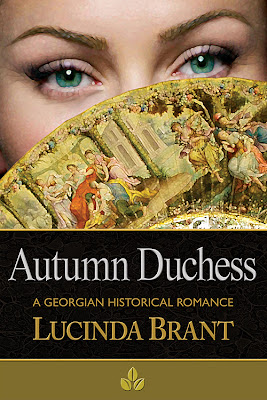
Thus water therapy was used by some physicians as a means of treating married women who had become “mildly distracted” and had opted out of their marital responsibilities (i.e. didn’t want to have sex with their husband). One such practitioner who used the method to sadistic effect was Patrick Blair, a physician who is the model for Sir Titus Foley in my novel AUTUMN DUCHESS, a dandified and well-respected physician whose medical forte is treating females for melancholia. When Antonia Dowager Duchess of Roxton is seen to be excessively melancholy and is still wearing mourning three years after the death of the Duke, her loving son is at his wits end and he instructs Sir Titus to treat his mother, little realizing that part of his treatment is the use of water therapy.


Patrick Blair had his female patients blindfolded, stripped and strapped to a bathing chair. The woman was then subjected to 30 minutes of water being sprayed directly into her face. When the woman refused to agree to return to the marital bed, Blair went one step further and repeated the treatment for 60 minutes, then 90 minutes and when she promised obedience Blair allowed her to sleep. Yet, the next day, sensing the woman was “sullen” and probably had only agreed because of the treatment, he again had her strapped to the chair and subjected to the treatment at intervals over the next two days. Finally, exhausted after such physical and mental torture, the woman succumbed and agreed to become a “loving and obedient and dutiful wife forever thereafter”. To make certain she did, Blair visited her at her home a month later and was happy to report “everything was in good order”. [4]

Thankfully Blair’s sadistic treatment of his female patients was not the norm. Yet, most physicians, indeed most people in the 18th and early 19th Centuries viewed water therapy in its various forms as an acceptable means of coercing, treating, and hopefully curing patients with various mental, melancholic and recalcitrant afflictions.


SOURCES
  1. Annual Report to the Friends (July 2005 – June 2006) The Institute for the History of Psychiatry, Cornell University, New York.

  2. Porter, Roy. Blood and Guts, A Short History of Medicine, Allen Lane, London 2002.

  3. Scull, Andrew. Social Order/Mental Disorder; Anglo-American Psychiatry in Historical Perspective. Berkeley. University of California Press 1989.

  4. Porter, Dorothy and Porter, Roy. Patient’s Progress: Doctors and Doctoring in Eighteenth-century England. Stanford University Press, Stanford California 1989.
Note: Water treatment images sourced and adapted from [1].