Showing posts with label laundry. Show all posts

Wednesday, February 24, 2016

The Great Wash - Laundry in the 17th century

by Deborah Swift

Washing in the 17th century was certainly labour-intensive. In the Stuart period outer garments could not easily be washed because fine fabrics - the silks, brocades and velvets, (beloved of those who wanted to show their status) would not stand up to the harsh treatment. Clothes were hand-made and valuable, and were worn until they were too dirty to be tolerated. However, the undergarments were usually linen, which was tough and hard-wearing, and could be washed.

'Before that you suffer it to be washed, lay it all night in urine, the next day rub all the spots in the urine as if you were washing in water; then lay it in more urine another night and then rub it again, and so do till you find they be quite out' 

Hannah Woolley, in The Compleat Servant-Maid, 1677


So where did this urine come from, and where was it used?

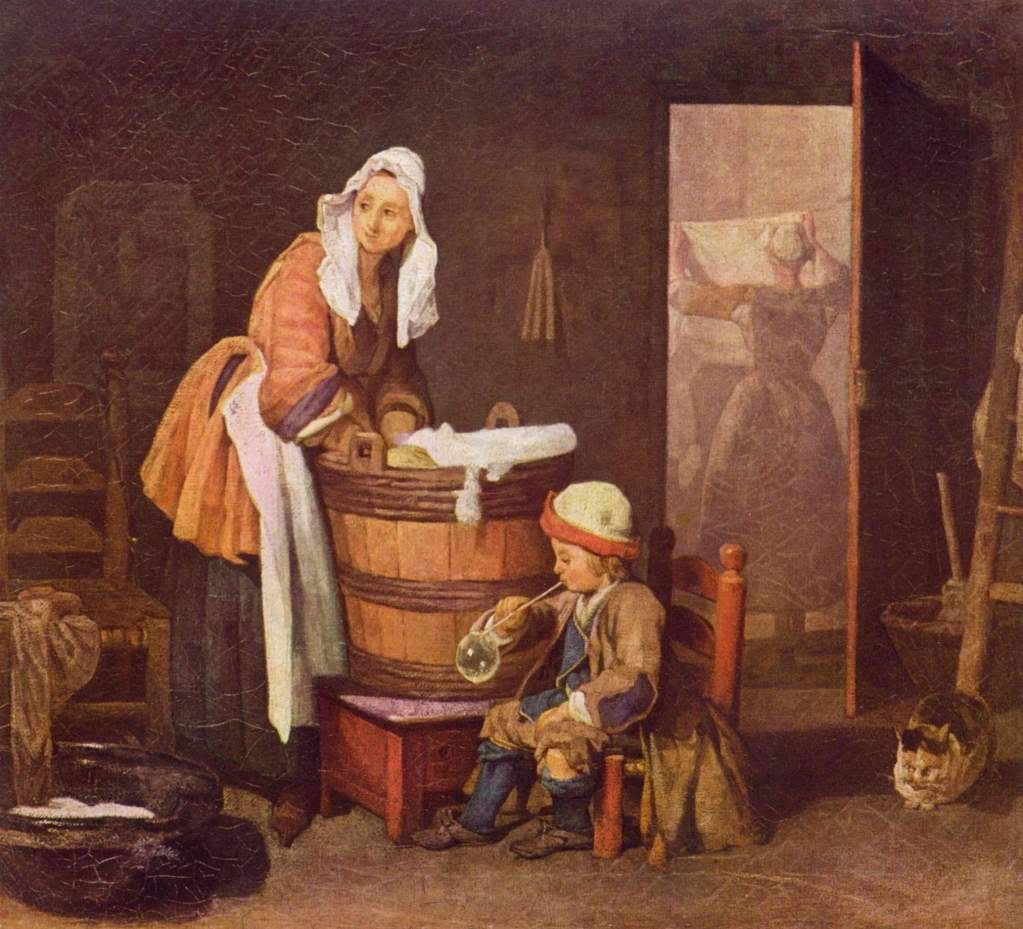
It came from chamberpots and was used neat straight from the pot. Apparently men's was more effective than women's so this was much in demand. (They would say that, wouldn't they?)The ammonia in the urine removed grease and stains before the washing was then soaked in a 'buck tub.' After that a buck cloth was spread over the top and potash or lye was poured through and collected from a hole in the bottom. Sometimes the clothes were layered, hung on sticks, and the lye, which was alkaline, was poured through. This is a possible origin of the term ‘passing the buck’.
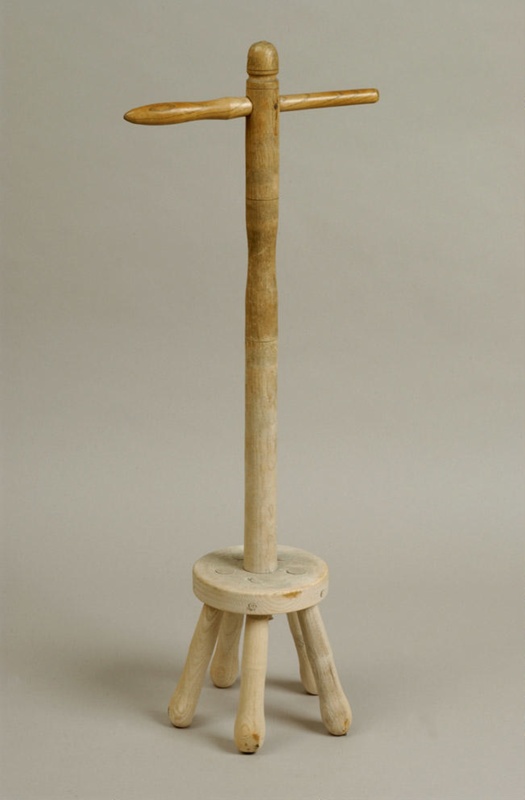
modern dolly stick (1950's)
the design stayed unchanged
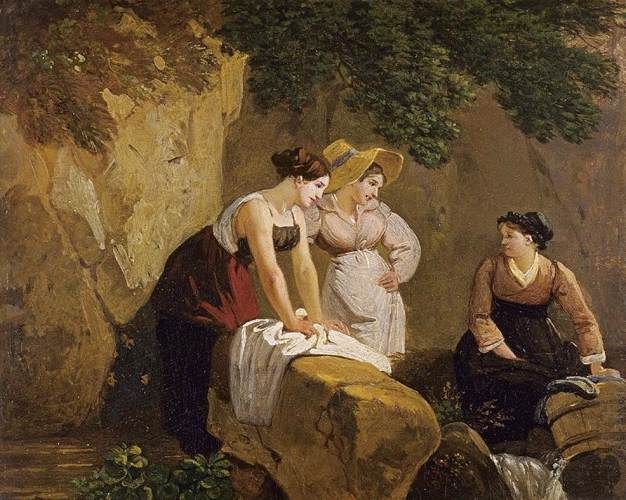
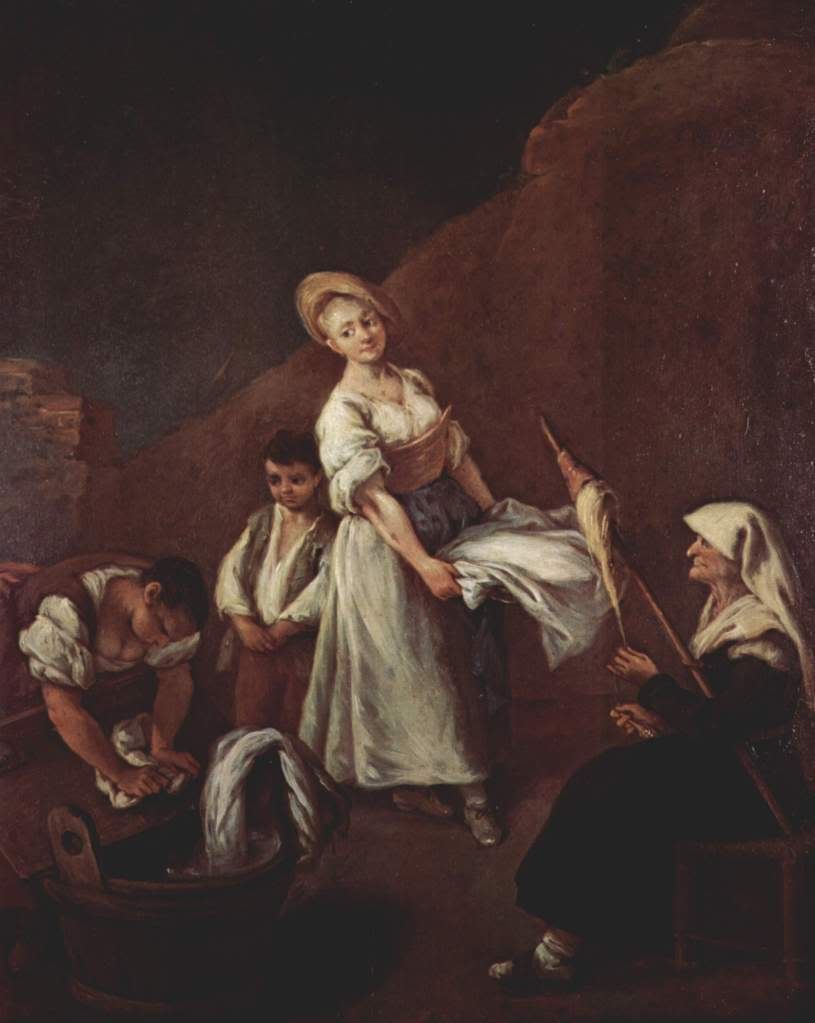
The water was then boiled up again and passed through as many as eight times. (See the picture of the woman using a buck tub, above.) Then the linen was soaped by hand and paddled with 'dolly sticks' or slapped against washboards before rinsing. Soap was a new commodity - In the 17th century the first soap factory was built in Toulon for the mass production of soap for laundering. The soap was made of goat's or sheep's fat, and ash. Rinsing was necessary to remove the lye before it caused damage to the fabric. In rural England, clothes were taken to the nearest stream or river and either paddled, with a wooden bat, or trodden. Sometimes used wash water was donated to the poor because soap was still an expensive luxury.

Generally a 'Great Wash' would only be done twice a year by most households unless they had many servants. This event could take three days, and usually took place at the same time as a 'spring clean' of the house. The Great Wash was often seen as a symbolic purification of the house. 

From Old and Interesting blog, (do visit it - it's indeed very interesting) here are the laundry expenses for the Duke of Bedford's Great Wash in 1675.

'For washing sheets and napkins before the great wash when the two masters was in town 2s
For four pounds of soap 1s
For six pounds of candles 2s 6d
For three women one day to wash 4s 6d
A woman two days to help dry up the linen 3s
For oil, ashes, and sand to scour 1s 8d
A woman to scour two days 3s
For washing of twelve pair of sheets at 4d per pair 4s
For two pounds of soap to scour the great room 6d
For nine pounds of soap 2s 3d
For four mops 4s
For Fuller's earth and sand to scour the rooms 1s 8d
A woman six days to help to wash all the rooms after the workmen left the house 6s
A woman six days for scouring and washing the rooms and cleaning the irons against the family's coming to town 6s
A woman to help air the bedding when the family came to town 2s' (2s = $0.34)


Some better off English houses had many staff, and used a brass tally of rotating discs to keep track of the linen that had been sent away for starching.. Each disc lists an accessory - for example neckwear -  'Ruffes' and 'Bandes', and lace-topped boot hose. These small items of linen that were worn next to the skin were washed more often than the sheets or napkins for example. Professional whiteners of linen were called 'whitsters' and they would bleach and starch the linen, and sometimes offer crimping or goffering for ruffs, collars and cuffs. This tally board (above) was originally from Haddon Hall, near Bakewell, Derbyshire, Click the picture for more information.

Whenever I think about the characters in my books I have to be aware of this - that people would have taken care not to get dirt on their clothes, because washing was such an ordeal. In my most recent novel, Lady Katherine Fanshawe has lost all her servants because of the Civil War. In a big house, the loss of servants for washing and mundane tasks creates a radical shift in daily life. So many processes were incredibly labour-intensive, and without servants to help, many things were forced to change. In many ways this was echoed three centuries later after WWI.

There is another good blog on washing in the colonies on the Plymouth Pilgrim's site here

Thanks for reading!
visit my website to sign up for a free book, or say hello on Twitter @swiftstory

Friday, May 3, 2013

The Days of Lye and Laundry

by Maria Grace


 With all our modern conveniences, it is easy to forget how arduous everyday tasks were for our ancestors. Wash day in particular is one for which we take our modern appliances for granted.

Today, we gather the laundry and sort it, more or less, less if you’re one of my teen-aged sons. If it is a good day, we check for stains, pretreat the stains, then throw it all in the machine. Later we wander back to switch it to the dryer, muttering under our breath because the washer doesn’t have a buzzer to let us know it is done. At the sound of the buzzer, we return to dry, sweet smelling laundry, ready to fold and put away. Oh the horrors of it all!

How our 18th and early 19th century friends would envy us. For them, laundry definitely did not take place on a weekly basis and when it happened, it was a multi-day, all hands on deck experience. The ladies of the house, unless they were very high born, would work alongside the servants (at least until the Victorian era when more shunned the activity) in order to get the enormous task accomplished.

Sorting the Laundry

The wealthier a family, the more clothing they possessed, the longer they could stretch the time between washdays. The bulk of the laundry consisted of ‘body linen’. Worn next to the skin, under shirts, shifts, chemises and the like protected finer garments from skin oils and sweat that soiled clothing more than dirt from the outside. Consequently, finer garments were rarely laundered. These two facts explain why so much silk and wool clothing of the period survives for us to see now. Victorians added removable cuffs and collars to their garments for the same reasons. Removable-and replaceable-elements increased the garment’s lifespan by reducing the need to wash it.

Laundry days had to be carefully planned out in order to make best use of the resources, including daylight. The process often began the night before, with sorting the laundry. Lights, darks, flannels, calicos and fine clothing would all be separated and a special pile dedicated to the most heavily soiled items. Often, the dirtiest laundry was set to soak in soapy water or lye the night before the actual process began to minimize the time and effort spent scrubbing the next day. All this sounds rather familiar, but the real work has not even started yet.

Getting Ready to Wash 

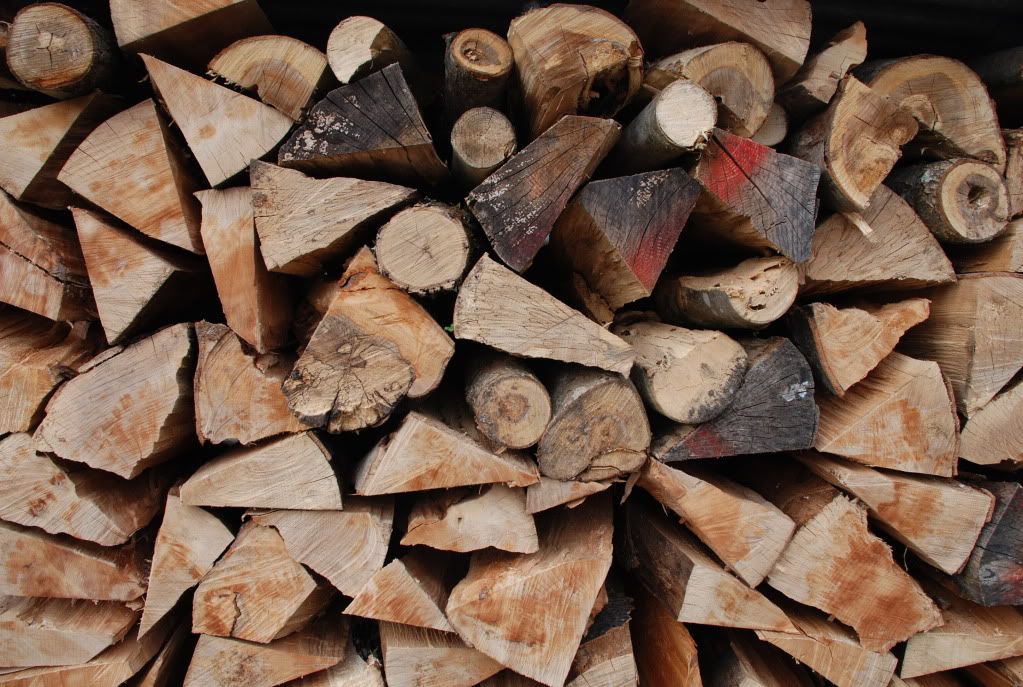
A great deal of firewood needed to be available for laundry days. For a moderate size estates laundry, 150-200 lbs. of wood would be required to feed the laundry fires. Firewood might be gathered the day before, but if not, the laundress would need to move it to the laundry site that morning. That alone sounds like a substantial effort, but for her it was only the beginning. Once wood was gathered and fires started, water had to be hauled to fill the copper boiler and additional wash and rinse basins.

Laundresses preferred copper boilers because they did not rust and stain the clothing the way iron would. The typical boiler would need 20-40 gallons per load with an additional 10 gallons for scrub and rinse water. Depending on the location of the water source, this process alone could require miles of walking burdened with heavy yokes of water by the time the day was over. (Water weighs about 8 lbs. a gallon.)

Not surprisingly, very large estates might have an outbuilding dedicated to laundry where wood might be stored nearby and a water supply was more convenient. Such a building might also provide indoor drying space when the weather was inclement.


Of Lye and Laundry Bats

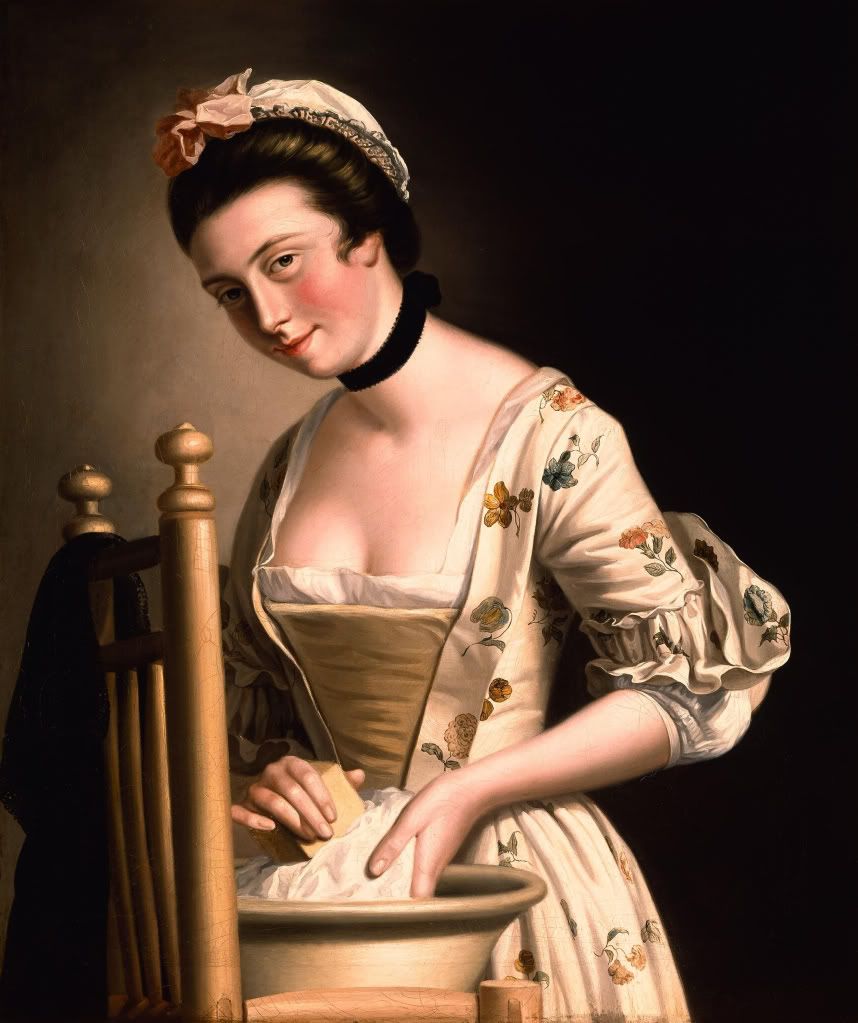
The laundress placed clothes in boiling water to loosen dirt, agitating them by hand with a washing bat, a two to three foot long wooden paddle. This was hot, heavy, exhausting work. After a quarter of an hour in the boiler, she removed the articles to a large basin of warm water to treat any remaining soiled areas with lye, soap or other stain treatment.

Plain lye formed the backbone of much of the everyday laundry cleaning arsenal and was fairly easy to obtain. Ashes from household fires were packed into a barrel with holes drilled in the bottom and lined with hay. Water was poured through the ashes and concentrated lye dripped from the holes.

Since soap was expensive and since lye could be made at home, poorer households might wash their laundry entirely without soap.

A variety of preparations might be used on stained clothing. Chalk, brick dust and pipe clay were used on greasy stains. Alcohol treated grass stains and kerosene, bloodstains. Milk was thought to remove urine stains and fruit. Ironically, urine, due to the ammonia content was often used for bleaching as were lemon and onion juice. Makes modern eyes water just thinking about the process.

To prevent fading, colored garments like calicos were not soaked or washed with lye or soda. They were washed in cold or lukewarm water by hand, rather than agitated with a bat. Ox-gall might be added to the water to help preserve the color.

Obtaining ox-gall meant sending a glass bottle to the butcher who would drain the liquid of cow’s gall bladders into it. Doesn’t that sound like what you want to add to your next wash cycle?

Articles that needed starching would be dipped in water that potatoes or rice had been cooked in and saved for laundry day. Laundresses were cautioned to make sure that the starch water had not soured or gone moldy before dipping clothing into it. Another appetizing thought.

Out of the Wash and on to Drying 

Box Mangle
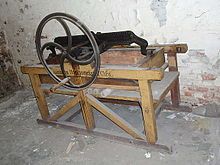
Finally, after boiling, washing and rinsing, garments had to be prepared for drying. To speed drying, excess water had to be removed from the wet fabric. A wealthy household might employ a box mangle, a large contraption that wound laundry around rollers then rolled a heavy box over them to extract excess water. Few households could afford such a luxury.

More often, two people would work together to wring the water from the laundry by twisting. Afterwards, clothes would be hung on clotheslines--usually without clothespins, bushes, hedgerows, wooden frames or laid over the lawn to dry. Some estates and towns had drying greens, fields of grass for laundry to be dried upon. The chlorophyll in the grass and the sunshine also helped bleach fabrics. Inclement weather forced drying inside to kitchen and attic spaces.

As if this was not enough, after the laundry finally dried, nearly every article required pressing of some form. But the history of ironing is a subject for another post.


References
~~~~~~~~~~~~

Free Google Books-digitized originals 


 Maria Grace is the author of Darcy's Decision and The Future Mrs. Darcy. Click here to find her books on Amazon. For more on her writing and other Random Bits of Fascination, visit her website. You can also like her on Facebook, follow on Twitter(@WriteMariaGrace) or email her.

Sunday, November 11, 2012

Ashes, Tallow and Turpentine: Coming Clean in the Regency Era

By Maria Grace

Keeping clothes has always been a challenge.  Today, we can simply go to the store and buy a specialized product according stain that needs cleaning. In centuries past, the mistress of the house needed to be well versed on what home preparations could be used to keep her household fresh and clean. Some of their solutions are similar to what we use to today and some were positively stomach churning.

Lye
Plain lye formed the backbone of much of the everyday laundry cleaning arsenal and was fairly easy to obtain. Ashes from household fires were packed into a barrel with holes drilled in the bottom and lined with hay. Water was poured through the ashes and concentrated lye dripped from the holes.

The strength of the solution was critical for its cleaning power.  If an egg did not float high enough in the solution it was too weak and would be poured through the ashes again. Lye that was too strong could burn skin and damage fabrics and would need to be diluted. Urine, for its ammonia content might also be added to a lye solution it improve its cleaning power.

Body linen, other garments whose colors did not need to be protected, sheets and household linens were soaked in a vat of lye prior to being boiled on laundry day. The process was called ‘bucking’ and attempted to restore the white or off white color to the laundry.

Soap
The generous use of soap was a modern advance in dealing with dirty laundry. At first it was used sparingly, only to treat stains. Later, it would be added to the main wash for cleaning.

Though soap could be purchased, what could be made at home often was, especially in areas away from larger urban areas. Soap could be made in several ways. A pail of lye could be added to about three pounds of melted animal fat and boiled all day. To avoid all that boiling and stirring, four pails of lye could be stirred into a barrel of 30 pounds of animal fat. Additional lye was added until it looked ‘right’ to the soap maker.  The soap might be used while it was still soft or it might be set up—dried and hardened with warm weather and salt.

Household manuals often contained various specialized recipes for soap with different fats and additives touted as better for one use or another. Individual households would also have their own recipes handed down from mother to daughter.

Water Softeners
Sodium borate (borax) and sodium carbonate (washing soda) were often added to the water to improve the action of the soap. Borax was preferred to washing soda which would yellow whites and damage their texture.  Borax could be added to the soap when it was made to eliminate the need to add it to the laundry water separately.

Both borax and washing soda had to be purchased and might not be available to poorer or more remote households.

Stain Removal
Stains were as much a problem then as they are now. Different recipes were used for different stains. These included:
  • Grease and oil stains: chalk, brick dust and pipe clay
  • Grass stains: alcohol, lemon and onion juice, kerosene
  • Blood stains: kerosene, lemon juice
  • Wax stains: a hot coal wrapped in a clean rag or wet brown paper
  • Urine stains: milk
  • Fruit stains: milk, lemon juice, onion juice

    Ox-Gall
To deal with stains on expensive colored fabrics which would bleach in a lye solution, ox-gall was the favorite solution. Ox-gall was obtained by sending a bottle to the butcher who filled it with the contents of cows’ gall-bladders.

     Bleaching
Despite soaking in lye, stubborn articles sometimes required additional bleaching. Human urine and hog manure were often used for this purpose as was lemon juice.

Sunshine in combination with lemon juice or lye was a freely available bleaching agent. Some estates and towns set aside areas of mown grass as ‘bleaching grounds’ where articles could be spread on laundry day. The chlorophyll in the grass helped in the bleaching process.

     Bluing
Since soap and washing soda often yellowed white articles, bluing would be added to the rinse water to neutralize the yellowing.  Blue dye, of various formulations, was placed in a small bag which would be swished through the rinse water and removed leaving a slight blue color behind.

Stiffening
Like other laundry necessities, starch was made at home. Wheat, potato gratings, and rice were common sources. Wheat starch might be added directly to water. The water used to cook rice or potatoes might be saved for starching. Similarly grated potatoes could be soaked in water then removed and the water used for starching laundry.

For delicate laces, sugar might be added to the final rinse water rather than starch. Alternately, gum arabic, made from the sap of acacia trees, might be used to stiffen laces and collars.

Dry Cleaning
Silk and woolen clothes never touched water. Several dry cleaning techniques were developed to preserve the fabrics through the cleaning process.

Fullers used fuller’s earth, an absorbent clay, and a thistle to clean wools.

Scourers spot cleaned silks once a year. Salt, chalk, or fuller’s earth as well as solvents like turpentine, kerosene, gasoline, lemon juice, warm milk, or even urine were used on the fine fabric. The whole garment was never immersed and scrubbed.

Leather breeches were scrubbed with a ‘breeches ball’ made of a mixture of ox-gall and fuller’s earth.

Interestingly, because many fine garments were not laundered with harsh lye, scrubbing and boiling, then remain preserved today.  Far fewer examples of body linen survive today because of the harsh measures used to keep them clean.

References
Kristina Harris. Victorian Laundry (or, Aren't You Glad You Didn't Live Then?) 
The Complexities of Wash Day in the 18th Century
History of Washing Clothes
History of Laundry 
Michael Olmert.  Laundries: Largest Buildings in the Eighteenth-century Backyard   
________________

 Maria Grace is the author of Darcy's Decision and The Future Mrs. Darcy. Click here to find her books on Amazon. For more on her writing and other Random Bits of Fascination, visit her website. You can also like her on Facebook, find her on twitter @WriteMariaGrace or email her.