By Lauren Gilbert

Current Exterior of Grosvenor Chapel
St. George’s, Hanover Square was (and still is) the most venerable church in Mayfair, the most fashionable district of London by the end of the 18th century. This district was home to the bluest of blood. Consequently, St. George’s, Hanover Square was the chief site of baptisms, burials and, most importantly, weddings for the highest society in London during the Georgian era and beyond. (Over 1000 marriages were conducted there in 1816 alone.) Grosvenor Chapel, located nearby at 24 South Audley Street, is not as well known.

Sir Thomas Grosvenor, 3rd Baronet
Sir Thomas Grosvenor, 3rd Baronet, was the head of a family long established in Cheshire, whose wealth came primarily from Welsh mines. He significantly increased that wealth when he married Mary Davies, the heiress to the Ebury estates in 1677. The property he acquired through this marriage covered a large area of what is now Mayfair, Pimlico and Belgravia. Sir Thomas started building in the 1660s but died July 2, 1700. His son Richard inherited his title, becoming Sir Richard Grosvenor, 4th Baronet. He pursued the development of the Mayfair area, including Grosvenor Square. A church or chapel at the Audley Street location had been considered as early as 1723. He signed a 99-year lease on the property with four builder-proprietors (also referred to as “under-takers”), one of whom was Richard Timbrell, a well-known builder, and the first stone was laid April 7, 1730 by Sir Richard Grosvenor himself. He had previously sold 1 ½ acre of land on Mount St. (neighbouring property) to St. George’s, Hanover Square, for burial purposes, and the original plan required that the vaults under the chapel not be used for burial purposes. The design of the chapel was similar to St. Peter’s, Vere St., which was not surprising considering Richard Timbrell was involved with the construction of both.
The chapel was finished in about a year, two ministers were appointed, and the rector of the parish was petitioned to open the chapel in April of 1731. Originally called the Audley Chapel, the name evolved to the Grosvenor Chapel. The chapel was constructed as a commercial enterprise for the landlords and builder-proprietors based on pew rentals and additional income generated by people moving to the area due to further development. (For example, in 1873, pew rentals at Grosvenor Chapel generated over 1000 pounds for the year.) At some point, in exchange for 500 pounds, Sir Richard gave the rector and churchwardens immediate freehold of the vaults and the land between the chapel and burial grounds, and gave up the rent for the site. In 1732, at Sir Richard’s expense, the original organ was built by Abraham Jordan and installed. Sir Richard died July 12, 1732.
A font was installed in 1790. Residents in the neighbourhood attended services, and the chapel was frequently used as a burial chapel. When the lease expired in 1829, the chapel was brought under the parochial system, and the freehold of the chapel itself reverted to the parish. By this time, the chapel was in poor condition, so extensive repairs and some changes were initiated. The Act of 1831 caused Grosvenor Chapel to be consecrated as a chapel of ease to St George’s, Hanover Square. This allowed the rector to appoint the priest in charge (also called the perpetual curate) to serve the congregation. Evan Nepean was the first minister so appointed, and he served at Grosvenor Chapel until his death in 1873. St. George’s benefited by having additional space for the congregation, as the seating in St. George’s was limited to approximately 1200 souls, in a district which housed roughly 36,000 people by 1850. Grosvenor Chapel added almost 1000 seats to St. George’s communicants.

Interior-note font to the left
In 1841, the font was replaced. Additional building and repairs were started in 1873 by R. H. Burden. In 1877, the pulpit was made smaller and moved from the center to the side, box pews were cut down to benches, and choir stalls were installed. Rebuilding the entire chapel was proposed but the Duke of Westminster refused to entertain the project. (Over time, the Grosvenor family were further ennobled; in 1874, the head of the family was made Duke of Westminster, the title being created by Queen Victoria. The Grosvenor family still owned land and buildings in Mayfair, and their connection to the chapel was maintained.) The churchyard at the rear of the chapel (land originally sold to be St. George’s burial ground) became a public garden in 1899, now known at the Mount Street Gardens. Significant renovations to the interior were proposed, and some carried out between 1890-1920, and the organ was reconstructed and enlarged by J. W. Walker and sons and moved in 1930. Exterior work was done in 1951-52, 1966 and 1969. A new organ was installed in the original Georgian organ case in 1990.

View of organ
The pew rent books were lost, so few of the regular congregants during the Georgian era are known. However, Arthur Wellesley, 1st Duke of Wellington, was known to have attended services at Grosvenor Chapel regularly. His parents, the 1st Earl and Countess of Mornington, were buried there (the earl in 1781 and the countess in 1831). The walls have numerous memorial tablets. Burials in the chapel include Lady Mary Wortley Montague in 1762, Lord Chesterfield in 1773, and John Wilkes (the radical MP) in 1797. Ehrengard Melusine von der Schulenburg (mistress of George I) was also buried here in 1743. The vaults were sealed in the 19th century, so are no longer accessible for burials.
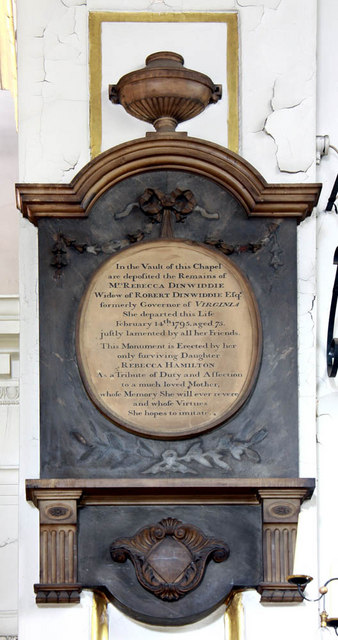
Wall monument
The chapel continues to offer services as chapel at ease to St. George’s, Hanover Square, serving nearby residents and members of Parliament. American troops stationed in Britain during World War II, including General Dwight D. Eisenhower, attended there, and the chapel continues to be popular with American tourists and visitors from other countries as well as other parts of London.
Sources include:
Callendar, Ann, ed. GODLY MAYFAIR. (London: Grosvenor Chapel, 1980).
British History Online. “South Audley Street-East Side.” HERE
GettyImages.com. ENTERTAINMENT-Elizabeth Taylor Baby Christening-Grosvenor Chapel, London. HERE
The Grosvenor Chapel website. HERE
History of Parliament Online. “Sir Richard Grosvenor, 4th Baronet (1689-1732), of Eaton Hall, Cheshire” by Eveline Cruikshanks. HERE ; “Sir Thomas Grosvenor, 3rd Baronet (1655-1700), of Eaton Hall, Cheshire” by Gillian Hampson and Basil Duke Henning. HERE
ProjectGutenberg.org. Mitten, Geraldine Edith. MAYFAIR, BELGRAVIA AND BAYSWATER
The Fascination of London. Sir Walter Besant, ed. (London: Adam & Charles Black, 1903). HERE
RegencyHistory.net. “St George’s Hanover Square-A Regency History Guide” by Rachel Knowles. Posted September 24, 2015. HERE
All images from Wikimedia Commons.
Exterior-by John Salmon, Creative Commons license, here
Sir Thomas Grosvenor, 3rd Baronet, here
Interior showing font-by John Salmon, Creative Commons license, here
Interior showing organ-by John Salmon, Creative Commons license, here
Interior of wall monument-by John Salmon, Creative Commons license, here
~~~~~~~~~~

Lauren Gilbert holds a degree in English, is a long-time member of the Jane Austen Society of North America, and lives in Florida with her husband. Her first published book is HEYERWOOD: A Novel.
Her second novel, A RATIONAL ATTACHMENT, is in progress. Please visit her website here for more information.
Current Exterior of Grosvenor Chapel
St. George’s, Hanover Square was (and still is) the most venerable church in Mayfair, the most fashionable district of London by the end of the 18th century. This district was home to the bluest of blood. Consequently, St. George’s, Hanover Square was the chief site of baptisms, burials and, most importantly, weddings for the highest society in London during the Georgian era and beyond. (Over 1000 marriages were conducted there in 1816 alone.) Grosvenor Chapel, located nearby at 24 South Audley Street, is not as well known.
Sir Thomas Grosvenor, 3rd Baronet
Sir Thomas Grosvenor, 3rd Baronet, was the head of a family long established in Cheshire, whose wealth came primarily from Welsh mines. He significantly increased that wealth when he married Mary Davies, the heiress to the Ebury estates in 1677. The property he acquired through this marriage covered a large area of what is now Mayfair, Pimlico and Belgravia. Sir Thomas started building in the 1660s but died July 2, 1700. His son Richard inherited his title, becoming Sir Richard Grosvenor, 4th Baronet. He pursued the development of the Mayfair area, including Grosvenor Square. A church or chapel at the Audley Street location had been considered as early as 1723. He signed a 99-year lease on the property with four builder-proprietors (also referred to as “under-takers”), one of whom was Richard Timbrell, a well-known builder, and the first stone was laid April 7, 1730 by Sir Richard Grosvenor himself. He had previously sold 1 ½ acre of land on Mount St. (neighbouring property) to St. George’s, Hanover Square, for burial purposes, and the original plan required that the vaults under the chapel not be used for burial purposes. The design of the chapel was similar to St. Peter’s, Vere St., which was not surprising considering Richard Timbrell was involved with the construction of both.
The chapel was finished in about a year, two ministers were appointed, and the rector of the parish was petitioned to open the chapel in April of 1731. Originally called the Audley Chapel, the name evolved to the Grosvenor Chapel. The chapel was constructed as a commercial enterprise for the landlords and builder-proprietors based on pew rentals and additional income generated by people moving to the area due to further development. (For example, in 1873, pew rentals at Grosvenor Chapel generated over 1000 pounds for the year.) At some point, in exchange for 500 pounds, Sir Richard gave the rector and churchwardens immediate freehold of the vaults and the land between the chapel and burial grounds, and gave up the rent for the site. In 1732, at Sir Richard’s expense, the original organ was built by Abraham Jordan and installed. Sir Richard died July 12, 1732.
A font was installed in 1790. Residents in the neighbourhood attended services, and the chapel was frequently used as a burial chapel. When the lease expired in 1829, the chapel was brought under the parochial system, and the freehold of the chapel itself reverted to the parish. By this time, the chapel was in poor condition, so extensive repairs and some changes were initiated. The Act of 1831 caused Grosvenor Chapel to be consecrated as a chapel of ease to St George’s, Hanover Square. This allowed the rector to appoint the priest in charge (also called the perpetual curate) to serve the congregation. Evan Nepean was the first minister so appointed, and he served at Grosvenor Chapel until his death in 1873. St. George’s benefited by having additional space for the congregation, as the seating in St. George’s was limited to approximately 1200 souls, in a district which housed roughly 36,000 people by 1850. Grosvenor Chapel added almost 1000 seats to St. George’s communicants.
Interior-note font to the left
In 1841, the font was replaced. Additional building and repairs were started in 1873 by R. H. Burden. In 1877, the pulpit was made smaller and moved from the center to the side, box pews were cut down to benches, and choir stalls were installed. Rebuilding the entire chapel was proposed but the Duke of Westminster refused to entertain the project. (Over time, the Grosvenor family were further ennobled; in 1874, the head of the family was made Duke of Westminster, the title being created by Queen Victoria. The Grosvenor family still owned land and buildings in Mayfair, and their connection to the chapel was maintained.) The churchyard at the rear of the chapel (land originally sold to be St. George’s burial ground) became a public garden in 1899, now known at the Mount Street Gardens. Significant renovations to the interior were proposed, and some carried out between 1890-1920, and the organ was reconstructed and enlarged by J. W. Walker and sons and moved in 1930. Exterior work was done in 1951-52, 1966 and 1969. A new organ was installed in the original Georgian organ case in 1990.
View of organ
The pew rent books were lost, so few of the regular congregants during the Georgian era are known. However, Arthur Wellesley, 1st Duke of Wellington, was known to have attended services at Grosvenor Chapel regularly. His parents, the 1st Earl and Countess of Mornington, were buried there (the earl in 1781 and the countess in 1831). The walls have numerous memorial tablets. Burials in the chapel include Lady Mary Wortley Montague in 1762, Lord Chesterfield in 1773, and John Wilkes (the radical MP) in 1797. Ehrengard Melusine von der Schulenburg (mistress of George I) was also buried here in 1743. The vaults were sealed in the 19th century, so are no longer accessible for burials.
Wall monument
The chapel continues to offer services as chapel at ease to St. George’s, Hanover Square, serving nearby residents and members of Parliament. American troops stationed in Britain during World War II, including General Dwight D. Eisenhower, attended there, and the chapel continues to be popular with American tourists and visitors from other countries as well as other parts of London.
Sources include:
Callendar, Ann, ed. GODLY MAYFAIR. (London: Grosvenor Chapel, 1980).
British History Online. “South Audley Street-East Side.” HERE
GettyImages.com. ENTERTAINMENT-Elizabeth Taylor Baby Christening-Grosvenor Chapel, London. HERE
The Grosvenor Chapel website. HERE
History of Parliament Online. “Sir Richard Grosvenor, 4th Baronet (1689-1732), of Eaton Hall, Cheshire” by Eveline Cruikshanks. HERE ; “Sir Thomas Grosvenor, 3rd Baronet (1655-1700), of Eaton Hall, Cheshire” by Gillian Hampson and Basil Duke Henning. HERE
ProjectGutenberg.org. Mitten, Geraldine Edith. MAYFAIR, BELGRAVIA AND BAYSWATER
The Fascination of London. Sir Walter Besant, ed. (London: Adam & Charles Black, 1903). HERE
RegencyHistory.net. “St George’s Hanover Square-A Regency History Guide” by Rachel Knowles. Posted September 24, 2015. HERE
All images from Wikimedia Commons.
Exterior-by John Salmon, Creative Commons license, here
Sir Thomas Grosvenor, 3rd Baronet, here
Interior showing font-by John Salmon, Creative Commons license, here
Interior showing organ-by John Salmon, Creative Commons license, here
Interior of wall monument-by John Salmon, Creative Commons license, here
~~~~~~~~~~

Lauren Gilbert holds a degree in English, is a long-time member of the Jane Austen Society of North America, and lives in Florida with her husband. Her first published book is HEYERWOOD: A Novel.
Her second novel, A RATIONAL ATTACHMENT, is in progress. Please visit her website here for more information.