
by Scott Higginbotham
One can almost hear the pound of drums, the steady plod of men at arms, and the clomping of countless hooves. War is fascinating, but the reality and motivations for going into the fight are much more grim and startling. Causes that could have positive and long-lasting results are oftentimes tainted by the methods.
On November 27, 1095, Pope Urban II made the call for Crusade in Clermont, France. There had been previous pleas, but this call unified, if not electrified, those in attendance. He appealed to chivalry, patriotism, and the crowd’s obedience to the Church – for the promise of salvation. He also stressed that the land was a worthy goal and that they, the Crusaders, were God’s ambassadors on that quest. Most accounts agree that the conquest of Jerusalem was not specifically mentioned during his speech, but it was expected based on later preaching as the idea gained in popularity.
Robert the Monk chronicled parts of Urban’s speech, and while it is not clear if he wrote a word for word report (and what medieval chronicler did?), the import, which toppled a thousand years of Church teaching, can be summarized in four points 1:
1. We must go to recapture Jerusalem from the pagan Muslims.
2. We must go to come to the aid of fellow believers who are suffering.
3. We must go for the remission of our sins.
4. We must go because we are assured the imperishable glory of heaven.
It is interesting to note that these four points were summarized by two former Muslims that had converted to Christianity. The Caner brothers also note in their book Christian Jihad that the First Crusade could have met the requirements for Augustine’s Just War Doctrine. However, it really didn’t turn out that way, as great numbers of innocents died as Jerusalem was "cleansed" of the infidels after the siege in 1099.
Urban’s speech captivated the crowd. His word usage in the following excerpt inspired former enemies around a common goal, a common enemy besides Christian armies. However, this Crusade caused a fundamental shift in the Church and its original mission.
His words were meant to astonish, but also to bind up old grudges and wounds. When Urban was admonishing the masses with these words the crowd began to roar “Diex le volt!” or “God wills it!” in an excited frenzy. “It was at that very moment that the Crusade came into existence.” 3
In addition to arms and armor, the Crusaders made preparations by taking a vow to strengthen their resolve. A cloth cross was sewn onto shirts, tunics, and surcoats to symbolize their solemn undertaking. To renege on this promise was to be branded an outlaw, and for those without the cloth cross, it was implicit that there would be no salvation. Some soldiers proclaimed their devotion by using stronger measures – burning the sign of the cross on their chests like a tattoo.
Crusaders were not homogenous; they came from all social strata. Peter the Hermit led a disastrous People's Crusade months before the trained armies led by the nobles departed. He was a charismatic preacher and his army was largely made of untrained rabble; they were massacred barely inside Asia Minor (though Peter himself was not present). Motivations varied from person to person, but in one speech, Pope Urban II unified countries that once fought amongst themselves into a cohesive force embarking on a quest unlike any other – an armed pilgrimage. Moreover, the years preceding this were marked by famine and war across Europe; piety and the blessedness of the afterlife were beacons of hope. The Crusade was this beacon for many.
The First Crusade began as a result of a dire plea for the rescue of the Eastern Church centered in Constantinople – they were surrounded, and time was running out. Though politics and intrigue were rampant and could fill volumes of books, I would have to agree with the Caners that the First Crusade could have been done much better. Had they followed the precepts of the Just War Doctrine (up-to date) from the Catechism of the Catholic Church below, imagine how different this period would be viewed today.
- The damage inflicted by the aggressor on the nation or community of nations must be lasting, grave, and certain;
- All other means of putting an end to it must have been shown to be impractical or ineffective;
- There must be serious prospects of success;
- The use of arms must not produce evils and disorders graver than the evil to be eliminated. The power of modern means of destruction weighs very heavily in evaluating this condition. 4
War is costly and can impoverish nations and even souls on both sides of the divide. The downside is that there are times when it is unavoidable, or perhaps a noble and moral decision. Worse, is when the conscience becomes so seared and unfeeling that it becomes sport.
King Solomon was a wise teacher, cherishing wisdom above all else. He knew that there was a right time for everything when he said, "A time to love, and a time to hate; a time of war, and a time of peace." Ecclesiastes 3:8
One can almost hear the pound of drums, the steady plod of men at arms, and the clomping of countless hooves. War is fascinating, but the reality and motivations for going into the fight are much more grim and startling. Causes that could have positive and long-lasting results are oftentimes tainted by the methods.
On November 27, 1095, Pope Urban II made the call for Crusade in Clermont, France. There had been previous pleas, but this call unified, if not electrified, those in attendance. He appealed to chivalry, patriotism, and the crowd’s obedience to the Church – for the promise of salvation. He also stressed that the land was a worthy goal and that they, the Crusaders, were God’s ambassadors on that quest. Most accounts agree that the conquest of Jerusalem was not specifically mentioned during his speech, but it was expected based on later preaching as the idea gained in popularity.
 |
| "Council of Clermont" by meh Public domain via Wikimedia Commons* |
Robert the Monk chronicled parts of Urban’s speech, and while it is not clear if he wrote a word for word report (and what medieval chronicler did?), the import, which toppled a thousand years of Church teaching, can be summarized in four points 1:
1. We must go to recapture Jerusalem from the pagan Muslims.
2. We must go to come to the aid of fellow believers who are suffering.
3. We must go for the remission of our sins.
4. We must go because we are assured the imperishable glory of heaven.
It is interesting to note that these four points were summarized by two former Muslims that had converted to Christianity. The Caner brothers also note in their book Christian Jihad that the First Crusade could have met the requirements for Augustine’s Just War Doctrine. However, it really didn’t turn out that way, as great numbers of innocents died as Jerusalem was "cleansed" of the infidels after the siege in 1099.
Urban’s speech captivated the crowd. His word usage in the following excerpt inspired former enemies around a common goal, a common enemy besides Christian armies. However, this Crusade caused a fundamental shift in the Church and its original mission.
This now is the time to prove that you are animated by
true courage, the time to expiate the violence committed
in the bosom of peace, the many victories purchased at
the expense of justice and humanity. If you must have
blood, bathe in the blood of the infidels. I speak to you
with harshness because my ministry obliges me to do so.
Soldiers of Hell, become soldiers of the living God! 2
His words were meant to astonish, but also to bind up old grudges and wounds. When Urban was admonishing the masses with these words the crowd began to roar “Diex le volt!” or “God wills it!” in an excited frenzy. “It was at that very moment that the Crusade came into existence.” 3
In addition to arms and armor, the Crusaders made preparations by taking a vow to strengthen their resolve. A cloth cross was sewn onto shirts, tunics, and surcoats to symbolize their solemn undertaking. To renege on this promise was to be branded an outlaw, and for those without the cloth cross, it was implicit that there would be no salvation. Some soldiers proclaimed their devotion by using stronger measures – burning the sign of the cross on their chests like a tattoo.
Crusaders were not homogenous; they came from all social strata. Peter the Hermit led a disastrous People's Crusade months before the trained armies led by the nobles departed. He was a charismatic preacher and his army was largely made of untrained rabble; they were massacred barely inside Asia Minor (though Peter himself was not present). Motivations varied from person to person, but in one speech, Pope Urban II unified countries that once fought amongst themselves into a cohesive force embarking on a quest unlike any other – an armed pilgrimage. Moreover, the years preceding this were marked by famine and war across Europe; piety and the blessedness of the afterlife were beacons of hope. The Crusade was this beacon for many.
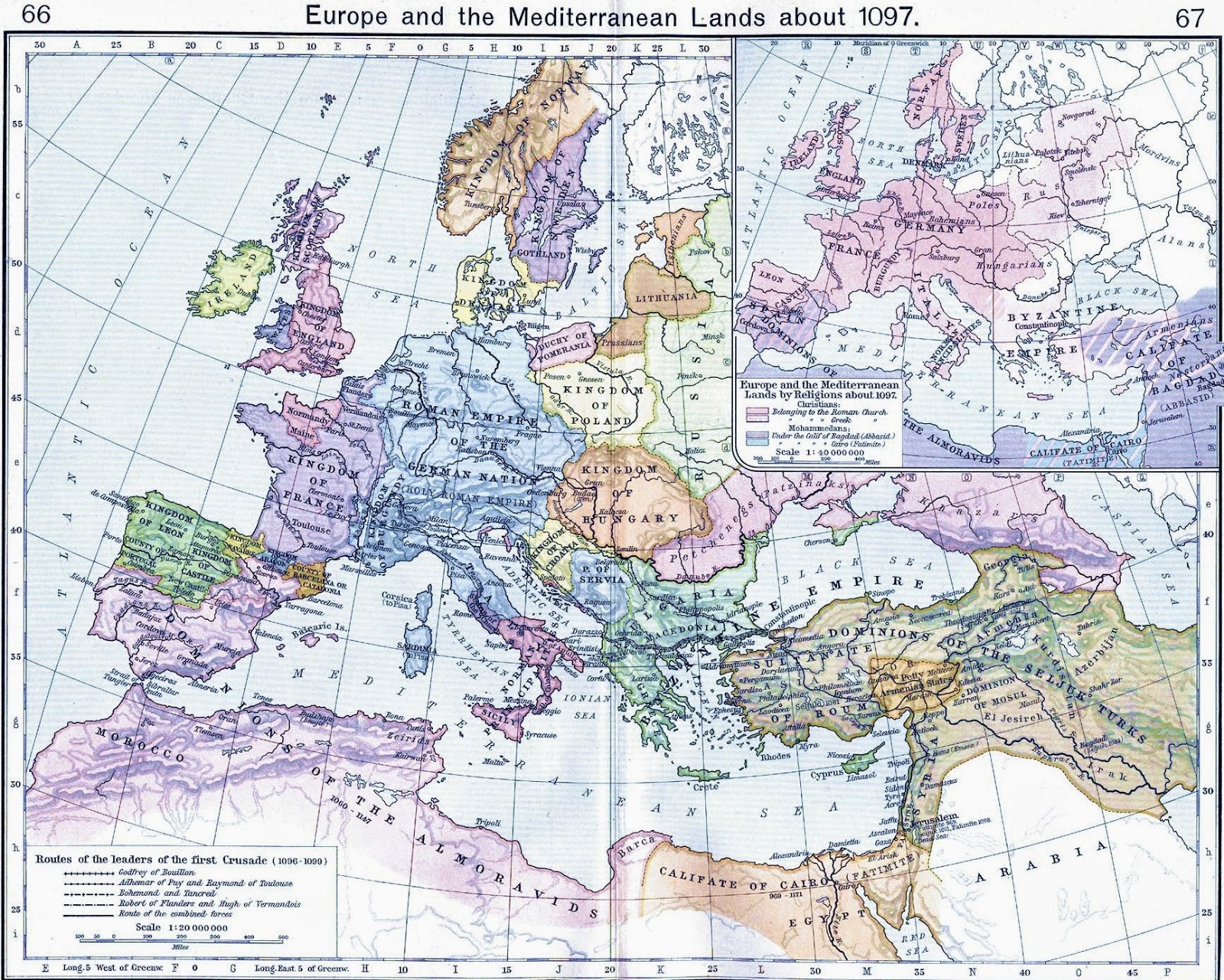 |
| "First.Crusade.Map". Licensed under Public domain via Wikimedia Commons** |
The First Crusade began as a result of a dire plea for the rescue of the Eastern Church centered in Constantinople – they were surrounded, and time was running out. Though politics and intrigue were rampant and could fill volumes of books, I would have to agree with the Caners that the First Crusade could have been done much better. Had they followed the precepts of the Just War Doctrine (up-to date) from the Catechism of the Catholic Church below, imagine how different this period would be viewed today.
- The damage inflicted by the aggressor on the nation or community of nations must be lasting, grave, and certain;
- All other means of putting an end to it must have been shown to be impractical or ineffective;
- There must be serious prospects of success;
- The use of arms must not produce evils and disorders graver than the evil to be eliminated. The power of modern means of destruction weighs very heavily in evaluating this condition. 4
War is costly and can impoverish nations and even souls on both sides of the divide. The downside is that there are times when it is unavoidable, or perhaps a noble and moral decision. Worse, is when the conscience becomes so seared and unfeeling that it becomes sport.
King Solomon was a wise teacher, cherishing wisdom above all else. He knew that there was a right time for everything when he said, "A time to love, and a time to hate; a time of war, and a time of peace." Ecclesiastes 3:8
1. Ergun Mehmet Caner and Emir Fethi Caner, Christian Jihad, (Grand Rapids, MI: Kregel Publications, 2004) 88-89.
2. Robert Payne, The Dream and the Tomb: A History of the Crusades, (New York, NY: Stein and Day, 1984), 35.
3. Caner, Christian Jihad, 91.
4. http://www.scborromeo.org/ccc/p3s2c2a5.htm#2309
* "CouncilofClermont" by meh - http://en.wikipedia.org/wiki/Image:CouncilofClermont.jpg. Licensed under Public domain via Wikimedia Commons - http://commons.wikimedia.org/wiki/File:CouncilofClermont.jpg#mediaviewer/File:CouncilofClermont.jpg
** "First.Crusade.Map". Licensed under Public domain via Wikimedia Commons - http://commons.wikimedia.org/wiki/File:First.Crusade.Map.jpg#mediaviewer/File:First.Crusade.Map.jpg
~~~~~~~~~~~~~
 |
| A Soul’s Ransom |


.jpg)
