Showing posts with label Ælfflæd. Show all posts

Wednesday, February 21, 2018

Queen Ælfflæd: A Bride Worth Killing Over

By Kim Rendfeld


Today we know little about Ælfflæd, except that kings wanted to her to marry their sons.

She was the daughter of deposed Mercian King Ceolwulf, who claimed to descend from the legendary Penda’s brother. Apparently, that pedigree made her a desirable bride.

Ælfflæd’s birth and death dates are unknown. Not a surprise consider the dearth of information about 9th century Mercia. She lived in turbulent times. In a span of 54 years, there were 10 kings. The realm faced danger from Viking raids and power struggles within.

Her uncle Cenwulf succeeded Offa’s son, Ecgfrith, who died in December 796, maybe not of natural causes. Offa had a reputation for ruthlessness, but Cenwulf was no Mr. Nice Guy. Early in his reign, he suppressed a rebellion in Kent and had its leader blinded and his hands chopped off. He released his crippled rival to Winchcombe, an abbey and center of power. His daughter, Cwenthryth, was abbess of Winchcombe and Minster in Thanet in Kent. (Rumors of Cwenthryth ordering the murder of her brother, later revered as a martyr, are likely apocryphal.)

Cenwulf died without male heirs in 821, passing the throne to Ælfflæd’s father, Ceolwulf. If she was at court as a child, it was not for long. Although anointed in 822, Ceolwulf was deposed only a year later, and we don’t know why.

Coins from Ceolwulf's reign (The Portable
Antiquities Scheme/The Trustees of
the British Museum, CC BY-SA 2.0,
via Wikimedia Commons}


His successors fared no better. Beornwulf, perhaps a descendant of rival family to Offa, died in 826, at the hands of East Angles. Then Ludeca died the next year, also in battle against the East Angles.

Wiglaf ascended to the throne in 827. He was deposed by Wessex King Ecgberht in 829 but resumed his reign in 830. After that scare, Wiglaf might have realized he needed some help if he didn’t want to wind up like the last two rulers. Beornwulf, Ludeca, and Wiglaf might have been regional rulers—they could seize the throne but couldn’t secure the support of all Mercian factions. Wiglaf needed an alliance, and marriage between noble families was one way to forge that. His son Wigmund was the eligible bachelor and the father looked to Ælfflæd.

Why Ælfflæd, the daughter of a deposed king? For one thing, she might have been wealthy and controlled a lot of land. She was the sole heiress for her father and, after Cwenthryth passed, her uncle. Perhaps, Mercians still held a high regard for her ancestors, and she had friends through the kingdom.

History is silent on whether Ælfflæd immediately supported the union and her family’s return of power or required persuasion. It’s not too much of a stretch to think she welcomed the offer. Medieval women were expected to manage assets and wield influence in Church and secular politics. I suspect Ælfflæd, much like another woman with the same name, was quite capable.

We don’t know how well Wigmund and Ælfflæd got along. They had a son, Wigstan. Whether they had another son, Ceolwulf, is uncertain. If there was a second child named after his maternal grandfather, that says a lot about Ælfflæd and her importance.

You might have noticed part of the father’s name often appears in the names of his children, both sons and daughters. Ælfflæd seems to be an exception. There’s no way to know for certain, but it is possible she had been named for Saint Ælfflæd, an influential abbess of Whitby who had died in the previous century. Ceolwulf’s parents might have wanted to remind the people of another king, either Ælfflæd’s father or an 8th century saint who was king of Northumbria.

Wiglaf ruled for another 10 years, a long time in this period. Exactly who succeed him and when is in dispute, but here’s what I suspect. The crown passed to Wigmund, who ruled another nine years until his death.

Crypt at Repton (public domain, via Wikimedia Commons)


According to legend, Wigmund’s son Wigstan preferred the religious life to ruling the kingdom and appointed his mother regent. If Ceolwulf was his brother, why didn’t the crown pass to him? Was Ceolwulf too young?

Wigstan’s kinsman Beorhtfrith wanted to wed the widowed Ælfflæd. Politically, this would have made sense. The marriage would reconcile two noble families who had been at odds. (Given the similarity of names Beorhtwulf and Beornwulf, it is likely the two were related.) It’s not too much of a stretch to imagine Ælfflæd still young enough to bear children.

But Wigstan forbid the marriage—or persuaded his mom to refuse the offer—because of consanguinity. Beorhtfrith and a servant murdered Wigstan on June 1, 849. Interred with his father at Repton, Wigstan would later be canonized as a martyr.

We know Beornwulf, Beorhtfrith’s father, was the next king. What happened to Ælfflæd is unclear. She might have retired to Winchcombe and become its abbess. History is silent on Ælfflæd’s grief. Nor does it tell us if she prayed for Beorhtwulf’s downfall.

Beorhtwulf’s reign lasted only three years. Burgred succeeded him after a Mercian defeat at the hands of the Vikings. Then Burgred himself was ousted by Vikings in late 873 or early 874.

Ceolwulf II succeeded him. Perhaps an older man when he became king, he’s been called a puppet of Vikings, but because of his royal descent, he was acceptable to Mercians. The Vikings and the people of Wessex accepted him as the ruler of Mercia. We don’t know if Ælfflæd was alive to witness this. But if she were around, and if this Ceolwulf was his son, perhaps she felt some triumph to see royal power back in her family’s hands.

Sources
Oxford Dictionary of National Biography, including:
“Cenwulf” by M.K. Lawson
“Cwenthryth” by S.E. Kelly
"Beornwulf" by S.E. Kelly
"Wiglaf" by S.E. Kelly
"Wigstan [St Wigstan]" by David Rollason
"Berhtwulf [Beorhtwulf]" by S.E. Kelly
"Burgred [Burhred]" by S.E. Kelly

A Biographical Dictionary of Dark Ages Britain: England, Scotland, and Wales, C. 500-c. 1050 by Ann Williams, Alfred P. Smyth, D.P. Kirby

The Mammoth Book of British Kings and Queens by Mike Ashley
~~~~~~~~~~

Kim Rendfeld has written two novels set in 8th century Europe. In The Cross and the Dragon, a Frankish noblewoman must contend with a jilted suitor and the fear of losing her husband (available on Amazon). In The Ashes of Heaven's Pillar, a Saxon peasant will fight for her children after losing everything else (available on Amazon). Her short story “Betrothed to the Red Dragon,” about Guinevere’s decision to marry Arthur, is set in early medieval Britain and available on Amazon.

Connect with Kim at on her website kimrendfeld.com, her blog, Outtakes of a Historical Novelist at kimrendfeld.wordpress.com, on Facebook at facebook.com/authorkimrendfeld, or follow her on Twitter at @kimrendfeld.




Wednesday, January 17, 2018

Ælfflæd: An Abbess Who Was Always a Princess

By Kim Rendfeld


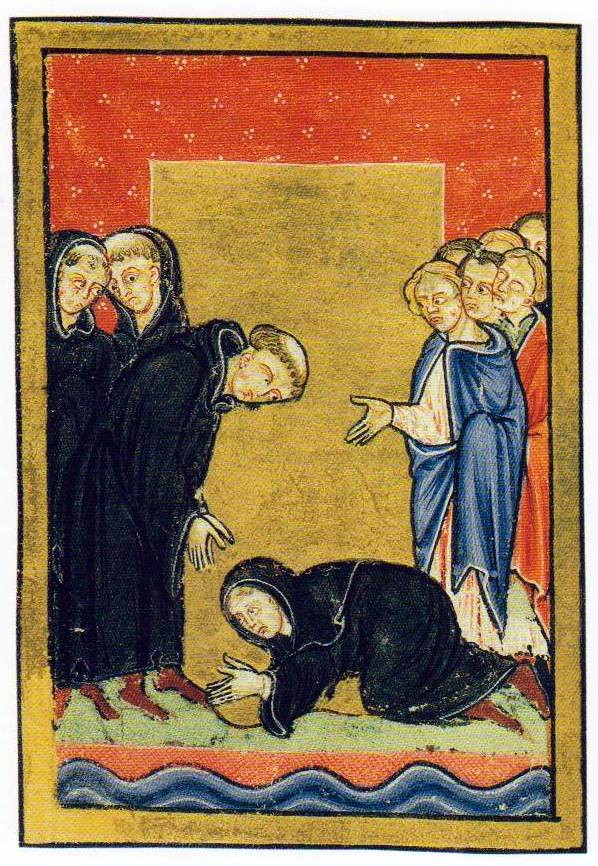
Ælfflæd’s life was decided in her father’s battle against the Mercians in 655. Northumbrian King Oswiu made a promise: if God granted him victory, he would give land and his 1-year-old daughter to the Church. Ælfflæd would never be a queen, but she wielded royal power.

When she was an infant, Ælfflæd was commended to the care of her mother’s kinswoman Hild, abbess of Hartlepool. Two years later, Hild founded the double monastery of Whitby with the donated land, and she and the toddler took up residence there.

Because of her father’s decision, Ælfflæd was no longer eligible for a political marriage. Probably not a bad thing in this family. Elder half-sister Alhflæd might have had something to do with the death of her husband, the son of the ruler Oswiu killed in battle. Her full sister, Osthryth, later married to a Mercian king, was murdered by Mercian nobles.

Ælfflæd grew up in Whitby, a center for learning and a cradle of bishops. While Ælfflæd was still a child, the abbey hosted the Synod of Whitby in 664 to decide whether the Church should practice Christianity like the Romans or the Celts. The two sides disagreed on many things such as the date for Easter and how tonsures should be shaped. Ælfflæd’s own parents were on different sides—her father favored the Celts while her mother supported the Romans. The Roman way prevailed.


At the abbey, Ælfflæd would become a teacher and was probably being groomed to succeed Hild. It was common for an abbey to pass from aunt to niece or another female relative. As an aristocrat, Ælfflæd was expected to lead.

After Oswiu died in 670, Ælfflæd’s widowed mother, Eanflæd, joined her daughter at Whitby. Eanflæd and Hild apparently were close in childhood, baptized together in 627. When Hild died in 680, Ælfflæd and Eanflæd jointly ruled the double monastery. Eanflæd died after 685, and Ælfflæd assumed sole rule until her death in 714.

And rule she did.

Ælfflæd might have played a role in one of Hild’s pupils becoming a bishop. She commissioned the Life of Gregory, a hagiography written by one of her monks or nuns, and oversaw the translation of her grandfather King Edwin’s relics to Whitby. She was influential enough to write to a continental abbess of behalf of religious women pilgrims. And she was a close friend of the holy man Cuthbert. One story has a linen girdle Cuthbert sent miraculously healing her of an illness that left her paralyzed. About 684, she consulted with him on a matter close to her heart.


She might have been concerned that her brother Ecgfrith, her father’s successor as king of Northumbria, had no sons. Ecgfrith’s first marriage with Etheldreda ended with her following her dream to be a nun, at the urging of Bishop Wilfrid (whom Hild also disliked), and her brother’s second marriage had yet to produce heirs. If we are to believe Cuthbert’s hagiography—and that’s a big if—Cuthbert reminded her that she had a half-brother born out of wedlock before her father’s first marriage. I have a feeling Ælfflæd knew all along and was testing Cuthbert’s loyalty.

Cuthbert was appointed a bishop of Lindisfarne soon after the meeting. Supposedly, he didn’t want the office. It would not surprise me if Ælfflæd played a role the decision.

Ecgfrith died in a disastrous battle in 685, and half-brother Aldfrith, a man in his 50s, ascended to the throne. Although she did not wear a crown, Ælfflæd was someone to reckon with when it came to making peace between Aldfrith and Wilfrid. The archbishop seeking the reconciliation wrote to both the king and his sister. Apparently brother and sister were close, and she had a streak of pragmatism.

When Aldfrith died at the end of his 20-year reign, he had an 8-year-old son, Osred. A rival named Eadwulf seized the throne but was expelled two months later, thanks to teamwork from Ælfflæd, Wilfrid, and a nobleman. Ælfflæd testified that Aldfrith wished for his successor to reconcile the royal family with Wilfrid, and Osred became Wilfrid’s adopted son and king. The next year, Wilfrid didn’t get the See of York as he wanted but he was allow to retain two churches and named a bishop.

With her combination of piety, education, and savvy, it is little wonder her contemporaries called her “a wise woman and learned in the Holy Scripture” and “ever the comforter and best counsellor of the whole kingdom.”

Public domain images via Wikimedia Commons.

Sources

“Ælfflæd (654–714)” by Alan Thacker, Oxford Dictionary of National Biography

“Osred I (696x8–716)” by David Rollason, Oxford Dictionary of National Biography

Bede’s Life of Cuthbert

Beda: A Journey to the Seven Kingdoms at the Time of Bede by Henrietta Leyser

The Earliest English Kings by D. P. Kirby

Double Agents: Women and Clerical Culture in Anglo-Saxon England, by Clare Lees, Gillian Overing

Motherhood and Mothering in Anglo-Saxon England by M. Dockray-Miller

Prayer and Thought in Monastic Tradition: Essays in Honour of Benedicta Ward SLG edited by Santha Bhattacharji, Dominic Mattos, Rowan Williams

A Handbook of Anglo-Saxon Studies, edited by Jacqueline Stodnick, Renée Trilling


~~~~~~~~~~

Kim Rendfeld has written two novels set in 8th century Europe. In The Cross and the Dragon, a Frankish noblewoman must contend with a jilted suitor and the fear of losing her husband (available on Amazon). In The Ashes of Heaven's Pillar, a Saxon peasant will fight for her children after losing everything else (available on Amazon). Her short story “Betrothed to the Red Dragon,” about Guinevere’s decision to marry Arthur, is set in early medieval Britain and available on Amazon.

Connect with Kim at on her website kimrendfeld.com, her blog, Outtakes of a Historical Novelist at kimrendfeld.wordpress.com, on Facebook at facebook.com/authorkimrendfeld, or follow her on Twitter at @kimrendfeld.