Showing posts with label Raleigh. Show all posts

Tuesday, May 24, 2016

The Markhams: A study in betrayal, treachery and infidelity. Part One: The Knight.

By Linda Root


Plots against the Scotsman who had become the King of England did not begin with Guido Fawkes and William Catesby in November of 1605, nor were they all the result of his religion.  For that matter, there was no consensus as to what exactly his religion was. In her article published in 1985 in the Journal of British Studies and entitled Gunpowder, Treason, and Scots, historian Jenny Wormald hypothesizes that there was just as much resistance to James VI stemming from his Scottishness as attributed to his Protestantism.

While the Armada threat had created more than a few Hispanophobes among the English, and the English and the Hapsburgs were hardly friends, a dislike of all things Spanish did not overshadow the English response to highly charged buzz words such as Bannockburn and Ancrum Moor. An enemy sitting tight in Madrid and Flanders was far more remote than the one entrenched on the far side of the Rivers Tweed and Clyde or along the Borders of the Middle Marches at places like Ferniehirst, where Scots a short step above barbarians had been known to play with severed English heads.

A young King James I


Sir Anthony Weldon put the sentiment to words, saying "Scotland was too guid for those that inhabit it, and too bad for others to be at the charge of conquering it. The ayre might be wholesome, but for the stinking people that inhabit it...Thair beastis be generallie small (women excepted) of which sort there are no greater in the world."  James banished him.for his anti-Scottish statements.

Those who favored the Spanish Infanta as an alternative candidate to James Charles Stuart, King of Scots had not all flocked to support Isabella Clara Eugenie because she was a Catholic. In spite of their denials, Elizabeth's First Minister William Cecil (Lord Burghley) and his son Robert, Earl of Salsbury, were among her sponsors. Nevertheless, Archduchess Isabella, who ruled the Spanish Netherlands alongside her husband, did not like the terms proposed by the Cecils, which included a pledge to work in harmony with England's protestant-dominated regime.

Archdukes Albert and Isabella (yes, she used the masculine!)

There was more to Isabella's lack of enthusiasm than her Catholicism. She and Archduke Albert had brought a Golden Age to the Netherlands and enjoyed a pleasant life, but even their luxurious salons did not explain it all.  Although her father Phillip II had willed the Southern Netherlands to her and Albert, it was a conditional grant. In effect, they served as Regents for the benefit of her brother Phillip III in the event Isabella died without issue. By the time Elizabeth Tudor was in extremis, the Infanta was thirty-six years old and probably barren. Nevertheless, she and Albert did not wish to do anything to cause a reversion prematurely. Adopting a position tolerant of Protestantism would be a dangerous move likely to alienate her brother.

Thus, in the Spring of 1603, Elizabeth lay dying and England was without a designated heir apparent. In that uncertain climate, the Queen's failing health and the fluctuating fortunes of Sir Walter Raleigh spawned two precursors to the Gunpowder Treason--the Bye Plot and the Main plot.  The target was King James, and the scapegoat was Sir Walter Raleigh.

SirWalter Raleigh


The Bye Plot and the Main Plot.


Enter stage right, Sir Griffin Markham.


In early 1603, many Catholics in England held out hopes of leniency towards Catholics on the part of James IV of Scotland. Thomas Percy, later one of the Gunpowder Conspirators, had stoked them. He was a second cousin and agent of Henry Percy, the Earl of Northumberland. Northumberland had sent him to Scotland to meet privately with James on the issue of his ascension.  Whether it was to gain status with his friends or because of a language barrier as some historians suggest (i.e., Antonia Fraser, The Gunpowder Plot), Tom  Percy had overstated the Scottish king's intentions on the issue of religion.

A widespread belief that Scottish James had grown tolerant of Catholicism did not seem so outlandish in light of evidence suggesting his consort Anne of Denmark had embraced Catholicism and both of his parents had been Catholic.  Rumors abounded in Europe that James himself intended to convert as soon as the English crown was sitting firmly on his head. In early 1603, Elizabeth died, James was tapped to succeed her, and he and a parade of ambitious Scots crossed into England in the Spring, just what many of the Protestant English feared.

Coronation of James I

But when his first Parliament was convened, the royal agenda was aimed at a union of the nations as well as the crowns.In June 1604 the national parliaments of both Scotland and England passed acts appointing commissioners to explore the possibility of "a more perfect union". James closed the final session of his first parliament with a rebuke to his opponents in the House of Commons — "Here all things suspected...He merits to be buried in the bottom of the sea that shall but think of separation, where God had made such a Union". Nothing was said about a reconciliation of religions, and during his first months in office, he took a harsh stand against the open practice of Catholicism.

The Bye Plot.


The first plot to threaten the monarchy has been referred to as the harebrained scheme of two disgruntled priests--William Watson and  William Clark. The pair planned to kidnap "the King and all his cubbes" from their lodging in Greenwich and carry them to the Tower. Next,  they would force the King 1) to pardon them; 2) to adopt a policy of  'tolleration of relligion;' and,  3) to place Catholics in 'places of credit' in the government. Since the two priests lacked the muscle to carry it off, they recruited some men who knew how to wield a sword and promised them a place in the pro-Catholic government they had conjured.

According to their plan,  Watson would be Lord Keeper (of the Privy Seal); their co-conspirator Lord Grey would be Earl Marshall;  Brooke would be Lord Treasurer (referring either to Henry Brooke, Lord Cobham, or his brother George),  and Sir Griffin Markham would be Secretary.  The plot was uncovered separately by two different Jesuit priests, one of whom promptly blew the whistle. The subtler of the two was the aristocrat-turned-Jesuit  Father John Gerard who engaged his brethren to put a stop to the foolishness. In investigating the affair, the interrogators got Cobham talking, and he exposed the Main Plot and implicated Raleigh.

The Main Plot.


The Main Plot was more ambitious and deadlier and was believed to have the financial backing of the Spanish government. Its objective was to eliminate the king and replace him with his hapless paternal cousin Arabella Stuart.

When those named by Cobham, including Raleigh, who was almost certainly innocent, were brought before the King, James was faced with a cause celebre. Raleigh was a well established English hero with no reason to fall in with the likes of the others charged.  He certainly would not have looked to Spain for money, since he had already deprived the Spanish treasuries of most of its New World gold. The likes of Raleigh and Drake had greatly relieved the English people of their tax burdens through their privateering, and not even James wished to see him hanged and gutted.  What followed is one of the most bizarre execution stories in the history of what James was referring to as Great Britain.

Raleigh's heroics  at Trinidad


The Execution Comedy.


After a series of joint and separate trials of those arrested in each of the plots, and in spite of the lack of any evidence against Sir Walter Raleigh, all of the prisoners were condemned. The two priests who designed the ridiculous Bye Plot were the first to die. They climbed the scaffold the 29th of November, 1603. Next in line were the remaining Bye conspirators, Cobham, Grey, and Sir Griffin Markham, who was a Midland Catholic from a family of known recusants. His wife Anne was a friend and neighbor to Eliza Roper, the redoubtable Dowager Lady Vaux (See my post The Undaunted Eliza Roper, Dowager Lady Vaux, supra.).

 In planning the event, King James revealed a talent for stagecraft that even the Bard could not have surpassed. Surprisingly, he kept the script very close to the chest. Not even the families of the victims or the Queen knew what James had planned. Each of the condemned men had been housed separately. They were to die one at a time. Markham was the first to mount the scaffold, to be followed at intervals by Grey and Cobham.  At the last minute, Markham, who was visibly disconcerted with good reason,  was told he did not appear ready to die, and would be given time to make his peace. He was escorted from the scaffold, unbeknownst to the remaining two, who thought him dead.

When Grey ascended the scaffold and made his peace with God,  he was told the order of executions had been changed,  and he, too, was escorted to his cell. The routine repeated itself with all three, each thinking the worst as to the fate of the others, and fearing the worst for himself, until the Sheriff offered them the Kings pardon and announced the king would do the same for Raleigh, who had been scheduled to die the following Monday. According to eyewitness accounts, the outcries of God Save the King were deafening.

In spite of overtures to the contrary to the crowd at the aborted execution, Raleigh, though spared, was not released.  He spent the rest of his life in a Tower Suite. He was executed many years later after he finally fell into the trap and committed treason. One could hardly blame him.

Sir Griffin Markham and the others were allowed to leave the scaffold with their lives, but little else. Markham was stripped of his lands and his knighthood and banished from the kingdom. From that time forward, the fortunes of the Markhams' feel into the hands of his wife, Lady Anne. While there is scarce information as to how she accomplished it, she quickly made friends with people in high places. Her name was already familiar to Cecil, who heard her mentioned by a turncoat Jesuit as someone who knew Gerard from his enthusiasm for hunting in the Midlands. In any event, the lady's circumstances did not remain dire for long.  By November 1604, her husband's attained property was ordered delivered to her care. A portion of  Markham's debts had been assumed by a cousin, John Harington, who was imprisoned when he could not pay them, but James forgave the debt and made Harington a Knight of the Bath.

Meanwhile, Markham, who was living in the Spanish Netherlands, found lucrative employment in the households of wealthy exiles there, probably as a spy.  By November 1605, his wife Anne was still living well, mixing with Midland society. Free of her husband's debts, she maintained an adequate household staff and resumed her formal lifestyle. She had been a long-time friend of the recusant Vaux of Harrowden and was a welcome visitor at Great Harrowden Hall.  By the time of the Gunpowder Conspiracy, she had made a new friend of Robert Cecil, Earl of Salisbury, the King's right-hand man.  Her absentee husband was not the only spy in the family.

Part 2 of this post, The Lady Spy, will be published on this blog on Friday, June 03 2016.

~~~~~~~~~~~~~~~~~~~~~

Additional Reading and References

Childs, Jessie, God’s Traitors: Terror and Faith in Elizabethan England, Oxford Press, N.Y. 2004.
deLisle, Leandra, After Elizabeth, The Rise of James o fScotland and the Struggle for the Throne of England, Ballantyne Books, NewYork, 2005.
Fraser, Antonia, The Gunpowder Plot: Terror and Faith in 1605, Weidenfeld & Nicolson, 1995. Also, see http://books.google.co.uk/books.
Gerard, John, S.J. The Autobiography of a Hunted Priest, Ignatius Press, San Francisco, Translated and edited by P.Carman, S.J., 195
Hogge, Alice, God’s Secret Agents, Queen Elizabeth’s Forbidden Priests and the Hatching of the Gunpowder Plot, Harper Perrenial, New York *London *Tronto*Sydney, 2005
Lovell, Mary, Bess of Hardwick, Empire Builder, W.W.Norton & Company,2007
Morris, John, S.J., Editor. The condition of Catholics Under James I, Father John Gerard’sNarrative of the Gunpowder Plot and Biography, 1871, London, a public domain book.
Morrisey, Mary, Politics and the Paul’s Cross Sermons,1558-1642
Patterson, W.B., King James VI and I and the Reunion of Christendom, Cambridge Studies in Early Modern British History, Cambridge University Press 1997.
Wormald, Jenny, Gunpowder, Treason and Scots, Journal of British Studies, Vol.24, issue 2 April 1985,pp141-168.
___________1603: The men of the Bye Plot,but not those of the Main Plot, December 9th, 2010, The Headsmen,from Executed Today, http://www.executedtoday.com/2010/12/09/1603-william-watson-bye-plot-main-plot/
Additional materials from Wikipedia.

About the Author:

Linda Root is a historical fiction author writing in the 16th and 17th Century, whose books include The First Marie and the Queen of Scots, The Last Knight and the Queen of Scots, Unknown Princess, The Knight's Daughter, 1603: The Queen's Revenge; In the Shadow of the Gallow, with Deliverance of the Lamb to follow. She is a former major crimes prosecutor who lives in the California hi-desert Town of Yucca Valley. She has written a Scottish fantasy, the Green Woman, under the name J.D.Root and is currently writing a comedic mystery tentatively called The Hurricane and the Morongo Blonds.

Tuesday, November 5, 2013

The Mystery Behind the Founding of Modern America

by Jenny Barden


The disappearance of the 'Lost Colony' of Roanoke has become embedded in the folklore surrounding the birth of modern America. As an Englishwoman I can attest to the story being less well known in the UK than in the States, but most people are aware that, before the Pilgrim Fathers and before Jamestown, Sir Walter Raleigh tried to found a colony that failed in that it did not survive. The many layers of mystery surrounding its demise are not so familiar, and the uncertainty of its fate has been the subject of enduring fascination.

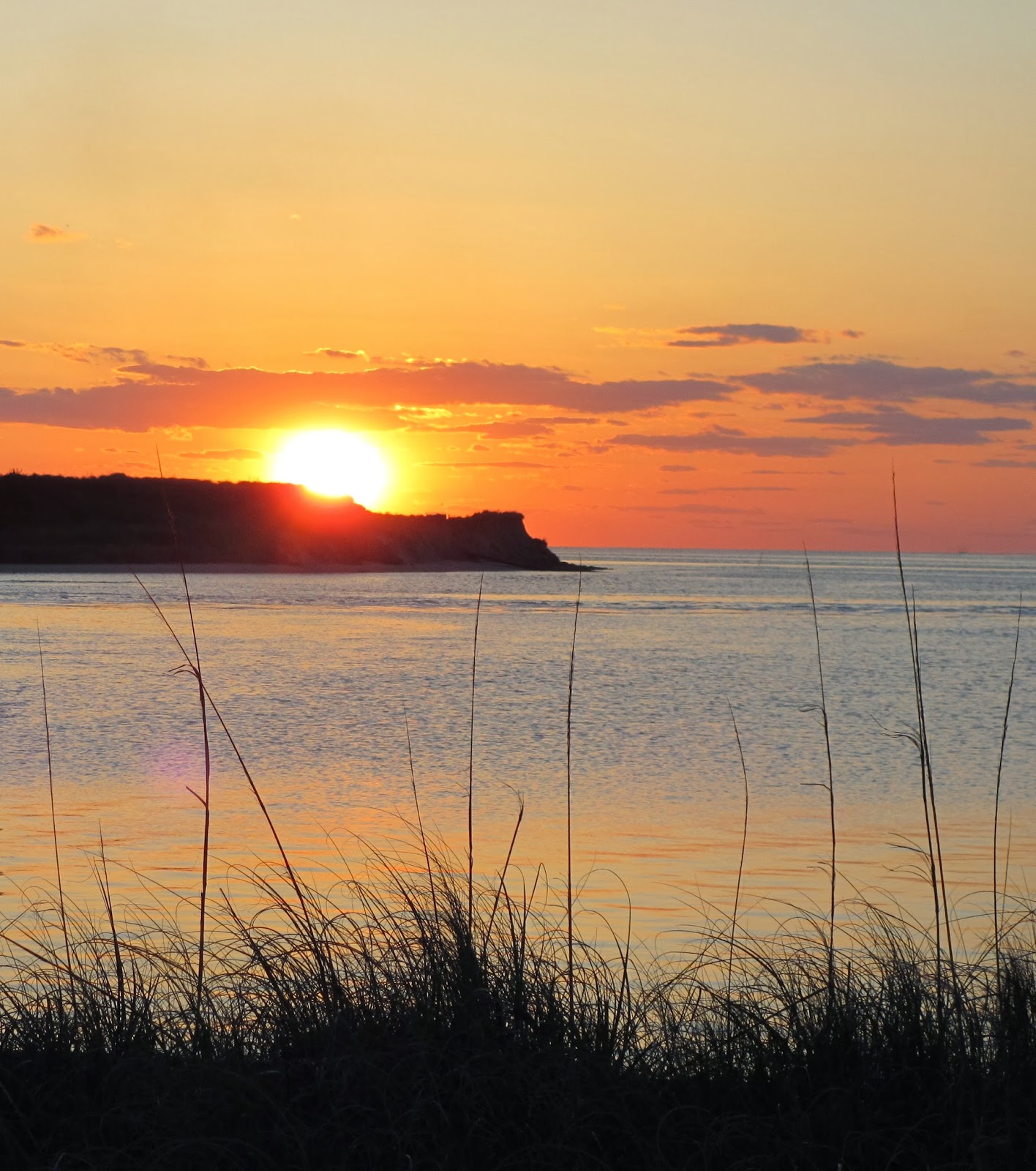
Roanoke sunset

When, in August 1587, Governor John White left the Island of Roanoke in the region then known as Virginia, and bade farewell to the first English colony with a chance of permanence, comprising at least 113 men, women and children, he expected to return within a year at most and bring relief in the form of extra supplies. But a succession of mishaps and interventions, including piracy and the threat of invasion by the Spanish Armada, meant that White did not return until the summer of 1590.

White must have been anxious to be reunited with his daughter, Eleanor, and his baby granddaughter, Virginia Dare, born only days before his departure -- the first child of English parents born in America. But tragedy blighted the relief effort before the landing boats got as far as the shallow waters behind the dunes of the Outer Banks. The expedition arrived in the midst of a storm, and in trying to pass through a dangerous inlet one of the boats overturned and seven men drowned. The search continued in failing spirits and under pressure of time in the teeth of a developing tempest.

Oregon Inlet - similar to the passage where White's men drowned

Late the following day, White and his party reached Roanoke Island and made for the light of a fire in the woods which gave them heart, believing it might be a signal left by the colonists. In his account of the expedition White wrote: 'We let fall our Grapnel neere the shore, & sounded with a trumpet a Call, & afterwardes many familiar English tunes of Songs, and called to them friendly; but we had no answere.'

Imagine the desperate hope with which White must have called for his family in the gathering darkness, having seen what he thought was a signal, only to be confronted with an eerie silence. The next day they landed and found dead trees smouldering where they had seen the light the previous night, but no sign of people beyond the 'print of the Salvages feet of 2 or 3 sorts troaden that night' in the sand. On the approach to the place where the colonists had established their 'citie of Ralegh', White saw the letters 'CRO' carved into a conspicuous tree. Then, on a post near the entrance to a defensive wall of tree trunks, he found the word 'CROATOAN'.

Fort Raleigh National Historic Site, thought to be close to the location of the 'Citie of Ralegh'

The signs have become iconic in that they represent the last messages of the Colonists to be received by Europeans, but their meaning remains an enigma. White was in no doubt that the signs showed that at least the Colonists had not left Roanoke in distress because they had agreed a code with White by which, if they were forced to abandon the settlement, then they would carve a cross thus ✠ next to the name of their destination. If there was no cross then they had not moved under duress. 

But if they were not under threat, why had the settlers built a defensive wall, and why move to Croatoan, a smaller less fertile island? There was no other clue as to where White's 'Planters' had gone, no sign of them or their boats. White found the houses in ruins, and equipment and artillery left in disarray and overgrown with weeds. Chests, plainly once buried, had been dug up and their contents spoiled. Many of White's own books, maps and paintings had been destroyed. The message suggested that the Planters had re-located to Croatoan, one of the barrier islands occupied by the friendly Croatan tribe of Algonquian Indians, but White had no time to search there; deteriorating weather forced the expedition to leave.

Where had the Colonists gone? If they had moved to Croatoan then surely they would have kept a lookout for ships and signaled with smoke or in some other way in response to the gun blasts from White's ship with which the expedition announced its arrival, and it is doubtful that Croatoan could have supported over a hundred more mouths to feed in addition to the native Croatans who who were themselves short of food when the settlers first arrived.  


The reconstruction 'Elizabeth' at Roanoke Island, similar to the 'Lion' that brought the Lost Colonists from England

The uncertainty is compounded by the fact that, according to White's account, the settlers were 'prepared to remove from Roanoke 50 miles into the maine'. Some historians have taken this to mean that they planned to make for Chesapeake Bay which was their original destination before the expedition Pilot, Simon Ferdinando (often called 'Fernandez'), made the Colonists disembark at Roanoke.

Others have speculated that the settlers intended to move to a new site near the confluence of the rivers now known as the Roanoke and the Chowan. This theory was given added impetus last year when a patch over White's Virginea Pars map of the region was discovered to mask a fort like symbol. Did this mark the secret destination of the Colonists, one that they dared not reveal publicly for fear of making the new city a target for Spanish attack?

Excavations in this area are now planned, and are continuing near modern day Buxton on Hatteras Island at a site presumed to be the principal Algonquian settlement on Croatoan. They may never yield definitive proof as to what happened to the Colonists. The patch on White's map could simply mark a fort that was once proposed but never established. It indicates a place close to the main settlement of the Choanoke tribe who were originally welcoming of the English, though relations deteriorated between them and the garrison initially stationed on Roanoke under the command of Ralph Lane, to the point at which Lane took the son of the Choanoke chief prisoner and may never have released him.

Chowan swamp

Perhaps the Colonists did head north for Chesapeake; they had boats with which to navigate through waterways and swamp. They also had a pinnace that could potentially even have got back to England since it had already made one Atlantic crossing. The messages carved into the trees could have been confusing because they were incomplete. Possibly the settlers were attacked before they had a chance to add any warning. They may have meant to retreat to Croatoan and then head somewhere else -- somewhere that could not be identified because it had not yet been named.

The tantalising morsels of information that filtered back to England over subsequent decades suggested that some of the Colonists survived, at least for a while. John Smith (the adventurer famously saved by Pocahontas) sent back reports of 'certaine men clothed' who had established a community hidden in the forest to the southwest of Chesapeake Bay at a place called Ocanahonan. Later he was told by chief Powhatan that a settlement of white people had survived in that region for almost twenty years which had been destroyed by his warriors in the Spring of 1607.

If true, most of the inhabitants would have been slain just as the first Jamestown settlers arrived, possibly because Powhatan feared being overwhelmed by the invaders. This would be consistent with the observation of Captain Newport, who commanded the ship carrying the Jamestown colonists, that there was a large swathe of land to the south of Chesapeake Bay which appeared to have been cleared for farming, though he came across no Europeans or settlement, only hostile natives, and smoke rising from a distance in the forest.

Subsequent reports emerged of pale-skinned people living with tribes far inland, of white captives who worked at copper-smelting in villages along the Chowan River, and of grey-eyed, brown-haired people living on the island of Croatoan. None were ever verified.

Roanoke Island - woodland and marshflats

The fate of the Lost Colony is the larger mystery but within it there are many others, such as the mystery of the disappearance of the earlier second garrison left on Roanoke by Sir Richard Grenville* and the strange behaviour of Simon Ferdinando whose actions almost wrecked both Lane's expedition and White's. Was he incompetent or unlucky, or possibly a secret agent for Spain with a brief to sabotage the expedition? Or was Ferdinando under covert orders from Queen Elizabeth's spymaster, Sir Francis Walsingham, to locate the colony further south than Raleigh intended?...

One of the joys of writing my second novel, The Lost Duchess, has been to take these questions and weave a story around possible answers. The challenge has been to arrive at a solution that not only makes for an engrossing read but hangs together in relation to what is known. I hope I have succeeded.

The mystery will live on.

***

* The loss of Grenville's men without trace beyond 'the bones of one of those fifteene, which the Savages had slaine long before' is a subject I cover in more detail here: http://readingthepast.blogspot.co.uk/2013/11/when-eden-became-hell-vision-and-plight.html

** Quotations from the original accounts of the 1587 and 1590 expeditions are as reproduced in The First Colonists: Documents on the Planting of the First Settlements in North America 1584-1590 edited by DB Quinn and AM Quinn

*** Other sources: Big Chief Elizabeth by Giles Milton and Roanoke the Abandoned Colony by Karen Ordahl Kupperman

**** All images copyright of Jenny Barden

~~~~~~~~~~~~

Jenny Barden’s second novel, The Lost Duchess, is an epic Elizabethan adventure-love story set against the backdrop of Raleigh’s ‘Lost Colony’ of Roanoke. It will be released tomorrow (7 November) and can be pre-ordered from Amazon UK
More about Jenny and her writing can be found on her website:
www.jennybarden.com

A giveaway of The Lost Duchess will be held on this site beginning 11 November 2013.