by Judith Arnopp
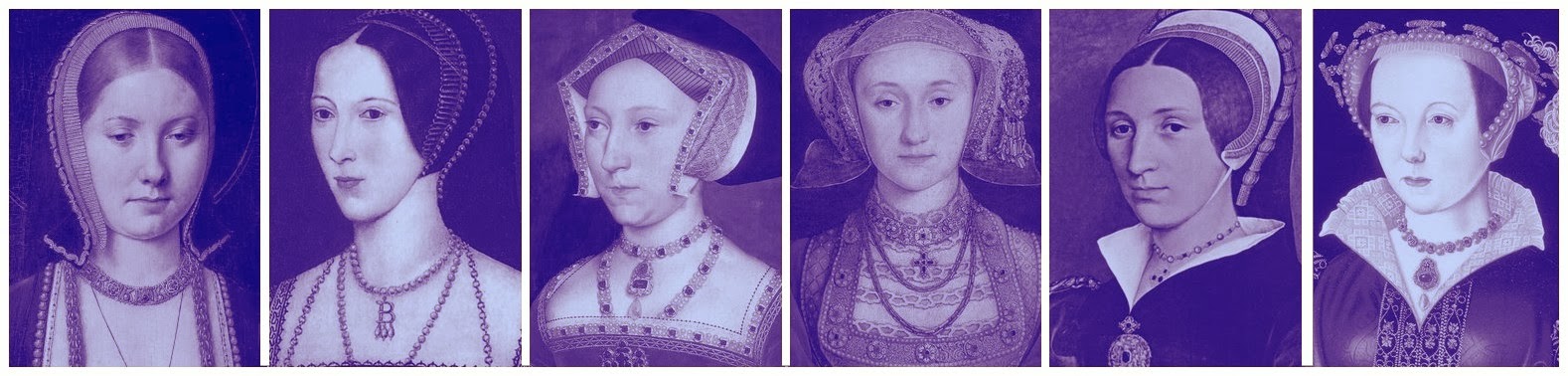
The wives of Henry VIII sit neatly in their various pigeon holes. The old rhyme, Divorced, Beheaded, Died, Divorced, Beheaded, Survived, sums up what many people believe to be the truth about each queen.
They have ceased to become complex, living, breathing people (yes, I know they aren’t breathing now) and no longer exist outside the applied modern-day stereotype. They have each been summed up in three words.
Catherine of Aragon – stubborn, proud, barren.
Anne Boleyn – scheming, traitorous, unfaithful.
Jane Seymour – sweet -natured, soothing, mother.
Anne of Cleves – malodorous, simple, German.
Katherine Howard – unfaithful, foolish, child.
Katheryn Parr – gentle, nursemaid, step-mother.
Yet they were so much more than this. This blog could become a lengthy one, dismissing these assumptions and detailing the many virtues and accomplishments of each queen but, today, I want to concentrate on Henry’s last queen, Katheryn Parr.
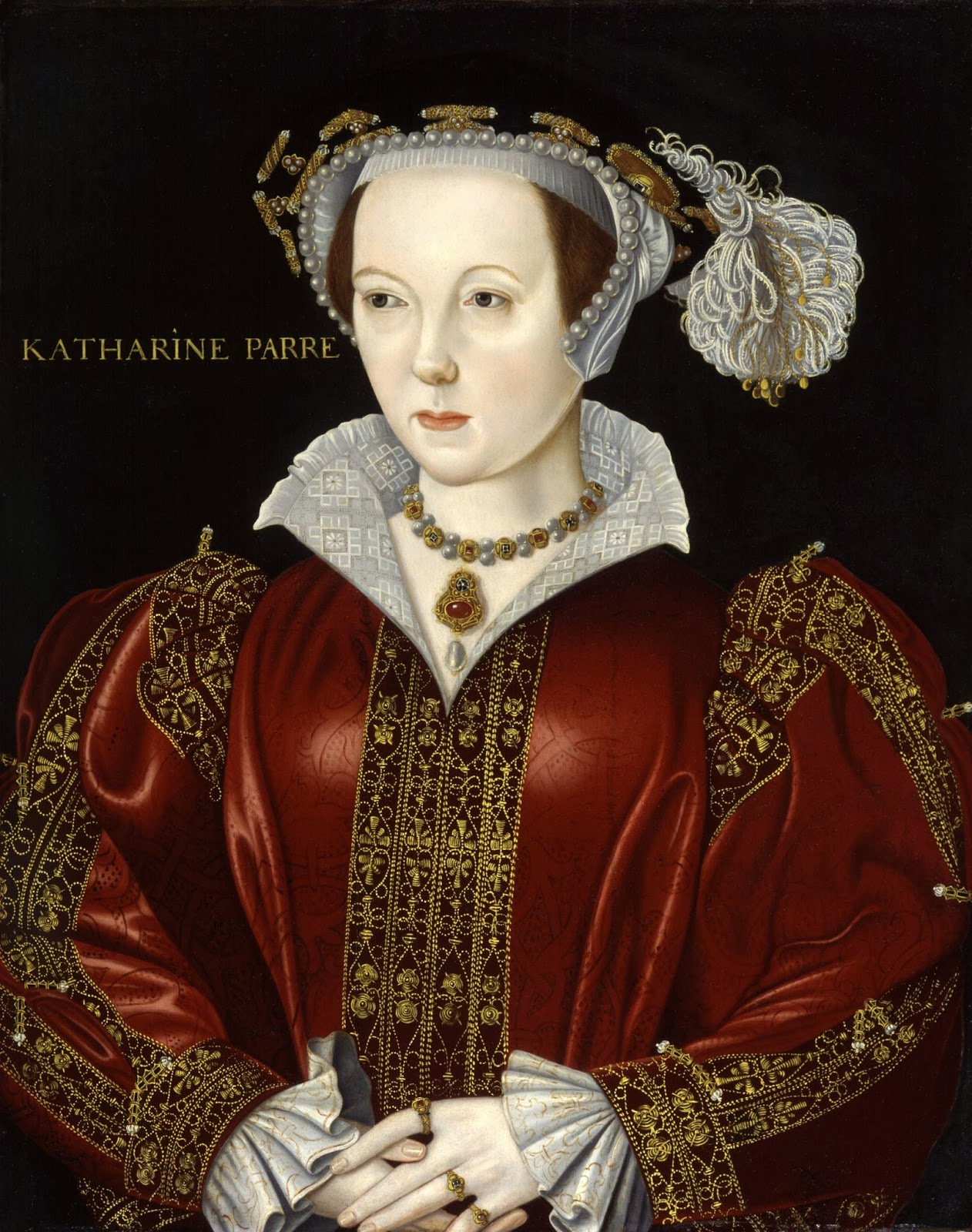 |
| Katheryn Parr |
My novel
The Kiss of the Concubine;
a story of Anne Boleyn, has been very well received but when I mention that the subject of my next novel,
Intractable Heart, is Katheryn Parr, people look a little sceptical. “Isn’t she a bit dull? You know; wasn’t she more a nursemaid than a queen?”
But, unless we are to judge a woman as boring because she manages to keep her head, Katheryn’s story is equally as compelling as that of Henry’s other queens. It may be less ‘bloody’ but I don’t think we can say it is less romantic, or less dramatic.
Katheryn was the daughter of Sir Thomas Parr, her first two marriages arranged by her ambitious mother, Maud. She lived through the northern rebellion and the siege of Snape Castle, war with France, and the reformation of the church, not to mention life with Henry.
While Anne Boleyn desired church ‘reform’, she remained what we would now call ‘Catholic’ to her death. Katheryn, on the other hand, was the first queen to properly embrace Protestantism. Katheryn ‘managed’ Henry better than any of his previous wives; she was credited by her contemporaries for her intellect, and was the first English queen to become a published author.
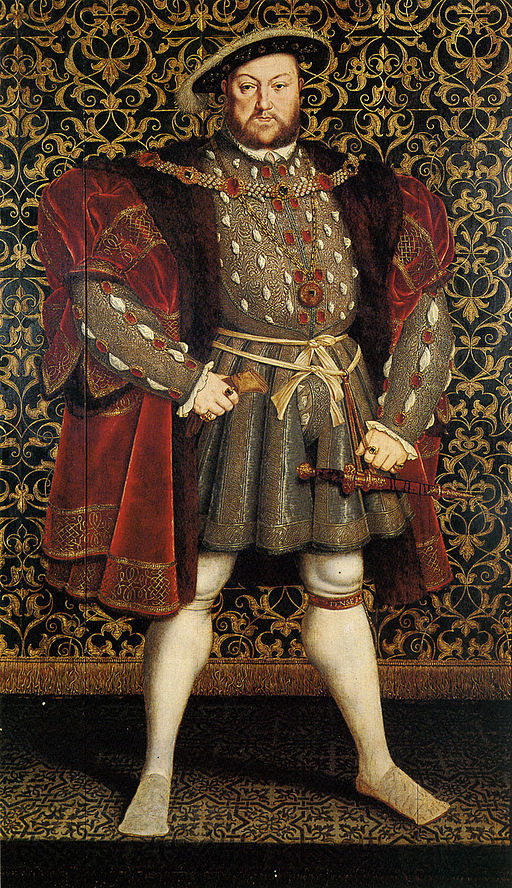 |
| Henry VIII |
Henry’s opinion of her was such that while he made war on the French, he appointed her Regent in his absence, an honour bestowed only on one other of his wives, Catherine of Aragon. As well as carrying out this role superbly, Katheryn also reunited the royal family, bringing all three of Henry’s legitimate children, Mary, Elizabeth and Edward, back to court. Furthermore, her influence can be detected in the character of her step daughter, who later became Queen Elizabeth I.
Elizabeth was at Katheryn’s side in 1544 during her role as regent and there can be little doubt as to the impact of the princess’s first experience with the challenges of female leadership. She witnessed first-hand her step-mother’s control of a male-dominated world, and the strategies the queen undertook to maintain her authority over the council.
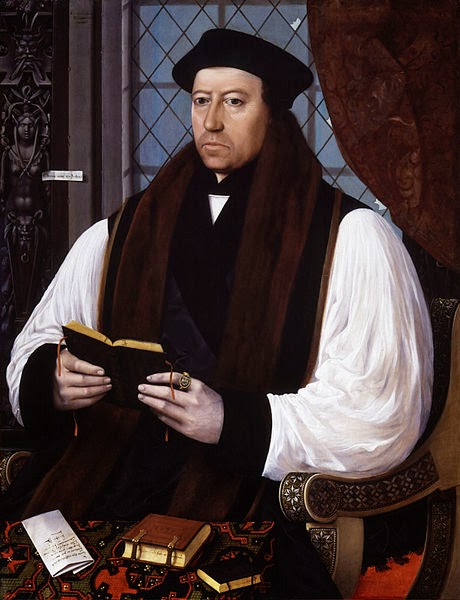 |
| Thomas Cranmer |
Far from being simply a nursemaid to an elderly monarch, Katheryn Parr was both influential and respected. It was her strong influence over the king that ultimately placed her life in peril. Katheryn’s close proximity to Henry, together with her involvement in reform, won her enemies in high places. Traditionalists like Gardiner, Norfolk, and Wriothesley looked for ways to implicate her in crimes against the state. Katheryn, surrounded with scholars and theologians was the prime target for those against Lutheranism.
In 1546 Anne Askew was arrested, accused of heresy and acts against the Catholic Church. She was tortured and tormented before ultimately facing the penalty of death by burning. There is no proof that Katheryn and Anne had ever met and, fortunately, Anne died without betraying any of her friends. However, she did have links with Cranmer and Catherine Willoughby, who were also friends with Katheryn, and Gardiner lost no time in acting against the queen.
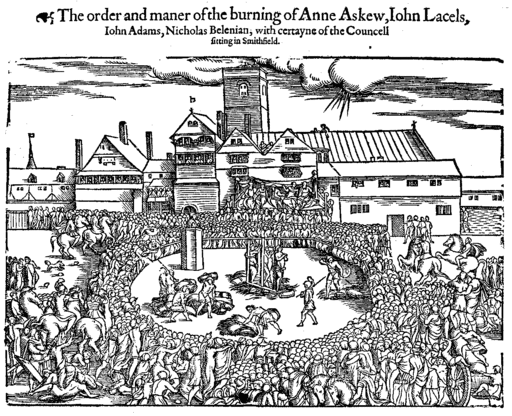 |
| The burning of Anne Askew for heresy |
Katheryn’s influence with Henry and her interest in the new religion strengthened the reformist party. Gardiner had to stop this. He wanted a new queen, one who was conservative in her religious opinion. Given the choice, he would probably have selected a biddable, uneducated wife for Henry; one who would never dream of questioning either God’s law or that of the king.
Gardiner began to plot.
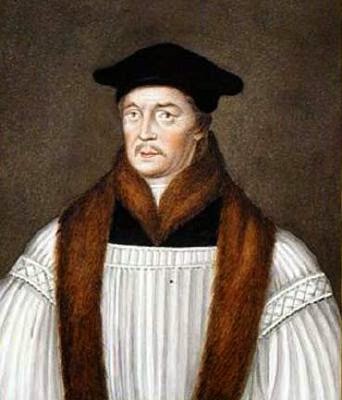 |
| Stephen Gardiner |
Toward the end of his life constant pain from his ulcerated leg made it impossible for the king to partake of many of his former pleasures. As a result Henry’s mood became ever more irascible. Katheryn began to talk to him of her beliefs, church reform and the errors she perceived in the traditional religion. Henry, who apart from the initial break with Rome, clung throughout his life to the Catholic religion, grew ever more cantankerous. Some say he resented his wife’s intelligence, her argumentative manner. Henry and Katheryn began to have disagreements and people believed that the king’s enchantment with Katheryn was beginning to wane.
Taking full advantage of the situation, Gardiner made his move. Using flattery and cunning, he slowly began to convince Henry that the queen was a heretic, her presence giving other heretics and traitors access to court. Eventually Henry agreed to issue a warrant for her arrest.
I want to pause here and consider what Henry may have been feeling at this time. He was no longer a young man. He was tired. He had spent all his adult life in pursuit of securing the succession and so far, had produced just one boy, and two useless girls. His sixth marriage had, up until now, been happy. He was probably just beginning to feel confident that at last he’d discovered a good woman; a faithful, staunch supporter, a helpmeet, someone he could trust.
Henry wasn’t a monster. He was a man with too much power trying to obtain the unobtainable, something that at least felt like love. He cannot have relished the idea of another failed marriage, another trial, another execution. He was getting old. The idea of searching out a replacement for Katheryn would not have been a welcome one, and surely by now, he can have held little faith left in finding a better wife. Unlike previous occasions, when he’d taken for the hills at the first hint of marital failure, this time Henry stayed at the palace, giving Katheryn and her friends time to act.
Some say it wasn’t by chance that the news of her imminent arrest fell into the hands of Katheryn’s friends. The queen was tipped off, giving her time to act and allowing Henry to apply the ultimate test of her fidelity. Perhaps the king never had any real intention of arresting her. Maybe it was a game he was playing; like a small bored boy with two beetles in a jar, setting the opposing sides against each other, for entertainment.
We can never really know but it is fun to speculate.
Anyway, on hearing the news, Katheryn fell into uncharacteristic (possibly feigned or exaggerated) hysterics that were so severe that her physicians were summoned. She made such a commotion that Henry, hearing her from in his adjoining apartments, went to investigate. When he enquired as to the cause of her upset, she fell at his feet declaring she feared she had displeased him when all she had meant to do was take his mind from his troubles.

She went on to ask, how could ‘a poor silly woman’ like herself ever think to council the erudite king on matters of theology or state. Katheryn claimed she only ever discussed religious matters with her husband so that she might learn and benefit from his superior mind. Henry, appeased as always by flattery, reassured her that he loved her as much as ever and that they were ‘perfect friends.’
Katheryn was a resourceful woman. It was no coincidence that she performed so competently during her regency. The episode of her attempted coup illustrates the clever strategy of a woman who had learned how to handle her man.
Next day in the palace gardens Wriothesley, with the warrant for Katheryn’s arrest tucked neatly beneath his arm, arrived with the guard to take the queen to the Tower. Imagine his frustration when Henry turned on him in fury, calling him a ‘Beast’, ‘a fool,’ and ‘a knave’ and sending him about his business. Astounded at the king’s change of heart, there was nothing Wriothesley could do but creep off with his tail between his legs.
Katheryn had won but only by the skin of her teeth. Thereafter, she kept her opinions to herself, suppressing her views and ceasing work on her half-written manuscript
The Lamentations of a Sinner which was not published until after Henry’s death in January 1547.
 |
| Thomas Seymour |
After the king’s death, having already made three political marriages, Katheryn at last married for love; this time selecting her former sweetheart, Sir Thomas Seymour. But this marriage was not as successful as her previous dealings with matrimony. Seymour was not a man to be easily managed. After a brief spell of apparent wedded bliss the relationship began to fail. Seymour is alleged to have been a rogue and hungry for power, carrying out a flirtation under Katheryn’s nose with her stepdaughter, the Lady Elizabeth.
We cannot help where we love and perhaps Katheryn found it harder to manage this husband because her heart was involved, making it impossible to remain objective. For many years she had dreamed of being Seymour’s ‘humble, true and loving wife’ but having gained all that she wished for, she died with a reproach on her lips in 1548, shortly after giving birth to Seymour’s daughter. She was just thirty-six years old.
Katheryn’s story is the subject of my next novel
Intractable Heart. Told by four narrators, Margaret Neville, Katheryn Parr, Thomas Seymour and Elizabeth Tudor. The novel traces Katheryn’s path from her days as Lady Latimer during the northern uprising, through her role as Henry VIII’s queen. The narrative then follows her disastrous fourth and final marriage, and concludes at her death in 1548.
Images from Wikimedia commons
Further reading
James, Susan,
Catherine Parr
Norton, Elizabeth,
Catherine Parr
Hutchinson, Robert,
The Last Days of Henry VIII
Weir, Alison
Henry VIII, King and Court
Starkey David,
Six Wives: the queens of Henry VIII
Withrow, Brandon, G.
Katherine Parr
Porter, Linda,
Katherine the Queen, the remarkable life of Katherine Parr
My other novels include:
The Kiss of the Concubine: A Story of Anne Boleyn
The Winchester Goose: at the court of Henry VIII
The Song of Heledd
The Forest Dwellers
Peaceweaver
All available in paperback or on Kindle.
For more information please visit my webpage: www.juditharnopp.com