By Jude Knight
The privileged English tourists of the late nineteenth century reached further than ever before, but they were not the first to travel for education and entertainment. Tourism is probably as old as civilisation; it is certainly as old as writing. As soon as social structures produces a class with money to spare and time on their hands, the rich have travelled as a leisure activity, and some places and times have opened the opportunities to those merely comfortably placed.
Tourism’s ancient roots
Privileged groups of Egyptians, Persians, Greeks, Chinese, and Harappans went up into the mountains for the summer, or up the river to see the newest edifice (my goodness, Cheops, take a look at the size of that pyramid), or to a famous temple to gawk at the statues and paintings, and leave an offering for the local God.
Letters of request from one king to another, requesting passage for a traveller, began at least in Babylon, and were applied intermittently from that time, eventually becoming passports.
Romans set up their own summer beach resorts, which became so crowded with the hoi polloi that the really rich took over private islands, where they could relax in peace. And with Roman roads stretching to the edges of Empire, possible destinations were limited only by the travellers’ pocket, imagination, and sense of adventure.
Pilgrimage for fun and (spiritual) profit
In medieval times, tourism took another guise. Scholars and journeymen travelled for education (and undoubtedly took in a little entertainment along the way. Pilgrims travelled for the education of their souls, and we have Chaucer’s word for it that some of them found it very entertaining.
A wealthy English pilgrim might choose to visit Rome or the Holy Land, but even the comfortably circumstanced could find an abbey or a holy well that boasted the relic of a saint.
The Grand Tour
From the sixteenth to the eighteenth century, young English noblemen took the Grand Tour, an educational journey between being recognised as a man and being expected to behave like one. Their sisters’ travel was usually much more curtailed, but they might enjoy a journey from England to Paris to attend court, refresh their wardrobes, and acquire a little foreign polish at French entertainments.
In seventeenth century France, Louis XIV required travellers to have a letter of request or passe port (literally, to pass through a port) and a visa given by his own government. Soon most of Europe had followed suit, and the age of queueing at the border had begun.
Tourism takes off
War closed much of the Continent at the end of the eighteenth century, but Napoleon’s final defeat opened it again. The English flooded out across Europe, in a tourist boom that gathered pace and continued until the First World War. From England alone, the volume of travel grew from 10,000 in 1814 to 250,000 in 1860, to one million in 1911. So great was the temporary migration of pleasure seekers that the passport system was abandoned in the mid-1860s, and not reinstituted until 1914 (as a temporary measure, but they kept it after the war).
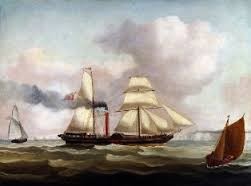
By the middle of the nineteenth century, steam engines had opened the world, near and far, facilitated by entrepreneurs like the original Thomas Cook. If you were middle class, you could go near, so the super-rich needed to go far.
The rich go far, far, away
And New Zealand was as far as you could get: a one-way trip for working people, but a six month pleasure cruise for tourists. By the 1880s, the British Medical Journal was endorsing sea voyages as a cure for whatever ailed you, and steamships made travel easier, safer, and more certain.
Travel agencies in England would extoll the sights, and travel guides in New Zealand would take you to see them. Most people would manage to fit in the hot lakes of Rotorua, the cold lakes of Queenstown, and the glacier landscapes of the Southern Alps. In the words of one English traveller, James Froude:
“We could stand on the brim and gaze as through an opening in the earth into an azure infinity beyond. Down and down, and fainter and softer as they receded, the white crystals projected from the rocky walls over the abyss, till they seemed to dissolve not into darkness but into light. The hue of the water was something which I had never seen, and shall never again see on this side of eternity. Not violet…turquoise…sapphire. Comparison could only soil such inimitable purity. The only colour I ever saw in sky or on earth in the least resembling the aspect of the extraordinary pool was the flame of burning sulphur.”
Volcanic theme parks have one disadvantage
The town of Rotorua was built by the government in the early 1880s, to accommodate tourists (mostly English and German) coming to see the hot pools and the world-famed Pink and White Terraces, hillsides with cascading silica sheets grown over millenia from limestone deposits in the ever-seeping thermal water.
Up to thirty tourists a day arrived to stay at one of the four Ohinemutu hotels (Ohinemutu was the Ngati Whakaue town next to which Rotorua had been built), having travelled overland from Auckland or Tauranga. Another four hour trip would take them to the Maori village of Te Wairoa, and from there they would be taken by canoe to the terraces.
Until the night of the volcanic eruption that is the background for my novella Forged in Fire in this year’s Bluestocking Belles’ anthology. On 10 June, 1886, Mt Tarawera erupted, utterly destroying the terraces and burying nine villages, including Te Wairoa. The descriptions given by my fictional English tourists are drawn directly from those of witnesses who survived that terrible night. Thermal activity is only fun until someone gets hurt.
Sources:
Gyr, Ueli. The history of tourism: Structures on the Path to Modernity. Retrieved from
http://ieg-ego.eu/en/threads/europe-on-the-road/the-history-of-tourism/ueli-gyr-the-history-of-tourism
The Rosbifs arrive. A review of The Smell of the Continent: The British Discover Europe, by Richard Mullen and James Munson. Retrieved from
http://www.economist.com/node/13940943
History of Passports, from
http://www.cic.gc.ca/english/games/teachers-corner/history-passports.asp
Various articles about tourism in New Zealand, from
https://www.nzgeo.com/stories/maori-tourism/,
https://nzhistory.govt.nz/keyword/tourism, and
https://teara.govt.nz/
Quote from James Froud,
https://teara.govt.nz/en/visitors-opinions-about-new-zealand/page-2
Images:
Women travelling: Assyrian women travelling by ox cart
Lydgatepilgrims: Pilgrims on the road, attributed to Gerard Hornbout. C. 1516 to 1523
Steamer: The P&O Paddle Steamer William Facwett
Pink and White Terraces: The beautiful Pink and White Terraces, painted by JC Hoyte in the 1870s
~~~~~~~~~~
Jude Knight’s writing goal is to transport readers to another time, another place, where they can enjoy adventure and romance, thrill to trials and challenges, uncover secrets and solve mysteries, delight in a happy ending, and return from their virtual holiday refreshed and ready for anything.
She writes historical novels, novellas, and short stories, mostly set in the early 19th Century. She writes strong determined heroines, heroes who can appreciate a clever capable woman, villains you’ll love to loathe, and all with a leavening of humour.
Website and blog: http://judeknightauthor.com/
Buy links for Never Too Late
Amazon:
US:
amzn.to/2y6oBg7
AU:
http://amzn.to/2fycyAx
BR:
http://amzn.to/2wjyWkm
CA:
http://amzn.to/2yFvxxS
DE:
http://amzn.to/2xA0Udb
ES:
http://amzn.to/2yFIgk4
FR:
http://amzn.to/2yF7gbg
IN:
http://amzn.to/2fzQkhv
IT:
http://amzn.to/2xzPPbW
JP:
http://amzn.to/2xK5yqS
MX:
http://amzn.to/2xJTlCK
NL:
http://amzn.to/2hvRYkV
UK:
http://amzn.to/2fyBesx
iBooks:
http://apple.co/2yY4gXC
Kobo:
http://bit.ly/2fK7vJR
Smashwords:
http://bit.ly/2xDMQkb
Barnes and Noble:
http://bit.ly/2y0DPjd




 In Jude’s books, you’ll find strong determined heroines, heroes who can appreciate a clever capable woman, and villains you’ll love to loathe. The novel plots tend towards the gothic, with a leavening of humour, and some insights into the similarities and differences between now and way back then.