Showing posts with label Games. Show all posts

Thursday, August 11, 2016

Games of Courtship

by Maria Grace

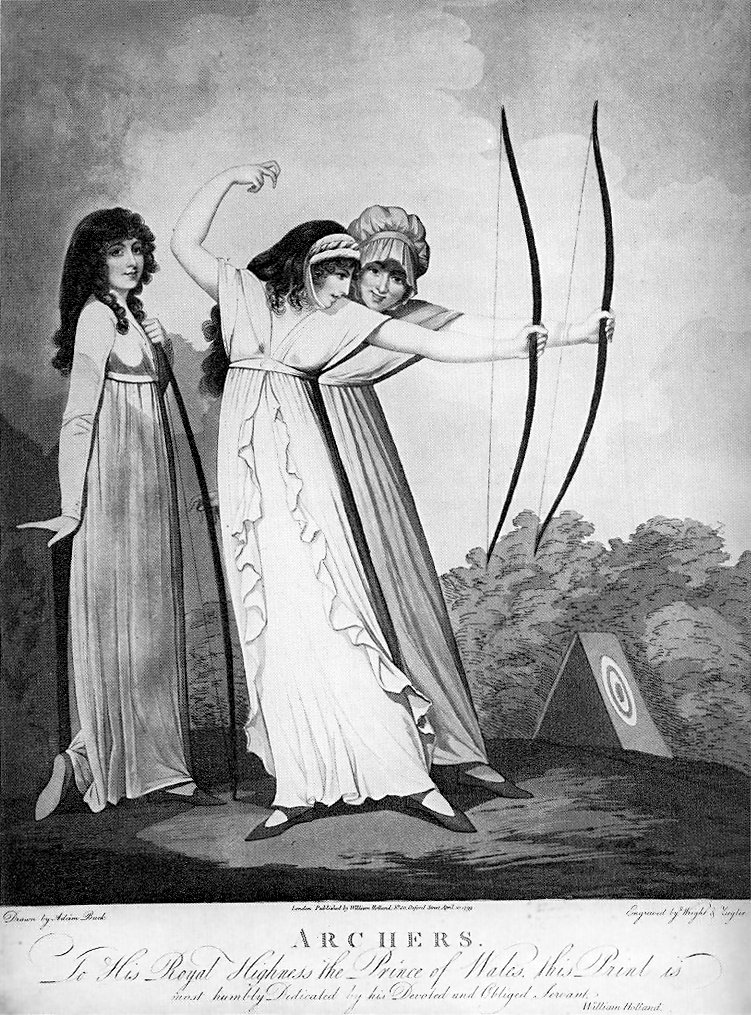
In Regency England, courtship and flirtation were very different than they are today. Couples could have very little unchaperoned contact with one another in company and none in private. So anything that might allow them to push those boundaries and keep reputations intact was bound to be popular. 
What’s more, without distractions like television or the internet, all classes of society played parlor games. What else was there to do during the long, dark winter nights when the cost of candles meant that everyone holed up together in one room in the evenings?

So, with everyone playing parlor games, it was only natural that young people—or those not so young—would make use of these pastimes to their greatest advantage.   Games spanned the spectrum from quiet sedate card or word games to very physically active games that could even involve physical touch. Each variety provided opportunities for the courting couple to interact in ways otherwise forbidden by proper society.

Consider how a flirtatious girl or determined beau might make use of games like Buffy Gruffy, Hot Cockles, Move All or How d'ye do? How d'ye do? 

Active Games

In Buffy Gruffy  a blindfolded player stands in the middle of the room while the others arrange their chairs in a circle and silently trade places. Someone claps to start the game. The blindfolded person passes around the chairs and stops in front of one. How one does this without stumbling and falling is rather a mystery, but it certainly does suggest cheating played a big role in the game.

The blindfolded player begins questioning the seated player to determine their identity. The answers are delivered in a disguised voice and with a great deal of evasion. All sorts of touching which would not otherwise have been appropriate might occur in the context of trying to figure out the other player’s identity, the degree largely dependent on what the players wanted to get away with and how diligent their chaperones might chose to be.   

Hot Cockles  took the same notion a step further. In this case the blindfolded player either stood, sat, or most interestingly of all, knelt with their head in another player’s lap. No doubt the Lydia Bennets would push for this version, while any proper chaperone would be having a heart attack.  
Other players would run up and touch the blindfolded person’s shoulder and have them guess who tapped them.  The mind boggles at how an enterprising young beau might use this game to their ends.

If having one’s beau’s head on one’s lap wasn’t enough, Move-all provided the opportunity to have said beau sit in one’s lap—if one managed it all carefully, that is. In this game, chairs are set out in a room, as far apart as possible, with one less chair than player. The chairless player stands in the center and shouts ‘Move all’ and everyone scrambles for a new seat. A great deal of pleasing impropriety might be disguised under the chaos.


Quiet Games

Others games offered the possibility for people to manage covert communications as part and parcel of the play.  In ‘I love my love with an a’, each person picks a letter  and completes the verse about ‘their love’ with words beginning with that letter. Anyone who cannot fulfil their verse or who repeats what has been said by another must pay a forfeit, more on why this might be a desirable outcome in a bit.

The verses used for this game could be short:  I love my love with an A, because she is ardent: I hate her, because she is ambitious : I took her to Andover, to the sign of the Angel : I treated her with artichokes ; and her name is Anne Adair. Or they might be long and rather involved—with the potential to be far more revealing:  I love my love with an S, because she is sensible; I hate her, because she is sarcastic; by way of presents, I gave her Shenstone, a squirrel, a sea-gull, and a sensitive plant; I took her to Salisbury, to the sign of the Sun, and treated her with soup, salmon, sand-larks, shaddocks, and sherry; her name is Selina Smith, and she is dressed in sarsenet.  Talk about an opportunity to get a lot off one's chest, all in the name of good fun!

Direct questions might be asked indirectly in a game of Short Answers. Ladies and gentlemen are seated alternately in a circle. A lady begins by asking her neighbor a question which he answers with a single syllable. Longer answers exact a forfeit for each extra syllable. Furthermore, neither questions nor answers may be repeated lest forfeits be incurred—unless of course that’s what one was looking for…

With Cross Questions and Crooked Answers a little bit of collusion, creativity, and craftiness could result in some interesting declarations. In this game, players sit in a circle. The first player asks their neighbor a question. For example, “What is the use of a cat?" The next player might answer: “To kill the rat, that ate the malt, that lay in the house that Jack built,” or some otherwise ridiculous reply. The answering player then asks a question of their neighbor and receives an answer and so on around the circle.  

Here’s when it could get interesting, though. At the end of the round each player must repeat both the question they asked and the answer they gave (to a different question entirely). A little scheming could lead to some very interesting statements being made.  And if not that, there’s always the potential for forfeits if any player cannot recite their question and answer correctly. (Yes, I know, I promise, I’m getting to that.)

Other Games

Interesting potential of a different sort came in Musical Magic, an amusement in which flirtatious actions could be encouraged and even directed by one's friends.   In this game, one player leaves the room while the others decide on a task or action they want to see that player take. It might be as simple as snuffing a candle, for a novice player, or as complex as kneeling before another player, removing their ring and placing it on the finger of the other player, for one with some experience with the game. 
Another player goes to whatever musical instrument is available and they can play creditably well and the first player returns. That player must then figure out his or her task through the guidance of the background music. The music would grow louder the closer the player got to the next correct action and softer if farther away. The music would stop when the player got the action correct. 

If the player gives up in despair which, honestly, seems like a likely result, then a forfeit must be paid. 

Added Benefit of Forfeits

And now the issue of forfeits and why they might be the whole point of a game.
When someone lost a game, they paid a forfeit. The forfeit could be an elaborate penalty or dare, which might be a great way to get even with one's rival. More often though, they were a thinly disguised machination for getting a kiss, as in the forfeiting player would have to bestow a kiss on someone, often the hostess, but it could be another player. Often, forfeits were accumulated all evening, until the hostess would ‘cry the forfeits’ and they would all be redeemed at once.

Considering how much flirtation and active courting might be going on under the guise of these games, it doesn’t seem at all far-fetched to think that paying or receiving forfeits from the right players might be the whole point after all.

References

Revel, Rachel. Winter Evening Pastimes; Or, the Merry-maker's Companion Containing a Complete Collection of Evening Sports, including Twelfth-night Ceremonies, with Copious Directions for Crying Forfeits, and Promoting Harmless Mirth and Innocent Amusement. The Whole Selected, Altered, and Composed, by Rachel Revel, Spinster. London: Printed for A. Mesnard, 40, Strand, 1825.


Find previous instalments of this series here:

Get Me to the Church on Time: Changing Attitudes toward Marriage
To Have a Courtship, One Needs a Suitor
Nothing is ever that simple: Rules of Courtship
Show me the Money: the Business of Courtship
The Price of a Broken Heart
Making an Offer of Marriage

~~~~~~~~~~~~


Though Maria Grace has been writing fiction since she was ten years old, those early efforts happily reside in a file drawer and are unlikely to see the light of day again, for which many are grateful. After penning five file-drawer novels in high school, she took a break from writing to pursue college and earn her doctorate. After 16 years of university teaching, she returned to her first love, fiction writing.

Click here to find her books on Amazon. For more on her writing and other Random Bits of Fascination, visit her website. You can also like her on Facebook, follow on Twitter or email 

Thursday, April 10, 2014

Come play with me-Part 2

by Maria Grace

Games are a universal to the human experience. Many have a very long life span. Many of the pass times our 18th century ancestors enjoyed would seem so familiar that contemporary children would not hesitate to join in the fun.


Duverger HopscotchHopscotch is an ancient game. It may have originated in ancient Rome, but was certainly popular in the 17th century. In the game, players, both boys and girls, draw out a grid of numbered rectangles in a specified pattern. They toss a small object into the numbered spaces and hop or jump through the spaces to retrieve the object.


Similarly, children of both sexes enjoyed the game of battledore and shuttlecock, a predecessor of badminton. Drawings from ancient Greece suggest this game originated there over 2000 years ago. Players, armed with rackets, tried to bat a feathered shuttlecock back and forth, without a net, and keep it in play as long as possible

Lydia Maria Child in her book, Girl’s Own Book (1833), suggests: Little girls should not be afraid of being well tired (playing battledore and shuttlecocks) that will do them good but excessive fatigue should be avoided especially where it is quite unnecessary.

Girls risked little fatigue with the game of lawn bowls, a game originating in the 13th century. In this game, the objective was to roll balls so they would stop close to a smaller ball. The game was prohibited by multiple monarchs including Edward III and Richard II for fear it might impinge on the practice of archery. Ironically archery was another common outdoor sport for our Georgian ancestors.

Other popular outdoor amusements included games of rounders, an ancestor of baseball played by boys and girls,  variations of blindman’s bluff, tag, various kinds of races, all very similar to what goes on on playgrounds today.

Indoor games

Children and adults played many games to keep themselves entertained during long evenings where the firelight was not strong enough to support other activities like reading or sewing. Many games were quite familiar to us. Chess, checkers (called draughts), backgammon, cribbage and other card games, and dominoes in forms very similar to the ones played today were common.

Nine Men's Morris with dice in Libro de los juegosMorris games including three, six, nine and twelve men versions have been played since 1400 BCE. This two player strategy game resembles tic-tac-toe in the three man version, where the object is to get three of your pieces in a row, but unlike tic-tac-toe, the men can move along the game board. The game’s complexity increases as the number of men and the size of the board grow.

Malbork July 2013 116Other board games like 'race to the finish games' and fox and geese became popular for whole families. Fox and Geese was played with pegs or marbles on a cross shaped lattice board. Many versions existed, but the goal of the game was for the geese to surround the fox so it could not move or the single fox to capture enough geese that it could not be surrounded. The same board could be used to play a solitaire game in which the goal was to remove pieces by jumping them and end the game with a single piece in a designated space.

American Jack StrawsMore dexterous (and patient) players might enjoy the game of spillikins, an early version of pick-up-sticks and jack-straws. A pile of spillikins, which might be simple sticks or splinters or more elaborately carved pieces resembling tools and other objects, were dropped on a table. Players then tried to pick them up without moving any other piece in the pile. The player who picked up the most sticks won. In some versions different points might be assigned to different colors or shapes of sticks or another stick or hook might be available to help a player in their task. Evidence of this game has been found in 5th century BCE remains in India.

Similarly, evidence of the game we know as jacks and its earlier version, knuckle bones suggest they were played in the ancient world over 2000 years ago. Small animal bones or pebbles were the first playing pieces. Over time, the Jack stone was replaced by first a wooden ball, then a rubber one. The other pieces were replaced by the metal jacks of today which are said to be reminiscent of the original animal knucklebones. A wide variety of games can be played with these pieces.

Marble games appeared to have developed during the same period. Marbles have been made of a variety of material including clay, stone, metal, and glass. Like jacks, a wide variety of games may be played with these prized objects. At Oxford and Cambridge, students had to be prohibited from playing marbles on the steps of the Bodleian Library and Senate House.

Strung conkerConkers resemble marbles a little, at least it does in my head. In France, the game was played with snail shells, in England, horse chestnuts were the medium of choice. The conker was strung on a string. Players would stretch out their string and take aim at another player’s conker and let it fly. The first to break his opponent’s conker won.

While many of these games are more associated with children, many parlor games were more appropriate for adults. Rachel Revel, spinster, published a book in 1825, ‘Winter Evening Pastimes or The Merry Maker’s Companion’ that offers guidelines for various amusements suitable for genteel company in the drawing room.  Interestingly in the context of these games, normal, strict social conventions, like those restricting physical touch between the sexes, may be bent or even ignored for the sake of the play. Some examples include:

Bullet pudding

Flour was piled into a high mound and a bullet placed on the top. Players cut slices out of the flour pile with a knife without dislodging the bullet. If the bullet fell, the player had to retrieve the bullet from the flour with their teeth.


Blind Man's Bluff and many variations thereof

Many variations of this game existed, including Hot Cockles, Are you there Moriarty, Buffy Gruffy, and Guess the Kiss (which needs no explanation). All the variations include one player being blindfolded and trying to guess the identity of another player who they have touched in some way. A great deal of cheating was generally involved, which only added to the sport.

For our next family reunion I am planning to print out some morris boards and a fox and geese lattice and teach those games to my sons and nieces. I have a feeling they will enjoy them as much as children did 2000 years ago.

References


Boyle, Laura. Battledore and shuttlecock. Jane Austen.co.uk. June 13, 2013.

Boyle, Laura. Lawn Bowls. Jane Austen.co.uk. July 17, 2013.

Boyle, Laura. Spillikins. Jane Austen.co.uk. August 16, 2013

Davidoff, Leonore & Hall, Catherine. Family Fortunes: Men and Women of the English Middle Class 1780-1850. Routledge (2002)

Grose, Captain (Francis) Dictionary of the Vulgar Tongue, 1811 edition Ikon Classics (2004)

Lydia Maria Child. <>Girl’s Own Book (1833)

Manring, Lynne. Children's Amusements in the Early Nineteenth Century. Memorial Hall Museum Online, American Centuries. Martin, Joanna. Wives and Daughters. Hambledon Continuum (2004)

Rendell, Mike. Sir David Brewster, the man with kaleidoscope eyes. Georgian Gentleman. December 11, 2013.

Selwyn, David. Jane Austen and Children. Continuum Books (2010)

Selwyn, David. Jane Austen & Leisure. The Hambledon Press (1999)

Stone, Laurence. The Family, Sex & Marriage in England 1500-1800. Penguin Books (1979)

Toys and Games. History lives.

Waldock , Sarah J. Toys and games of Jane Austen’s time. Dec 13, 2011

Waugh, Johanna, Conkers and the games children played during the Regency. October, 2008.


~~~~~~~~~~~~

 Maria Grace is the author of Darcy's Decision,  The Future Mrs. Darcy, All the Appearance of Goodness, and Twelfth Night at Longbourn.  Click here to find her books on Amazon. For more on her writing and other Random Bits of Fascination, visit her website. You can also like her on Facebook, follow on Twitter or email her.

Wednesday, January 1, 2014

A History Lover's Treasure Hunt

by Tim Carrington

Years ago I used to organise the occasional Armchair Treasure Hunt for BBC Radio Shropshire. I would provide the clues and their presenter, and I would take calls from people who thought they knew the answers, and so we would ‘virtually’ travel the county during an hour long programme. En route we would chat to locals and find out a little bit more than what my cryptic clues or my own knowledge of the area provided. 

Of course, that was in the days before internet, Google Earth and Wikipedia. So this is an invite to spend an hour or so in ‘Virtual’ England, and perhaps you will learn even more history – or should that be trivia – than you already know. I hope you use both internet searches and Google Earth to help you. The nice thing about the latter is that the sun is always shining.

1.       We start at what local legend tells was Gwenhyfar’s (Guinevere’s) birthplace which was recently the subject of local and on-line protests. One point for the place name IN WELSH. One point for the protest topic. (2 points available)

2.       Now we travel east to the White Tower which now ends in a large weight. Close by there is a wood which may or may not have a connection with the children’s story ‘Babes In The Wood’. One point for naming the family who had to hide in those woods when the nasty Welsh took the castle. One point for knowing the reason so many places end in ‘ton. (2 points available)

3.       Now south to a ‘monarch’s cranium’.  One point for naming that place and another for naming the monarch. (2 points available)

4.       And south again past another heavy weight which does NOT lie to the east. At the cross roads head for the brothel. Yes, there is such a place (by implication) if you look hard enough. Nearby is a castle. But who is the guy who built it? And IS there a brothel there today? One point for the village name, one for the name of the man who built the castle, and one for the brothel connection. (3 points available)

5.       Now we go east to the only place in the WORLD that has Roman numerals in its name. Eleven points for giving me the 11 reasons for its name. (11 points available)

6.       And then south to a highwayman’s hideout. He was a bit of a local hero who robbed the rich to feed the poor – probably to keep them quiet as there was a price on his head. One point for his full name and another for telling me where his family home was. (2 points available)

7.       Now south east to the birthplace of Charles Darwin. One point for giving me his connection with pottery. One point for his father’s occupation. (2 points available)

8.       And while we are here. Did you know that it is in this town where the FIRST English parliament sat where both lords and commoners were represented? One point for naming the king at that time. And three points for telling me the full  name of the unfortunate Welshman who was hung, drawn and quartered as a result of that parliament. (4 points available)

9.       And while we are in this historic town, can you find out who the would-be king was and where he stayed in this town. Two points for that. (2 points available)

10. Finally, a bonus ten points if you can tell me in your own words what happened when the would-be king arrived at the Welsh bridge and asked for passage through the town. (10 points available)

Unfortunately, US law does not allow us to have you "work" for a prize, so we cannot award anything for your efforts. It is all just for fun. Please send your answers to tim@book2read.eu

Have fun!
Tim Carrington