Showing posts with label Eleanor of Castile. Show all posts

Friday, December 23, 2016

The Life of a Queen Bee - or doing your royal duty

by Anna Belfrage

One of the things a medieval queen was expected to provide her husband with was a male heir. Plus, preferably, a spare. For a medieval king to have only female heirs caused a number of problems, primarily that of convincing the male barons to swear allegiance to a woman. Plus, from a purely dynastic perspective, whatever children the female ruler had would belong to their father’s house.

To not have male heirs was a problem Henry I of England faced. When his only (legitimate) son died in the White Ship disaster of 1120, this powerful king was left with a mere daughter as his legitimate heir. Not that Matilda was in any way a mere anything, but as per the mind-set of the times, being a woman did not exactly make her the self-evident choice as next ruler of England. Henry knew this, which was why he had his barons swear allegiance to Matilda while he was still alive. Didn’t help much, because no sooner was Henry dead, but the majority of the Anglo-Norman barons turned to Matilda’s cousin, Stephen of Blois instead.

What followed was a period known as the Anarchy, several decades of civil war that ravaged the country. No future king wanted a repeat on that. Ever.

Matilda - as per a 15th C chronicle
No matter that ultimately Matilda’s side “won”, she never became queen. Instead, the crown passed from Cousin Stephen to her son, Henry II, a vigorous young man whom the nobles gladly acclaimed. Henry wasn’t about to risk ending up in the same pickle as his grandfather. Once wed to Eleanor of Aquitaine – several years his senior, and judged incapable of producing a son for her first husband, king Louis of France – they did some serious begetting which resulted in many sons. Too many, one could say, as all those haughty young princes were soon to become Henry II’s major headache – and heartache. But at least he didn’t leave his vast lands without a male heir: upon his death, Richard Lionheart was ready to take over. When Richard died, baby brother John picked up the pieces, rid himself permanently of the competition in the form of his nephew Arthur, and settled down to rule – and beget heirs of his own.

By the time John’s grandson Edward was old enough to wed, the Plantagenet kings had established themselves firmly on the English throne, the crown passing safely from father to son. Edward was only fifteen when he married Eleanor of Castile in 1254, and as always when it came to royalty, this wedding had a political purpose at heart – in this case, to keep Alfonso X of Castile from invading Gascony.

Edward & Eleanor - not the most flattering
of likenesses
The happy couple only met a few days before being married. He was already inordinately tall – if lacking in bulk, I imagine. She was not quite thirteen. Was she fair? Dark? No idea. She did, however, come with a good pedigree. Her mother, Jeanne de Dammartin, had once been considered by Henry III as a wife for himself, but due to political reasons this was not to be. Instead, Jeanne was wed to Fernando III of Castile (the future St Fernando) as his second wife. With her husband came an entire brood of step-children, first and foremost the future Alfonso X of Castile.

Eleanor not only had a saint for a father, but also had Plantagenet blood, in that her great-grandmother was Henry III’s aunt, Eleanor of England, who wed Alfonso VIII. (I know: it does get a bit complicated with all these Eleanors and Alfonsos). Plus – and this was a major point in her favour – she came from a notably fertile family. Her mother had given Fernando five children, four of whom were sons. Her paternal grandmother, Berenguela, had produced five children during seven years of marriage. And as to Eleanor of England, well she had presented her husband with twelve children – one every other year or so. However, very few of the sons survived – in fact, once the youngest was killed by a falling tile, the Castilian crown passed through Berenguela to Fernando. (Berenguela was wise enough to understand the Castilian nobles would not accept her as queen – but they readily accepted her son as king.)

Anyway, with all these fertile females up Eleanor of Castile's family tree, no one was particularly worried about the mandatory male heir. In the fullness of time, Edward’s new wife would surely present him with a healthy, squalling son.

The young couple seem to have taken an immediate liking to one another. This resulted in a stillborn (or dead shortly after its birth) baby in 1255, the first of sixteen (at least fourteen) children. At the time, Eleanor was not yet fourteen, so I imagine this was a traumatic experience. There was a gap of some years – years in which the affection and love between Edward and Eleanor grew, making them almost inseparable. Whether or not there were miscarriages, we don’t know. I hold it likely: Edward and Eleanor not only liked each other but also desperately needed to produce an heir. Besides, throughout their marriage, Eleanor did not seem to have a problem conceiving – it was more a matter of the viability of the children she gave birth to.

There was probably quite some rejoicing and relief when, in 1261, Edward and Eleanor welcomed a daughter, Katherine, into this world. Their joy was short-lived. Little Katherine died at three, and one year later, in 1265, Eleanor was delivered of yet another daughter, Joanna, who died some months later. I imagine that by now, Eleanor and Edward were beginning to become quite concerned. More than ten years married, and no living children – that did not bode well.

Fortunately, in 1266, little John arrived, and he was miraculously healthy. Prayers of gratitude rang in the royal solar, even more so when in 1268 yet another son, Henry, saw the light of the day. Two boys, albeit that little Henry was sickly.  To round things off, a healthy daughter, Eleanor, was born in 1269.

Edward I
In 1270, Edward took the cross. As a matter of course, Eleanor decided to accompany him, leaving her babies in the care of their grandmother and, in the case of the precious heir, their great-uncle. In 1271, there was a stillborn child. In 1272, while in Palestine, Edward and Eleanor welcomed yet another daughter, Joan. By then, they would have heard that their son John had died and what little joy they experienced at the birth of their daughter soured into fear when Edward was almost murdered. Clearly, they weren’t welcome in the Holy Land, and they set off for home. On the way, they learnt Henry III was dead. Edward was now king, and the pressing matter of a male heir became even more pressing – little Henry was not expected to live long.

In 1273, son number three, Alphonso, was born. A fine, lusty son, and Eleanor must have wept in relief. It was therefore with great happiness Edward and Eleanor celebrated their coronation in 1274. By then, they’d been married almost twenty years, and even if little Henry died some months later, they did have their lovely Alphonso – and two healthy little girls. Does not seem much, given that Eleanor had carried nine babies to full term. Nine. As she was only thirty-three, she could look forward to several more pregnancies. I wonder if there were times when this thought filled her with trepidation.

1275, 1276, 1277, 1279 – four pregnancies, four births, resulting in four little girls of whom two died. But at least Alphonso, this apple of his parents’ eyes, still thrived.

1281 – a little boy came and went like a shadow in the night. But still, they had Alphonso.

1282 – Elizabeth of Rhuddlan was born. A healthy child, and now there were five daughters – plus the precious Alphonso.

In April of 1284, a heavily pregnant Eleanor accompanied her husband to Wales. And there, in the building site that was Caernarvon Castle, Eleanor was delivered of a boy. A boy! Yes, a miracle baby, a strong little prince, and Eleanor smiled and wept as she presented her husband with the much-desired spare. And as to Alphonso, their sweet son was now old enough to wed, and a marriage had been arranged for him with Margaret, daughter of the Count of Holland. For a little while there, everything was perfect in the Eleanor-Edward household. Until Alphonso fell ill, dying in August of 1284.

Alphonso
Alphonso lived the longest of all those children who died. Long enough for his parents to pin hopes on him, long enough to grow from an anonymous baby into an adored boy. And then, just like that, he died.  It must have been utterly devastating. Yes, they had Prince Edward, but both Eleanor and Edward knew just what frail things children were – after all, with Alphonso they buried a tenth child.

Eleanor was not to have any more children. After sixteen births, I guess she was worn out, and besides, her health was failing. So all hopes for a surviving male heir now rested on baby Edward, and even if he was a robust child, there were concerns that he too would die young. On a daily basis, Eleanor did not see much of her youngest son. In fact, she rarely saw much of any of her children, seeing as she was always travelling from one place to the other.

Judging by moral standards, this behaviour does not make a good mother. After all, we expect mothers to spend time with their children. As per the standards of her time, Eleanor was a conscientious mother, ensuring her children were in good, competent hands and lived relatively stable lives while she accompanied her husband from one end of his kingdom to the other. Did she love her children? I’d say yes – as much as she dared to, given all those losses. But no matter that she loved them, she loved her husband much, much, more. It was with him she wanted to be, it was at his side she belonged, as his loyal and supporting spouse. And he, I believe, agreed.

Edward I with Prince Edward
In 1290, Eleanor died. Edward was numb with grief – so much so that for three whole days all royal business was suspended. But life goes on, and Edward had a duty to the crown – and his dynasty – to ensure there was more than one little boy in line to the throne. So in 1299, Edward married a second wife, the pretty and vivacious sister of the king of France. At the time, he was sixty and she was twenty – and fertile enough to present him with two beautiful and healthy sons.

In the event, these little spares would not be needed. In 1307, Eleanor’s lastborn, Edward of Caernarvon, became king after his father. I daresay she would have been mightily pleased. She had done her duty – she had birthed the next king.

Eleanor's life consisted of more than having babies - much more. In fact, this is an intriguing lady who surprisingly often surfs just under the radar, despite building up a considerable real estate fortune and being a proactive member of Edward's court. But that side of her will have to wait for another day, another post.

All pictures in public domain and/or licensed under Wikimedia Creative Commons

~~~~~~~~~~~

Had Anna been allowed to choose, she’d have become a professional time-traveller. As such a profession does not exist, she became a financial professional with two absorbing interests, namely history and writing.

Presently, Anna is hard at work with The King’s Greatest Enemy, a series set in the 1320s featuring Adam de Guirande, his wife Kit, and their adventures and misfortunes in connection with Roger Mortimer’s rise to power. The first book, In The Shadow of the Storm was published in 2015, the second, Days of Sun and Glory, was published in July 2016.

When Anna is not stuck in the 14th century, she's probably visiting in the 17th century, specifically with Alex(andra) and Matthew Graham, the protagonists of the acclaimed The Graham Saga. This is the story of two people who should never have met – not when she was born three centuries after him.

More about Anna on her website or on her blog!

Tuesday, April 12, 2016

Leeds Castle, a Castle Fit for a Queen.

by Anne O'Brien
This post is an EHFA Editor's Choice. It was first published on 10/11/2012.

Or even six of them ...

Not only is Leeds Castle a romantic ruin in a superb setting - sometimes described as the loveliest castle in the world - and so a 'must-visit' spot on any tourist or historical itinerary, it has a particular attraction for me as a writer of medieval historical fiction. During its time as a medieval royal residence, Leeds Castle has been home to at least six queens of England.


Nigel Chadwick [CC BY-SA 2.0 (http://creativecommons.org/licenses/by-sa/2.0)],
via Wikimedia Commons

Why?  Because Leeds Castle became part of the Queen of England's dower, granted to her on her marriage to give her future security in the case of her husband the King predeceasing her.

Situated in Kent, near Maidstone, the original castle was probably a simple motte and bailey construction of wood and earth, but a more formidable stronghold was built in 1119 by Robert de Crevecoeur.

Its importance in history began when it fell into royal hands in 1278 when King Edward I took over.  It soon became - not surprisingly - one of his favourite residences and he made much investment there, creating the beautiful setting that it enjoys today.  It is thought that Edward was the man who created the lake which surrounds the castle, linking the three islands in the River Len with a causeway.  For the pleasure of his beloved wife Eleanor of Castile, he built a gloirette - a D shaped tower with residential apartments - on the smallest of the three islands, giving magnificent views of the surrounding countryside.  I am sure they enjoyed living there during the summer months although I imagine it would be incredibly damp in winter.


CC BY-SA 3.0, https://commons.wikimedia.org/w/index.php?curid=252262

So who were the Queens who spent time there?

Eleanor of Castile, wife of Edward I, for whom most of the early improvements were made.  She is the Eleanor of the crosses, marking her final journey in death from Lincoln to her burial in Westminster abbey.

Margaret of France, Edward I's second wife.  She was only 20 when she married him, and he was 60, but when she was widowed 8 year later she never remarried, saying 'when Edward died, all men died for me.'

Isabella of France, wife to Edward II.  After his death in 1327 and her fall from grace when her son Edward III took control of England, she lived primarily at Leeds castle.

Anne of Bohemia, the 15 year old bride of Richard II spent the winter of 1381 at the castle on her way to be married to the youthful king.

Henry VIII transformed the castle with much new building in 1519 for his first wife Catherine of Aragon.  They stayed at Leeds together, with the entire English Court, on their way to the Field of the Cloth of Gold to sign the treaty with Francis I of France.  The wood and plaster work here in the courtyard looks to be a Tudor addition but the stonework is old enough for the castle's medieval beginnings.


Lynda Poulter [CC BY-SA 2.0 (http://creativecommons.org/licenses/by-sa/2.0)],
via Wikimedia Commons

And my own particular interest in Leeds Castle?  It was the home of two of my favourite ladies, both of whom appear in my 2013 novel, The Forbidden Queen:

Joanna of Navarre, second wife to Henry IV and step mother to Henry V.

Katherine de Valois, wife to Henry V and Owen Tudor.

This room is set out at the Queen's room as it might have been in Katherine's day.  Isn't it magnificent? 


Richard Croft [CC BY-SA 2.0 (http://creativecommons.org/licenses/by-sa/2.0)],
via Wikimedia Commons

Joanna was imprisoned at Leeds for witchcraft - a spurious accusation for which there was no evidence but which enabled Henry to get his hands on her dower to pay for the increasingly expensive war in France.  This was not Henry at his best!  Joanna was released just before Henry's death.  I doubt that she enjoyed her enforced stay at Leeds.

As for Katherine, she was not always free to visit Leeds, condemned as she was to live in the household of her son, the boy king Henry VI, after her unwise association with Edmund Beaufort.  But after her demand for independence and her subsequent marriage to Owen Tudor, I imagine they spent much time together there in so idyllic a setting.


Richard Croft [CC BY-SA 2.0 (http://creativecommons.org/licenses/by-sa/2.0)],
via Wikimedia Commons

The Queen's bathroom.  What Queen could do without one?

What a rich sense of history this castle has.   Is it possible that the spirit of any of these  royal inhabitants still lingers in this lovely place?  Not than anyone has noticed.  But it is said that a large black dog haunts the ruins, a monstrous creature associated with Eleanor Cobham, Duchess of Gloucester, (married to the brother of Henry V) who was tried  and convicted of necromancy, witchcraft, heresy and treason.  She was held prisoner at Leeds for a short time before her trial.  Perhaps her unsettling presence caused the black dog to roam the ruins.

Black dogs notwithstanding, I like to think that the shades of Katherine and Owen still walk the ruins together on a summer evening, hand in hand.  Perhaps they even walk together through this splendid doorway ...


Richard Croft [CC BY-SA 2.0 (http://creativecommons.org/licenses/by-sa/2.0)],
via Wikimedia Commons


~~~~~~~~~~

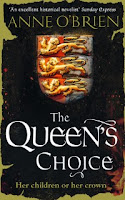
My novel of Joanna of Navarre, The Queen's Choice, already available in hardback and eBook, will be released in paperback in the UK on 19th May 2016. 

For regular updates, do drop into my website:
www.anneobrienbooks.com

Or join me on Facebook to keep in touch with my WIP and all things historical that interest me:
www.facebook.com/anneobrienbooks