
by E.M. Powell
I recently had the privilege of being involved with a project that has built a memorial of words to commemorate World War I. As part of the Letter to an Unknown Soldier project, thousands of people have written letters which will be preserved as a permanent memorial by the British Library in the National Archive.
As with so much of writing about history, the research took me down some side alleys. Now, so much of the history of World War I is familiar and iconic, even 100 years after the outbreak of war. And so it should be. Images of the trenches, the unimaginable loss of life, of the catastrophic destruction should never fade.
But it was the contribution to the war effort of something that we still use everyday that I found completely fascinating. It is not an institution that immediately springs to mind: it is the Post Office.
In 1914, the Post Office in the United Kingdom employed over 250,000 people and was the largest single employer in the world. With the outbreak of war, the operation was expanded even more as letters and parcels were sent between troops and loved ones. During the war, over 12 million letters were sent to the front line every week.
Letters were seen as essential in maintaining morale. I came to this project through the Bury Libraries and Archives Service. They sifted through their collection of newspapers to find glimpses of the role of the Post Office.
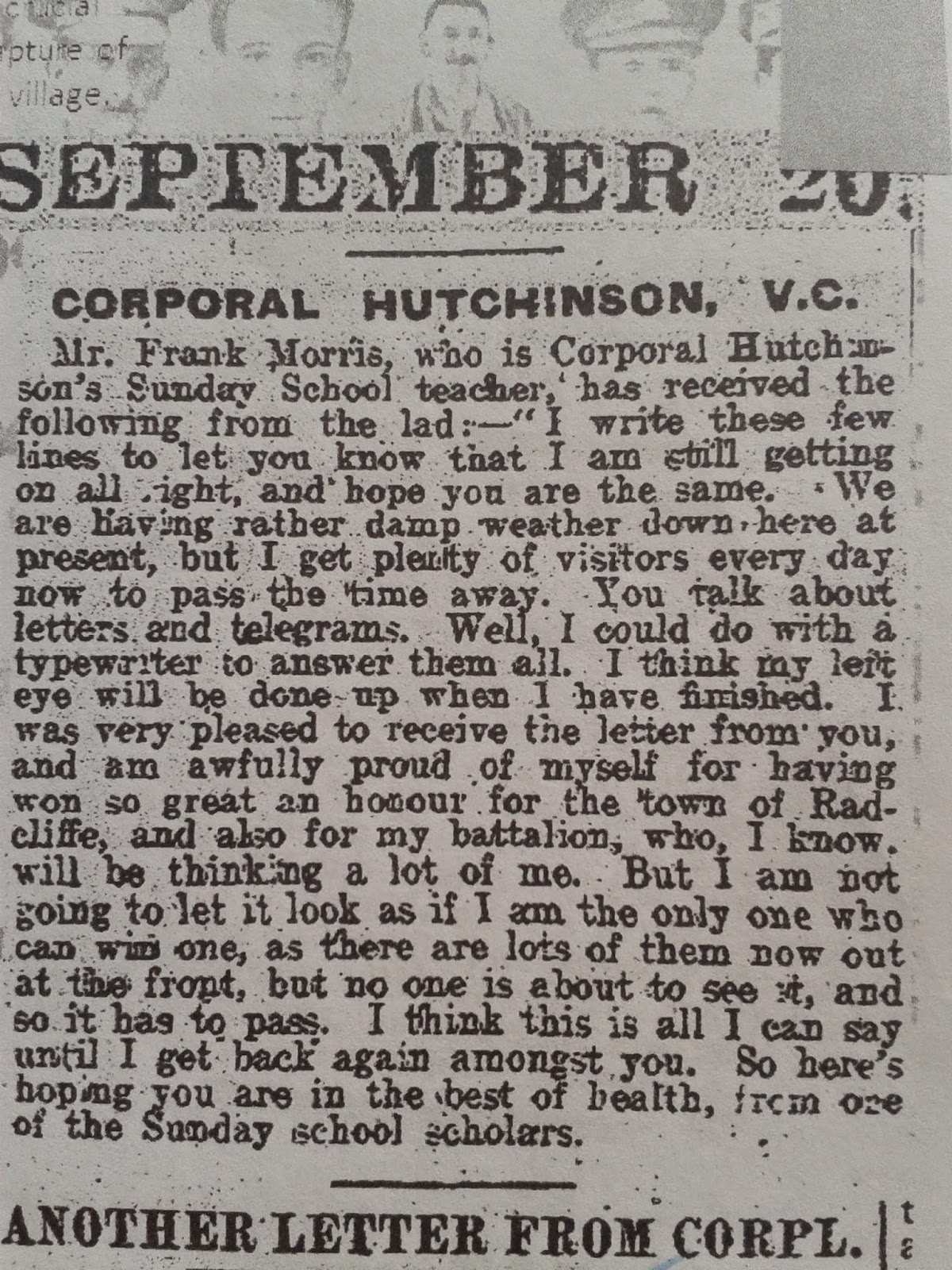
Here we see a report of a 1916 letter from Corporal Hutchinson, awarded the Victoria Cross (the highest military decoration for honour and valour), writing to his Sunday school teacher about all the messages of congratulation he has received.
But of course there is no detail about injuries or losses. All letters were heavily censored. Soldiers could use a field postcard, an honour postcard or self-censor. Field postcards were pre-printed, and the soldier just had to cross out the statements that did not apply. With an honour envelope, the sender had to sign a declaration to say their letters did not contain any sensitive information. Self-censorship was also widely used and soldiers gave those at home no hint of what life was like at the front.
And of course it was not only letters. Parcels were essential too. Soldiers were sent items like soap and lice powder. Public donations of items was also made, as in this appeal for razors.
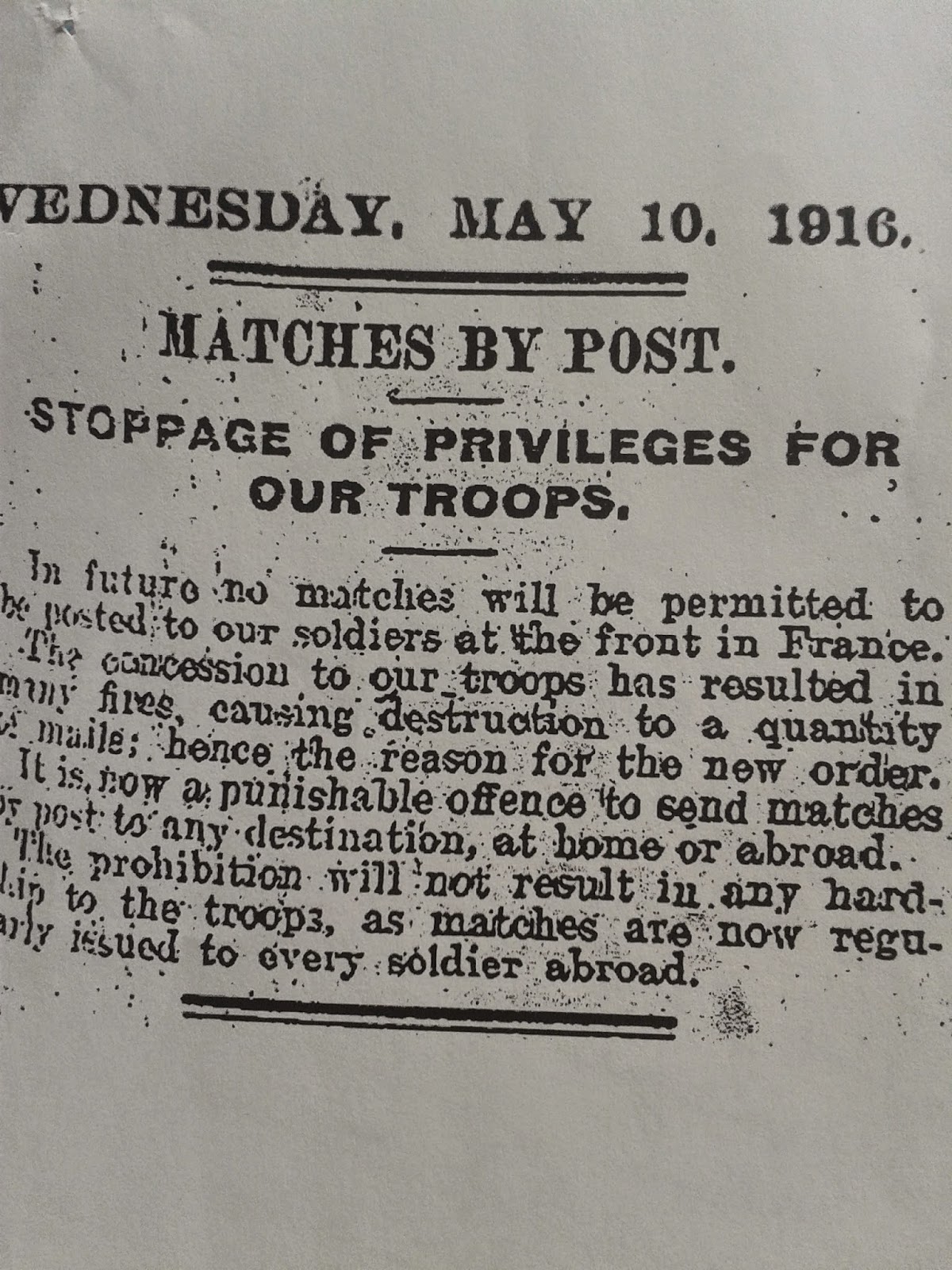
While sending large batches of sharp metal that potentially might be intercepted seems a little risky, the line was drawn when it came to matches.
It was not just physical comforts either. Here we have an appeal for literature for soldiers.
Again, then the number of items being quoted (in the hundreds of thousands) is remarkable.
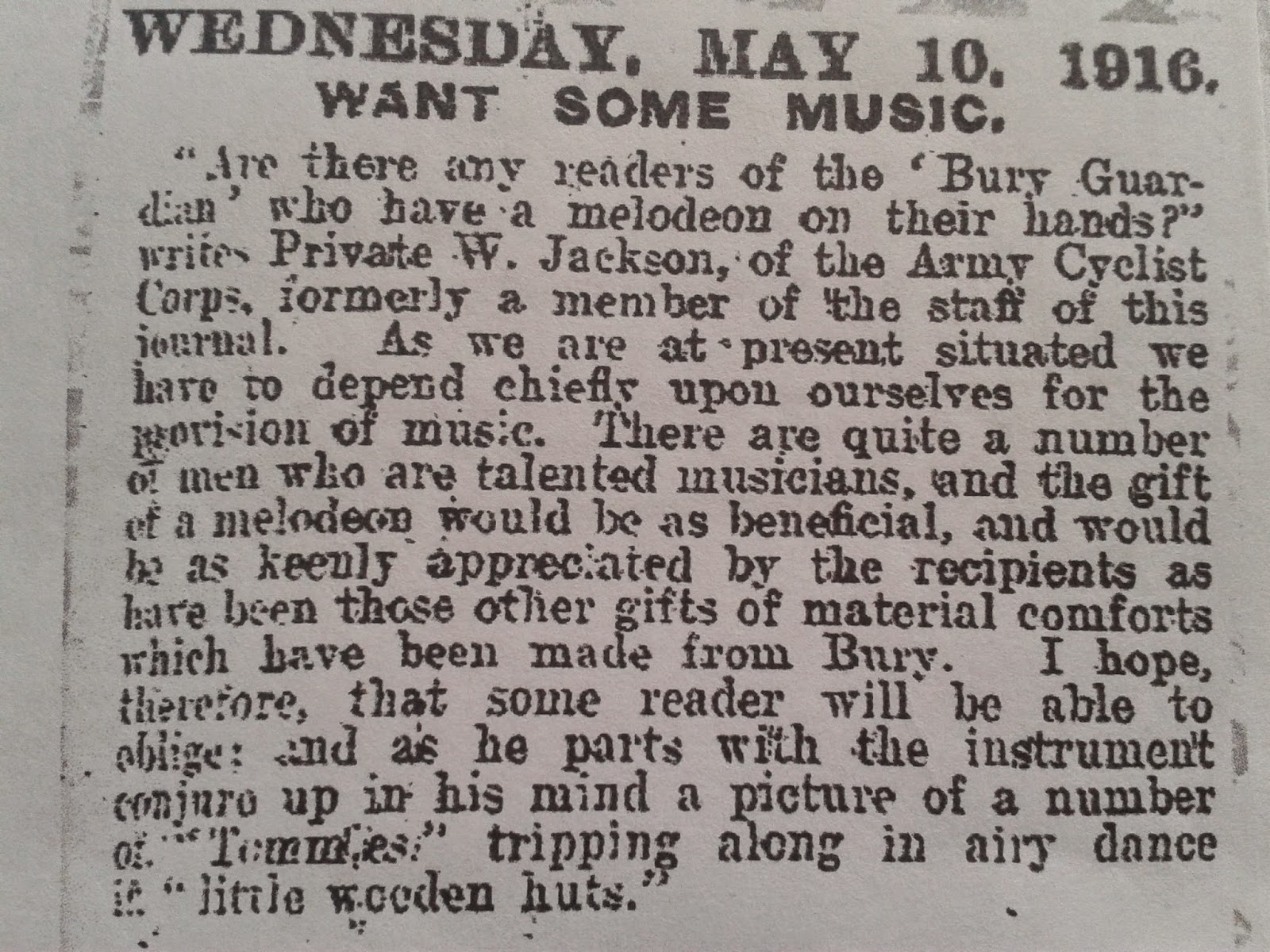
Another heart-rending appeal is for a melodeon:
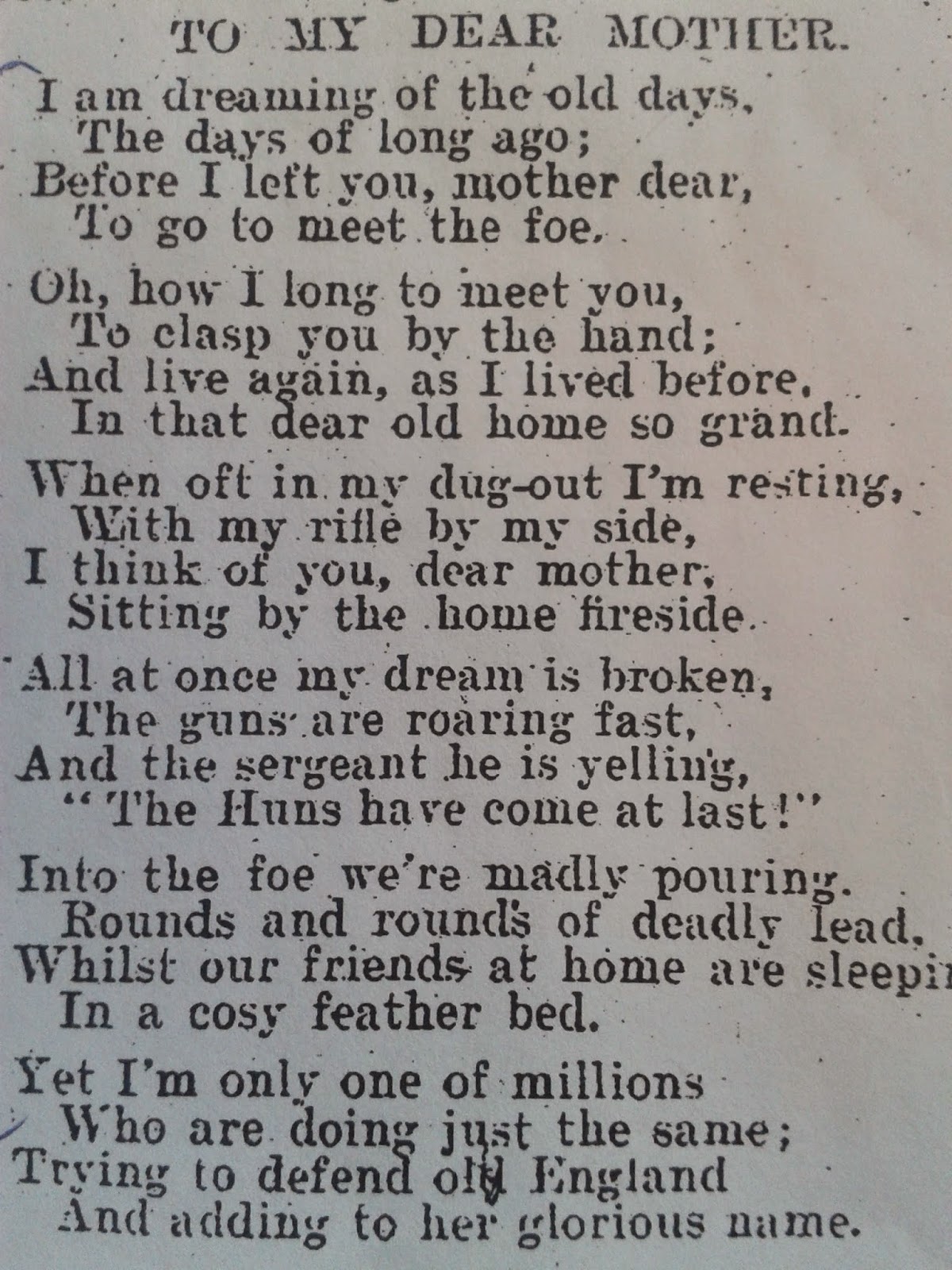
But of course the most heart-breaking items as always were the letters, for words are the most treasured possession of all. The Archivist found this poem printed in a 1917 newspaper. It was sent by a Lance-Corporal J.W. Gilbert to his mother.
Lance-Corporal Gilbert was a cricket-playing mill worker before he enlisted. He never did come home to his cosy feather bed or his fireside. He never did come home to his mother. On June 16, 1917, Mrs. Gilbert received 'official information of his death.' She received this almost a year after being informed he was 'missing.' He was twenty-two years old.
The Post Office could never have brought back Mrs. Gilbert's son. But they brought his words back to her, as they did to millions of others. We can only hope that they were a small comfort.
Letter to an Unknown Soldier: http://www.1418now.org.uk/whats-on/
The British Postal Museum & Archive: www.postalheritage.org.uk
BBC History- World War One Centenary: http://www.bbc.co.uk/history/0/ww1/
Bury Libraries and Archives: http://www.bury.gov.uk/index.aspx?articleid=3698
 E.M. Powell is the author of The Fifth Knight, a medieval thriller based on the murder of Thomas Becket in Canterbury Cathedral in 1170.
The sequel, The Blood of The Fifth Knight, will be released by Thomas & Mercer on January 1st 2015.
Amazon US
Amazon UK
Amazon CA
Visit her website at www.empowell.com.
I recently had the privilege of being involved with a project that has built a memorial of words to commemorate World War I. As part of the Letter to an Unknown Soldier project, thousands of people have written letters which will be preserved as a permanent memorial by the British Library in the National Archive.
As with so much of writing about history, the research took me down some side alleys. Now, so much of the history of World War I is familiar and iconic, even 100 years after the outbreak of war. And so it should be. Images of the trenches, the unimaginable loss of life, of the catastrophic destruction should never fade.
But it was the contribution to the war effort of something that we still use everyday that I found completely fascinating. It is not an institution that immediately springs to mind: it is the Post Office.
Letters were seen as essential in maintaining morale. I came to this project through the Bury Libraries and Archives Service. They sifted through their collection of newspapers to find glimpses of the role of the Post Office.
 |
© 2014 E.M. Powell
|
But of course there is no detail about injuries or losses. All letters were heavily censored. Soldiers could use a field postcard, an honour postcard or self-censor. Field postcards were pre-printed, and the soldier just had to cross out the statements that did not apply. With an honour envelope, the sender had to sign a declaration to say their letters did not contain any sensitive information. Self-censorship was also widely used and soldiers gave those at home no hint of what life was like at the front.
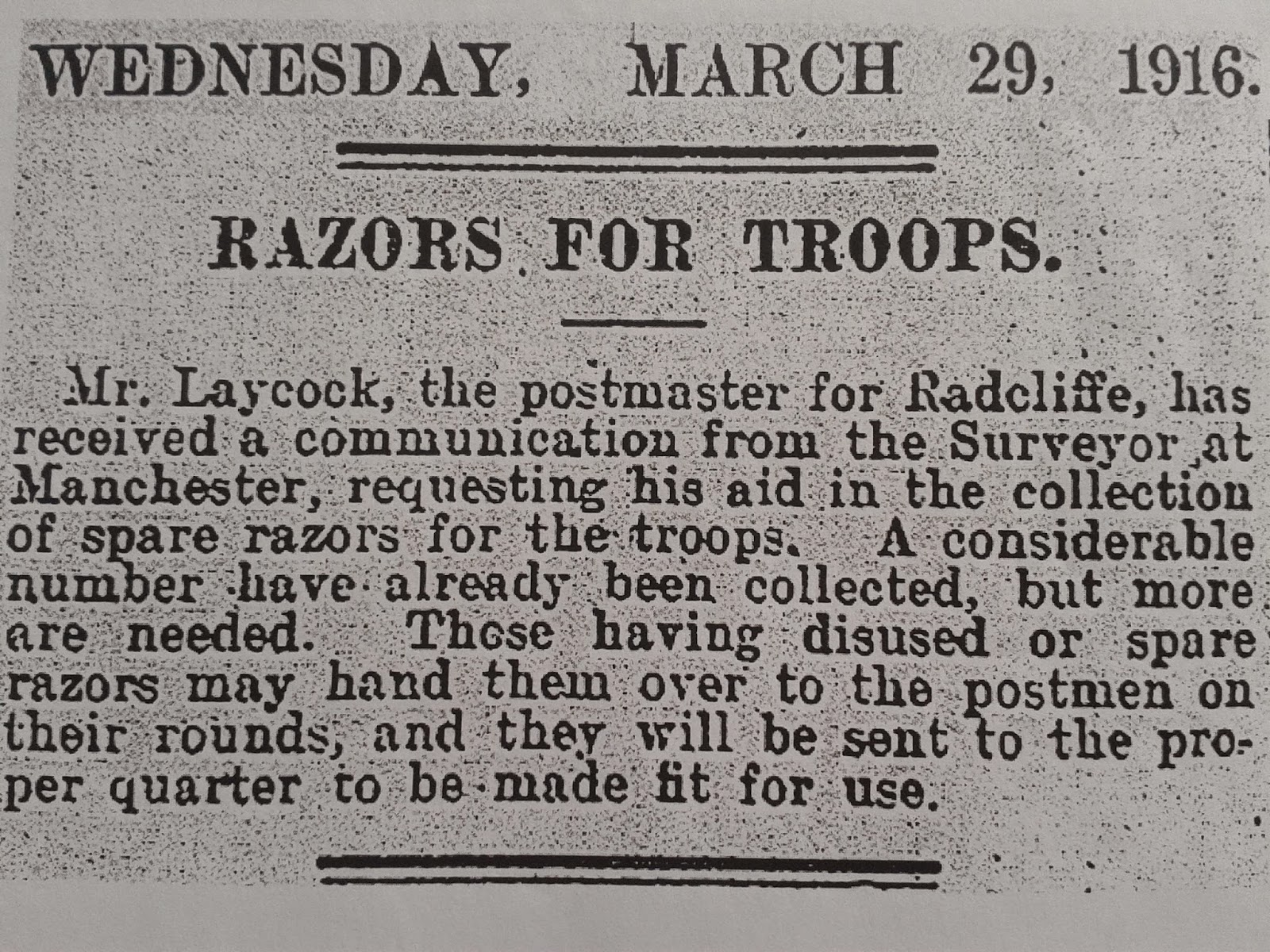
And of course it was not only letters. Parcels were essential too. Soldiers were sent items like soap and lice powder. Public donations of items was also made, as in this appeal for razors.
 |
© 2014 E.M. Powell
|
 |
© 2014 E.M. Powell
|
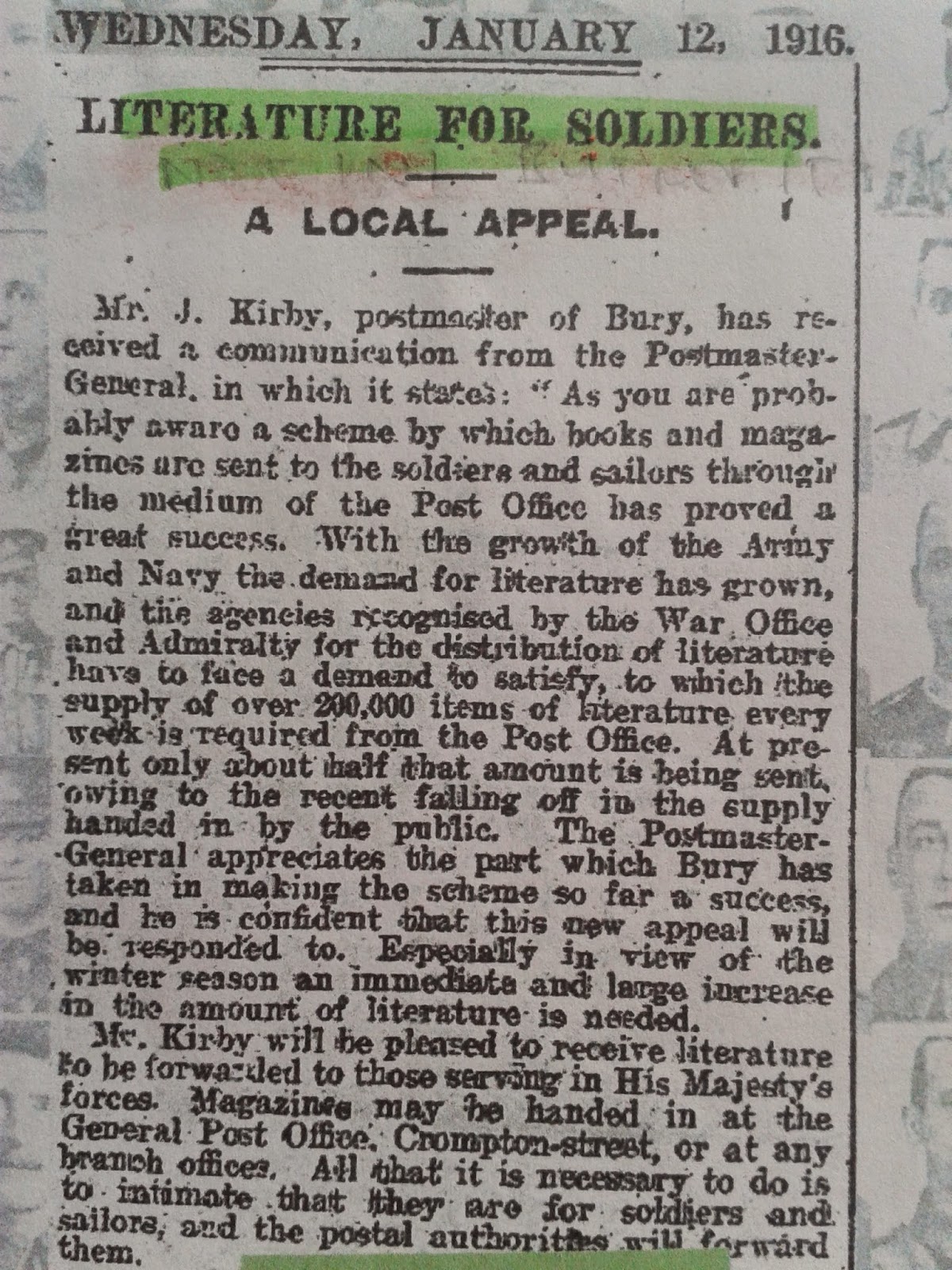
It was not just physical comforts either. Here we have an appeal for literature for soldiers.
 |
© 2014 E.M. Powell
|
Again, then the number of items being quoted (in the hundreds of thousands) is remarkable.
Another heart-rending appeal is for a melodeon:
 |
© 2014 E.M. Powell
|
But of course the most heart-breaking items as always were the letters, for words are the most treasured possession of all. The Archivist found this poem printed in a 1917 newspaper. It was sent by a Lance-Corporal J.W. Gilbert to his mother.
 |
© 2014 E.M. Powell
|
Lance-Corporal Gilbert was a cricket-playing mill worker before he enlisted. He never did come home to his cosy feather bed or his fireside. He never did come home to his mother. On June 16, 1917, Mrs. Gilbert received 'official information of his death.' She received this almost a year after being informed he was 'missing.' He was twenty-two years old.
The Post Office could never have brought back Mrs. Gilbert's son. But they brought his words back to her, as they did to millions of others. We can only hope that they were a small comfort.
~~~~~~~~~~~~~~~~~~~~~~~~~
References:Letter to an Unknown Soldier: http://www.1418now.org.uk/whats-on/
The British Postal Museum & Archive: www.postalheritage.org.uk
BBC History- World War One Centenary: http://www.bbc.co.uk/history/0/ww1/
Bury Libraries and Archives: http://www.bury.gov.uk/index.aspx?articleid=3698
The sequel, The Blood of The Fifth Knight, will be released by Thomas & Mercer on January 1st 2015.
Amazon US
Amazon UK
Amazon CA
Visit her website at www.empowell.com.

