by Karlie aka History Gal
In April 1484 King Richard III and his wife Anne Neville were enjoying a respite from their royal progress. They were lodging at Nottingham Castle when they received the devastating news that their son Edward of Middleham, Prince of Wales was dead.
The Croyland Chronicler recorded that King Richard and Queen Anne were “in a state almost bordering madness, by reason of their sudden grief.” 1
Prince Edward’s death would have profound consequences in Richard and Anne’s personal and political lives. It would also herald in the beginning of the end of the Plantagenet’s reign.
Edward of Middleham, Prince of Wales, had taken his last breath at the same place in which he was born: Middleham Castle in North Yorkshire. Edward’s nursery, located in the west wing of the Castle, was adjacent to the south wing known as the ‘Prince’s Tower’ (where Anne is said to have given birth to him).
The precise date and year of Prince Edward’s birth is unknown. Various historians have estimated that he was born within the years of 1473 to 1477; this would have made Edward 11 to 7 years old at the time of his death in 1484. According to “the Tewkesbury chronicler,” it’s likely that Edward “was born…in 1476 – an old style year that continued until 25 March 1477...” 2
Few records survive of Edward’s life both before and after his father, Richard, became King of England in June 1483. The first official record we have of him was written on 10 April 1477 when the priests at York Cathedral were asked to “pray for the good estate of the King and his consort (Edward IV and Elizabeth Woodville) and the King’s brother Richard, Duke of Gloucester (the future Richard III) and Anne his consort and Edward their son...” 3
As the nephew of the King, the son of a Duke, and an Earl in his own right, Edward was cared for and tutored as befitting his high status. The woman employed as his wet nurse was Isabel Burgh: wife to one of King Richard’s favorite courtiers.
The mistress of the nursery was Anne Idley: the widow of “Peter Idley, author of a book of manners, or education, for the rearing of boys, called Instructions to His Son.” 4 Edward’s parents must have been happy with Anne Idley’s services, because Richard penned a letter (to William Stoner) praising Idley, referring to her as “our right well beloved servant.” 5 In Edward’s later years, a lady by the name of Jane Collins was employed as his caretaker and Master Richard Bernall was assigned as his tutor.
Even with his exemplary upbringing, the prospect of Edward ever becoming King seemed less likely to occur during the early years of his life. At that time, Richard’s eldest brother –and Edward of Middleham’s uncle, (possible) god father and namesake—Edward IV was King of England. Edward IV’s son: Edward, Prince of Wales (the future Edward V) was the next in line to the throne, followed by his other son Richard of Shrewsbury, Duke of York.
Things changed after the deaths of Richard’s other elder brother George, Duke of Clarence in 1478, Edward IV’s death in 1483 and subsequently the latter’s sons’ disappearance in 1483. These series of events made it possible for Richard to assume the role as King of England.
In early 1484 parliament declared King Edward IV and Queen Elizabeth’s marriage invalid due to an alleged pre contract of marriage between King Edward to Lady Eleanor Butler. This proclamation made all of the late King’s offspring with Queen Elizabeth illegitimate, thus forfeiting their right to the crown.
As the new heir to the throne, King Richard’s son inherited grand titles. On 26 June 1483 Edward of Middleham became the Duke of Cornwall, a month later he was given the honorary title of Lord Lieutenant of Ireland. On 24 August 1483 he was created Prince of Wales and Earl of Chester. The following month he was formally invested as Prince of Wales and Earl of Chester in an extravagant ceremony held at York Minster. The venue was chosen as the place for his investiture instead of “Westminster Abbey as was customary…because the boy’s fragile health made distant travel ill advised.” 6 Edward was supposedly too weak to ride on horseback for the ceremony, and had to be carted from and back to Middleham Castle in a litter. Nonetheless, this was a proud moment for the young Prince’s parents to have witnessed, particularly since Edward was not in attendance for their joint coronation.
Although there is very little contemporary evidence to prove that Prince Edward suffered from a frail constitution throughout his entire life, it seems that he did spend the majority of his time in the confines of Middleham Castle. The scant records that exist of his life, show that he was able to live a fairly normal existence.
At Middleham, “Edward would have spent his days playing in the court yard watching mummeries (elaborate plays) in the Great Hall and spending time with his parents when they were at the keep.” 7 He also had a fool (a court jester) named Martyn who no doubt provided him with hours of entertainment. “Edward’s leisurely activities may have included watching the hounds” 8, as part of his inventory shows that during a visit to Pontefract Castle, he had in his possession “a pack of hounds…” He also occasionally traveled with his retinue to the “religious houses of Coverham, Fountains and Jervaulx.” 9
In the spring of 1484 Prince Edward was curiously absent during his parent’s royal progress. It’s possible that his father “left him behind in the north, as a symbol to his most loyal adherents of the new regime to which they owed allegiance, but it was likely that (his son) was also too ill to travel.” 10 What is certain is that neither King Richard nor Queen Anne expected their son to die during their absence.
In this age of superstition, it did not go unnoticed that Richard’s heir died in April 1484, “on a date not very far distant from the anniversary” 11 of King Edward IV’s death. This gave way to malicious gossip at court that Prince Edward’s death was just punishment because his father had been responsible for the deaths of the Prince’s in the Tower: Edward V and Richard of Shrewsbury, Duke of York.
There has been much speculation regarding the cause of Edward of Middleham’s death. One theory is that he died from tuberculosis: a bacterial infection that primarily affects the lungs. Whatever the true cause was, the Croyland Chronicler notes that his illness mercifully lasted but a “short duration.”
There can be no doubt that King Richard and Queen Anne genuinely loved their son. The “maddening grief” that they displayed shows that they were not as cold hearted as history has portrayed them. And that they didn’t just see their son as another pawn in their dynastic ambitions.
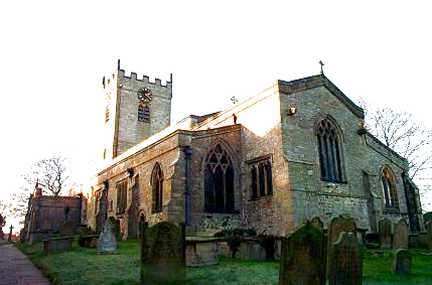
There is a lot of speculation concerning the whereabouts of Prince Edward’s remains, as no surviving record exists of his burial place. The Church of St Mary and St Alkelda in Middleham, Jervaulx Abbey in East Witton, Coverham Abbey in Coverdale, and the Church of St Helen and Holy Cross in Sherriff Hutton, are locations speculated as being Edward’s final resting place. At the Church of St Helen and Holy Cross, there is an alabaster cenotaph depicting a young boy dressed in fine robes. However, “recent research has proved that it dates from the first half of the 15th century” 12; thus the cenotaph is likely that of a Neville family relation.
A few months after Prince Edward’s death, King Richard traveled to North Yorkshire to pay off the remainder of his son’s expenses. The document he signed (detailing Edward’s expenditure) included the words “most dear son” and following that “in his own handwriting [Richard] added 'Whom God has pardoned'”.13
With his heir gone, the question arose about who Richard’s successor would be. The latter fathered two (perhaps three) illegitimate children with an unidentified woman, prior to his marriage to Anne Neville. King Richard’s other son, John of Gloucester, was knighted at York Minster on the same day that Edward of Middleham’s investiture as Prince of Wales took place. Because bastards could not inherit the throne, John could not become King of England. The next obvious successors were Richard’s two nephews: John de la Pole, Earl of Lincoln (son of Richard’s sister: Elizabeth of York, Duchess of Suffolk) and Edward, Earl of Warwick (son of Richard’s late brother George, Duke of Clarence). However, an Act of Attainder, issued by Edward IV against George, Duke of Clarence, prevented the latter’s offspring from inheriting the throne. This fact was further cemented in a statute, issued by parliament in 1484, called Titulus Regius (a statute essentially stipulating that Richard was the rightful King of England). Other than the contemporary English historian John Rous writing that King Richard named Edward, Earl of Warwick as his successor, there is no other evidence to support this. Although John de la Pole was never formally confirmed as such, Richard appears to have accepted him as his successor.
King Richard’s hopes of producing another heir were dashed when his wife became ill during the winter season of 1484. Tragically, 11 months after the death of her son, Anne died at the Palace of Westminster on 16 March 1485. She was only 28 years old and had been Queen Consort of England for almost 2 years. The general consensus among modern scholars is that the most likely cause of her death was either tuberculosis or some form of cancer.
After the death of his wife, King Richard’s reign became blighted by political and domestic turmoil and scandals. The gossip at the English court and abroad was that Richard had poisoned his wife so that he could marry his young and attractive niece Elizabeth of York. The marriage never came to be, and for a time he made negotiations to marry Princess Joanna of Portugal, but that union never came to pass.
King Richard also had to contend with the hostile Lancastrian faction and their figurehead Henry Tudor. Henry had been living in exile in Brittany for over a decade, until he landed on the shores of Mill Bay in Wales on 7 August 1485. His mission: to become the new King of England.
The fight for dynastic supremacy, known as the Wars of the Roses, reached its crescendo at the Battle of Bosworth Field, on 22 August 1485. King Richard and his army put up a valiant fight but were ultimately defeated by Lancastrian forces.
Richard died on the battlefield after sustaining several blows to his head by “possibly four assailants armed with halberds, swords, and heavy-bladed daggers” .14 Henry VII became King and his family, the Tudors, ruled England for the next 118 years.
Edward of Middleham’s legacy, much like his life, was short lived. He is a footnote in history, overshadowed by the political climate of his time, and the character and reign of Richard III. A sad state of affairs for a Prince whom—had he outlived his father—could have gone down in history as a famous Yorkist King, prisoner, martyr and or soldier.
References
1. 11. “Richard, The Man behind the Myth” by Andrea Willers
2. “Anne Neville: Queen to Richard III” by Michael Hicks
3. “Calendar of the Patent Rolls: Edward IV-Richard III.” by Great Britain. Public Record Office
4. http://authorherstorianparent.blogspot.com/2013/04/educating-edward-what-sort-of-king.html
5. “The Contemporary Review, Volume 3” by A. Strahan, 1866
6. “Lives of England's Reigning and Consort Queens” by H. Eugene Lehman
7. “The World of Richard III” by Kristie Dean
8. http://nerdalicious.com.au/history/a-glimpse-of-edward-of-middleham-prince-of- http://news.nationalgeographic.com/news/2014/09/140917-richard-cause-death-helmet-forensic-science/ wales/
9. “Richard III: England's Black Legend” by Desmond Seward
10. “Queens Consort: England's Medieval Queens from Eleanor of Aquitaine to Elizabeth of York” by Lisa Hilton
12. http://www.richardiii.net/richards_world.php
13. “Memoirs of King Richard the Third and Some of His Contemporaries, Volume 1”by John Heneage Jesse
14. http://news.nationalgeographic.com/news/2014/09/140917-richard-cause-death-helmet-forensic-science/
I’m Karlie (also known as History Gal on Twitter)! I have many interests including reading, writing, drawing and painting but my passion is history. I have read and love to read just about every period in history but I am most interested in the Plantagenet and Tudor eras. I’m intrigued, not just by their dynasties, but also the world in which they lived i.e.: the people, the religion, the politics, the conflicts, the events, the castles, the beautiful clothes, just overall their way of life.
In April 1484 King Richard III and his wife Anne Neville were enjoying a respite from their royal progress. They were lodging at Nottingham Castle when they received the devastating news that their son Edward of Middleham, Prince of Wales was dead.
 |
| Richard and Anne Neville - Attribution |
The Croyland Chronicler recorded that King Richard and Queen Anne were “in a state almost bordering madness, by reason of their sudden grief.” 1
Prince Edward’s death would have profound consequences in Richard and Anne’s personal and political lives. It would also herald in the beginning of the end of the Plantagenet’s reign.
Edward of Middleham, Prince of Wales, had taken his last breath at the same place in which he was born: Middleham Castle in North Yorkshire. Edward’s nursery, located in the west wing of the Castle, was adjacent to the south wing known as the ‘Prince’s Tower’ (where Anne is said to have given birth to him).
The precise date and year of Prince Edward’s birth is unknown. Various historians have estimated that he was born within the years of 1473 to 1477; this would have made Edward 11 to 7 years old at the time of his death in 1484. According to “the Tewkesbury chronicler,” it’s likely that Edward “was born…in 1476 – an old style year that continued until 25 March 1477...” 2
 |
| Middleham Castle - Attribution |
Few records survive of Edward’s life both before and after his father, Richard, became King of England in June 1483. The first official record we have of him was written on 10 April 1477 when the priests at York Cathedral were asked to “pray for the good estate of the King and his consort (Edward IV and Elizabeth Woodville) and the King’s brother Richard, Duke of Gloucester (the future Richard III) and Anne his consort and Edward their son...” 3
As the nephew of the King, the son of a Duke, and an Earl in his own right, Edward was cared for and tutored as befitting his high status. The woman employed as his wet nurse was Isabel Burgh: wife to one of King Richard’s favorite courtiers.
The mistress of the nursery was Anne Idley: the widow of “Peter Idley, author of a book of manners, or education, for the rearing of boys, called Instructions to His Son.” 4 Edward’s parents must have been happy with Anne Idley’s services, because Richard penned a letter (to William Stoner) praising Idley, referring to her as “our right well beloved servant.” 5 In Edward’s later years, a lady by the name of Jane Collins was employed as his caretaker and Master Richard Bernall was assigned as his tutor.
Even with his exemplary upbringing, the prospect of Edward ever becoming King seemed less likely to occur during the early years of his life. At that time, Richard’s eldest brother –and Edward of Middleham’s uncle, (possible) god father and namesake—Edward IV was King of England. Edward IV’s son: Edward, Prince of Wales (the future Edward V) was the next in line to the throne, followed by his other son Richard of Shrewsbury, Duke of York.
 |
| Edward IV - Atribution |
Things changed after the deaths of Richard’s other elder brother George, Duke of Clarence in 1478, Edward IV’s death in 1483 and subsequently the latter’s sons’ disappearance in 1483. These series of events made it possible for Richard to assume the role as King of England.
In early 1484 parliament declared King Edward IV and Queen Elizabeth’s marriage invalid due to an alleged pre contract of marriage between King Edward to Lady Eleanor Butler. This proclamation made all of the late King’s offspring with Queen Elizabeth illegitimate, thus forfeiting their right to the crown.
As the new heir to the throne, King Richard’s son inherited grand titles. On 26 June 1483 Edward of Middleham became the Duke of Cornwall, a month later he was given the honorary title of Lord Lieutenant of Ireland. On 24 August 1483 he was created Prince of Wales and Earl of Chester. The following month he was formally invested as Prince of Wales and Earl of Chester in an extravagant ceremony held at York Minster. The venue was chosen as the place for his investiture instead of “Westminster Abbey as was customary…because the boy’s fragile health made distant travel ill advised.” 6 Edward was supposedly too weak to ride on horseback for the ceremony, and had to be carted from and back to Middleham Castle in a litter. Nonetheless, this was a proud moment for the young Prince’s parents to have witnessed, particularly since Edward was not in attendance for their joint coronation.
Although there is very little contemporary evidence to prove that Prince Edward suffered from a frail constitution throughout his entire life, it seems that he did spend the majority of his time in the confines of Middleham Castle. The scant records that exist of his life, show that he was able to live a fairly normal existence.
 |
| Edward Prince of Wales - Attribution |
At Middleham, “Edward would have spent his days playing in the court yard watching mummeries (elaborate plays) in the Great Hall and spending time with his parents when they were at the keep.” 7 He also had a fool (a court jester) named Martyn who no doubt provided him with hours of entertainment. “Edward’s leisurely activities may have included watching the hounds” 8, as part of his inventory shows that during a visit to Pontefract Castle, he had in his possession “a pack of hounds…” He also occasionally traveled with his retinue to the “religious houses of Coverham, Fountains and Jervaulx.” 9
In the spring of 1484 Prince Edward was curiously absent during his parent’s royal progress. It’s possible that his father “left him behind in the north, as a symbol to his most loyal adherents of the new regime to which they owed allegiance, but it was likely that (his son) was also too ill to travel.” 10 What is certain is that neither King Richard nor Queen Anne expected their son to die during their absence.
In this age of superstition, it did not go unnoticed that Richard’s heir died in April 1484, “on a date not very far distant from the anniversary” 11 of King Edward IV’s death. This gave way to malicious gossip at court that Prince Edward’s death was just punishment because his father had been responsible for the deaths of the Prince’s in the Tower: Edward V and Richard of Shrewsbury, Duke of York.
There has been much speculation regarding the cause of Edward of Middleham’s death. One theory is that he died from tuberculosis: a bacterial infection that primarily affects the lungs. Whatever the true cause was, the Croyland Chronicler notes that his illness mercifully lasted but a “short duration.”
There can be no doubt that King Richard and Queen Anne genuinely loved their son. The “maddening grief” that they displayed shows that they were not as cold hearted as history has portrayed them. And that they didn’t just see their son as another pawn in their dynastic ambitions.
There is a lot of speculation concerning the whereabouts of Prince Edward’s remains, as no surviving record exists of his burial place. The Church of St Mary and St Alkelda in Middleham, Jervaulx Abbey in East Witton, Coverham Abbey in Coverdale, and the Church of St Helen and Holy Cross in Sherriff Hutton, are locations speculated as being Edward’s final resting place. At the Church of St Helen and Holy Cross, there is an alabaster cenotaph depicting a young boy dressed in fine robes. However, “recent research has proved that it dates from the first half of the 15th century” 12; thus the cenotaph is likely that of a Neville family relation.
A few months after Prince Edward’s death, King Richard traveled to North Yorkshire to pay off the remainder of his son’s expenses. The document he signed (detailing Edward’s expenditure) included the words “most dear son” and following that “in his own handwriting [Richard] added 'Whom God has pardoned'”.13
With his heir gone, the question arose about who Richard’s successor would be. The latter fathered two (perhaps three) illegitimate children with an unidentified woman, prior to his marriage to Anne Neville. King Richard’s other son, John of Gloucester, was knighted at York Minster on the same day that Edward of Middleham’s investiture as Prince of Wales took place. Because bastards could not inherit the throne, John could not become King of England. The next obvious successors were Richard’s two nephews: John de la Pole, Earl of Lincoln (son of Richard’s sister: Elizabeth of York, Duchess of Suffolk) and Edward, Earl of Warwick (son of Richard’s late brother George, Duke of Clarence). However, an Act of Attainder, issued by Edward IV against George, Duke of Clarence, prevented the latter’s offspring from inheriting the throne. This fact was further cemented in a statute, issued by parliament in 1484, called Titulus Regius (a statute essentially stipulating that Richard was the rightful King of England). Other than the contemporary English historian John Rous writing that King Richard named Edward, Earl of Warwick as his successor, there is no other evidence to support this. Although John de la Pole was never formally confirmed as such, Richard appears to have accepted him as his successor.
King Richard’s hopes of producing another heir were dashed when his wife became ill during the winter season of 1484. Tragically, 11 months after the death of her son, Anne died at the Palace of Westminster on 16 March 1485. She was only 28 years old and had been Queen Consort of England for almost 2 years. The general consensus among modern scholars is that the most likely cause of her death was either tuberculosis or some form of cancer.
 |
| Cenotaph once alleged to be that of Edward of Middleham |
After the death of his wife, King Richard’s reign became blighted by political and domestic turmoil and scandals. The gossip at the English court and abroad was that Richard had poisoned his wife so that he could marry his young and attractive niece Elizabeth of York. The marriage never came to be, and for a time he made negotiations to marry Princess Joanna of Portugal, but that union never came to pass.
King Richard also had to contend with the hostile Lancastrian faction and their figurehead Henry Tudor. Henry had been living in exile in Brittany for over a decade, until he landed on the shores of Mill Bay in Wales on 7 August 1485. His mission: to become the new King of England.
The fight for dynastic supremacy, known as the Wars of the Roses, reached its crescendo at the Battle of Bosworth Field, on 22 August 1485. King Richard and his army put up a valiant fight but were ultimately defeated by Lancastrian forces.
Richard died on the battlefield after sustaining several blows to his head by “possibly four assailants armed with halberds, swords, and heavy-bladed daggers” .14 Henry VII became King and his family, the Tudors, ruled England for the next 118 years.
 |
| Portrait of King Henry VII - Attribution |
Edward of Middleham’s legacy, much like his life, was short lived. He is a footnote in history, overshadowed by the political climate of his time, and the character and reign of Richard III. A sad state of affairs for a Prince whom—had he outlived his father—could have gone down in history as a famous Yorkist King, prisoner, martyr and or soldier.
References
1. 11. “Richard, The Man behind the Myth” by Andrea Willers
2. “Anne Neville: Queen to Richard III” by Michael Hicks
3. “Calendar of the Patent Rolls: Edward IV-Richard III.” by Great Britain. Public Record Office
4. http://authorherstorianparent.blogspot.com/2013/04/educating-edward-what-sort-of-king.html
5. “The Contemporary Review, Volume 3” by A. Strahan, 1866
6. “Lives of England's Reigning and Consort Queens” by H. Eugene Lehman
7. “The World of Richard III” by Kristie Dean
8. http://nerdalicious.com.au/history/a-glimpse-of-edward-of-middleham-prince-of- http://news.nationalgeographic.com/news/2014/09/140917-richard-cause-death-helmet-forensic-science/ wales/
9. “Richard III: England's Black Legend” by Desmond Seward
10. “Queens Consort: England's Medieval Queens from Eleanor of Aquitaine to Elizabeth of York” by Lisa Hilton
12. http://www.richardiii.net/richards_world.php
13. “Memoirs of King Richard the Third and Some of His Contemporaries, Volume 1”by John Heneage Jesse
14. http://news.nationalgeographic.com/news/2014/09/140917-richard-cause-death-helmet-forensic-science/
~~~~~~~~~~