Friday, September 21, 2012

1st Anniversary of English Historical Fiction Authors

by Debra Brown

A year ago, September 23rd of 2011, a group of authors lost in yesteryear Britain launched this blog. The goals were to take you back in time with a daily historical post and a weekly historical fiction giveaway. Readers would be introduced to the authors and their work.

We feel that we have had great success. We have had nearly eighty thousand of you wonderful folks come to visit us here--for the exact number, scroll down to our little knights at the bottom of this page. We have Nearly four hundred blog followers and have had over five hundred and fifty of you join us to chat in our Facebook group. Many have joined in the fun by leaving comments on our posts, and at least one of you per week has won a book in our giveaways.

This weekend we are celebrating. We have a giveaway planned with twenty books being given away. See the separate Giveaway Post and enter the drawing by midnight Pacific Standard Time on September 23rd. Please also check the weekly giveaway for The Gilded Lily by Deborah Swift. 

I am going to mention some of the highlights of our year's posts here and categorize more of them just in case you missed one. :) And tomorrow we will have a post of interesting historical anecdotes.

And now....

The post receiving the most views for the year is... (don't ask me how, really, we suspect he paid people to visit the post. Honestly, are toll roads the most interesting topic in England?) But yes, the top post of the year is by J.A. Beard, Stand and Deliver ... Your Tolls? The Rise and Fall of the Turnpikes. Maybe it was all those Olympic attenders worried about getting around the country. Congrats J.A.!

#2) Little Ease: Torture and the Tudors by Nancy Bilyeau

#3) A Glimpse of York During the Regency by Lauren Gilbert

#4) The Poor Always Amongst Us by Phillip Brown

#5) Child Labour and Pick-pockets by Marie Higgins

#6) In the Wake of James Cook by Linda Collison

#7) An Inconvenient Princess by Nancy Bilyeau

#8) A Regency-era Lady's Prodigious Layers of Clothing by Wanda Luce

#9) Top Ten tourist attractions in London, 1780 By Mike Rendell

#10) The Birth of "Bloody Mary" By Nancy Bilyeau

A special mention, too, to Gorgeous Georgian Metrosexuals — or How to strut your Metrosexual Stuff in Georgian England by Lucinda Brant, which was a ragingly popular post until it disappeared into thin air. We could not find it on the blog. For months we thought it gone forever, but Lucinda discovered that she could get to it by Google search. Huh? Well, we did some tinkering around and discovered that it had been unpublished. So we published it again, and it is back. Who knows what happened. Someone worried about that Number One spot, probably. ;)

Congrats to these authors. It seems Nancy Bilyeau ran off with the cake.


POST CATEGORIES

For reading ideas, I am categorizing some of the posts. I wish I could add all 365 of them, but time and space don't allow. And you'd get sick of it.

PLACES

A Journey to the Brontë family at Haworth
by Stephanie Cowell


Boundaries: Medieval Women in Medieval Gardens by Judith Arnopp

The Tower of London by Debra Brown

The Lost Houses of England by Maggi Andersen

London in the early 19th century by M.M. Bennetts

Marshalsea Debtor's Prison by Wanda Luce

The Lost Palace of Richmond by Anita Davison

Lloyds-- Lifeblood of British Commerce and Starbucks of its Day by Linda Collison

Welsh Idylls with Judith Arnopp Part One: St Gwenog's Church


CRIME AND PUNISHMENT

Smuggling in Devon by Jenna Dawlish

Old English Crime and Punishment: Death By Pyre...A More seemly Death For Women? by Teresa Thomas Bohannon

Fourteen Years Hard Labour by Prue Batten

Steal a book, seven-years' hard labor overseas: Transportation as punishment in the 17th-19th centuries by J.A. Beard


WAR AND BATTLES

Bloody Deeds at Tewkesbury by Anne O'Brien

Degsastan - a lost battlefield by Richard Denning

The West Africa Squadron by Tess St. John

'Carrying Away the Booty' - Drake's attack on the Spanish 'Silver Train' by Jenny Barden


PEOPLE

William Before He Was the Conqueror By Rosanne E. Lortz

Eleanor of Aquitaine: Mother of Kings by Christy English

Richard II and His Double by Brian Wainwright

Lady Jane Grey: Royal Tragedy - Royal Pawn by Teresa Bohannon

The Mysterious Death of King William the Second by Judith Arnopp

Alice the Bad or Alice the Good - or Alice the Quintessential Business Woman? by Anne O'Brien

Charles Brandon ~ Loyaulte me Oblige by Katherine Marcella

Adeliza of Louvain, Lady of the English: A Forgotten Queen by Elizabeth Chadwick

The Harlot Who Was Dickens’ Muse, or, Even Greater Expectations by Katherine Ashe

Two Men, One Crown by Paula Lofting


ART

Holy Grails, Bejeweled Crosses, and Beastly Aquamanilia: European Art in the 13th Century by Sherry Jones

The Royal Coat of Arms by Debra Brown


WEAPONS

The English Longbow – Available in Fiction, Nonfiction, and Video by Scott Higginbotham


LIFE

The Victorian Wedding versus My Own Wedding by Karen V. Wasylowski

Regency Era Classified Ads by Debra Brown

Mother Mourning: Childbed Fever in Tudor Times by Sandra Byrd

Celebrating Childhood Picture Books and the stories that shape us by Deborah Swift

The must-have garden accessories for the rich and richer? A glasshouse and pineapples! by M.M. Bennetts

Eloping to Scotland and the Marriage Act of 1753 by Regina Jeffers

Culpeper's Complete Herbal by Farida Mestek

History-Within-History by Grace Elliot

Downton Abbey and the Fight for Irish Freedom by Tim Vicary

The Great ‘What If’. What if Edward Bruce had succeeded in Ireland? by Arthur Russell

The Sheltons, A Typcial Knight's Family by Anne Clinard Barnhill

By Permission of Heaven - The Great Fire of London by Richard Denning


FASHION

Undergarments Revealed by Diane Scott Lewis

The Changes in Ladies' Fashion from 1780s to 1814 - Too Much or Too Little by Maggi Andersen

The Wig Business was Big Business in 18th Century France by Lucinda Brant


FOOD

Nom nom nom ~ Regency style by M.M. Bennetts

17th Century Recipes by Katherine Pym

Food and Drink in Anglo-Saxon England by Richard Denning


TRANSPORTATION

The days the world’s most powerful man, the richest man and smartest man came together by David William Wilkin

Sir Goldsworthy Gurney and His Steam Carriage by Gary Inbinder

Mrs. Benz's Wild Ride by V.R. Christensen


REGENCY TIMES

Waltzing during the English Regency? Preposterous! by David W. Wilkin

Almack's - it's not quite what you think... by M.M. Bennetts

‘Privy & Privation: A Handsome History of Health & Hygiene in Regaustenian* Times’ by Lady A~, Authoress of ‘The Bath Novels of Lady A~’ Collection.

The Regency Review, by Lady A~, Authoress of 'The Bath Novels of Lady A~' Collection


TUDOR TIMES

The Reformation and the English People by Sam Thomas

Elizabeth & Mary, Rival Queens: A Study of Leadership by Barbara Kyle

Our Tudor Sisters by Sandra Byrd

The Lady Elizabeth, Prisoner at Woodstock by Victoria Lamb


There is soooo much more. Please look around. Don't forget to check our weekly giveaways. And do come back for another year! 


WIN AN ANNIVERSARY GIFT BOOK


We have arrived at our Anniversary weekend. In one year nearly 80,000 unique visitors. A historical post everyday. More than 50 bloggers bringing you a little piece of English History every day that they uncover in their research. History that adds color and background to the novels that they write for your enjoyment.

To thank all those who have come this year to sample the endeavors herein, twenty of the books that our writers have labored over are being given away this weekend. Just post your name, email in the comments section for a chance to win. (Many people place spaces on each side of the @ symbol, or type that out as (AT) but we'll get the idea.) A comment on Saturday the 22nd, or Sunday the 23rd or both days will garner a chance to win one of the twenty books. Some are eBooks, some are physical and have restrictions as to where they will ship. Should you win, we will contact the author and provide them with your information. 


In no particular order for all prizes will be awarded randomly, we have donations for our giveaway from these authors and their works:

David Wilkin--The Shattered Mirror, The End of the World ebooks
Debbie Brown--Companion of Lady Holmeshire
Nancy Bilyeau--The Crown (2 Copies)
Lauren Gilbert--Heyerwood
Deborah Swift--The Gilded Lily
Katherine Pym--London 1660
Lucinda Brant--Deadly Affair
Cathie Dunn--Dark Deceit
Maria Grace--The Future Mrs. Darcy, Darcy's Decision
Nancy Jardine--The Beltane Choice
Maggie Secara--The Dragon Ring
Edward H. Carpenter--A Matter of Honor
Karen Wasylowski--Sons and Daughters
Peter St. John--Gang Territory
Teresa Thomas Bohannon--Choice of: A Very Merry Chase, Shadows in a Timeless Myth or The Widow's Tale
Mark Patton--Undreamed Shores
Sherry Jones -- Four Sisters, All Queens


Thursday, September 20, 2012

Dinner As It Might Have Been at Kenilworth 760 Years Ago

By Katherine Ashe

Eleanor, Countess of Leicester, is entertaining Robert Grosseteste, the Bishop of Lincoln and Peter de Montfort, her husband’s cousin from Gloucestershire at her castle of Kenilworth. As is often the case her husband is away from home. Trubody, her major d’omo, presides over the servants and will carve the principal roast meats as the sons at home, Guy, Amaury and Richard, are still children.

It’s early afternoon. The Countess sits on the turf seat with the Bishop in her rose garden. Peter is playing at battle with young Guy with wooden swords while Amaury reads a passage in Latin for the Bishop, as his tutor Geoffrey de Boscellis hovers proudly. Richard, still an infant, is suckled by his wet nurse in the nursery where, from her corner tower room, she can look down on the garden as she munches her rich, bland meal of beef and blancmange.

From the thatch-roofed bake-shed beyond the garden’s wattle wall the scents of baking savory pies and sweets perfume the breeze. Onto the crust of a chicken puree and custard pie the cook is grinding a sprinkle of white sugar from a hard, conical sugar loaf imported from Palestine. To give the custard a golden glaze she puts the big pie back under the inverted kettle that serves as oven in the hearth.

Herbs from the vegetable garden hang in bunches from the roof beams of the cook shed, beside strings of onions and medicinal garlic. Crocks of spring peas packed in lard are stacked along the walls, waiting to be winter treats. Barrels of cherries, quinces and medlars soaked in honey and wine wait winter’s feasts as well.

Finishing with the sugar, Cook hands the cone back to Trubody the major d’omo, who puts it into Slingaway’s basket with several boxes of spices, almonds, figs and dates, to go back to the hall where they’re kept locked in the aumbry, the serving cupboard near the main door and the cellar door. Before he leaves the cook shed the major d’omo lights a candle lantern; it’s full daylight and early afternoon, but he’ll need it.

Climbing the foyer steps to the castle, Trubody takes the basket and sends Slingaway to tell the household servants to bring the board and trestles for the Countess’s dining table, it’s time to set them up on the raised dais at the end of the hall. After setting his lantern on the aumbry and putting the costly “groceries” securely away behind the aumbry’s sturdy, iron bound doors, the major d’omo checks the linens as the table is assembled, smoothing the white table cloth, seeing the napkins are at each place.

The dais’s permanent furniture, the heavy, carved oak chairs for the Countess (and the Earl when he’s at home), are adjusted at the center of the table where the Countess and the Bishop will sit. Cushioned stools are brought for the cousin and the tutor, and for young Amaury and Guy. The seating, facing out into the hall, is arranged with space enough from the rear wall for the diners and servants to pass, but most serving will be from the open side of the table.

Trubody nods now to Slingaway for the long trestle tables to be set up on the main floor of the hall for the castle’s upper staff: Lady Mary, the Countess’ principal lady in waiting, the almoner, the manor steward, the Countess’s treasurer, the verger of the castle’s chapel, the armorer and captain of the castle’s guards, the chief huntsman and equerry, Lady Mary’s own maids. The kitchen, household and serving staff will take their places at the long tables when the first seating, of those who outrank them, is done and the diners at the high table have left for vespers in the chapel.

Taking up his lantern from the aumbry, and selecting the cellar key from the great bunch of keys that hang from his belt, Trubody opens the door to the cellar. By the light of his lantern he climbs down the ladder into the dark, moist pit. Gobehasty, the footman, hurrying from the kitchen with two large pewter pitchers, climbs down behind him.

In the dark, damp pit there in the cool darkness of the cellar are stacked the great casks of Bordeaux the brought home when he was viceroy in Gascony. Here also are iron chains and manacles fixed by massive iron staples to the wall – a reminder of of King Henry’s renovations when the master, the Earl Montfort, was in exile. Trubody finds the cask pierced by an oak spigot and fills Gobehasty’s pitchers. The lower household staff at the second seating will have beer, brought in wooden buckets from the brewster’s shed.

In the kitchen, Cook sends Garbag to tell Trubody that all is ready.
Clambering up the cellar ladder, with Gobehasty close behind, the major d’omo hurriedly unlocks the aumbry’s doors again and gives Garbag three silver goblets to set on the high table at the center places for Peter de Montfort, the Countess and the Bishop. Treen goblets from the kitchen shed will be sufficient for everyone else. But also for the high table, the major d’omo takes from the aumbry a fine pewter ewer shaped like a knight on horseback, the spout emerging from the horse’s mouth. Gobehasty carefully pours wine from a pitcher to the ewer as Trubody hastens to the rose garden to inform the Countess that dinner is ready.

Peter stops his play with little Guy. With the Countess and the Bishop leading, Amaury tucking his book into the blousing of his robe, follows his tutor, and the six go up the foyer steps to the hall.

As the Countess takes her place at the center of the table, with the Bishop to her right and Peter to her left, Boscelis and Amaury to the Bishop’s right, Guy, coached by Trubody, brings a towel and bowl of rose water for the diners to dip and dry their fingers.

The Countess’s staff seat themselves on the benches at the long tables along the walls and Slingaway, at the high table, sets a large, square-trimmed, thick slice of four-day old bread, a “trencher,” on the tablecloth at each diner’s place.

The Countess asks the Bishop to say the blessing. Never perfunctory, Grosseteste prays at length for the well-being of the Countess and for the Earl, absent in France and from whom there is no news, for the king and for the outcome of the harvest -- which can never be taken for granted even in a mild and moist year.

The staff members at the long tables sit, politely silent in the presence of their lady and a priest who’s said to have second sight -- some no doubt wondering if this mean the harvest, so near ripening, will fail? The kitchen servants wait restively in line down the steps of the foyer, beyond the hall door. At last the Bishop makes the sign of the cross and says “Amen,” and the meal may begin.

Servant after servant comes briskly in and offers the dish he’s bearing first to the Countess, then to the Bishop, then to Peter, last to tutor Boscellis and the boys. At the low tables Lady Mary presides and carves the trenchers loaves, holding each round loaf cradled under her arm with the long knife sawing perilously toward her bosom.

Kitchen boys bring in a roast of beef and another of ham, and a round of cheese. The leftovers of the dainty dishes of the high table may be offered here in the second course and sometimes the Countess sends special samples down to Lady Mary. The cups that the staff carry tied to their belts are brought forth and filled by Garbag from the second pitcher of wine.

Non-meat dishes first are served at the high table since the Bishop will not eat red meat. A footman offers eels, caught in the abbey pond next door and baked in a crust with diced onion, ginger, currants, raisins and vinegar. Next comes a charger of carp from Kenilworth’s Mere, served in a pond of sauce galantine (*recipe1). Then come fritters of parsnips cooked with almond milk; baked eggs with mint, parsley, fennel, rue and tansy; bowls of pease pottage with saffron and pepper (*recipe #2).

Frowning at such extravagance, Grosseteste helps himself only to the pottage, eggs, and the parsnip fritters, while Boscellis happily accepts large servings of the rich eel and carp. Countess Eleanor smiles; she’s fond of Boscellis and has told the cook to always have some fine dish for the tutor monk whose one indulgence is good food. Peter de Montfort and the Countess herself have a taste of everything, and Peter summons back the carp for a larger serving, his trencher well soaked in sauce galantine. The boys poke at small servings of the carp, waiting for the roasts in the next course.

At the lower tables, Trubody carves the roasted meats. The staff members pass the wooden chargers laden with sliced ham or beef, pricking their choices with their dining knives. Like the diners at the high table, each has a knife case, hung with whatever other implements they need – keys, stylus, needle case or hoof pick -- from their belts.

Now at the high table the second course begins. Gobehasty brings a magnificent pastry-covered roast. On the platter, surrounding the golden dome that encases the meat, are spiced apples and pears. Into the honey-laden juices, the poured batter that covers the meat has flowed and crisped into crinkled bits, special treats for the children. As Trubody carves and a servant takes the slices round the table, more dishes are run (coursed) from the kitchen: a pie of the spiced innards of the deer that was the main course yesterday; a capon stuffed with almonds and figs; a mawmenye of lamb with lentils, turnips and currants (*recipe 3).

Since the Earl is away and there are few guests today the meal is not extensive. The diners at the high table spear the cut meat with the points of their dining knives, as Peter does, or delicately carry them from trencher to mouth with thumb and forefinger -- or thumb and index finger as the Countess does, with fingers not in use daintily splayed to keep them free of sauce. The wash basin and towel is brought round again.

When the second course is finished, the course of sweets is served. Dishes of home-grown sugared violets and rose petals, imported almonds and dried cherries from the orchard are set upon the cloth as the sauce-soaked trenchers are removed. Being thick and very dry, the undersides of the bread trenchers have left little on the table but crumbs. The poor of the manor’s village, gathering at the castle gate, will receive the sauce-laden bread from the almoner this evening.

Cook has prepared a special sweet in honor of the Bishop. A faun tempere -- carnation flower pudding (*recipe 4). Small bowls, each garnished with carnations and roses, are set at each place at the high table.

The Countess, her guests and family, Lady Mary and the Bishop leave the hall for evening prayers in the chapel. The diners at the low tables vacate the benches, and the kitchen, serving staff and lesser servants of the castle take their places. Garbag and Slingaway bring wooden buckets of beer from the brewing shed and the copious remains of the roast meats and cheese are heaped on the trencher slices as quickly as Cook can slice the loaves.

In the kitchen shed the hearth’s fire has been banked, the inverted kettles used for backing are cleared from the coals. The hanging kettle used for the pottage has been lifted from its trammel to the stone wash tub where, with fasces of twigs, it was scrubbed, along with the big forks and ladles, griddles and pots, in hot water from the great kettle that never leaves the hearth. In a bucket of clean water Trubody himself carefully washes the silver goblets and the pewter ewer shaped like a knight on horseback, then he dries them and returns them to safety in the aumbry in the hall.

Recipes:

1) sauce galantine, to serve with fowl, meats or fish: 1/3 cup very dry bread or bread crusts ground to a fine grain, 1 cup stock (vegetable, chicken, fish or meat depending upon the dish to be sauced), 1 tsp ground galingale, ¼ tsp each cinnamon, ginger and cloves, 2 tbsp vinegar for fish or vegetable dishes, 3 tbsp sherry for fowl or meats. Combine bread crumbs with the spices. Add remaining ingredients and simmer gently until sauce thickens. Season with salt and pepper to taste and serve. About 1 ½ cups.

2) pease pottage: 3 cups vegetable broth, 3 lb. shelled green peas, 1 large onion, minced, 2 tbsp brown sugar, ¼ tsp salt, ¼ tsp saffron, ¼ tsp of pepper, ¼ tsp dry ginger powder. Bring broth to a boil; add all the other ingredients, cook covered over medium heat for 12 to 15 minutes, turn out and puree the pottage and return to the pot to reheat. Garnish with a slice of toasted, crusty bread for each bowl. Serves 6.

3) mawmenye of lamb and lentils: 1¼ lb of lamb cut into small bite-size chunks, 1 cup chicken or vegetable broth, 4 cups beef broth, 1 cup dry lentils washed and cleansed of stones and blemished lentils, 1 cup diced turnips or parsnips, 1/3 cup chopped figs, 1 cup currants, 1/3 cup raisins, ¼ tsp cinnamon and ¼ tsp ginger (powdered), ¼ tsp pepper, ½ tsp salt, 2 tbsp butter, pale celery leaves or yellow nasturtiums. Mix the ¼ tsp of pepper and ½ tsp of salt with the chunks of lamb and then sauté the lamb in the butter. Add chicken broth and simmer gently until lamb is cooked and tender (45 min. to an hour). Meanwhile bring lentils to boil in the 4 cups of beef broth; when boil is reached reduce heat and simmer for 15 minutes. Combine spices (additional salt may be added sparingly here, to taste) and add to turnips/parsnips, tossing to mix well. Add the turnips/parsnips, figs and currants to the lentils and continue to cook for 10 to 15 minutes or until the lentils are tender. Stir the cooked lamb into the lentils and place in a large serving bowl. Distribute the celery leaves or flowers decoratively and serve. Serves 6 if offered with other main course dishes.

4) faun tempere: carnation flower pudding. ½ cup beef or chicken broth, 2½ cups milk, ¼ cup white flour, ½ cup white sugar, 5 egg yolks, 9 or 10 carnation flowers (violets or rose petals may be substituted if carnations aren’t available, but nasturtiums have too sharp a flavor), ½ cup skinned and grated almonds, 1/4 tsp each cinnamon, galingale, mace and ginger powder. In a pot set into a kettle of gently boiling water (you can use a double boiler) heat milk and broth gradually. Mix the flour, sugar and spices and gradually add to the milk and broth, stirring constantly for 12 to 15 minutes. Beat the eggs. Put ½ cup of the heated milk, flour, spices and stock into a separate bowl and gently stir in the beaten egg yolks. Add to the main pot, stirring continually as pudding thickens. Pour the pudding into separate bowls and allow to cool. Strew the top with the flowers and serve.

Further reading:

Aresty, Esther B., The Delectable Past, Bobbs-Merrill, 1964.
Cosman, Madeleine Pelner, Fabulous Feasts, George Braziller, 1976.
Sass, Lorna, S., To the King’s Taste,The Metropolitan Museum of Art, 1975.
Tannahill, Reay, The Fine Art of Food, A.S. Barnes, & Co., New York, 1968.
Wilson, C. Anne, Food and Drink in Britain, Penguin Books.

Pictures are thanks to Wikipedia.

Katherine Ashe is the author of the Montfort book series on the life of Simon de Montfort the Earl of Leicester.

Wednesday, September 19, 2012

Gorgeous Georgian Metrosexuals — or How to strut your Metrosexual Stuff in Georgian England

by LUCINDA BRANT


The term “metrosexual” was coined by Mark Simpson to describe a man (especially one living in an urban, post-industrial, capitalist culture) who spends a lot of time and money on his appearance. Urban Dictionary definition number 5 states: “A straight guy who’s so cool, smart, attractive, stylish, and cultured, that everyone thinks he’s gay. But he’s so secure in his masculinity that he doesn’t care.” Both these definitions can be applied to wealthy men in the 18th Century who had time and money to spare.
Throughout English (and French) history there have been men such as this but it wasn’t until the 1700s when the aristocracy and the upper echelons of the wealthier merchant middle class had the time and money that the metrosexual truly came into his own. Men aspiring to be gentleman spent as much time and money fussing about their looks and what to wear as did women, and the evidence is there in their clothes, daily practices and accoutrements.
With minor modification to Urban Dictionary’s definition of what it is to be a metrosexual today, here is my list (not definitive) of what it took for a gentleman in 18th Century England to be classified a Gorgeous Georgian Metrosexual.

You were "metrosexual" if:
  1. You employ a French hair stylist instead of a barber, because barbers don't do pomade and powder
  2. You own at least 20 pairs of shoes, just as many pairs of shoe buckles— some diamond encrusted, half a dozen pairs of gloves (in every shade), and you always carry in your frockcoat pocket an enameled snuffbox and a quizzing glass
  3. You aren't afraid to use padding in your stockings, if necessary, to enhance your male attributes. Strong, large calf muscles are a must. (What were you thinking I meant?)
  4. You cultivate white hands and polished nails; so necessary when taking a pinch of snuff and standing about showing off your calf muscles in mixed company
  5. You would never, ever, be seen in public without your cravat, same goes for hair powder when attending balls and routs
  6. You know and care just as much about dress fabrics, color and weave as your wife and are not afraid to share your expert opinion with anyone
  7. You don't rise before 11AM and then you sit around in your embroidered silk banyan and matching turban half the day sipping chocolate and sorting through cards of invitation
  8. You can't imagine life without your valet
  9. Despite being flattered (even proud) that gay guys hit on you, you still find the thought of actually getting intimate with another man unappealing

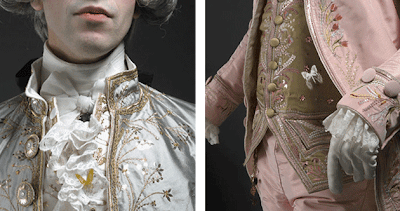
Thus for all your peacocking you are quintessentially male: You carry a sword and know how to use it, are good with your fists, love blood sports, shooting, horse racing and playing cards at your club with male chums. Dressed in a salmon pink silk embroidered frockcoat with matching silk breeches, old gold embroidered silk waistcoat, lace ruffles at your wrists to showcase your white hands, white clocked stockings to set off your massive calf muscles, an elaborately tied lace cravat, powder in your hair, a mouche at the corner of your mouth and wearing diamond buckled shoes with a heel, women swoon at the sight of you! Why? Because underneath that gorgeous metrosexual exterior is a real man just waiting to get his gear off!


Tuesday, September 18, 2012

An Englishman and his Dog...

by M.M. Bennetts


Whether it's Fielding's Squire Western with his Horses, Dogs and Bottle, or Austen's Sir John Middleton with his dogs, or Bronte's Mr. Rochester with his dog, Pilot, Siegfried Farnon, the vet from All Creatures Great and Small, or James Fleet's character in Four Weddings and a Funeral with his beloved black Lab, Englishmen are known for their close relationships with their dogs.  And never more so than in the past.

Englishman have always had dogs, haven't they?  Yes, of course, they have.  They're mad about the creatures.  But the stereotypical image we have today of the Englishman with his Labrador retriever or his Jack Russell terrier is actually quite a recent phenomenon, dating only back 150 years or so.

The short-coated Labrador retrievers (which are ubiquitous in the country) didn't originate in Labrador, but in Newfoundland, and the first mention of them there is in 1822, when a traveller there wrote of "small water dogs", commenting that "The dogs are admirably trained as retrievers in fowling, and are otherwise useful...The smooth of short-haired dog is preferred because in frosty weather the long-haired kind become encumbered with ice on coming out of the water."

Subsequently (sorry I can't find a date for it), the Earl of Malmesbury saw one of these animals which had been brought home by some English fishermen and instantly decided to have some imported.

By 1830, a sportsman by the name of Colonel Hawker was writing of them and calling the St. John's breed of water dog, saying they were "by far the best for any kind of shooting.  He is generally black and no bigger than a Pointer, very fine in legs, with short, smooth hair...is extremely quick, running, swimming and fighting...and their sense of smell is hardly to be credited."

But it isn't until a letter, written in 1887, by the Earl of Malmesbury, that they're given the name by which we know them today:  "We always call mine Labrador dogs, and I have kept the breed as pure as I could from the first I had from Poole, at that time carrying on a brisk trade with Newfoundland."

The Jack Russell terrier, such as those which travel about with HRH, the Prince of Wales, is equally modern...

John Russell (1795-1883), known as Jack, was a sporting mad young man, studying at Oxford prior to taking holy orders, when he encountered a little which terrier bitch...According to a memoir by E.W.L.Davies, published in 1883, the meeting went like this:

"It was a glorious afternoon towards the end of May, when strolling round Magdalen meadow with Horace in hand, but Beckford in his head, he [Jack Russell] emerged from the classic shade of Addison's walk, crossed the Cherwell in a punt, and passed over in the direction of Marston, hoping to devote an hour or two to study in the quiet meads of that hamlet, near the charming slopes of Elsfield, or in the deeper and more secluded haunts of Shotover Wood.

But before he reached Marston a milkman met him with a terrier – such an animal as Russell had as yet only seen in his dreams; he halted, as Acton might have done when he caught sight of Diana disporting in her bath; but, unlike that ill-fated hunter, he never budged from the spot till he had won the prize and secured it for his own.

"She was called Trump, and became the progenitress of that famous race of terriers which, from that day to the present, have been associated with Russell's name at home and abroad – his able and keen coadjutors in the hunting-field..."

In later life, John Russell became known as The Sporting Parson, and the line of dogs he bred from Trump live on in the flat-coated or wire-haired Jack Russell terrier--full of spunk and personality, the very best ratters one could hope to find, and generally, a beloved nuisance...

So...what's the novelist to do when writing about pre-Victorian times.  What kinds of British dogs would have been common in the homes of the gentry or aristocracy?  In the homes of farmers?

Spaniels are and were always popular (see above, sharing the picture with the black Labradors).  They're brilliant gun-dogs--and that in any age when shooting was a means of putting food on the table would have been essential.  Spaniels in some form or other date back at least to 1368 and these dogs come to be referred to as either land spaniels or water spaniels.

Brittany spaniels, for example, probably date back as far as the 3rd century.  But the first records that really pin down an actual Brittany-type spaniel are in 17th century tapestries and paintings.

Perhaps the best known though are what we now call Cavalier King Charles spaniels.  These small companion dogs are direct descendents of the small Toy spaniels that were popular throughout the 16th, 17th and 18th centuries and are often seen in the paintings of those eras.  (Madame de Pompadour had one.)  Even in Tudor times, they were popular as pets with court ladies.  But it was the Stuart kings, particularly Charles II, who gave them their name and reputation.

The diarist Samuel Pepys accompanied Charles II from exile.  Here are a few of his comments from his Diary for the date 25 May 1660--the date King Charles landed back in Britain:

"About noon (though the brigantine that Beale made was there ready to carry him) yet he would go in my Lord’s barge with the two Dukes. Our Captain steered, and my Lord went along bare with him. I went, and Mr. Mansell, and one of the King’s footmen, with a dog that the King loved,1 (which [dirted] the boat, which made us laugh, and me think that a King and all that belong to him are but just as others are), in a boat by ourselves, and so got on shore when the King did, who was received by General Monk with all imaginable love and respect at his entrance upon the land of Dover."

Here, though is an even more interesting morsel of trivia from Pepys' diary, a note about the dogs:

"Charles II.’s love of dogs is well known, but it is not so well known that his dogs were continually being stolen from him. In the “Mercurius Publicus,” June 28-July 5, 1660, is the following advertisement, apparently drawn up by the King himself: “We must call upon you again for a Black Dog between a greyhound and a spaniel, no white about him, onely a streak on his brest, and his tayl a little bobbed. It is His Majesties own Dog, and doubtless was stoln, for the dog was not born nor bred in England, and would never forsake His master. Whoesoever findes him may acquaint any at Whitehal for the Dog was better known at Court, than those who stole him. Will they never leave robbing his Majesty! Must he not keep a Dog? This dog’s place (though better than some imagine) is the only place which nobody offers to beg.”

Anyway.  These dogs fell out of fashion during the reign of William III, who preferred pugs (usually accompanied by a small black page boy).  And it wasn't until the late 18th and early 19th century that again they resurface, bred by the Duke of Marlborough at his home, Blenheim Palace.  (Which is why the chestnut and white coloured variety are referred to as 'Blenheims'.)

Other breeds which are surely old enough to figure into the lives of earlier generations of dog-loving Brits include Mastiffs, which Caesar described in his account of the invasion of Britain in 55 B.C.

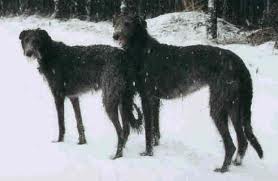
The Scottish Deerhounds and Irish Wolfhounds were originally one breed, but by 1576, the Deerhound was recognised as different, and highly valuable for the pursuit and killing of deer--a most coveted sporting occupation.  Both animals, although technically hounds, are rarely kept as kennel dogs because of their affectionate natures and love for human companionship.

And then of course, there are the packs of hounds--foxhounds and beagles, both of which are used for hunting and are kept in kennels and hunt in packs.

And yes, we love them all.  Truly, madly, deeply and forever...
~~~~~~~~~~~~

M.M. Bennetts is kept in line by two of the aforementioned creatures, a Cavalier King Charles spaniel with the temperament of the Dowager Countess of Grantham, and a Jack Russell terrier possessing all the character and charm of the Artful Dodger, but with sharper teeth.  The author is also a specialist in early 19th century British history and the Napoleonic wars, and has written two novels set in the period--May 1812 and Of Honest Fame (both featuring dogs)--with a third book underway.

For more information, please visit, www.mmbennetts.com.


Monday, September 17, 2012

The Original Jack the Lad - Jack Sheppard 1702 - 1724

by Mike Rendell

Had you been around in London on 16th November in 1724 there is a one in four chance that you would have been in the procession (some two hundred thousand strong) wending its way in a carnival atmosphere towards Tyburn Hill, where the empty gallows were being prepared for a hanging. One in four, because the crowd represented at least a quarter of the capital’s population at the time, and they were all there to ‘honour’ one man: the diminutive Jack Sheppard.

Daniel Defoe is presumed to have been hard at work scribbling the final touches to a biography which was on sale ‘hot from the press’ by the time of the execution. And the 22-year-old Jack, his cart escorted by uniformed guards, paused long enough at the City of Oxford Tavern in Oxford Street to sink a pint of sack (sherry), no doubt bemoaning the fact that one of his prison guards had discovered a pen-knife secreted about his person, and thereby scotched his chance of escape. And escaping was what Jack was good at, and why the crowds turned out in their thousands.

The series of three scenes shown above are from“The Last Scene”engraved by George Cruikshank in 1839, over a hundred years after Sheppard died, to illustrate the serialised novel, 'Jack Sheppard' by William Harrison Ainsworth.

For there was no doubt that the baby-faced Jack Sheppard was a thief, and was getting his just rewards from a legal system designed to protect the wealthy. But over and over again he had escaped justice with his daring escapes, and no doubt the throng wanted to see if he could pull off the final escape, the big one, from Death itself. There was to be no such luck, and the lad finally went to meet his Maker that day nearly three centuries ago.

Sheppard had been born in 1702 into abject poverty in the deprived area of Spitalfields: his father died when he was young and his mother had little choice but to send him to the Workhouse when he was six years old. Jack was lucky - eventually he was placed with a draper on The Strand called William Kneebone, as a shop-boy. Kneebone took the lad under his wing, taught him the rudiments of reading and writing and encouraged him to become apprenticed as a carpenter (a seven year indenture, which was signed in 1717 when Jack was 15). His master was Owen Wood, whose premises were in Covent Garden.

All went well for five years – an exemplary pupil, who showed every aptitude for carpentry and hard work. Then, well, he went off the rails. Maybe it was too many visits to The Black Lion off Drury Lane; maybe it was the blandishments of the young whore Elizabeth Lyon (otherwise known as Edgeworth Bess) whom he met there; or maybe it was the company he fell into while frequenting the establishment, and in particular the notorious Joseph ‘Blueskin’ Blake or the duplicitous Jonathan Wild (who styled himself the Thief-Taker General, though in reality he was a thief himself, but one who turned in his acquaintances whenever it was opportune to do so).

Whatever the reason, the fact was – young master Jack turned himself to a life of petty crime, and soon there was no way back. For a while it was pilfering – helping himself to odds and ends from people’s houses while on carpentry errands. But by 1723 he had jacked in his apprenticeship, and set up home with Mistress Bess.

Naturally she wanted to be spoiled rotten; naturally she was not content with the proceeds of minor shop lifting; she wanted Jack to show her the good life. He turned to burglary ( an offence which carried the death penalty). Mistress Bess was arrested after they had moved to Piccadilly from Fulham: Jack broke in to the jail and rescued her!

Jack and his brother Tom, aided by Bess, embarked on a series of robberies until Tom got caught. The previous year he had also been apprehended (and suffered the painful penalty of being branded on the hand). This time he shopped his brother Jack to save his own skin, and a warrant for Jack’s arrest was issued.

Knowing this, and anxious to get his hands on the forty pounds offered as a bounty, Jonathan Wild betrayed Jack to the constables and he was arrested and locked up in the very prison from which he had rescued Elizabeth. Within hours of his incarceration he had cut a hole in the ceiling (leg irons notwithstanding) climbed on to the roof and dropped down to join a crowd who had gathered when news of his escape became known. Diverting attention by announcing that he could ‘see someone on the roof over there’ he calmly shuffled off in the opposite direction…

In May 1724 Jack was arrested for a second time – caught while in the act of lifting a pocket-watch from a gentleman in what is now Leicester Square, and was taken off to Clerkenwell prison, where he was locked up with his mistress. A few days passed while Jack, active with a file, cut through the manacles which chained them both, and then removed one of the iron bars on the prison window. He lowered himself and his buxom Bess down to the street on a knotted bed-sheet (no mean feat given his lack of stature) and off they went into the darkness.

Things escalated – they tried their hand at highway robbery and burglary, stooping so low as to break into the home of his old employer and helper William Kneebone, but the greedy Jonathan Wild was closing the trap. He found Elizabeth Lyon, plied her with alcohol to loosen her tongue, and by this means established where Jack was staying.

Again he was arrested, again he was sent to prison (this time to the notorious Newgate), and guess what, he escaped from there as well! On 30th August a warrant for his death was being brought to the prison from Windsor – but by the time it arrived it was discovered that Jack had escaped. Aided and abetted by Bess he had removed one of the window bars, dressed in female clothing brought into prison by his accomplice, and made good his escape via boat up the river to Westminster.

By now he was renowned for his escapades. He was every cockney’s hero, Jack the Lad whom no bars could hold. After all, he hadn’t killed anyone, he was the ultimate cheeky chappy who always got away from the law in the nick of time. Added to that he was good looking in a baby-faced sort of way, young, strong and very agile. This was the stuff of which legends would be made…

Jack lay low for a few days but was soon back to his old tricks, and on 9th September was captured and returned to the condemned cell at Newgate, His fame meant that he was visited by the great and the good – gawpers who wanted to say that they had met Jack Sheppard. All this time he was not just in leg-irons, but chained to iron bolts in the floor of the cell.

Cheekily he had demonstrated to his guards his ability to pick the padlocks with a bent nail, and they in turn had increased the security by having him not just hand-cuffed but bound tightly as well. Having trussed him up like a turkey, they retired for the night…. and Jack set to work.

He couldn’t get rid of the leg-irons but he could free himself from the other restraints. He managed to break into the chimney, where his pathway was blocked by an iron bar. This he dislodged, using it to break a hole in the ceiling and as a crow bar to open various doors barring his way. At one point he went back to his cell to retrieve his bed clothes, as he needed these to drop down on to the roof of a building next to the prison. He waited until midnight, let himself into the building via the roof, and calmly walked out the front door (still in his leg-irons).

The lad must have had a fair amount of chutzpah, because after lying low for a couple of days he was able to persuade a passer-by that he had been imprisoned elsewhere for failing to maintain an illegitimate son – and would he mind fetching some smithy tools? The passer-by obliged and within a few hours Jack had broken his fetters, and was off to taste a freedom which was to last all of a fortnight.

It was at this point that the journalist Daniel Defoe was brought in to pen Jack’s story, which he did anonymously as The History of the Remarkable Life of John Sheppard.

On the night of 29th October Jack Sheppard broke in to a pawnbrokers shop in Drury Lane, helping himself to a smart black silk suit, a silver sword, rings, watches, a peruke wig, and other items. He then hit the town, dressed in style, and passed the next day and a half drinking and whoring. Finally, in a drunken torpor, he was arrested on 1st November, dressed “in a handsome Suit of Black, with a Diamond Ring and a Cornelian ring on his Finger, and a fine Light Tye Peruke”.

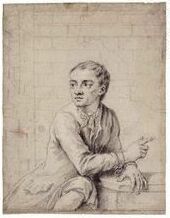
Back he was taken to Newgate, imprisoned in an internal room and weighted down with iron chains. His celebrity status meant that he was visited by the rich and famous, and had his portrait painted by James Thornhill, painter to his Majesty King George I.

Jack Sheppard sits for his execution portrait, to be done in oils by Sir James Thornhill. Also shown is one Figg, prizefighter (to Jack’s right); the playwright John Gay (to Jacks’s left); while William Hogarth sketches him on the right.


There was a clamour for his release but the authorities were adamant: Jack must pay the price for his notoriety. And so it was that on 16th November 1724 a huge and happy crowd escorted Jack to the gallows, where he did what prisoners were supposed to do – hang. After a quarter of an hour he was cut down, rescued from any attempt by the vivisectionists to claim his body, and buried in the churchyard at St Martin’s-in-the-Fields.

That was the end of Jack Sheppard but not the end of his story. Pamphlets, books and plays were written, all singing the praises of this swash-buckling hero. His name quickly became an icon and his story inspired John Gay to write The Beggar’s Opera in 1728. It was hugely popular.

Others piled into print and for the next one hundred years the tales based on Jack’s exploits were legion. It got so bad that at one stage the Lord Chancellor’s office banned the production of any plays containing Jack Sheppard’s name in the title – for over forty years – for fear that it would encourage lawless behaviour.

Courtesy of East London Theatre Authority.

Let us remember Jack Sheppard – a twenty-two year old who went to the gallows for offences which today would merit little more than a slap on the wrist or a spell in a Young Offenders Institutiion. The boy did wrong, but his memory lives on in our collective consciousness, kept alive by every tale of “the lovable Cockney rogue” and every mention of behaviour being that of “Jack the Lad”.


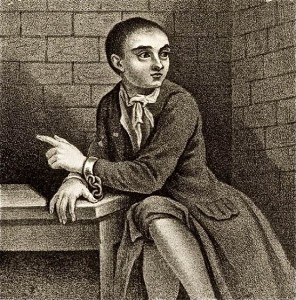
A mezzotint engraving, after the Thornhill portrait mentioned above.


(Mike is the author of The Journal of a Georgian Gentleman, a social history of England in the 18th Century as seen through the eyes of his ancestor Richard Hall. The book is currently being reprinted but you can follow Mike on his blogsite here.)

The Gilded Lily by Deborah Swift

Would you like to take part in a draw for 
The Gilded Lily by Deborah Swift? 
Not yet available in the US or Canada, here's your chance for a sneak preview. For more information, click on this link.
Comment to enter the drawing, and be sure to leave your contact information.

The Winner has now been drawn and it is Nancy Jardine. Congratulations to Nancy!

Sunday, September 16, 2012

Knights Templar - The Beginning

by Scott Higginbotham

The Knights Templar occupy a unique niche in the chronicles of history; those who write historical fiction have no shortage of fodder for their novels, as there is a wealth of information – sometimes conflicting.  The Templar order was feared, hated, respected, hailed, and coveted across a wide spectrum of medieval society, both in Europe and the Holy Land.  To be certain, this knightly order had few equals; they forged a new path and formed their bond upon a foundation like no other.  They were true originals.

In modern times they are speculated upon in countless ways - the Templars control the banking system, the stock market, are behind every uprising around the globe, wear strange hats and drive jalopies in parades, their secret symbols are on currency, and if a scapegoat is needed then look no further than the The Order of the Poor Fellow Soldiers of Christ and the Temple of Solomon.

There is much speculation, informed and otherwise, concerning the Knights Templar, but this piece will briefly touch upon their humble genesis and what facts are undisputed by historians.

After Jerusalem was captured during the First Crusade in 1099, religious zeal swelled as the news of the Crusaders’ victory spread across Europe.  Pious pilgrims trekked to the Holy City; however, they were beset on the perilous roads of Palestine, suffering the loss of their belongings and even their lives.  Nine knights later formed an armed brotherhood to protect the pilgrim roads of which Charles Addison puts it nicely:

To alleviate the dangers and distresses to which these pious enthusiasts were exposed, to guard the honour of the saintly virgins and matrons, and to protect the gray hairs of the venerable palmer, nine noble knights formed a holy brotherhood in arms, and entered into a solemn compact to aid one another in clearing the highways of infidels, and of robbers, and in protecting the pilgrims through the passes and defiles of the mountains to the Holy City.1


Red Cross Pattée - Scott Higginbotham

Moreover, their brotherhood was unique and original owing to the fact that these knights were warriors, but ones that embraced the same vows as that of monks - poverty, chastity, and obedience.  The ideal of a dashing knight astride a pawing destrier, begging a lady’s favor to wear on his arm had taken an odd turn.  Troubadours and bards had lost a portion of the deep, chivalrous well upon which to draw their verse.  Addison writes further, “They renounced the world and its pleasures, and in the holy church of the Resurrection, in the presence of the patriarch of Jerusalem, they embraced vows of perpetual chastity, obedience, and poverty, after the manner of monks.”2

In 1118 these nine knights, led by Hugues de Payens the order’s first Grand Master, were granted usage of a portion of the King of Jerusalem’s quarters, which was part of the al-Aqsa Mosque, believed to be built over King Solomon’s temple.  “It was from this place that the Order took its name - the Order of the Poor Fellow-Soldiers of Christ and the Temple of Solomon (Ordo Pauperum Commilitonum Christi Templique Salominici); Templars for short.”3

Beauseant - Scott Higginbotham

Until they were officially recognized, the Knights Templar remained a small and obscure force for about the first decade of their existence.  They operated largely upon their own initiative, but with the blessing and support of the King of Jerusalem and its Patriarch.  They initially wore no distinctive devices that proclaimed this new order, but their actions piqued the interest of Bernard of Clairvaux, head of the Cistercian monks, for it was Bernard that organized the Council of Troyes in 1129 thus giving the order official papal recognition.  This council transformed this small band that simply protected pilgrims into the army of Christendom and the interests of the Church.4

Templar Cross Sword - Scott Higginbotham
The Order would soon grow to be one of the most formidable fighting forces in medieval Europe, transcending borders, and drawing some of the most skilled knights into their ranks.  They were fighting men, but they were also monks, adhering to a strict Benedictine rule.  The red cross pattée on their surcoats (with minor variances) and the black and white Beauseant shield and banner were soon adopted as part of their distinction - many knights during the crusading era had crosses etched into the pommel of their swords.


Future posts will expand upon their rise, their nuances, and their ultimate demise.  But their legacy lives on as an interesting footnote in history and fuels much conjecture for novelists, theorists, and the curious.  Be sure to watch the video that follows - approximately 6 minutes and delves into the psyche of the order's founder. 


1Addison, Charles G. (2012-01-17). The History of the Knights Templars, the Temple Church, and the Temple (Kindle Locations 211-215). Kindle Edition.      
2Addison, Charles G. (2012-01-17). The History of the Knights Templars, the Temple Church, and the Temple (Kindle Locations 216-218). Kindle Edition.
3Temple of Mysteries (2010-12-01). The Knights Templar (Kindle Locations 116-118). Temple of Mysteries. Kindle Edition.    
4Temple of Mysteries (2010-12-01). The Knights Templar (Kindle Locations 148-149). Temple of Mysteries. Kindle Edition.
Scott Higginbotham is the author of A Soul’s Ransom, a novel set in the fourteenth century where William de Courtenay’s mettle is tested, weighed, and refined, and For A Thousand Generations, where Edward Leaver navigates a world where his purpose is defined with an eye to the future.