Thursday, September 7, 2017

The Brothers Penderel

by Cryssa Bazos

One of the most famous adventures in British history is the six week escape of Charles II following the Royalist defeat at the Battle of Worcester. This was during the 3rd English Civil War when Charles II marched his Scottish army south against Cromwell’s Parliamentarian forces on September 3, 1651. With the Royalist army in shreds and his bid to regain his crown momentarily crushed, Charles Stuart managed to escape Worcester and head north. So desperate were they to catch him, Parliament offered a thousand pound reward. Even with such a fortune, the king still escaped to France. How did he do it with Parliament beating the countryside for him?


Charles Stuart only survived through the assistance of the extraordinarily brave people, many of them commoners, who helped to hide him at great risk to themselves. The Penderel brothers, servants to a middle class family, were the first to put their life on the line for their king.

At pre-dawn in the early hours of September 4th, less than twenty four hours after the battle, an exhausted Charles Stuart with his close companions (including the Duke of Buckingham and Lord Wilmot) showed up at White Ladies in Shropshire seeking shelter. White Ladies was once a priory, but after the dissolution of the monasteries (over a hundred years earlier), the site passed to private ownership, and a farm house had been built beside the crumbling priory. In 1651, the Giffard family owned White Ladies and the surrounding area, including Boscobel House, a hunting lodge several miles away. 

White Ladies arch;
by Nilfanion - Wikimedia UK, CC BY-SA 4.0

A distant cousin of the Giffards, Major Charles Giffard, happened to be one of Charles’s companions, and as dawn approached, led the party to White Ladies where they could take shelter. Major Giffard knew his kin were loyal to the King and would gladly open their doors to receive their monarch, but when they arrived there, they discovered that the Giffards were not in residence. Instead, they were welcomed by their servants, John Penderel, his wife Joan and his brother George.

It was George who answered the knock, in his night shirt and cap. I can imagine his surprise when he answered the summons only to find the rightful heir to the British throne on the door step. There was likely a great deal of gaping involved. John Penderel had more presence of mind and welcomed the weary party into the parlour, where his wife passed out refreshments of sack and biscuits.

A few hours later, John sent a lad, Bart Martin, to fetch his brothers. The oldest Penderel, William, was the caretaker of Boscobel House, while Richard (also known as Trusty Richard) lived nearby in Hobbal Grange with their mother. The last Penderel brother, Humphrey, was also fetched.

Meanwhile, Charles’s party debated what they were to do and where to go. Word had reached them that one of the King’s generals, David Leslie, had been spotted in the area with three thousand of his men. Most were in favour of joining forces with Leslie in order to reach Scotland, but Charles flatly refused. General Leslie had not committed his reserve troops in the battle which was one of the factors in their defeat. In the end, the party agreed that those who wanted to leave should go, while Charles would make his own way, to where, no one was to be told. Secretly, Charles had made arrangements with Lord Wilmot to meet him in London, should either of them make it, but the implication was that each man would be getting there on their own.

Charles remained with the Penderels while the rest of his comrades left. Good thing, because later that morning, those who had left were all captured not far from White Ladies along with Leslie’s two thousand men!

Word reached the Penderels, and there was no time to waste. They had to somehow hide the King before the dragoons made a sweep of the area, as they would surely do. The Penderels scrounged up a coarse noggin shirt, a green suit and leather doublet for Charles. William, being the tallest, cobbled together rough shoes from his own footwear, the trick being that Charles’s feet were considerably bigger than William’s. 

Charles II at White Ladies, by Isaac Fuller
National Portrait Gallery NPG 5247
via Wikimedia Commons [Public Domain]

Hiding him would be a challenge. They couldn’t risk having Charles found at White Ladies, and they were expecting that the dragoons would insist on searching the house when they came, so Richard Penderel took Charles to a nearby coppice to hide. There the two men sat, in miserably wet weather. Richard had the presence of mind to beg blankets and provisions from his brother-in-law, Francis Yates, another Royalist.

Soon the militia arrived, and they were combing the woods looking for more of Leslie's men. In their hiding spot, they could see the militia beating the woods looking for more of Leslie’s men. By some bizarre twist (a fiction writer couldn’t get away with this), the rain only fell on the section where Richard and Charles hid. Instead of continuing their search, the poor weather chased them away.

I like to believe that it was here, soaked to the bone and having had a narrow escape, that Richard convinced Charles not to try for London and instead to ferry over the Severn and cross into Wales. From there, he could reach a port and arrange passage to the Continent.

They waited for night to descend before setting out on foot. Half-way between Bridgenorth and Shewsbury, around midnight, they came upon Evelith Mill and found a miller standing in the doorway of his mill, his white shirt visible in the dark. Richard warned Charles not to speak, as he didn’t have the manners or accents of a country fellow. When the miller heard them approach, he stepped out and challenged them:
“Who goes there?” the miller demanded.
“Neighbours going home,” Richard said.
And being disagreeable and belligerent, the miller said, “If you be neighbours, stand, or I will knock you down.”
Then from inside the mill, a burst of laughter erupted, and not knowing who the miller was entertaining, nor wanting to take any chances, Richard and Charles dashed for the gate leading to a “dirty lane up a hill.”

The miller screamed, “Rogues! Rogues!” and men ran out of the mill to investigate. Not knowing if they were soldiers, Richard and Charles dove over a hedge and hid in a ditch. They waited for half an hour to make sure they weren’t being chased.

Richard had to quickly concoct Plan B. He knew of an old Catholic gentleman, Francis Wolfe, who lived not far in Madeley and who would give them shelter for the rest of the night. If you recall, Richard’s nickname was Trusty Richard and he lived up to his monicker. When Wolfe asked who his companion was, anyone else would have made up an alias, but not Trusty Richard Penderel. He blurted the truth. I imagine Charles had a few bad moments until he realized Richard’s trust had not been misplaced. Wolfe was completely overwhelmed and pledged his aid to the king. Unfortunately, the only place he could safely keep them was his barn. Madeley had a number of priest holes but they had been found out and so weren’t safe to hide a cat in them, but who would ever think to hide a king in a barn?

The next morning, while Charles rested in his loft, Richard scouted the situation ahead. Bad news. All the ferry crossings were being watched by Cromwell’s men. There was no choice than to return back to the Giffard’s estate. After a simple meal of cold meat, Wolfe darkened Charles’s hands with walnut oil to make him look more weathered. Just before midnight, Richard and Charles set out again, this time for Boscobel House. 

Boscobel House
By Oosoom at Wikipedia, CC BY-SA 3.0
They arrived at 3am and found another Worcester with William Penderel. Major Carlis (also Careless) came from the area and knew the Giffards and their servants. But now there were two of them to hide. In the morning, William came up with another creative solution. All the priest’s holes in Boscobel had been previously uncovered so the house was not safe. William’s solution was to hide the men in plain sight, and he put them up in an oak tree. William had been tending the trees for years, and besides being sturdy, they were very thick and bushy at the top. 

The Royal Oak at Boscobel
By Oosoom at Wikipedia CC BY-SA 3.0
Up Carlis and Charles went into the tree (thereafter known as the Boscobel tree, or the Royal Oak), and the Penderels handed up a basket full of bread, cheese and ale for them to pass the time. While the two men hid in the tree, the Penderels kept close to the area, going about their wooding duties. 

Imagine how William would have felt when the militia showed up, to once again scour the area for fugitives. The militia passed right under the Boscobel tree, not once looking up. As an aside, a descendent of the original oak still lives on the property.

The next day, being Sunday, William kept the fugitives indoors, and Charles spent his time eating mutton and reading. His poorly shod feet were blistered and sore, and he could barely walk on them. Mistress Penderel personally bathed his feet. Remembering the trouble at the mill, the Penderels also took this time to coach Charles as to how to speak with a country accent.

Later that afternoon, John Penderel came to Boscobel to say that he had made arrangements for Charles to travel to the next safe house, Moseley Old Hall in Wolverhampton, the home of Thomas Whitgreave. Since Charles was still suffering with his feet and he couldn’t walk, Humphrey Penderel fetched his mill horse for Charles.

Charles left Boscobel with all five Penderels along for company. Along the way, Charles’s horse stumbled and Humphrey quipped, it was “not to be wondered at, for it had the weight of three kingdoms upon its back.”

In the wee hours, the Penderel brothers safely delivered Charles Stuart to Moseley Old Hall, where they commended him to the care of his new host, Thomas Whitgreave. He was one step closer to freedom.

Epilogue

When Charles Stuart was restored to his throne in 1660, he did not forget the Penderels. To Trusty Richard, the King bestowed an annual pension of one hundred pounds to be paid to him and his descendants in perpetuity. The other Penderels also received a pension, though a lesser amount. To this day, Penderel descendants are still receiving their share of the annuity.

Oak Apple Day is celebrated on the anniversary of Charles's birthday, with sprigs of oak leaves in honour of the Boscobel tree.

~~~~~~~~~~
Cryssa Bazos is an award winning historical fiction writer and 17th century enthusiast with a particular interest in the English Civil War. Her debut novel, Traitor's Knot, is published by Endeavour Press and placed 3rd in 2016 Romance for the Ages (Ancient/Medieval/Renaissance). For more stories, visit her blog cryssabazos.com.

Connect with Cryssa on Goodreads, Facebook, Twitter (@CryssaBazos), Instagram and her Website.

Traitor's Knot is available on Amazon in eBook and paperback.

Sunday, September 3, 2017

The Interesting History of London's Cheyne Walk and Its Famed Residents

©by Cheryl Bolen

Cheyne Walk is a rarity in London: a street of lovely mansions practically on the banks of the River Thames. Located in Chelsea, the walk was originally constructed in the early 1700's and over the centuries has been home to a Who's Who of authors, painters, musicians, one Prime Minister, and in more recent decades, billionaires.

The street is named after Lord Cheyne who lived in the Chelsea mansion until 1712, at which time he sold it to Sir Hans Sloane. The new owner constructed individual mansions on the site. Each of the properties went all the way to the river until the Embankment was built in the nineteenth century. Since then, pedestrians can stroll in front of the houses, which still have grand views of the river. Since the stunning Albert Bridge was built of iron in 1873, the homes on Cheyne Walk also have a close-up view of the bridge.

Sloane built Numbers 19-26 between 1759 and 1765 on land that had once held a manor house belonging to Henry VIII. It's said Elizabeth I planted trees on the site.

During the 19th century many artists and authors, including Dante Gabriel Rossetti, George Eliot, JMW Turner, Bram Stoker, and Algernon Charles Swinburne, lived here.

Sir Mark Brunel (1769-1849), who designed the Thames Tunnel, lived on Cheyne Walk, as did his more famous son, Isambard Kingdom Brunel (1806-1859), an engineering giant of the nineteenth century.

In 1886 Carlyle Mansions, a block of flats, was built on Cheyne Walk. They were named after Thomas Carlyle, whose residence was just around the corner from Cheyne Walk. The author was a lifelong resident of Chelsea. Famed authors who've rented flats at Carlyle Mansions (sometimes called Writers' Block) include Henry James, T.S. Eliot, William Somerset Maugham, and James Bond's creator, Ian Fleming, who also lived briefly at Number 124. (Flats there now average around $2 million each but can go much higher.)

Prime Minister David Llyod George (1863-1945) lived at Number 10. In the 1930s Laurence Olivier lived on Cheyne Walk, and another actor, American John Barrymore, also made his home briefly at Cheyne Walk.

Three of the Rolling Stones have called Cheyne Walk home. In the 1960s Mick Jagger lived at Number 48 with Marianne Faithful, and fellow band mate Keith Richards lived at Number 3. A later addition to the band, Ronnie Wood, lived at Number 119.

Author Ken Follett has lived at Number 92.

The houses have fences around them for privacy and locked gates, but their view of the bustling river from the upper stories has not been obstructed.

One of Sherlock Holmes' clients lived on Cheyne Walk in the BBC production starring Jeremy Britt. One scene supposedly depicts the home’s great river views during Victorian times.

Many of the homes have been turned into flats, but there are still a number of them which have remained multi-story homes. During the past forty years, billionaires have been buying these. John Paul Getty II lived in one. Russian billionaire Roman Abramovich, who owns the Chelsea Football Club, owns Number 101. In 2015, American billionaire and former New York Mayor Michael Bloomberg paid $25 million for the house at Number 4. See interior and exterior pictures of it here.

The house which formerly stood at Number 128 has been demolished, and the World's End Estate now stands on the site. The Clash front man Joe Strummer lived there.

Hopefully, no more of these historic houses will be demolished, and Cheyne Walk will remain largely as it was in the eighteenth and nineteenth centuries.

~~~~~~~~~~

Cheryl Bolen has strolled Cheyne Walk on one of her frequent trips to England. The author of 33 historical novels and novellas has been writing about Georgian England for the past twenty years. Her articles can be found both on her website,  or her blog. Her latest release is a Regency romance titled Miss Hastings' Excellent London Adventure.


Editors' Weekly Round-up, September 3, 2017

by the EHFA Editors

Enjoy this week's articles from the blog.

by Linda Root 


by Lauren Gilbert


by Sally A. Moore
Editor's Choice


Follow EHFA on Twitter, https://twitter.com/ehfablog.

Join us on Facebook, https://www.facebook.com/groups/212369672160560/, where readers, researchers, and authors come together to share posts on British history. Join the discussion. Find new books to read.

Saturday, September 2, 2017

Hero's Journey: Royal Brothers and the Great Fire of London

by Sally A. Moore

351 years ago on September 2, 1666, the Great Fire changed the face of London forever. Its advance ignited the spirits of its people for good and bad, and tested the mettle of the two brothers who governed England: Charles II and his brother, James, Duke of York.

By Anonymous [Public domain],
via Wikimedia Commons

Sometime between the hours of midnight and 2 a.m, a flame sprung up in the baker’s oven of Thomas Farriner. 
By daylight, most of Pudding Lane and Fish Street Hill were destroyed and the fire showed no signs of stopping. Samuel Pepys, an administrator for the Royal Navy, arrived at Whitehall to report to the King. 
“So I was called for, and did tell the King and Duke of Yorke what I saw, and that unless his Majesty did command houses to be pulled down nothing could stop the fire. They seemed much troubled, and the King commanded me to go to my Lord Mayor [Sir Thomas Bludworth] and command him to spare no houses, but to pull down before the fire every way.” (1)
Charles II and his brother James had returned to London in 1660 on the invitation of Parliament to end the Commonwealth and restore the throne of England. In those first six years of Charles’ reign, the Stuart brothers had garnered a reputation for a dissolute lifestyle with a people still in the throes of a Puritan hangover.
“The loose morals of Charles’s court were an unfailing source of public scandal, and as early as August 1661 Pepys was commenting on ‘the lewdness and beggary of the court, which I am feared will bring all to ruin again’.” (5)
King Charles II, by Unknown artist
National Portrait Gallery (NPG 1313)

Charles and James kept many mistresses and their profligate spending drew the criticism of his people. Contrary to Puritan doctrine, the Merry Monarch and his band of favourites spent long hours gambling and drinking, and the King’s courtiers publicly engaged in duels and verbal attacks one another. 
“These high-spirited gentlemen… diverted themselves at times with poetry, plays and literature in general, at times with sardonic comment on everything about them, couched, very often, in scabrous language.” (4)
Who was this self-indulgent Stuart king with a brother to mirror him, and why should the English people tolerate such pleasure-seekers as the governors of their nation? Wasn’t the plague two years before and the recent severe drought evidence enough of God’s displeasure?

The fire was to challenge the worth of these men at home and earn them notoriety abroad. Pepys, despite noting; the indulgence of Charles’ court; the mistresses of both men at hand; the King in his bed with dogs everywhere; and his nobles in the outer chamber at cards on a Sunday, also recorded the King’s immediate action upon hearing news of the fire.
“A clerk was summoned and the King dictated and signed a parchment. He handed it to Pepys, instructing him to find Sir Thomas Bludworth and give him the royal orders.” (3)
In addition to the instructions for the Mayor, the King promised the assistance of the King’s Royal Guard. The Duke of York informed Pepys that if soldiers were needed by the mayor, he would have them.

Duke of York, by Peter Lely
[Public domain], Wikimedia Commons

Pepys hastened to find Bludworth, but upon handing him the royal orders, the poor man, more suited to enjoying the royal favour of his appointment than in carrying out its duties, expressed himself overwhelmed.
“To the King’s message he cried, like a fainting woman, ‘Lord! what can I do? I am spent: people will not obey me. I have been pulling down houses; but the fire overtakes us faster than we can do it.’ That he needed no more soldiers; and that, for himself, he must go and refresh himself, having been up all night.” (1)
Bludworth retired without carrying out the King’s orders to continue the effort of pulling down houses. The King and the Duke of York took a barge on the Thames to see the extent of the damage. What they found was a city in dire threat of destruction.
“In the eighteen hours or so since the fire had broken out at the Farriner’s, it had destroyed twenty-two alleys and wharves, nearly a thousand homes and ships, and six Livery Company Halls, including those of the Vintners, the Watermen and the powerful Fishmongers... Nine churches were in ruins along with the parishes they served.” (2)
It was evident to the royal brothers that the fire would not be contained without immediate and sustained effort. Watching the flames devour the city, street by street, Charles and James became convinced that their intervention was crucial to saving the city.
“In a risky move which showed how seriously he viewed the situation, Charles overrode the Lord Mayor’s authority as chief magistrate and told Browne [London Alderman, Sir Richard Browne] to [continue the effort to] pull down buildings, concentrating on the area below London Bridge towards the Tower, where the presence of large quantities of gunpowder was making everyone nervous. He also ignored Bludworth’s refusal to ask for troops.” (2)
In spite of these actions, the fire took on a demonic momentum, devouring homes, shops, warehouses, and even spilling onto the Thames on slicks of oil and tar. The people fled in panic, unable to comprehend the destruction that seemed without end. Black smoke hung over the city and the sky turned blood red in reflection of the flames.
“Beside the dreadful scenes of flames, ruins and desolation, there appeared the most killing sight under the sun, the distracted looks of so many citizens, the wailings of miserable women and the cries of poor children and decrepit old people with all the marks of confusion and despair.” (3)
Faced with the loss of life and every material thing they had, the people gathered in the street and made a pitiful appeal to their king.
“The glow of the fires and the spurts of flame soaring into the heavens had lit up the windows of the Palace of Whitehall during the night. Citizens gathering outside the walls of his palace, held back by the company of Guards stationed before the gates, had woken Charles with their pleas of ‘God and the King save us.’ ” (3)
The hapless Bludworth was nowhere to be found, and Pepys noted that he was not seen for three days. While the mayor fled, the “dissolute” Charles and his brother sprang into action, declaring themselves stewards of the city. Recognizing the dire nature of this threat, they left the comforts of Whitehall on Monday morning, September 3, and spent most of the day and night fighting the fire.
“The streets were a bedlam of noise: the rumble of iron wheels, the cracking of whips, the rattle of carts jolting over the cobbles, the stamp of hooves, the sound of running feet and a cacophony of shouts and yells, voices raised in curses or prayers, and ‘the fearful cries and howlings of undone people’.” (3)
By Unknown- Display in Museum of London,
copy from Pepys Library in Magdalene College,
Cambridge [Public domain]

Wading into the fray without regard for personal safety, the brothers toiled alongside the citizens, alternately encouraging the people and the troops and passing off buckets of water or pulling down houses and calming the residents, acting with the determination of men of who would not shrink from the responsibility of saving the city that had welcomed them home six years before.
“By the end of the day the King’s clothes were soaking, his face black, his whole person muddy and dirty. But there were many testimonials to his bravery and resolution as he stood up to his ankles in the water, joining in the work with a will, wielding a bucket and spade with the rest, and encouraging the courtiers to do likewise.” (4) 
Their efforts were frustrated by changing winds and empty water reservoirs as a result of a drought, as well as the panicked flight of people. Charles carried a bag of coins to entice men into joining the effort, adding his personal royal plea to stand and fight. There were few takers, and even the royal guards were balking at their duty in the face of the growing wall of fire.
“By mid-morning on Tuesday the pall of smoke hanging over the city had grown to biblical proportions. It was so great, claimed Thomas Vincent, ‘that travellers did ride at noon-day some miles together in the shadow thereof, though there were no other cloud beside to be seen in the sky’. On the rare occasion when the sun did manage to break through the gloom, it was as red as blood.” (2)
Pepys described the fire from his garden as “…extremely dreadful, for it looks just as if it was at us; and the whole heaven on fire.” (1)

By Wednesday night, September 5, the fire was quelled, leaving a smouldering heap of destruction that covered up to 80 percent of the city and an estimated 100,000 homeless. In all, 13,000 homes, 89 churches including St. Paul’s Cathedral and 52 Guild Halls were destroyed.

The fact that anything was still standing and the loss of life estimated to be low was a miracle of heroic proportion. Without the courage of the royals it is likely that the fire would have consumed the rest of the city. The veneer of Charles’ court had burned away and exposed the men beneath who claimed the ruling class. While so many minor officials ran away, the royal brothers led their courtiers and people to triumph over the engulfing flames.

The Paris Gazette, in spite of relief on the part of the French that the fire would prevent an impending attack by the English, published a glowing story about the role of the Stuart brothers.
“[The Gazette] had nothing but praise for Charles II, crediting him with personally organising the firefighting and, through his kindness and courage, earning the lasting tenderness and veneration of his people.” (2)
James, too, was cited for his bravery and his ability to stay calm in the crisis, organizing the destruction of buildings to create a break for the fire.
“ ‘Next, Princely York, with sweat and dirt besmear’d/ (More glorious thus than in his Robes appear’d. James was seen ‘handling Bucketts of water with as much diligence as the poorest man did assist’. John Rushworth, a witness who wrote these words, went on to point out that ‘if the Lord Maior had donn as much, his example might have gone far to saveing the Citty’.”
In London, superstitions, despair and anger caused riots, the people blaming alternately the Dutch, the French or the wrath of God toward the ways of the King and his court for the catastrophe.
“Charles was anxious to reassure his subjects. So he addressed the crowd, telling them that the Fire had been an accident, and not a plot. It had come from the Hand of God. Just why God should have chosen to punish London in such a dramatic fashion he declined to say, although in the coming weeks and months there would be plenty who thought it an obvious and well-deserved judgement on Charles’s dissolute ways.” (2)
The aftermath of the fire was a period of hard-earned growth for England, with the new building slowly revitalizing London and a renewed respect between king and his people that lasted, with a few notable bumps, throughout his reign.
“…pleasure-loving, easy-going as the Court of Charles II was, it was not a bad and certainly not an evil place.” (4)
Charles never lost his taste for the pleasure-loving life that his people both loved and criticized him for. He continued to collect mistresses as some collect coins. But he and his brother had proven what Charles had professed to the people during the Great Fire: that they had the will and the means to protect their kingdom, a promise that was to test Charles’ resolve again in the years to come.

References:
1. The Diary of Samuel Pepys, 1660 – 1669
2. Permission of Heaven, the Story of the Great Fire of London, by Adrian Tinniswood, Pimlico, Random House UK, 2004 
3. The Dreadful Judgement, the True Story of the Great Fire of London, by Neil Hanson, Doubleday, 2001
4. Charles II, His Life and Times, by Antonia Fraser, Weidenfeld & Nicolson, 1993
5. The Life and Times of Charles II, by Christopher Falkus; Weidenfeld and Nicolson, 1992

This Editor's Choice was originally posted September 2, 2016

~~~~~~~~~~
Sally A. Moore is an award-winning writer from Kingston, Ontario in Canada. Represented by The Rights Factory Literary Agency in Toronto, she is currently writing a historical fiction/fantasy trilogy. Her writing credits include fiction and creative nonfiction, as well as poetry prizes from the Ontario Poetry Society and the Montreal International Poetry Prize. Sally is Past President of the Writers’ Community of Durham Region (WCDR), a member of the Historical Novel Society, and the recipient of the Len Cullen Writing Scholarship. Sally holds certificates of achievement from Humber School for Writers and a diploma with Distinction in Commercial Communications. 
Connect with her through Twitter (@SallyMoore11), LinkedIn, and her Website. For more information about her work, check out her portal, Legend of Three Crowns.

Thursday, August 31, 2017

The Murder of Martha Reay: Victim Blaming in 18th Century England

by Lauren Gilbert

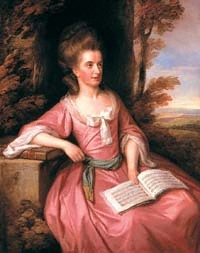
Martha Ray by Nathaniel Dance, 1777

It’s a story that could be taken from 21st century news media. The evening of April 7, 1779, Miss Martha Reay left the theatre with a friend. As she started to get into her coach, James Hackman shot her in the face with a pistol, and then tried to kill himself with a second pistol. Within a year or so of her death, the victim was considered somehow at fault in her own murder, even though he did not deny killing her. This case was a sensation in the press of the day.

Who was Martha Reay? Strictly speaking, in terms of the society in which she was born, Martha Reay (or Ray, or Raye, or other variations depending on the source) was no one. She was born sometime between 1742-1746 in Elstree in Hertfordshire, the daughter of a corsetmaker and his wife(?), a servant. She was apprenticed to a milliner or dressmaker at the age of 13 or so by her father. When Martha reached the age of 16, her father allegedly took her to a procuress with a prospect of prostituting her. By all accounts, she was an attractive girl (not strictly a beauty, but fresh and pretty in appearance) with a good singing voice and a kind nature. Whether through the efforts of the procuress or by other means, Martha became the mistress of John Montagu, the 4th Earl of Sandwich, when she was somewhere between the ages of 17 and 19.

John Montagu, 4th Earl of Sandwich, engraving, 1774

The Earl was a married man, aged about 44 years, and a career politician with a serious love of music. He had naval interests and was a patron of Captain James Cook, who named the Sandwich Islands for the Earl. (Contrary to the myth, the “sandwich” of bread and meat named for him was his quick meal to allow him more time at his desk, not the gaming table.) Unhappily married with only one living child (a son and heir also named John), he separated from his wife in 1755, shortly after which she was found to be insane by the Court of Chancery and was made a ward of the court. While his wife remained in permanent seclusion, he was unable to divorce and remarry.

When Lord Sandwich took Martha under his “protection”, he first placed her in a little house in Covent Garden with a companion, where he provided her with music masters. Whether the sexual relationship started immediately or later, the Earl took her (and her companion) to his family home Hinchingbrooke and treated her for all intents and purposes as his wife. She served as hostess at dinners Lord Sandwich hosted at the Admiralty Club for fellow politicians, and sang in two seasons of oratorios sponsored by the Earl. Over a 10-year period, Martha bore him 5 living children (4 sons and a daughter), whom he acknowledged. Sources indicate she actually had 9 children by the Earl, but only 5 survived. All accounts indicate that they were an affectionate couple.

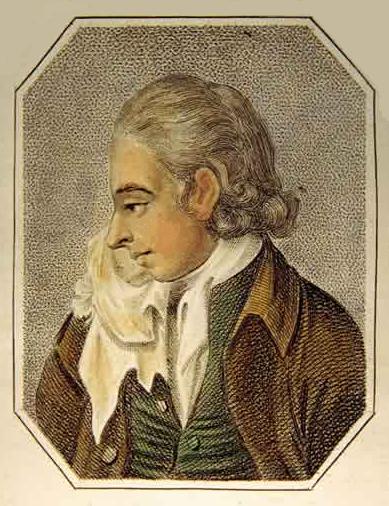
John Hackman, hand-coloured copper engraving, 1810


In 1774, John Hackman (a birth date of 1752 put his age at 22 at this time ) met the Earl while riding with a neighbour of the Earl’s, and was invited to dinner. At this point, he met Martha. Born in Hampshire, he was a handsome young man with the rank of ensign in the 68th regiment of the foot, of a respectable lower middle class family (originally destined for a trade, he went into the military instead.) Apparently, he conceived a romantic desire to rescue Martha from the Earl’s clutches. Martha was several years older than Hackman and there is no indication she had feelings for him. Being in the neighbourhood, they met multiple times. Hackman asked her to marry him and she turned him down. Accounts indicate Martha cited her loyalty to Lord Sandwich and that she had no desire to marry a military man. Shortly afterwards, Hackman was posted to Ireland. In 1776 he was promoted to lieutenant, but subsequently had resigned from the army to become a clergyman, supposedly in hope that Martha would change her mind and marry him. In February of 1779, he was ordained as a deacon, then a priest, and was assigned as rector of Wiveton in Norfolk.

Apparently, Hackman’s infatuation with Martha continued, possibly even grew, throughout this separation, and career change. (There is no indication he actually served in his clerical capacity.) He went to London, and sent Martha a note asking her to meet him. Accounts indicate she refused and told him to give it up, in essence. (This response appears to be the only letter known to have been written by Martha in the case.) Accounts indicate that his acquaintances noted that he was increasingly depressed. Shortly after this, on April 7, he followed Martha to the theatre, where he saw her in company including Lord Coleraine, who he decided was her current lover. He went to get 2 pistols, waited in a nearby coffee house, then, when he saw her leaving the theatre, committed the crime.

Stunned by her murder, Lord Sandwich had Martha buried next to her mother in Elstree. (Some accounts indicate he had her name engraved on a silver plaque which was mounted on her coffin.) In the meantime, during his murder trial, John Hackman pleaded innocent, saying he had not intended to kill Martha but only himself and that shooting her was a sudden impulse or frenzy, and his attorney said that he was insane. Judge and jury did not agree, especially because he had 2 pistols with him, and found him guilty. (Several witnesses also testified, which did not help his cause.) He was hanged at Tyburn April 19, 1779. Accounts indicate he met his end with bravery, asking to be buried near Martha, which did not happen. (His body was dissected at Surgeon’s Hall in London.)

The newspapers reported the case heavily, initially objectively. The supposed love triangle made it irresistible. Subsequently, Hackman's handsome appearance, his despair over his failed courtship and the death of his love resulting from his crime of passion made him a more sympathetic character. Speculation that Martha had somehow led him on then spurned him began circulating. Subsequently, a pamphlet (author anonymous) was published by G. Kearsley in Fleet Street, portraying John Hackman as good hearted yet misguided young man overwhelmed by his desire to save an undeserving woman. The romance combined with the facts that Hackman was a clergyman while Martha was a fallen woman appealed to the public’s imagination.

In March of 1780, G. Kearsley brought out a book titled LOVE AND MADNESS: A STORY TOO TRUE (written by Herbert Croft but published anonymously), to be the correspondence of John Hackman and Martha Reay over several years, supporting the view of Martha as the older woman taking advantage of a naive younger man then casting him aside, leading him to desperation. The book went into 9 editions. Even though the correspondence was forged and the book considered an epistolary novel when the author’s identity became known, many accepted it as factual. Public opinion leaned towards sympathy with the murderer, and a feeling that the victim had brought her death on herself.

Although Martha was known to have been concerned about financial security for herself and her children (given that the Earl was significantly older than she was and not overly wealthy), she had actually considered becoming a professional singer. There is no indication that she was ever unfaithful to the Earl or that she encouraged Hackman to believe she had feelings for him. Hackman’s known letters indicated that he chose to believe that she might marry him; this belief may have had roots in his obsession with an attractive woman whom he felt needed to be rescued or, even more simply, a refusal to accept that she did not want to be with him. In my opinion, evidence does not support the theory that Martha toyed with him then cast him aside.

After Martha’s death, Lord Sandwich took care of their children who continued to live with him. Although one son died, the other 3 had opportunities and their daughter married an admiral. Lord Sandwich died in April of 1792. Mary Hervey, Lady Fitzgerald, was shown as his last mistress by one source, but another referred to her as a good friend to the Earl. Most biographical references for the Earl that I found do not mention a mistress after Martha. It seems he remained faithful to Martha’s memory. I found nothing to indicate that he believed that Martha enticed Hackman. Sadly, you can still find speculation that Martha led James Hackman on in accounts today.

Sources include:

CASE and MEMOIRS of Miss MARTHA REAY, to which are added, REMARKS, by Way of Refutation on The CASE and MEMOIRS of the Rev. Mr. Hackman. London: M. Folingsby and C. Fourdrinier, 1779. (ECCO Print Edition)

Stebbins, Lucy Poate. LONDON LADIES True Tales of the Eighteenth Century. New York: Columbia University Press, 1952.

EverythingExplained.com. "John Montagu, 4th Earl of Sandwich explained" (no author or post date shown). HERE

ExecutedToday.com "1779: James Hackman, sandwich wrecker" by Headsman, posted April 19, 2015. HERE

Plagiary. "LOVE AND MADNESS: A Forgery Too True" by Ellen Levy, 2006. HERE

Pen and Pension. "The Rev. James Hackman and the Murder of Martha Reay" posted June 10, 2015 by William Savage. HERE

Royal Favourites. "English Earls' and Countesses' Lovers and Mistresses" posted by Eu Royales (no date provided). HERE

Smithsonian.com. "Fatal Triangle" by John Brewer, Smithsonian Magazine, May 2005. HERE

Watford Observer. "Martha Ray" (no author or post date shown). HERE

Illustrations:

Martha Ray: Wikimedia Commons, HERE

John Montagu, 4th Earl of Sandwich: Wikimedia Commons, HERE

John Hackman: Wikimedia Commons, HERE


~~~~~~~~~~


Lauren Gilbert, author of HEYERWOOD: A Novel, holds a B.A. in English and is a long-time member of JASNA. She lives in Florida with her husband, and is working on her second book A RATIONAL ATTACHMENT. Please visit her website here for more information.


Tuesday, August 29, 2017

The Promise and the Curse of Dynasty: A Stuart Tragedy

by Linda Root

The Tragic Deaths of the Sons of King James Charles Stuart:

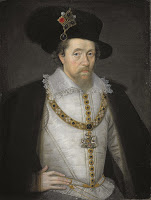
James I and VI
Seventeenth Century Britain was a society in which children were often regarded as commodities. In agrarian societies, numbers were important, especially if the counted heads were male.  Daughters were tolerable as long as there were not too many to be marketable. With the decline of female monasticism in England, the alternative of a nunnery was no longer viable. Even the highest levels of society suffered failed dynastic plans, not the least of which involved the Royal House of Stuart, even before James Charles Stuart VI, King of Scotland, ascended the English Throne as James I in 1603.
He was shortly followed from Scotland by the entourage of his Danish consort, Anne of Denmark, who traveled with their firstborn son and heir, Prince Henry Frederick, who was the image of everything a royal heir should  be.  

On instructions from the king's advisers, the second son was left in Fife. Ostensibly, he was too frail to travel. Or, perhaps his parents considered him an embarrassment likely to detract from the joy brought by the first Royal Family to grace England since the reign of Henry VIII. 

THE FIRST STUART PRINCE OF WALES

And thus, when the Stuart royals arrived in London, they brought with them the son and heir whom many were less impressed by the parents than their child, who was considered to be the Hope of England.

Henry Frederick, Prince of Wales

Meanwhile,  the not-yet-three-year-old Prince Charles, who did not walk, and when he spoke, stuttered, was left behind in a cloistered environment in Dunfermline in the household of the Scottish Chancellor, Catholic Alexander Seton. Finally Lord Robert Carey was sent to England to check on rumors of some improvement, and Seton was ordered to deliver Charles to London, where he was given the title Duke of York.  But even then, his liabilities prompted James to suggested his legs be encased in iron boots until Carey's wife, the redoubtable Dame Robert, tucked Baby Charlie under her wing and cajoled and bullied him into recovery.

Perhaps the earliest portrait of the future Charles I


Nine years later, on November 6, 1612, they saw the promise dashed when Henry Frederick, Price of Wales, died of what most likely was typhoid. When one considers its ultimate outcome, Henry Frederick's death may  be the most significant event in  17th Century English history. Upon his death, the Venetian Ambassador to England remarked: 'His authority was great... His designs were vast; his temper was grave, severe, reserved, brief in speech. All the hopes of these kingdoms were built on his high qualities."

A partial list of the attributes for which the prince was known and which his younger brother Charles lacked is portentous:

1. Prince Henry Frederick was a staunch protestant, but possessed a profound understanding of the theological issues of the day. His personal religious beliefs smacked of Puritanism, but his intellect was cosmopolitan.

2. His behavior and writings suggest he was not a Divine Right monarchist.

3. His thinking was mature beyond his years.

4. He was a sportsman and an athlete, and cultivated such an image of himself in art.

5. He enjoyed a personal correspondence with European royals not limited to members of his mother's Danish Royal Family, and including among others, Henri IV, King of France.

6. He was admired and respected by leaders in the Stuart government such as the powerful Earl of Salisbury, Lord Robert Cecil, some of whom had misgivings concern Scots in general and King James in particular.

7. He was no one's puppet, and there is evidence his father was afraid of him.

8. Physically, he was handsome and robust until illness struck him down, with the stature of his grandfather Henry Stuart, Lord Darnley and his grandmother Marie Stuart, Queen of Scots, both grandchildren of  Henry VII, and both near or over six-feet in height.

THE TRAGEDY OF THE SECOND SON: 

At the time of his brother's death, the future Charles I had overcome most outward manifestations of his childhood.  He had struggled to overcome his lameness and learned to control his stutter. But he never filled the image of his brother. By the time he succeeded his father  he favored a high Episcopal form of worship and was suspected to be a closet Catholic.  He married a Catholic French princess, Henrietta Maria,  three months after his ascension in 1625. He was a Divine Right monarch who made a habit of dismissing Parliament when it disagreed with him before he permanently disbanded it in 1629. Scores of historians who document his fall differ widely as to what kind of man he was and whether he was an anachronism or a charlatan, a victim of his unfortunate childhood or simply blind to change.


Whatever the diagnosis of the short-comings on Charles I, he was ill-equipped to rule a country on the brink of a Civil War unlikely to have happened had his brother lived. If he was successful at anything, it was as a family man. He begin his public life in England in an unpopular relationship with the Duke of Buckingham, and his marriage to a Catholic French princess placed him at odds with his father. His estrangement of his parliament clinched it. There are volumes written dealing with his fall. One could advance an argument that his attitude toward kingship killed him. He was executed outside the Banqueting House at Whitehall on January 30, 1649.  In any case, his execution created a hiatus in Stuart Rule.

A contrary argument can be advanced claiming the dynasty did not suffered from his death, since two of his son's survived to ascend the throne. However, the Stuart restoration can be chalked up to Dumb Luck rather than Divine Intervention. The military strategist and orthodox Puritan who managed England after the King's execution, Protector Oliver Cromwell, suffered a similar curse in leaving an ill-equipped and disinterested son  Richard Cromwell, to succeed him. The documents of government in effect at the time of Oliver Cromwell's death specified he should be the one to name his successor. With that in mind, he had been governing his son for years, with mixed results and much reservation as to his ability to lead the people and control the army.  His doubts were well founded and in 1659, with little hesitation on Richard Cromwell's part, he signed articles of Abdication on terms requiring the government to pay his debts and award him a pension. He received neither. But when the monarchy was restored the following year, he remained unmolested and resumed his former quiet life as a country gentleman. At that point, the English were tired of Puritan austerity and enthusiastically invited the Bishops back and the Stuart's home. There is no question the dynastic ills that cursed the Stuarts was with them both when they returned.

THE INGLORIOUS RESTORATION AND GLORIOUS REVOLUTION: CHARLES II AND JAMES II:


Without dwelling on the period of English history known as the Interregnum, a topic worthy of volumes, not a paragraph in a post, suffice it to say that England did not fare well without a sovereign. Scottish Parliament proclaimed the dead king's eldest surviving son Charles as Charles II in 1651. The English, in the hands of the Puritans, did no such thing. Following the defeat of Charles’s Royalist forces by Cromwell’s Model Army, Charles fled Britain.  He remained in exile in Europe for nine years until Oliver Cromwell's death resulted in a power vacuum and he was invited back to come home and take his crown.   He returned to London on his birthday in 1660 to rule as The Merry Monarch, an intensely popular king during his early reign, especially with the ladies.  Although known to have sired numerous bastards, some from one-night stands with nameless whores, he sired none to his unpopular wife, the Portuguese princess Catherine of Braganza. And thus, the Stuarts faced the next dynastic crisis.  When Charles II died without legitimate issue at Whitehall Palace in February 1685, having asked those who attended him on his deathbed to deal generously with his mistresses, the crown passed to his younger brother James, who was proclaimed James VII of Scotland first, and soon thereafter, as James II of England, and, who by comparison, was no fun at all.

When Charles II died, James, Duke of York became King James II, for lack of a viable, Protestant alternative.  James II and VII was the last Catholic King to rule the British kingdoms.  The Scots, who knew him from his time spent there, were known to refer to him as Dismal Jimmie.  He was not a bright man, nor was he pleasant, in some ways the most tragic of the surviving victims of the English Civil War.  Although he was hardly intuitive, he was possessed of an integrity which his brother lacked.  If he mastered anything, it was the balance sheet.  He ran his own life with great frugality.  He had inherited his executed father’s obstinacy and stutter.  And worse, by the time of his ascension, he was no longer a closet Catholic. His first wife Anne Hyde had died leaving two daughters surviving of her brood of seven.


When Anne Hyde, left, Duchess of York died in 1671, Charles II still ruled England, with no legitimate offspring to take the throne. All his brother had were daughters, Mary and Anne. In one of his last acts to assure a Stuart succession,  the Merry Monarch set out to find a proper protestant second wife for his younger brother, who would have none of it. James would do his own shopping, thank you very much! His qualifications for a wife were two: she must be Catholic, and  she must be beautiful. In the adolescent Princess Mary of Modena, above right, he found both. Unfortunately there had been no  stipulation requiring her to be fruitful.

On the day James, then Duke of York, brought his fifteen-year-old consort to meet his daughters, he introduced her as their new play-fellow. While the young bride was repulsed by her much older and unattractive husband at first, she came to cherish him.  The marriage lasted longer than James II’s brief occupation of the British throne.

A early portrait of William and Mary
He was not a bright man, nor was he pleasant.  Although he was hardly intuitive, he was possessed of an integrity which his brother lacked.  On a personal note, if he mastered anything, it was the balance sheet. He ran his own household with considerable frugality and his life with little wit. Unlike his brother’s union with Catherine of Braganza who was blamed for Charles II’s suspected deathbed conversion, it was James, then Duke of York, who had instigated his first wife’s Anne Hyde's conversion to the Catholic faith. By the time of his ascension, his own Catholicism was an ill-kept secret. What was worse, his youthful second wife was rumored to be the daughter of the Pope. When his bride landed in England, effigies of the pope were torched along their parade route. Just when it appeared as if the British monarchy could be in no greater jeopardy, it became obvious his  consort was barren, and his son-in-law William was ready to take up arms against him.

CURSED OR BLESSED?

The events that brought an end to Stuart Rule through the male line is filled with intrigue and conspiracies far beyond the limits of this post. By 1689, events in England tone on a tone echoed in the New World colonies in 1776.  The king had broken his covenant with his people. Having done so, he fled to France and thus, was deemed to have abdicated. Those who governed in his absence fashioned laws placing limitations on the monarchy, and with that detail out of the way, they invited the King's Dutch son-in-law William and his daughter Mary to come to England to claim their crowns. The rulership passed to William and Mary.  There is a legend that on his flight from England, James II dropped the Great Seal of England in the Thames. It is also reported that after his arrival in France, the wise said, ‘When you listen to him, you understand why he is here.’

Yet, his forced abdication does not end the story nor give credibility to the curse, but the place of the position of the  Stuart Dynasty in the English monarchy is no longer as direct as it was after the male line failed. James II's daughter Anne succeeded when  her sister Queen Mary's spouse and co-ruler died. In 1714, Queen Anne died childless. Debates range as to exactly when the Stuart Dynasty ended, but the Act of Settlement of 1701, settling the succession on the House of Hanover upon Anne's death is as good a date as any, or if one is a die-hard romantic, upon the death of the last Stuart Pretender, Bonnie Prince Charlie in 1788. In a certain sense, it never did.

It is noteworthy that Prince George and Princess Charlotte are the fourteenth great-grandchildren of Marie Stuart, Queen of Scots. And thus, while dynasty eludes the Stuarts after 1701, the bloodline extends forward to the present day, and back through Marie Stuart’s paternal grandmother Mary Tudor to Owen Tudor’s bloodline, and through her Stuart ancestors, as far back as The Bruce.


~*~*~*~*~*~*~*~*~*~*~*~*~*~*~*~*~*~*~*~*~*~*~*~*~*~*~*~*~*~*~*~*~*~*~
Notes:  Photos are in the public domain.  Art is PD -Art, courtesy of Wikimedia Commons, via Creative Commons and GNU.  Credit and accolades go to John Macleod's highly entertaining history, DYNASTY The Stuarts 1560-1807, St Martin's Press, 1999, to The Scotsman, The Guardian, and Wikipedia.

Linda Fetterly Root is a historical novelist living in the Morongo Basin area of the Southern California Hi-Desert, with numerous animals, both wild and tamed.  She is a member of the Marie Stuart Society, and of the Bars of the State of California and the United States Supreme Court.  She is a retired major crimes prosecutor who is is currently working on her eighth historical novel, this one set in 17th Century England in the aftermath of the  Gunpowder Treason.


Friday, August 25, 2017

A dark Welsh lady

by Anna Belfrage

In 1230, Ralph Mortimer of Wigmore took a certain Gwladus Ddu as his wife. Ralph was a Marcher Lord, always intent on expanding his domains into Wales. His new wife was as Welsh as they came, daughter of Prince Llewellyn the Great.

While Gwladus’ paternity has never been up for discussion – she is Gwladus ferch Llewellyn when mentioned in records of the time – who her mother was is a substantially thornier issue. Was Gwladus the product of Llewellyn’s long-standing affair with a certain Tangwystl, mother of his eldest son Gruffydd, or was she a legitimate daughter, born to Llewellyn and his Angevin wife Joanna? Somewhat ironically given the discussions as to whether Gwladus was illegitimate or not, Joanna was most definitely illegitimate, the daughter of King John of England.

To sort out who was Gwladus’ mother, one could start by trying to pin down when Gwladus was born. Well, unsurprisingly, it’s not as if there’s a neat entry stating her date of birth. Instead, genealogists usually work backwards from what known facts there are, and one of those facts is that Gwladus’ marriage to Ralph was not her first: she’d been wed to Reginald de Braose already back in 1215.

This, according to some, means she must have been born at the latest around 1202, so as to be of marriageable age in 1215. And if Gwladus was born in 1202, she could not be Joanna’s daughter seeing as Joanna and Llewellyn were wed in 1205, ergo Ralph Mortimer married an illegitimate Welsh princess.

However, there are some doubts as to whether there was a real marriage in 1215. Maybe it was more of a betrothal. Besides, why would Reginald de Braose, a man pushing forty and with heirs to his body (among which a certain William de Braose whom Llewellyn would hang in 1230 for having engaged in adulterous relations with Llewellyn’s wife, Joanna. All very complicated, isn’t it?) want to marry the illegitimate daughter of Llewellyn? A second marriage in this case would have been entered out of political interests, and Gwladus was worth much, much more as a political pawn if she was the legitimate daughter of a Welsh prince and the granddaughter of an English king than if she were the daughter of Llewellyn and the irresistibly named Tangwystl.

It is also interesting to note that while Gwladus and Reginald were married for thirteen years there are no recorded children. Reginald was definitely fertile and with her second husband Gwladus would go on to prove that she was too which begs the question if this first marriage was ever consummated, thereby indicating (perhaps) that maybe the bride was very young in 1215, corresponding with a birthdate after 1205.

When King John gave his daughter in marriage to Llewellyn, he also had Llewellyn promise that it would be the children he had with Joanna who would be his heirs. This was not in accordance with Welsh custom which in general supported every child’s right to inherit from its father, no matter if the child was conceived within or without the marital bed. At the time of Llewellyn’s wedding to Joanna, he already had a son named Gruffydd, so by agreeing to John’s demands he was effectively disinheriting his boy. Did not go down well with Gruffydd.

Llewellyn with his sons
Eventually, Joanna did present Llewellyn with a son who was named Dafydd. In 1229, young Dafydd rode to London to visit with his young uncle, Henry III. He did this to present himself before the entire English court as Llewelyn’s recognised heir, thereby formally acquiring his uncle’s support against his half-brother’s claim.

Interestingly enough, Dafydd was accompanied on this little jaunt by none other than Gwladus, at the time recently widowed as Reginald passed away in 1228. Now, the fact that Gwladus chose to accompany her younger sibling may indicate nothing more than a case of wanderlust. But if Gwladus was Gruffydd’s full sister, wouldn’t she have hesitated in accompanying her half-brother on a trip that had as its purpose to permanently scotch Gruffydd’s hopes of inheriting Llewellyn’s lands?

It did not take long for Llewellyn to find a new husband for his widowed daughter. This time, Gwladus was dispatched to wed Ralph Mortimer of Wigmore, a man some years her senior who’d become heir to the Mortimer lands upon the death of his older brother. The Mortimers were as covetous and power-hungry as all the Marcher Lords and while Ralph definitely wanted heirs, he also wanted valuable alliances. I seriously doubt he’d have wanted Gwladus—no matter how beautiful she might have been—unless she was not only the daughter of Llewellyn but also the niece of Henry III.

Whatever the case, Ralph and Gwladus seem to have hit it off. Over the first nine years of married life, she gave birth to six known children, among them the very competent Roger Mortimer who would go on to become a loyal servant of the king, behead Simon de Montfort at Evesham and marry Maud de Braose, daughter of the man his Welsh grandfather once hanged for adultery.
In 1246, Ralph died, leaving Gwladus a widow. She never remarried, dying five years later while visiting with her uncle, Henry III, in Winchester.

Not only don’t we know for sure who Gwladus’ mother was. We know nothing about Gwladus herself, beyond who her father was, who her husbands were, who her children were. She is defined not by who she was but by what she was, daughter, wife, mother. We have no depiction of her, all we have is her epithet, Ddu, which is Welsh for black. I guess this probably means that Gwladus was dark rather than fair, and I picture her with long dark braids and eyes the colour of a deep forest tarn. For some reason, I imagine she was of a serious disposition – but that is entirely fanciful, and for all I know, Gwladus may have been the life and soul of any medieval party she might have been invited to.

Gwladus Ddu remains an enigmatic and anonymous lady who attracts more interest due to the uncertainties surrounding her mother than due to herself. That’s a bit sad. However, no matter who her mother was, through Gwladus the blood of the Royal House of Gwynedd would pass down the Mortimer line, the Welsh Dragon lying dormant until that very distant descendant of hers, Edward IV, claimed the throne. Through Edward’s daughter, Elizabeth of York, that rather diluted drop of Welsh blood has made it all the way down the line to the present Queen. Having cried my eyes out over the sad fate of Llewellyn’s grandson and namesake, Llewellyn the Last, I find some comfort in that. Some.


All pictures in public domain and/or licensed under Wikimedia Creative Commons

~~~~~~~~~~~

Had Anna Belfrage been allowed to choose, she’d have become a professional time-traveller. As such a profession does not exist, she became a financial professional with two absorbing interests, namely history and writing.

Presently, Anna is hard at work with The King’s Greatest Enemy, a series set in the 1320s featuring Adam de Guirande, his wife Kit, and their adventures and misfortunes in connection with Roger Mortimer’s rise to power. And yes, Edmund of Woodstock appears quite frequently. The first book, In The Shadow of the Storm was published in 2015, the second, Days of Sun and Glory, was published in July 2016, and the third, Under the Approaching Dark, was published in April 2017.

When Anna is not stuck in the 14th century, she's probably visiting in the 17th century, specifically with Alex(andra) and Matthew Graham, the protagonists of the acclaimed The Graham Saga. This is the story of two people who should never have met – not when she was born three centuries after him.