By Kim Rendfeld
In 429, Germanus of Auxerre and another bishop got on a ship bound for Britain. Germanus did not speak the local language, but he wasn’t planning to speak to common folk. He needed to convince aristocrats who spoke Latin to reject something more dangerous than paganism: heresy.
This heresy was called Pelagianism, after the British-born monk Pelagius. His teachings had taken hold in his native lands and reached all the way to Africa. A lot of his writing no longer exists. So what exactly he believed and was preaching is a best guess.
Pelagius lived from the mid-fourth century until about 418. We don’t know much about his life. Even where he was born is hazy. He might have been British, Scottish, or Irish. He was described as tall and corpulent. But he practiced an ascetic lifestyle—one that requires fasting and other self-denial—which makes it hard to believe he was fat. He was well educated, and that made him more of a threat.
Apparently, Pelagius rejected original sin—that Adam’s sin tainted all of humanity, even newborns, and baptism alone could remove that stain on the soul. Pelagius also argued that people were born with a desire to be good and they had the strength of will, bolstered by asceticism, to redeem themselves rather than rely on divine grace.
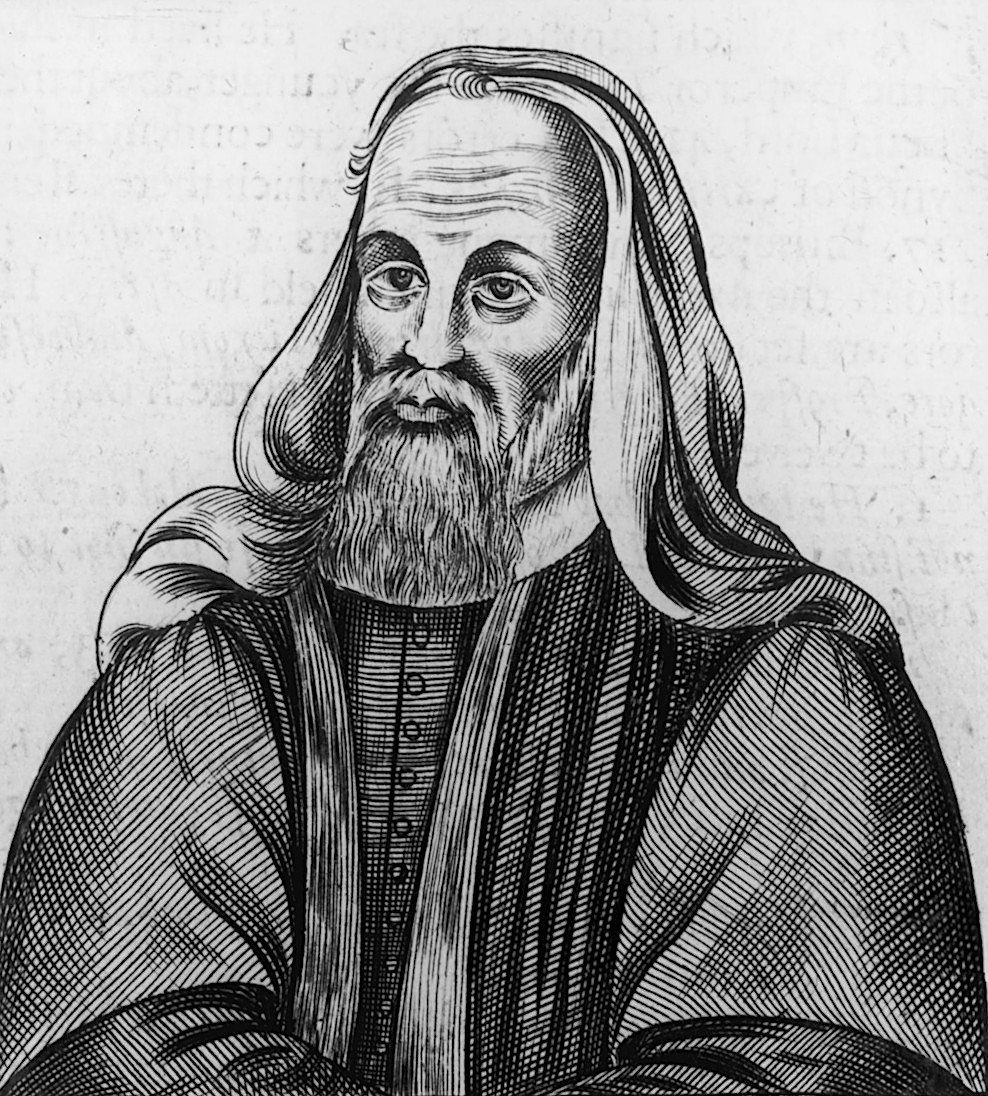 |
| 17th-century Calvinist print |
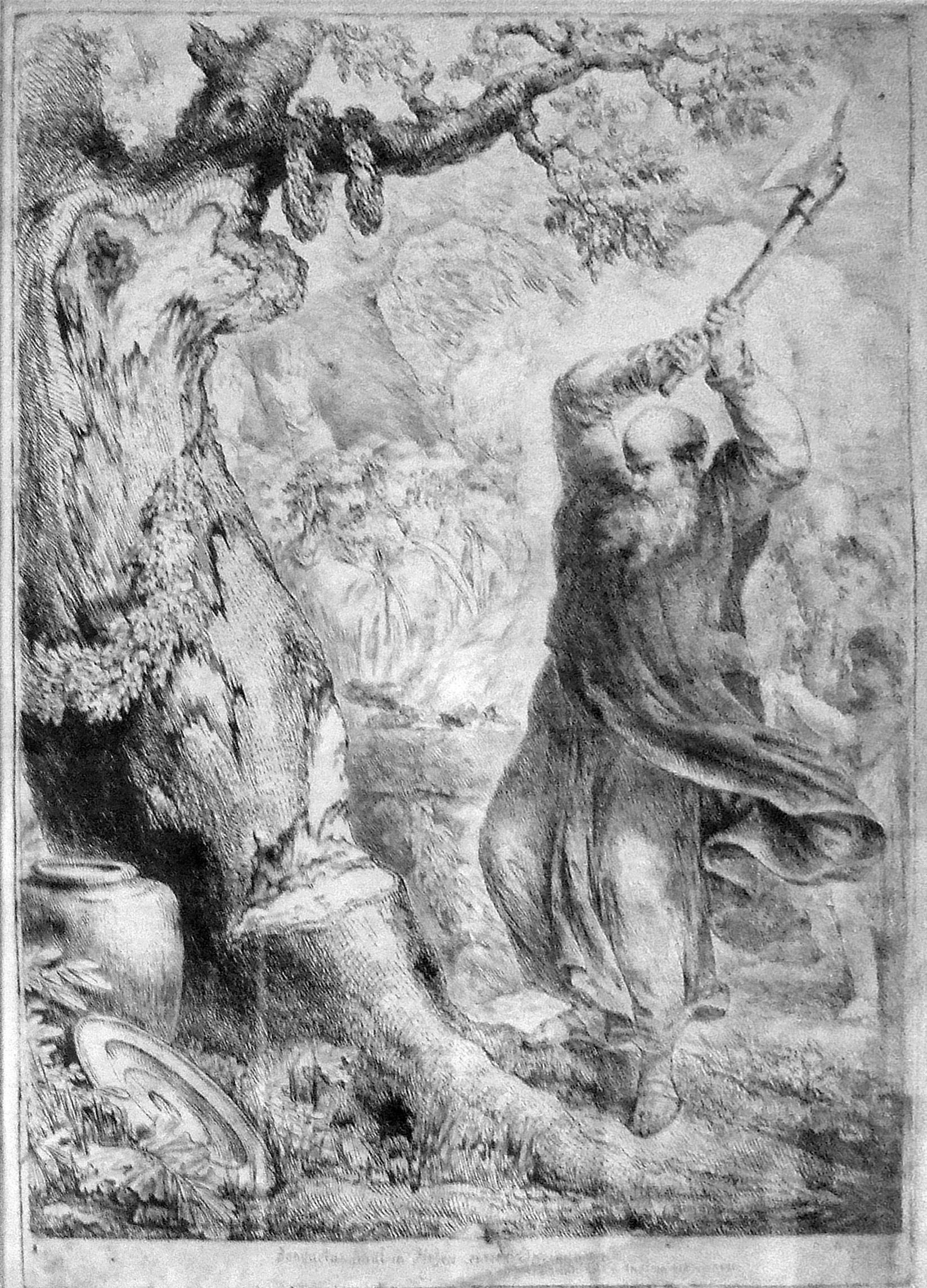
To the early medieval Church leaders, these ideas were more Stoic than Christian, and they posed a greater threat to the faith than the paganism they equated with devil worship. Priests could proclaim pagan gods to be false and chop down sacred trees to prove it (as Germanus’s predecessor Amator did). They could easily call a pagan an enemy. They often put up with vestiges of paganism among the faithful. If someone wore an amulet, a priest tended to look the other way. Heck, he might even employ an expert to interpret his dreams, although it went against Church law.
An eloquent monk who could quote Scripture and follow an austere lifestyle was a harder case, especially if he had supporters among the nobility. He could argue with Church officials on their own terms. But with core beliefs like original sin and divine grace, there was no room for compromise. For the Church to hold power, it have needed to be unified—with one set of beliefs and one hierarchy. Otherwise, the Church would splinter. Heresy was a threat from within, and it could not be tolerated. In 380, it became punishable by death.
Pelagius lived in Rome for many years without a problem. When Alaric destroyed the city in 410, Pelagius fled to Africa and was opposed by Church leaders, including Augustine, bishop of Hippo (354-430).
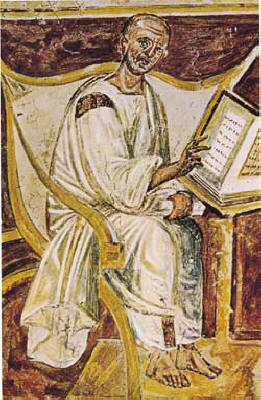 |
| 6th century fresco, Lateran, Rome |
In 417, Augustine participated in one of two synods in Africa that rejected the monk’s ideas. Pope Innocent I sided with the bishops and excluded Pelagius and one of his followers from Communion unless they renounced their ideas. Pelagius appealed. In the meantime, Innocent died and was succeeded by Zosimus, who ordered another investigation. The Council of Carthage in 418 again determined Pelagianism was heresy. This time Emperor Honorius got involved and exiled Pelagius’s followers in Italy. Pelagius disappears from history. No longer young, he might have died about this time.
At this point, Britain had been cut off from the Roman Empire for several years, and religious beliefs there were fluid. A Christian asked a Celtic goddess to avenge the loss of his coins, a week’s worth of wages. With this isolation, Pelagianism could flourish, and so it did. It had support from the wealthy and educated. Its adherents includes Celtic Bishop Fastidius and Agricola, a monk who was the son of a British bishop.
A synod in 429 sent Germanus and another bishop to Britain to stamp out the heresy. It might seem strange to send clergy who couldn’t speak the local language, but Germanus’s target audience could understand Latin. Like Pelagius, Germanus followed an austere lifestyle. If we are to believe his hagiography by Constantius, he had one meal in the evening, and he ate a mouthful of ash followed by barley bread made with flour he ground himself. He wore a hair-shirt underneath his tunic and cloak and slept on planks with ashes in between them.
 |
| Stained glass window in Truro Cathedral, c.1907 |
He was high-born and educated in the liberal arts and law and was a high-ranking military official before his unwilling entry into the priesthood. He has the right combination of piety, nobility, and knowledge to take on his opponents. His hagiography paints this as a fight Germanus won easily, because he had God on his side (and it includes a few miracles, too). But considering what happened later, the Church must have known it was in for a tough fight, and it needed someone whose devotion and credibility were beyond question. Still Germanus believed the heresy was squelched, and he returned home.
Funny thing about ideas. They have a way of hanging on and even evolving. A doctrine later called Semipelagianism had emerged around 420. The argument was that faith sprang from free will. Augustine countered that planting grace in the soul was an act of God.
Pelagianism’s survival might have been the reason the pope sent an anti-Pelagian bishop, Palladius, to Ireland in 431. Apparently, the heresy had not disappeared from Britain. In 447, Germanus made a second trip with another bishop. This time, he found only a few people were spreading Pelagianism. They were exiled from Britain and brought to the Continent.
Still, Pelagianism and Semipelagianism persisted for the next century in Wales, Gaul, Ireland, and Italy. They were condemned again at the Second Synod of Orange in 529 and apparently died out.
Sort of. The very thing early medieval Church leaders feared did eventually happen. Christians disagreed over core beliefs, and factions broke away. The debate about sin and grace never did disappear.
Public domain images from Wikimedia Commons.
Sources
Daily Life in Arthurian Britain by Deborah J. Shepherd
“Pelagius and Pelagianism” by Joseph Pohle, The Catholic Encyclopedia
“Semipelagianism” by Joseph Pohle, The Catholic Encyclopedia
“Who Was Pelagius?” 5 Minutes in Church History
“Germanus,” Encyclopaedia Romana
“Pelagianism,” Encyclopaedia Romana http://penelope.uchicago.edu/~grout/encyclopaedia_romana/britannia/anglo-saxon/earlychurch/germanus.html
“St. Germain” by Andrew MacErlean, The Catholic Encyclopedia
Ecclesiastical Records of England, Ireland, and Scotland, from the Fifth Century Till the Reformation: Being an Epitome of British Councils, the Legative and Provincial Constitutions, and Other Memorials of the Olden Time, with Prolegomena and Notes, Richard Hart
Antiquities of the British Churches by Edward Stillingfleet
"The Life of Saint Germanus of Auxerre," by Constantius of Lyon, translated by F.R. Hoare, Soldiers of Christ: Saints and Saints' Lives from Late Antiquity and the Early Middle Ages
~~~~~~~~~~

She has also written two novels set in 8th century Europe.
 In The Cross and the Dragon, a Frankish noblewoman must contend with a jilted suitor and the fear of losing her husband (available on Amazon).In The Ashes of Heaven's Pillar, a Saxon peasant will fight for her children after losing everything else (available on Amazon).
Connect with Kim at on her website kimrendfeld.com, her blog, Outtakes of a Historical Novelist at kimrendfeld.wordpress.com, on Facebook at facebook.com/authorkimrendfeld, or follow her on Twitter at @kimrendfeld.