Showing posts with label Northanger Abbey. Show all posts

Monday, November 4, 2019

Elisabeth Vigee Le Brun—A Brilliant, Adventurous French Portraitist During Jane Austen’s Era

by Diana Birchall

In Jane Austen's novel, Northanger Abbey, we are told that Catherine Morland was a naïve young girl, her mind “about as ignorant and uninformed as the female mind at seventeen usually is.” Fond of “horrid novels,” as Jane Austen termed the scary tales of the period, Catherine fancied that visiting Northanger Abbey, home of Henry Tilney, the clever, delightful young man she admired, would involve all sorts of delicious, romantic Gothic thrills. Instead she learned, with Henry pointing out to her, that such imaginings could not be real, not in a modern, Christian England; yet she still had to discover that people of ill will could be as troublesome as anything that sensational fiction could produce.

Catherine is, in my view, a true heroine. Therefore, I have longed for a portrait in which she might look out at us in what is called a speaking likeness. Where better to turn than to the beautiful female portraits painted by the famous French artist of the period, Elisabeth Vigee Le Brun? As she lived from 1755 to 1842, she encompasses Jane Austen’s own much shorter lifetime (1775 – 1817) and although Vigee Le Brun was French, she was by no means confined to France, as Jane Austen was to England, but lived an extraordinarily wide-ranging, adventurous, and remarkable life for a woman of her period.

Self portrait of Elisabeth Vigee Le Brun, 1790

Louise Elisabeth Vigee was born in Paris, daughter of a portraitist and a hairdresser. Her father died when she was twelve, and her mother remarried a jeweler, who exploited the young girl’s precocious artistic talents. Trained by her father, by the time she was fifteen she was a popular and prodigious painter, producing portraits highly sought by fashionable aristocrats, who saw her as a phenomenon. In 1776 she married Jean-Baptiste Le Brun, an artist and art dealer. Her star continued to rise, and by 1779 she painted the first of some thirty portraits she made of her patroness, Marie-Antoinette. This sealed her reputation and won her acceptance into the Academie Royale de peinture et de sculpture. Her talent for painting luminously flattering portraits of women in lovely Neoclassical fashions, was prized among courtiers. At the height of her fame, in 1789, with the arrest of the Royal Family and approach of the Revolution, Vigee Le Brun fled danger with her young daughter, Julie. Her husband remained in France during the dozen years of her exile and was obliged to divorce her. She traveled widely, in Italy, Spain, Austria, Czechoslovakia, Germany, Russia (she spent six years in St. Petersburg and painted Catherine the Great), Switzerland, and England. She was wildly feted and famed both as a painter and in high society everywhere she went, having as brilliant a career abroad as at home, and except for a brief sojourn in her homeland under Napoleon, she did not return to live in France permanently until 1805. She painted many famous people along the way, including Lord Byron, Madame de Stael, and King George IV as the Prince of Wales. After the death of her husband and then her daughter, she settled in Louveciennes, continued to paint, and wrote her gossipy, name-dropping memoirs, Souvenirs.

Portrait of Marie Antoinette, 1783

Vigee Le Brun is a fascinating figure among 18th/19th century personalities, radical in her behavior and her professional independence, her life was a striking contrast to that of the more retiring Jane Austen. The two never met; Jane Austen visited none of the countries where Vigee Le Brun travelled. They had only very slight, tangential connections in common, such as Vigee Le Brun painting Emma Hamilton, Lord Nelson’s mistress, and Jane’s brother Frank serving with Nelson. Or Jane’s cousin the Comtesse Eliza de Feuillide (whose French husband was guillotined) once writing a letter home to England about having seen Marie Antoinette at court, though there is no way of knowing if she ever came in contact with the Queen’s artistic friend. In her memoirs Vigee Le Brun tells an amusing story of spending time with an Englishwoman who spoke no French, while she spoke no English, and they determinedly each spoke for hours each in her own language, not understood by the other. Had Jane Austen ever met Vigee Le Brun, she might have done better, knowing at least some French; but she who refused an introduction to the clever worldly Madame de Stael, author of Corinne, might have been no more eager to meet the French woman painter.

Looking over a gallery of Vigee Le Brun’s works, searching for a face – one face, the face of Catherine – one is struck by how little the two artists’ worlds intersected. The painter was not only French but one who moved easily in aristocratic circles, a courted, public personality wherever she went. The faces she painted were mostly not English middle class or country family people such as are portrayed in Austen’s novels and letters. Moreover, we sense a faint disapproval of French culture in Austen, even apart from the fact that the two nations were at war for most of her life. The right-thinking Mr. Knightley disapproves of Frank Churchill in Emma, saying, “No, Emma, your amiable young man can be amiable only in French, not in English. He may be very ‘amiable’, have very good manners, and be very agreeable; but he can have no English delicacy towards the feelings of other people: nothing really amiable about him." And when young Catherine Morland comes despondently home from Northanger Abbey, her mother anxiously chastises her for talking too much about “the French bread at Northanger.”

Portrait of Madame de Stael as Corinne, 1809

By the end of her life Vigee Le Brun had dropped in fashion as a painter; her portraits probably seemed to hark back to the days of the Ancien Regime, and she mainly painted historical subjects. Nevertheless, during the years when she was painting lovely young women who were contemporaries of Jane Austen’s heroines, we do see a few faces that might have come out of Austen’s novels; and I recognized 'Catherine' as soon as I saw her. This young lady happens to have been exactly of an age with Catherine, painted in 1800 when she was eighteen, at just around the time as Austen was writing her early version of what became Northanger Abbey. The image in question is not however that of a naïve English country girl, but a French aristocrat, Corisande Armandine Leonie Sophie de Gramont (1783 – 1865). Corisande was a granddaughter of the Duchesse de Polignac, the favorite of Marie Antoinette, and she married an English Member of Parliament, Charles Augustus Bennet (there’s an Austen name for you!), 5th Earl of Tankerville, and settled in England.

~~~~~~~~~~


Diana Birchall worked for many years at Warner Bros studios as a story analyst, reading novels to see if they would make movies. Reading manuscripts went side by side with a restorative and sanity-preserving life in Jane Austen studies and resulted in her writing Austenesque fiction both as homage and attempted investigation of the secrets of Jane Austen's style. She is the author of In Defense of Mrs. Elton, Mrs. Elton in America, Mrs. Darcy's Dilemma, and the new The Bride of Northanger. She has written hundreds of Austenesque short stories and plays, as well as a biography of her novelist grandmother, and has lectured on her books and staged play readings at places as diverse as Hollywood, Brooklyn, Montreal, Chawton House Library, Alaska, and Yale. Visit Diana at her Austen Variations author page, follow her on Twitter, Facebook and Goodreads

The Bride of Northanger is now available for purchase through Amazon and Barnes & Noble. 


Friday, October 25, 2019

Eleanor Sleath: Gothic Heroine?

By Lauren Gilbert

With Hallowe’en fast approaching, it’s appropriate to look at scary subjects. Gothic novels were extremely popular in the late 18th and early 19th centuries. Although some were written by men, many of the most popular of these novels were written by women. Jane Austen wrote NORTHANGER ABBEY which satirizes these novels and their readers. In volume I, chapter 6 of NORTHANGER ABBEY, Isabella Thorpe gives the heroine Catherine Morland a list of these novels, now known as the “Horrid Novels”: CASTLE OF WOLFENBACH, CLERMONT, MYSTERIOUS WARNINGS, NECROMANCER OF THE BLACK FOREST, MIDNIGHT BELL, ORPHAN OF THE RHINE and HORRID MYSTERIES. THE ORPHAN OF THE RHINE was written by Eleanor Sleath, who achieved a certain level of popularity at the time but is fairly obscure now. For some time, little was known about her, but that has changed. Available data appears to indicate that Mrs. Sleath suffered as many tragic losses, trials and tribulations as any heroine in a novel.
Title Page from the First Edition of Jane Austen's
NORTHANGER ABBEY and PERSUASION

Eleanor Carter was born the youngest of five children to Thomas Carter, an attorney, and his wife Elisabeth Cousins Carter. Her date of birth is unknown, but she was baptized October 15, 1770 at All Saints Church, Loughborough, Leicester, England. Her father died in 1773. Little is known about her family except that they seem to live comfortably on income generated by properties owned by the family. Eleanor’s writings indicate that she was well educated. In September of 1792, she married Joseph Barnabus Sleath, a surgeon and apothecary with connections to the militia in Calverton, Buckinghamshire. Joseph’s birth date is unknown but it appears he was about 4 years older than she. Not long after their marriage, the couple had a son, whom they named for his father. All circumstances point to the expectation of a happy family life. Sadly, the child died in September of 1794. Shortly thereafter, Eleanor’s husband also died at the age of 28, leaving her extremely in debt. She returned to her family home in November of 1794 to care of her mother. With the help of her family, particularly her brother John Edward, her debts were paid off between 1794-1795. Eleanor experienced ill health during this time as well.

Sometime in the late 1790’s, Eleanor began to write for publication. It is unknown if she wrote for personal satisfaction or from a desire to generate her own income. Her first book was the afore-mentioned THE ORPHAN OF THE RHINE, which was published in 1798 by the Minerva Press. The reviews were rather lacklustre, citing the influence of Ann Radcliffe so apparent in her story. Subsequently there was also speculation that Eleanor had a pro-Catholic bias (if she wasn’t actually a Catholic). However the novel became quite popular. During this time, Eleanor and her family developed strong friendships with an intellectual circle that included Susanna Watts, who wrote poetry, did translations, and wrote the first tourist guide for the city of Leicester. Other members of this circle included Reverend John Dudley and his wife Ann. Reverend Dudley was the vicar of Humberstone and Sileby.
Cover of the reprint edition of
THE ORPHAN OF THE RHINE from Valancouort Books

In 1801, the family moved to Scraptoft Hall near Leicester. It was close enough that Eleanor was able to maintain her friendships, and she and her family mixed with local society. In 1802, Eleanor’s second novel, WHO’S THE MURDERER?, was published, also with Minerva Press. Over the next few years, Eleanor visited and was visited by her circle of friends, and they even travelled together. As members of the same circle, Reverend Dudley and Eleanor became friendly and wrote together. Things rather came to a head when, in 1807, Eleanor’s sister-in-law (her brother John’s wife) made a sarcastic remark in company about Eleanor’s friendship with Reverend Dudley. This ignited a scandal that resulted in Mrs. Dudley becoming jealous and hostile to Eleanor, and the previously close circle of friends taking sides.

A period of great upheaval ensued, with several results. Reverend Dudley and his wife began living separately. Eleanor, in the meantime, wrote and published 3 more books: THE BRISTOL HEIRESS, or The Errors of Education, published in 1809; THE NOCTURNAL MINSTREL, or The Spirit of the Woods, published in 1810 (and was considered by some to be her best work); and THE PYRENEAN BANDITTI, published in 1811, all with Minerva Press. In 1813, Eleanor’s brother John died. Their mother died 6 months later. As sad as these deaths were, Eleanor did inherit sufficient means to support herself. Although her whereabouts are unknown through much of the period 1814-1816, she wrote her 6th book, GLENOWEN, or The Fairy Palace A Tale, which was published in 1815 by John Harris and Black & Co. This book is different to her other novels. While still in the gothic vein, it was intended for children. It is known that she returned to Loughborough, where she bought a house in December 1816 and was able to live as a widow of independent means. There is no indication of her writing, or at least publishing, after GLENOWEN.

John Dudley and Eleanor continued to be friends throughout the years. Ann Dudley died in February 1823. John Dudley and Eleanor Sleath were married April 1st, 1823 in Loughborough. Eleanor was 52 years old. The couple settled in the rectory in Sileby, where she would have taken up her duties as the vicar’s wife. She died at home on May 5, 1847 of liver disease, after a period of ill health.

Sileby Parish Church taken by Kev747 April 14, 2006
SOURCES INCLUDE:

Austen, Jane. THE OXFORD ILLUSTRATED JANE AUSTEN. Northanger Abbey and Persuasion Vol. 5. 3rd Edition. Northanger Abbey, Vol. 1, Chapter 6, P. 40. Oxford: Oxford University Press, reprinted 1988.

Sleathsleuth.com NEW ELEANOR SLEATH BIOGRAPHY. “The Real Eleanor Sleath,” by Rebecca Czlapinski and Eric C. Wheeler. Posted May 8, 2011. HERE.

Books.google.com Garside, Peter, and O’Brien, Karen, editors. THE OXFORD HISTORY OF THE NOVEL IN ENGLISH Vol. II English and British Fiction, 1750-1820. Oxford: Oxford University Press, 2011. HERE.

English Historical Fiction Authors. “Northanger Horrid Novels” Thoughts from Regina Jeffers. October 8, 2011. HERE.

Gothicheroine.wordpress.com. “The Nocturnal Minstrel” by Ian Taylor. February 2, 2012. HERE.

Illustrations:

Title page from the 1st edition of NORTHANGER ABBEY and PERSUASION from Wikimedia Commons HERE. Public domain.

THE ORPHAN OF THE RHINE cover from Valancourt Books HERE.

Sileby Parish Church, Attribution: Kev747 at en.wikipedia GNU Free Documentation License. See HERE.

~~~~~~~~~~~~~
Lauren Gilbert was introduced to English authors early in life.  Lauren has a bachelor of arts degree in liberal arts English with a minor in Art History.  A long time member of JASNA, she has presented various programs at meetings of the South Florida region, and presented a breakout session at the Annual General Meeting in 2011.  She lives in Florida with her husband.  Her first book, HEYERWOOD A Novel, is available.  A second novel, A RATIONAL ATTACHMENT, is finally due out later this year.  A long-time contributor to this blog, some of her work is included in both volumes of CASTLES, CUSTOMS AND KINGS: True Tales by English Historical Fiction Authors. She is also researching material for a biography.  For more information, visit her website at HERE.

Thursday, February 9, 2012

‘Capital Improvement’, by Lady A~, the authoress of 'The Bath Novels of Lady A~' Collection


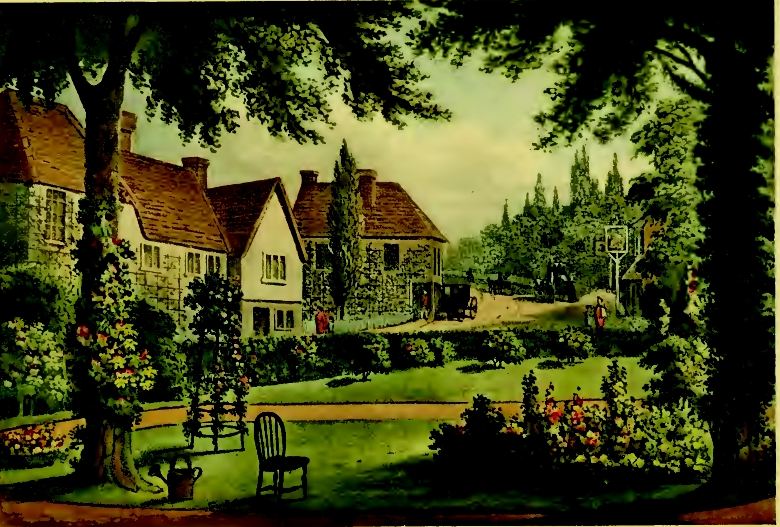
My compass for anything and everything historical is always set on the English Regency period, an era made hugely popular and famous in contemporary times thanks to the ‘mistresspieces’ of the late, great Jane Austen. Hence, I like to call it, the ‘Regaustenian’ era of English history. Besides the fascinations of the writer herself and the obvious allure of her novels, the Regency created an ideal backdrop for someone of Jane’s singular mindset—and her satirical-political commentary. It was an era that uncannily mirrored our own and, in many ways, set the trends for the things that have become an integral part of modern society and popular culture. One of those ‘things’ was the very intriguing ‘improvement’ trend, which permeated through Regency society from the top down, beginning in the eighteenth century. The very enlightened Prince Regent was a great ‘improver’ of everything, from parks to palaces, and even Jane’s family got caught up in the craze when the grounds of the rectory at Steventon, too, underwent ‘improvement’. Landowners all over the Empire, from the aristocracy to the gentry, were employing the principles of improvement. From landscapes, gardens and agriculture to art, music, manufacture and science, just about everyone was wanting to improve something. Essentially it was the beginning of the consumerist society that we have all evolved in to, today. And, as surely in our own social hierarchies, the trend began to divide Regency society into distinct groups—the meritocrats and the mercenaries. Not unlike the worldly Crawfords in Mansfield Park, there were those that used their wealth and influence to effect changes that were as brash and they were reckless. Only think of the ‘capital improver…. brought up in a school of luxury and epicurism’, Henry Crawford, whose infamous reputation as a change-merchant spurs the droll Mr. Rushworth into a rash improvement plan of his own. Coopting Crawford into a trip to evaluate the questionably fashionable overhaul of his own ‘noblest old place in the world’, Sotherton, even ‘creep-mouse’ little Fanny Price begins to bewail the effects of its certain outcome—one being the loss of an ancient avenue of oak trees—and to decry it with the libertarian-poet Cowper’s line: 'Oh ye fallen avenues, once more I mourn your fate unmerited.'

And this was where the improvement divide began to show itself, very clearly, in a ‘moralized landscape’. There were those who instilled ‘merit’ in change and those who did nothing of the sort. Essentially ‘contrivance’ versus utilization. Particularly in landscape design these two camps spiritedly challenged one another and Humphry Repton, mentioned, oddly enough (and perhaps a revelation of Rushworth’s lack of information), several times in the Sotherton conversation in Mansfield Park, became a champion of the utilitarian landscape. He advocated against ‘contrived irregularity’; the sort of quick-fix, disrespectful and dysfunctional, pseudo-natural makeover that the likes of Mr. Rushworth and Henry Crawford wildly support.

This ‘fashionable picturesque’, as touted by Richard Payne Knight and Uvedale Price, was contested by Repton who preferred converting estate grounds into natural landscapes from which a host of benefits were derived—from ‘social convenience’ to productive and efficient husbandry. Naturally the latter translated into allowing the much poorer tenants of the progressive landlord, of such a property, to put food on their tables more abundantly and sustain independent livelihoods. Contrast this with the mercenary ‘contrivers’ who often enclosed commons [common pastures] to simply improve the aspect of their view, while turning their tenants into laborers by usurping the public grazing land for the latter’s livestock. In such a light, the lay of the moralized landscape becomes much more distinctive under the influence of improvement.

In Merits and Mercenaries, the first ‘Bath Novel’ of my seven-book The Bath Novels of Lady A~ Collection, I wanted to highlight this trend, in particular, and its allegorical effects through a consumerist society of meritocrats and mercenaries, whose ideals and ideas turn into a veritable ‘war’. My hero, William Halford, for instance, is the epitome of the progressive improvers/meritocrats, and his acts of ‘enclosure’ on his estate are put to good effect in a ‘civic sense of responsibility’, allowing such ‘reclamation’ to ‘benefit all of the community that live off and farm on his land’. Additionally, he also applies this to the renovation of his ancestral home, which has been remodeled with every attention to ‘history, nature and art’. When his house-party guests arrive for the summer it is immediately apparent who blends well into such a milieu and who doesn’t—and why. Indeed, as the reader comes to understand William’s rectitude and libertarian mindset, so too, one is called to think of the characters that Jane Austen crafted working for—and against—such tenets, and how these shaped the characters of her most memorable casts. Darcy immediately comes to mind in this reflection, his Pemberley estate being ‘balanced’ upon the very criteria that inspired William’s just ‘realm’ in M&M, and so revealing the probity and moral nature of the man. In the same vein, Darcy’s aunt, Lady Catherine is exposed as a shameless consumer and Rosings is deliberately set in stark contrast to Pemberley, which has nothing ‘neither gaudy nor uselessly fine’.

In looking at the arrangement of each of Austen’s characters’ respective properties, tacitly or overtly reflecting improvement, one can determine what sort of people live in them, so much so, that the houses become ‘characters’ in their own right; hence, I conjecture, the choice of Mansfield Park as the title of her third (and most complex) novel.

When Fanny is enduring the rigors of ‘grog’ and ‘clatter’ in her slovenly parents’ home in Portsmouth, she is called to think of the ‘elegance, propriety, regularity, harmony … and … peace and tranquility of Mansfield’; again, an implicit reference to the home being in perfect balance with nature and art, so as to inspire order and harmony in ways that reveal the moral compass of those living in it. In Mansfield’s case, Fanny is the character most compatible with such a ‘balance’ in its elegant environment of propriety; the one most susceptible to, and benefiting from, ‘improvement’, while, in Portsmouth, her Mansfield upbringing is physically and psychologically ‘scuttled’ by the disorder and mayhem of her family’s abysmal abode and shiftless values.

Compare this with Austen's explicit expose, in Northanger Abbey, of the effects of improvement in General Tilney’s rapacious and despotic succession-houses’ enclosure: ‘The walls seemed countless in number, endless in length; a village of hot-houses seemed to arise among them, and a whole parish to be at work within the inclosure’. Here the General is doing exactly the opposite of what William Halford progressively effects in Merits and Mercenaries, by forcing the parish to labor in his aptly named ‘forcing-houses’; thus appropriating his tenants’ former livelihoods by his autocratic encroachment. Austen is very obviously drawing an overt parallel with this unjust ‘inclosure’ with the intrinsic nature of the General’s very questionable character and ethics.

Certainly the improvement trend is one of those socio-political, Austenian litmus tests which gets to the heart of class warfare in Austen’s novels and, in so doing, clarifies the significant theme of rational meritocracy versus entrenched elitism in Regency society. It weaves in the fabric of the latter, for good or for bad, the very nature of its morality or immorality and which Austen, then, scrutinizes so superlatively in her delicious microcosms of ‘3 or 4 families in a country village’. Thus the ‘prospect’ of the landscape or the houses established on it, in the light of implicit or explicit improvement, becomes something much more than a mere observation of aesthetic value. It foreshadows the prospects of the families and parties connected to the property, how their relative progressive or consumerist policies will determine their inevitable outcomes, and to which Regaustenian camp they will be ultimately assigned/relegated by so inimitable an author: Austen's most memorable meritocrats or her very machinating mercenaries.

SOURCES: Amble to Lady A's R&R Lyste, pray!

Fine opinions upon Lady A~’s vivid and vivacious Meritocrats and Mercenaries!

Purchase & Possess Merits and Mercenaries

Call upon Lady A~ & her TBNLA friends at HOME


Follow Lady A~’s ‘Twittershire’ larkish proxy, Mrs. Skyelark & all TBNLA ‘Visage-volume’ news

Coming soon a very 'stylish & steamy' TBNLA blog ‘Ye Bath Corner Blogge’ .

All 'Bath Novel' Imagery© Copyright, Hye St. Press, 2010-2012. All Rights Reserved.

All other imagery courtesy Wikimedia Commons