
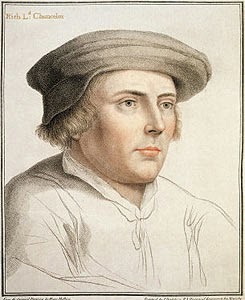
 |
| Sir Richard Rich, 1st Baron Rich of Leez (Hans Holbein the Younger) |
Sir Richard Rich, 1st Baron Rich of Leez, Essex -- was there ever a more manipulative man in 16th century British history? Simply stated, no. In fact, many historians would be hard pressed to find any British man who walked the earth with less redeeming qualities. With no moral center, not even the zealous religious fanaticism common for the era, the Baron Rich of Leez lived his life flip-flopping to the whims of the monarchs he served, resourcefully allying with and then stepping on anyone in his way to advancement and wealth.
Unfortunately for many in the realm, Rich was long-lived, spreading his venom throughout the reigns of King Henry VIII, King Edward VI and Queen Mary I, amazingly remaining unscathed. With the varying political and religious agendas of these monarchs, ranging from staunch Roman Catholicism to near Calvinist Protestantism and everything in between, just how did he pull this off? Well let us count the ways through this admittedly incomplete list.
______________________________
Ten Dastardly Deeds of Sir Richard Rich
Ten Dastardly Deeds of Sir Richard Rich
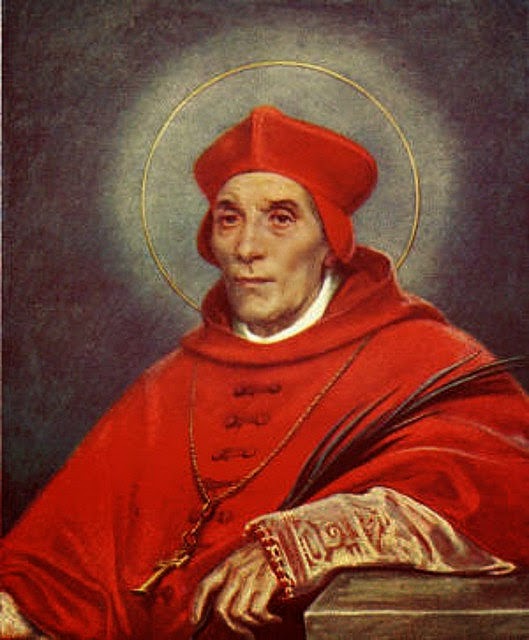 |
| Saint John Fisher |
In Thomas More's case, Rich flat out lied to the same. Thomas More reportedly told him at trial, "In faith, Mr. Rich, I am sorrier for your perjury than for my own peril, and you shall understand that neither I, nor no man else to my knowledge, ever took you to be a man of such credit as in any matter of importance I or any other would at any time vouchsafe to communicate with you."
Though the source of the quote is actually from More's son-in-law William Roper, truer words were never spoken. Both Saint John Fisher and Saint Thomas More were executed by decapitation for high treason based on Rich's dubious testimony.
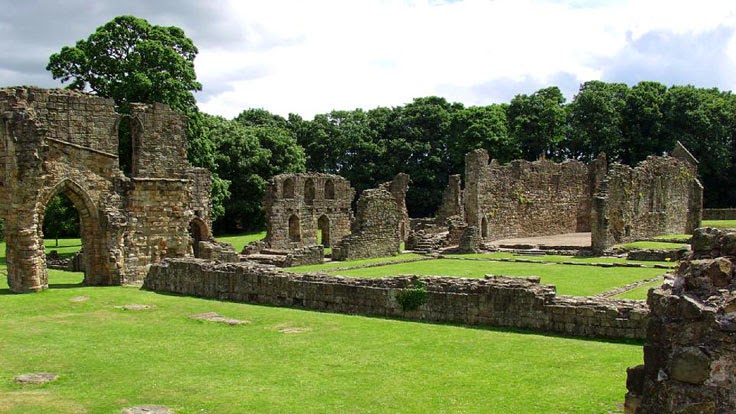 |
| Ruins of Holywell Priory, Middlesex |
2. In 1536, along with his other titles, Sir Richard Rich was appointed Chancellor of the newly created Court of Augmentations. In this role, he worked in partnership with the Vice-gerant and King's Principal Secretary Thomas Cromwell to dissolve all abbeys, monasteries and nunneries in England and Wales, displacing thousands and completely upending a way of life going back centuries.
What did Sir Richard Rich have to gain by this? Well, he acquired wealth and territories, of course. At bargain basement prices, he procured the monastery at St. Bartholomew, the priory of Leez, the manors of Lighes Parva, Magna Lighes, Folsetd and Fyfield in Essex. Not satisfied, he added to his land gains by procuring the nunnery of St. Bride at Syon, several manors in Essex once belonging to Christ Church, Canterbury and several more manors once owned by St. Osth's at Chic and the Holywell Priory, Middlesex.
Our Baron Rich of Leez was on his way.
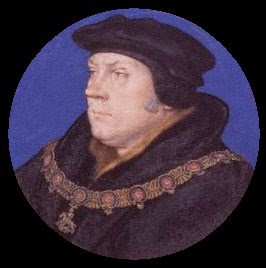 |
| Thomas Cromwell, 1st Earl of Essex (Hans Holbein the Younger) |
Thomas Cromwell made his opinions of Rich known to King Henry VIII in a letter after his arrest. From prison he wrote, "What master chancellor has been to me, God and he knows best; what I have been to him your Majesty knows."
The Baron of Leez was "off the hook" for perjuring himself in court this time, though. Cromwell was condemned on attainder, thus Rich's lies were solely to Parliament, the Privy Council and the King.
4. Sir Richard Rich was an incredibly resourceful villain. As King Henry VIII's religious views swayed from evangelical to conservative and back again, Rich went along for the ride, playing the role of henchman brilliantly. In July 1540, on the heels of Cromwell's execution, three men were burned at the stake, declared heretics for preaching doctrines opposed to King Henry's Six Articles of Faith.
On the same day -- that's right, the same day -- three more men were hanged, drawn and quartered for denying the Royal Supremacy. Think about that for a minute. Three Evangelicals and three Roman Catholics were put to death at the hands of Sir Richard Rich on the same day. Was there anyone more expert in riding the waves of King Henry VIII's ever changing religious doctrine? I think not.
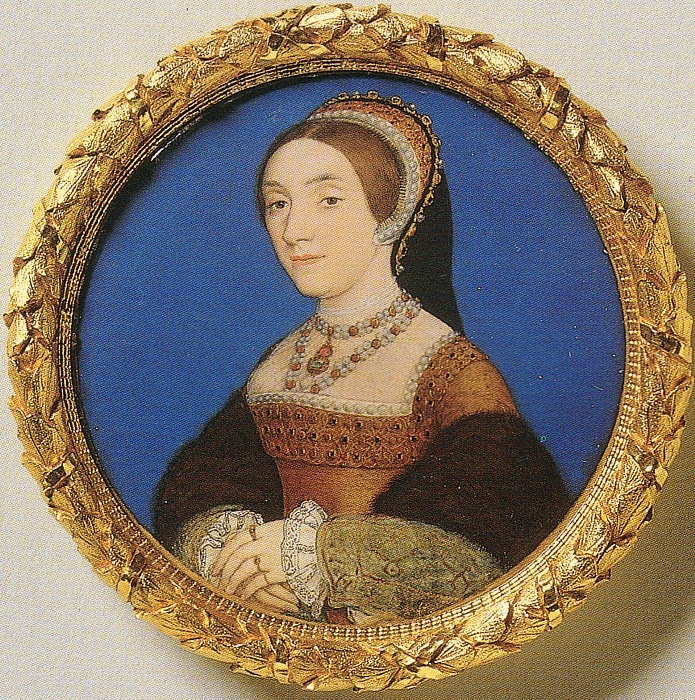 |
| Perhaps Queen Catherine Howard (Hans Holbein the Younger) |
If you are shaking your head disbelievingly, I don't blame you.
6. In 1546, the Baron of Leez was a busy guy. Along with Lord Chancellor Thomas Wriothesley and Bishop Stephen Gardiner, Rich engaged in a witch hunt, working to discredit and upend minor evangelicals in the hopes of snagging the major players, most notably Katherine Parr, Queen of England; Catherine Willoughby, Duchess of Suffolk; and Thomas Cranmer, Archbishop of Canterbury.
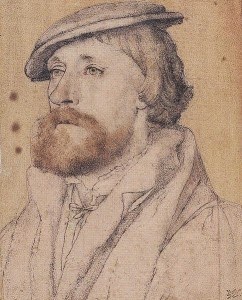 |
| Thomas Wriothesley, Earl of Southampton (Hans Holbein the Younger) |
With arms, legs, elbows and knees dislocated from the rack, Anne Askew was burned at the stake on July 16, 1546.
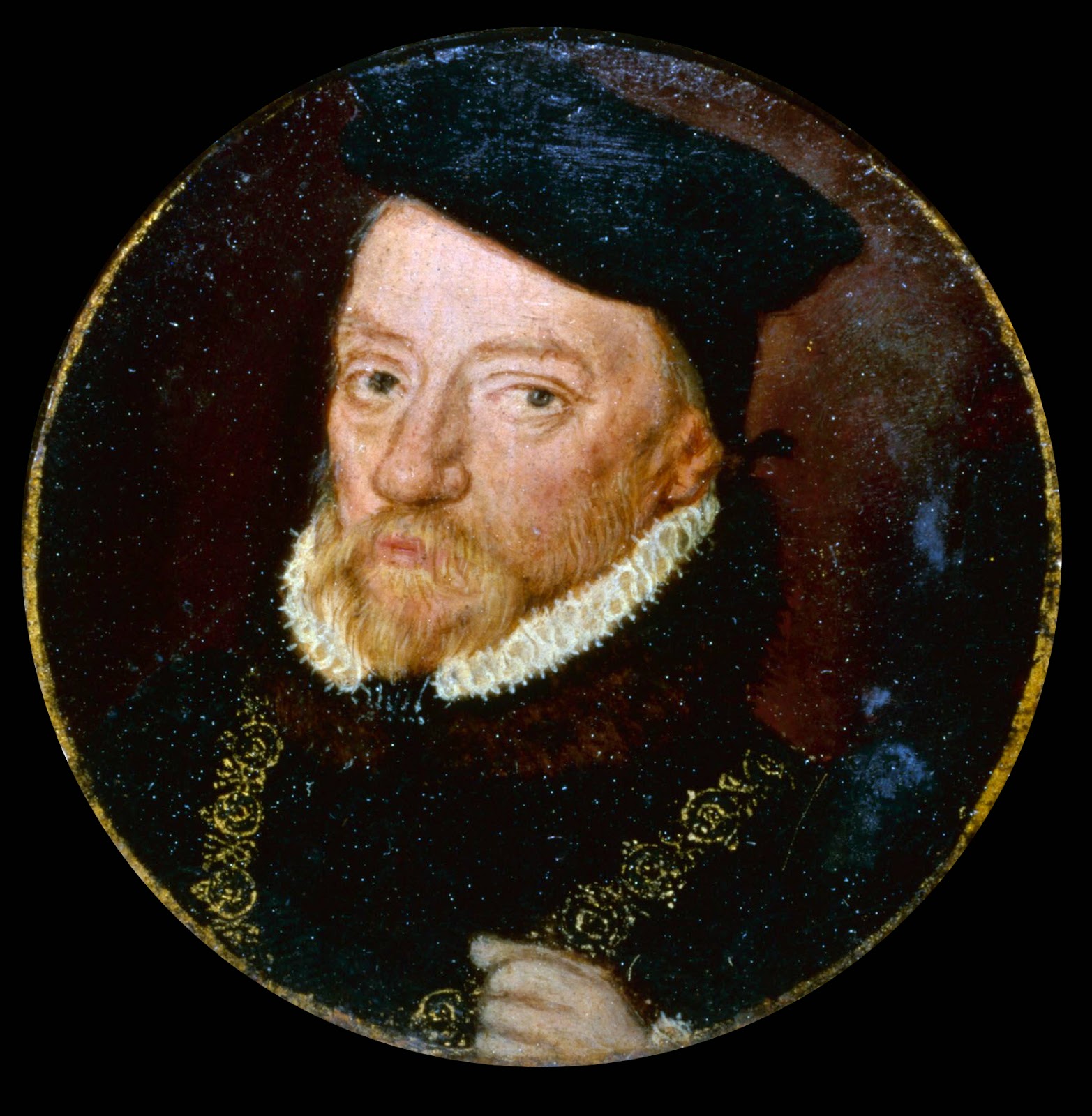 |
| William Paulet, 1st Marquess of Winchester (Hans Eworth) |
Things did not work out quite as planned. William Paulet was appointed in Wriothesley's place. No problem -- Baron Rich of Leez quickly convinced Lord Protector Edward Seymour and the Privy Council of Paulet's "incompetence", securing the Lord Chancellorship for himself.
8. Throughout the reign of King Edward VI, Lord Chancellor Rich was a "staunch Protestant". Thus, along with Archbishop Thomas Cranmer, he insured the destruction of all "images and idols" in the realm's churches. Throughout the realm great roods and stained glass were destroyed. All church and abbey walls were white washed, covering priceless works of art replaced with the Ten Commandments -- in English, of course.
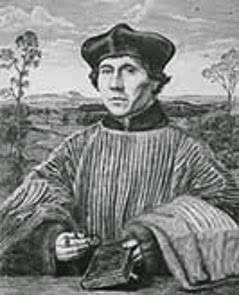 |
| Stephen Gardiner Bishop of Winchester |
Sir Richard Rich dutifully delivered a letter to the King's Roman Catholic sister from Edward VI himself commanding her to cease and desist. The Lady Mary's response? She commanded that Rich keep his lecturing short. Her celebration of the Eucharist continued.
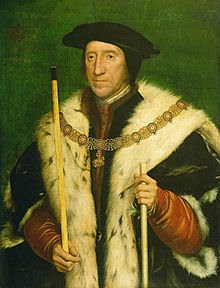 |
| Thomas Howard, Duke of Norfolk (Hans Holbein the Younger) |
Why? Like those in modern times who carelessly hit the "send button" before insuring they are emailing or private messaging the correct person, a befriending letter of manipulative warning intended to be sent to the imprisoned Edward Seymour, Duke of Somerset was delivered instead to the also imprisoned Thomas Howard, Duke of Norfolk.
I suppose addressing the wax sealed parchment "The Duke" was not quite specific enough for a missive sent to the Tower of London. After all, throughout Tudor history, there always seemed to be a few Dukes, Earls or Barons in the pokey.
What a great opportunity for Norfolk to gain potential release! Though ultimately unsuccessful (for now), the Duke sent the missive along to John Dudley, Duke of Northumberland. Rich's days as Lord Chancellor were over.
What a great opportunity for Norfolk to gain potential release! Though ultimately unsuccessful (for now), the Duke sent the missive along to John Dudley, Duke of Northumberland. Rich's days as Lord Chancellor were over.
Phew! Finally we are done with him. Or are we?
10. Upon the death of King Edward VI in 1553, both Mary Tudor and Elizabeth Tudor were usurped in favor of the King's cousin, Jane Dudley. Sir Richard Rich was solicited for support of the new queen. Knowing this was his chance to regain power within the realm, the Baron of Leez did what he is now infamous for. Rich flipped his support to whom he gauged would ultimately reign and proclaimed his loyalty to the woman he previously persecuted, Mary Tudor.
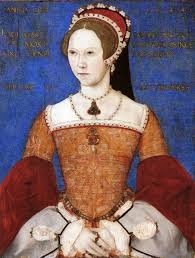 |
| Queen Mary Tudor (Hans Holbein the Younger) |
What was Sir Richard Rich's most noteworthy service to the realm in Queen Mary's reign? This should come as no surprise. Baron Rich, loyal subject that he was, became one of Queen Mary's most active persecutors, orchestrating the arrest and execution by burning of all convicted Protestant "heretics" in his home county of Essex.
Perhaps to make amends for his previous work as Chancellor of the Court of Augmentations, the Baron of Leez worked towards the large and unfinished task of restoring the monasteries. He granted the Queen what remained of the monastery at St. Bartholomew, where she established Black Friars.
______________________________
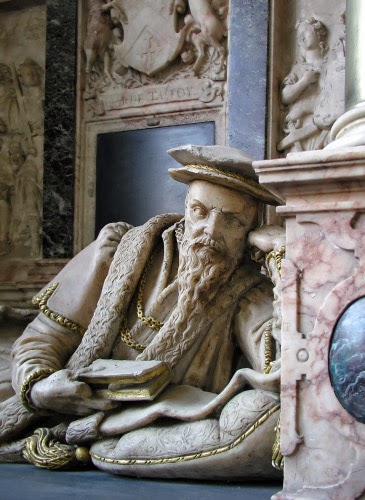 |
| Richard Rich, 1st Baron Rich of Leez Felsted Church, Essex |
Sir Richard Rich mellowed in his last years, perhaps in penance and preparation for meeting his God. The Baron of Leez founded a grammar school in Felsted, which in time educated two sons of Oliver Cromwell. He also founded almshouses to care for the poor and built the tower of Rochford Church.
The father of at least 15 children, 11 legitimate from his long suffering wife and at least 4 known bastards, Sir Richard Rich, 1st Baron Rich of Leez, died on June 12, 1567. He rests under his magnificent, albeit disconcerting tomb and statue at Felsted Church, Essex.
______________________________
 |
| The "resting place" of Richard Rich, 1st Baron Rich of Leez. |
______________________________
SOURCES:
Author Unidentified, Chapter X: Sir Richard Rich, British History Online
Author Unidentified, Richard Rich, 1st Baron Rich, Luminarium Encyclopedia Project, England Under the Tudors. The article notes that it was excerpted from the following: 1. Pollard, A. F. "Richard Rich, first Baron Rich."; 2. Dictionary of National Biography. Vol. XVI. Sidney Lee, ed.; and 3. New York: The Macmillan Company, 1909. 1009-1012.
______________________________
Beth von Staats is a short story historical fiction writer and administrator of
______________________________
This post is an EHFA Editor's choice. It was first published on July 23, 2014.

