Showing posts with label Kingdom of Mercia. Show all posts

Wednesday, November 28, 2018

Cynethryth, a Powerful Queen of the Mercians

By Kim Rendfeld


Queen Cynethryth had an exalted status during her husband’s reign and enjoyed seeing her son succeed his father, a rarity in 8th-century Mercia. Yet she would also see the dynasty she and her husband desired fall apart.

Alcuin, a scholar in Charlemagne’s court, described her as the controller of the royal household, a role akin to a treasurer and chief of staff for the kings—traditional for early medieval queens. She likely managed the properties of the many religious houses her husband founded and got papal permission to control.

Yet she had something unique: her image graces a coin minted during her husband’s reign. It was common for kings to assert their authority by having their image imprinted on currency. Cynethryth is the only known Anglo-Saxon queen to do so. Perhaps, she and her husband were inspired by the Byzantines, who minted coins with the image of Empress Mother Irene.

Cynethryth penny (public domain via Wikimedia Commons)


Cynethryth’s husband was Mercian King Offa. Although he had a reputation for ruthlessness, he knew how to play by the rules, at least when it served to his advantage. Unlike his predecessor, his kinsman Æthelbald (accused of fornication, including acts with nuns), Offa wanted the Church’s approval for his relationship with one woman—and only one woman—to ensure his offspring would inherit the crown. Offa knew that special woman, the mother of his children, should be queen of the Mercians, endowed with a royal status.

Offa apparently was a steadfast husband. He had no children born outside wedlock. True, the Church preached against sex outside marriage, but for men, it wasn’t a big deal. All a father had to do was acknowledge and support the child. Perhaps, Offa was faithful because he was fond of Cynethryth. He definitely wanted to limit the number of claimants to the throne and took the necessary, and maybe murderous, steps.

Presumably, Offa and Cynethryth wed for political reasons. We don’t know Cynethryth’s parents or her age. Her name is similar to 7th-century King Penda’s wife and daughters, so she likely came from a prestigious family. We don’t know exactly when the couple married, but her name starts to appear on charters around 770, where she identified herself as the mother of the heir to the throne, Ecgfrith.

Women in that era typically were teenagers when they married, some as young as 12 or 13. She might have been born a few years before Offa seized the throne. Æthelbald had been murdered in 757, and Offa drove away a rival shortly thereafter. Considering that Offa ruled for almost 40 years, he was probably a young man at the time. If he married around 769, he might have been in his 30s and thinking about the future.

By 770, Offa had imposed himself as overlord of Kent, taking advantage of a succession crisis there. Or, from his point of view, reasserting the Mercian rule his predecessor had established. He might have seen Cynethryth as the woman who shared his ambition for Mercia and would support his conquests. After their son’s birth, Offa continued expanding his territory into Sussex and the Hwicce.
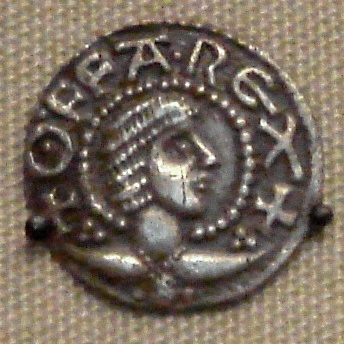
Coin with Offa's image (public domain via Wikimedia Commons)


Who Cynethryth was as a woman is hard to say. During her lifetime, the scholar Alcuin advised Ecgfrith to learn piety from his mother. After Cynethryth’s death—long after—she is accused of being as ruthless as her husband in ordering the execution of a visiting East Anglian king. In reality, her husband might have been responsible, for political reasons. But then again, Cynethryth very well could have supported her husband. Medieval women were ambitious.

In addition to the son, Offa and Cynethryth had three daughters, Æthelburh, Eadburh, and Ælfflæd. The couple put their daughters in positions of influence. Æthelburh was an abbess who corresponded with Alcuin. Eadburh wed Beorhtric, king of Wessex. The marriage solidified Beorhtric’s claim to his throne, and the father- and son-in-law drove out Ecgberht, son of Kentish King Ealhmund and a rival for the West Saxon crown. Ælfflæd married Northumbrian King Æthelred I.

In 787, Ecgfrith was crowned co-ruler with his father, a move that ensured his succession. After Offa died on July 29, 796, Cynethryth remained at court. Her son would die before the year was over. The cause of his death remain unknown, but I suspect it was not natural causes. Her son-in-law Æthelred was murdered that year, leaving Ælfflæd a widow. We don’t know whether Cynethryth lived to see Eadburh become a widow when her husband (likely) died in battle in 802 (likely) at Ecgberht’s hand. (Decades later, Alfred the Great’s biographer, Asser, accused Eadburh of accidentally poisoning her husband while trying to kill someone else. His account is highly suspicious for many reasons, including that Alfred was Ecgberht’s grandson.)

After Ecgfrith died, Cynethryth took the veil and became abbess of Cookham (in Berkshire), one of the religious houses her husband founded and bequeathed to her. Perhaps a sign of the couple’s affection is where Cynethryth chose to retire. Cookham was close to Bedford, where Offa was buried.
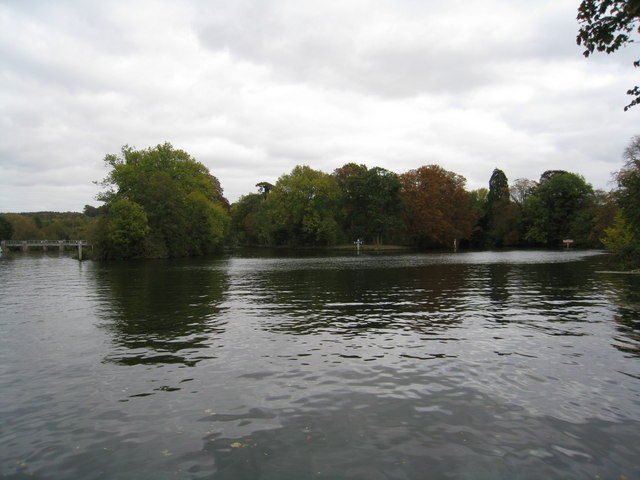
The Thames at Cookham (by Sebastian Ballard,
  CC BY-SA 2.0 via Wikimedia Commons)


Sources

Oxford National Biography
“Offa” by S.E. Kelly
“Cynethryth” by S.E. Kelly

“Political Women in Mercia” by Pauline Stafford, Mercia: An Anglo-Saxon Kingdom in Europe

Carolingian Connections: Anglo-Saxon England and Carolingian Francia, c. 750–870 by Joanna Story
~~~~~~~~~~

In Kim Rendfeld's Queen of the Darkest Hour, Queen Fastrada must stop a conspiracy before it destroys everyone and everything she loves. The book is available on Amazon, iBooks, Barnes & NobleKobo, and Smashwords.

Kim has written two other books set in 8th century Francia. In The Cross and the Dragon, a Frankish noblewoman must contend with a jilted suitor and the fear of losing her husband (available on Amazon). In The Ashes of Heaven's Pillar, a Saxon peasant will fight for her children after losing everything else (available on Amazon). Kim's short story “Betrothed to the Red Dragon,” about Guinevere’s decision to marry Arthur, is set in early medieval Britain and available on Amazon.

Connect with Kim at on her website kimrendfeld.com, her blog, Outtakes of a Historical Novelist at kimrendfeld.wordpress.com, on Facebook at facebook.com/authorkimrendfeld, or follow her on Twitter at @kimrendfeld.


Thursday, November 21, 2013

Saint Milburga

by Tim Carrington

The sisters of Llan Meilien,
Round the Abbess Milburga stood:
"Oh Lady, stay, go not away
Through that dark lonesome wood.
The road of wolves is sore beset,
And also of pagan foe;
Then tarry here, Oh lady dear.
To Godstoke do not go."
King Merewald's daughter raised her hand,
And sadly shook her head:
"Ere break of day I must away
To Godstoke", she said.
"For sword I'll take the Holy Cross,
My maiden truth for shield;
So armed my ass and I would pass
Safe through a battle field."


So starts a fascinating story of the lady who is known in history as Saint Milburga.

Milburga was the daughter of Merewald, a member of the royal house of the Kingdom of Mercia, who founded a monastery at Wenlock around AD 690. It was a double house; primarily a nunnery but also served by priests who lived a formal life under vow. Most probably these two communities lived separate lives, each with their own church.

Milburga, together with her sisters, Milgitha and Mildred, were canonised by Saint Theodore, Archbishop of Canterbury, at a time when the various tribes in Britain were at war with each other in a vicious power struggle.

The Archbishop's task was to preach brotherly love and Christian faith, although even that was a contentious issue as there were at least TWO schools. The Catholic church and the Druid/Christian/Pelagianism school which was still prevalent in rural areas and certainly in the mountains to the west. However, to a certain extent, the sanctifying of royalty was simply good politics, as it united the church and monarchy, and many of those thus honoured did not continue to live up to their new position of saint. Milburga, Milgitha and Mildred were the best with probably more recordings of their lives than many holy men of that period.

In this period it was the practice for royalty to marry their daughters to sons of neighbouring kings as a means of uniting kingdoms. Mercia, at that time, was allied with the Welsh against the might of the Northumbrians, and when peace came a Mercian princess duly married a Northumbrian prince. Milgitha accompanied her to found a convent in Northumbria. Mildred went south to Kent, the home of her mother, to become St. Mildred of the Isle of Thanet. Their mother was St. Ermenburga, a Kentish princess, who was one of the first members of (Saxon) royalty to become a Christian.

Milburga stayed at home, and under her role the convent at Wenlock flourished. Her aura, which some people believed in, was seen by many. It is recorded that she was found with a sick child in her arms, both engulfed by flames, though neither were burnt. As well as healing the sick, she had the power of being able to communicate with birds, and she was said to help farmers by putting a charm on their scarecrows. It is also recorded that she was able to prevent a flock of wild geese from doing damage to crops. In fact, in later years, pilgrims to her tomb purchased little leaden geese as mementos.

So Milburga prepared for her journey, but just before she left she confessed something to her sister that shows us that, despite being a Saint, she was only human!

"Oh, sister dear, I do not fear
The perils of the road;
Though dark the wood and deep the flood,
And wolves prowl abroad,
He in whose cause I journey
gainst foes will take my part;
But Milgitha, dear, I need to fear
My weak and sinful heart."
"You know how, when duty called,
I cast my love aside;
Wolfgang, I said, a Christian maid
Can never be a pagan's bride.
I vowed my life, my love to God,
My plighted faith I broke;
And, Milgitha, I have never rued,
The word which then I spoke.
"But when I journey all alone,
And foes around me wait,
I fear least I should meet with one
Whose love has turned to hate.
I daily pray for Wolfgang,
For his soul will I pray;
But, sister dear, alas, I fear
To meet him on my way."


Well, it's not the first time a member of a Royal family has had the 'hots' for someone. But, thankfully, in those days, they knew to put duty before the heart, and thankfully there were no tabloid newspapers to ‘scoop’ any indiscretions. BUT, alas, Milburga met Wolfgang on her travels.

Over hill and dale, through brake and fell,
Sped on her milk white ass,
And ere the sun had reached the noon,
Through Corve's fair vale they passed.
There in a deep red furrow
The sowers dropped their grain,
An armed pagan by their side
Looked out across the plain.
And when he saw Milburga,
His black eye flashed fire:
"False Maid," he cried, once trothed my bride
By thy fainthearted sire:
Thou who has trampled on the love
Of a Saxon nobly born,
Shall rue the day thou told me nay
And pay for all your scorn.
The maiden's heart it quailed not;
She meekly raised her eye:
"Wolfgang, your arm can never harm
One that has a friend on high:
He who can make that grain to spring
And ripen into fruit,
Powers rain and sunshine on your heart,
And bids your faith take root."
She pointed to the furrowed field;
Loo, even as she spoke,
From the dry seed up sprang green blade,
And stalk and full ear broke!
In sore amazement the serfs gazed,
The warrior smote his breast,
And humble on his bended knee
The Christian God confessed.
Changed was his mind. He looked and lo
As in a glorious dream,
Behold the maiden and her ass
Against Corve's glittering stream;
And where they go fresh flowers grow,
And to this day is seen.
Upon the sod which they have trod,
A belt of freshest green.
But why did Milburga ride so fast?
No danger now was nigh.
"Think not," she cries, "my perils past;
From my own heart I fly!
My prayer is heard, we too shall meet
In the bright realms above,
But not again on Earth's wide plain;
In Heaven is all my love."
"Speed quick, my ass!" The ass sped on
Till well near Godstoke,
Her strength was spent, she tottered bent,
And sank upon a rock.
Great blood-gouts from her nostrils fell,
And stained the stone with red.
The saintly maid knelt by her side,
And stayed her fainting head.
"The wicked prophet smote his ass,
I will not thee so smite,
For God doth stay my onward way,
Till I shall walk a'right.
Trust not on chariot nor on steed
'Tis writ, but trust in me.
But I sought safety in great speed,
Though none pursue, I flee."
So spoke the pious Maid; and lo,
A sparkling fountain burst
From the dry ground and bubbled round,
And the ass slaked her thirst;
And strengthened, gained the journey's end;
And holy pilgrims tell,
There doth remain a dark red stain
At the bottom of the well.


When the pagan Danes invaded our shores, Milburga's tomb at Wenlock suffered the fate of many churches and shrines and was destroyed. It was later restored by Lady Godiva, but was destroyed yet again in the early days of the Norman Conquest. Later still, Roger de Montgomery founded a prior of monks at Much Wenlock on the site of St. Milburga's convent. Her memory was rekindled by the accidental rediscovery of her resting place around the time of the rebuilding of the church. It is said that her remains wrought so many miracles that floods of people poured in thither.

And so the memory of St Milburga was rekindled, but in 1547, in the last year of the reign of Henry VIII, Abbott Butler of Much Wenlock recorded the public burning of her precious bones in a common bonfire. Today, the memory of St. Milburga still lives on, especially in the parish of Stoke St.Milborough, (Godstoke) where the church is dedicated to her and where her holy well stands close by.

But what sort of person was this Mercian Princess? Can we, after 1,200 years, even speculate as to her character? I like to think we can. Despite her devout faith, she was no less human and she possessed all the foibles and passions of her subjects. Perhaps this poem, by an unknown poet, written at an unknown time, is closer to the truth than many of the legends and stories that surround her. One thing is certain, if she had weakened and fell for the pagan Wolfgang there would have been many who would have lost faith in her position and ceased to hold her, or her family, in such respect. It might be a lesson that today's Royal family could learn from.

Visible remains

Today in Much Wenlock, although nothing visible remains of the religious house she founded, it is believed that the priory occupies the original site of the canon's church; and that the present parish church is founded on the ruins of St Milburga's Nuns church. It is here that Milburga was buried, as was her father some years earlier.

It is said that she was only eighteen when she became Abbess, and we are told that under her gentle rule the 'Abbey became like a paradise, in which the Lord had planted the fairest flowers and sweetest fruits,...."

Stoke St. Milborough

This village lies some 13 miles to the south west of Much Wenlock. The water from the well was traditionally a cure for eye complaints. For many years it was overgrown, but has now been landscaped and reopened to the public. It can be found a little way up the hill on the road from the church towards Clee St. Margaret.

I love Much Wenlock. Visiting there is like stepping back in time. But Saint Milburga is not its only claim to fame. It was here, in this tiny town in Shropshire that the Modern Olympics were first held having been organised by Dr Penny Brookes, a local doctor who was concerned that his patients were not fit enough. One of the events in the first Olympics was ‘chasing a pig’. I kid you not!

~~~~~~~~~~~~~

Tim Carrington is the author of the 5th century novels ‘Hywel’ and ‘Tadau a Meibion’.

Website