Showing posts with label Mary of Modena. Show all posts

Friday, March 15, 2019

The Glorious Revolution

by Judith Thomson

On the 10th of July 1688 a momentous event in the history of England took place – a baby was born! He was not just any baby, he was the son of King James ll and his wife, Mary Beatrice. Or was he?

The news was the very last thing most people in England wanted to hear. James had succeeded his charismatic brother, Charles ll, to the throne but James was nothing like him. When the monarchy had been restored after the troubled years following Civil War, Charles had vowed that he would never go upon his travels again and he had used his charm, and his intelligence, to make sure of it. James was unfortunately lacking in both these qualities. Lord Rochester, who had a cruel wit, summed up their differences by saying that “Charles could see all things if he would, whilst James would see all things if he could!”

But the worst thing about James, in most people’s eyes, was that he had declared himself to be a Catholic and had married a Catholic after the death of his first wife. To a Protestant nation, to whom the horrors of the Popish Plot were still a vivid memory, this was unforgiveable. Catholics had been accused at that time of all sorts of heinous crimes, including attempting to kill his brother, Charles, and whether or not the charges had been proved false, Papists were still viewed with suspicion, and even hatred, by most. Now, thanks to James, they were being given important positions of power.

Charles’ illegitimate son, the Duke of Monmouth, had, three years earlier, led a rebellion against his uncle James, but it had been a disaster and resulted in a great many deaths, including that of the young Duke himself. After that, the people had, in the main, accepted James’ rule sullenly, safe in the knowledge that James could not live for ever. When he died, his eldest daughter, Mary, a good Protestant married to another of James’ nephews, the Dutch Prince, William of Orange, would inherit the throne.

Except now she wouldn’t. The new baby, being a boy, would take precedence over her, and he was baptised into the Catholic faith before he was a day old. The Papist rule would continue. Small wonder few welcomed the announcement of the Prince’s birth.

The word was even spread about that the Queen’s baby had died and that the new Prince of Wales had been a substitute, smuggled into her bedchamber in a warming pan. Some people went so far as to claim that she had never been pregnant in the first place, but had just been wearing a cushion tied around her! Those who were present at the birth disputed the tale of the ‘warming pan baby’ but, since it was only Catholics who been there whilst the Queen was in labour, their words did not carry too much weight.

Whatever people believed, or pretended to believe, there were a few who had decided that the time had come for action. Since the throne would no longer be given on James’ death to William of Orange and Princess Mary, then why not ask them to take it now, whilst James was still alive?

William of Orange

However, William had quite enough problems as it was, with the French troops of Louis XlV encroaching on his borders. He accepted the desirability of ensuring Protestant rule in England, especially since his arch-enemy, the Catholic King Louis, was James’ cousin, but, before he embarked upon so great an enterprise, he needed to be absolutely certain that it was what the nation truly wanted. He insisted upon being actually invited to take the English crown.

This was tricky, for anyone signing such an invitation would be taking a great risk. King James would show no mercy to any he suspected of working against him but, even so, a document was drawn up in secret. It bore the coded signatures of men representing the organisations whose welcome William had desired. These were Compton, the Bishop of London, for the Church, Admiral Russell for the Navy, Lord Danby for the Tories and Henry Sidney, Lord Shrewsbury, Lord Devonshire and Lord Lumley for the Whigs.

Seven brave and desperate men.

William received his invitation with more resignation than pleasure, but he knew where his duty lay and, upsetting as the prospect must have been of siding with her husband against her father, so did his wife, Mary.

Preparations for an invasion of England began at once. As well as the Dutch, there were troops assembled from all parts of Protestant Europe, and they were joined by Englishmen who had taken up residence in Holland and Huguenots who had fled France when the edict which had once protected French Protestants had been revoked.

It was a mighty army. Two hundred transport vessels were needed to take the sixteen thousand soldiers and their equipment over the North Sea. As well as food for the men and fodder and saddles for the horses they were taking, there was a mobile smithy and wagons, boats, a portable bridge and even a printing press with moulds for striking money! There were also fifty men o’ war with fire ships and lighter craft to escort them and many small boats that needed to be lashed to the side of larger vessels to enable them to make the crossing.

And what was King James doing whilst these preparations were going on? Not a lot, actually, at first. There were rumours that Prince William was planning to invade but he did not take the threat seriously. Samuel Pepys, the Secretary of the Admiralty, did take it seriously and tried to persuade him to commission the first and second rates, the grand battle fleet, but James was unwilling to spend the money. Pepys did manage to persuade him to man two third rates and three fourth rates, but James refused to be panicked and listened to his advisers, such as his chief minister, Lord Sunderland, who were convinced that if William did come he would not be foolish enough to brave the Autumn weather but would wait until the Spring.

Samuel Pepys

When they finally realised they were wrong, Pepys put to sea everything the Navy had that would stay afloat in the Autumn storms and even recalled the fleet from the straits of Gibraltar, all the way from the southern tip of Spain. Ships from every shipyard in the country were assembled at the Buoy of the Nore, in the mouth of the Thames estuary, and he worked round the clock to equip them, but he was short of guns and sailors. The press gangs were waiting for the merchant ships to come into port and soldiers were being taken on board if no others could be found.

William’s expedition did not have a very auspicious start. The first time they set sail the gales scattered the ships and they were forced to return. Only one ship was lost and no men but, sadly, thirteen hundred of the horses had suffocated by the time they managed to get them out. When the news reached James, he insisted that the wind had declared itself Popish!

Pepys was still concerned and pointed out to him that if the wind had not stopped William then their own fleet, which had been moved from the Nore to the Gunfleet, would have been trapped and powerless to prevent him from landing. James sent an order for Admiral Dartmouth to cross the sea and put a stop to the invasion whilst it was still in shambles but Dartmouth had a dilemma; most of his captains were Protestant and many of them were not loyal to James. He feared they might simply turn their ships over to William, given the chance.

And so it was without any opposition that William’s fleet finally sailed to England on the 1st of November 1688, saluting Dover and Calais with their guns as they passed through the Straits of Dover and playing drums and trumpets for the benefit of the people watching them from the Dover cliffs.

William had originally planned to land in the north but the wind was making it difficult so he decided to make for Torbay, in the west, instead and the huge fleet anchored off the little fishing village of Brixham, much to the surprise of the villagers!

Brixham - William of Orange Monument

There was little accommodation to be had there so William, the future king of England, spent his first night in his new country sleeping in a fisherman’s hut!

They marched to London, gathering recruits and supporters along the way, slowly at first, for people still remembered the terrible price paid by those who had supported the Duke of Monmouth’s ill-fated rebellion, but it soon became obvious to James that he was under a real threat and he rallied his forces to meet him in battle.

Unfortunately for James, most of the soldiers felt the same way about him as the sailors did. Many deserted and went over to join William, including his own son-in-law Prince George, who was married to his younger daughter, Anne. The real blow came for James, though, when John Churchill, later to become the Duke of Marlborough, changed sides. James had been a generous patron to Churchill, whose sister, Arabella, had once been his mistress, and could have expected that he, at least, would have remained loyal.

He returned to London and, when it became evident that he would not be able to negotiate a settlement with William, he managed to escape, on the second attempt, and followed his wife and baby son to France, where his cousin Louis welcomed him, even giving over to him the chateau of St. Germain.

So the ‘Glorious Revolution’ came about without battle or bloodshed, which had been exactly William’s intention. He and Mary were crowned as joint King and Queen on the 11th of April 1689 and became our first constitutional monarchs, not absolute as their predecessors had been, but answerable to the parliament and the people.

And James? The following year King Louis equipped him with an army and he sailed to Ireland in an attempt to raise supporters there and regain his crown.

But that is quite another story!

~~~~~~~~~~

Judith Thomson lives in Sussex and is passionate about the seventeenth century She has gained much inspiration from her time spent in London and her regular visits to Paris and Versailles.
She likes to paint, enjoys boating on the French canals and scuba diving.
Judith has written five historical novels to date, based around the actual events of the period, set in both England and France. They follow the life and adventures of her main character, Philip Devalle, and have been published by Troubador. They are all available from https://www.troubador.co.uk/ as well as Amazon  and most book stores.

For more information about Judith and her books, please visit:
https://www.judiththomsonsite.wordpress.com/
She also writes regular blogs on:
https://www.judiththomsonsite.wordpress.com/
Follow her on Twitter @JudithThomson14

Also by Judith Thomson:


Monday, February 23, 2015

A Coronation Feast, 23 April, 1685

by Margaret Porter


James II in 1685
Wikimedia Commons
 At about noontime on 6 February, 1685,  King Charles II breathed his last and his brother instantly succeeded him as King James II. In the midst of royal mourning and the many necessary changes within the royal household, thoughts quickly turned towards the planning of a coronation. The chosen date was 23 April, the Feast of St. George, England’s patron saint. Ten days after James's accession, the clerk of the Great Wardrobe was making lists of the “Necessaries” for such an event and researching earlier coronations.

 Officers of the Board of Greencloth were ordered to present to the Council “a particular account of the Dinner kept in Westminster-Hall at the Coronation of His Late Majesty King Charles the Second, and also that provided at the Coronation of his Royal Father, together with the whole Expense and Charge of each of the said Dinners.” They returned with the requested information, including the fact that Charles II's coronation dinner cost £1209 15s 7 ½d. But all records for Charles I’s coronation had been “lost in the Great War.”

Francis Sandford 1630-1694
By George Vertue
© National Portrait Gallery, London
We know every detail of James II's coronation day from Francis Sandford, the Lancaster Herald of Arms, whose very thorough, fully illustrated account of the proceedings was commissioned by the King. The planning, the pronouncements, the order of the service, its participants, what they wore, what they did and said . . . he recorded it all.

On the appointed day, the coronation began with a procession from Westminster Hall to the Collegiate Church of St. Peter—commonly known as Westminster Abbey.

The event was plagued by ill-omens: the staves of the royal canopy broke, and it nearly collapsed over the King as he entered the abbey. His newly-minted crown didn't quite fit and almost fell off as soon as it was placed upon his head. And, in a preview of conflicts to come, James—a convert to Roman Catholicism—refused to take communion by Anglican rite as required in the coronation ritual.
Diarist John Evelyn reported, “. . . to the greate sorrow of the people, no Sacrament, as ought to have ben . . . . Having ben present at the late King's Coronation, I was not ambitious of seeing this ceremonie.” Hard to say whether this reluctance was indicative of his opinion of James, or of his experience twenty-five years previously of a day-long event that stretched well into evening.

By five o’clock that day James and his consort Mary Beatrice had been crowned, and they processed out of the Abbey beneath their separate canopies. Wearing their purple velvet robes, carrying their regalia, accompanied by trumpeters, and hailed by the cheering populace, they returned to Westminster Hall for the grand feast.

Within the vast and ancient  hall the tables had been arranged and were already covered by all the banquet dishes that didn’t contain hot food—99 of them on the King and Queen’s table. These consisted of cold meat (flesh and fish) “excellently well Dressed and Ordered all manner of ways. In three very great Chargers and 14 large Basins, Dryed sweet-meats, and Plates of all sorts of Jellyes, Bla-mange etc., with Sallads of all kinds . . . Void places were left for the Hot Meat.” Sandford’s book shows each table and the placement of each dish—numbered, with a corresponding numbered list to indicate what was served and where.


The King and Queen occupied the high table and there were six additional tables, three on either side of the hall. On the west side was the First Table, for court officers and significant coronation participants, and the highest orders of the nobility from dukes and duchesses down to some of the earls and countesses. At the Second Table sat the remainder of the earls and countesses with the viscounts and viscountesses, The lowest table on that side was for barons and baronesses. On the east side was a table for the Lords Spiritual, judges, barons of the Cinque Ports, with a second table for sergeants of law, clerks and masters of Chancery, the Lord Mayor and Aldermen. And the lowest table was occupied by Kings’ Heralds (Francis Sandford was one of them) and Pursuivants of Arms. The King and Queen each had a carver and a cup-bearer, and every member of the nobility “had a servant of their own to wait upon them.” Quite a crowd, as evidenced by the illustration.


 The metrics of the feast are mind-boggling. The King and Queen had 145 dishes as a first course, with 30 more dishes of hot meat served in the second course, for a total of 175 dishes at the royal table. Each of the peers’ and peeresses’ tables had 213 dishes. A total of 1445 dishes was served!

What exactly were these dishes? Thanks to Sandford’s meticulous account, we know every single one of them. Here's a sampling of the more interesting or curious foods served to the King and Queen (period spelling preserved):

pistachio cream in glasses
custards
anchoviz
lamb stones
cocks combs, hot
marrow patie
sallet
stags tongues
sweet breads
patty pidgeon,  hot
cray fish, cold
bolonia sausages, cold
collops and eggs
frigase chicken, hot
rabbets ragou
oysters pickled
portugal eggs
Dutch beef
Andolioes
mushrooms, hot
veal
hogs tongues
cheese cakes
ciprus birds
tansy, hot
asparagus, hot
ragou of oysters, cold
scallops, cold
salmagundy
3 dozen glasses of Lemon jelly
5 neats tongues, cold
a whole salmon, cold
8 pheasants, cold
9 small pidgeon pyes, cold
24 fat chickens, hot
12 crabs, cold
24 partridges, hot
a dish of tarts
soles marinetted
4 fawns, hot
12 quails
10 oyster pyes, hot
pease
artichokes
Beef  a la Royal, hot
turkeys
bacon gammon
spinage
three pigs, hot
almond puff
a square pyramide rising from 4 large dishes on the angles and 4 lesser dishes on the sides, containing several fruits in season and all manner of sweet meats
4 dozen egg pyes, cold
A very large circular pyramide in the middle of the table rising from 12 dishes in the circumference, 6 of which were large and the other 6 less, containing several fruits in season and
all manner of sweet meats
6 mullets large souc’d
8 godwits
18 mincd pyes, cold
8 wild ducks marinated, hot
lampreys
shrimps
24 puffins, cold
smelts
truffles
4 dozen of petit paties, hot
morels
5 carps, cold
8 Ortelans
5 partridge pyes
12 lobsters, cold
12 leverets, hot
sturgeon, cold
24 ducklings, larded, hot
8 capons
8 geese 3 larded, hot
gerkins
soucd’d trout, cold
cabbadge pudding
french beans
periwinkles
cavear
olives
prawns
samphire
trotter pye
taffata tarts
parmezan
capers
whitings, marinated
cockles
mangoes
cardoons
3 dozen glasses of bla-mange, cold

After a 5-hour coronation ceremony, the diners must have been starving—but perhaps also too exhausted to do justice to such a feast. And the day's pageantry wasn't yet over.

During the interval between the first and second courses, the King’s Champion, Sir Charles Dymoke, rode into the hall on a “goodly white horse” with attendants. He declared to all present, “If any person, of what degree soever, shall deny or gainsay our Sovereign Lord, King James II . . . here is his Champion, who say that he lieth and is a false Traitor, being ready in person to combat with him.” The champion threw down the gauntlet, and after a respectable pause, it was returned to him by the herald, at which point he and his horse advanced further into the hall, repeating the challenge and throwing the gauntlet once more. And then again. When this spectacle concluded, the second course was served.

By virtue of his title of Baron of the Cinque Port of Sandwich, Samuel Pepys had marched beside the King in the coronation procession. As gourmand and convivial fellow he must have enjoyed the meats and fish served at his table, the first on the east side—and doubtless ate one of the 36 cheesecakes on the board.

At the conclusion of the feast, the amply-fed King and Queen processed out of the hall, with their regalia. The scheduled fireworks display on the River Thames at Whitehall Palace was postponed until the following night, “by the reason of the great fatigue of the day.” And when it did take place, the results were disastrous—a rocket misfired, an explosion ruined the illuminations, boats carrying spectators overturned, many were drowned.  Still more ill-omens clinging to the unfortunate King James II.

Francis Sandford’s book about the coronation day was so exhaustive that it took fully two years to compose and produce. It was not published until 1687, the year before James was denounced by his people and Parliament, de-throned by his son-in-law William of Orange, and sent into exile in France.

~~~~~~~~~~~~~

Sources:

Sandford, Francis, The history of the coronation of the most high, most mighty, and most excellent monarch, James II by the grace of God, King of England, Scotland, France and Ireland, defender of the faith, &c. and of his royal consort Queen Mary: solemnized in the collegiate church of St. Peter in the city of Westminster, on Thursday the 23 of April, being the festival of St. George, in the year of our Lord 1685; with an exact account of the several preparations in order thereunto, Their Majesties most splendid processions, and their royal and magnificent feast in Westminster-Hall; the whole work illustrated with sculptures; by His Majesties especial command/ by Francis Sandford Esq; Lancaster herald of arms, The British Library.

Tomalin, Claire, Samuel Pepys: The Unequalled Self.

The Diary of John Evelyn.

~~~~~~~~~~~~~
 
Margaret Porter is the award-winning and bestselling author of several historical fiction genres, and is also published in nonfiction and poetry. Various characters in her novel A Pledge of Better Times (April 2015) participate in James II's coronation. Margaret studied British history in the UK and the US. As historian, her areas of speciality are social, theatrical, and garden history of the 17th and 18th centuries, royal courts, and portraiture. A former actress, she gave up the stage and screen to devote herself to fiction writing, travel, and her rose gardens.

Tuesday, April 2, 2013

Babies, warming pans, and wars.

by Tim Vicary


This is the story of a baby who wasn't born at all - or at least, not when his mother said he was. (And she wasn't his mother anyway, so what did she know?) That, amazingly, seems to have been the view of many people in England at the time - perhaps the majority view.

Or to put it another way, it's the story of sixty people - adult men and women - many of whom refused to believe their own eyes.

And so, to prove that this baby hadn't been born - even though it had happened right in front of their own eyes - they raised an army, invaded a country, and deposed a king.
King James II
So what was it all about? 

Well, here's the story. In 1685, Charles II died, and his brother James became king. Unfortunately, King James II was a Roman Catholic.  This made him hugely unpopular with most of the English ruling class, who hated and feared Catholicism -  just as many people fear Islam today - so the idea of a Catholic king was anathema to them. 

In Charles II's reign, there had been a determined attempt to exclude his brother James from the succession. As soon as James was crowned his Protestant nephew, the Duke of Monmouth, led a rebellion against him.

When Monmouth was executed, James seemed secure. His opponents consoled themselves with the thought that James' heirs - his two daughters, Mary and Anne - were both loyal Anglicans with staunch Protestant husbands. So all they had to do was wait a few years for James to die and everything would be all right again.

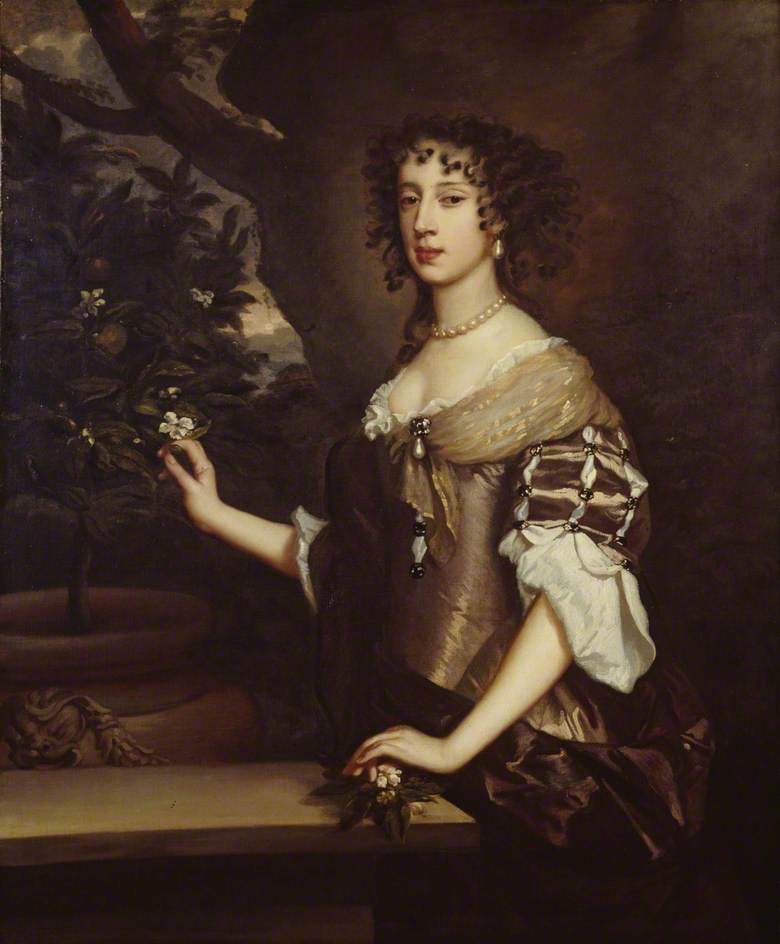
Mary of Modena
But then - oh dear - James' second wife, Mary of Modena, became pregnant. At first this wasn't too much of a worry because Mary was well into her forties and had suffered a number of miscarriages and still-births already. 

But while her husband proceeded with his plans to reintroduce Catholic officers to his army and Catholic clergy into the universities, the baby in Mary's womb grew steadily bigger. The bigger her belly, the more the public worried. What if she gave birth to a Catholic prince? That would change everything. In their minds people saw a long line of Catholic kings stretching into the future.

Some of their fears were real, others imaginary. The real fears were that England could be plunged into religious war, like those which had convulsed Europe for the past century. Millions on both sides had been massacred. The English Civil War had been partly about religion. And just over the Channel, French Protestants - Huguenots - were being forcibly converted, imprisoned and tortured by the agents of King Louis XIV. Many fled to England with genuine tales of terror.

But there were imaginary terrors too. The reign of Charles II had been disfigured by fantasists like Titus Oates, whose lies about non-existent Catholic plots had sent many innocent men to the scaffold. Many believed the Great Fire of London, even the Plague, were spread by Catholics. To the London mob, Catholics were monsters, like Jews in Nazi Germany.

And here was the Queen about to give birth to one! It was such an awful thought that many people refused to believe it.  After all, the last Catholic queen - Bloody Mary - had claimed she was pregnant too. And it had all turned out to be a fantasy, a dropsy, a joke. Surely this would be the same.

Plans were laid to ensure that 'unbiased' witnesses - respectable Protestants - would be on hand to witness the birth. The Archbishop of Canterbury, for instance, and King James' second daughter, Princess Anne.

Ambulance
But the Queen went into labour a month early, while Princess Anne was still in Bath, taking the waters. On the evening of 9th June 1688, Queen Mary was playing cards in Whitehall until midnight. Then, as her labour started, an ambulance (a sedan chair!) was hurriedly called to carry her to St James' Palace and messengers were sent running hither and thither to summon help and witnesses. Lots of them. A really enormous number of people.

Poor lady - she gave birth in front of no less than sixty people!!

She had two midwives, Mrs De Labadie and Mrs Wilkins, who each received 500 guineas. There were doctors too, and priests, and Lords of the Privy Council, and Ladies of the Bedchamber. Presumably the King was there too (a new man!) and a few servants to light the fire and change the sheets. If it had been possible to invite a TV crew they would have done that too, no doubt.

Or perhaps not. Because even though the Queen gave birth in as public a way as it is possible to imagine, many people still refused to believe it. Princess Anne said it must be a conspiracy to pretend the birth had come early while she was in Bath and couldn't witness it. The Archbishop of Canterbury had been arrested the day before (about something quite different) so he wasn't present either. And the royal obstetrician, Dr Hugh Chamberlen, missed the birth too because no-one could find him - he was attending another birth in Chatham.

Weapon of mass deception
So there you are, people cried. It's obviously not true - it's a conspiracy, a fraud! (Dan Brown would have had a field day.) Gilbert Burnet, a prominent churchman, said the Queen had deliberately sent Dr Chamberlen away so that she could deceive everyone by smuggling in a changeling. 

And why were so many of the witnesses Catholics? Why hadn't the King invited the Dutch ambassador, for instance? No, only a fool would believe the Queen had actually given birth as she claimed. The baby wasn't hers at all.  They'd smuggled one into the bed in a warming pan.

Dr Burnet, who was in Holland at the time, was quite certain of this.

And so the evidence of sixty eye-witnesses counted for nothing. Not even the evidence of the vociferously Protestant midwife, Mrs Wilkins, who surely ought to know what had happened if anyone did. She protested to Dr Chamberlen:  'Alas, will they not let the poor infant alone! I am certain no such thing as the bringing of a strange child in a warming-pan could be practised without my seeing it; attending constantly in and about all the avenues of the chamber.'

Crazy, isn't it? People just believed what they wanted to believe. Nothing like that could happen today, surely? We're far more rational now. Ah, but bear with me. Here's a thought. Far-fetched, I admit, but still ...

Ten years ago, British and American soldiers invaded Iraq. (I told you my idea was far-fetched - a giant leap across centuries!) Why? Because Saddam Hussein had weapons of mass destruction. Almost everyone believed that; even the protesters. I certainly believed it, and so did George Bush and Tony Blair.  I don't think they lied; they deceived themselves. They believed what they wanted to believe, because they were afraid of another, bigger 9/11.

Oh dear, I'm in seriously hot water now. Let's jump swiftly back to 1688. What happened as a result of this earlier bout of mass self-deception, this refusal to believe a baby prince had been born? Well, a large force gathered in Holland, sailed across the Channel and landed in Torbay, England. King James II fled, and was replaced, at Parliament's invitation, by his daughter, Mary, and her husband, William of Orange--the throne, with strings attached. This was the Glorious Revolution of 1688-1689.
James III - 

So there you have it: the invasion of a foreign country, regime change, and a change in the balance of power between monarch and Parliament. Coincidence, or what? All because of a bout of self-deception.

Amazing what a warming pan can do. Especially when it wasn't there at all.

**********

You read about Tim Vicary's books on his website and his blog