Showing posts with label Lizzy Drake. Show all posts

Friday, May 13, 2016

Adventure Seekers – Women Explorers of the Victorian Era

By Lizzy Drake

1887 travelling party of the Smith twins
Wikimedia Commons [Public Domain]

In a male dominated era in the western world, it is easy to assume that all women of the time were docile, meek things, despite England, one of the greatest nations, having a strong woman monarch. Yet even with formal teachings of domesticity, and a general lack of higher education for girls, there were some memorable women who defied the status quo, forging themselves against their male counterparts and finding success in their efforts.

While there are more than the three examples set below, these are the women who stand out to me in particular as being some of the most inspiring and defying the environments that wouldn't even allow women to vote, let alone explore, lecture or write for top newspapers.

The first of these examples is Nellie Bly who writes in her travel book (only 50cents!), Around the World in Seventy-Two Days, on how she found the inspiration to attempt her around the world adventure:

Nellie Bly 1880's
Wikimedia Commons
[Public Domain]
'This idea came to me one Sunday. I had spent a greater part of the day and half the night vainly trying to fasten on some idea for a newspaper article. It was my custom to think up ideas on Sunday and lay them before my editor for his approval or disapproval on Monday. But ideas did not come that day and three o'clock in the morning found me weary and with an aching head tossing about in my bed. At last tired and provoked at my slowness in finding a subject, something for the week's work, I thought fretfully:
"I wish I was at the other end of the earth!"
"And why not?" the thought came: "I need a vacation; why not take a trip around the world?"
It is easy to see how one thought followed another. The idea of a trip around the world pleased me and I added: "If I could do it as quickly as Phileas Fogg did, I should go."'
And go she did. As her title suggests, she also did it in less than 80 days, proving that not only could she do the most adventurous things all her male counterparts were talking about someday doing, she could also publish it and carve her own place in history as a woman adventurer.

She gives a very detailed account of her adventures in her book and it sold very well to adventure-hungry Americans. Here is a beautiful excerpt of her book in which she explains why she doesn't decide to carry a firearm:
'The evening before I started I went to the office and was given £200 in English gold and Bank of England notes. The gold I carried in my pocket. The Bank of England notes were placed in a chamois-skin bag which I tied around my neck. Besides this I took some American gold and paper money to use at different ports as a test to see if American money was known outside of America.Down in the bottom of my hand-bag was a special passport, number 247, signed by James G. Blaine, Secretary of State. Someone suggested that a revolver would be a good companion piece for the passport, but I had such a strong belief in the world's greeting me as I greeted it, that I refused to arm myself. I knew if my conduct was proper I should always find men ready to protect me, let them be Americans, English, French, German or anything else.'
But Nellie was not just an adventurer. She was also a highly respected reporter who was known for uncovering uncomfortable truths as she did with the expose on the appalling conditions and treatment of patients of Blackwell's Island, an asylum in New York City. She was also an advocate for women's rights, and although she married a millionaire 40 years her senior, she still was writing on topics close to her heart until her death at the age of 57 when she was claimed by pneumonia.

Annie Smith Peck
Wikimedia Commons [Public Domain]

Annie Smith Peck, an American adventurer also had the itch to explore outside her comfort zone. Born in 1850 Rhode Island, Annie was a scholar and Latin teacher before she became a mountain climber and scaled many peaks, defying both altitude and Victorian era gender attitude. Although she had attempted to secure her place as a lecturer of archaeology (Classical Greek Archaeology), primarily to support her hobby of mountain climbing, she found that people were entranced with her hobby, and went to climbing full time. She wrote a book in 1911, covering her climbs and experiences entitled The Search for the Apex of America. She was a strong advocate of the woman's vote and even climbed Mount Coropuna in Peru, placing a banner stating 'Votes For Women'.

Biography.com sums up her adventures beautifully, stating that:
'After climbing the Matterhorn in 1895, Annie Smith Peck continued to seek new challenges, especially in the mountains in the Americas. She tackled Mexico's Mount Orizaba in 1897, setting the women's altitude record at that time. Wanting to reach heights higher than anyone else - male or female - had done before, Peck tried several times to climb Mount Illampu in Bolivia. Despite this setback, she tried to reach her goal by climbing Mount Huascarán in Peru. Peck was victorious on her second attempt in 1908. Having reached a height of 21, 812 feet, she set the record for the highest climb in the Western Hemisphere at the age of 58. For her amazing feat, the peak she scaled was named Cumbre Aa Peck in her honor.'
But a favourite pair of adventurers of mine are the twin Scottish sister explorers, Agnes and Margaret Smith (later to marry and become Agnes Smith Lewis and Margaret D. Gibson), who were educated by their father as if they were boys. With a natural ability to pick up languages, their father (a widower as his wife passed when the girls were very young), indulged his daughters with the ploy that for every language they learned fluently, the family would go and visit that respective country. They visited many countries with their father, but when he passed away at a relatively young age, they broke their cardinal rule of learning the language first, and travelled unchaperoned to the Middle East in search of old, undiscovered religious texts. What they found sent shock-waves through the academic world.

Syriac Sinaiticus
Wikimedia Commons [Public Domain]

At a visit to Sinai, Agnes first discovered the Syriac Sinaiticus, one of the biblical gospels hidden under another hand written text of female saints. She photographed it, at first not knowing its significance, then immediately funded and organized a return expedition with a recognized scholar to help prove her findings. Although the trip was a success on many levels, socially there was fallout between her scholar, a good friend, and the two sisters as the newspapers were keen to attribute the discovery to the women while the scholar was determined to get their name erased from the find. However, after their scholar did such a poor job of translating the manuscript, Agnes went on to study Syriac and do her own translation, which outshone the first. Eventually she became a highly respected scholar herself. There is a plaque commemorating the two women at the University of Cambridge.

Plaque at Cambridge University
Wikimedia Commons [Public Domain]

One of the many things these adventures illuminates, is how the human spirit of adventure and discovery will overcome every obstacle, even in a time when a particular group of people are pressured to socially and morally not do so. Women in the Victorian era is just one facet of such human determination, and one that still inspires people today.


References:

-Bly, Nellie – Around the World in Seventy-Two Days; The Pictorial Weeklies Company, New York, 1890

-Gibson, Margaret D. and Agnes Smith Lewis – How the Codex was found: a narrative of two visits to Sinai from Mrs Lewis's journals, 1892-1893; Macmillan & Bowes, Cambridge, 1893

-Lewis, Agnes Smith – In the Shadow of Sinai: A story of travel and reseach from 1895 to 1897; Macmillan & Bowes, Cambridge, 1900

-Soskice, Janet – Sisters of Sinai, How Two Lady Adventurers Found the Hidden Gospels; Vintage, London, 2009


Online links:

Listverse: Top 10 Female Adventures 

Biography.com (Annie Smith Peck)


________________________________________

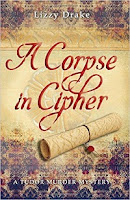
 A Corpse in Cipher amazon.com
Lizzy Drake is the author of the Elspet Stafford Mysteries, a mystery series set in Tudor times during Catherine of Aragon's time as Queen. Book 1, A Corpse in Cipher – A Tudor Murder Mystery is out now. 

Aside from the early 16th century, Lizzy also has a passion for the Victorian era and adventure. 

You can read more about her on her blog inkydoom.blogspot.com or on Twitter@wyvernwings.

Wednesday, April 27, 2016

Crests, Blood and Power – The Howards' Rise in Tudor Times

By Lizzy Drake

Photo 1: Framlingham Castle, the seat of the Dukes of Norfolk (Holly Stacey)

The Howard dynasty in Tudor times was a highly rich and powerful one, but there was a time when their precious heads were on the proverbial block before being given a chance to prove themselves loyal to the 'new' Tudor crown. Having been Yorkist and fought for Richard III where Henry Tudor took the crown at the Battle of Bosworth in 1485, the family was viewed with suspicion, not in part for the fact that they had a Plantagenet lineage and could, with the backing of loyal Howard and old Yorkist ties, easily have attempted to take the crown for themselves. Thomas Howard, 2nd Duke of Norfolk, was stripped of his title and lands and sent to the tower for three years. The former Duke was, however, clever enough to know how to show his loyalties had changed, for when an opportunity for escape from the tower came, he refused to take it. Who knew that his family would land so close to the king in the form of two queens. Or, perhaps, Thomas Howard had a keen sense of destiny, for the years to come allowed him to show both his guile and servitude in rising back to his position and beyond.

While Thomas Howard was in prison, his family and heirs were still expected to serve the crown and country, providing from their own pocket to help defend and serve it. The Howard male children were educated in court and also taught to train in combat for any upcoming threat. Thomas Howard II was also betrothed to the queen's sister, Anne but because the alliance was so threatening to the current monarchy, their vows were postponed until 1495, though it was the Queen who had to provide her sister and husband 20 shillings a week (Denny, p.21). In 1503, Margaret Tudor was escorted by the Howards to her groom, King James IV and then later, both Thomas Howards travelled on an embassy to Flanders, an obvious show of trust and by the time the crown passed to Henry VIII, the Howards had managed to become an invaluable asset.

It proved a good move for Henry VII not to have executed Thomas Howard, as he proved to be a superb ally both in court politics and, in particular, in the battlefield. It was at the Battle of Flodden (during Henry VIII's reign, and where the Scottish king lost his life) Howard truly proved his worth, fighting so valiantly, he earned back his family title of Duke of Norfolk, while his son, also a Thomas Howard, took the title Earl of Surrey (soon to be passed down to his own son, as Thomas Howard the elder was an aged 70 years by this point and soon to be laid to rest).

Photo 2: portrait of Thomas Howard 2nd Duke of Norfolk

In fact, things were going so well for the Howards by late 1513 that they had fortune enough to make many repairs on their family estate at Framlingham Castle, rebuilding the gatehouse and adding the coat of arms above it, putting up highly decorative Tudor chimneys and the chambers adjoining the gatehouse to accommodate the castle porter and staff. The coat of arms, still visible today as visitors enter the castle, is highly chipped, but a beautiful reminder of the seat of power the Howards held with the Tudors from this upward turning point.

Photo 3: The Howard coat of arms on the new gatehouse built in 1513 (Holly Stacey)

The Howards adopted the motto, Sola virtus invictia, 'Virtue alone invincible'. Their coat of arms was 'red with a silver stripe between six silver crosses', with the crest of a lion 'on a chapeau (Denny, p 20).” Though a contemporary drawing of the Howard coat of arms for Henry Howard, earl of Surrey (beautifully shown in the Framlingham Castle Guidebook), included the cross with the three-pointed label in his arms which was Edward the Confessor's emblem, in which claimed the royal ancestry. Evidently, claiming to be royal blood was too dangerous to broadcast, especially to a king who wanted to eliminate all potential rivals in an increasingly dangerous court, although at the time, there was a power struggle between the Seymours and the Howards. While the very ill King Henry VIII was waning, the Seymours were concerned that the Howards would make a bid for the throne by putting the rightful heir, Edward, aside, and ascending though their Plantagenet bloodline; something they were supposedly able to do should the king have no heir, or as Britannica.com puts it:

'Returning to England in 1546, he found the king dying and his old enemies the Seymours incensed by his interference in the projected alliance between his sister Mary and Sir Thomas Seymour, Jane’s brother; he made matters worse by his assertion that the Howards were the obvious regents for Prince Edward, Henry VIII’s son by Jane Seymour. The Seymours, alarmed, accused Surrey and his father of treason and called his sister, the Duchess of Richmond, to witness against him. She made the disastrous admission that he was still a close adherent to the Roman Catholic faith. Because Surrey’s father, the Duke of Norfolk, had been considered heir apparent if Henry VIII had had no issue, the Seymours urged that the Howards were planning to set Prince Edward aside and assume the throne. Surrey defended himself unavailingly and at the age of 30 was executed on Tower Hill. His father was saved only because the king died before he could be executed (britannica.com/biography/henry-howard-earl-of-surrey).'

Photo 4: Henry Howard (wiki photos)

The Howards created an amazing dynasty for themselves and it was clear that they took family honour to the absolute limit and coupled it with unparalleled ambition for power cutting just shy of actually seizing the throne, though it does seem evident that Henry Howard had this intent. Historians often dwell on the two women who, through the 2nd Duke of Norfolk, found themselves as Henry VIII's queens, and the other, who produced some of his illegitimate children, but it may be said that without the cleverness, patience and political acumen of Thomas Howard the elder and the younger, neither would have worn their crown, nor indeed, would the family have risen from the ashes like a phoenix of lore.

References:

deLisle, Leanda; Tudor, The Family Story; Vintage Press, London 2014
Denny, Joanna; Katherine Howard, A Tudor Conspiracy; Piatkus, 2005
Doran, Susan; The Tudor Chronicles 1485-1603; Metro Books, New York
Elton, G.R.; England Under the Tudors; Routledge, 1991
English Heritage; Framlingham Castle

Online references:
http://www.theanneboleynfiles.com/anne-boleyns-family-part-two-howards/
http://www.britannica.com/biography/Henry-Howard-Earl-of-Surrey

_______________________________________________

 A Corpse in Cipher amazon.comLizzy Drake has been studying Medieval and Tudor England for over 15 years and has an MA in Medieval Archaeology from the University of York, England. She has been writing for much longer but the Elspet Stafford Mysteries began her writing careen in the genre. The First Elspet Stafford book, A Corpse in Cipher - A Tudor Murder Mystery, is available now.

When not writing or researching, Lizzy can be found reading or gardening. She balances time between her two homes in Essex, UK and California.

You can follow her on Twitter (Lizzy Drake@wyvernwings)


Saturday, February 27, 2016

Mary Tudor's Double Engagement

By Lizzy Drake


There is nothing like a bit of gossip, especially if it's about a wedding and it's even better if it's Tudor. It's one of those points in history where every book gives a different date. Was Mary Tudor engaged to Charles of Castile or Louis XII of France? The answer of course, is both, but for a point of time she may have been engaged to Charles and Louis at the same time. Mary had been betrothed to Charles of Castile for years (from 1507) before it was abruptly and rather secretively dropped and substituted for a match with the ageing French monarch. The couple were meant to marry in May 1514, but instead of her younger betrothed, she ended up wedding Louis in October 1514. Mary, who reputedly begged to be allowed to marry her first match was highly romanticized by television and historical fiction as having great willful fits in a vain attempt to not be forced to marry Louis. But the question remains – during Henry's secret arrangement for his sister to wed Louis, was Mary still engaged to Charles?

Wiki even gives two different months when her engagement to Charles is ended (my guess here is two different historians have edited it and forgot to check over the whole document – it happens). Some historians cite as early as October for her engagement's end to Charles, but it must not have been official at this point as he writes to her as a groom-to-be, asking about her health and giving full attention to their supposed future together as husband and wife. Is Charles simply ignoring the fact that the engagement has ended or has he simply not been told?

The key for understanding Mary's role (let's face it, she wasn't very active in her choices) is understanding her brother and monarch, Henry's, political allegiances. For while Mary is engaged to Charles, England is at war with France and supporting Ferdinand of Spain, Margaret of Austria (Savoy) and the alliance to the Catholic faith, League of Cambrai. In December 1513, Wolsey is sending out letters to most of Europe's leaders, begging for a peace treaty to be drawn up with France, which Ferdinand does (much to Henry's annoyance) and tells the French king that Henry cannot be trusted, all this as Ferdinand had been using Henry's money to fund his grudge against France and had more than once double-crossed Henry.

Henry is the one truly deciding who his sister will marry and who will become the best political match as a future brother-in-law. He'd already lost one sister to Scotland who had become a political enemy, though now that her husband had fallen (King James was slain at Flodden), she was the country's Regent as the young new king grew into his shoes. Henry needed to make a better match for his sister Mary. Charles of Castile, as nephew to Catherine of Aragon who was still communicating and showing allegiance to her Spanish roots, was part of Ferdinand's plans and could lead Henry's sister to be another pawn for Spain. Now that Ferdinand has once again gone behind Henry's back with France, Henry may have decided it would do to have some of his own blood keeping him informed, and in October 1514, Mary Tudor was married to Louis XII, a man very much her senior and very different from the caring younger man Charles she was first engaged to.

We don't know exactly at what point Mary was informed of her new groom, but as the tension between Ferdinand and Henry grew, one can only assume that Charles was not informed until Ferdinand was. As a revenge plot against Ferdinand as much as a political ploy from Henry, it would have been beneficial to keep everyone save Louis of France (and I imagine Wolsey, who probably put the idea into Henry's head in the first place) in the dark for as long as possible before Ferdinand could undo Henry's work.


Charles eventually did marry – to Isabella of Portugal many years later (1526) which shows how difficult royal matches could be to make. Mary, whose health was never great (there are many apothecary bills for Mary when she was in Henry's court and only lived to the age of 30) only suffered to be Louis's wife for a year before he died from, what was assumed at the time, marital exertions with his young Queen. Mary returned to England and decided to take fate into her own hands by marrying for love, one of the King's favorites, Charles Brandon.

References:

British History Online – December 1513 letters

Wikipedia (to illustrate conflicting dates given by historians)

deLisle, Leanda; Tudor, The Family Story; Vintage Press, London 2014

Doran, Susan; The Tudor Chronicles 1485-1603; Metro Books, New York

Tremlett, Giles; Catherine of Aragon, Henry's Spanish Queen; Faber and Faber, London 2010

_______________________________________________________________________________


Lizzy Drake is the author of the Tudor era Elspet Stafford Mysteries. She is currently working on book 2 of the series which involves an early Tudor 'magician' at Framlingham Castle. She has been studying Tudors for over 15 years and has a MA in Medieval Archaeology from the University of York.

Saturday, February 13, 2016

In Search of Early Tudor Magicians

By Lizzy Drake

Rattan-monodosico: An English magic sigil or device found in the Devil's Dyke.
Photo from Tumblr (The Broom Cupboard)

Most students of Tudor history are familiar with Elizabeth I's pet magician, John Dee, but they might not be familiar with where the earlier ideals of the magician originated from. While most of his work revolved around his Angelic Manuscripts and attempts to conjure and communicate with angelic beings, there is an older, some would say much darker, form of 'magical science' that helped to bring him to the position of authority he is now known for. While Dee was obsessed with contacting angels, previous magicians are known for their attempts to summon demons to do their bidding.

I would however, like to point out here that evidence for early Tudor magic in regards to demon summoning is scarce. John Dee wanted to classify the difference between higher spirits (angels) and lesser (demons) and go on to make his Angelic Manuscripts. His work was based much on what Edward Kelly (seen as a charlatan by most historians) saw in his visions, but there are hints in his books that his research has also come from others who have claimed to summon or have a story about a demon visiting. Witchcraft was well known and understood to be a force of evil at the time, though 'cunning women' were seen as helpful forces (it wasn't until 1542 that the practice of witchcraft was deemed a capital offence punishable by hanging – unlike popular fiction, burning of witches was not practiced in England as it was in Scotland and Europe).

Just to differentiate, the magician or astrologist (some would put alchemist in this category too) was a completely different kettle of fish than the witch or cunning woman. These men (I have yet to come across a record of a woman within this category) were individuals who view themselves more as scientists and scholars than people users of magic. Henry VIII had several court astrologers, though they kept getting their predictions so wrong that he eventually lost faith in them. Despite this, they were still viewed as acceptable at court.

It is important to remember that what we as modern minds consider as 'magic' is very different than the 16th century individual. For one, religion, science and magic were intermingled. There was not yet a great understanding of why or how nature worked. Heaven and Hell were real places in the thoughts and beliefs of 16th century men and women, and the same belief went for angels and demons. If a horse went lame and no obvious source was found, it would often be blamed on witchcraft. If a plague swept through London, many would assume it was God punishing them. Though the fear of eternal damnation would keep many on the straight and narrow, there were also those with a drive to gain more power by any means necessary. And there was the same natural drive that mankind has to understand his/her world. It may be difficult to swallow, but these might be considered as some of the first 'scientific experiments' in England.

The later 16th century saw a surge in 'magical' research and publications. It was separated from witchcraft (as mentioned earlier, which had become a capital offence) and no longer in Henry VIII's or Mary's dangerous reign, students of this new form of rough 'natural science' were accepted. In Robert Turner's book, Elizabethan Magic (Turner, p. 4), he kindly lists just a few texts that he worked from. It gives us some insight into the new revolution of thought, which I would argue, held its seeds much earlier. The list is as follows:

Libri Mysteriorum, Books I-V (1581-1583)
Liber Mysteriorum Sextus et Sanctus (1583)
Libri Mysteriorum, Books VII-XVIII (1583-1587)
48 Claves Angelicae (1584)
Liber Scientiae, Auxilii et Victoriae Terrestris (1585)
A Book of Supplications and Invocations (date unknown)


Simon Forman, 1611
[Public Domain] Wikimedia Commons
Simon Forman (1552-1611) was a highly respected physician, astrologer and necromancer, showing once again how science had still not broken away from what we might now consider unscientific and downright superstitious. But he would not have been allowed to flourish without the change in monarchy. As Turner writes, 'Had fate allowed Mary more than five short bloody years to pursue her relentless persecution of all that she considered heretical, a very different Simon Forman may have emerged. For during his life Forman was to become notorious as a necromancer: expert in the arts of conjuring spirits; communication with the dead; and the manufacture of philtres; charms and talismans; aphrodisiacs and even poisons. In high places his trusted – and perhaps, feared – reputation was to earn him the title 'sweet Father Forman' (Turner, p. 91). Would Forman have abandoned his desires to pursue astrology and raising spirits if he were born half a century earlier? I seriously doubt it. Instead, he may have hidden his works and carried them out in secrecy. After Cambridge University awarded him a licence to practice his art in 1603, he was still imprisoned for a year with a heavy fine for breaking some rules put upon his 'illicit' ministrations as he was harassed by the Guild of Barber-Surgeons and the Royal College of Physicians (Turner, p. 92). This example shows how his passion for his subject overcame any restrictions put upon him by the law. Despite his dubious practices, he was the first to have noted how rats may have been responsible for the spread of plague.

Witchcraft might not have been a capital offence until 1542, but heresy was different. Texts before this Elizabethan revolution were dangerous and if found, were probably burnt. What evidence remains, can be found within the archaeological strata; wall carvings and portable antiquity. At least, that is for the English texts pre-Elizabethan era. Anna Marie Roos lists many European scholars from the medieval era onward, which used sigil and angels to perform feats of magic, Marsilio Ficino (1433–99) and Peter of Abano (ca. 1250–1316), only two of them.

Roos states further evidence in the early use of sigils and angels that has been used and seen in medieval Spain, something that would probably have been familiar to Catherine of Aragon. Although there is little evidence for English texts supporting the uses of cabalistic magic, the fact that it was about previously throughout Europe shows distinct possibility that it would have been accessible for those pursuing it. She writes: 'Inscribing the names of angels on sigils was also thought to be efficacious, a tradition begun in the thirteenth century by the increasing influence of Jewish cabalistic texts such as the Sefer Yezirah and the Sefer Razi'el. These works were used by Jewish astrologers who served as courtiers in medieval Spain, and were later incorporated in Pico della Mirandola's cabalistic theses in 1486.

Heinrich Cornelius Agrippa (1486–1535), in his Philosophia occulta siva magia (1531), also writes detailed instructions for the use of Hebrew symbols and numerology in magical sigils. At this time, nobody was awarding themselves with the title of 'magician' yet they were setting the foundations of what would become popularly known as 'Elizabethan Magic' as scholars see it today.


References:

Agrippa, Heinrich Cornelius; Philosophia occulta siva magia, 1531 (as cited by Roos)

Biggs, Robin; Witches and Neighbours, London 1996

Macfarlane, Alan; Witchcraft in Tudor and Stuart England, London 1970

Roos, Anna Marie; ‘Magic coins’ and ‘magic squares’: the discovery of astrological sigils in the Oldenburg Letters, The Royal Society (online) 2008

Turner, Robert; Elizabethan Magic, Dorset 1989

______________________________________________________________________

Lizzy Drake is the author of the Tudor era Elspet Stafford Mysteries. She is currently working on book 2 of the series which involves an early Tudor 'magician' at Framlingham Castle. She has been studying Tudors for over 15 years and has a MA in Medieval Archaeology from the University of York. 


Tuesday, December 29, 2015

The Birth of Cipher in England

by Lizzy Drake
Finally, forasmuch as the ciphers which sir Thomas Spynell (whose soule God pardon!) had, have come to the hands of sundry persons since his decease, soe that damage might ensue, by the disclosing of seacrets, unles a new ciphr were provided; thereofre the kings highness, by the advice of his counsaile, hath not only conceyved and made such a cipher, but also sent the same, by his serveaunt, this bearer; who is purposely sent only for the sure deliverance of them to his said ambassadours; by which ciphers they may have knowledge in the contents of such articles as shall be written in ciphers to them at any time hereafter.
Henry VIII's Instructions to Sir Thomas Bolayn and Doctor Sampson (Galt, Appendix, p.lxxxv-xcvii)

The use of ciphered letters was well in use in other countries before it reached the court of Henry VII in Tudor times. Ferdinand of Spain, among others, was reputed to have been using cipher in correspondence for some time; a coded letter that only the recipient (in theory) could decipher via a cipher key (held within the cipher itself or sent separately). When Catherine of Aragon was sent to Henry VII's court as a bride-to-be to his firstborn son, Arthur, Catherine's father continued to send ciphered and coded letters to avoid spies getting wind of what he was planning. Catherine, clever and highly educated, would have been aware of the use of cipher, but didn't hone her own unique ciphering skills until she was deep within Henry's court. She was, as believed by some, to be Ferdinand's pawn in securing England's support of his war campaigns and suffered greatly while the two men played their political games.

England at this point was new to the cipher, but with Catherine's constant use of the code, it became more and more common for political players to adopt a code of their own. Spanish ciphers were reputed to use two ciphers for one text, a style that the first (this is arguable by some) ciphered letter to be used in England was written (in 1505 written by Henry VII in regards to approaching Maximilian of Rome about both a marriage and the fate of Edmund de la Pole. It was deemed to be of such sensitive nature that it was advised to be made in cipher, though historians have different theories on the nature of the letter and its encoding). This document has the key to the cipher embedded within the document itself. The cipher was supposedly hidden within one paragraph whilst a second cipher key was within a postscript to aid the location of the first cipher in the text.

The use of cipher is well known by many an amateur historian, but not so much the actual ciphers themselves. Not many of them survive today, but the 19th century historian Bergenroth, describes one cipher beautifully, remarking on how three lines contained twenty-one signs each, corresponding to the number of the letters of the alphabet while other lines contained between twenty-two to twenty-three letters. He had come to suspect that the lines look very much like the rest of the writing, and had concealed within them the key to the cipher. The man placed the alphabetical letters, starting with A (in the same order that we learn them today) over the signs, which he claimed to provide him with the key. If this is true, it was a cleverly hidden cipher and key in one document, that only few would be able to decode and only when they knew what they were looking at in the first place.

The Spanish ambassador De Puebla had once written to Ferdinand that he had deciphered, on his own, the letters that were to be delivered to Henry VII. Later, Catherine of Aragon had confessed to her father that De Puebla was not to be trusted as he was more of an ambassador to the king of England than that of the Spanish Ambassador (once again showing her strong alliance with Spain when she was in the English court). This is when she began to write many of her correspondences to Spain in her own cipher that she was confident could not be intercepted or transcribed by De Puebla and thus pass on to Henry VII who made her life at court difficult both before her marriage to Arthur and after his death. Yet while De Puebla even admitted that Catherine's was 'one of three ciphers' he was unable to decipher, Ferdinand still sent his ciphers to Catherine via De Puebla; ciphers that he knew De Puebla could translate (according to De Puebla) and share with the king of England. One can only assume that Ferdinand's attempts were to make Henry feel he was not being made a fool of.

In one of Catherine's first letters to her father Ferdinand in July 1509 (just a month after her marriage to Henry VIII), she gushes her deep affection for her new husband. However, in what is deemed by some as an 'important part of the letter' (Earliest English Diplomatic Ciphers) was written in a cipher. What is strange about this is that she did not use the usual Spanish cipher she was known for, but instead used a cipher made up of strange symbols. This part of the letter is left undeciphered by historians who have viewed it and Bergenroth leaves it out of his history (though it may have been because he himself could not decode it, something that he seemed to pride himself on).

Catherine's first use of the Cipher was probably in 1507 when her sister Juana was being thought of as a match for Henry VII. Ferdinand decided in the spring that his daughter Catherine should be the ambassador for this match and all letters and correspondences went through her. 'When she turned to the subject of the prospected marriage between Henry VII and Juana, Queen of Castile, she said she would like to be able to write in cipher. Although she had succeeded in deciphering his letters, she did not dare to make use of cipher in her writing, and much less to confide the ciphering of her letter to any other person. Thus, she wrote in plain Castilian.'(Earliest English Diplomatic Ciphers, citing Bergenroth p.412, Supplement p.99-104)

Catherine had indeed shown her cleverness as she was able to decipher many of the ciphers Ferdinand had sent without any aid or cipher key, but was at that time, still not confident on writing her own. Her first cipher she'd sent to Ferdinand was so confusing that she wrote it again in plain text so that it could be understood. Of course, as time went on, she became much more confident with her ciphers and the use of a cipher key.

Much later, in 1514 there is evidence that ciphers are very much still in use. Bergenroth references a ciphered letter from John Stile to Henry VIII, dated 21 March 1514. He comments on the cipher used therein: 'The cipher in which this despatch is written is of the rudest and simplest kind imaginable. Every letter has one and not more than one sign, and the words are even separated from each other. Any person, not entirely unaccustomed to reading and writing in cipher, could find out at the first glance such words as "that", "the", "and," &c., and by means of them form in a very short time the whole key of the cipher.'

Stile's grumbling letter is a godsend for researchers, he makes such a detailed complaint about the 'rudest and simplest kind' but in so describing it in his letter to Henry, he has given us a glimpse into the wonderful and complicated world of ciphered diplomatic letters of the time.

References


Bergenroth, G.A. (ed.) (1862), Calendar of State Papers, Spain; Vol. 1, Vol. 2, Supplement; British History Online

J.S. Brewer (ed.) (1920), Letters and Papers, Foreign and Domestic, Henry VIII, Vol. 1 (2nd ed.); Internet Archive, British History Online, Letters and Papers, Foreign and Diplomatic, Henry VIII, Volume I

Fox, Julia (2011), The Noble, Tragic Lives of Katherine of Aragon and Juana, Queen of Castile; Ballantine Books, New York

Galt, John (1812), The Life and Administration of Cardinal Wolsey

Wood, Mary Anne Everett (ed.) (1846), Letters of Royal and Illustrious Ladies of Great Britain; Internet Archive: Vol. I

Pollard, A.F. (ed.) (1913), The Reign of Henry VII from Contemporary Sources; Internet Archive Vol. I, II, III

Tremlett, Giles (2010), Catherine of Aragon – Henry's Spanish Queen; Faber and Faber, London

Author unknown, Earliest English Diplomatic Ciphers; http://cryptiana.web.fc2.com/code/henryvii.htm

Archaeologia, Or, Miscellaneous Tracts Relating to Antiquity (1838); Society of Antiquaries of London
https://archive.org/stream/archaeologiaorm01londgoog#page/n323/mode/2up

~~~~~~~~~~~~~

Lizzy Drake has been studying Medieval and Tudor England for over 15 years and has an MA in Medieval Archaeology from the University of York, England. She has been writing for much longer but the Elspet Stafford Mysteries began her writing career in the genre. The first Elspet Stafford mystery, A Corpse in Cipher - A Tudor Murder Mystery, is available now.

When not writing or researching, Lizzy can be found reading or gardening. She balances time between her two homes in Essex, UK and California.

You can follow her on Twitter (Lizzy Drake @wyvernwings)


Amazon
Facebook
Blog