Showing posts with label A Pledge of Better Times. Show all posts

Monday, May 25, 2020

Equestrian Pageantry in Tudor and Stuart Times

by Margaret Porter


William Cavendish, 1st Duke of Newcastle


The basis of equestrian pageantry began with Xenophon of Athens, who first codified the movements. His treatise On Equitation (circa 400 BC) was first printed in 1512, inspiring centuries of artistic horsemanship, the origin of modern-day dressage. It was then referred to as the Art of Manège, or High School Riding. Riding academies were founded--initially in Italy and Spain. Over time the horse trainer, noble rider, choreographer, composer, and costumier united to develop a popular and exclusive entertainment. During the Renaissance, horse ballets or carrousels rose to prominence at European royal courts, eventually replacing jousting tournaments. A carrousel featured a mock battle, with group manueuvres, quadrilles, and individual feats showcasing elements of the balancing, leaping, jumping, and flying 'airs above the ground': the levade, croupade, courbette, ballotade, and capriole.

England


English royalty preferred court masques to carrousels. But everyone liked a clever horse and rider. The common people tended to prefer low comedy to balletic grace.
Marocco & William Baknes
Marocco, sometimes referred to as Bankes's horse, was the most famous dancing horse of the Renaissance. Born 1586, he was alternately described as a bay, a chestnut, or white. Petite and well-muscled, he was extremely agile, intelligent, and easily trained. His owner, William Bankes of Staffordshire, took his marvel to London. Marocco's initial performances took place in Gracechurch Street, and he was later stabled at the Belle Sauvage Inn and performed there. Marocco, who wore silver horseshoes, could dance a jig, count, play dead, walk on his back legs, and urinate on command. He could also identify which ladies in his audience were sluts, and which were virtuous. He made his bow to Queen Elizabeth I. And he bared his teeth at King Philip of Spain. John Donne and Shakespeare knew of Marocco (there's a reference in Love's Labours Lost) and almost certainly witnessed performances similar to this:

Banks perceiving, to make the people laugh, saies; 'seignior,' to his horse, 'go fetch me the veryest foole in the company.' The jade comes immediately, and with his mouth drawes Tarlton [a famous clown and comedian] forth. Tarlton with merry words, said nothing but, 'God a mercy, horse.' In the end Tarlton, seeing the people laugh so, was angry inwardly, and said: 'Sir, had I power of your horse as you have, I would doe more than that.' 'What ere it be,' said Banks, to please him, 'I will charge him to do it.' 'Then,' said Tarleton: 'charge him bring me the veriest whore-master in the company.' The horse leades his master to him. Then 'God a mercy horse indeed,' saies Tarlton. (1611)
The horse was immortalised in various verses. One example:

Bankes hath a horse of wondrous qualitie
For he can fight, and pisse, and daunce, and lie,
And finde your purse, and tell what coyne ye have:
But Bankes, who taught your horse to smell a knave?

In 1601 he performed his greatest feat, climbing the thousand steps to perform on the rooftop of St. Paul's Cathedral--the medieval one, not the Christopher Wren one with the dome. After touring England and visiting Scotland, he travelled to Europe. In Paris he caused such a sensation that Bankes was accused of sorcery, and to save himself revealed that he controlled the horse primarily through hand gestures. Marocco performed in Germany and travelled as far as Portugal. Returning to England, Bankes worked as a trainer in the royal stables during James I's reign, and also trained the Duke of Buckingham's horses.


Bankes's acquaintance Gervase Markham produced A Discourse on Horsemanship (1593), in which he writes of 'that most excellent and prayse worthie gyft, the breeding and ryding and trayning uppe of horses.' In his multi-volume Cavelarice: Or the English Horseman (1608) dedicated to Prince Henry, James I's son and containing William Bankes's secrets for training Marocco. Markham attributes human emotions to horses, stating, 'It is most certaine that everie horse is possest with these passions: love, joy, hate, sorrow and feare.' He also charts the different 'humours' during the lifetime of the horse as it matures: 'Now these tempers do alter, as the powers of a horse either increase or diminish, as thus, a Foale is said to have his temper from the Fire and Ayre, a horse of middle age from the Fire and the Earth, and a horse of the old age from the Earth and the Water.'


1st Duke of Newcastle
William Cavendish, the polymath First Duke of Newcastle was one of the great riders of his age. Margaret Cavendish, his duchess and biographer, describes the admiration his riding excited at the English court, where was responsible for the education of the future King Charles II. In that role imparted his riding skills to the then-Prince of Wales:
But not only strangers but his Majesty himself, our now gracious Sovereign, was pleased to see my Lord ride, and one time did ride himself, he being an excellent master of that art, and instructed by my Lord, who had the honour to set him first on a horse of manage when he was his governor [instructor, tutor]...his Majesty's capacity was such that being but ten years of age he would ride leaping horses and such as would overthrow others and manage them with the greatest skill and dexterity to the admiration of all that beheld him.
A firm and devoted Royalist, Newcastle spent Interregnum on the Continent. In Antwerp, where he occupied the house associated with painter Peter Paul Rubens, he established a riding school. Then, and later, he published books on horsemanship and established his famous riding-school, exercised 'the art of manège' (High School riding), and published his first work on horsemanship, Méthode et invention nouvelle de dresser les chevaux (1658). After the Restoration and his return to England, he published A New Method and Extraordinary Invention to Dress Horses and Work them according to Nature (1667).

He was not humble about his abilities and their effect upon spectators:
The Marquess of Caracena was so civilly earnest to see me ride that he was pleased to say it would be a great satisfaction to him to see me on horseback, though the horse should but walk...he came to my manage [manège] and I rid first a Spanish horse called Le Superbe, of a light bay a beautiful horse, and though hard to be rid yet when he was hit right he was the readiest horse in the world. He went in corvets forward backward sideways on both hands made the cross perfectly upon his voltoes and did change upon his voltoes, so just without breaking time that a musician could not keep time better, and went terra a terra [terre-á-terre] perfectly. The second horse I rid was another Spanish called Le Genty, and was rightly named so for he was the finest-shaped horse that ever I saw...no horse ever went terra a terra like him so just and so easy and for the piroyte [pirouette] in his length so just and so swift, that the standers by could hardly see the rider's face...truly when he had done I was so dizzy that I could hardly sit in the saddle. The third and last horse I rid then was a Barb that went...very high both forward and upon his voltoes and terra a terra. And when I had done riding, the Marquess of Caracena seemed to be very well-satisfied, and some Spaniards that were with him crossed themselves and cried 'Miraculo!'

France


Grand  Carrousel, 1662

Many English aficionados of equestrian skill were exposed to the carrousel at the French court. Antoine de Pluvinel (1555-1620), a well-born Frenchman, studied equitation and other subjects in Italy, returned to found an academy at Faubourg St. Honore. He served as chief instructor, or gouveneur, to the Dauphin, the future Louis XIII, and his precepts for riding were published in The Maneige Royal, or L'Instruction du Roy (1623), written as a dialogue between master and pupil. In 1612, Pluvinel devised a fifteen-minute carrousel celebrating the marriage of ten-year-old Louis and Anne of Austria.

Like father, like son. The 1662 Grand Carrousel at the Tuileries, performed over two days, celebrated the birth of the Dauphin, son of Louis XIV. It was a grand display of the young King's power and splendour. Louis participated, as did the royal dukes. The riders and their horses were elaborately costumed, and the characters were allegorical and representative in nature--Romans, Turks, famous warriors from history. Teams of participants, each led by a duke or the king, performed this ballet to music created by the court composer Lully. The horses' decorations alone cost one hundred thousand livres. Though not English by birth, England's Dowager Queen, Henrietta Maria, witnessed her nephew's performance.

Louis XIV in Le Grand Carrousel

Monsieur, the King's brother

In May 1686, the two-day Carrousel des Galantes Amazones was held at Versailles. All the most important people received tickets, including the English ambassador, Sir William Trumbull, and his wife. The story depicted was that of Alexander the Great (portrayed by the now adult Dauphin) and the Amazon Queen Thalestris (the Duchess of Bourbon). This was the first time ladies appeared in a carrousel, and all, men and women, were spectacularly attired in costumes by Jean Berain.
Carrousel des Amazones at Versailles, 1686

The King's Champion


After every English coronation, an elaborate banquet was served to the participants, and it included a unique and historic ceremony involving equestrian spectacle. A designated 'King's Champion' (or Queen's) mounted on a steed, rode into Westminster Hall and dared anyone to challenge the new ruler's right to succeed. For more than six hundred years members of the Dymock family held this position, although the George IV coronation in 1821 was the occasion that a Dymock was called on to perform his hereditary role, described thus in 1660:
...to have on the Coronation day one of the King's great coursers with a saddle harness and trappings of cloth of gold and one of the best suits of armour with cases of cloth of gold, and all such other things appertaining to the King's body...if he was going into mortal battel. And on the Coronation day to be mounted on the said courser ...being accompanied by the High Constable and Marshal of England and the King's Herald with a trumpet sounding before him to come riding into the Hall to the place where the King sits at dinner with the crown on his head...to proclaim with an audible voice these words following...that if any person of whatsoever degree he be, either high or low, will deny or gainsay that Charles the Second King of England Scotland France and Ireland son and next heir of our late sovereign Lord Charles the First deceased defender of the faith... ought not to enjoy the crown thereof here is his Champion ready by his body to assert and maintain that he lyes like A false traitor, and in that quarrel to adventure his life on any day that shall be assigned him. And thereupon the said Champion throws down his gauntlet, and in case no man shall say that he is ready in that quarrel to combat then as hath been usually done at all former Coronations of Kings and Queens of this realm...


James II's Champion (British Museum)

Conclusion


The famed Royal Lippizzans of Vienna's Spanish Riding School are modern equivalents of the dancing horses of centuries past, as are the Olympians in the dressage competitions in the Summer Games. Modern groups recreate versions of carrousels that were seen by Henrietta Maria, Charles II, and their kinsmen Louis XIII and Louis XIV, and French courtiers. The one I attended in Brussels is an indelible memory. A video of a similar performance is here. A section of Lully's music for the Grand Carrousel can be heard here.

This is an Editor's Choice from the #EHFA archives, originally published December 15, 2016.
~~~~~~~~~~~~~
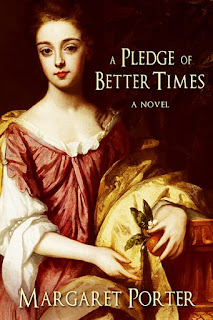
 
Margaret Porter is the award-winning and bestselling author of twelve period novels, whose other publication credits include nonfiction and poetry. The Carrousel des Amazones is the setting for a scene in A Pledge of Better Times, her highly acclaimed novel of 17th century courtiers Lady Diana de Vere and Charles Beauclerk, 1st Duke of St. Albans.

Margaret studied British history in the UK and the US. As historian, her areas of speciality are social, theatrical, and garden history of the 17th and 18th centuries, royal courts, and portraiture. A former actress, she gave up the stage and screen to devote herself to fiction writing, travel, and her rose gardens.

Connect with Margaret:

Website
Blog
Facebook
Twitter
Amazon


Friday, May 25, 2018

Garden Guide for English Historical Authors: Spring

by Margaret Porter

Tulips and primula

'Planting and gardening addes much to the Health and Content of Man.'  Moses Cook, 1676

'My Garden, like my Life, seems to me every Year to want Correction and require attention.'  Alexander Pope, 1736

This is the fourth and last seasonal gardening guide, with information taken from 17th and 18th century sources in my personal library. I took the photographs either in historic gardens in England or in my own 21st century gardens, in which I grow heritage plants. The previous three entries are:  
Garden Guide for English Historical Authors: Summer and Garden Guide for English Historical Authors: Autumn, and Garden Guide for English Historical Authors: Winter.

With the advent of spring, garden tasks multiplied, in the past as they do nowadays. Seedlings and young plants established on hotbeds had to be planted out in prepared sites where they could thrive, grow and bear. The onset of warmer weather meant that pleasure gardens would serve areas for display of flowers and fruit, enjoyment, and relaxation, hence the need to continuing the tidying begun in winter's waning days. Printed garden guides provided explicit instructions to the professional as well as the common gardener.


Bluebells in springtime

MARCH

'First sturdy March with brows full sternly bend,
And armed strongly, rode upon a Ram,
The same which over Hellespontus swam:
Yet in his hand a spade he also hent,
And in a bag all sorts of seeds ysame,
And fild her wombe with fruifull hope of nourishment'
                           Edward Spenser, The Faerie Queene

In the kitchen garden. Ensure that cucumber and melon hot beds are properly warm, with lively but moderate heat. Sow seeds of both throughout the month. Make new hot beds for moving transplants. Transplant cabbage and lettuce plants, and plant cauliflowers in rich ground. Sow broccoli, cabbage, savoy, spinach, onions, leeks, radish, carrots, beans, peas, turnips, celery, parsnips, tomato or love-apple, asparagus, chervil, coriander, parsley, basil, and other pot and medicinal herbs. Plant cuttings of rosemary and rue. Dress existing asparagus and artichoke beds, forking or lightly digging, then raking. Plant potato beds and Jerusalem artichokes. Shake the nut trees to loosen pollen from the catkins; this will fertilise the flowers. 

In the fruit garden. Prune fig trees, cut out branches overtopping the wall. Plant fruit trees of all kinds on walls, as espaliers, or as standards. Train young apricots, peach and nectarines planted against a wall. Prune and train apples, pears, plums, and cherries. Prune raspberries of deadwood and thin live shoots. Prune vines. 

Hyacinth
In the flower garden. Sow tender annuals in hot beds. Add fresh earth to potted plants. Guard auriculas in pots from too much wind, cold, and frost. Support heavy hyacinth flowers to prevent toppling. Plant ranunculus and anemones. Plant biennial and perennial flower seeds. Transplant perennial plants. Prune shrubs. Plant additional  shrubs and evergreens. Lay turf for new grass walks, clean gravel walks of weeds and litter.


Garden produce: Winter spinach, some cabbages and savoys, broccoli, red and chard beets, parsnips, carrots, potatoes, Jerusalem artichokes, endive, all sorts of salad herbs. 

From the hot beds: Cucumbers, peas, kidney beans, purslane. In warm borders: mint, tarragon, tansy, sage, parsley, marigolds, burnet, sorrel, hyssop, winter savory, rosemary, other pot herbs.


Persian iris
Plants in flower: Various sorts of crocus, double snowdrop, several sorts of narcissus, Persian iris, spring cyclamen, several sorts of daffodils, early turnips, crown imperials, hyacinths, violets, hepaticas, wall-flowers, alyssum, primroses, dog's tooth violet, hearts ease or pansies, wood anemones, hellebores.


Crown imperial

Hellebore

Hearts ease

Primrose


Tree and shrubs in flower: Apricot, almond, daphne mezereon, cherry plum, spurge laurel, laurustinus, cornelian cherry, honeysuckle.

Medicinal plants to gather: Elder buds, nettle tops, liverwort, primrose, violet, watercress.

Greenhouse plants in flower: Ilex-leaved lantana, Spanish Jasmine, Aleppo cyclamens, geraniums of several sorts, cotyledon, African marigold, Canary campanula, coffee tree, purple lotus, gladiolus.


APRIL

'And the buds and blossomes breathing forth pretious and pleasant Oders, rejoyce and delight the inward and outward senses.' Ralph Austen, A Treatise of Fruit Trees, 1653


'In Aprill about St George his day, you shall set abroad your citron and orange trees, as also such other trees as you had kept within house from St Martin's Day.' Richard Surflet, 1600

In the kitchen garden. Many vegetables sown in prior month may still be sown for successive crops. Transplant lettuce where there stand close. Thin radishes. Sow spinach. Plant early kidney beans in dry weather. Sow gourds and pumpkins. Sow broccoli for a winter crop. Sow borage, bugloss, clary sage, thyme, sweet marjoram, savory, burnet, sorrel, and hyssop. Continue to sow pot herbs. Also nasturtium and marigolds. Cuttings and slips of new growth from herbs can be planted, especially lavender and rosemary.

In the fruit garden. Continue planting fruit trees as required. With fumigating bellows, destroy insects that breed in this season and damage trees, pick off curled leaves. Protect blossoms and young fruit of trees from frost by covering with evergreen branches or mats, until fruits are as large as the end of a man's finger, or larger.

Cadytuft
In the flower garden. Make a hot bed to receive annual seedlings planted the prior months. Continue sowing of tender annuals. Sow seeds of hardy annuals and other flowers in borders and elsewhere: convolvulus major and minor, Tangier and sweet-scented pea, nasturtiums, lupines, larkspur, poppy, hawkweed, candytuft, dwarf lychnis, nigella, stock, dwarf and large sunflower, lavatera, oriental mallow. Sow some in patches in in the borders. Water frequently in dry weather. Sow pinks, carnations, and polyanthus. Take especial care of hyacinths, tulips, ranunculus and anemone flowers now blooming--guard from heavy winds and rains by screening with mats. Plant tuberoses in hot beds or inside the hothouse. Place pots of auriculas on shelves of the auricula stage. Stake such flowering plants as require support.


18thC Sweet-scented pea

Garden produce: Turnip shoots, spinach, radishes, asparagus, pot-marjoram, late celery and endive, chervil, young onions, leeks, scallions, borage, sage, rosemary, young carrots sown in autumn. From the hot-beds: cucumbers, peas, kidney beans, purslane, early cabbages.


Fritillary & daffodils
Plants in flower: Anemones, ranunculus, polyanthus, auriculas, tulips, crown imperials, hepaticas, hyacinths, narcissus, daffodils, jonquils, violets, muscaria, snowdrop, flag iris, cyclamen, Double white violet, anemone, double daisies, fritillaria, Persian lily, lungwort, lily of the valley, hearts ease, periwinkle.

Trees and shrubs in flower: White and purple and blue lilac, Persian lilac, laburnum, peach, pear, cherries of all sorts, plum, almond, hawthorn, Italian honeysuckles, Yellow jasmine, coronilla, dogwood, horse chestnut, spirea, azaleas.

Spirea


Crabapple


MAY

'There is no flower can be more glorious than the Poppy.' John Worlidge, 1677

Poppy

In the kitchen garden. Melon beds and cucumber frames require especial care--early plants in frames will now show fruit. Maintain sufficient warms in the beds while fruit is setting. Admit fresh air to the plants each day by propping the glass. Shade the plants from the sun on the brightest days. Plant out the gourds and pumpkins sown in April. Plant out the tomato or love-apple plants sown earlier. Cut asparagus for the table. Transplant lettuce. Plant more beans and peas for later crops. Continue to sow pot herbs and propagate medicinal plants from slips and cuttings.

In the fruit garden. Train new shoots of wall trees. Thin apricots, peaches, and nectarines where the tree is too heavily laden with fruit. Water new-planted trees. Clear vines of all useless shoots. Train all shoots that have fruit upon them. Uncover fig branches in warm weather to prevent mold. continue to repair espalier frames. Transplant fruit trees. Look carefully after bullfinches, at this season they do great mischief to fruit trees by packing off blossom buds and can destroy all garden fruit in two or three days.


Parrot tulip
In the flower garden. When tulips cease flowering, cut away the seed pod from the top of the stalk and allow the leaves to wither. In dry weather transplant autumn flowering bulbs, and separate off-sets from the main bulb. Plant out tender and less hardy plants from hot beds into the ground. Transplant the perennial flowering plants that were sown in March. Mow grass walks and lawn, and keep gravel walks tidy. Continue to support tall flowering plants.


Garden produce: Cabbages, savoys, broccoli, carrots, parsnips, turnips, red beets, salsify, cardoons, spinach, potatoes, artichokes, onions, leeks, garlic, shallots, sage, parsley, sorrel, mint, tansy, tarragon, sallet herbs, mushrooms, endive, celery, chervil. Pot herbs and aromatic plants: winter savory, hyssop, thyme, lavender, rosemary, pot-marjoram, burnet.


Foxglove
In the pleasure garden. Plant out carnations in pots to flower and place in a warm situation. Sow seeds of auricula and polyanthus in pots or tubs of light, rich earth. Add fresh earth to auricula pots. Near the end of month, stir the surface of flower beds, and clear them of weeds and moss. At end of the month transplant Canterbury bells, French honeysuckle, daisies, rose campion, foxgloves, pinks, sweet william, bachelors' buttons, campanulas, thrift, scarlet lychnis, columbines, goldenrods, and other fibrous-rooted plants. On dry frosty nights cover beds of ranunculus, anemones, and tulips to protect from injury. Rake and clean in the wilderness, because the flowers under the trees are beginning to bloom. Edge the grass walks and lawns, and roll them when the ground is soft. Make hot-beds for tender annual flowers.


Lawn roller

Garden produce: Radishes, spinach, cabbage, lettuce, sorrel, mint, winter savory, borage, bugloss, young onions, chives, asparagus, peas, beans, early artichokes, cauliflower, young carrots in protected locations, cucumbers, melons, purslane, kidney beans on hot beds, mushrooms, parsley, coriander, chervil, cresses, mustard, burnet, tarragon, spring herbs for soups.


Lily of the valley
Medicinal plants for gathering: Sorrel, wood sorrel, lily of the valley, pimpernel, watercress, ground ivy, dead nettle, fumitory, columbine, tansy, stonecrop, woodruff, mandrake leaves, dandelion, betony, groundsel, borage, horse tail, cranesbill, burnet, lungwort.

Fruit for gathering: Cherries, strawberries in warm soil, late in the month gooseberries and green currants in warm situations.


In the forcing frame: Apricots, peaches, cherries, strawberries, other early fruits.

Lupine
Plants in flower: Late tulips, anemones, ranunculus, lupines,  lily of the valley, daisies, thrift, valerian, sage, rosemary, veronica, geraniums, Armenian perennial poppy, peonies, monkshood, stock gillyflowers, wallflowers, Solomon's seal, ladies' mantle, tuberose, lady slipper, Welsh poppy, double white narcissus, harebells, iris, flag-leaved iris, spiderwort, bellflower, double feverfew, ladies' smock, snapdragon.


Trees, shrubs, and vines in flower: Yellow jasmine, lilacs, honeysuckles, whitethorn, Guelder rose, cinnamon rose, monthly rose, damask rose, burnet-leaved rose, Scotch rose, horse chestnut, laburnum, flowering almond, perfumed cherry, Portugal laurel, dwarf medlar, myrtle, double-flowering cherry, viburnum, dogwood, privet, flowering ash, common broom, clematis.


Blush damask rose

Blush burnet rose

Double flowering cherry

Having closed out the seasonal guides to the gardening year, I hope they will prove informative and perhaps useful to my fellow authors, as well as interested historical fiction readers.


Flag iris

Peony

Everlasting pea

Mallow
English Garden History: Summer Guide
English Garden History: Autumn Guide
English Garden History: Winter Guide
~~~~~~~~~~~~

Margaret Porter is the award-winning and bestselling author of twelve period novels, whose other publication credits include nonfiction and poetry. A Pledge of Better Times, her highly acclaimed novel of 17th century courtiers Lady Diana de Vere and Charles Beauclerk, 1st Duke of St. Albans, is her latest release, available in trade paperback and ebook. Margaret studied British history in the UK and the US. As historian, her areas of speciality are social, theatrical, and garden history of the 17th and 18th centuries, royal courts, and portraiture. A former actress, she gave up the stage and screen to devote herself to fiction writing, travel, and her rose gardens.


[This article is an Editors' Choice, first published on March 22 2016]

Saturday, October 8, 2016

Mary II of England: A Queen of Gardens

by Margaret Porter

“Her rooms should be abundantly furnished each day with all kinds of flowers.” – Prince William of Orange (later King William III), to his gardener Charles du Boisson.

“In Gardn’ing, especially Exoticks, she was particularly skilled.”– Stephen Switzer.

Mary of Orange, with citrus tree & pet parrot
Princess Mary of York, eventually Princess Mary of Orange, and ultimately England’s Queen Mary II was an enthusiastic plantswoman and garden-maker. From her early years, when her education was supervised by the botanically-minded cleric Henry Compton, she was an avid gardener. During her years in Holland she and her husband created extensive gardens at their palaces. And when the Glorious Revolution placed the couple on her deposed father’s throne, they imported Dutch styles for gardens and architecture to England.

From 1689 to 1696, the monarchs’ expenditure on their royal gardens totaled £83,000, in modern currency approximately £7,275,000 or $11,471,000. Three-fourths of the sum was spent at Hampton Court alone.

Hampton Court Palace, Surrey

Hampton Court Palace and Gardens, late 17th century

Because King William, an asthmatic, could not live comfortably at damp and draughty Whitehall Palace, he and Mary immediately settled on Hampton Court as their country palace.

They commissioned extensive alterations from Sir Christopher Wren. They also designated William’s Dutch confidant and Mary’s fellow plant collector, Willem Bentinck, Earl of Portland, as Superintendent of the Royal Gardens.

One of the Cibber urns
In 1689 Daniel Marot, responsible for some of the couple’s garden designs in Holland, and nurseryman George London laid out the first parterre on the East Front, filled with grass or coloured gravel in imitation of Le Notre’s work at Versailles. The large semi-circle was edged with lime trees for shade. The wrought iron gates by Tjou and great stone urns carved by Caius Gabriel Cibber remain, as does the Queen’s Bower, created by training wych elms over an arched tunnel one hundred yards in length, twenty feet tall, and twelve feet wide. The landscape was further adorned with thirteen fountains and numerous sculptures. The Privy Garden received a new parterre design. Names of the adjacent series of walled gardens indicate what grew there: the auricula quarter, the orange quarter, the flower garden, and so on. Tropicals and “exoticks” resided in specially designed glass cases.

Large sums were spent and great efforts made to fill the new hothouses and flower beds. As an example, records reveal a payment to “Jas. Road, Gardiner, for going to Virginia to make collections of plants, £234 11s 9d.” Dr. Leonard Plukenet, the botanical curator, received £200 per year, as specialist in “tropical and foreign plants, cuttings, roots or seeds.” In January 1691, the gardens consisted of patterns “laid in grass plats and borders…narrow rows of dwarf box in figures like lace patterns. In one of the lesser gardens a large greenhouse divided into several rooms, and all of them with stoves under them.”

Summer display of citrus and exotics, as in Mary's lifetime
These hothouses also contained the tender items brought over from Holland. The death of Gaspar Fagel, one of William’s advisors, coincided with the Glorious Revolution. His family sold the contents of his garden collection to William and Mary, which were transferred to Hampton Court over a period of two years. By September 1692 the last of the “orange trees, lemon trees, and other … trees” arrived in England. In 1892 some of the oranges were removed to Windsor. The rest of the collection survived in situ until 1921.

From mid-May throughout the summer Mary's arrangement of citrus trees, oleanders, olives, yuccas, and agaves—grown in large wooden tubs or in blue-and-white ceramic vases—is recreated on the terrace beside the former orangery. In colder months these are replaced with bay, laurustinus, holly, Portugal laurel, and Spanish broom.

Agave growing in 17th century reproduction tub

No attempt has been made to recreate Mary’s aviaries. She collected exotic birds as well as exotic plants—she had a pet parrot—and alleys of her bird cages were an attractive and melodic feature of her gardens.

Hampton Court Gardens in springtime, showing Queen Mary's Bower.

Kensington House, Kensington

From their joint desire for a compact “country palace” like the ones they had known and loved in Holland, William and Mary purchased Lord Nottingham’s residence at the edge of Hyde Park. As at Hampton Court, they commissioned alterations undertaken by Sir Christopher Wren. Mary expanded the original gardens to twelve acres, with flower beds arranged in formal Dutch style. New paths were laid and filled with gravel. The cost of adding trees, plants and flowers was £700, and the total cost of garden improvements (exclusive of labour) was £12,495. The house—not yet designated a palace—had a kitchen garden and an adjacent orchard. A visitor in the winter of 1691 reported that the grounds were not “abounding with fine plants,” as the citrus trees spent the cold months in Mr. London’s Brompton greenhouses a mile away, “But the walks and grass are laid very fine.”

Kensington House gardens, as they were circa 1690-91, in a later print.

Here, in the waning days of 1694, Mary died of smallpox. Her sister Queen Anne later added the orangery, now a popular restaurant. In Queen Victoria’s reign Kensington Gardens was developed as the extensive public park we know today, with water features and walkways and monuments.

Whitehall Palace, London

Despite their preference for other locations, this palace served as the monarchs’ official residence. Its Privy Garden, devised by Cardinal Wolsey, had been improved by Henry VIII and subsequent Tudor monarchs. Partly destroyed during the Interregnum, it was repaired and enhanced by the Stuarts. A typical pleasure ground, it consisted of grass squares with paths between, and contained a sundial of which Charles II was very proud. His mistress Barbara, Lady Castlemaine (later Duchess of Cleveland) spread her freshly laundered underthings there to dry, as noticed and remarked upon by Samuel Pepys.

When living at Whitehall, Mary seldom had leisure time for garden improvements. She served as Regent during her husband’s long absences in summer and autumn, when he waged annual war against Louis XIV’s armies in Flanders. Her days were filled with burdensome official duties and council meetings.

The King was abroad in April 1691 when fire consumed a portion of the palace. Stones and building material were salvaged to carry out a plan of Mary’s, as reported by Luttrell the diarist: “There is orders given for building a fine terras walk under the lodgings at Whitehall, toward the waterside.” In 1693 he writes, “The Queen’s terras walk . . . facing the Thames is now finished, and curiously adorn’d with greens which cost some thousands of pounds.” No matter the state of the Treasury, there was always money for Mary’s plants! During the winter of 1698 a far worse conflagration consumed the entire palace, leaving behind only the Banqueting House as a remnant and reminder of its former glories.


Arrangements and Art

Queen Mary’s fondness for flowers was evident not only in her gardens, but also in the elegant rooms of her residences. She and her husband patronised the great Dutch and Flemish botanical and floral artists, whose lush and colourful still life paintings decorated her rooms and became part of the royal art collection. She was sometimes observed watching Jean-Baptiste Monnoyer paint floral decorations at Kensington. And Mary’s own portraits often contain urns overflowing with flowers, or an orange tree.

Still life by Jean-Baptiste Monnoyer

Delft pagoda vases and planter, Kensington Palace
Mary was an innovator in flower display as well, commissioning various containers from the ceramic factory in Delft—in traditional forms and others made to her specifications. Samples of these distinctive blue-and-white glazed vessels can be seen at Hampton Court and Kensington Palace. Huge ceramic tubs held shrubs. Pyramids and pagodas were used to show off individual blooms—not only tulips, but all varieties of flowers. Arrangements in bowls tended to be asymmetrical and free-flowing, as seen in the botanical paintings, with only the leaves of the flower stalks as greenery.

Many Stuart-era formal gardens were eradicated by Capability Brown and his followers in the late 18th century—at Hampton Court and elsewhere. Garden historians have made great strides replicating the designs that Mary and her artisans created, to the delight of palace visitors in every season.

Delft planter at Hampton Court

All photos from the author's personal archives. Period prints and paintings via Wikimedia Commons and Google Images.

This is an Editor's Choice, originally published August 24, 2015.

 ~~~~~~~~~~~~

Margaret Porter is the award-winning and bestselling author of twelve period novels, nonfiction and poetry. Queen Mary's garden pursuits are featured in A Pledge of Better Times, her highly acclaimed novel of 17th century courtiers Lady Diana de Vere and Charles Beauclerk, 1st Duke of St. Albans (available in trade paperback and ebook). Margaret studied British history in the UK and the US. As historian, her areas of speciality are social, theatrical, and garden history of the 17th and 18th centuries, royal courts, and portraiture. A former actress, she gave up the stage and screen to devote herself to fiction writing, travel, and her rose gardens.


Sunday, February 14, 2016

Valentine's Day: A Brief History


by Margaret Porter
 
Oft have I heard both youth and virgins say
Birds choose their mates, and couple too this day;
But by their flight I never can divine
When I shall couple with my Valentine.

                                        --Robert Herrick
Origins.

In ancient Rome on 15th February, young men drew young women's names in honour of the goddess Februata-Juno. After Christianity was established, the church replaced the pagan ritual and chose the preceding day to venerate St Valentine of Rome. 


Valentine's baptism of St Lucilla by Jacopo Bassano
Valentine's precise identity is mysterious--he might have been a Bishop of Terni, he might have been a priest. Legends about him are various. According to one of them, he actively converted Romans to Christianity, drawing upon himself the wrath of Emperor Claudius II, who demanded that he renounce his faith or be beaten and beheaded. Valentine refused, and was executed--possibly in 269 but perhaps in subsequent years. His other claim to fame is for supposedly marrying lovers in secret to prevent the husbands being sent off to war. One of his best-known miracles was curing his jailer's daughter's blindness. Before being led away to his death, he is believed to have left behind a note for her signed, "Your Valentine."

Archaeologists discovered evidence of his existence in a Roman catacomb and found the remains of an ancient church dedicated to him. In 496, to honour his martyrdom, Pope Gelasius designated 14th February as his saint's day. Valentine remains on the Roman Catholic list of saints, although he was de-listed from veneration in 1969. Within the Anglican Communion 14th February is an official feast day. He is the patron saint of lovers, engaged persons, and happily married couples--but also bee keepers, travellers, and those suffering from epilepsy, fainting, and plague.


England

During the Middle Ages in England it was believed that birds choose their mates in mid-February. In 1361 Chaucer aligns this belief with observance of the saint, in his poem The Parliament of Fowls, commemorating the marriage of King Richard II and Anne of Bohemia:
For this was on Seynt Valentynes day,
Whan every foul cometh ther to chese his make,
...
This noble emperesse, ful of grace,
Bad every foul to take his owne place,
As they were wont alwey fro yeer to yere,
Seynt Valentynes day, to stonden there.

On the 14th it was customary for young men to draw names from a bowl as a way of choosing a female valentine. A paper bearing that person's name was attached to the sleeve. Thus, the phrase "wear your heart on your sleeve" is very old indeed!
The drawing of valentines crossed social boundaries, so in the traditional lottery a maid might draw her master's name.

Henry VIII in 1537, by Holbein
The Tudors made the most of the occasion, and in 1537, King Henry VIII--who loved to be in love--decreed by Royal Charter that Valentine's Day would become a holiday in England.

It was popularly believed that the first person an individual met on that day (though not a family member) would be their Valentine, and if you were choosy you would keep your eyes shut until an acceptable prospect materialised. Shakespeare's Ophelia expresses her desire to be the first person Hamlet sees in the morning, with this rhyme,

To morrow is Saint Valentine's
All in the morning betime
And I a maid at your window
To be your Valentine


Various forms of prognostication arose. To know the occupation of her future husband, a girl would look to the skies. If she saw a blackbird, he'd be a clergyman; a robin meant a sailor; a goldfinch indicated a rich man; a blue tit predicted a happy  man; a crossbill, an argumentative man; a dove for a good man. If she saw a woodpecker, she'd have no man at all.

She might also place a single bay leaf beneath her pillow, reciting, "Saint Valentine, be kind to me, This night may I my true love see."


It was bad luck to bring snowdrops into the house on Valentine's, or else the girls dwelling there will never be wed.

In a Leap Year, girls were permitted to propose marriage to bachelors on Valentine's Day as well as on the 29th of February.


17th Century


17h Century glove
The day continued to be a romantic occasion marked by gift-giving. It was considered lucky to present your true love with new gloves, as stated in this rhyme of the period:
Good morrow, Valentine, I go today
To wear for you what you must pay.
A pair of gloves next Easter Day.


According to Monsieur Misson, a French visitor to England, the drawing of names continued to be popular:
On the Eve of the 14th of February, St Valentine's Day, an equal Number of Maids and Batchelors get together each writes their true or some feign'd Name upon separate Billets which they roll up and draw by way of Lots, the Maids taking the Men's Billets and the Men the Maids' so that each of the young Men lights upon a Girl that he calls his Valentine and each of the Girls upon a young Man which she calls hers. By this Means each has two Valentines but the Man sticks faster to the Valentine that is fallen to him than to the Valentine to whom he is fallen. Fortune having thus divided the Company into so many Couples, the Valentines give Balls and Treats to their Mistresses, wear their Billets several Days upon their Bosoms or Sleeves, and this little Sport often ends in Love.


Samuel Pepys by Peter Lely

 Valentine's Day was also an opportunity for pranks and frolic, and some of the best evidence of Valentine's Day merriment, expectations, and expence comes from diarist Samuel Pepys:

Thursday, 14th February 1661
14th (Valentine's day). Up early and to Sir W. Batten's, but would not go in till I asked whether they that opened the door was a man or a woman, and Mingo, who was there, answered a woman, which, with his tone, made me laugh; so up I went and took Mrs. Martha for my Valentine (which I do only for complacency), and Sir W. Batten he go in the same manner to my wife, and so we were very merry.

Friday, 14th February 1662
14th (Valentine's day). I did this day purposely shun to be seen at Sir W. Batten's, because I would not have his daughter to be my Valentine, as she was the last year, there being no great friendship between us now, as formerly. This morning in comes W. Bowyer, who was my wife's Valentine, she having, at which I made good sport to myself, held her hands [over her eyes] all the morning, that she might not see the paynters that were at work in gilding my chimney-piece and pictures in my diningroom.

Tuesday, 14th February 1665
14th (St. Valentine). This morning comes betimes Dicke Pen, to be my wife's Valentine, and come to our bedside. By the same token, I had him brought to my side, thinking to have made him kiss me; but he perceived me, and would not; so went to his Valentine: a notable, stout, witty boy. I up about business, and, opening the door, there was Bagwell's wife, with whom I talked afterwards, and she had the confidence to say she came with a hope to be time enough to be my Valentine, and so indeed she did,

Wednesday, 14th February 1666
14th (St. Valentine's day). This morning called up by Mr. Hill, who, my wife thought, had been come to be her Valentine; she, it seems, having drawne him last night, but it proved not. However, calling him up to our bed-side, my wife challenged him.

Thursday, 14 February 1667
This morning come up to my wife’s bedside, I being up dressing myself, little Will Mercer to be her Valentine; and brought her name writ upon blue paper in gold letters, done by himself, very pretty; and we were both well pleased with it. But I am also this year my wife’s Valentine, and it will cost me £5; but that I must have laid out if we had not been Valentines.

Saturday, 16 February 1667
I find Mrs. Pierce’s little girl is my Valentine, she having drawn me; which I was not sorry for, it easing me of something more that I must have given to others. But here I do first observe the fashion of drawing of mottos as well as names; so that Pierce, who drew my wife, did draw also a motto, and this girl drew another for me. What mine was I have forgot; but my wife’s was, “Most virtuous and most fair;” which, as it may be used, or an anagram made upon each name, might be very pretty.

Friday, 14th February 1668

14th (Valentine's day). Up, being called up by Mercer, who come to be my Valentine, and so I rose and my wife, and were merry a little, I staying to talk, and did give her a guinny [guinea] in gold for her Valentine's gift. There comes also my cozen Roger Pepys betimes, and comes to my wife, for her to be his Valentine, whose Valentine I was also, by agreement to be so to her every year; and this year I find it is likely to cost £4 or £5 in a ring for her, which she desires.


  18th Century


18th century puzzle valentine
Notes and letters containing verses, riddles, and anagrams, often lavishly illustrated by hand, gained prominence. Because these missives weren't signed, the recipient had to guess the sender's identity.

At the Theatre Royal, Drury Lane, Valentine's Day: A Musical Drama in Two Acts was performed as an afterpiece in 1776. It sounds as though it would be a delightful entertainment, however a theatre employee recorded in his diary that it was "much hissed" and "badly performed." The critics were  a little kinder:


It would be going out of our way to dwell much on its defects; suffice it therefore that although we so far join with the audience in condemnation of it...yet we protest we have seen worse singing pieces received with applause. Jerry Jingle had some humour, and the music had great prettiness about it. (Westminster Magazine)
For a sixpence, a young woman seeking inspiration could purchase the book Every Lady's Own Valentine Writer In Prose and Verse for 1798 contained "Humorous Dialogue: Witty Valentines, with Answers; Pleasant Sonnets, on Love, Courtship, Marriage, Beauty, &c&c". The first entry is a dramatic sketch set in a girls' boarding school, in which several pupils compare their gifts--a cake, a diamond pin, a work-bag, all accompanied with a rhyme--which appear all to have come from the same young man.

Most of the romantic poems it contains are written in the form of a question or plea from the swain, immediately followed  by a set of rhymed verses from the lady, giving her answer. 

Here is a sample acrostic featured in the book:

V ain world farewell, I live for love
A mbition ne'er my soul shall move;
L ove is the all of my desire,
E ach thought, each wish, it can inspire;
N e'er can wealth my hopes excite;
T itles are mere trifles light;
I n a sound there's no delight.
N ames can never joy assign,
E xcept that of Valentine.


19th Century

 
Regency Valentine

 
In his Essays of Elia, Charles Lamb discourses upon the holiday :
...this is the day on which those charming little missives, ycleped Valentines, cross and intercross each other at every street and turning. The weary and all forspent twopenny postman sinks beneath a load of delicate embarrassments, not his own. It is scarcely credible to what an extent this ephemeral courtship is carried on in this loving town, to the great enrichment of porters, and detriment of knockers and bell-wires....Not many sounds in life, and I include all urban and all rural sounds, exceed in interest a knock at the door. It “gives a very echo to the throne where Hope is seated.” ...But of all the clamorous visitations the welcomest in expectation is the sound that ushers in, or seems to usher in, a Valentine.

Victorian Valentine
Remarkably, by the third decade of the century, on Valentine's Day  two hundred thousand more letters than usual were delivered through the two-penny post. Commercially printed valentines became available early in the century, and production of these grew ever more intricate and artistic. Over time, the comic valentine became popular, as did "bank notes" drawn on Cupid's Bank or "telegrams" from Cupid.

Impetuous reckless use of a valentine purchased in a shop leads to a crucial aspect of plot in Thomas Hardy's novel Far From the Madding Crowd:

It was Sunday afternoon in the farmhouse, on the thirteenth of February. Dinner being over, Bathsheba, for want of a better companion, had asked Liddy to come and sit with her....

"Dear me--I had nearly forgotten the valentine I bought yesterday," she exclaimed at length.

"Valentine! who for, miss?" said Liddy. "Farmer Boldwood?"

It was the single name among all possible wrong ones that just at this moment seemed to Bathsheba more pertinent than the right.

"Well, no. It is only for little Teddy Coggan. I have promised him something, and this will be a pretty surprise for him. Liddy, you may as well bring me my desk and I'll direct it at once."

Bathsheba took from her desk a gorgeously illuminated and embossed design in post-octavo, which had been bought on the previous market-day at the chief stationer's in Casterbridge. In the centre was a small oval enclosure; this was left blank, that the sender might insert tender words more appropriate to the special occasion than any
generalities by a printer could possibly be.

"Here's a place for writing," said Bathsheba. "What shall I put?"

"Something of this sort, I should think," returned Liddy promptly: --

"The rose is red,
The violet blue,
Carnation's sweet,
And so are you."

"Yes, that shall be it. It just suits itself to a chubby-faced child like him," said Bathsheba. She inserted the words in a small though legible handwriting; enclosed the sheet in an envelope, and dipped her pen for the direction.

"What fun it would be to send it to the stupid old Boldwood, and how he would wonder!" said the irrepressible Liddy, lifting her eyebrows, and indulging in an awful mirth on the verge of fear as she thought of the moral and social magnitude of the man contemplated....
"No, I won't do that. He wouldn't see any humour in it."


But of course, she does. And he doesn't. A Valentine's joke that goes seriously awry!


Nowadays, as we express our affections with cards and flowers and chocolates, in social media as well as via the postal service, we perpetuate time-tested traditions that our most distant ancestors would recognise.

~~~~~~~~~~~~~~~~~~~~~~~~~~~~

 Margaret Porter is the award-winning and bestselling author of twelve period novels, whose other publication credits include nonfiction and poetry. A Pledge of Better Times, her highly acclaimed novel of 17th century courtiers Lady Diana de Vere and Charles Beauclerk, 1st Duke of St. Albans, is her latest release, available in trade paperback and ebook. Margaret studied British history in the UK and the US. As historian, her areas of speciality are social, theatrical, and garden history of the 17th and 18th centuries, royal courts, and portraiture. A former actress, she gave up the stage and screen to devote herself to fiction writing, travel, and her rose gardens.

Author Website
Blog
Facebook  
Author Page
Twitter
Amazon