Saturday, November 21, 2015

The Ancient tradition of the boy-bishop

by Anne O'Brien

Here is something with a festive connection today.

I find ancient historical traditions that still exist today most appealing.  Did the characters in my historical novels participate in or witness these traditions?  Did Joanna of Navarre and her husband King Henry IV of England acknowledge the tradition of appointing a Boy-Bishop during their own Christmas celebrations? history rarely tells us, but I am sure that they did.  Henry was a keen exponent of Christmas festivities both in his youth and in later life at Eltham Palace.


This is Hereford Cathedral where the custom of appointing a boy-bishop is still maintained today. In the great cathedrals of England this was a tradition widespread and going back to the first quarter of the thirteenth century, long before Henry and Joanna, when a boy was chosen to parody the role of the true bishop, becoming for a short time a 'boy-bishop.'

There were two purposes here.  One was to remind the congregation of humility, a child replacing an ecclesiastical lord and wielding his power.  The other purpose, since the ceremony took place on the Sunday nearest to the Feast of St Nicholas, the patron saint of children, usually in the first week of December, to remind the congregation that there was a place for fun and revelry and celebration  to fight off the cold dark days of midwinter.  The medieval church was not necessarily a place of doom and gloom. The ceremony was originally planned with lively choristers in mind.  The boy bishop was chosen from one of their number, to recognise their importance in the musical life of the church.


This ancient custom was abolished by Henry VIII at the Reformation, revived by Mary I, then finally abolished by Queen Elizabeth I.  In recent years it has however been revived, most notably in Hereford Cathedral, as shown above, where a boy-bishop has been appointed with great ceremony every year in the first week of December since 1982.  His term of office runs from the Feast of St Nicholas to Holy Innocents' Day on 28th December.  Definitely a time for festivity and rejoicing.

This is how it works at Hereford.  The boy-bishop, in his early teens, is chosen from the senior choristers to take office.  It is written into the service of Evensong.  During the saying of the Magnificat, on the words 'he hath put down the mighty from their seat', the bishop of Hereford steps down from the Episcopal throne.  Then on the words 'and hath exalted the humble and meek' the boy- bishop takes his place.  He is dressed in full bishop's robes with mitre and stole and is given  the bishop's crozier to hold.  The new bishop leads the prayers, accepts the collection, blesses the congregation and preaches his own sermon.  A favourite text in medieval times was Mathew 18:3 'Then He said: in truth I tell you, unless you change and become like little children you will never enter the kingdom of Heaven.'

What an experience for a young boy, to taste such magnificence and such authority.


For the rest of the festive period in Hereford, the new 'bishop' in full episcopal regalia plays an important part in all the services of the church except for Holy Communion.  Many see it as a chance to give a youthful perspective on life in a clerical community through their sermons.  One of the boy bishops, when asked which ability was most required to be boy-bishop for three weeks, confessed that it was the ability to drink so many cups of tea when meeting with members of the congregation.  Others quite simply enjoy the panoply and magnificence of it all, where they are the centre of attention.


In medieval times the boy-bishop and his retinue of choristers dressed as cathedral canons were expected to go on 'visitations' to ecclesiastical establishments and noble households.  There he would be entertained and given gifts, the whole often irreverent and unruly but much in keeping with medieval festivity.  This aspect of the tradition no longer takes place.  I am sure that many wish it did.

The boy-bishop will be installed once again this December in the magnificent setting of Hereford Cathedral with great ceremony and enjoyment for all involved.  I find it a great pleasure when the echoes of medieval life are carried on today.  Long may it continue.

My novel of Henry and Joanna which includes their celebration of Christmas at Eltham Palace, The Queen's Choice, will be published in the UK on 15th January 2016.

Please visit my website to keep up to date with all my events, signings and giveaways.


Friday, November 20, 2015

Where history brushes my cheek

by Anna Belfrage

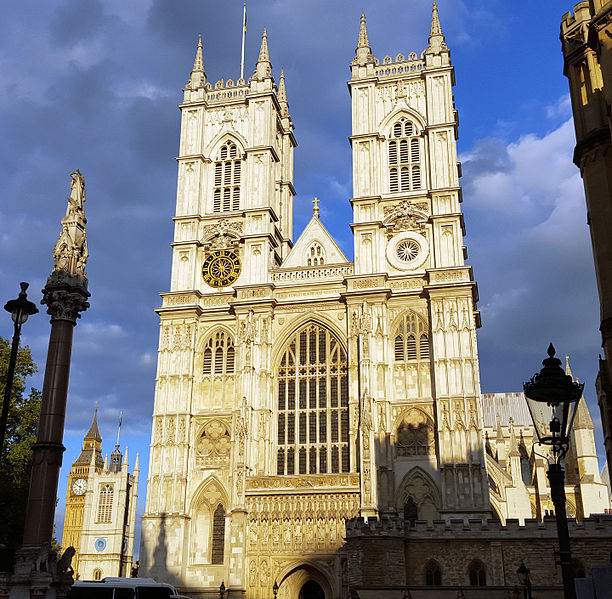
Westminster Abbey,
Chapter house by Aiwok, 2012
There are few places in the world I am so in love with as Westminster Abbey. I recall my first visit there – ages ago – when you were still allowed to ramble around as you pleased, instead of like now, following a preordained route. But as no London visit of mine is complete without a session in the abbey, I will obediently follow the signs, stopping at my own personal highlights - like the magnificent chapter house.

Now Westminster Abbey is not first and foremost a burial site of the famous – it is a church, built in testimony of deep faith. Two English kings were to spend the equivalent of a major fortune on this their favourite church, but the origins are far older than that. In fact, we probably have the Romans to thank for the original settlement on what was then known as Thorn Ey (Island of the brambles), a small patch of solid land in the marsh that abutted the northern shore of the Thames. You see, the Romans had a logistical problem: somehow they wanted to join up Watling Street with Dover Street, and the self-evident intersection was round Thorn Ey, where the Thames was fordable at low tide.

Anyway, time came and went, the tidal waters of the Thames lapped at the shores of little Thorney Island. To the west, the Roman settlement of Londinium had evolved into Lundenvic, and Thorney Island was ideal as a further outpost of civilisation, having natural springs for drinking water and being bordered by two streams (one of which was the now subterranean Tyburn) on which to transport whatever materials might be needed to build a house, a palace, a church – well, whatever. Obviously, the then inhabitants of Lundenvic found Thorney Island too suburban, too remote, how else to account for the fact that at the time of the Norman Conquest, there were only 25 houses on the Island. Or maybe they didn’t like the marshy surroundings…

As to the abbey, its roots are lost in antiquity. As per one legend, the Romans built a temple to Apollo on the present day site of the abbey. Out went the Romans, in came the barbarous Saxons, and the temple was razed to the ground, a forgotten ruin, no more, until King Sebert of Essex (a gentleman who lived in the 7th century) saw the light and decided to build a church on top of the Roman ruins to celebrate his conversion to Christianity.

St Peter visiting the church, from La Estoire de Seint Aedward le Roi
On the eve of its dedication, or so the story goes, an anonymous traveller asked a fisherman to carry him across to the finished church. The fisherman – Edric to his friends – agreed, but chose to remain in his boat when his passenger stepped ashore. When the stranger entered the church, heavenly light poured down from above, the sky rang with the sounds of angels singing, and poor Edric was terrified. Understandably, one would think. The stranger returned to the boat, asked Edric for something to eat, but our fisherman had been so stunned by the spectacle he’d just witnessed that he’d forgotten to cast his net. “Do so now,” the stranger urged, and Edric did, bringing aboard the largest catch in his life. The traveller smiled, told him to share the fish with the bishop and revealed himself as St Peter before, I presume, stepping back into invisibility as gracefully as he’d stepped out of it.

Edric and his fish, La Estoire de Seint Aedward le Roi
Sadly, historical proof to support the above is lacking. In fact, a lot of the documents pointing to an early church on Thorney Island are 11th century forgeries produced by skilled Westminster monks eager to prove their abbey was the earliest of all Christian abbeys in England. There was a major fight ongoing between Glastonbury and Westminster, both religious houses claiming to be the oldest and therefore most important site. Of course, once Glastonbury produced the story of Joseph of Arimathea, come to England with the Holy Grail and a staff that was to take root and become the Glastonbury thorn, they sort of won that particular dog-fight…

Back to Westminster: It is believed there was a small religious community already by the 8th century, but Danish raids probably destroyed what there was. After years of unrest, the 10th century saw the re-emergence of a strong Saxon – and Christian – kingdom. Under King Edgar, religion flourished, and a certain Dunstan – bishop of Worcester and London, soon to be Archbishop and a saint – founded Westminster with monks from the Benedictine community he’d started in Glastonbury. (And in view of the previous paragraph, this would indicate Glastonbury was first, wouldn’t it? Except that the monks some centuries down the line were rather bickering about the FIRST religious settlements on their sites, the ones before dear Dunstan.)

The 11th century ushered in a Danish dynasty and so Knut (Canute), son of Sven Tveskägg (Svein Forkbeard) became king of all of England in 1016. He rather liked Westminster, despite having issues with the temperamental tides of the Thames, so he decided to build a royal palace next door to the monastery. In doing so, Knut indirectly forged the first of several links that would forever tie the future abbey to the English royals. By then, Westminster had grown into one of the more important monasteries in England. Several years of royal patronage had resulted in a wealthy monastery, and  an impressive collection of relics – among which figured parts of the True Cross – ensured a steady stream of eager pilgrims.

The Danish dynasty was to be one of the more short-lived in England. Knut died in 1035, his son Harold Harefoot became king by default as Knut’s named heir – Harold’s half-brother – Hårdeknut (Harthacnut) was stuck in Denmark due to political reasons. Eventually, Harold died of a sudden illness – some people saw this as divine justice, punishment for usurping his brother’s throne. Hårdeknut obviously agreed, as one of his first acts once he arrived in England was to exhume his half-brother’s recently buried body, decapitate it, and throw it in the Thames. Two years later, Hårdeknut was dead, and in 1043 the throne passed to Edward, known to posteriority as Edward the Confessor.

Edward as per the Litlyngton Missal
Edward was the son of Ethelred, the Saxon king deposed by Sven Tveskägg and his son. He’d grown up mostly in Normandy, and must often have despaired of ever becoming king. Tradition has it that Edward had promised to make a pilgrimage to St Peter’s grave in Rome should he regain his kingdom – and that when he was finally crowned, he found himself unable to fulfil that vow as his absence could result in him losing his crown. A compromise was found: instead of taking a very, very long walk to Rome, Edward was absolved from his vow if he instead were to build – or enlarge and restore – a monastery dedicated to St Peter. Somewhat coincidental, all this, seeing as just opposite the royal palace in Westminster was a monastery dedicated to…ta-daa…St Peter.

Other sources, such as the Vita Aedwardi, site somewhat more prosaic reasons for rebuilding the existing church at Westminster: the king wanted a grand burial place. Whatever the case, Edward immediately initiated his building project. By 1045, the work could begin in earnest, and Edward had every intention of building a permanent landmark, something that would inspire awe long after he was dead and gone. I think it is safe to say he succeeded.

The church Edward built was huge by those days’ standards. It was also built to an innovative design, the first cruciform church in England, further adorned by a huge lantern tower and turrets. It was, by all accounts, magnificent, and people gawked and exclaimed as stone by stone, the building rose towards the heavens, testament to Edward’s faith and unswerving determination to build one of the finest churches in Christendom.

Westminster Abbey - on the Bayeux tapestry
Twenty years after the building work started, the church was sufficiently finished to be consecrated. It was 1065, and while successful in his church-building endeavours, Edward had failed dismally at another royal obligation: that of producing an heir. Maybe his piety made it difficult for him to indulge in carnal relations with his wife. Or maybe the fact that Queen Edith was Godwin of Wessex’s daughter had Edward approaching her with caution – his and Godwin’s relationship was stormy at best. Whatever the case, there was no son, no daughter, and Edward was sixty – a considerable age for the times.

It was decided that the new church was to be consecrated on St Stephen’s Day in 1065. Accordingly, Edward celebrated Christmas in the nearby Westminster Palace. On Christmas Eve, Edward became ill. He managed to keep his condition secret for some days, but by the 27th he took to his bed, incapable of attending the impressive hallowing of his precious church. Two archbishops, a number of bishops and abbots went through with the consecration, at which a new list of relics were drawn up. The king himself had contributed with the Virgin Mary’s milk (and let’s not start thinking about how he got hold of that), hairs from St Peter’s beard and a broken jaw with three teeth that supposedly belonged to St Anastasia.

Neither the consecration nor the relics helped. Edward sank closer and closer to death, nominated his brother-in-law Harold as his successor, ordered that he be buried in his new church “in a place that will be shown to you”, and died on January 4th, 1066. That most momentous year in English history had, one could say, opened inauspiciously.

The day after his death, Edward was buried in front of the high altar of his new church, right under the lantern tower. That same day, Harold was crowned.

Death of Harold
Harold was destined to be a brave, tragic and unlucky king. Portents in the sky, the rumours that he’d made a binding promise to support Duke William of Normandy’s claim to the English throne, plus the treachery of baby brother Tostig, made his a very shaky throne indeed. And while he managed to defeat Tostig and his Norse companions, he lost his life in the Battle of Hastings, supposedly shot through the eye by a Norman arrow. Saxon England had cause to weep and tear their clothes. Norman William, however, decided it was time for pageantry – and where better to drive home his victory than in the church built by Edward?

William's coronation, Matthew Paris
On Christmas Day 1066, William was crowned king of England in Westminster Abbey, the coronation chair strategically placed on Edward’s tomb. Inside the church, the Saxon nobles loudly acclaimed the new king – what else could they do, what with the circle of armed men that surrounded the church? Outside the church, those same armed men feared the shouts from within was a sign of treachery, and set about burning as much of the nearby surroundings as they could. A rather odd behaviour, one thinks, as William was inside the church with the potentially rebelling Saxons…

Since that long gone December day, Westminster Abbey has seen the coronation of thirty-nine English monarchs and the burial of sixteen – plus an assortment of wives and children.  And to this day, the heart of this mighty church is the chapel to St Edward the Confessor, built two centuries after Edward’s death by Henry III, the second royal builder of Westminster Abbey.

Westminster Abbey, West facade, by Bede 735
Whenever I set foot inside this ancient building. I see them all, from pious Edward through gallant Harold to the determined William. In my head, I see Henry II come striding, power and energy surging round him. There is Richard and John, the rather ineffectual if artistic Henry III, Edward Longshanks and his beloved Eleanor. There is Edward III, surrounded by his wife and many children, to the side stands handsome Richard II, and just beyond the choir I catch a glimpse of Henry Tudor, wretched and bereaved now that his wife is dead. I see them all, in this place that all of them at some point in time visited, prayed in or maybe even despaired in. I see them all, so lost in my own imagination I only notice I’m holding up the traffic when one of the wardens gently moves me aside. From the expression on his face, I am not the only one to be so overcome. In Westminster Abbey, history brushes my cheek. No wonder I always have to go back!

~~~~~~~~~~~~~

Anna Belfrage is the author of the acclaimed  The Graham Saga. Set in 17th century Scotland, Virginia and Maryland, eight books tell the story of Matthew Graham and his wife, Alex Lind - two people who should never have met, not when she was born three centuries after him.

Presently, Anna is hard at work with The King’s Greatest Enemy, a series set in the 1320s featuring Adam de Guirande, his wife Kit, and their adventures and misfortunes in connection with Roger Mortimer’s rise to power. The first instalment, In the Shadow of the Storm, was published on November 1, 2015.

For more information about Anna and her books, please visit her website. If not on her website, Anna can mostly be found on her blog.

Thursday, November 19, 2015

Marie Stuart in France: Women who shaped the early life of the Queen of Scots


by Linda Root


In spite of the volumes written about  Marie Stuart, Queen of Scots, even the most accomplished historians leave perplexing questions about the queen’s personal relationships with the women who shared her youth.  Ironically, the end of her life at age forty-four mirrored its beginning.  She spent her first five years of childhood being moved from one sanctuary to another, just ahead of Edward Seymour’s army in the operation known in history as The Rough Wooing, when Henry VIII sought to kidnap her to enforce a marriage contract with his son.  During the last two decades of her life,  she was forced from one rural estate to another at the will of the English Queen.  In neither case was she empowered to select her surroundings or her friends. The Inchmahome Priory of her early childhood was not that different from Fotheringhay where she died.  Marie Stuart's personal freedoms were determined by the English.


THE FOUR MARIES:


During her early childhood, Marie Stuart’s playmates and companions were four little girls selected by the little queen’s mother, the Scottish Dowager,  Marie de Guise. 
They were daughters of the Dowager’s ladies in waiting, most of whom were French. Many notable historians assert all of the Four Maries other than Flemyng had French mothers, but that is inaccurate.  Livingston’s mother was Lady Agnes Douglas. The other exception in the predominantly French household of Marie de Guise was Princess Janet Stewart, Lady Flemyng, an illegitimate sibling of Marie’s father James V, who died when the queen was six days old. 
At the time of their selection, they became part of the queen’s movable household.  They and their families joined the nomadic existence of the queen while her mother negotiated her daughter's exodus to France. 


The queen's final Scottish refuge during the Rough Wooing was Dumbarton Castle,  on a rocky crag where the Firth of Clyde empties into the Irish Sea. From there, she sailed from Scotland on a French flagship in the midst of violent storms. The queen's fraternal aunt Lady Flemyng served as her governess. Lords Seton and Livingston accompanied the queen to France as her co-guardians.  


The Four Maries were seasick during most of the voyage.  They were Marie Flemyng (Flamie), Marie Livingston (Lusty),  and the two staunch Catholics with French mothers,  Marie Seton (Seton) and Marie Beaton (Beton). All were between ages five and six,  and all four were named Marie. Although numerous sources assert Livingston’s given name was Mary, surviving documents show she signed her names on court documents and is referred to in the queen’s will as Marie.  The will, of course, was signed by the testatrix as 'Marie R'. During her lifetime, there was no such person as Mary Queen of Scots.  According to modern Marian historian Jane Lewis, the English insistence on calling the Scottish Queen  'Mary'  is a manifestation of the national tendency to lay claim to a queen who brought the Stuart dynasty to England. It is from Marie Stuart that all English monarchs descend through the female line of Princess Elizabeth Stuart, Marie Stuart's granddaughter, the Winter Queen. 
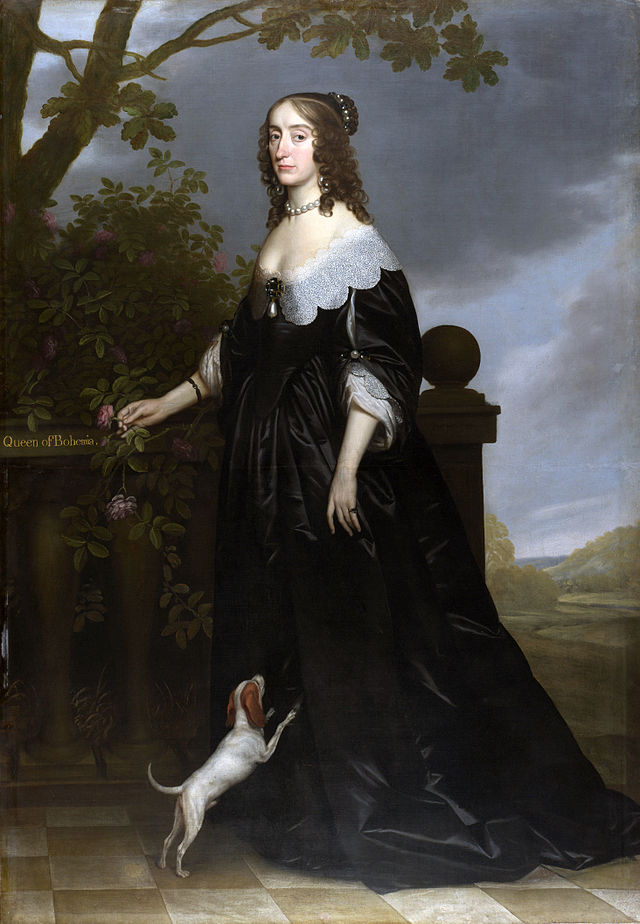
Elizabeth Stuart, Queen of Bohemia - The Winter Queen


How much information we are given about the four little girls who were Marie Stuart's conscripted playmates depends on who is writing the history.  As long ago as when I was in college, and first became interested in the Queen of Scots, I realized insofar as primary sources are concerned, there are two separate queens with very different stories, depending upon the religion of the author.  As to the Four Maries, numerous historians regard Marie Flemyng as the chief among them and the only one with the courage to call the queen to account when she was over-bearing.  Those who write of her after she married the statesman Maitland of Lethington color her as a devil or an angel, depending on their view of Maitland's politics. Marie Livingston was the first to marry. Writers with a Catholic bias would canonize Marie Seton if they could. And even though she was the niece of a murdered Catholic Cardinal, Marie Beaton was not as morally upright as her best friend Seton. She later earned the queen's disfavor by establishing an unspecified relationship with the English ambassador. 

In any case, once they arrived in France in 1548, the Four Maries were culled from the queen’s entourage and sent to Poissy while Marie Stuart was ensconced in the Royal Nursery at Saint Germain en Laye, separating her from the Scottish influence of her Four Maries.  The excuse given was to force the Queen to speak nothing but French, which makes no sense since her governess Lady Flemyng’s French was marginal. 


Nevertheless, King Henri Valois sent glowing praises to the Scottish Dowager about the governess, no doubt referring to talents other than linguistic.  Within three years, she was sent home in disfavor, having given birth to a bastard son of the King of France, conceived while the Royal Mistress Diane de Poitiers was home at her estate nursing a broken ankle.  It was one occasion when Queen Consort Catherine d’Medici and Royal Mistress, Diane d’ Poitiers joined forces and brought the governess’s pregnancy to the attention of Marie de Guise, who was more outraged than either of them.
 Lady Flemyng’s conduct was a smudge on her daughter’s reputation. The king did not get to vote when his wife and his mistress sent Lady Flemyng packing for her home in Biggar. Her best friend the Dowager did not speak to Lady Flemyng until the Dowager was on her deathbed, but it was Janet who was the chief mourner at her funeral and who accompanied her casket to Rheims for interment.

Even before Lady Flemyng was sent home in disgrace,  her Scottish influence over her royal ward had been challenged by the Dowager Duchess of Guise, Antoinette de Bourbon, who had wanted a French governess at the outset and had been overruled by her daughter, Marie de Guise. Antoinette instigated the dismissal of the Four Maries from the Queen’s household and supported the king and queen when they sent most of the Scottish suite home.  The only Scots Lady Flemying had been able to retain were a cook and a physician.

During the years of the queen’s separation from her Four Maries, she formed four notable relationships with females. The first was with her nursery playmate and new best friend, Princess Elisabeth. Marie often chose the astute royal mistress Diane de Potier for a mentor, favoring her over her future mother-in-law Queen Catherine d'Medici.  Her relationship with the Queen Consort was not always warm and friendly.  The formidable Duchess of Aumale, soon to become Duchess of Guise, Anne d’ Este, was the fourth.  Marie Stuart was being groomed to become the Queen of France. Her success in the role required her to behave like a French princess, not a Scottish queen.  

Although historians often cast the dismissal of her playmates in a harsh light, Poissy was only a few miles from Saint Germain.  The Four Maries often visited the palace on weekends and holidays. They had not been exiled to an austere convent in a backwater location. The convent school at Saint Louis Priory provided a high-quality liberal education to its aristocratic students. Even religious policies were flexible to a degree. Marie Livingston, whose family embraced the new learning, was encouraged but not forced to attend Mass. By the time the Four Maries reached puberty, they were well educated and highly polished French girls, ready to be integrated into the life at the French court.  Nevertheless, their place in the life of the Queen had been taken by the Princesses Elisabeth and Claud, and their brother Francois, the Dauphin. 
By the time she was eleven, the Queen of Scots might well have been homesick for her mother, but there is no reason to think she missed or even remembered the land of which she was sovereign.  

Of the four female relationships formed during her early years in France, three were among those with whom she corresponded in the months before her execution.  Diane de Poitiers was dead, but her elegance and style left a lasting impression on the queen, who like Diane, knew her stage craft.  She did not wear a crimson petticoat to her execution by accident.  She knew it was the color of martyrdom. 

THE PRINCESS ELISABETH VALOIS:


Elisabeth Valois, school of Clouet

The Princess Elisabeth Valois:  One might develop a distorted impression of the relationship between the Queen of Scots and Henri and Catherine’s oldest daughter Elisabeth if they merely surveyed the queen’s correspondence without knowing the background in which they were written.  A portfolio of letters written by the Queen to her new best friend survives.  They were not components of a private communication between close friends, but letters produced in the classroom as a part of the curriculum.   They were designed as exercises in penmanship and self-expression, and would have been read by a language tutor and possibly by Queen Catherine or Diane de Poitiers, but they were not meant to be sent to the recipient.   While Elisabeth was a frequent addressee of the queen’s letters, she was not the only one. Sometimes Marie wrote to her little friend and future fiancé, the Dauphin Francois, who was also a student in the royal nursery, and adored Marie. 


The tone of the queen’s letters to Elisabeth is often pedantic, not unusual in an exchange between a girl of eleven to a friend almost two and a half years her junior.  The queen lectures Elisabeth as if she were a younger sister, and in many respects, she was. There was a difference in status of the girls.  Marie was an anointed queen, and thus took precedence in the protocols.  Marie also treated Francois very much as if he were a sickly younger brother. Throughout her life, she was drawn to nurse the needy. However, it is an error to paint her as always compassionate and kind to those who stood between her and her goals.

From a letter written circa 1553, when Marie Stuart was eleven:
"It is not enough, my beloved sister, that at the commencement of your studies you should invoke the help of God. For He wishes, besides, that you should work with all the force you possess. For, my dearest friend and sister, the ancients have said that the Gods do not give their blessings to idle folk, but sell them for labor. Farewell, and love me as I love you."

In another letter, eleven-year-old Marie Stuart writes to her younger friend Elisabeth as follows:
"I read, yesterday, one of (Aesop’s)Fables which is as profitable as it is agreeable. During the winter the ant was engaged in making a good meal of the grain which he had collected in the summer, when the grasshopper came to him, very hungry, and begged for something to eat. But the ant said, " What were you doing in the summer?" " Singing," was the answer. " If you sang in the summer, you may dance now in the winter," answered the ant. The fable signifies, dearest sister, that while we are young we should take pains to study learning and virtue, to guide us in later years."

The friendship between the two royal girls did not fade with the years, although they were separated in their teens when Elisabeth was sent to Spain to become the third queen of King Phillip after Mary Tudor died.  In a letter written to Elisabeth in later years, from one of her English prisons, the Queen of Scots writes:
"I do not know how to describe to you the pleasure which your kind and comforting letters have given me at a time so unfortunate for me; they seem sent from God for my consolation in the midst of all the troubles and adversities that surround me! I see well how much I am bound to bless God for our having been (fortunately for me) brought up together in friendship."

Some histories of the queen infer she received her education at the convent school at the Abbey of Saint Pierre les Dames du Rheims where her Aunt Renee de Guise was abbess. It is true that the queen visited her mother’s oldest sibling at the convent and spent some time there in the company of her aunt Renee, but she did not reside there for any protracted length of time. Her principal education was received at Saint-Germain-en-Laye, and when she grew older, she moved with the court.  Her mother’s family,  however, participated in her care and education and as she approached the age of majority, assumed a principal role. . The family matriarch Antoinette d’Bourbon, the Dowager Duchess of Guise, was not shy in providing input. The image one receives of the young Marie Stuart was that of a serious student who aimed to please and who worked hard at her lessons and was obedient.


 Because Marie was already a sovereign, she sometimes found herself the object of power struggles in the nursery and at court.  She also was a pawn in the rising fortunes of the House of Guise. There is no question that the Dukes of Guise and their ecclesiastical siblings were intimidating.  Francois, Second Duke of Guise, and his brother Charles, Cardinal of Lorraine rivaled the king in both wealth and power. A major rift erupted when the Dauphin was given his establishment and withdrawn from the nursery.  At Antoinette Bourbon’s instigation, her sons Francois and Charles demanded the same treatment for their niece Queen Marie, who was a year older.  The problem was getting someone other than themselves to pay for it, preferably the Scottish parliament.  Financial accommodations were reached between Henri II and the Scots, and Marie Stuart moved into her own suite at Saint Germain,  One of her first acts was to free her Four Maries from their exile and restore them to her household. Another was to entertain her Uncle Charles at a lavish dinner.  By then, the adolescent queen had learned to assert herself.  She embarked upon a struggle with her formidable grandmother Antoinette to rid herself of the governess the Dowager Duchess of Guise had selected to replace Janet Stewart, Lady Flemyng.   Marie took her complaints directly to her mother in Scotland, and the governess was sacked, but not without first spreading tales inferring Marie Stuart was a spoiled, manipulative brat.  During the dispute over the governess, Marie maintained the woman’s abuses had caused her to take to her bed with severe pains in her side.  Whether real or feigned, the pains were a recurring device displayed by the queen throughout her life when she did not get her way. And of course, the governess was sent back from whence she came, a bitter woman who did not live long.

QUEEN CATHERINE d' MEDICI:

There is much truth to the governess’s accusation.  Marie was indeed manipulative, and her first great success was with her prospective father-in-law, the king.  When adolescent Marie and Queen Catherine disagreed,  Marie sometimes took her complaints directly to the king, who was enchanted by his little ward and often arbitrated in her favor.  There is no definitive point where relationships between Queen consort Catherine and the Queen of Scots are noted in the histories.  At the time of Marie’s arrival in France, Catherine d’Medici was herself an outsider, the Italienne.  The female personage of power and influence at the Valois Court was not the queen but the royal mistress, Diane dePoitiers.  It was she who convinced Henri to begin occasionally sleeping with his wife, in order to secure the dynasty.  Diane was the one who set the tone at court.  When in 1551 the Dowager of Scotland Marie de Guise came home to France for a visit, it was Diane she consulted on matters of protocol and wardrobe. But the Duchess of Valentinois was more than a fashion plate. She was one of the king’s principal advisers on such heady matters as international diplomacy and military affairs.

The Queen of Scots was friendly with the Duchess and considered her a mentor and friend.  At one point, some of Marie Stuart’s distractors suggested a painting by an unknown artist of two topless women in the bath produced late in the 16th century was of Diane and the Queen of Scots, although it is far more likely of the French King Henry IV’s beloved mistress Madame d’Estrees and her sister. While Diane had frequently posed nude, there is no evidence the Queen of Scots did.  Also, Diane was forty-three years older than Marie, obviously not the case of the women in the painting.

 It is worthy of note that Catherine d’Medici had only been Queen of France a year when anointed Queen Marie Stuart arrived in France.  From the time of Catherine’s  marriage to Henri in 1533,  she had remained in the background. The marriage contract was negotiated while her uncle Clement VII was the pope, but he died shortly after the marriage.  The contract had been negotiated by Henri’s father Francois I, anticipating the political benefits he would reap by being an in-law of the Pope.  The marriage occurred at a time when Francois was competing with Charles V for the favor of the  Roman Church. For that reason, the bride’s dowry was hardly a factor in the negotiations.  With Clement’s death, Catherine was relegated to the background. She spent her energies staying in the good graces of the king’s mistress the Duchess of d’Etampes and her husband’s beloved Diane de Poitiers. At the time Henri succeeded his father, Catherine was far from an important force in French court politics, and the Queen of Scots apparently sensed her lack of popularity at the court.  There is no evidence of precisely when the queens displayed a mutual dislike of one another, but at some point while Marie was growing up, she referred to Queen Catherine as ‘the Florentine shopkeeper’s daughter.’ Her use of the demeaning label made its way to  Catherine, who did not forget the slight. 

DIANE d' POITIERS:


Diane dePoitiers, the Duchess of Valentinois, was not the trollop the Scottish Protestant Kirk made her out to be.  She had been a loyal and loving wife to her much older first husband, Louis de Breze, Seigneur d’Anet.  According to romantic legend, Henri II had been infatuated with Diane since he was a boy on his way to captivity in Spain,  and while that may be true,  whatever the adolescent Henri’s feelings for her might have been, she was an exemplary wife to Louis while he lived.  While the court of Henri’s father Francois I was licentious, Henri Valois was of a different ilk.  He and Diane were deeply devoted to one another, and the tone of their court was conservative. When sensuous dances such as the Volta became popular at court, they were favored by Queen Catherine, not the Duchess.  In some respects, she was more prudish than Catherine.

 Diane was 19 years the king’s senior, and her judgment was astute.  If she was unpopular with the Guises and its rivals in  the Montmorency faction, it was for her competence in maintaining the balance of power between them, not her status as a mistress.  She, not Catherine, held the ear as well as the heart of the king.  But, Catherine was an intelligent young woman whose life experiences had taught her to be cautious.  She knew better than to be confrontational in her dealings with Diane.  She was also circumspect about her relationship with her designated future daughter-in-law.  The Italian shopkeeper’s daughter was wise enough to avoid battles she could not win. Once she began giving birth to Henri’s children, she was content to bide her time.

ANNE d' ESTE, DUCHESS OF GUISE, DUCHESS OF NEMOURS:

When the Queen of Scots arrived in France, her grandfather Claud was Duke of Guise, the second son of the Duke of Lorraine, which had been an independent Duchy.   The House of Guise had brought Lorraine into the kingdom, and its scions were considered princes of France, claiming precedence over the Bourbon princes of the blood.   Until 1528, only princes of the ruling house were awarded the title of Duke. Thus, when Duke Claud’s daughter, the Scottish Dowager, began negotiations aimed at sending her daughter to France to escape a forced betrothal to Henry VIII’s son Prince Edward, there were political benefits in welcoming the Queen of Scots to France.  Although Henri Valois disagreed with his father’s position on many issues, bringing Marie Stuart to France under contract to become betrothed to his four-year-old son Francois was not among them.  The French crown was locked in armed conflicts with the Holy Roman Emperor, Charles V, and the House of Guise contributed both its military might and incredible wealth to efforts to hold Charles at bay.  Marie had been in France for two years when Claud died at the Guise estate in Joinville where she had visited, but by the time of her arrival, the Duke had passed the leadership of the Guise faction to his sons Francois and Charles. 


Anne d'Este
Clouet F de Lorraine.jpg
Francois de Guise
In 1550, both the Duke and his brother John, Cardinal of Lorraine, died, leaving the new Duke of Guise Francois the most important of France’s generals, and his brother Charles, the most important European ecclesiastic behind the Pope, and the richest man in France.  Their mother, the redoubtable Antoinette deBourbon, Dowager Duchess of Guise, retained her position as the family matriarch,  but the new Duchess of Guise, Anne d’Este, was formidable in her own right, and a person of influence in the wife of her niece, the Queen of Scots.   Like Elisabeth Valois, Anne d’Este remained close to the Queen of Scots long after she returned to Scotland.

Of the women who influenced Marie Stuart’s early life, I find Anne d’Este the most enigmatic.  My debut novel sees her through the eyes of Janet Stewart, Lady Flemying’s daughter whom the French called La Flamina because her surname hinted at a Flemish heritage.   My protagonist did not like Anne and viewed her as a puppet of Antionette d’ Bourbon, a rather stiff-necked moralist who wore a hair shirt and a celice under plain, coarse clothes.  However, as she matured, Anne became a leader of the militant Catholic faction in the French Wars of Religion and the epitome of a woman who stepped far outside of the role of the typical aristocratic noblewoman of her day.  It is difficult to extract from the several versions of Anne e’Este to isolate the one who influenced the Queen of Scots during her years in France. 

The woman who succeeded Antoinette de Bourbon as Duchess of Guise was the daughter of the Duke of Ferrera, Ercole II, which gave her shared heritage with Queen Catherine d’ Medici. However, Anne was also the granddaughter of a King of France, and the niece of Francois I’s revered first wife Claud.  Her mother was Renee of France, one of the two daughters of the Valois king Louis XII, his only children to survive infancy.  The crown then passed to his relative Francois I, Henri II’s father. Thus, Anne e’Este and the French king were related.  She traveled from her father’s duchy to Saint Germain en Laye where she was married and never again set foot in Italy.  Her marriage to the son of the high-flying Duke of Guise was a political match of high value to both.  Whether out of genuine affection or a shared political ambition, the marriage was a strong one.  From the time of her marriage to Francois, who at the time was Duke of Aumale, Anne d’Este became an enthusiastic member of the House of Guise.  In 1550 when the old Duke died, she became Duchess of Guise, and with the aid of her mother-in-law Antoinette managed the vast wealth of the Guise while her husband became one of France’s most accomplished warrior princes.  She apparently shared her mother-in-law’s enthusiasm for removing the pre-pubescent Queen of Scots from the control of  Catherine and Diane.  She developed a friendly correspondence with her husband’s sister Marie de Guise, informing her that at the age of nine, the little queen was too advanced to be treated as a child.  She and her brother-in-law Charles, Cardinal of Lorraine, were instrumental in convincing Mare de Guise to pursue the funding necessary to establish a separate household for the Queen of Scots.  

According to a very recent scholarly analysis by Aysha Pollnitz, Princely Education in Early Modern Britain, Cambridge Press, 2015, it was after the queen’s eleventh birthday when her sovereignty was established that her classical education actually began.  The strict regimen imposed by the hand-picked governess Madame Parois, as unpopular as it was with Marie, introduced the queen to a level of study of more substance and less glitter.  According to author Pollnitz, her education to that point, while impressive, was superficial, aimed more at showmanship than deep understanding. Contrary to the reports of other historians who compare her facility with Latin to Edward VI, Polnitz maintains the queen’s  performances were orchestrated by her tutors and were well rehearsed.  Her celebrated dissertation at the Louvre in 1554-or 1555 so gloriously applauded by the French scholar Brantome was more a recitation than an expository declamation. Nevertheless, Mary Stuart was educated well above the standard of most female royals of her day, no doubt with the encouragement of her aunt Anne, who had received an exemplary liberal education while growing up in Ferrera.

The success of her Guise relatives in giving the Queen of Scots her household paved the way for acknowledgment of her majority, a move that allowed her to appoint her own Regent.  Guided by her Guise relatives, Marie ousted the Regent James Hamilton, erstwhile Earl of Arran and Duke of Chatelherault, and replaced him with her mother.  It was a move popular in France, but not in Scotland, where the move was perceived as an assault against the Scottish Reformation and a reaffirmation of the Auld Alliance between Scotland and France.  It was a victory for the Guises and the Royal House of Valois, but one for which Marie de Guise ultimately paid dearly. 
Notre Dame du Paris

After Marie  Stuart’s marriage to Francois II in April 1558 when she became the Dauphiness, it seemed apparent she would someday become Queen of France.  Her training shifted to what was appropriate for a queen consort. For elegance and taste, she would have looked to Anne e’Este as well as Diane de Poitiers. She had already estranged herself from Catherine by insisting on wearing white at her wedding, which Catherine considered the color of mourning.  The austerity of the Dowager Antoinette de Bourbon was ill-suited to a nominated Queen of France. Thus,  Anne Este emerged as an ideal mentor.

For all of her love of elegance, Anne d’Este was an exemplary wife to Francois.  She never appeared in public without the Duke, or if he was on a military campaign, without his brother the Cardinal as her escort.  While the Queen of Scot’s enemies in Scotland later tried to cast the Duchess as a loose woman who had engaged in an affair with her second husband, the Duke of Nemours while Francois still lived, there is no credible evidence that Anne was anything but a loyal and loving wife, one of the several victims of the poison pens of Marie Stuart’s enemies Buchanan and Randolph, and the polemics of John Knox. When Francois d’ Guise was assassinated in 1563, Anne d’Este is said to have supervised the execution of the man who shot him, standing watch while his extremities were tied to bent saplings,  which when released tore him limb from limb.  Some stories have her cutting the rope herself.

Throughout her life, the Queen of Scots and her Guise family remained close, at times to Marie Stuart’s detriment.  During her years of detention in England, she looked to Anne’s sons to launch a rescue, and she stayed close to her aunt.  Among their preserved  correspondence,  at the eve of Marie Stuart’s period of personal rule, letters were exchanged regarding Anne’s remarriage to the handsome and younger Jacques de Savoy, Duke of Nemours,  at a time when the Queen was imprisoned at Loch Leven.  The Queen of Scots sent Anne d’Este wishes for the happiness Marie would never realize. It was Anne’s second successful marriage. She presented Nemours with three more children to match the seven survivors of her union with Francois de Guise.  She also supervised diplomatic exchanges between Nemours, France and the independent  Duchy of Savoy.

Henri IV as Mars (PD Art)
Anne d’Este remained a political force to be reckoned with after her second husband died. The last of Catherine d’Medici’s sons to rule France, Henri III, had her two older Guise sons murdered, and Anne arrested, although she was soon released. While there is a lack of conclusive evidence, Anne is a prime suspect in Henri III’s assassination the following year. After personally supervising the resistance in Paris to the armies of the Huguenot heir to the throne, Henri of Navarre during the Wars of Religion, when Henri IV submitted to a mass and recanted his Protestant faith, Anne persuaded her sons to  acknowledge him as King of France.  When he divorced his flamboyant wife Marguerite of Valois (Queen Margot), the Dowager Duchess of Guise and Nemours, a consummate survivor, became superintendent of his bride Maria d’ Medici’s  household.  When Anne d’Este died, her heart was buried at Joinville with Francois and her Guise children, and her body was sent to Annecy to be buried with her second husband and his family.  She would have been a good role model for the Queen of Scots, whom she outlived by twenty years.  She was refined and educated, flexible when warranted, and hard of heart when required.  


CONCLUSION:

Execution of the Queen of Scots, {{PD Art}}

During the last days of her life, the Queen of Scots still looked to France for her salvation. Her last letter was written to Charles IX, King of France, Catherine’s son. It was Anne’s son Henri, third Duke of Guise whom she had expected to lead a military expedition to England to save her, unfortunately at a time when the Guises had problems of their own. She petitioned Elizabeth to allow her to retire to the Guise controlled convent of Saint Pierre les Dames du Rheims where her Aunt Renee was the abbess, and where the last of the Four Maries to leave her service, Marie Seton, had gone to spend her final years. Elizabeth refused. Ironically, the Queen of Scots,  who was happiest as Queen of France,  is buried in Westminster Abbey in a country she never ruled, across the aisle from the Queen of England, who signed her death warrant.  Even in death, she did not choose her own company.

Thank you for joining me in this brief look at the women in Marie Stuart's France. ~ Linda Root


Linda Root is the author of six historical novels set in the late 16th and early seventeenth century, The First Marie and the Queen of Scots, (2011) and The Last Knight and the Queen of Scots (2013), both large historicals, and the Legacy of the Queen of Scots Suite consisting of four books to date and the fifth coming in early 2016.  Visit her author’s page: She also writes historical fantasy under the name J.D. Root.  Root is a former major crimes prosecutor living in the high desert above Palm Springs with husband Chris and two Alaskan malamutes Maxx and Maya.  Visit her author page on Amazon at http://www.amazon.com/-/e/B0053DIGM8

Tuesday, November 17, 2015

Winter Crone Legends

by Elaine Moxon

"She who hardens the ground with the frost and ice, which quickens the dormant seeds in the earth's womb."
'VISIONS OF THE CAILLEACH' - Sonia d'Este & David Rankine

'The Cailleach' by Michael Hickey

Winter is almost upon us, the solstice looming as the nights lengthen and daylight becomes a rare and precious thing. To our ancient ancestors we are in 'Geimredh', the dark half of the year. The sun takes his leave of us for more and more hours, our lives increasingly illuminated by the moon. Writing Dark Ages historical fiction, it is important that I know what this time means to my characters, both Britonic and Saxon. Both cultures contain legends of the Crone or Winter Hag, a goddess of good or evil who shapes the land and controls the very forces of nature. She has many guises and names, including:-
  • Death Goddess
  • Wise Woman
  • Frau Holle/Hel
  • Valkyrie
  • Cailleach
  • Lady of the Beasts
  • Hag of the Mist
  • Harsh Spirit of Winter
  • Hag of the Mill-Dust
Geimredh begins at 'Samhuinn' (1st November), which for the Celts marked the beginning of a new year, a beginning shrouded in darkness, where they believed the veil between the living and dead was at its thinnest, thus allowing ease of communion between the worlds. Incidentally, burial chambers and stone circles are often oriented to the midwinter solstice, aligning those buried and the winter rituals performed within them to the Otherworld. It is also the time of the last harvest where the pagan Lord dies with the cutting of the last sheaf and begins his journey through the underworld, laid to rest in the womb of the Great Mother. It is therefore fitting that his matrimonial partner, the Lady or Goddess, takes the helm to guide her people until he is re-born in the spring. Then she will be the virgin maiden, awaiting her lover. If the harvest was good, this final sheaf was fashioned into a 'kern maiden', referencing the fruitful spring goddess. However, if the harvest was poor, it was fashioned into the guise of the Crone and no, one farmer would wish to keep it long in his house for it brought bad luck. Such was the fear of the Crone's power.

Even before man cultivated grains and modelled kern maidens, the Crone was still venerated and was a symbol of death. The elder tree is sacred to the autumn equinoxe for pagans to this day, but as far back as the Megalithic period it was present. Known as the 'tree of death', representations of elder leaves have been found carved onto funerary flints at Megalithic burial sites. There is also evidence of Welsh and Manx Celts planting elders on new graves. Winter continues to be a harsh time for many in our modern world. Death is never far away. The old or infirm, people or animals, can perish. For our ancestors, living so close to the land, tied by their dependency upon it, this was moreso. As in death, the world around them was bereft of light. Devoid of life, it must have seemed as though the Otherworld had taken over; the world of the Crone. In winter, fodder is scarce and our ancestors slaughtered weaker animals to save feed for the stronger beasts, and to feed themselves through the winter.

In such a barren landscape, any fruits borne during this time were considered sacred. Apples, a symbol of the sun and immortality, would be stored as long as possible. These remain in our modern psyche when we bob for apples at Hallowe'en, chew toffee apples or wassail our apple trees. When cut crossways an apple forms a 5-pointed star or 'pentacle' and this referred to the 5 sacred roles of the Lady or Goddess: birth, initiation, consummation, repose and death. Blackberries, with their growing cycle of green-red-black as the fruits turn, signifies the 3 stages of the goddess as maid-mother-crone and was sacred to the Celts. They also revered the hazelnut tree, as in autumn it produces flowers for beauty and fruit (nuts) for wisdom. Eating the nuts was said to impart knowledge and wisdom to those who ate them. Its association with water (the entrance to the Otherworld) made it a popular offering and has been found in lakes, wells and springs - once again the domain of female deities. This is further confirmed by 'Coll', the bardic number nine - hazel trees fruit after 9 years of growth. Nine is sacred to the aspect of the triple goddess (3 x 3 = 9). Finally, elder berries, indeed any berries remaining through winter, were deemed by the Druids to be a gift from the 'Earth Mother' or Crone and would be gathered to make ceremonial wines. In other rituals, married Celtic women would paint their naked bodies in woad to honour 'the veiled one'. Again, this is a reverence of the Winter Crone, She who controls the veil to the Otherworld, She who folds the elderly and 'tired children into her cloak of death to await another dawn'.

'White Wolf' courtesy of wallpapercave.com

The Crone can be found throughout many cultures in both a benevolent and malevolent form. You may recognise some of them!

"It is written that before the Norman invasion of England, Gyrth had a dream that a great witch stood on the island, opposing the King's fleet with a fork and trough. Tord dreamed that before the army of the people of the country was riding a huge witch-wife upon a wolf, and she tossed the invading soldiers into its mouth."
FROM BRANSTON'S DESCRIPTION OF A FAILED INVASION ATTEMPT BY HAROLD HARDRADA IN 1066 IN 'THE LAST GODS OF ENGLAND'.

Here we see resemblance to the Norse Valkyrie, Frau Holle or Hel - goddesses associated with death.


She rides through the sky on the back of a wolf, striking down signs of growth with her wand, spreading winter across the land. If she sees you, she will keep her mantle of snow over the land, so you must remain still.

"The man held the Druid wand first over his head and then over hers, at which she dropped down as if dead. He then mourned for her, dancing about her body to the changing music. Then he raised her left hand, touched it with the wand, and the hand came alive, and began to move up and down. The man became overjoyed and danced about. Next he would bring her other arm and her legs to life. Then he knelt over her, breathed into her mouth and touched her heart with the wand. She leapt up fully alive, and both danced joyously."
THE 'CAILLEACH AN DUDAIN' DANCE OR 'HAG OF THE MILL-DUST', APPROPRIATELY DANCED AT THE AUTUMN EQUINOXE, FROM THE ORDER OF BARDS, OVATES AND DRUIDS FOR 'ALBAN ELUED'.

Here we see 'the death of the fertile Mother of Life in the barren months that were to come and the promise of her resurrection in springtime'.

Other familiar representations of the Winter Crone are the Hag witches in Disney's 'Snow White' and 'Sleeping Beauty', where the aforementioned princesses are the spring-like maidens and the evil Crones their nemeses. We can also find similarities between the 'Snow Queen' in C. S. Lewis' 'The Lion, the Witch and the Wardrobe', who is reminiscent of Hans Christian Andersen's 'The Snow Queen'. Meanwhile, Queen Elsa of Disney's 'Frozen' provides us with a more benevolent Winter Witch. She holds swathe over the land that is plunged into an eternal winter, building a palace of ice and a giant, boulder-like creature. As Beowulf hunts Grendel's mother in her watery cave (another Crone legend), so Elsa is hunted. It takes her sister Anna, another representation of the spring goddess, to persuade Arundel's population their Snow Queen has a good heart and can, if she wants to, remove winter from the land.

'The Snow Queen' by Elena Ringo

In conclusion, we are never far from these legends. Despite the many years separating us from our Megalithic or Dark Age ancestors, the legends persist and continue to permeate our so-called 'modern' lives. In reality, we are closer to our forebears than we imagine!

BIBLIOGRAPHY:
'Pagan Feasts' - Anna Franklin & Sue Phillips
'Visions of the Cailleach' - Sonita d'Este & David Rankine
'Alban Elued' - Order of Bards, Ovates & Druids

~

Elaine has always loved writing and history. When she decided to combine the two, she wrote her Dark Ages debut 'WULFSUNA', which was published in January 2015 through SilverWood Books. She enjoys baking, knitting and gardening and lives in the Midlands with her family and their mad Labrador. She is currently writing the second book in her ‘Wolf Spear Saga’ series.


Monday, November 16, 2015

From Major to minor - a Bohemian Rhapsody

by Anna Belfrage

This, ladies and gentlemen, is Elizabeth Stuart, princess of Scotland and England, daughter to James VI & I and his Danish queen, Anne. Like her younger brother, Charles, Elizabeth was destined for a life of tragic adventure, but fortunately this was something she was totally unaware of during her childhood. As an added boon, she never had her head chopped off – even if the Stuarts are somewhat over-represented when it comes to beheading statistics, what with both Mary Queen of Scots and her grandson, Charles I, dying under the executioner’s blade.

Back to our Elizabeth. Born in 1596, she was James’s and Anne’s second child, and seeing as they already had a thriving male heir, the little girl was received with open arms. A Scottish princess, no less – named for the ageing English queen to curry favour not only with Virgin Bess but also with James’ potential future subjects, one imagines.

Elizabeth’s early years were spent in Linlithgow Palace. Early on, she developed a strong bond with her older brother, Henry Frederick, while showing little interest in her sister who was born in 1598. Seeing as Margaret died within the year, maybe this was not a bad thing.  In 1600, the nursery saw yet another addition, little Charles. Elizabeth was only vaguely interested. Yet another brother was born – and died – in 1602.

James VI & I
In 1603, Queen Elizabeth died. James VI of Scotland was to become James I of England, and off he went with wife and his two eldest children in tow to claim the English throne (Charles was considered too frail to make the journey). Now we have to remember that James was a Scot. For most English people that translated as being the enemy, almost as bad as being French. Almost. And where England could boast a population of four million and healthy trade, Scotland was home to a fifth as many souls and had suffered one economic set-back after the other during the last few decades. It was very much a case of the poor cousin being invited to the party, and James, always painfully aware of his dignity, had every intention of making a good impression. His children were part and parcel of this ambition, and both Henry Frederick and Elizabeth were expected to be on their best behaviour.

Royal children at the time were good at being on their best behaviour. In this particular case, the children were also bright and comely. James’ new subjects thawed somewhat: here was a handsome boy, their future king, and beside him his pretty sister. Even better, the children – just as their father – were raised as staunch Protestants, maybe a tad too Calvinistic for English tastes, but still.

Not everyone in England was thrilled with a Scottish king. A minority of the English were also of the opinion that England needed to be returned to the true Catholic faith – an opinion that was reinforced when James showed no intention of being more lenient towards Catholics than his successor. (In all fairness to James, he was prepared to be open-minded, but a planned attempt on his life in 1603 featuring Catholic priests and nobles sort of soured his relationship with the recusants).

While little Elizabeth applied herself to her lessons, monitored by Lord Harrington, others planned yet another devious plot centred round the little girl. Once again, we have a group of Catholic nobles conspiring against the king. This time, the intention was to kill the king by blowing up Parliament, probably killing the Prince of Wales as well, and then place Princess Elizabeth on the throne, a little puppet queen to be raised a Catholic and eventually to be married to a Catholic. As we all know, the infamous Gunpowder Plot failed, and Elizabeth was never to be queen of England.

James was a great believer in education, even for his daughter. Well, he drew the line at Latin, being of the opinion that women had no benefit from studying the classics, but all the same, by the time she was 12, Elizabeth spoke several languages, including French, and was well-versed in her bible and the Protestant faith. She was also, by all accounts, a great rider and quite attractive.

Suitors flocked like drones round a queen bee. The future Swedish king was one of them, but Gustav Adolf was crossed off the list at Queen Anne’s behest (no love lost between Swedes and Danes). Otherwise, there was an assortment of princes, of dukes and earls. Elizabeth had little say in who the lucky groom would be. Her marriage was a matter of state, and Elizabeth could only hope her father would make a wise choice.

Fortunately, James did. After much consideration, he chose Frederick, Count Palatine of the Rhine. Of impeccable lineage, the young man came with the added benefit of being a devout Protestant and having a sweet disposition. In 1612, Frederick arrived in London, there to woo his bride. Well, woo and woo: the marriage was more or less a done deal anyway, but James was happy enough to allow the young couple some time to get to know each other.

In November of 1612, Henry Frederick died, and Princess Elizabeth was suddenly second in line to the throne, after her rather sickly younger brother Charles. Queen Anne felt this required a better groom than Frederick: her daughter was now in a position to marry a future king, not an insignificant Count Palatine. But Elizabeth had set her heart on Frederick, and James agreed with her – the poor man was probably too distraught by his heir’s death to really care one way or the other.

In 1613, Elizabeth and Frederick were married, and the wedding itself was a lavish feast that more or less wiped out King James’s funds. After the wedding, Elizabeth and her husband set out for Heidelberg, Frederick’s principal home, where they settled down to refurbish the castle, including a magnificent garden, and to make babies.

As regular as clockwork, out came a baby, with the eldest born in 1614, and the youngest in 1632. In total, this happy couple produced thirteen children in 18 years – thirteen! Elizabeth was effectively pregnant for 9 years and nine months…. No wonder she reputedly had a distant relationship with her children – she was always busy expecting the next one. Anyway, all those pregnancies do not seem to have cramped her style, seeing as she accompanied her husband all over the place. Like to Bohemia.

Bohemia…Situated in the present day Czech Republic, this was a kingdom in which the king traditionally was elected by the aristocracy. Well, that’s the way it used to be, until Bohemia was annexed by the Hapsburg Empire. Hapsburg Emperors had little time for this election nonsense, and the Bohemians were smart enough to realise they had no chance in hell to withstand the powerful Empire – nor did they feel the need to do so as long as the Hapsburgs allowed them to practice their Protestant faith.

But in 1618 things changed: the old emperor was ailing and demanded that Bohemia recognise his heir, Ferdinand as their crown-prince. Problem was, Ferdinand was virulently anti-Protestant, so when he sent a couple of Catholic counsellors to Prague, the Bohemian nobles responded by throwing these gentlemen out of the window, the so called Prague Defenestration. Did not go down well with Ferdinand. In fact, it made him even more determined to wipe out the Protestant heresy from his lands.

In 1619, Emperor Matthias died. The Bohemian nobles seized the opportunity offered, invoked their ancient right to choose their king themselves, and offered the crown to Frederick, Count Palatine. Fredrick wasn’t so sure about this. Being an intelligent young man, it took him like five seconds to work out that Bohemia was very, very small in comparison to the very, very big Hapsburg Empire. His wife, however, thought the idea of going to Bohemia was great – well, I think she liked the idea of being a queen. Plus, both Frederick and Elizabeth genuinely believed they needed to do this to defend their faith.

Off they went to Bohemia, and one month after her coronation, Elizabeth gave birth to her third son, Prince Rupert of English Civil War fame. (See? Eight months along and she travels all the way from Heidelberg to Prague). That, essentially, was the high point of Elizabeth’s sejour in Bohemia. Emperor Ferdinand II was not about to allow the Bohemian revolt to go unpunished (and for those of you who like your history, the Bohemian Revolt is generally considered to be the starting point of the Thirty Years’ War),- and in November of 1620 the imperial force routed Frederick’s army. The King of Bohemia had lost his crown.

One would have thought Elizabeth and Frederick could return to Heidelberg. Nope. The Rhine Palatinate was part of the Hapsburg Empire, and so, in one fell swoop, Frederick was reduced to a landless exile – more or less simultaneously with becoming a father for the fifth time, seeing as Prince Maurice was born in January of 1621.

This was not the life Elizabeth had envisioned. Our Stuart princess was no longer a queen, she was reduced to being grateful for the invitation from the Prince of Orange to come to Hague, there to set up a much reduced court. But at least they still had each other, and apparently Frederick and Elizabeth found comfort in each other’s arms, resulting in eight more babies. Handsome babies, most of them!

Frederick decided to ally himself with the star of the north, Gustav Adolf of Sweden. In January of 1632, Frederick kissed his newborn son and wife farewell and sat up on his horse. She would never see him again. In late November of 1632, Frederick succumbed to an infection and died, just 36 years old. (And by then Gustav Adolf was also dead, his pillaged body found in the aftermath of the Battle of Lützen.)

Losing the Bohemian crown was nothing to losing her beloved husband. Elizabeth was prostrate with grief, for several days she neither drank nor ate. Frederick had been the love of her life, far more important to her than their many children, and now he was gone – for good. She wept, she paced her rooms, she wept some more…But after some days of such uncharacteristic behaviour, she pulled herself together: she had a son to fight for, a fifteen-year-old boy who she was determined to see succeed to his father’s lands.

Over the coming years, Elizabeth was to suffer hardship and loss in spades. While she did manage to secure her son’s inheritance, she was to live through the death of four of her children, suffer the shock of her brother’s execution, see her nephews reduced to penniless exiles, and all the while be dependent on the somewhat stingy largesse (I know, I know, but it’s a beautiful contradiction ;)) of the Prince of Orange. It seems all this suffering endowed her with dignity, softened somewhat the haughty edges of the princess.

In 1660, the Stuart dynasty was restored to the throne of England, Scotland and Ireland. Elizabeth, by now in her sixties, yearned to revisit the land of her birth and arrived in England in May 1661. She extended her stay, fell ill in pneumonia and died in February of 1662.

Elizabeth was buried in Westminster Abbey, her coffin accompanied by only one of her children, Prince Rupert. She would have preferred to be laid to rest beside her beloved Fredrick, but that, sadly, was not possible, as no one knew where Frederick’s remains had ended up. Originally buried in Frankenthal, Frederick’s embalmed body was transported to Kaiserslautern when the Spanish soldiers invaded his resting place. What happened to him afterwards remains unknown.

And so ends the story of Elizabeth Stuart, princess, queen, mother and wife. Most of all wife. Several years later, Elizabeth’s and Frederick’s grandson was to ascend the English throne as the first of the Hanover kings. I think Elizabeth would have been pleased. But I think she would have happily traded that for some more years by Frederick’s side.

NOTE: This post has previously been published on Anna's own blog

~~~~~~~~~~~~~

Anna Belfrage is the successful author of eight published books, all of them part of The Graham Saga. Set in 17th century Scotland, Virginia and Maryland, this is the story of Matthew Graham and his wife, Alex Lind - two people who should never have met, not when she was born three centuries after him.

Presently, Anna is hard at work with The King’s Greatest Enemy, a series set in the 1320s featuring Adam de Guirande, his wife Kit, and their adventures and misfortunes in connection with Roger Mortimer’s rise to power. The first instalment, In the Shadow of the Storm, was published on November 1, 2015.

For more information about Anna and her books, please visit her website. If not on her website, Anna can mostly be found on her blog.