Showing posts with label President John Adams. Show all posts

Monday, January 23, 2017

Louisa Catherine Adams, The Fifth First Lady of the United States-Part II

by Lauren Gilbert

Louisa Catherine Johnson, 1794

Part I can be found HERE.

Louisa Johnson’s family was known to the Adams family, a family on a level with nobility in the fledgling United States of America. John Quincy’s parents, John and Abigail, were in London and Paris between 1784 and 1788, when John was the first ambassador to Great Britain. Although not yet consul, Joshua and his wife would have been part of the Anglo-American society with whom John and Abigail would at least have been acquainted. Previously, John and John Quincy were known to have met up with the Johnson family while they were sojourning in Nantes in France. There is no indication that John Quincy and Louisa had any prior acquaintance themselves (she was much younger).  They met when John Quincy was ordered from Holland to London to help with an official act. Due to travel delays, John Quincy did not arrive in time; business was concluded without him. He was kicking his heels, waiting for orders to return to his duties as resident minister of Holland, when he found his way to dinner at the Johnsons’ house.  There he resumed his acquaintance with Mr. and Mrs. Johnson and enjoyed the society of their family and friends. He was considered a handsome young man, and a portrait of him can be seen HERE.  

Before we go further, it is important to understand a bit about both of these individuals. Louisa had strong ideas about marriage and a woman’s role. She viewed her parents’ relationship as idyllic, reminiscing about how her father had adored her mother and catered to her. At the same time, her father also espoused a very traditional role for women, in the home and subordinate to her husband.  (This was still a time, when a couple married, the two became one and the man was the one.) Louisa’s own reading and thinking led her to want more. She wanted a voice in her life and decisions affecting her, and she wanted the kind of marriage that she thought her parents had. Louisa was also rather insecure about many things. She considered her older sister Nancy to be the belle and beauty of the family. Quite slender, almost unfashionably so, with large dark eyes, she did not consider herself particularly attractive or talented, although accounts indicate otherwise. Most of all, she felt compelled to hide her intelligence and her desires, as she did not believe men would be attracted to those attributes. The traditional duty of a woman of her time and status was to marry as well as possible to please her parents. In many respects, she was spoiled; in others, she was stifled.

John Quincy, as the son of John and Abigail Adams, was raised to be an achiever. His parents planned his education and career and made the decisions at all levels. Both parents pushed him hard to excel in his studies. His career path was to study law and follow in his father’s footsteps. The trouble was he was not particularly interested in the law, nor did he particularly want to follow his father’s path into public service. His father’s work and the war caused frequent separations, and both parents wrote frequently about the importance of his studies, his duty to his family and his country, and setting forth the high expectations they held for him. He became insecure, feeling that he could never fully meet their expectations, and frustrated because he did not trust his own preferences and desires. He loved and respected his parents but also felt resentment for their constant pressure and control over his life. (He seems to have had especially mixed emotions for his mother; she was a very strong woman who made decisions and had a strong partnership with her husband. He loved and admired her, but also seemed to have resented her influence and strength.) As an adult, he was torn between what he felt he ought to do in terms of continuing his studies and pursuing his work versus the things he wanted to do. Leisure was a particularly difficult issue for him. He enjoyed parties and society and felt guilty for indulging in leisure activities. He felt he could never live up to his parents’ expectations for him and did not always trust his own abilities. He had been in love with and wanted to marry a girl named Mary Frazier and gave her up at the insistence of his parents, a sore point for the rest of his life.

So John Quincy joined the Johnson family for dinner and became a regular in their society. He did not appear to pay particular attention to any of the girls but, in time, he mentioned her by name in his diary expressing his appreciation of her singing. He was present socially on a frequent basis, including his attendance at Louisa’s older sister Nancy’s birthday ball in November 1795. Many people (including Louisa, apparently) believed he was courting Nancy (a logical assumption given she was the elder and considered the beauty). Catherine Johnson was pleased by the prospect, although there were indications that Joshua was not, given his desire for his daughters to marry Americans from the south.   A ball for Louisa’s upcoming 21st birthday was held January 27, 1796, and John Quincy made his interest in Louisa known. This caused a serious upset in the family, given that Nancy considered him to be courting her as did many other people, and no one had any inkling it was Louisa to whom he was attracted.  Nancy was angry and humiliated, and she took it out on Louisa. Then, having made his interest known, John Quincy did not appear to be disposed to do anything more about it. While Catherine was in favour of the marriage, her father seemed resigned (financial problems made husbands for his daughters very attractive). However, having declared his intentions, John Quincy did not propose marriage.  He was due to return to his duties in Holland and, despite spending more time with the Johnsons than ever, seemed almost to hope to get away.  Finally in April, Catherine Johnson demanded a meeting with him and insisted on knowing his intentions.  John Quincy, despite his apparent reluctance, and Louisa became engaged, and Joshua promised her dowry of 5000 pounds.  However, John Quincy insisted on returning to Holland (he was ordered to return in May) without being married, and that he would not marry Louisa until his appointment was concluded and he was able to resume his law practice and was able to support her; in other words, they were engaged but had no definite plans to marry. At this time, long engagements were not the norm. This situation left Louisa in an uncertain state, insecure about his affection and facing the possibility of estrangement in time. John Quincy returned to Holland, unmarried, while Louisa resigned herself to wait.

John Quincy and Louisa began a correspondence. Both of them were short tempered, insecure and uncertain of the future. They meant to be agreeable to each other. He told her his plans and expectations; she tried to mould herself accordingly. They tried to be romantic, but were unable to find a real connection. Then, John Quincy was appointed minister to Portugal. To Louisa, this seemed an opportunity for them to marry; he could stop in England on the way to Lisbon, they could marry, he could take her with him. This was not an acceptable plan to John Quincy. The concern about supporting her was the same.  However, she also felt his letters implied that he did not truly feel she would be a suitable wife for him. In the meanwhile, Joshua was facing extreme financial difficulty and planned to take his family back to America that summer, and John and Abigail Adams were writing letters to John Quincy deploring the marriage. They counselled delay, to wait til his prospects were more settled. Abigail felt that Louisa was too European and would not fit in as an American, even though naturalized. That did not faze John Quincy, so the tactics changed; John and Abigail expressed concern that time in a European court would corrupt her, turning her into a monarchist, so they discouraged his taking Louisa with him to Lisbon. Louisa asked if they could at least see each other, even offering to come to Holland with her parents. Unfortunately, John Quincy responded by accusing her of planning to be left behind in Holland, basically trapping him. Frequent correspondents, letters flew back and forth, neither waiting for a response before firing off another. Harsh words were exchanged, and each gave the other the opportunity to break it off. However, making it clear that his first obligation would always be to his country, John Quincy came to England July 12, 1797.

John Quincy had made it clear that Louisa would never be his first priority, and it showed when he did not visit her until the day after his arrival. To his surprise, when he asked Louisa to set the wedding date, she selected a date two weeks away. She felt insecure and wanted to get it done. (Her father was also in a hurry, as his finances required that the family return to the United States as soon as possible; marrying Louisa off would mean one less person to transport and feed.) John Adams was, by now, President of the United States, and he threw a further monkey wrench into their  plans by changing his appointment from Portugal to Prussia, a more prestigious position. John Quincy deplored nepotism, but took the appointment anyway, not least because it was troublesome to him. (He seemed to feel a particular virtue in annoyance and struggle.) He had already had his possessions shipped to Lisbon. Louisa and John Quincy were finally married on July 26, and they celebrated for several weeks, concluding in a ball given by Louisa’s father on August 25. John Quincy and Louisa moved to the Adelphi Hotel to stay til their departure for Berlin in October. Her family joined them for dinner on September 8, which turned out to be a farewell, as Joshua was taking the family to the US immediately (earlier than planned), the result of a financial disaster about which Louisa knew little or nothing. They left the hotel and went straight to the ship. Then Louisa discovered that, in addition to leaving her without warning, he had not paid her dowry to John Quincy, a violation of their marriage agreement. This was a serious blow, as she felt that John Quincy and other people would assume she knew that her father would  not pay. John Quincy had always been concerned about money, and her father’s default and the subsequent scandal put her in a embarrassing and difficult position, especially when creditors appeared at their hotel. The timing was especially bad, as John Quincy had left his savings with his brother Charles to invest, and Charles had lost it. John Quincy received a letter from a colleague of Mr. Johnson's, implying that John Quincy had knowledge of Joshua’s failure, and gave the letter with his reply to Louisa to read.  The whole situation left her shattered and humiliated.


Part III will continue with their married life. Their marriage would last fifty-four years.

Sources include:

(In addition to those cited in Part I)
Roberts, Cokie.  LADIES OF LIBERTY.  New York: William Morrow (an imprint of HarperCollins Publishers), 2008.

Withey, Lynne.  DEAREST FRIEND A Life of Abigail Adams.   New York: Touchstone (trademark of Simon and Schuster), 1981.

Caroli, Betty Boyd.  THE FIRST LADIES From Martha Washington to Michelle Obama, 4th edition.  New York: Madison Park Presss, 2009.

Image of Louisa: Wikimedia Commons HERE.

Source for image of John Quincy Adams: NewEnglandHistoricalSociety.com, "John Quincy Complains About Kissing."  No author or post date provided.  HERE

About the author: Lauren Gilbert is the author of HEYERWOOD: A Novel, released in 2011.  A second novel A RATIONAL ATTACHMENT is in process.  She lives in Florida with her husband, with some roses and gardenia, herbs and pineapples.  Please visit her website at HERE.


Saturday, April 4, 2015

Thomas Cromwell, Founding Father of "The American Dream"

by Beth von Staats

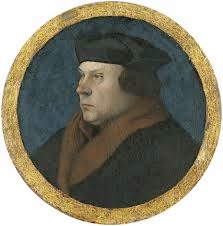
Thomas Cromwelll
(Artist: Hans Holbein the Younger)
________________________________

“The American Dream is a constant reminder that America's true nature and distinctive grandeur is in promising the common man, the man on the make, a better chance to succeed here than common men enjoy anywhere else on earth.”
― Cal Jillson
________________________________

Thomas Cromwell, 1st Earl of Essex, Vicar General and Chief Minister of King Henry VIII, is a very popular man in contemporary British culture. With the huge literary Booker Prize award winning success for Hilary Mantel’s brilliant novels, Wolf Hall and Bring Up the Bodies leading the charge, two critically acclaimed Royal Shakespeare Company plays and a British Broadcasting Company mini-series based on Mantel's prized novels soon followed. With the “Mantel Midas Touch”, no doubt Golden Globe, BAFTA and Olivier Awards will abound. Thomas Cromwell, our Lord Privy Seal, certainly made an amazing resurgence, not only in recognition as an important historical figure, but also in a greatly enhanced respect of Cromwell’s legacy.

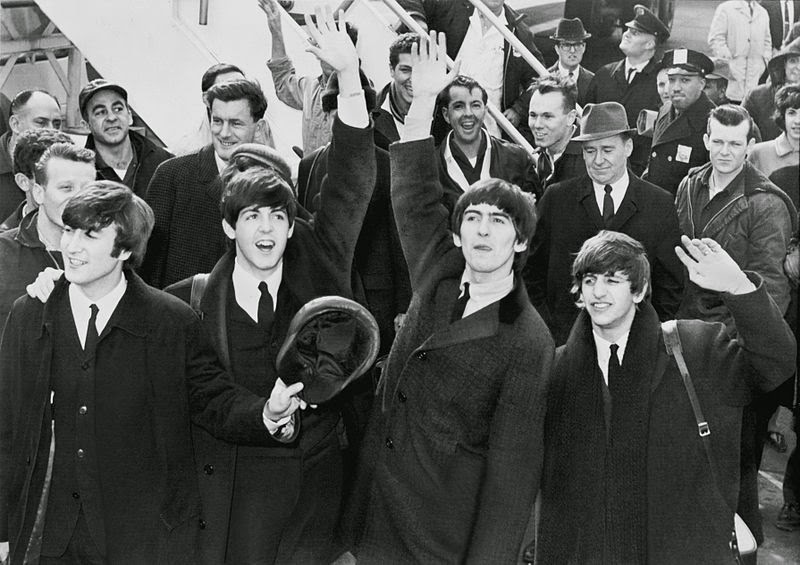
"The Beatles in America" February 1964
United Press International/ Public Domain
What is next for the base-born commoner from Putney? Well, like the Pilgrims, Alfred Hitchcock, “Dr. Who”, Tom Jones, Julie Andrews, the lads from Liverpool, and a host of other famous and infamous Britons before him, Thomas Cromwell recently ventured across “The Pond”. On March 20th, the Royal Shakespeare Company plays Wolf Hall, Parts 1 & 2 premiered at the Winter Garden Theatre on Broadway, Ben Miles taking center stage. Tonight, Mark Rylance will have his turn when Wolf Hall, the British Broadcasting Company's six part mini-series, premiers on PBS Masterpiece Theater. Will Emmy and Tony Awards find their way to the King's Chief Minister? Is the queen Anglican?

Should any of this really come as a surprise? Despite the facts that the majority of Americans have no idea who Thomas Cromwell was and most of those who do either confuse him with Oliver Cromwell or recognize him as a fat and ugly villain who manipulated the execution of Queen Anne Boleyn, our man from Putney lived the “American Dream”. He really did. Born to a scandalous and bullying town drunk, a “ruffian” in his youth by his own admission, Thomas Cromwell received no titles, no rewards, no wealth, no respect, no fame and no property through inheritance. Plain and simple, all Cromwell had and all he ultimately lost, the man earned through an exhaustive work ethic, ingenuity, and a genius intellect – all mixed in with a little good fortune. It doesn't get more “Uncle Sam and Apple Pie” than that.
________________________________


Video Credit: Act 1, Scene 1 Wolf Hall, Part One
The Royal Shakespeare Company 
________________________________

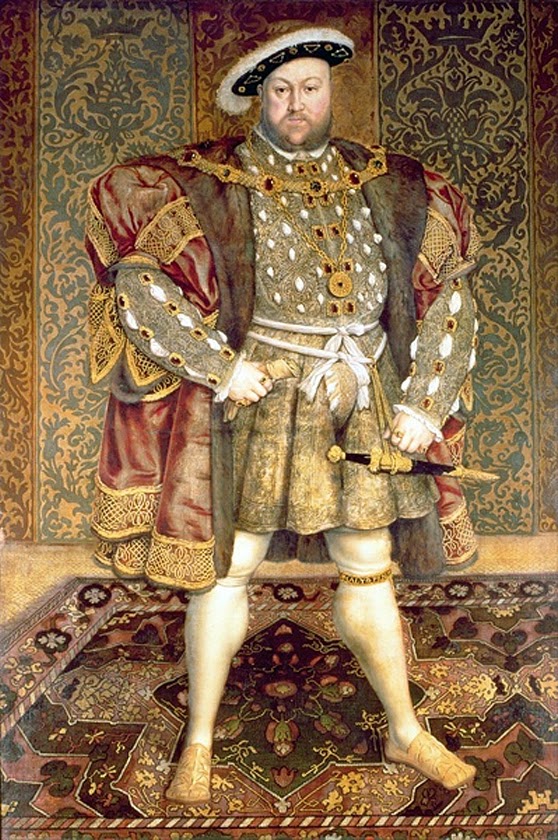
King Henry VIII
(Artist Unknown)
Beyond Thomas Cromwell’s “American Dream” life story, however, there are several important reasons for people in the United States to take note of this fascinating and influential British historical figure. As obscure as he may be to those who live in the world's first republic, the brilliance of Thomas Cromwell's governance of England during his ten years of service to the monarchy, ultimately second in power only to King Henry VIII himself, not only influenced the future of Great's Britain's growing Parliamentary governance and emerging world imperial status, but also influenced the formation of the republican foundations of first the Commonwealth of Massachusetts Constitution – and ultimately through that governing manifesto’s influence, the United States Constitution that all Americans hold dear.

Thomas Cromwell? Our Putney "ruffian"? Who knew?
________________________________

“When you are writing laws you are testing words to find their utmost power. Like spells, they have to make things happen in the real world, and like spells, they only work if people believe in them.”
– Hilary Mantel, Wolf Hall
________________________________

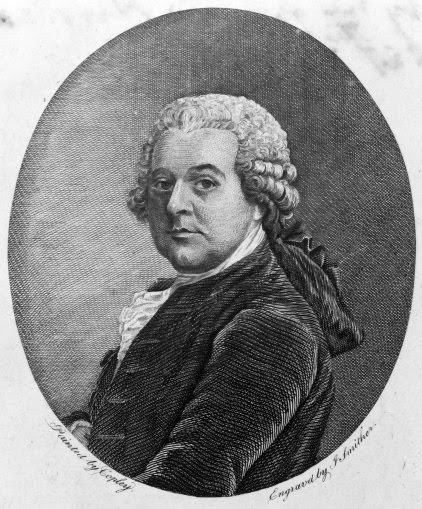
John Adams
Engraving: Library of Congress
________________________________

Introductions are now in order. Thomas Cromwell and John Adams, please do remove your hats and bow respectfully. Very good. Now gentlemen, move to your separate corners please.

For those in Great Britain who know as much about John Adams as most Americans know about Thomas Cromwell, here is a short introduction. Born in 1735 in Braintree, a town in the Massachusetts Bay Colony, John Adams was a Harvard educated attorney -- and an effective one at that. In his historically most relevant criminal case, John Adams successfully defended a British sentinel goaded on by at least fifty rebels to fire their arms, killing three people, while wounding eight others in what is now known as the Boston Massacre. Early in the game towards the cause of independence, Adams served as a highly effective and influential delegate to both the First and Second Continental Congresses. During the American Revolutionary War, Adams became a diplomat, acting as an ambassador to both France and Holland, crucial countries in securing needed funding, allied military forces and arms.

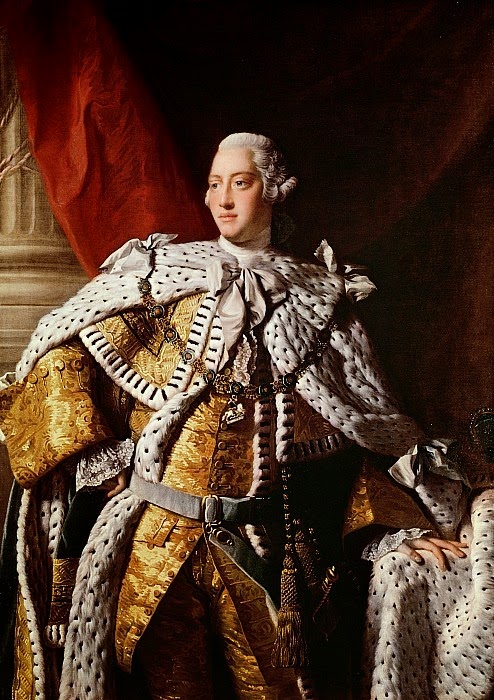
King George III
(Artist: Allan Ramsay)
Once the United States gained independence as a sovereign nation, our man John Adams was appointed as minister and ambassador to the court of St. James. Thus, John Adams, who later became a two term Vice President under George Washington and ultimately America's second President of the Unites States, was the first American to serve in any official capacity in Great Britain. Although this mere skeleton description of John Adam's accomplishments points to his prowess as a politician, his greatest gifts to the United States and the world were not his outward persona of a brash and verbally blunt public servant, but instead his remarkable letter writing with his magnificent wife Abigail and political rival and later friend, Thomas Jefferson -- as well as Adam's genius in political philosophy.

Like Thomas Cromwell before him, John Adams was a “man of laws”, his crowning and most influential achievement the Commonwealth of Massachusetts Constitution. In crafting his vision of republican governance, John Adams took an obvious long and hard look at history. Living in a colony of Great Britain, a subject of King George III, Adams naturally researched the governmental structure and laws of the imperial nation reigning supreme in his homeland. Although not overtly conscious by arguably America's greatest founding father, this is where our man from Putney, Thomas Cromwell, steps in.

Let's now take a look at the Parliamentary Acts composed and/or championed by the political and intellectual genius Thomas Cromwell, as well as "handy implements of law" Cromwell utilized to great effect, and compare them to the Massachusetts Constitution Articles conceptualized and then actualized by political philosopher John Adams.

Stay in your corners, gentlemen. This might get a bit ugly.
________________________________

Left: John Adams (Artist: Eliphalet Frazer Andrews)
Right: Thomas Cromwell (Artist: Hans Holbein the Younger)  
________________________________

The Act of Restraint of Appeals (1533)

Thomas Cromwell, a highly effective lawyer and Parliamentarian, had a novel and ingenious idea. By using Parliament as the agent of change, the ruling government could rationally declare that all radical changes within England had the support of the subjects of the realm through their “representative government”. Although he may not have realized it at the time, when Cromwell drafted, advocated, and moved through the passage of The Act of Restraint of Appeals, he inched the monarchy towards its eventual shared power with Parliament and later its complete capitulation to it.

That was not his intention at the moment, however. Instead, the act set the legal foundation for the impending English Reformation, King Henry's supremacy over the clergy, and the nation's break from a papal authority. In short, the act forbade all appeals to the Pope in Rome on religious or any other matter, making the reigning monarch the final authority in all legal matters, whether religious or secular. To punctuate the authority of King Henry VIII and his successors, England and Wales were declared an Empire, and the reigning monarch an emperor, his crown Imperial.

Responding Massachusetts Constitution Articles 

Article I. All men are born free and equal, and have certain natural, essential, and unalienable rights; among which may be reckoned the right of enjoying and defending their lives and liberties; that of acquiring, possessing, and protecting property; in fine, that of seeking and obtaining their safety and happiness.

Article XIX. The people have a right, in an orderly and peaceable manner, to assemble to consult upon the common good; give instructions to their representatives, and to request of the legislative body, by the way of addresses, petitions, or remonstrances, redress of the wrongs done them, and of the grievances they suffer.
________________________________

King Henry VIII Dynasty Portrait
(Artist Unknown)
________________________________

The Acts of Succession of 1534 and 1536

Thomas Cromwell composed and advocated these acts to establish King Henry VIII's line of succession. The Succession Act of 1534 bi-passed his daughter by Catalina de Aragon, Mary Tudor, their marriage declared by the amendable Thomas Cranmer, Archbishop of Canterbury, to be “null and void from the first”. Instead, King Henry VIII's succession rights would fall to his progeny within a male dominated line with his second wife, Anne Boleyn. After her stark fall, the succession rights were changed to fall to his progeny within a male dominated line with his third wife, Jane Seymour. Thus, ultimately, the heir to King Henry VIII was his son by Jane Seymour, Prince Edward Tudor.
________________________________


Note that the "Succession Act of 1534" is highlighted in this scene from Wolf Hall. Also, a Bill of Attainder filed to condemn Elizabeth Barton, Holy Maid of Kent, and her supporters is referenced, a legal procedure we shall also discuss.
Video Credit: Wolf Hall, The British Broadcasting Company
________________________________

Responding Massachusetts Constitution Article

Article VI. No man, nor corporation, or association of men, have any other title to obtain advantages, or particular and exclusive privileges, distinct from those of the community, than what arises from the consideration of services rendered to the public; and this title being in nature neither hereditary, nor transmissible to children, or descendants, or relations by blood, the idea of a man born a magistrate, lawgiver, or judge, is absurd and unnatural.
________________________________

The Meeting of Thomas and Margaret More After Death Sentence
(Artist: William Frederick Yeames) 
________________________________

The Act of Supremacy of 1534

The Act of Supremacy was actually drafted by Thomas Audley, Lord Chancellor through Cromwell's influence and then championed through Parliament by Audley, the increasingly powerful and influential Thomas Cromwell, and Lords of the king's inner circle. In short, this act established King Henry VIII “Supreme Head of the Church of England”, along with “his heirs and successors, and all kings of the realm”

The act further gave English monarchs “all honors, dignities, preeminences, jurisdictions, privileges, authorities, immunities, profits, and commodities to the said dignity of the supreme head of the same Church belonging and appertaining; and that our said sovereign lord, his heirs and successors, kings of this realm, shall have full power and authority from time to time to visit, repress, redress, record, order, correct, restrain, and amend all such errors, heresies, abuses, offenses, contempts and enormities, whatsoever they be, which by any manner of spiritual authority or jurisdiction ought or may lawfully be reformed, repressed, ordered, redressed, corrected, restrained, or amended, most to the pleasure of Almighty God, the increase of virtue in Christ's religion, and for the conservation of the peace, unity, and tranquility of this realm; any usage, foreign land, foreign authority, prescription, or any other thing or things...”

Phew!! Think about that for a moment. The Act of Supremacy established a complete enmeshing for the first time in English history of the legislature (Parliament), executive authority (monarch) and religion – all under the control of one man. To make matters worse, a soon following Treason Act of 1534 criminalized anyone disavowing the act. Oaths of compliance were mandated, treason charges filed for all refusing, the penalty death by execution. Add in Bills of Attainder, which we will discuss next, and the judiciary fell under the control of the monarch with Parliament's help, as well. With the stroke of the pen, not the sword, King Henry VIII was the most powerful reigning monarch in Europe respective to his authority over his own people -- in short, an omni-powerful tyrant.

Responding Massachusetts Constitution Articles

Article II. It is the right as well as the duty of all men in society, publicly, and at stated seasons to worship the Supreme Being, the great Creator and Preserver of the universe. And no subject shall be hurt, molested, or restrained, in his person, liberty, or estate, for worshiping God in the manner and season most agreeable to the dictates of his own conscience; or for his religious profession or sentiments; provided he doth not disturb the public peace, or obstruct others in their religious worship.

Article VIII.  In order to prevent those, who are vested with authority, from becoming oppressors, the people have a right, at such periods and in such manner as they shall establish by their frame of government, to cause their public officers to return to private life; and to fill up vacant places by certain and regular elections and appointments.

Article XXX.  In the government of this commonwealth, the legislative department shall never exercise the executive and judicial powers, or either of them: the executive shall never exercise the legislative and judicial powers, or either of them: the judicial shall never exercise the legislative and executive powers, or either of them: to the end it may be a government of laws and not of men.
________________________________

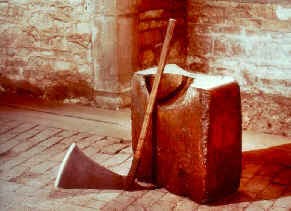
Block and Axe, Tower of London
________________________________

Bills of Attainder

The Bill of Attainder was a handy procedure of Parliamentary Law that swiftly enabled Parliament to pass judicial sentence upon an accused person, whether justified or not irrelevant, as if it was a court of law. The concept when actualized enabled Parliament to act as judge and jury, with the Bill of Attainder submitted for review replacing a judicial verdict. Thus, the accused was condemned by statute rather than judged by a jury of peers. Literally speaking, the condemned was determined by legislative action to have "tainted blood" that needed to be "destroyed".

With ink and quill a minister acting on behalf of a monarch could propose a law and demonstrate that an individual violated the said law, thus punishment levied -- often retroactively. The minister could bi-pass the potential of subject revolt based on questionable actions, a clever individual demonstrating his innocence, and the risk of trial and judgment by peers. An attainder could even be brought for Parliamentary consideration after an offender's death in battle or revolt. Nifty, eh? What a convenient stroke of genius!

Although the use of Bills of Attainder began in the 14th century, first to depose the DeSpensers, allies and favorites of King Edward II, they were initially limited to garnishing the riches and lands of men who rivaled the security of the monarch or who were defeated in battle. During King Henry VIII's reign, however, the Bill of Attainder became a far more ominous tool, as for many unfortunate souls, it resulted in a death sentence, a convenient and expedient way to exact justice through judicial murder. In all cases, whether execution was exacted or not, the condemned lost nobility status if applicable with all property reverted to the crown, obviously leaving the condemned, family and heirs destitute.

Who perfected the use of Bills of Attainder? Well our man from Putney, Thomas Cromwell, of course.

Responding Massachusetts Constitution Articles (Oh my! John Adams had a lot to say about attainders! I will post just a few of the most relevant.)

Article XII.  No subject shall be held to answer for any crimes or offence, until the same is fully and plainly, substantially and formally, described to him; or be compelled to accuse, or furnish evidence against himself. And every subject shall have a right to produce all proofs, that may be favorable to him; to meet the witnesses against him face to face, and to be fully heard in his defense by himself, or his council at his election. And no subject shall be arrested, imprisoned, despoiled, or deprived of his property, immunities, or privileges, put out of the protection of the law, exiled, or deprived of his life, liberty, or estate, but by the judgment of his peers, or the law of the land.

Article XV.  In all controversies concerning property, and in all suits between two or more persons, except in cases in which it has heretofore been other ways used and practiced, the parties have a right to a trial by jury; and this method of procedure shall be held sacred, unless, in causes arising on the high seas, and such as relate to mariners' wages, the legislature shall hereafter find it necessary to alter it.

Article XXIV.  Laws made to punish for actions done before the existence of such laws, and which have not been declared crimes by preceding laws, are unjust, oppressive, and inconsistent with the fundamental principles of a free government.

Article XXV.  No subject ought, in any case, or in any time, to be declared guilty of treason or felony by the legislature. 
________________________________


________________________________

You get the idea. Thomas Cromwell and John Adams, both exemplary public servants, governmental theorists and tacticians, held widely varying visions of how to make government work – Cromwell to impose the state on the people, Adams to impose the people on the state. 

Before you think too critically of our man from Putney, however, do keep in mind that he lived over two centuries before our first American ambassador to the Court of Saint James. Thomas Cromwell's political initiatives were quite innovative and revolutionary indeed. This acknowledged, they were also baked into Cromwell's evangelical religious belief system, which from a 16th century mindset led to his belief that only one religion was the truth of God's word. Thus, God's truth of the royal supremacy must be imposed to save the very souls of the realm's subjects.

As the life of Thomas Cromwell proved to humanity, it was possible for a person born in poverty without the benefit of royal blood to possess genius, ingenuity, drive and ambition -- and to use God given talents to reach the highest echelon of society. From Cromwell's example, the very ethos of the “American Dream” was crafted. From Cromwell's genius, the very thought that government could be managed through laws crafted by the representation of the people was born.
________________________________

RESOURCES

Adams, John, Constitution of the Commonwealth of MassachusettsThe 189th General Court of the Commonwealth of Massachusetts

Audley, Thomas, The Act of Supremacy of 1534, Luminarium: Encyclopedia Project, England Under the Tudors.

Cromwell, Thomas, The Act of Restraint in Appeals (1533), History Learning Site.

Cromwell, Thomas, The Act of Succession (1534), Luminarium: Encyclopedia Project, England Under the Tudors.

Jillson, Cal, Pursuing the American Dream: Opportunity and Exclusion over Four Centuries, University Press of Kansas, 2004.

Mantel, Hilary, Wolf Hall, Fourth Estate, 2009.
________________________________


Beth von Staats is a short story historical fiction writer and administrator of Queen Anne Boleyn Historical Writers.