Showing posts with label Horace Walpole. Show all posts

Sunday, January 24, 2016

The Berry Sisters: Mary and Agnes Berry


My introduction to the Berry sisters came when they were mentioned in a novel.  In looking them up, I discovered that Mary, the older of the two, was a well-known author, and that the two sisters were personalities in society of their day, which spanned the Regency era.

Mary and Agnes Berry


Their father, Robert Berry, was the nephew of a successful and wealthy merchant, named Ferguson.  Mr. Ferguson achieved great success in London and Robert and his younger brother William were taken into his business.  Unfortunately, Robert Berry appears to have been something of a dreamer with a keener interest in literature than commerce, while William seemed to have a head for business.    Robert married a distant cousin, Elizabeth Seaton,  for love in 1762, despite the fact that she had no portion.  Robert’s income at that time was 300 pounds per year.  Mary, the couple’s first child, was born March 16, 1763 in Kirkbridge, Yorkshire.  Agnes was born May 29, 1764.  Sadly, Elizabeth Berry died in childbed in 1767 at the age of 23, and the baby died as well.   Their Grandmother Seaton cared for the two girls in Yorkshire, until they were moved to Chiswick in 1770.  Their governess’s marriage in 1775 ended their formal education.  There is an indication that, when Mary was 16, she was in love with a Mr. Bowman (or Bowden) but the relationship was disapproved and came to nothing.

In 1781, Robert Berry’s uncle died, leaving the bulk of his fortune and estate to William Berry, who took the last name of Ferguson, and a legacy of 10,000 pounds to Robert.  William, however, established an annuity for Robert of 1000 pounds per year.  Even though some sources suggest that Robert Berry’s reduced status of 300 pounds per year was a permanent state, at the time, it was still an income that allowed a comfortable life and, once Mr. Ferguson died, the family’s status definitely changed to a much higher standard of living. At this time, Mary and Agnes would have been young ladies of approximately 19 and 18 years of age.  In 1783, Mr. Berry took his daughters on a tour of Holland, Switzerland and Italy.  During this tour, the older daughter Mary took on the responsibility of acting as her sister’s and her father’s guardian.  Also in 1783, Mary began writing her journal in Florence, Italy, which became a lifelong activity.   The family returned to England via France in June of 1785.  While in Italy, Mary met General Charles O’Hara, governor of Gibraltar.


Agnes Berry


Subsequently, upon the family’s return to England, they spent some time in London and visited friends.  Attractive, well-informed, and charming, the young ladies became popular in society.  During the winter of 1787, Mary and Agnes became acquainted with Horace Walpole.  According to some sources, Mr. Walpole saw them but, because of their lack of social status, declined to be introduced them.  However, Mr. Walpole heard so many favourable comments about them that he allowed the introduction at their second meeting, and speedily became an admirer of the girls, especially of Mary.  This was the beginning of a significant and intimate friendship.  Mr. Walpole, who was in his 70’s, and the young ladies, both in their twenties, became very devoted, Mr. Walpole even referring to them as his “twin wives” (1).  He introduced them to many of his friends, and obtained a house for the Berry’s in 1789.


Mary Berry


In 1790, the Berry family went abroad for a year, maintaining a correspondence with Mr. Walpole.  On their return, he convinced them to take up residence near him in Little Strawberry Hill.  Subsequently, gossip arose about the nature of Mr. Walpole’s relationship with the Berry’s, and Mary tried to cancel the arrangement, but, citing his age, Mr. Walpole convinced her to disregard the gossip, and the family remained at Little Strawberry Hill.  Horace Walpole became the Earl of Orford in December, 1791.  There are indications that he thought of asking Mary Berry to marry him, but no indication that he ever did so.

At some point during this time, General O’Hara returned to England, and renewed his acquaintance with Mary Berry.  He became engaged to Mary before he returned to Gibralter in November of 1795.  Horace Walpole, Earl of Orford apparently liked General O’Hara, but was not aware of their engagement, which was apparently kept secret from everyone.  Mary and General O’Hara corresponded, but the engagement was broken off in June of 1796, at least in part because Mary could not make up her mind to announce their engagement out of concern for the Earl’s feelings.  This was a great sorrow to Mary for the rest of her life.

The Earl died March 2, 1797.  He left Mary and Agnes each 4000 pounds, and the house, garden and long meadow of Strawberry Hill jointly for their lives.   The earl left to Mr. Berry, Mary and Agnes his printed works and his manuscripts, to be published at their discretion with any income thereof to go to them.  Although Mr. Berry was supposed to be the editor, Mary actually did all of the work.  Mr. Berry’s contribution was a paragraph praising his daughter’s efforts in the preface.  The WORKS OF HORACE WALPOLE was published in 1798, the year after the earl’s death. 

Sometime after the Peace of Amiens in 1802, the Berry family went to Paris again.  During this visit, Mary was supposedly presented to Napoleon.     She returned to England just before her published play “Fashionable Friends” was put on at Drury Lane Theatre but failed.  (It had been a success in amateur performances at Strawberry Hill.)   Apparently, there were questions of the play’s morality.  Interestingly, Mary implied that the play had been written by Walpole.  Equally interesting, when editing Walpole’s works, she had included a play entitled “Mysterious Mother” with his work even though she had written it herself.  A third play by Mary called “The Martins” was not published or performed.  After the failure of her play at Drury Lane, she went back to France with Agnes and their father, where they travelled through the south of France into Switzerland and Germany.  The family returned to England in the fall of 1803.

At some point in this period of time, Agnes fell in love with and became engaged to a cousin, Colonel Robert Ferguson (the son of Robert Berry’s brother William).  However, the marriage did not occur.  There are indications of her uncle’s disapproval and of her own reluctance to take the final step.  At any rate, she stayed with her family.  In many respects, Agnes seems to have been in her sister’s shadow, less attractive, less lively and definitely in second place in Horace Walpole’s affections, even though Mary was proud of her sister’s artistic talent and abilities.

Mary Berry went on to publish in 1810 an annotated edition of the letters of Madame du Deffand to Horace Walpole written between 1766 and 1780 and Madame du Deffand’s correspondence with Voltaire between 1759 and 1775, for which she received 200 pounds.  Their father died May 18, 1817 at Genoa, and his annuity stopped, which resulted in Mary and Agnes having to live on their own income.   They gave up Little Strawberry Hill at this time, and took residence at Devonshire Lodge in Petersham.   In 1819, Mary produced a work on Rachel Wriothesley, Lady Russell, which included letters from Lady Russell to her husband Lord William Russell written between 1672 and 1682 as well as some other letters by Lady Russell.  Mary and Agnes became personalities, known for their gatherings in their London lodgings, where they attracted artists, writers, politicians and society’s elite, including the writers Maria Edgeworth and William Makepeace Thackeray, Lord Colchester,  the Devonshires, and the Duke of Sutherland, and the artist Thomas Lawrence.  Mary seems to have been the main draw with her liveliness and literary talent, but Agnes seemed to have a talent in arrange seating in a way that encouraged the flow of conversation.
  
Mary Berry, later in life

Mary’s most ambitious work was a major effort and became her most famous.  The first volume, titled “A Comparative View of the Social Life of England and France from the Restoration of Charles the Second to the French Revolution” was published in 1828.  The second volume “Social Life in England and France from the French Revolution in 1789 to that of July of 1830” came out in 1831.  These two volumes were reissued as a single volume under the title “England and France: a comparative View of the Social  Condition of both Countries” in the complete edition of her “Works” in 1844. 

Mary and Agnes seem to have maintained their social lifestyle as time went on, even as Agnes’ health began to deteriorate, noticeably by 1849.  She survived until her death in January 1852.  Mary did not long survive her sister, passing away November 20, 1852.  They are buried in the same grave in St. Peter’s churchyard, Petersham.  In 1865, Lady Theresa Lewis edited and published “Extracts from the Journals and Correspondence of Miss Berry from 1783 to 1852.”

(1)   Melville, Lewis.  REGENCY LADIES. P. 95
  
Sources include:
Melville, Lewis.  REGENCY LADIES.  New York: George H. Doran Company, 1926

Twickenham Museum.  “The Berry Sisters” (no author or publication date). Here.

A Web of English History.  “Mary Berry (1753-1852)” by Charles Kent, published 1885.  Website is the intellectual property of Dr. Marjory Bloy.  Here.

 Richmond.gov.uk.  “Local History Notes.  St. Peter’s Church, Petersham” (no author or publication date).   Here.

GoogleBooks.com.  ENCYCLOPEDIA OF BRITISH WRITERS, 16th, 17th and 18th CENTURIES, Alan Hager, ed.  “Berry, Mary.”  P. 20. New York: Book Builders LLC, Facts on File, 2005.  Here.

GoogleBooks.com. HORACE WALPOLE by Austin Dobson, 1893.   Here.  

Bartlebys.com.  EXTRACTS OF THE JOURNALS AND CORRESPONDENCE OF MISS BERRY.  Mary Berry (1763-1852).  Here.

Photos courtesy of Margaret Evans Porter, used with permission.

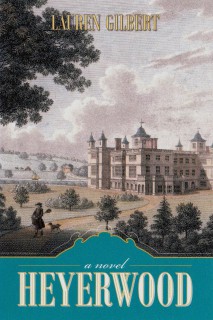
Lauren Gilbert's first published book, HEYERWOOD, A Novel, was released in 1991.  A second book, A RATIONAL ATTACHMENT, is in process.  She lives in Florida, and will be attending the Amelia Island Book Festival in February.  Find out more about her by visiting her website Here:

Sunday, May 25, 2014

A Perfectly Ordinary Medieval English Church

by Anne O'Brien

Or is it?

What is so special about this unassuming little church?


This is the church of St John the Evangelist at Shobdon, a small village in the Welsh Marches in Herefordshire. It looks very much like any small medieval church in this part of rural England.

The first known church at Shobdon was a timber chapel, built in Anglo Saxon times. The second was a stone church built in the 12th century, by Oliver de Merlemond, a steward of the powerful Mortimer family, when he received the estate of Shobdon from Hugh Mortimer.   A tower was added in the 13th Century.


The third and present church consisted of a completely new nave, which was built onto the 13th Century tower, by the Bateman family in 1756, on whose estate the church stood. Much like the rebuilding of many churches in England over the centuries, we would presume.

So what is it that makes this church so remarkable?  As soon as you enter, you will see that it is far from ordinary.  To be fanciful, it is like stepping into a traditional iced wedding-cake, a completely different world, a true Georgian gem.


This unique style of architecture is known as Strawberry Hill Gothic, a flamboyant world of Rococo and Gothic design that draws its inspiration from the work of Horace Walpole at his London house of Strawberry Hill.  This should not be be too surprising, as the Batemans were close friends with Walpole, and his ideas obviously influenced the design of this extraordinary building.


The interior is primarily two-toned, in white with pale blue accents. Highly decorated ornamental arches abound, with exquisite attention to the fine detail of the carving. The centrepiece of the interior is the lavish three-storey pulpit, which is based on one designed by William Kent for York Minster.


The church has no aisles, but has a gallery above the west entrance, and a chancel marked by a trio of ogee arches that appear almost oriental in style. There is a separate door for the Bateman family, which gives onto the family pew, where they were provided with their own fireplace for warmth. There is another door for the Bateman servants, which gives access to the servant's pew in the north transept.


The only piece of original decoration is on the Norman font which was retained.


The whole thing is quite unexpected and totally at odds with the exterior but quite delightful, particularly after its recent sensitive restoration. Not to be missed if you are visiting Herefordshire.

But that is not the end of the story.  What happened to the original interior of this striking little church?  Was it simply destroyed?  It would have been a tragedy if it had been destroyed for one very important reason.  

Soon after he acquired the manor, Oliver de Merlemond went on pilgrimage to the shrine of St James at Compostela, after which he rebuilt the small Saxon church on his manor, stunningly decorated, its arches carved with patterns and mythical beasts such as dragons, its pillars adorned with intricate interlaced decoration and figures, the semicircular panels above its two doorways bearing beautiful depictions of Christ in Majesty, upheld by angels, and the Harrowing of Hell. The church seems to have been the first building decorated by the celebrated Hereford School of Sculptors.


So ornate is the Hereford sculpture, so unlike what was being done in the rest of England at the time, and so like other work in Europe, that there has been speculation that Oliver’s journey influenced it in some way.

Did Oliver bring back a carver from Spain or France? Or did the group of pilgrims with which he travelled include a local stoneworker who absorbed the powerful influence of buildings on the route to Compostela? We will never know.

So what happened to this glorious carving?  When the 18th century church was built, the original Romanesque chancel arch was carefully removed and reassembled on the hill overlooking the church. This was linked to two carved doorways with their tympana to create an unusual folly. Though somewhat eroded by wind and weather, the arches, known as Shobdon Arches, still show us the exquisitely detailed Norman carving.


Anyone who wishes to see this Hereford style of architecture with its mythical creatures and interlocked carving still in its rightful position can visit the nearby churches of Eardisley and, of course, the most famous of them all, Kilpeck.


But nothing prepares you for the sight of the Strawberry Hill Gothic inside Shobdon Church.


~~~~~~~~~~~~~

Visit my website to discover more about my medieval interests and my historical novels.

The Forbidden Queen, a novel of Katherine de Valois, was released in the USA in March 2014.

The Scandalous Duchess, a novel of Katherine Swynford and John of Gaunt, was released in the UK in March 2014.

Monday, July 16, 2012

The Wig Business was Big Business in 18th Century France

by LUCINDA BRANT

It is often assumed that the wig* of the 17th and 18th centuries was the preserve of the aristocracy, “an aristocratic ornament of Old Regime Europe”, a marker of high birth and status worn by the privileged few. Indeed, at the French Courts of Louis XIII and Louis XIV, wigs were very much part of the display of power and status.
[*Wig here refers to the wigs worn by men. Women’s hair is not discussed in this post.]

The full-bottom wigs worn by Louis XIV of France required ten heads of long human hair to achieve one luxuriant wig with an over-abundance of flowing locks. Cost consideration aside, how to wear such an article in every day life made it prohibitive to all but the most aristocratic fashion-conscious courtier.


Yet, by the end of Louis XIV’s reign in 1715, the wearing of wigs had spread throughout France. Surprisingly, wigs were not the exclusive preserve of noble courtiers but had “tumbled down the social hierarchy”, so far down in fact, that by the mid 1700’s wigs were upon the heads of tutors, bakers, messengers, servants, cooks and shopkeepers. All wore a wig, and often owned two—one for every day and one for Sunday best.

The Marquis of Mirabeau lamented, “Everyone [in Paris] has become a Monsieur. On Sunday, a man came up to me wearing black silk clothes and a well-powdered wig, and as I fell over myself offering him compliments, he introduced himself as the oldest son of my blacksmith or saddler; will such a seigneur deign to dance in the streets?”

The male wig became big business in the 18th century. It was no longer an aristocratic affectation, or worn only by certain non-aristocratic professional groups such as judges, lawyers and clergymen. The wig was not confined to men in the city but spread to towns and villages. As well as every town having a wigmaker or three, estimates put the number of journeymen who trudged the roads of rural France selling wigs at 10,000.


The account books of French wigmakers attest to a customer base that included not only the wealthy merchant citizens of the town but included priests, petty clerks, and shopkeepers, and in the death inventories of middle class citizens wigs figured as prominent possessions. The wig was such a universal object of consumption by mid century that it became synonymous not with luxury but with convenience. Wig advertisements stressed comfort and appeal as most important when considering the purchase of a wig. Wigmakers were keen to emphasize the free movement of the head of the 18th century wig. Unlike its predecessor, the full bottom wig, which restricted its wearer’s movements and peripheral vision, an 18th century wig permitted the wearer to carry out his daily life as if he was wearing his own head of hair, not someone else’s.

The Parisian wigmaker Neuhaus asserted that wearing a wig was far more convenient than looking after natural hair. Well, he would, wouldn’t he? He’s in the business of selling wigs! But he went to great lengths to ensure his customers felt comfortable in their wigs. He announced the invention of a new “elastic skin that grips the wig” without any irritating loops or garters, and “this skin has the softness of velvet, and does not at all inconvenience the head.”

In some respects, Neauhaus’s assertion regarding the convenience of the wig over a natural head of hair was true, given the prevalence of head lice, the lack of shampoo and intermittent bathing practices. It was far easier for a man to have his head shaved and wear a wig than to groom his own hair, particularly when, for a small fee, he could have his barber maintain his shaven head and have his wig serviced by his local wigmaker.


With wigs being the universal male consumer product of the 1700s, and everyone from shopkeeper to king wearing one, men were spoiled for choice. While a shop boy might only be able to afford one wig, and thus had to choose wisely and for durability, those of the one percent of the population, the nobleman and the wealthy cit, could afford to own dozens of wigs. If they considered themselves to be a leader of fashion, were eccentric, or merely had the money to indulge a whim, they could purchase wigs that others could only dream of owning (or not, as the case may be!).

It has often been assumed that every man wore a powdered wig, but this was not so. For everyday wear and for most occasions, men wore their wigs in their natural state, which was unpowdered natural hair. Only on the most formal of occasions, and those of the nobility attending court or a formal function, were wigs powdered. Another misconception is that because wigs looked like wigs (you could tell it was a wig!) then the wig must have been made from horsehair. Not so. All the evidence—portraits, surviving wigs, engravings, documents, letters—suggest that less than half of all wigs consisted of hair from horses, and from such animals as goats and cows. Most wigs were made from human hair. For the shop boy, however, the “horse-hair tie wig” was probably his only option.


There were a small number of wigmakers who were prepared to experiment with other materials, and often because of this found themselves ostracized by their fellow wigmakers. Yet, the experimental wig attracted the eccentric, the dandy and the jaded gentlemen. Looking for something different to make them stand out in the crowd or as a mark of their wealth, these gentlemen were not afraid to parade about society and garner the stares of amazement, incredulity and puzzlement of others about the hairpiece atop their heads.

Horace Walpole, that great 18th century letter writer and gossip, who collected fascinating tidbits about Society, wrote in a letter dated 1751, about Edward Wortley Montagu’s odd manner of dressing, commenting “that the most curious part of his dress, which he has brought from Paris, is an iron wig; you literally would not know it from hair...”.

Naturally, I just had to give one of my characters an iron wig and so the eccentric poet Hilary Wraxton in SALT BRIDE gets to wear one at a recital, causing hilarity and disruption to an afternoon’s entertainments.

Made from iron wire turned into spiral curls, such a wig could also be made of copper. While Edward Wortley Montagu may have thought he cut quite a figure in English society parading about in his iron wig, one wigmaker advertised an iron wig as being economical because it can “withstand rain, wind and hail, and all without causing discomfort to the wearer” (I wonder about that final claim).

Feathers were also used in the making of wigs, particularly sporting wigs. Wigs made from the tails of mallards or drakes were said to be not only durable but could also fight off the wet. Some parsons’ wigs employed feathers at the front and were known as “feather tops”. One can imagine the congregation doing its best to keep a straight face with a parson at the pulpit in a fine feather top wig delivering the Sunday sermon.

Most sectors of male society succumbed to the wearing of a wig in 18th century France. Testament to the wig’s universality was its necessity. Without a wig, a gentleman’s outfit was incomplete; he could not go about his daily business out in the world without his wig. Just as in the 21st century, a man’s business suit is not complete without a tie. An 18th century bewigged gentleman wished to project an air of elegance and refinement, no matter his station in life, and this is evidence in the many portraits that survive of handsome chaps in frockcoat, breeches and perfectly fitted wig, whether as part of a family group or in a singular pose, the wig helped maketh the man. As to the many styles created for the gentleman’s wig, that requires a whole other post!


Bibliography

John Woodforde, The Strange Story of False Hair, Routledge and Kegan Paul, London, 1971

Michael Kwass, Big Hair: A Wig History of Consumption in Eighteenth-Century France, American Historical Review, June 2006

The Letters of Horace Walpole, Vols. 1-4, Charles Duke Yonge (Ed), Putnam and Sons, London, 1890

Hair and Hair dos: http://www.marquise.de/en/1700/howto/frisuren/frisuren.shtml

The Hair at the Eighteenth Century: http://thehistoryofthehairsworld.com/hair_18th_century.html

The Eighteenth Century Garb Homepage: Handbook of English Costume in the Eighteenth Century by Willett & Phillis Cunnington: http://www.theweebsite.com/18cgarb/1750.html