Tuesday, August 30, 2022

Iona, Clan Donald and the Cathedral of the Isles

by Regan Walker

The Isle of Iona is a very special place as anyone who has been there can tell you. A small isle that lies about a mile off the west coast of the larger Isle of Mull in the Scottish Hebrides, Iona has a long and illustrious history. Today is it a tourist destination and the faithful make pilgrimages to its shores and its Abbey Church. I have walked the white sand beaches, felt the constant breeze on my face and experienced the tranquility that characterizes this sacred place.

Iona Beach
Photo by Robert Guthrie, Wiki Commons

Surrounded by turquoise water, the rocky shores of the isle must have called to the early Irish missionary monks, Oran and Columba, who came here in 563 to establish a monastery from which they could evangelize the Picts. It was here the Book of Kells was originally created before it was taken to Ireland for safety.

Oran was the first monk to be buried on the isle and the small stone chapel, “St Oran’s Chapel”, was erected over his grave. Beginning with Somerled in the 12th century, the chapel became the burial chamber of the Lords of the Isles. He was the progenitor of Clan Donald. In my story of his descendant, Angus Og Macdonald, you can experience the ceremony to bury his father, Angus Mor, the Lord of the Isles.

St. Oran's Chapel
Photo by August Schwerdfege

The graveyard, Reilig Odhrain, named in Oran’s honor, that surrounded St Oran’s Chapel, became the burial place of various isle chieftains as well as Norse, Scottish and Irish kings. The tall carved crosses that stand before the chapel and the abbey are each dedicated to a saint. The hereditary master masons on Iona were famous for their stone carving.

St. Martin's Cross
Photo by Regan Walker

The most magnificent structures on the isle are the Abbey and the Abbey Church, hewn out of red stone and restored as you see them today. The pictures are my own.

Iona Abbey Church
Photo by Regan Walker

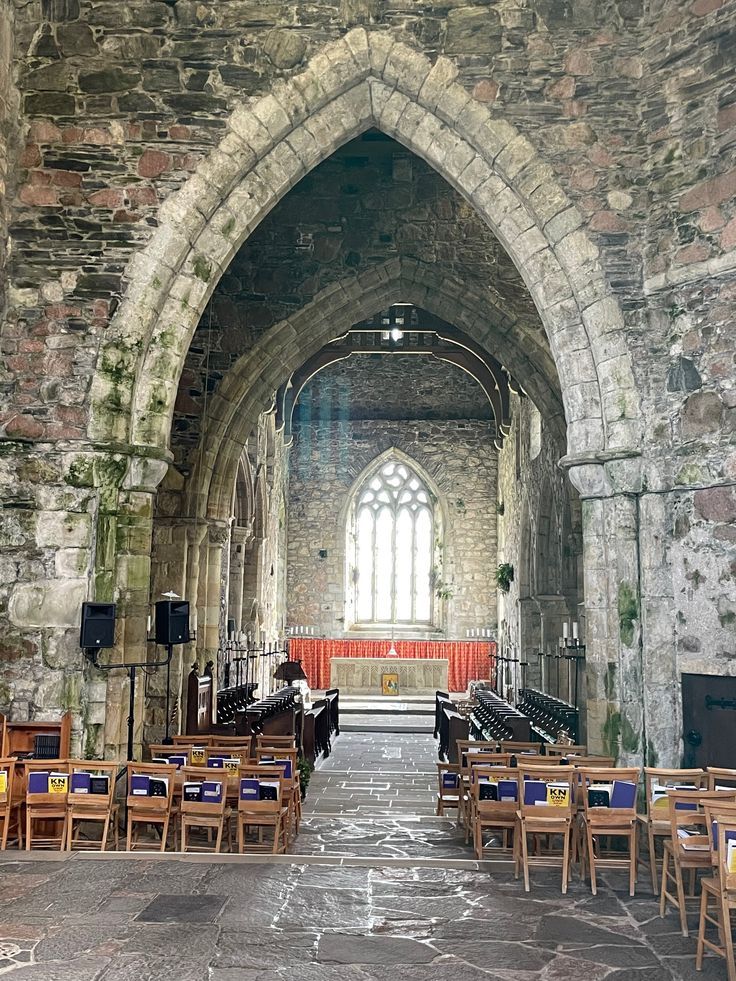
The church is a medieval masterpiece but today the inside looks nothing like it would have at the time of my story when the stones were painted with brilliant colors and the abbey lined with colorful tiles.

Inside the Abbey Church
Photo by Regan Walker

Ian Ross Macdonnell, author of Clan Donald and Iona Abbey: 1200-1500, with whom I consulted for my story, helped me to understand that Iona Abbey and the Abbey Church (the “Cathedral of the Isles”), are Clan Donald’s legacy. They stand as monuments to the faith of its chiefs who protected and maintained them for centuries. When a chief of Clan Donald, a Lord of the Isles, died, all the clans in the Isles came to Iona to honor him in death and to observe the ceremony that lasted eight days.

The Abbey Church
Photo by Regan Walker


~~~~~

Regan Walker is an award-winning author of historical fiction set in the Regency, Georgian and Medieval eras. Her newest venture, The Clan Donald Saga, spans several centuries and tells the stories of the great sea lords, the Lords of the Isles, who plied the waters of the Hebrides in their galleys, ruling the western Highlands and the Isles for four hundred years. She has made several trips to Scotland as a part of her research. Regan lives in San Diego with her dog “Cody”, a Wirehaired Pointing Griffon, who walks with her on the beach early every morning.


Thursday, July 7, 2022

Lucy, Lady Duff-Gordon – Haute Couturiere and Entrepreneur

by Tessa Arlen

In 1893 a thirty-year-old woman wakes up one morning to discover that her alcoholic and spendthrift husband has run off—again, this time with a pantomime dancer. There is no money in the bank and even if there were women in 1893 rarely had their own bank accounts, or access to their husband’s. The rent on her fashionable house, just off Berkley Square, is due next month, but she has no idea who their landlord is: that was again something husbands and fathers took care of.
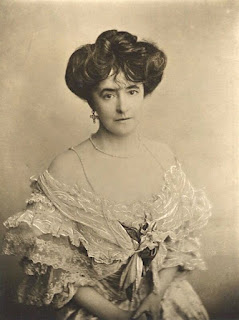
Lucy, Lady Duff Gordon (nee Wallace)

Lucy Wallace is a hair away from destitution: a single mother with a five year old daughter and only an aging mother and a temperamental sister, Elinor, to turn to. Lucy’s worst dilemma is that she has not been educated to earn a living. Of course, she can read and write, and her embroidery and needlework are enviably fine, but beyond becoming a governess or a paid companion she has nothing to offer the world that will result in a salary large enough to keep them. She is a perfect example of a woman from the genteel class of 19th century Britain.


The dressmakers of London

But Lucy has the beginning of a plan to earn money…it is a brave one and luckily she is not worldly enough to realize that the competition to design and make dresses is desperate in London. Thousands of modistes and milliners open and close shops all over the city every day.

In that moment she decides that she must divorce her husband—she can only obtain a divorce for desertion. Cruelty, incompatibility or stealing their wives’ money are not grounds for divorce in 1893. When women married their property and children belonged to the husband. Lucy is not so naïve that she does not knows that the social stigma will cost more than her solicitor’s fees. She won’t let herself think about the friends who will cut her, or point her out with pity as “That woman . . .” But divorce is the final hurdle to her freedom and however distasteful and frightening the divorce court is, she has no choice—if her husband returns he will drink away any money she has managed to make.

She lies in bed and calculates how far she can stretch the frugal sum she has put by from her dress allowance and her pin money. She can just about keep going until her business venture, if she dares to call it that, takes off.


Seamstresses at work in an atelier 1910

She must not let fear paralyze her. She throws back the bedclothes and gets out of bed: the first thing she must do is give her servants notice. As she says goodbye to women who have cooked, cleaned and cared for her for ten years, she cannot bring herself to fire the sixteen-year-old scullery maid, a workhouse orphan taken on only two weeks earlier. There is something about the girl that appeals to Lucy, and she is not so desparate that she must turn a young girl out on the street to starve? They are in the same boat!

Her mother is appalled about the divorce, but even more horrified that Lucy is thinking of going into ‘trade’. Her sister, married to a rich man, is determined that Lucy will make a go of a dressmaking business: after all Lucy’s doll’s clothes, made from scraps of silk and lace, were the envy of their childhood playmates! Elinor reassures her sister that success will be hers: Lucy has a flair for color, and eye for line and style—and anyway she has no choice but to succeed. Elinor has rich friends, and surely the more sophisticated of them won’t bat an eyelash about an unsavory divorce. Elinor promises that her rich husband will vouch for her credit.
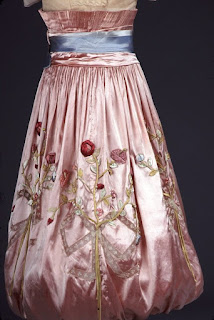
The embellished skirt of a Lucile dress 1906

Gradually Lucy Wallace builds her clientele. It is slow going but she begins to succeed. Rich and titled women flock to her tiny little house and sip tea in her cramped drawing room as they wait for fittings for morning, afternoon, and evening dresses. They all agree that Lucy Wallace’s gowns are superbly original and for what is more than half the price of a Paris model! And there are no dreadful Channel crossings to be made, or the irritation of dealing with the patronizing attitude of the great fashion salons on the Rue de la Paix. Charles Frederick Worth is such a dreadful old snob, and it is impossible to get an appointment with Jacques Doucet these days.
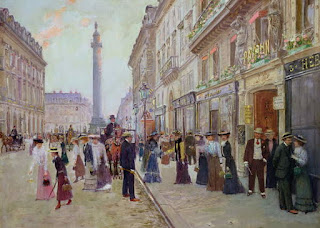
The great fashion houses of Rue de la Paix, Paris

Lucy is helped by her scullery maid, the young orphan from the workhouse with a quick mind, deft hands and an aptitude for organization and arithmetic. Together the two women work long hours, taking on seamstresses, embroiders, and tailors as business grows.

There are set-backs: many of them. Cash flow is a nightmare, and Lucy has no skill as a businesswoman: the aristocracy are terrifyingly offhand about paying their bills on time, or in some cases ever. Silk merchants will not extend credit to single women; skilled workwomen are expensive and Lucy refuses to take advantage of cheap piecework labor (women making parts of a garment in their homes for starvation wages).

Piecework from home involved the whole family--for starvation wages

The dining room is her atelier; the drawing room full to overflowing with clients waiting for a fitting in the morning room; the three attic rooms house seamstresses. They moved to upmarket Hanover Square and to the luxury of space enough for fitting rooms galore!

The fashions change rapidly and to become a top designer Lucy can’t simply copy Paris models, she must be innovative, original and create her own look. Lucy’s label “Lucile” becomes known for its informality, its joie de vivre and its vibrant colors. She is fresh, daring and discovers that she has a flair for publicity.
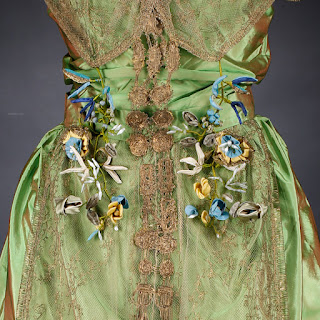
Detail of one of Lucile's dresses

Lucy’s clients are ladies of fashion from a new generation: they are young society hostesses; stage actresses; women of title and means—even their husband’s mistresses patronize Lucy’s salon.  Lady Brook the Countess of Warwick, the Prince of Wales’s new mistress never pays for a single gown, but she reigns supreme in the sophisticated Marlborough Set where no woman would dream of wearing the same dress twice to a grand occasion. Mrs. Cynthia Asquith, the Prime Minister’s wife, brings her avant garde literary friends to be dressed by Lucy; The famous Westend stage actress Ellen Terry insists her costumes are designed by Lucy, and even Victoria Eugenie Julia Ena of Battenberg the Queen of Spain sends her maid over to make an appointment to consult with Lucy when her majesty is in London.
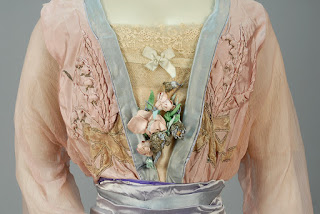
Bodice detail of a dress Lucy named "Happiness"

Lucy’s natural ability to listen to what her clients want and her tact to advise on what would actually suit them are among her greatest gifts. She creates what she calls Dresses of Emotion, each designed for its individual wearer. She gives her favorite gowns names: Passion Flower’s First Kiss; The Sigh of Lips Unsatisfied, and A Dream of Endless Summer. She also develops a talent for publicity! 

Lucile Ltd. is one of the first fashion houses in London to introduce their new season’s models in a live mannequin show.

As a new century dawns Lucy is ready to prise women out of hard, unforgiving whalebone corsetry and into softer more alluring and female lines—her silky lingerie is displayed in the Rose Room of her new Hanover Square salon, on a bed once slept in by Louis XIV mistress the Marquise de Montespan.

Lucile was the first fashion house in London to introduce the new season's models in a live mannequin parade

When Lucy marries Sir Cosmo Duff Gordon, society is willing to accept that Lucy has reached the pinnacle of success. She may not be presented at court because she is a divorcee, and worst of all in trade, but she can, and does, open a fashion house in New York, Chicago and with unashamed audacity in Paris.

Truly, could life be more perfect? Lucy Duff Gordon has become one of the most sought after haute couturières of the early 1900s, but as history has taught us: change is constant. On one bitterly cold night in April 1912 a catastrophe of such magnitude occurs and changes the course of Lucy Duff Gordon’s life forever. And once again she must rise above social ostracization and public humiliation to find a way out of this dilemma to save not only her business, but her marriage.

~~~~~

Tessa Arlen writes historical fiction when she is not toiling away in her garden. She is the author of the Edwardian mystery series: Lady Montfort and Mrs. Jackson; the Woman of World War II mystery series. Poppy Redfern. And two standalone historical novels: In Royal Service to the Queen and A Dress of Violet Taffeta.


Wednesday, May 11, 2022

The Gunning Sisters & the Cost of Celebrity

by Nancy Bilyeau

On an autumn day in 1760, a woman's funeral was held in London. So many mourners mobbed the church--one count puts the crowd at ten thousand--that it suggests the burying of a royal. But the deceased was far from royal. 

She was Maria Coventry, born Maria Gunning and raised in obscurity in County Roscommon, Ireland. Yet during the second half of her short life Maria would have been well accustomed to mobs.

The Gunning sisters, Maria and Elizabeth, were beautiful no doubt, but their effect on the population was extreme if not bizarre. We are told that at times they required sword-bearing guards to protect them from fevered crowds, that people stayed up all night to be in position to catch just a glimpse of one descending from a carriage.

In George Selwyn's memoirs, he writes, "Someone proposes a stroll to Betty's fruit shop [in St. James's Street]. Suddenly the cry is raised ' The Gunnings are coming!' and we all tumble out to gaze and criticise."

Horace Walpole wrote of them as "two Irish girls of no fortune who make more noise than any of their predecessors since the days of Helen, and are declared the handsomest women alive."

Aristocratic men who ordinarily would have been keen to make financially prudent marriages ("acre to acre" went the saying) abandoned all pragmatism and fought to marry a penniless Gunning sister within weeks, even days, of coming into contact with her.

Maria married an earl, and Elizabeth married a duke and, after he died, a second duke. 

Attractive young women had caused sensations at the English court before, whether it was Anne Boleyn in the 16th century or Frances Stewart in the 17th century. In the mid-18th century, the fame that was attainable for a young beauty changed in nature, becoming greater in scope and more threatening too.


Maria Gunning
Maria, Countess of Coventry, credit: wikipedia

One of the changes that affected the Gunnings was the growth of the popular press.

"So it was that a free press and a very weak libel law created a climate of speculation and gossip far freer than we have today, far more direct, personal and scurrilous," wrote Stella Tilyard. "Information, paid for by eager editors, poured into publishers' offices and straight into type. Readers were discovering the heady pleasures of scandals in high places."

Along with a bolder press came the rise of the British portrait painter. Sir Joshua Reynolds, first president of the Royal Academy of Arts, is believed to have created the concept of celebrity, "a hybrid of fame driven by commerce and the cult of personality," according to the book Joshua Reynolds: The Creation of Celebrity.

In an article published in The Guardian, curator Louise Cooling writes that "Catherine Maria 'Kitty' Fisher was the most celebrated courtesan in England in the 1760s and was one of the first celebrities to be famous simply for being famous." It was a portrait of Kitty painted by Joshua Reynolds, posing her as Cleopatra dissolving a pearl, that turned her into "an 18th century Kardashian" and "the original influencer," according to The Guardian.

Reynolds' portrait of Kitty Fisher

It was a spectacular portrait of Elizabeth Gunning by Reynolds that brought her a rush of special attention. She sat for the artist for an unusually long time. He worked on the portrait from January 1758 to June of the following year. It is praised by art historians as one of the first examples of Reynolds; "fully realized aesthetics."

It could be fairly argued that it was the Gunning sisters who carry the distinction of being the original influencers. They did inspire a cult of personality.

We know next to nothing of Kitty Fisher's early life. As for the Gunning sisters, much more has been written about their background. But how much of it is accurate is up for debate. Some tales carry a whiff of the apocryphal.

Their father was John Gunning of Castle Coot, yet it does seem clear there was a shortage of money. The mother and children took a house in Dublin while the father hid from creditors. There is one story that an actress, Mrs. Bellamy, heard raised voices on the other side of a wall, rushed inside the strange house to help, interrupted a fight over eviction, and rescued Mrs. Gunning and her "beautiful children" with a loan.

Some reports say the sisters afterward dabbled in acting, others that, when they had the chance to attend a ball in Dublin, their mother begged a theatrical contact to lend her daughters costumes so they could go to the ball. Their own dresses were close to rags. Shades of Cinderella...

Whatever they wore, Elizabeth and Maria caused a sensation at the Dublin ball. Their mother was advised to "take them to London." Somehow she raised the money t do just that.

"Thus the captivating aristocratic Gunning sisters, whose distinguishing feature was that there were two of them, were sent on a carefully managed progress from their home in Ireland to England in 1750 to be launched on the marriage market," wrote Tilyard.

In 1752, both Elizabeth and Maria married two of the most eligible single men in England. They were judged successes--though whether their marriages were happy is another matter.

It was when between Elizabeth was between husbands that she posed for Reynolds. Both sisters were quite tall; Elizabeth's willowy figure in the portrait and fashionable coloring suggest why she might have been so celebrated.


Elizabeth Gunning

Her first husband, the Duke of Hamilton, was a notorious rake and gambling addict who insisted on marriage shortly after meeting her. The second, John Campbell, the Duke of Argyll, was despised by Walpole as "sordidly covetous." Nonetheless, Elizabeth seems to have developed a steeliness about the whole business. She had eight children, served as a Lady of Bedchamber to Queen Charlotte, and died at Argyll House at age 57.

The older sister, Maria, had a different kind of marriage and court career. She possessed an impulsive, outspoken nature that some people found charming. When George II asked her if she were sorry that there were no more masquerades that season, she answered that no she was tired of them, but there was one thing she did want to see—a royal funeral. The King used to tell this story himself "with much amusement."

Her marriage did not turn out to be a happy one. When she and the Earl of Coventry went to France, she began using rouge as the other ladies did, including Madame de Pompadour, but her husband hated it, and once chased her in public to rub it off her face. 

More seriously, the earl had a flagrant affair with none other than Kitty Fisher. Maria, unlike most other aristocratic wives, did not look the other way.

According to one account, "in the park Lady Coventry asked Kitty Fisher for "the name of the dressmaker who had made her dress." Kitty Fisher answered she ..."had better ask Lord Coventry as he had given her the dress as a gift." To that, Maria raged at her "impertinence."

Maria's health deteriorated. While one theory is tuberculosis, another frequently repeated story is that she died of lead poisoning caused by overuse of cosmetics. (This was the same cause of death rumored to strike down her rival Kitty Fisher.) There was no autopsy, so we'll never know.

She didn't slow down willingly. One chronicler wrote, "With all the spirit of a true belle, however, she refused to quit the paths of pleasure, and was seen attending a celebrated murder trial only a few days before she was forced to take to her bed."

Maria Coventry died at the age of twenty-seven.


-------------------------------------------------------------------------------------------------------------------

Nancy Bilyeau wrote about the art world of 1764 London in her historical novel The Fugitive Colours, with Joshua Reynolds and Kitty Fisher appearing as characters. The book was published in the US, the UK, Canada and Australia on March 12th.


"A cracking historical spy thriller."- Historical Novel Society

"Deftly written and deeply atmospheric, The Fugitive Colours is a book 
you'll have trouble putting down!"
--Kate Quinn, New York Times Bestselling Author of The Diamond Eye

Links:
Amazon
Bookshop.org


www.nancybilyeau.com


Attachments area


Thursday, May 5, 2022

"A Horse, a horse, my kingdom for a horse!" by Jeri Westerson

 In 1485, King Richard III of England was unhorsed and killed on Bosworth field. Poor Richard. He lost his life and his dynasty. The crown went to Welsh Henry Tudor, Earl of Richmond, who became Henry VII of England, father to the infamous and ubiquitous Henry VIII.

Who was Richard? Was he really the villain he is portrayed to be in Shakespeare's tragic play (whence the title's quote comes)? Was he the diabolical instigator of the murders of the Princes in the Tower? Or is he really the innocent as portrayed in Josephine Tey's 1951 novella The Daughter of Time?

Earliest surviving portrait of Richard III, 1520

I doubt we'll ever know the real truth, though I tend to think that he was, perhaps, a little of both. He was a medieval man, after all, seeking the highest place in the land. But he was a loyal and accomplished warrior, fighting to restore his brother, King Edward IV to the throne during the War of the Roses. He was appointed to many posts under his brother's reign, in recognition of his loyalty and service: Constable of England, Chief Justice of North Wales, Chief Steward and Chamberlain of Wales, High Sheriff of Cumberland for life, Great Chamberlain, Lord High Admiral of England, Lieutenant of the North and Commander-in-Chief against the Scots and hereditary Warden of the West Marches, and later Lord Protector when his brother the king died and his young son, King Edward V and Richard’s nephew was a bit too young to rule. In other words, he was no slouch.

The Two Princes Edward and Richard in the Tower, painted by Sir John Everett Millais 

However, he seemed to be surrounded by conspirators, whether actual or imagined, and many were executed for treason. And the Princes in the Tower were later declared illegitimate because Edward IV was supposedly married first to Eleanor Butler and therefore made his marriage to Elizabeth Woodville, the mother of the princes, invalid. The princes just sort of...disappeared, and no one knows what happened to them, though much speculation has plagued historians ever since.

Rebellion was afoot, though, and when Richard went to his fateful battle at Bosworth field it was all going to be settled one way or another. Or was it? History is a funny thing. Yes, it's based on documents and firsthand and thirdhand accounts. To the victor go the spoils, but records are there and the information available offers only a glimpse that is sometimes interpreted one way and then another. That's what makes it interesting. In fact, sometimes new archaeological information comes to light. Not only do historians have to re-evaluate where exactly was the battleground, but because of artifacts found, they had to reconsider how the battle was fought.

Alf Oliver's farm will never be the same. This is the fellow who has an arable farm just off the old Roman road from Atherstone to Leicester in England. According to a 2017 article in the London Times, to get to Alf's farm:

"...you drive south and west from the Bosworth visitor centre on Ambion Hill, which is now, rather awkwardly, two miles adrift of the true site. Past a farm selling “battlefield beef” you park in a lane, tramp round one small field with a dip, cross a drainage ditch and arrive at a flat, triangular ploughed field exposed to the elements on all sides."

Richard III's boar badge from Bosworth, British Museum

The exact location of the battle of Bosworth Field where Richard III lost his crown and his life and made way for the reign of the Tudors, was unknown. Archaeologists finally located it October 2016 but were reluctant to give its exact location before they had a chance to dig it up for artifacts. And artifacts they found! Boar badges, Richard’s talisman, were found. Bones, weaponry. And, most interesting, they also discovered cannon balls and shot leading historians to the conclusion that heavy movable artillery were used much earlier for battles than expected, as well as the use of “gonners”. That will change a lot of author’s fiction for that time period. Perhaps that horse was blown out from under Richard with a cannonball!

Now, since I was invested in researching and writing about the late fourteenth century in my medieval mystery series, we can further turn this around to the reign of Richard II.   

John of Gaunt, Duke of Lancaster, painted later c. 1593 

In his household, John of Gaunt, the Duke of Lancaster had the court poet Geoffrey Chaucer as a loyal friend and servant. Was it because he liked the poet or liked his sister-in-law more? For the duke entertained Chaucer’s sister-in-law Katherine Swynford as his mistress for over twenty-five years, and even married her a year after his second wife, Constanza of Castille, died. Katherine wasn’t his first mistress. When he was a young man he took one of his mother’s ladies-in-waiting as a mistress, Marie de St. Hiliare, and had a daughter with her, named Blanche Plantagenet. All told, he had about fourteen children both legitimate and ill-, with nine living into adulthood. His illegitimate children from Katherine Swynford were made legitimate by King Richard II when John finally married her, but they were barred from inheriting the throne.

Meanwhile, King Richard II had a falling out with the duke’s legitimate son Henry Bolingbroke and kicked him out of the country. But it is Lancaster who gets the last laugh. By the end of the century, Richard is forced to abdicate and is then left to starve to death in Lancaster’s favorite castle, Pontefract. Lancaster’s son Henry seized the throne and thus the royal House of Lancaster began. Unfortunately, the venerable duke was in his grave by then.

But speaking of inheriting the throne, Gaunt’s eldest son by Katherine Swynford, John, had a granddaughter, Margaret Beaufort, whose son became Henry VII and took the throne from the last Plantagenet, Richard III. And Henry VII in turn married Elizabeth of York (who was also related to John of Gaunt), thus ending the York and Lancaster feud known as the War of the Roses, and allowing Gaunt's and Katherine's descendants to get the throne at last.

____________

Jeri Westerson writes the critically acclaimed Crispin Guest Medieval Noir series, and will be releasing her humorous medieval caper Oswald the Thief at the end of May 2022. Her newest mystery series set in Tudor England, Courting Dragons; A King's Fool Mystery with Henry VIII's real court jester Will Somers as protagonist, will be released January 2023. See all of her books--including an urban fantasy, a werewolf mystery series, a gaslamp-steampunk fantasy, and a LGBTQ rom-com mystery series--at JeriWesterson.com

Thursday, April 28, 2022

A Visit to the Seaside: Worthing


by Lauren Gilbert

Located on the coast in West Sussex, Worthing is between 50-60 miles south of London, and 10-12 miles west of Brighton and Hove (depending on routes taken). It has a long and fascinating history.

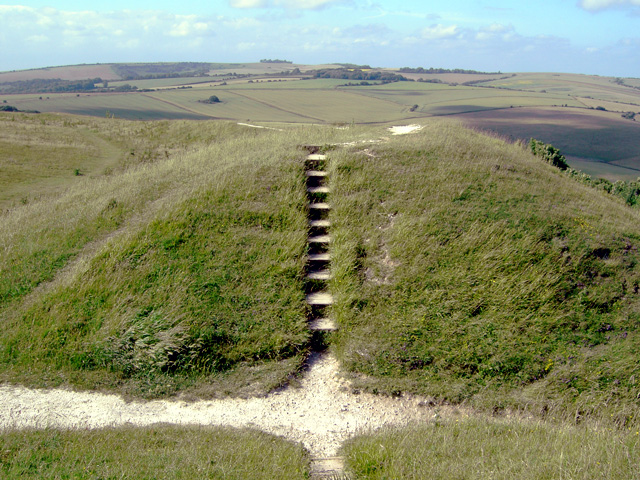
Stone Age people were in the area approximately 60,000 years ago. By the New Stone Age or Neolithic era (between about 4000 BCE to about 2000BCE), Worthing was the centre of flint mining; Romans also settled the area. The Iron Age (about 750 BCE-about 43 AD) hillfort Cissbury Ring is the largest hill fort in Sussex, and the 2nd largest in England. It contains one of the Neolithic flint mines found in the area.


Easternmost Part of Cissbury Ring by Slbs June 29, 2008 Creative Commons

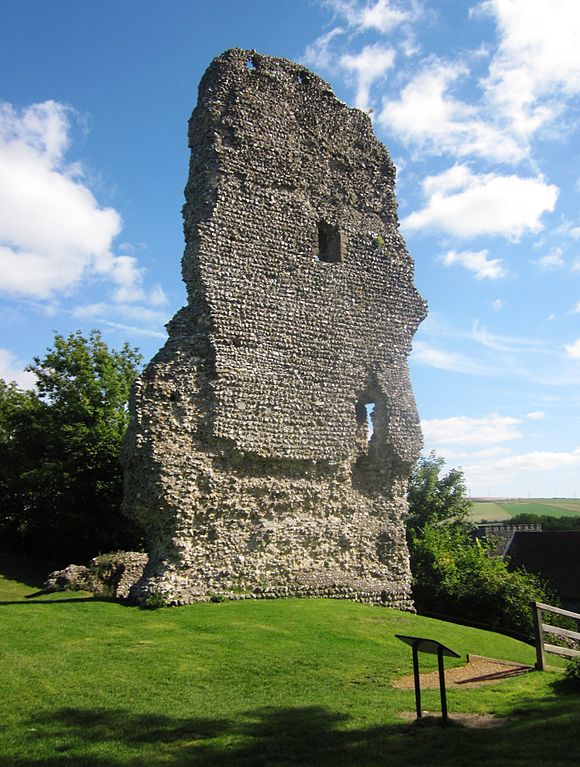
At the Norman Conquest, the Manor of Worthing included the Ordinges and Mordinges estates. William de Braose received the Manor. The estates were joined, and Bramber Castle was built. The Manor was then leased to Robert Le Sauvage. Worthing was included in the Domesday Book.


Remains of the Norman keep of Old Bramber Castle by Margaret Anne Clarke Sept. 20, 2013, Creative Commons


During Georgian Era, Worthing saw great change. For decades, Worthing was a fishing village, with mackerel as the prime catch, until the temperate climate and seaside started attracting visitors in the 1750s. It was also a stronghold of smugglers throughout the 19th century.

As other watering places such as Brighton became more congested, less crowded places, such as Worthing, became more attractive. As physicians extolled the benefits of sea bathing for health, more visitors came. George III (who had popularized Weymouth as a seaside destination, visiting numerous times in 1789-1805) thought it might improve Princess Amelia’s health and brought her to Worthing in 1798.

By 1803, streets had been built, along with some hotels and fine homes. The early visitors were wealthy fashionables, who expected comfortable accommodations and entertainment. The medical benefits of sea bathing attracted some. Others confined themselves to travel within the United Kingdom due to the difficulties of foreign travel resulting from the Napoleonic Wars. In 1803, Parliament passed an Act, establishing Worthing as the Town of Worthing, and establishing a group of commissioners to manage cleaning, lighting, improving streets and roads, and to establish a police force.

There is also a Jane Austen connection-she stayed at Stanford’s Cottage in Worthing, with her mother, her sister Cassandra and her friend Martha Lloyd for several weeks in late 1805. Worthing is considered the likely inspiration for SANDITON. Edward Ogle (a prominent businessman) and Warwick House, which he purchased in 1801, may have been models for Mr. Parker and Trafalgar House.(1) Now known as Stanford Cottage now has a blue plaque declaring that Jane Austen stayed there.

In 1813, John Feltham described Worthing and said, “In a short space of time, a few miserable fishing huts and smugglers’ dens have been exchanged for buildings sufficiently extensive and elegant to accommodate the first families in the kingdom. The establishment of two respectable libraries (Spooner’s and Stafford’s) at each of which the newspapers are regularly received, and the erection of commodious warm baths (Wickes’s) within a few years; sufficiently prove how far it has risen in public estimation.” (2)

In 1821, The Esplanade was built to create a suitable place for people to promenade. After 1825, Worthing was no longer considered a fashionable resort, and drew a much smaller crowd of visitors, which resulted in financial difficulties for the town in the 1830s. It became a suitable resort for families and those seeking health.

During the Victorian Era, as its status declined, Worthing again experienced financial difficulties in the 1850s. In 1862, the Pier was built, and in 1865, the Esplanade was expanded and renamed the Marine Parade. By 1889, a pavilion had been built on the southern end of the Pier. Paddle steamers, providing popular day trips along the coast, moored there to pick up and drop off passengers. Oscar Wilde is known to have spent time there in 1893, and liked it well enough to spend the summer and autumn of 1894 in Worthing, writing THE IMPORTANCE OF BEING EARNEST. In 1897, a bandstand was built west of the pier. Band concerts became a crowd-pleasing feature.


The Pier, Worthing, England-print-1890-1900, Library of Congress, public domain

The Pier was badly damaged during a storm on March 24, 1913 (Easter Monday). Repairs were begun promptly, and the pier reopened in 1914. In September 1933, fire destroyed the South Pavilion. This was repaired, and the pavilion subsequently reopened.

On October 9, 1934, there were clashes between Oswald Mosley’s British Union of Fascists and anti-fascist protestors, an event which became known as the Battle of South Street. During World War II, Worthing was a prime defensive place in the event of an enemy landing along the coast. In 1942, it became a popular recreation area for the troops. Worthing also served as the embarkation site for the D-Day invasion on June 6, 1944.

After World War II, the town was repaired and refurbished. The population has grown steadily. In the 1960s, Worthing was a popular music venue. It evolved to a retirement haven in the 1970s and 1980s. From the 1990s to present, major corporations have located there, attracting younger workers with families. In 1998, 1999 and 2000, Worthing was voted the most profitable town in Britain by Experian. In the 21st century, Worthing continues to grow and thrive as the seaside location continues to attract visitors and residents.

NOTES:

(1) Edmonds, Antony. JANE AUSTEN’S WORTHING The Real Sanditon. Pp. 9-11, pp. 14-30.

(2) Feltham, John. A GUIDE TO ALL THE WATERING AND SEA-BATHING PLACES FOR 1813. Vol. 2, p. 463.

Sources include:

Edmonds, Antony. JANE AUSTEN’S WORTHING The Real Sanditon. 2015: Amberley Publishing, Stroud, Gloucestershire.

Evans, John. PICTURE OF WORTHING To Which Is Added An Account of Arundel and Shoreham, with Other Parts of the Surrounding Country. 1805: printed by C. Stower, London. Reprint published by Sagwan Press, imprint of Creative Media Partners. Scholar Select.

Feltham, John. A GUIDE TO ALL THE WATERING AND SEA-BATHING PLACES FOR 1813. With a description of The Lakes; A Sketch of A Tour in Wales and Itineraries. Vol. 2 1813: Longman, Hurst, Rees, Orme and Brown, London. Reprint published by Franklin Classics, an imprint of Creative Media Partners. Scholar Select.

Visitworthing.co “History of Worthing.” (No author or post date shown.) HERE

En.wikipedia.org “Worthing,” last edited April 20, 2022. (No author shown.) HERE

All images from Wikimedia Commons.


Lauren Gilbert was introduced to English authors early in life. An avid reader, she pursued a Bachelor of Arts degree in English, with a minor in Art History. She is a contributing writer to both volumes of CASTLES, CUSTOMS AND KINGS: True Tales by English Historical Fiction Authors. She has two novels, HEYERWOOD A Novel and A RATIONAL ATTACHMENT, currently in print and is working on a new nonfiction work. A long-time member of JASNA, she has presented programs for the JASNA Palm Beaches Region, the JASNA annual general meeting in 2011, and the Jane Austen Fest in Mount Dora in 2022. She lives in Florida with her husband. Visit her website here.