by Maria Grace
 During the Regency era , anywhere from ten to twenty percent of the British population were employed in domestic service. Of that number, approximately ninety percent were women. A significant gender gap existed both in wages and prestige afforded male and female servants.
Male versus female labor
Two primary factors contributed to these gender differences. Firstly, men were more expensive to hire. Not only did they command higher wages, but the 1776 tax on male servants made them dramatically more expensive to employ. Effectively a household required an income of at least 1000 pounds per year to employ a man servant (though 700 pounds a year might afford a footboy),whereas households having only 150 pounds a year could afford a maid-of-all-work.
Male servants became a status symbol and a mark of prestige, whereas female servants were only a commonplace feature found in even very modest households.
On the whole, women filled unskilled positions in the house, primarily cleaning and cooking. Men managed and oversaw those positions and supervised household valuables and luxury items like tobacco and alcohol. Perhaps more significantly, male servants engaged in what was considered skilled labor, including most of the labor outside of the house. Young men apprenticed in those tasks, learning to take on those skilled positions in the future.
Most male servants reported to the master of the house, through a hierarchy of male servants. The system worked well for those servants concerned with outdoor activities. Problems arose, though, when indoor male servants reported to the mistress of the house. Conflicts often arose when a woman attempted to supervise male staff, requiring the intervention of the master of the house.
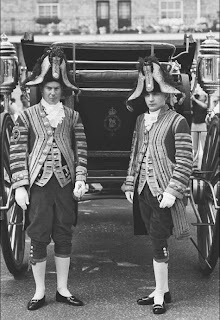
The professional staff positions available in large households demonstrated this divide clearly.
 This gender divide extended from the lowest to the highest staff positions in households, with all of the highest paid, most powerful and prestigious positions held by men.
The largest households employed stewards to manage the lands. In some cases when the house itself was very large, the house also had a steward assigned. Paid a salary from 50 to 300 pounds a year, depending on the size and profitability of the estate, these men usually had a background in law and many had served as clerks to solicitors. Land stewards would have a separate dwelling on the estate, but a house steward would have private quarters in the house. Neither were considered servants, but rather professionals and according respect equal to or above the family lawyer.
No directly corresponding female positions existed. The closest analogy might be the lady’s companion or the governess. Both these positions employed women who were gently born but forced into service by some unfortunate circumstance. Thus, they were not fully considered as servants. However, despite their skills and education, they were not afforded professional status either. They were relegated to a neither/nor position where they did not fit with the family and were not accepted among the household staff. Similarly, their salaries were typically only in the range of 25 pounds a year, half of what the least steward might earn.
In short, male servants cared for the household luxuries, alcohol, silver, crystal and were paid far more than the women who cared for the household’s young ladies and children.
Hardships of the female servant
 The lowest order of servants was relegated to the most difficult, unpleasant tasks: cleaning, scrubbing, hauling water and waste, maintaining fires and cleaning up after them. These were the scullery maids and maids-of-all-work. They also made up the largest single category of those in domestic service.
Girls as young as eleven filled these roles. They were also the servants most subject to physical discipline by their employers, particularly the mistress of the house. No laws prevented a master or mistress from beating a servant they felt deserving of it. A servant could petition the courts if they felt themselves mistreated, but such an action could impact their ability to seek future employment, so such complaints might cause more problems than they resolved.
 Female servants were subject to one further hardship that male servants did not generally face. Women in service were deemed sexually available to the men of the household, including male servants. Even if the female servant was married, or the master enforced celibacy (forbade boyfriends) among the servants, this additional ‘service’ could be demanded from female employees, including governesses and companions. To add further insult to injury, nothing prevented a jealous mistress from venting her spleen upon these vulnerable servants. Few legal protections existed in this situation, and girls could be dismissed for pregnancy, even if it were caused by one of the members of the household.
Although men and women both worked in service, both law and tradition conspired to make their relative situations vastly different. Despite occupying only ten percent of the domestic service positions, high paying, high power and prestige roles were held almost exclusively by men while the lowest ranks were occupied by women.
References
Adams, Samuel, and Sarah Adams. The Complete Servant; Being a Practical Guide to the Peculiar Duties and Business of All Descriptions of Servants ... with Useful Receipts and Tables,. London: Knight and Lacey, 1825.
Ardelie, Susan. "Domestic Servants - Part 1 - Women." Making History Tart Titillating. February 16, 2010. Accessed August 10, 2015. https://lifetakeslemons.wordpress.com/2010/02/16/domestic-servants-part-1-women/.
Ardelie, Susan. "Domestic Servants - Part 2 - Men." Making History Tart Titillating. March 2, 2010. Accessed August 10, 2015. https://lifetakeslemons.wordpress.com/2010/03/02/domestic-servants-part-2-men/.
Barker, Anne. The Complete Servant Maid or Young Woman's Best Companion. Containing Full, Plain, and Easy Directions for Qualifying Them for Service in General, but More Especially for the Places of Lady's Woman, Housekeeper, Chambermaid, Nursery Maid, Housemaid, Laund. London: Printed for J. Cooke, No. 17, Pater-Noster Row, 1770.
Beeton, Isabella Mary. The Book of Household Management. Edited by Mrs. I. Beeton, Etc. [With Illustrations.]. London: S. O. Beeton, 1861.
Cosnett, Thomas. The Footman's Directory, and Butler's Remembrancer Or, the Advice of Onesimus to His Young Friends: Comprising, Hints on the Arrangement and Performance of Their Work ; Rules for Setting out Tables and Sideboards ; the Art of Waiting at Table, and Conduct. London: Printed for the Author ;, 1823.
Giles, Kelly. "Servants." Randolph College Faculty Webserver. Accessed August 10, 2015. http://faculty.randolphcollege.edu/janeausten/reports/servants.htm.
Glover, Anne. "Regency Culture and Society: A Primer on Household Staff." Regency Reader. March 19, 2012. Accessed August 10, 2015. http://www.regrom.com/2012/03/19/regency-culture-and-society-a-primer-on-household-staff/.
Hoppe, Michelle Jean. "Servants--Their Hierarchy and Duties." Literary Liaisons. 2003. Accessed August 10, 2015. http://www.literary-liaisons.com/article046.htm.
Household Work, Or, The Duties of Female Servants Practically and Economically Illustrated, through the Respective Grades of Maid-of-all-work, House and Parlour-maid, and Laundry-maid : With Many Valuable Recipes for Facilitating Labour in Every Departmen. London: J. Masters, 1850.
Koster, Kristen. "A Primer on Regency Era Servants - Kristen Koster." Kristen Koster. November 29, 2011. Accessed August 10, 2015. http://www.kristenkoster.com/a-primer-on-regency-era-servants/.
Schmidt, Wayne. "Victorian Domestic Servant Hierarchy and Wage Scale." Wayne's This and That. Accessed August 10, 2015. http://www.waynesthisandthat.com/servantwages.htm.
The Servant's Guide and Family Manual: With New and Improved Receipts, Arranged and Adapted to the Duties of All Classes of Servants ... Forming a Complete System of Domestic Management. 2d ed. London: J. Limbird, 1831.
Webster, Thomas, and William Parkes. An Encyclopædia of Domestic Economy .. London: Longman, Brown, Green, and Longmans, 1852.
~~~~~~~~~~~~
 Maria Grace is the author of Darcy's Decision, The Future Mrs. Darcy, All the Appearance of Goodness, and Twelfth Night at Longbourn, Remember the Past, and Mistaking Her Character. Click here to find her books on Amazon. For more on her writing and other Random Bits of Fascination, visit her website. You can also like her on Facebook, follow on Twitter or email her.

Male versus female labor
Two primary factors contributed to these gender differences. Firstly, men were more expensive to hire. Not only did they command higher wages, but the 1776 tax on male servants made them dramatically more expensive to employ. Effectively a household required an income of at least 1000 pounds per year to employ a man servant (though 700 pounds a year might afford a footboy),whereas households having only 150 pounds a year could afford a maid-of-all-work.
Male servants became a status symbol and a mark of prestige, whereas female servants were only a commonplace feature found in even very modest households.
On the whole, women filled unskilled positions in the house, primarily cleaning and cooking. Men managed and oversaw those positions and supervised household valuables and luxury items like tobacco and alcohol. Perhaps more significantly, male servants engaged in what was considered skilled labor, including most of the labor outside of the house. Young men apprenticed in those tasks, learning to take on those skilled positions in the future.
Most male servants reported to the master of the house, through a hierarchy of male servants. The system worked well for those servants concerned with outdoor activities. Problems arose, though, when indoor male servants reported to the mistress of the house. Conflicts often arose when a woman attempted to supervise male staff, requiring the intervention of the master of the house.
The professional staff positions available in large households demonstrated this divide clearly.

The largest households employed stewards to manage the lands. In some cases when the house itself was very large, the house also had a steward assigned. Paid a salary from 50 to 300 pounds a year, depending on the size and profitability of the estate, these men usually had a background in law and many had served as clerks to solicitors. Land stewards would have a separate dwelling on the estate, but a house steward would have private quarters in the house. Neither were considered servants, but rather professionals and according respect equal to or above the family lawyer.
No directly corresponding female positions existed. The closest analogy might be the lady’s companion or the governess. Both these positions employed women who were gently born but forced into service by some unfortunate circumstance. Thus, they were not fully considered as servants. However, despite their skills and education, they were not afforded professional status either. They were relegated to a neither/nor position where they did not fit with the family and were not accepted among the household staff. Similarly, their salaries were typically only in the range of 25 pounds a year, half of what the least steward might earn.
In short, male servants cared for the household luxuries, alcohol, silver, crystal and were paid far more than the women who cared for the household’s young ladies and children.
Hardships of the female servant

Girls as young as eleven filled these roles. They were also the servants most subject to physical discipline by their employers, particularly the mistress of the house. No laws prevented a master or mistress from beating a servant they felt deserving of it. A servant could petition the courts if they felt themselves mistreated, but such an action could impact their ability to seek future employment, so such complaints might cause more problems than they resolved.

Although men and women both worked in service, both law and tradition conspired to make their relative situations vastly different. Despite occupying only ten percent of the domestic service positions, high paying, high power and prestige roles were held almost exclusively by men while the lowest ranks were occupied by women.
References
Adams, Samuel, and Sarah Adams. The Complete Servant; Being a Practical Guide to the Peculiar Duties and Business of All Descriptions of Servants ... with Useful Receipts and Tables,. London: Knight and Lacey, 1825.
Ardelie, Susan. "Domestic Servants - Part 1 - Women." Making History Tart Titillating. February 16, 2010. Accessed August 10, 2015. https://lifetakeslemons.wordpress.com/2010/02/16/domestic-servants-part-1-women/.
Ardelie, Susan. "Domestic Servants - Part 2 - Men." Making History Tart Titillating. March 2, 2010. Accessed August 10, 2015. https://lifetakeslemons.wordpress.com/2010/03/02/domestic-servants-part-2-men/.
Barker, Anne. The Complete Servant Maid or Young Woman's Best Companion. Containing Full, Plain, and Easy Directions for Qualifying Them for Service in General, but More Especially for the Places of Lady's Woman, Housekeeper, Chambermaid, Nursery Maid, Housemaid, Laund. London: Printed for J. Cooke, No. 17, Pater-Noster Row, 1770.
Beeton, Isabella Mary. The Book of Household Management. Edited by Mrs. I. Beeton, Etc. [With Illustrations.]. London: S. O. Beeton, 1861.
Cosnett, Thomas. The Footman's Directory, and Butler's Remembrancer Or, the Advice of Onesimus to His Young Friends: Comprising, Hints on the Arrangement and Performance of Their Work ; Rules for Setting out Tables and Sideboards ; the Art of Waiting at Table, and Conduct. London: Printed for the Author ;, 1823.
Giles, Kelly. "Servants." Randolph College Faculty Webserver. Accessed August 10, 2015. http://faculty.randolphcollege.edu/janeausten/reports/servants.htm.
Glover, Anne. "Regency Culture and Society: A Primer on Household Staff." Regency Reader. March 19, 2012. Accessed August 10, 2015. http://www.regrom.com/2012/03/19/regency-culture-and-society-a-primer-on-household-staff/.
Hoppe, Michelle Jean. "Servants--Their Hierarchy and Duties." Literary Liaisons. 2003. Accessed August 10, 2015. http://www.literary-liaisons.com/article046.htm.
Household Work, Or, The Duties of Female Servants Practically and Economically Illustrated, through the Respective Grades of Maid-of-all-work, House and Parlour-maid, and Laundry-maid : With Many Valuable Recipes for Facilitating Labour in Every Departmen. London: J. Masters, 1850.
Koster, Kristen. "A Primer on Regency Era Servants - Kristen Koster." Kristen Koster. November 29, 2011. Accessed August 10, 2015. http://www.kristenkoster.com/a-primer-on-regency-era-servants/.
Schmidt, Wayne. "Victorian Domestic Servant Hierarchy and Wage Scale." Wayne's This and That. Accessed August 10, 2015. http://www.waynesthisandthat.com/servantwages.htm.
The Servant's Guide and Family Manual: With New and Improved Receipts, Arranged and Adapted to the Duties of All Classes of Servants ... Forming a Complete System of Domestic Management. 2d ed. London: J. Limbird, 1831.
Webster, Thomas, and William Parkes. An Encyclopædia of Domestic Economy .. London: Longman, Brown, Green, and Longmans, 1852.
~~~~~~~~~~~~