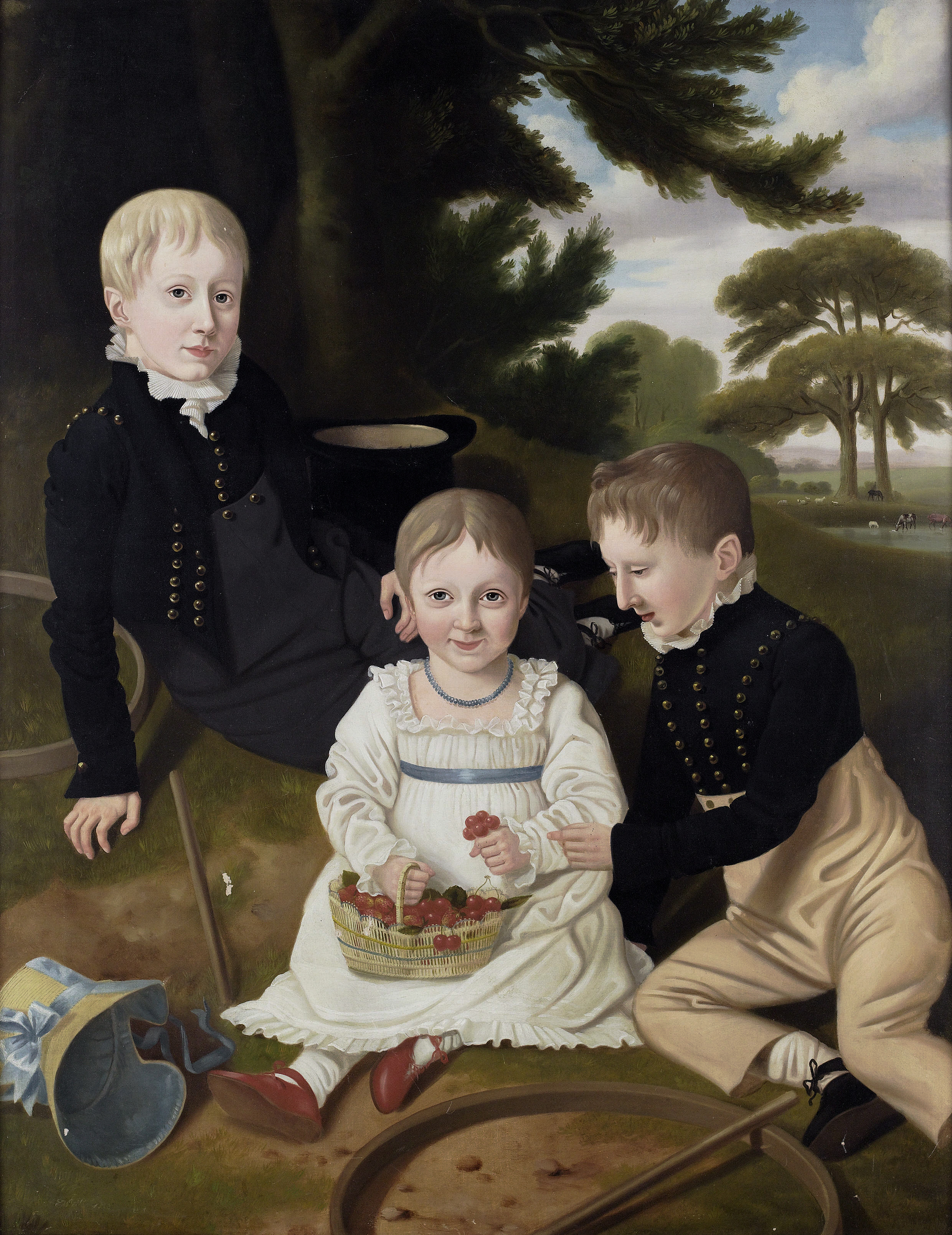
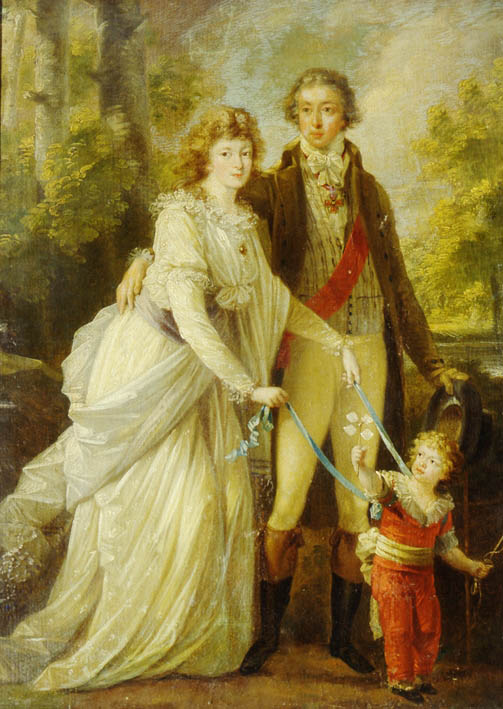
Showing posts with label children. Show all posts

Friday, May 11, 2018

Changing Perspectives on Childhood

by Maria Grace


Today, most Western societies mark a distinct period of childhood beginning at birth and extending into adolescence, with full adult responsibilities not required until close to an individual’s second decade—and sometimes beyond that. We take it for granted that childhood is a unique and special period of life during which the child should play and be educated in the ways of their culture, essentially free from adult responsibilities.

The concept of childhood

Some historians have suggested that the modern conception of childhood developed during ‘long eighteenth century’ (c.1688-1832).  The concept of the ‘child’ sparked widespread debate causing society to reconsider its perception of childhood. Prior to the nineteenth century, children were viewed as fundamentally miniature adults, not much different from their parents. (Metz, Romanticism and the Child) But, as a result of the Enlightenment and other social influence during this period, people began to rethink children as impressionable, unformed beings; requiring much protection and attention from adult caretakers; inherently different from adults. The role of parent and guardian was similarly redefined to include a deep, affectionate regard for youngsters and a sense of nostalgia toward the childhood period. Historian J. H. Plumb characterized England during the latter half of the 18th century as a “new world of children.”  (O’Malley, 2005)

Some argue that it was not so much the concept of a unique period childhood that developed during this period, but rather a more copious expression in the interest in children, their maintenance, and their future prospects. Dissemination of Enlightenment thought and an emerging middle class seem to be at the root of these changes. (O’Malley, 2005) The notions of an ‘enlightened’ humanity suggested the possibility of a better world and future for the future generations and fueled enthusiasm and resourced to be martialed in efforts to improve the lot of children.

Towards a Unique Childhood

At the start of the Enlightenment, probably the most common view of children was the traditional Calvinist Christian view. A child was born with Original Sin and the only hope for overcoming it was strict subordination to authority. (Anyone ever faced with a room full of toddlers near naptime has probably ascribed to this view too—just saying.) Advances in sciences came to suggest a more biological view of children. The character and potentialities of the child were determined by inheritance at conception. Whether this came from genetics as we understand them today or from astrological influences could be debated, though.

 Philosophers contributed an altogether another way to view children. John Locke’s and Jean-Jacques Rousseau’s philosophies, although different from one another, regarded children as natural innocents whose feelings and wishes might be corrupted by his experience in society. (Stone, 1979)

Philosophers of Childhood

John Locke’s 1673 treatise, Some Thought Concerning Education proposed the notion of a lengthy, and in many ways leisurely childhood. However, it was not until the mid-eighteenth century that his recommendations about education were paid heed. Rousseau’s 1762 work, Emile: or On Education helped transform the fad for Locke’s ideas into lasting social change.

Locke

John Locke regarded the young mind as tabula rasa, a blank slate, without inborn knowledge or ideas. Society was then responsible for inscribing said slate with appropriate rational and moral precepts by the experiences a child took in with his five senses. To this end, Locke suggested children should be dressed in cool, loose clothing, fed simple diets, and kept safe from erroneous or detrimental influences and stimuli since what was initially written on these little blanks slates might well be indelible.

“Locke famously argued against the physical punishment of children for their little transgressions, except in cases where a child evinced a ‘manifest Perverseness of the Will.’ He suggested children would learn better and correct themselves when their behaviour was disciplined by a system of reward and shame, and while physical punishment was doubtless still widespread, most writers for and about children adopted Locke’s position.  For some critics and historians, Locke’s system provides the child with the kind of autonomy and self-discipline needed to become a successful and socially responsible modern individual; others see in Locke’s method of child-rearing an almost insidious internalization of authority designed to produce docile and compliant subjects.” (O’Malley, 2005)

Rousseau

In contrast, the French philosopher, Jean-Jacques Rousseau stressed the natural goodness and innocence of the child who was his own independent entity. His fictional account in Émile (1762) depicted his view of an ideal the “natural” education for the titular character. Though impractical, his natural education emphasized a separation of the innately good child from and corrupt society where the child (with his tutor) could learn experientially from interactions with nature to become a good and productive adult citizen.

Both Locke’s and Rousseau’s philosophies supported “the ideas of personal responsibility and of society not as a fixed hierarchy or ‘great chain of being,’ but as a ‘race fairly run,’ in which the individuals who worked hardest at improving themselves should succeed. Both of these ideas were central to an emerging middle-class ideology in the period. (They) … recognized in education … (the) potential not just for passing on old knowledge but for generating new ideas and technologies needed to reform and improve society.” (O’Malley, 2005)

Practical offshoots

These new views of childhood resulted in practical changes in parenting. The formality between children and parents prevalent in earlier periods was, on the whole, replaced by a more relaxed and affectionate kind of behavior within the family. Solicitude and indulgence towards children became far more common.

As children came to be regarded as individuals with their own unique and relevant likes and dislikes, their opinions, were taken into account, but were not necessarily the final word. Experts like Maria and Richard Edgeworth in “Practical Education” examined the influence of those who cared for children and recommended that the interactions between servants and children be limited. While they recognized that very young children needed the help of servants for some tasks, they insisted that the mother or governess (the governess was not a servant, but professional staff, a critical distinction) should be present during those times to minimize the talk between child and servant and thus minimize the impact the interaction could have on the impressionable young mind. (Selwyn, 2010)
Even the mode of children’s dress was influence by these philosophical changes. Locke, Rousseau and other writers attacked stiff and restrictive swaddling as an assault on human liberty and a means of depriving children of early affectionate contact, like cuddling. By the second half of the eighteenth century the practice was dying out in England (Selwyn, 2010).

Rousseau went even further, believing that young men’s innate goodness could be preserved by raising them in a more natural environment which included plain, comfortable clothes which allowed freedom of movement. Perhaps more significantly, for mothers of boys in particular, the change in philosophy that went along with the changes in garments meant that their young sons did not make the transition from infant boys to men the moment they donned male garments.  Instead of being immediately sent off to apprenticeships or boarding schools, boys could enjoy a slower initiation into the world of men. Fathers would begin spending more time with them, teaching them masculine activities. A tutor might be hired to educate him or he might be sent to study a few days a week with a local vicar, curate, or other resident scholar all while the boy remained close to hearth and home for a little while longer.

An astute reader may have noticed by now nearly all the references to the child in this article are masculine. This is not an oversight. As was typical in the period, it was the male who was counted as particularly relevant, while female education drew relatively little attention. While good for providing companionship for her mother, and becoming a mother (hopefully of boys) in the future, the female child did not receive a great deal of consideration in this era.

References

Davidoff, Leonore, and Catherine Hall. Family Fortunes: Men and Women of the English Middle Class, 1780-1850. Chicago: University of Chicago Press, 2002.
Fullerton, Susannah. Jane Austen and Crime. Sydney: Jane Austen Society of Australia, 2004.
Horn, Pamela. Flunkeys and Scullions: Life below Stairs in Georgian England. Stroud: Sutton, 2004.
Metz, Stephanie. “Can it be a song of joy? / And so many children poor?”: William Blake and the Child.” Romantic Politics. Accessed Feb. 18, 2018. http://web.utk.edu/~gerard/romanticpolitics/williamblake.htm
Metz, Stephanie. “Romanticism and the Child: Inventing Innocence “Romantic Politics. Accessed Feb. 18, 2018. http://web.utk.edu/~gerard/romanticpolitics/childhood.html>
O’Malley,  Andrew .”The Eighteenth-Century Child.” Representing Childhood. 2005. Accessed Feb. 18, 2018.  <http://www.representingchildhood.pitt.edu/eighteencent_child.htm
 Rovee, Christopher. “The Romantic Child, c.1780-1830.” Representing Childhood. 2005. Accessed Feb. 18, 2018.  <http://www.representingchildhood.pitt.edu/romantic_child.htm>
Selwyn, David. Jane Austen and children. London: Continuum, 2010.
Stone, Lawrence. The Family, Sex and Marriage in England, 1500-1800. New York: Harper & Row, 1979.


~~~~~~~~~~

Though Maria Grace has been writing fiction since she was ten years old, those early efforts happily reside in a file drawer and are unlikely to see the light of day again, for which many are grateful. 

After penning five file-drawer novels in high school, she took a break from writing to pursue college and earn her doctorate. After 16 years of university teaching, she returned to her first love, fiction writing.

Click here to find her books on Amazon. For more on her writing and other Random Bits of Fascination, visit her website. You can also like her on Facebook, or follow on Twitter.

Monday, January 9, 2017

Childhood in Medieval London


By Kristin Gleeson

In Medieval London and throughout all England, parents were concerned about the rearing and education of their children, just as society is today. In the later Medieval period as guilds became more strict, professions were more formally established, among other things, parents worked hard to prepare their children to pass successfully into adulthood, something evident from the many manuals from that time that address these issues.

 The parents were right to be concerned with the many obstacles that faced a child before he reached adulthood. The specter of death hung over all children. There were high risks of infection from various diseases including the plague, the pox, sweating sickness, flux and various fevers, in addition to malnutrition. Any number of possible accidents could befall a child. He or she could get run down by a horse or fall into a hearth fire. A month-old girl, Joan, in Queenhithe, died after a sow entered the home and “mortally bit the right side” of the child’s head. It was disease, though, that caused the majority of childhood deaths in the Medieval period.

 London had a large population of foreigners, especially French, Flemish, Italian and German, but still, the parishes were small and people in each tended to know and protect one another. In that light the London children were probably the best supervised of the whole of the country. The streets were crowded with adults going about their business or pleasure and would notice any child at risk or a child seriously misbehaving.

The first years of a child’s life were usually spent in a cradle, the limbs tightly swaddled in cloth. By their second or third years they would be walking, learning to talk and being toilet trained. At that time the parent would shown them the "jakes" streets and latrines of London,  and in the wealthier families, the use of the chamber pot.

Contrary to some common understanding Medieval society did recognize childhood as something separate from adulthood. There were toys for children of varying quality, the more luxurious ones for the upper classes. Children’s clothes were sturdy and made to size and were not necessarily the adult clothes made smaller. One wax chandler had a little painted table and stool and silver beads and a crucifix for his child.

There were also many guides to raising children, especially in the later Medieval period, all of them filled with plenty of sage advice on best practices for the upper classes, but also for those in trade and other less well off people. Generally, a mother guided the daughters to adulthood while the fathers taught their sons. For the most part, training manuals were focused on the male children, but regardless of which gender it was directed towards, the common theme on child rearing present in all the books was the well known concept, “spare the rod, spoil the child.” A manual written for those who would earn a living cautioned against idleness as well. “You must eat what you get with your hands” it said, while another stated, “a man’s arms are for working as a bird’s wings are for flying.”

 A child’s day (if the manuals are to be believed) usually began by rising early and then attending prayers or some form of devotions, followed by sponging or brushing the day’s clothing, cleaning shoes, combing hair and washing the hands and face and then cleaning the teeth by washing them with an ivory or wooden stick. The manual advised, too, that a child should dress according to his rank in a neat manner with a napkin “for cleaning the nose of all filthiness.”

 After making his bed and a breakfast of meat and drink of small beer or milk, the boys would go off to school, or if school wasn’t an option, they might play in the streets. Schooling for boys was seen as very important in the late 14th and 15th centuries as the many guilds increasingly required functional literacy from anyone enrolling for an apprenticeship. .Daughters usually stayed at home with their mothers who were responsible for all aspects of their daughters’ education.

 Elementary schooling could be obtained from private individuals, a small establishment with just a few pupils, or even a school set up by the church. Some children attended at the expense of the parish. Some girls of the better classes attended the grammar schools for 4 or 5 years where they learned English, accounting, perhaps a little French and Latin. Generally, the male pupils were taught Latin, literacy in English and training in keeping accounts, all tasks needed for a successful working life. To guide the teaching many schools used primers, and each student would pack their satchel with books, pen, parchment or a wax tablet and stylus. Along with Latin and accounts they were taught respect towards their parents and to learn society’s etiquette to maintain their social positions, or to improve it if possible. The general outlook was to help the child achieve a sense of stability and level-headedness that would garner good will among the neighbours.

“If you be well at ease, and sit warm among your neighbours, do not get new-fangled ideas, or be   hasty to change or flit; for if ye do, ye lack wit and are unstable, and men will speak of it and say: ‘This fool can bide nowhere!’”

From: Science & Literature in Middle Ages
The reality was somewhat different from what the manuals would have us believe. Most educational programmes had limited success and many students never learned the required behavior. Most of the apprentices and servants came from the countryside and may or may not have had the recommended training before they arrived in the city. For many Londoners as well, fine manner and cleanliness weren’t always necessary or possible, especially among the lower classes. It is more likely that these children were loud and boisterous, played games in the street and drank too much beer, frequented taverns, tore their clothes and weren’t always polite. Upper class youths no doubt failed these standards on various occasions too. In one instance a goldsmith’s son, William, standing at the top of a lane near Cheap, urinated into a urinal and poured it into the shoe of another young man, and when the man complained, William struck him with his fist. A man standing nearby reprimanded him for his actions. William grabbed a staff and bashed the man on his head so hard that he died.

 After a morning of school, at midday, the youths would break from school, games, or whatever they were doing, and go home for the main meal. City taverns had numerous places to buy food so many Londoners would buy their beer and meat there and take it home for the meal. If not a meat pie, the food would often be served up in 4 day old bread carved into a trencher that acted as a plate or bowl. Diners ate in pairs sharing the beer or wine cup.

In the afternoon the boys returned to their games or schools and the girls to needlework or household chores. The evening meal was light and usually followed by leisure activities. Leisure activities for children took many forms. They might watch a cock fight or play ball in team with other scholars in London fields, play tag, run a race or play hoops. Older boys might go in for bear baiting, throwing javelins, sword practice, wrestling or knucklebones, or even go to the tavern. Occasionally boys would act as jockeys in horse races.

 By the time children reached their teens it was time for the next stage of their lives. For many it meant apprenticeship or service. In the early Medieval period the minimum age for apprenticeship was thirteen, but by the end of the 15th century it rose to sixteen years of age. Entry into university or legal training rose to the late teens by the end of the 14th century. The age to enter service could be as young as seven, but older children were preferred because they were more useful and generally more responsible. London provided many opportunities for temptation, something clearly evident from the terms of the various apprentice contracts. The apprentice contracts also tried to ensure that the teens behaved themselves by requiring them to refrain from late nights, gaming, visits to the theatre and taverns and consorting with prostitutes.

 The relationship between apprentices and masters was very complex. The living and training arrangements could often create misunderstandings. A master could be tempted to abuse his apprentice in matters of discipline because he held the balance of power. The apprentices ultimately could look forward to the day when they would be householders, hold a mastership and be guildsmen. Servants, in contrast, had no such potential achievements. Though they might live among those they served and have kind masters, their pay was much less.

Wheel of 10 Ages of Man, Psalter of Robert de Lisle
The age at which a youth was considered an adulthood rose throughout the Medieval period. The apprentice contract influenced the rise to some degree. A seven year contract for any apprentice meant that adulthood would be deferred to at least 25, or longer, if the apprenticeship exceeded the seven years. Some guilds required an apprentice to serve his master for a further few years. For girls, the picture is less clear. Schooling, if it did take place was shorter and more often than not she entered into marriage at a younger age and her value was in her potential as a wife, so her age for adulthood would be lower. By the time a youth reached adulthood, it was hoped that the boys would be “sad and wise,” prepared for their adulthood and the girls would be suitably skilled for their duties as a wife and mother.

In some ways the childhood of Medieval times differed little from today’s childhood. They were instructed by their parents, played games and got into trouble, and above all the parents hoped to instruct them to take their place in society. And like today, there were varying degrees of success. 

~~~~~~~~~~~~~

Originally from Philadelphia, Kristin Gleeson lives in Ireland, in the West Cork Gaeltacht, where she plays harp and runs a book club for the village library. She holds a Masters in Library Science and a Ph.D. in history, and for a time was an administrator of a national archives, library and museum in America. She has also worked as a public librarian in America and now works at a library in Ireland.You can read more about her books on her website.

 Kristin Gleeson’s novel, The Imp of Eye features a thirteen year old orphan boy in the streets of London in 1440.


Friday, November 28, 2014

The Life of Pet Marjory

by Catherine Curzon

Marjory Fleming (Kirkcaldy, Fife, Scotland, 15th January 1803 – Kirkcaldy, Fife, Scotland, 19th December 1811)

Marjory Fleming during her last illness possibly by Isabella Keith, 1811
Marjory Fleming, possibly by Isabella Keith, 1811
Earlier this year I wrote a short article for my own blog on Marjory Fleming (later known as Pet Marjory), a child poet of the Georgian era whom the Victorians took to their hearts. As I have read and written about other European child prodigies of the era, Fleming has always continued to fascinate me. Her story does not seem widely known, so it is my pleasure to share it with you today.

Marjory was born in Kirkcaldy, Fife, the third child of James Fleming and his wife, Isabella Rae, known as Isa. An accountant, James was able to give his family a relatively comfortable life and was soon to realise that Marjory had a fierce intellect, one that easily surpassed her childish peers. Unlike some other prodigies of the era, Marjory's life at home was quite normal and she enjoyed a loving family environment, encouraged in her learning but not aggressively so. 

By the age of six, the Flemings decided that Marjory needed to broaden her horizons and satisfy her burning curiosity for the world in which she lived. They sent her to Edinburgh to live with her 18 year old cousin, Isabella Keith, who was happy to take over responsibility for the little girl's education.  Isabella had a passion for literature and in particular poetry; she introduced Marjory to the power of verse, and the child soon began to write poems of her own. When she wasn't writing, Marjory was reading, yet for all her intelligence, she remained a child. Playful and cheery, she took her learning in stride, seeing nothing unusual in her abilities and encouraged by Isabella to lead an utterly normal life. It was whilst in Edinburgh that she met and charmed Walter Scott, who became a regular visitor and one of her greatest literary champions.

Marjory kept her family informed of her experiences in the city by writing numerous letters to them. She further elaborated on life in Edinburgh in the diaries she kept in the final years of her short life where she discussed domestic life, the news of the day and her views on the lessons she undertook with her adored Isabella. Her poetry impressed none other than Walter Scott, a relation on her mother's side, but she was not particularly known during her life, though celebrity would follow later.

Marjory left Edinburgh and returned home to Kirkcaldy at the age of eight. That same year she contracted measles during an epidemic and, though she appeared to recover, she fell ill again and swiftly deteriorated. The official verdict on her death was that she had been killed by "water on the head", likely meningitis, and she was laid to rest in Abbotshall Kirkyard, Kirkcaldy.

Fascinated by the world around her, Marjory watched and absorbed all that she saw, and from a young age she proved to be a prolific letter writer. Her diary provides a fascinating insight into the life of a child in the era. Rumour has it Walter Scott was highly impressed by the poems of the little girl, but her writings were largely ignored for many years after her death.

The diary Marjory wrote in the last two years of her life remained unpublished for decades after her death until a journalist, HB Farnie, serialised them in a heavily edited version in the Fife Herald. Shocked at some of the forthright language used by the little girl, further edits followed before in 1868, the diaries were published as a book. This was the first of several works about Marjory and slowly but surely, six decades after her death, the child was famous.

These published diaries were a huge hit in the Victorian era, as readers were utterly beguiled by the tragic tale of this bright, brave little girl. Although Marjory's original journals had been substantially rewritten, it was for these that she eventually found fame. So popular were the diaries that they were reprinted on numerous occasions and each time, more and more celebrity admirers queued up to shower lavish praise on the child including Mark Twain, who wrote an essay on Marjory that popularised her works in America.

Marjory's works are now kept in the National Library of Scotland, and she has become recognised as a deservedly important figure in the history of Scottish literature. Her poems and writings reveal a child with a wit and intelligence that surpasses that of many adults; whilst it is tempting to speculate on what she might have achieved had she lived, the legacy she left behind cannot be underestimated.


~~~~~~~~~~~~~

Glorious Georgian ginbag, gossip and gadabout Catherine Curzon, aka Madame Gilflurt, is the author of A Covent Garden Gilflurt’s Guide to Life. When not setting quill to paper, she can usually be found gadding about the tea shops and gaming rooms of the capital or hosting intimate gatherings at her tottering abode. In addition to her blog and Facebook, Madame G is also quite the charmer on Twitter. Her first book, Life in the Georgian Court, is available now, and she is also working on An Evening with Jane Austen, starring Adrian Lukis and Caroline Langrishe.

Monday, October 13, 2014

Bantlings, Kinchins and Cossets: Colorful Language Regarding Children.


Francis Grose, author of 
Dictionary of he Vulgar Tongue
by Maria Grace

One of the things that fascinates me most about slang is its very changeable nature. Words can change meaning at the drop of a hat. New words come into lay and may be gone in an instant, or they may stay around for a very long time.

I found some very familiar terms in this offering of Regency era language pertaining to children.

Infants

  • Bantling
  • Brat
  • Chit  
  • Lullaby Cheat

Boys
  • Young shaver
  • Kid
  • Little Breeches

Girls
  • Sow Child

Children
  • Kinchin. A little child.
  • Urchin. A child, a little fellow: also, a hedgehog.
Bull Chin. A fat chubby child.
Cherubim. Peevish children, because cherubim and seraphim continually do cry.
Chip of the old block. A child who, either in person or sentiments, resembles its father or mother.
Cosset. A foundling.
One of his get. One of his offspring or begetting.
Mother's loll. A favorite child, the mother's darling
Pin-basket. The youngest child.

Illegitimate children
  • Love-begotten Child 
  • Merry-begotten
  • Squeaker
  • A natural son or daughter
To stand Moses: a man is said to stand Moses when he has another man's bastard child fathered upon him, and he is obliged by the parish to maintain it.
A wrinkle-bellied whore. One who has had a number of bastards as child-bearing leaves wrinkles in a woman's belly.

Being with Child
  • A woman has got her belly full
  • A girl who sprained her ankle
  • A woman has a white swelling.
  • That wench is poisoned, see how her belly is swelled
Hans In Kelder. Jack in the cellar; i.e. the child in the womb: a health frequently drank to breeding women or their husbands.
Jack In A Box.  A child in the mother's womb.
Launch. The delivery, or labor, of a pregnant woman.

Interesting Expressions related to children
Heavy baggage; women and children.
Black Monday. The first Monday after the school-boys' holidays, or breaking up, when they are to go to school and produce or repeat the tasks set them. 
To sing the black psalm; to cry
A chip of the old block; a child who, either in person or sentiments, resembles its father or mother.
Chitty-paced. Baby-faced; said of one who has a childish look. 
He has deserved the cushion; a saying of one whose wife is brought to bed of a boy: implying, that, having done his business effectually, he may now indulge or repose himself. 
Foundling. A child dropped in the street, and found and educated at the parish expense.
Free of fumbler's hall; a saying of one who cannot get his wife with child.
Marriage Music. The squalling and crying of children.
His mouth is full of pap; he is still a baby.
Prattle. Insignificant talk: generally applied to women and children.
He is as like his father as if he was spit out of his mouth: said of a child much resembling his father.
Sunburnt. Clapped: also, having many male children.

Quoted from: Grose, Captain (Francis). (2004) Dictionary of the Vulgar Tongue, 1811 ed. Ikon Classics

~~~~~~~~~~~~

 Maria Grace is the author of Darcy's Decision,  The Future Mrs. Darcy, All the Appearance of Goodness, and Twelfth Night at LongbournClick here to find her books on Amazon. For more on her writing and other Random Bits of Fascination, visit her website. You can also like her on Facebook, follow on Twitter or email her.

Friday, October 10, 2014

Philosophy and children’s clothing pt 1

by Maria Grace

Today we take it for granted that childhood is a unique and special period of life during which the child should play and be educated in the ways of their culture, free from the responsibilities of an adult. Most Western societies mark childhood beginning at birth and extending into adolescence, with full adult responsibilities not required until close to an individual’s second decade.

The idea of a lengthy, and in many ways leisurely, childhood was proposed in John Locke’s 1673 treatise, Some Thought Concerning Education. However, it was not until the mid-eighteenth century at his recommendations about education and dress of the sons of the aristocracy were paid heed. Rousseau’s 1762 work, Emile: or On Education helped transform the fad for Locke’s ideas into lasting social change.

Rousseau believed that young men’s innate goodness could be preserved by raising them in a more natural environment which included plain, comfortable clothes which allowed freedom of movement. Such clothing included dresses for little boys and skeleton suits for slightly older boys.


Infant Clothes

During the Regency, the majority of garments for infants and babies, whether swaddling bands for the first few months of life or simple gowns worn thereafter, were typically linen or cotton, either white or unbleached natural color cloth, possibly trimmed with colored ribbons. These ribbons would be chosen to the mother’s tastes, not restricted to blue for boys and pink for girls as would be seen much later in the century. In wealthier families, babies had some "good" clothes to wear while being shown off to visiting family and friends. Typically these garments would be colored or trimmed in ways that would not stand up as well to the harsh laundry techniques of the day, so they would be worn sparingly.

During this era, parents felt little need to identify a small child’s gender by their clothing. Those who knew the family personally would already know the child’s gender, and for those who did not know the family that well, it was none of their business. Moreover, very young children rarely appeared in public. The age at which children began to be seen outside the house coincided with the age at which they would begin to wear gender differentiated clothing.

One unique feature of infant clothing still present in the early 1800’s was leading strings. Leading strings were the fashion decendents of the hanging sleeves of the middle ages. Attached to the back of children’s garments when the child began to move independently, leading strings might be sewn into individual garments when a family could afford multiple sets. For those of lesser means a single set could be pinned onto different garments. In some cases, children’s garments were made with buttonhole like slits through which leading strings could pass when fastened to the child’s corset.

Well into the nineteenth century infants, both male and female, were dressed in corsets. These garments were not boned and cinched like adult corsets might be, but rather made of multiple layers of sturdy fabric, most often corded or quilted cotton or linen. These garments did not shape the body so much as provide warmth and train the child to have good posture, which was considered essential for good health at that time. The sturdiness of the garment made it an ideal one for attaching leading strings.

Once attached, leading strings could be used as a reins to guide the child during the process of learning to walk. This approach was most prevalent in the upper classes. For middle and lower class women who enjoyed less help from servants, leading strings might be used more as a leash to limit a child’s movement. The strings could be fastened to a bed-post or heavy piece of furniture while indoors or something immobile like a fence or tree while outside. Though this might be an uncomfortable idea to modern parents, in a world where child safety measures were largely non-existent, these methods could help keep a child safe while their mother’s attention was diverted elsewhere.

Leading strings were usually removed when they learned to walk well, certainly by age three or four.

Boys in Dresses

Before learning to walk, babies wore long gowns that extended beyond their feet. Once out of infancy (walking age), both boys and girls were ‘shortcoated’, dressed in ankle length dresses. The early 19th century saw almost no difference between dresses for little boys and little girls. Little boys might wear their sisters’ hand-me-downs and vice-versa. Dresses might be made of chintz or printed cottons. They were worn with small white caps, sashes and petticoats or long ruffled pantaloons.

This is William Henry Meyrick
Though it is difficult for the modern observer to wrap their minds around dressing little boys like little girls, the fact was that dresses were considered children’s wear, not little girls’ clothes. Children’s dresses were very distinct from women’s garments, so to the eye of the person in context, it was not a matter of boys in women’s garments. On a more practical note, in the days before disposable diapers and washing machines, dresses were much more practical garments for children who were not toilet trained.

The transition of little boys from wearing dresses to masculine pants was called breeching and marked a major transition in a child’s life. Part two will detail this transition.

References

~~~~~~~~~~~~

 Maria Grace is the author of Darcy's Decision,  The Future Mrs. Darcy, All the Appearance of Goodness, and Twelfth Night at Longbourn and Remember the PastClick here to find her books on Amazon. For more on her writing and other Random Bits of Fascination, visit her website. You can also like her on Facebook, follow on Twitter or email her.