Showing posts with label Mary Queen of Scots. Show all posts

Friday, December 22, 2017

Falkland - Royal Palace & A Town Stopped in Time

By Annie Whitehead

Last time, I blogged about Culross in the ancient kingdom of Fife, which boasts a 'palace'. This time, I'm looking at a Fife town which is equally 'stopped in time' but which boasts a real palace, and a royal one at that.


Like Culross, Falkland is a town which seems stuck in another time period, and, like Culross, it was used for a location in the series Outlander. Unlike Culross, though, it has not been renovated, or rebuilt, but simply it has survived, because of the royal palace situated in the heart of the town. It was not, as Culross was, dependent on industry and the local lord, but on the large community which came with the palace, and the trade which developed from it, and continued long after the kings had left.


Falkland was created a royal burgh in 1458, but the palace reached its apogee with the reign of James V, (1512-1542) who brought it to its full Renaissance glory. Usually, stately homes and royal palaces are set at the end of long sweeping driveways, well away from other buildings. In Falkland, one merely steps from the main street into the gateway.


James V kept a permanent staff of foresters, falconers, dog handlers and stablemen. In the 1530s the household accounts recorded nearly 350 named staff, including stewards, carvers, cupbearers, ushers of the outer and inner chamber doors, yeomen, grooms and a barber. Instructions to the master of the royal household, signed by James, included the edict that no one should enter or leave the court without proper authority, especially 'lads or vile boys'.

It was at Falkland that James V died, in December of 1542. He had been visiting his mistress at Tantallon, and then spent a few days with his pregnant wife Marie at Linlithgow, before travelling to Falkland. He took to his bed, suffering possibly from either dysentery or typhoid. News reached him of the birth of his daughter, but he was disappointed that the baby was not a boy, having lost his sons the previous year. He died on 14th December and never saw his daughter.

James V's body lay in state in the chapel inside the palace. He had lost interest in the building after the death of his baby sons in 1541, but his daughter, the future Mary Queen of Scots, had some of her happiest days here, and it's said that she frequently went hunting in the nearby hunting grounds. There is a unique feature in the chapel which is a window depicting her husband, Lord Darnley, as King Henry - the only place where Darnley is recognised as having been king.

Falkland also has another boast - that of having the oldest Real Tennis court in Britain. It was built in 1539 for James V, and unlike other examples, it was designed and built without a roof.


Walking round the inside of the palace, I discovered a nugget of information. In one of the bedrooms there was a great wooden dresser, and I learned the origin of the phrase 'bottom drawer'. It's common parlance, certainly in the UK, to talk about the bride's 'bottom drawer', the place where she will collect linens and suchlike prior to her wedding. I had never thought about what this meant in practice though, until at Falkland I was shown the 'top' part of the cabinet. The groom's job was to collect bulkier items, such as crockery, and then after the marriage, the two portions of the cabinet/dresser were put together in the marital home.

I was also told the story which I'd first heard at Dunfermline Abbey about James VI, son of Mary Queen of Scots, and his journey to collect his bride, Anne, or Anna, of Denmark. His ship was blown off course on more than one occasion. Denmark was a country which had already conducted witch-hunts and James became deeply interested in witchcraft and its evils, convinced that it was this diabolical practice which had summoned up the storms against his ship.


In 1589 James VI, had conferred the palace on his wife, Anna of Denmark, and in 1595 he renewed the town's status as a royal burgh. But once he became James I of England, he only returned to Scotland once thereafter, and to Fife, in 1617.

The hand-loom linen weaving industry in Falkland grew out of the weaving trade which supplied the palace. Many weavers' cottages can still be seen in the town. The industrial revolution brought power looms to Falkland, and of the three factories established, one still survives today, producing paper and plastic bags, instead of linen.


Many of the buildings display 'marriage lintels' - the two sets of initials and the dates may record a marriage, when the house was built, or the date the couple moved in.


The centre of Falkland was used, as mentioned earlier, as a location for Outlander. The hotel which can be seen beyond the fountain was used as the B&B. But its name suggests a rather different history...


This building is the Covenanter Hotel, with its sign above the door declaring "Down with tyranny - we are and we will make free 1638-1688" This refers to the Covenanters, a Scottish Presbyterian movement, whose members were opposed to the notion of the Divine Right of Kings, one of the Catholic principles upheld by the Stuart monarchs. Richard Cameron was a famous Covenanter who was born in Falkland, although not, it seems, in this building. Incongruous indeed, to have a symbol like this so nearby to a Stuart royal palace.

Charles II, before landing in Scotland in June 1650, declared by solemn oath his agreement of both covenants, having signed the Treaty of Breda with the Covenanters, and this was renewed on the occasion of his coronation at Scone in the following January, in 1651. Charles spent some time at Falkland palace following his coronation, but this was the last time a monarch stayed at the palace. 

Thereafter, the palace park timber was felled on the orders of Oliver Cromwell, and in 1654, Cromwellian soldiers, occupying the palace, started a fire by leaving a cooking pot unattended. Falkland palace was never again used as a royal residence, but its decline was halted by a restoration programme begun in the early nineteenth century, so that visitors can still enjoy its grandeur to this day.


[all photographs by and copyright of the author]

~~~~~~~~~~

Annie Whitehead is an author and historian, and a member of the Royal Historical Society. Her first two novels are set in tenth-century Mercia, chronicling the lives of Æthelflæd, Lady of the Mercians, who ruled a country in all but name, and Earl Alvar who served King Edgar and his son Æthelred the Unready who were both embroiled in murderous scandals. Her third novel, also set in Mercia, tells the story of seventh-century King Penda and his feud with the Northumbrian kings. She is currently working on a history of Mercia for Amberley Publishing, to be released in 2018.
Amazon Page
Website
Blog

Friday, July 14, 2017

Did the Queen Kill Her Husband? The First Trial of Mary, Queen of Scots

by Barbara Kyle

Mary, Queen of Scots

The news that reached London astonished Queen Elizabeth and all her court. Her cousin Mary, Queen of Scots, had been defeated on the battlefield near Glasgow and in terror had fled to England. She had arrived in a fishing boat on the coast of Cumbria with nothing but the clothes she stood up in. It was May 1568.

Mary instantly wrote to her "dear cousin" Elizabeth asking for her protection and her support. Eager for revenge, Mary wanted to rage back to Scotland at the head of an army and vanquish her enemies. Those enemies were led by her own half-brother, the Earl of Moray. 

The year before, Moray and his confederates had forced her (she said at knife-point) to abdicate and had taken over the government. He had also accused her of adultery and conspiring with her lover to murder her husband, Lord Darnley.

Welcome to the shark-infested waters of 16th-century Scottish politics.

Mary and Darnley
Darnley had indeed been murdered - the house he was staying in near Edinburgh was blown up. It had been undermined with kegs of gunpowder. Charges for masterminding the crime were laid against the Earl of Bothwell, the tough military man Mary had turned to when her marriage had soured. Many believed their relationship was adulterous. At his trial Bothwell was acquitted, thanks to Mary's support, and three months after Darnley's death she took Bothwell as her new husband.

Moray then accused Mary herself of the murder and imprisoned her. Bothwell fled to Denmark. Mary escaped, raised an army, and that's when she came up against Moray's army on the Glasgow battlefield. She lost, losing her kingdom for a second time. She was twenty-six years old.

Arriving in England as a royal refugee, Mary fully expected the support of her cousin Elizabeth. Mary was often blind to reality when she had a passionate stake in a situation, and never was she more blind than when she asked Elizabeth for help.

That's because Mary's arrival in England created a terrible quandary for Elizabeth. England was Protestant, but a large, disgruntled portion of its people were Catholics who believed that Mary, a pious Catholic, should be on the throne, since they regarded Elizabeth as illegitimate and a heretic. Both queens had Tudor blood. (Elizabeth was the granddaughter of the first Tudor monarch, Henry VII; Mary was his great-granddaughter.) 

Elizabeth, unmarried at thirty-five, had no children, and Mary had the best claim to succeed her. Elizabeth feared that Mary would be a lightning rod for these disaffected Catholics to rise up to depose her. If they tried, Mary could expect the backing of the mightiest power in Europe, Catholic Spain.  

Elizabeth's councillors were appalled at the thought of Mary moving freely about England to draw Catholics to her cause, and they advised her to imprison Mary. Elizabeth recoiled at that, for she took her cousin's royal status very seriously. However, she knew that Mary was a dangerous threat to her throne. So, crafty ruler that she was, she found a way forward. 

Her solution was Machiavellian - and pure Elizabeth. She let it be know that, much as she sympathized with her fellow queen, she could not support her if Mary was, indeed, an adulteress and a murderer. To discover the truth, she proclaimed, she would hold an inquiry into the charges against Mary.  

In soothing letters to her cousin she assured her that if the charges proved unfounded, as Mary vehemently insisted, Elizabeth would wholeheartedly back her in restoring her to her Scottish throne. Elizabeth's tactic was one that modern-day crafters of smear campaigns would appreciate. Dirt, once it is hurled, tends to stick. If it did, Elizabeth would be free to abandon Mary and uphold the alliance she wanted with Moray's Protestant government in Scotland. Mary, at this point, was notorious for the scandals that had swirled around her, so at the news that there would be an inquiry all of Europe waited, agog, for the outcome.

It was not called a trial, since English courts had no jurisdiction over foreign rulers, but for all intents and purposes, a trial is what it was. Elizabeth set the venue; the proceedings would take place at York, then move to Westminster. She invited the Earl of Moray to come and argue his case before her commissioners. He eagerly agreed, and set out from Edinburgh with a rookery of lawyers.

Westminster
Mary was furious. She said there was only one way she would appear to answer charges made by her subjects: if they were brought before her in chains. She refused to attend the inquiry. It was one of the many impetuous decisions she made that doomed her, for by all accounts she had extraordinary charm and had she attended she might very possibly have won the commissioners' sympathy. Instead, she appointed commissioners to act in her name, Lord Herries and the Bishop of Ross. These men were staunchly loyal to her, but they did not have her "star" power.

Elizabeth appointed the Duke of Norfolk, the premier peer of her realm, to preside. But Norfolk, like just about everyone involved in this intricate piece of political theater, including Elizabeth, had a hidden agenda. Mary, ever seeking to enhance her power base in England, had made Norfolk an offer he could not resist: marriage. Secretly, in letters, the two formed a marriage plan. For Norfolk, it was the brass ring. Mary had the best claim to be Elizabeth's heir, and if she came to the throne, then he, as her husband, would be king. Norfolk, therefore, was secretly predisposed to find Mary innocent.

But then something happened that changed the course of the proceedings, and of history. Moray presented evidence to the English commissioners: eight letters written by Mary to the Earl of Bothwell while she was married to Darnley. These have become known as the "casket letters," so named because, Moray said, they were found in a small silver casket in Bothwell's house after he had fled the country. Found under a bed!

How convenient, Mary raged. She had good reason to rage, for she only heard of this development from leaks. Moray had presented the letters to Elizabeth's commissioners alone, in secret. Mary was not allowed to see the evidence that was to damn her.

And damning it was. The letters were the intimate words of a woman to her lover. She called herself "the most faithful lover that ever you had or shall have" and "I end, after kissing your hands...your humble and faithful lover who hopeth shortly to be another thing unto you for my pains...Love me always, as I shall love you." "I remit myself wholly unto your will." Worse, they indicated that Mary and Bothwell had indeed been plotting to kill Darnley. "Burn this letter, for it is too dangerous." News of the letters, carefully leaked, shocked all of Europe.

Mary swore to her dying day that the letters were forged. And the fact that she was allowed no rebuttal at the inquiry was such a miscarriage of justice, her furious commissioners withdrew in protest.

Elizabeth gave Mary one last chance to come before the inquiry and defend herself. Mary refused, sure that such a desperate move would be a virtual confession of guilt. But the damage had already been done. Mary's reputation was in tatters. Even many of her Catholic followers turned away from her. Elizabeth was satisfied. She wrapped up the inquiry without even proclaiming a verdict. She didn't need to.

Did Mary plot with Bothwell to murder her husband? We may never know. The casket letters no longer exist. Moray took them back to Scotland where they eventually ended up in the possession of Mary's son, James. He became king, and the letters were never seen again.

Mary never regained her freedom. Elizabeth kept her under house arrest for the next nineteen years. Hers was a comfortable captivity, spent in a series of old castles with a small retinue to serve her, but it was captivity nonetheless. During those nineteen years she plotted ceaselessly to take Elizabeth's crown. 

Eventually, she was part of a plot in which her own writings - irrefutable this time - proved her guilt. Elizabeth had had enough. Charged with conspiring to murder Elizabeth, Mary came to trial in October 1586. This time, it was not her reputation that was in jeopardy, it was her life. 

The trial was a mere formality, its outcome never in question. Three months later Mary was executed, beheaded at Fotheringhay Castle.

The famous rivalry between these two queens has enthralled the world for over four hundred years. It enthralls us still.


An Editor's Choice, originally published 29 April 2013.
~~~~~~~~~~~~


Barbara Kyle is the author of the Tudor-era "Thornleigh" novels including,  The Queen's Gamble, The Queen's Captive, The King's DaughterThe Queen's Lady, and Blood Between Queens.

Website: www.BarbaraKyle.com
Facebook: Barbara Kyle Author Page
Twitter: BKyleAuthor

Friday, December 25, 2015

The Other Mary: Mary of Guise

by Marie Macpherson

Portrait of Mary of Lorraine, Queen
 of Scotland in the Royal Collection
2015 marks the 500th anniversary of the birth of Marie de Guise, mother of Mary, Queen of Scots, on 22 November 1515. Throughout her short life this twice widowed, dowager queen regent of Scotland surmounted many personal tragedies and handled public crises with the pragmatism and prudence of a skilled politique but she is rarely given the credit she is due. The tragic misfortunes of her more famous daughter have eclipsed the achievements of this French-born warrior queen who fought to keep the Scottish throne for the Stewarts.

Childhood

The eldest child of Claude de Guise and Antoinette de Bourbon, Marie was born into ‘arguably the most powerful dynasty in sixteenth-century France’, the prestigious House of Guise, a scion of the House of Lorraine. However, she did not enjoy the cosseted upbringing that her royal daughter later did. Marie was no pampered princess but lived with her devout grandmother, Philippa de Gueldres, who had retired to the convent of Pont-à-Mousson. There, Marie endured the privations of a Poor Clare, sleeping on a bed of straw and undertaking menial tasks. This austere, ascetic regime undoubtedly stood her in good stead, forging a character strong enough to withstand the many tragedies, trials and tribulations that fate flung at her.

When she was fourteen, her striking good looks and robust figure – Marie would grow to nearly six feet – as well as her intelligence and wit – greatly impressed her uncle Antoine, duc de Lorraine. Declaring his niece to be too precious a prize to be closeted in a convent, he withdrew her from the cloister to groom her for the French court and marriage to a prince. Though Marie swiftly found favour with François I, the king did not match her with the hoped-for prince but with a duke – Louis de Longueville. Their wedding on 4 August 1534 was the event of the season.

Duchess of Longueville

The golden couple’s marriage seemed blessed, firstly with the birth of their son, François, on 30 October 1535, and then again when Marie became pregnant in 1537. However, that year Marie was to suffer the first of the many tragedies that blighted her life: the sudden death of her husband in June 1537.

If the 21-year-old widow assumed she would live out her life as a dowager duchess rearing her sons (her second son, Louis, was born in August) and overseeing their inheritance at Châteaudun, King François had other plans for this highly desirable marital asset. In 1537, he had wed his eldest daughter to James V, King of Scots, but Madeleine suffered poor health and, weeks after arriving in damp, dreich Scotland, succumbed to consumption.

Although devastated by her untimely death, James V was anxious to acquire a French princess, but François was not keen to sacrifice another daughter.

Instead, he proposed the recently widowed duchess. As well as her many physical and intellectual attributes she had proved to be fertile. Marie was reluctant for it would mean leaving behind her sons and travelling to Scotland, a very rough and backward place, she had heard.

Nevertheless, she must have given thanks that James got his offer in first because his uncle Henry VIII, newly widowed after Jane Seymour’s death in childbirth, was also back on the marriage market. Hearing that the ‘lusty and fair’ duchess with the rich dowry was ‘big in person’ he retorted that he had need of a big wife. Neither his manner of wooing nor his marital history impressed Marie. ‘I may be big in person, but my neck is small,’ she famously retorted, demonstrating a sharp tongue as well as a brass neck. Henry’s reaction to this, if his envoys ever dared to pass it on, is not recorded.

Although Marie had no choice but to accept James’ proposal, the doughty widow asserted herself during the dowry negotiations, refusing to agree to his unreasonable demands and drawing up a pre-nuptial agreement that would secure her sons’ inheritance. In the midst of this crisis, Marie suffered another blow: her four-month-old son Louis died, leaving her bereft.

To persuade his reluctant bride, James wrote an emotional cri de coeur that began: "Madame, I am only twenty-seven years old and life already weighs as heavily upon me as my crown does … Fatherless since childhood, I have been the prisoner of my ambitious nobles." Going on to list the deceit, treachery and greed of his rebellious nobles who continually threatened his position, he confessed his need for a strong and capable wife to help him govern. Forewarned should be forearmed, and a lesser woman might have balked at such a frank description of the trials that lay ahead, but perhaps his frankness disarmed her. And Marie de Guise was made of sterner stuff. She had smeddum – the Scots word for backbone, mettle, or determination – in spades. Hastening the wedding plans, she was married by proxy on 9 May 1538 at Châteaudun.

Engraving of the Proxy Marriage of Mary of Lorraine and James V

Queen of Scots

After meeting his bride at St Andrews, James took her on a tour of the properties he had been refurbishing in preparation for his marriage to Madeleine. The palaces of Falkland, Linlithgow and Holyrood and Stirling Castle enchanted Marie who confessed that Scotland was not such a barbarous country after all. However, the honeymoon was short-lived as Marie learned that James was a deeply troubled man who suffered from bouts of depression and mood swings. Then she had to accept his various illegitimate children by at least six different mistresses were being brought up at court.

Portrait of James V and Marie de Guise

Marie had to tread a fine line and deploy all her tact to deal with the resentment and jealousy that her arrival had aroused, especially in Margaret Erskine, mother of his eldest son, James Stewart. After her failed attempt to divorce her husband so as to marry James V, Lady Douglas nursed a deep-seated grudge that she bequeathed to her son, drumming it into him that he should be the rightful heir to the throne.

Marie’s increasingly strained relationship with the mentally unstable king eased when she produced an heir and a spare. When she gave birth to James on 22 May 1540 followed by Robert on 24 April 1541 Marie was crowned Queen of Scots in reward for doing her duty. However, fate dealt a double blow when both sons died within hours of each other. When she aired her suspicion about their being poisoned in a letter to her mother, Antoinette de Bourbon consoled her with the thought that she and the king were young yet and had plenty of time to have more sons.

In the spring of 1542, Marie was delighted to be pregnant again, but her joy was overshadowed by the threat from England. For centuries the English had fought to gain sovereignty over their northern neighbour, and now Henry VIII was scouring the ancient records for proof of his claim to be overlord of Scotland. When this failed, he planned to kidnap his nephew and seize his kingdom. He sent a small force led by the Douglas brothers, Archibald, Earl of Angus (ex-husband of Henry VIII’s sister Margaret Tudor; he was James V’s stepfather). James had warned Marie about the fickle Scottish lords, but here was proof that ‘assured Scots’ in the pay of Henry VIII were willing to betray their country for English gold.

In November 1542, James sent an army under the command of Oliver Sinclair to face the English force at Solway Moss. Whatever the reason for the Scots’ defeat that day, the rout sent James spiralling into a deep depression, ‘his mind near gone through dolour and care’. He embarked on a final tour of his properties, stopping off at Linlithgow where Marie was in the last days of her confinement before crossing the Forth to Falkland. When asked where he would spend Christmas he replied he could not tell, for, "On Yule day you will be masterless and the realm without a king". He then took to his bed with a high fever.

The news that his wife had given birth to a daughter on 8 December was the last straw. Reputedly muttering the prophecy about the Stewart dynasty that: "It cam wi a lass an it’ll gang wi a lass", James V turned his face to the wall. The thirty-year-old monarch died on 14 December, probably of dysentery but also despair.

Dowager Queen


Marie of Guise
Widowed once again, Marie held in her arms an important ‘dynastic entity’, as Merriman described her six-day-old daughter and during the fierce battle for control of the infant Queen Mary, Marie was helpless. For over a month she not only had to observe the Roman Catholic ritual of purification for a newly-delivered mother but also the strict rules of mourning for a royal spouse. Released from her enforced seclusion she was surprised to find that she had not automatically become regent. Cardinal David Beaton had produced a will purportedly signed by James on his deathbed appointing him as regent but contested by James Hamilton, Earl of Arran, next in line to the throne, who accused him of forging it. At a convention in January 1543, the lords voted for Arran as regent and Lord Governor of Scotland and Beaton as Lord Chancellor.

These bitter rivals would head the two factions that defined Mary Stewart’s regency. The Anglo-Scottish alliance – led by Arran – intended to reform the Church along Protestant lines while the Franco-Scottish alliance – headed by Beaton – sought to maintain the authority of the Roman Catholic Church in Scotland.

Meanwhile, in England, Henry VIII saw the perfect opportunity to unite the two kingdoms. By marrying his son, Edward, to Queen Mary, Henry could achieve peacefully what his predecessors had fought over for centuries – sovereignty over Scotland. With that in mind he released prominent noblemen captured at Solway Moss in return for their promise to support the union of Edward and Mary and his claim to Scotland. Marie was pushed into a corner. If she refused Henry’s proposal, he would invade Scotland and take the infant queen by force. With no choice but to dissemble and play for time she replied that nothing would please her better.

Despite heated debates, the Scottish Parliament finally signed the Treaty of Greenwich on 1 July 1543 agreeing to peace between the two kingdoms and to sending Mary to England on her eleventh birthday to marry Edward.

Meanwhile, the queen mother was playing off rival suitors for her hand. Dangling the bait of marriage she had invited back to Scotland Matthew Stewart, Earl of Lennox. A Catholic with a strong claim to the Scottish succession he would present a serious challenge to Arran’s authority.

Not to be outdone, Patrick Hepburn, Earl of Bothwell, divorced his inconvenient wife in order to throw his hat into the marital ring. During the autumn of 1543, the comical sight of the two earls vying with each other for the queen’s hand kept the court entertained. Marie had no intention of favouring either: her ploy was to keep both earls on her side. (Growing impatient, Lennox flounced off to England in the huff to wed Margaret Douglas, daughter of the Earl of Angus and Margaret Tudor. As fate would have it, both men turned out to be fathers of her daughter’s future husbands. Such was the incestuous relationship of the Scottish nobility!)

The Rough Wooing

The ink on the Treaty of Greenwich was hardly dry when the Scottish parliament revoked it. On the eve of Mary’s coronation as Queen of Scots, twa-fangelt Arran lived up to his nickname. Leant on by his half-brother the Abbot of Paisley, the vacillating, indecisive, opportunistic regent repented of supporting the Protestants. Now he supported the Auld Alliance between Scotland and France.

Infuriated, Henry ordered his commander, Edward Seymour, Earl of Hertford, to burn Edinburgh and Leith, sack Holyrood, "putting man, woman and child to fire and sword without exception". So began the period of ‘rough wooing’ that lasted until 1548.

Henry also ordered St Andrews, the seat of the Scottish Roman Catholic Church and Cardinal Beaton’s stronghold, to be razed to the ground. Beaton fortified the castle, but Henry plotted with Protestant sympathisers in Fife who were only too ready to get rid of this turbulent priest.

"Cardinal David Beaton" by Quicumque; Own work. 
Licensed under Public Domain via Commons* 
The wealthy, worldly cardinal, who kept a concubine and had fathered several offspring, symbolised all that was corrupt in the Roman Church. In 1546 he sentenced the popular Protestant preacher, George Wishart, to be burned at the stake for heresy. In retaliation, the Fife lairds stabbed him to death and then barricaded themselves inside the castle. Thus began a long siege during which Wishart’s disciple, the firebrand John Knox, stepped into his master’s shoes to become preacher to the Castilians, as the conspirators were called.

On Henry’s death in January 1547, Seymour, now Duke of Somerset and Lord Protector of Edward VI, insisted on the Scots abiding by the Treaty of Greenwich and continued the policy of aggression. In September 1547, with the aim of taking Queen Mary by force, he marched on Edinburgh. The two armies clashed at Pinkie Cleugh, six miles south of the capital, where the Scots suffered a disastrous defeat.

Fearful for her daughter’s safety, Marie hid her daughter at the priory on Inchmahone Island in the Lake of Menteith but that was only a stopgap. To spring the trap, the new French king, Henri II proposed marriage between his three-year-old son, Dauphin François, and Mary, Queen of Scots, on condition that Mary was brought up at the French court as the future queen of France. In return he sent ships to break the St Andrews siege and capture the Castilians, amongst them John Knox who was sentenced as a galley slave.

On 7 July 1548 Marie signed the fateful Treaty of Haddington at the Cistercian abbey on the banks of the Tyne, and a few weeks later Mary sailed from Dumbarton (in a galley rowed by her nemesis Knox, in a quirk of fate, I like to imagine!)

Sojourn in France


In 1550, Marie left for France not only to visit her children and newly widowed mother but to petition Henri’s support in her bid for the regency and oust Arran who was bleeding the coffers dry. I also think she was anxious to meet her daughter’s intended. On receiving Lady Janet Fleming’s unfavourable reports about the dauphin’s poor physical condition, Marie was concerned he may not live to adulthood. And what would Mary do then, poor queen? She may also have intended to bring back her son to groom him as a future regent, but sadly, on the way to Dieppe, François, died in her arms. "Our Lord must wish me for one of his chosen ones, since he has visited me so often with such sorrow," broken-hearted Marie wrote to her mother.

Queen Regent

Back in Scotland, Marie toured the realm to find out how many lords would support her bid for the regency. Quite a lot, it turned out, if given enough financial inducement. Arran, too, had his price. In return for substantial financial benefits he surrendered the governorship, and Marie was at last declared Queen Regent of Scotland in February 1554. Her letters reveal that she saw herself as ‘mother of the commonwealth,’ with a God-given mission to turn the unruly infant nation into a well-organised, well-behaved state.

Bringing together all the various divisions under one rule was not an easy task, for Scotland was a disunited country not only religiously but politically, geographically. In the highlands, the clan chiefs ruled their own roosts while uprisings amongst the rebellious borderers in the Debatable Land were forever breaking out.

Protestantism

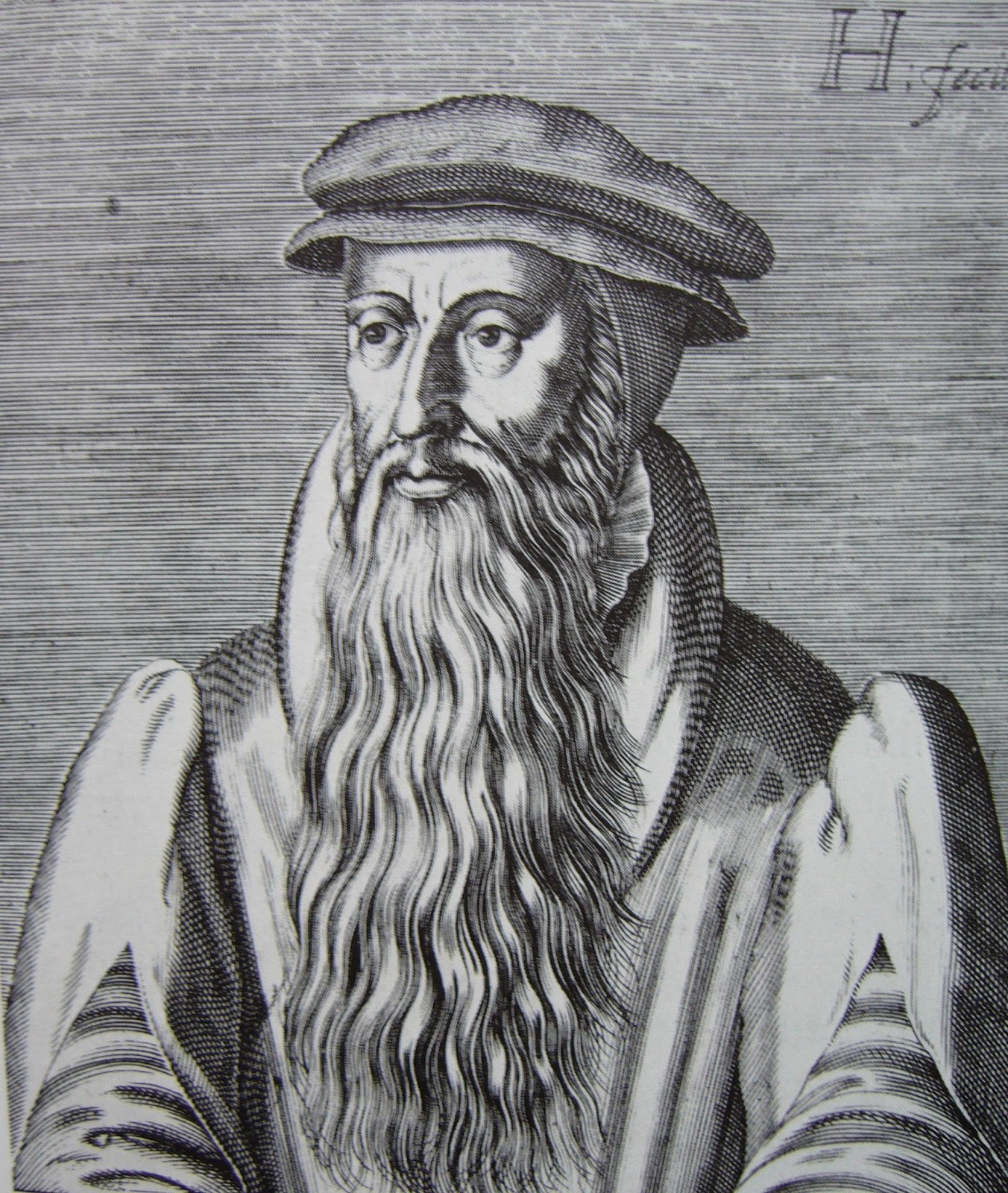
John Know woodcutting
Marie de Guise may have been brought up in a convent, but she displayed remarkable tolerance towards her Protestant subjects – unlike Mary Tudor who sent countless martyrs to the stake. The controversial burning of Walter Milne in 1558 was by order of Archbishop Hamilton, and during 1555-56 she allowed Knox to carry out his preaching tour of Scotland (much to Hamilton’s chagrin) though she famously brushed aside his attempt to convert her – a snub Knox never forgave.

Marie did not escape the lash of John Knox’s vitriolic tongue in his notorious tract, The First Blast of the Trumpet against the Monstrous Regiment of Women –not, as is commonly supposed a sexist rant against a battalion of battleaxes, but a denunciation of female rule – Mary Tudor, Mary of Guise and Mary, Queen of Scots. To be fair, Knox was voicing what most men of the time believed – that being weak, vacillating and immoral creatures, women were unfit to hold power – though much more vociferously.

Despite her policy of tolerance and non-persecution, a group of the lords banded together in December 1557 to sign the first covenant, ostensibly to establish the Protestant faith in Scotland but more likely to gain the rich properties held by the Roman Catholic Church. For Marie suspected the grubby mitts of Mammon rather than the divine hand of God guided the motives of these Lords of the Congregation.

With the threat of the Catholic Anglo-Imperial partnership south of the border (Mary Tudor had married Philip of Spain) the lords pushed for Mary’s marriage to the dauphin in 1558 as the lesser of two evils. However, the commissioners sent to negotiate the marriage contract were unaware of the secret documents signed by Mary stating that, in the event of her death, France would retain the kingdom and revenues of Scotland until all the expenses incurred for Scotland’s defence and Mary’s education had been repaid. In other words, France would gain full control of Scotland. What would the Congregations’ reaction have been if they’d found out? The marriage took place in April 1558 but with Mary Tudor’s premature death in November, the game of thrones changed once again.

The Protestant Rebellion

Emboldened by the accession of the Protestant Elizabeth and the removal of the Habsburg threat, the Lords of the Congregation became more forceful in their demands for reform. On 1 January 1559, an anonymous notice, the ‘Beggars’ Summons’, was pinned to the door of every religious house in Scotland warning the friars that if they did not hand over their property to the poor and infirm by Whitsunday they would be evicted.

Spurred into action, Marie ordered the four most outspoken preachers to answer charges of usurping the ministerial office and preaching sedition, but they refused. To show their support for the preachers, a multitude assembled in Perth ready to march on Stirling. Taken by surprise, Marie could not imagine that this act of defiance would spark a wholesale rebellion in Scotland, a civil war led by John Knox.

Invited by the Lords of the Congregation, Knox had left Geneva and landed in Scotland on 2 May 1559. On 11 May he preached a fiery sermon at St John’s Kirk of Perth that provoked riots and destruction throughout Perthshire and Fife.

Over the next few months a bitter civil war ensued with defeats and victories on each side and agreements drawn up only to be broken again. The French ambassador’s report best sums up the sorry state of affairs in mid-16th century Scotland:
Because of the aforesaid divisions, the realm of Scotland was, and still, is at the present time under arms, for all the friends of one faction mistrust all those of the other faction so much so that not merely is the nobility in arms, but churchmen, friars and country people only travel through the countryside in large companies, all armed with pikes, swords and shields.
Suffice to say that there was deceit and dissimulation on both sides and downright treachery on the part of the lords.

At first Marie had the support of her stepson, Lord James Stewart, and the Earl of Argyll, husband of her stepdaughter, and Secretary William Maitland, but when she broke the Perth Agreement by garrisoning the town with soldiers in the pay of France, they defected to the other side.

When Marie ordered a contingent of French troops to fortify Leith, Arran, now Duke of Châtelherault, used this as an excuse to switch allegiance. Ever the opportunist, he had been conspiring with Elizabeth’s principal adviser, William Cecil, to unite the two countries by putting his son on the Scottish throne and wedding him to Queen Elizabeth. An even more serious danger was the treachery of Marie’s secretary Maitland who betrayed her plans to the Congregation.

After Henri II’s death from a jousting wound in July 1559, the new monarch and son-in-law François sent a fleet to Scotland, but it was driven back by storm to Calais. In the meantime Knox, Maitland and Châtelherault had been negotiating with Cecil and in February 1560 signed the Treaty of Berwick giving Elizabeth I the right to military intervention and renouncing the Franco-Scottish Auld Alliance. In March 1560 when an English army invaded Scotland Marie took refuge in Edinburgh Castle.

Death

All this stress was taking its toll on Marie who was now showing signs of heart failure. Despite suffering from dropsy, she battled on, pleading with her lords to break from England – in vain as one by one they deserted her. By 1 June she was gravely ill – her mind began to wander and she was unable to eat and speak at times. Knowing she was near to death she wrote her will and sent for the lords including James Stewart, Châtelherault and the Earl of Argyll. After pleading with them to maintain the French alliance she begged their forgiveness if she had ever offended them and forgave them for all their offences against her. For some reason she consented to a visit from the Protestant preacher John Willock, a colleague of Knox, rather than her French bishop.

Shortly after midnight on 11 June 1560 she died in her 45th year. Her body was placed in a lead coffin and taken to St Margaret’s Chapel on the highest point of the castle rock where it lay until being transferred to France in March 1561 to be buried in the abbey church where her sister Renée was abbess. Marie had come full circle.

Mary of Guise Commemorative Tablet at Edinburgh Castle

Two symbols are attributed to Marie de Guise. One, a crown set above a rock beaten by winds and waves, bears the motto Adhuc stat – And still it stands. The other, according to Margaret Swain, is a phoenix, the bird that rises anew out of the ashes from the flames that destroyed it. It has the motto that her daughter chose to embroider on her cloth of state: En ma fin gît ma commencement – In my end is my beginning. Added together both symbols and mottoes sum up the arduous life of this remarkable woman.

Bibliography

Ritchie, Pamela E., Mary of Guise in Scotland, 1548-1560 (2002)
Dawson, Jane E. A., Scotland Re-Formed 1488-1587 (2007)
Dawson, Jane, John Knox (2015)
Marshall, Rosalind K., Mary of Guise (2001)
Merriman, M.H., The Rough Wooings: Mary, Queen of Scots, 1542-1551 (2000)
Swain, Margaret, The Needlework of Mary, Queen of Scots (1973)

All illustrations are in the public domain.
*https://commons.wikimedia.org/wiki/File:Cardinal_David_Beaton.jpg#/media/File:Cardinal_David_Beaton.jpg

~~~~~~~~~~~~~

Scottish author Marie Macpherson writes historical fiction set in the 16th century during the turbulent time of the Scottish Reformation. Her first novel in the Knox Trilogy, The First Blast of the Trumpet (published by Knox Robinson Publishing 2012) is a fictional account of the early, undocumented life of the reformer, John Knox.

Marie de Guise’s valiant struggles to preserve her daughter’s throne are depicted in the second book of the Knox trilogy. The Second Blast of the Trumpet, due out in 2016, follows Knox’s life after his release from the galleys; his exile in England and Geneva, his marriage to Marjory Bowes (as well as his relationships with other women), the circumstances that led him to write his notorious tract, The First Blast of the Trumpet against the Monstrous Regiment of Women and his role in the Protestant uprising of 1559-60.

Blog
Facebook
Amazon


Tuesday, May 26, 2015

Terrorism: 1582

by Barbara Kyle

"It's all so familiar in our own deplorable time: torture...spies and counter-spies...mutually exclusive faiths, the cult of martyrdom...projects for exterminating the liberties of peoples...the implacable hates, the use of assassination, the division of families, the riving asunder of friends, and the conflict within the individual conscience itself, which tore men's hearts open." - A.L. Rowse, The England of Elizabeth

Queen Elizabeth I

Elizabeth's Dilemma

In 1582 Elizabeth Tudor, age forty-nine, had ruled England for twenty-three years, and under her reign the country had enjoyed peace and increasing prosperity. But her throne, and her life, were under constant threat. Religion was the cause.

Elizabeth's first act as Queen in 1559 had been the Act of Supremacy. It had made the realm Protestant and confirmed the monarch's position as head of the English church, without doing violence to Catholics. Elizabeth herself advocated religious tolerance, saying she had "no desire to make windows into men's souls," but she knew that strong leadership was needed to restrain the growing antagonism between Puritans and Catholics, and she hoped her religious settlement would unify them.

It did not. Neither side was satisfied.

The Puritans felt she had not taken England far enough away from "papist" customs, while Catholics considered her a heretic and found the concept of a woman as head of a church grotesque. They believed her Catholic cousin, Mary Stuart, Queen of Scotland, was the rightful claimant to the English throne, one who acknowledged the supreme authority of the pope.

Mary Queen of Scots


Enter Mary, Queen of Scots

In 1568 Mary was deposed in her own country and fled to England seeking Elizabeth's help, but Elizabeth, anxious that Catholics would rally around the Queen of Scots, put her under house arrest. Mary's supporters in England and abroad were outraged.

Mary herself, though comfortably lodged in a series of castle suites, chafed at her captivity and secretly communicated with leaders who were eager to free her by insurrection or invasion, or both.

In 1570 Pope Pius V issued an edict of excommunication against Elizabeth that called on Catholics throughout Christendom to rise up and depose her. This emboldened English Catholics in their opposition to the Church of England, and many refused to attend their parish churches. Known as "recusants" (from the Latin recusare, to refuse), these dissenters faced heavy fines.


A Hinge of History

In France, in August 1572, on the feast day of St. Bartholomew, the country's Catholic rulers instigated a savage attack on French Protestants, the Huguenots. In a convulsion of religious violence, over three thousand men and women were slaughtered in Paris by mobs of their Catholic neighbors. The carnage spread throughout France, claiming seventy thousand Huguenot lives.

The St. Bartholomew's Day Massacre sent shock waves through England. The Protestant island nation, its population far smaller than that of powerful France, was galvanized by fear.

St. Bartholomew's Day Massacre

Licence to Kill

Elizabeth had at first been lenient with Catholic recusants; they were merely fined. But in 1580 the threat to her became dire when Pope Gregory XIII, reinforcing the anathema against her, issued a declaration that it would be no sin to assassinate her. It was a clear licence to kill.

Assassination plots multiplied. Jesuit infiltrators from abroad fomented insurrection. Mary Stuart's supporters pledged to free her by force of arms. Elizabeth's government leaders discovered and thwarted the plots, but in their acute alarm they became more aggressive in rounding up agitators, real and perceived. Punishments became harsh: no longer mere fines, but imprisonment and, in some cases, death.

By 1582 England, feeling under siege, was in the grip of mind-darkening terror.

Note: The quote at the top of this post is by eminent Elizabethan historian A.L. Rowse. His words sound eerily apt for our own paranoid times.
________________________________________________________________

The above is the Historical Preface that opens my new historical thriller, The Traitor's Daughter.

The Traitor's Daughter is the latest in my internationally published Thornleigh Saga series. The seven-book series follows a middle-class English family's rise through three tumultuous Tudor reigns. I hope you'll enjoy them all.

For details please see www.BarbaraKyle.com


“Riveting Tudor drama in the bestselling vein of Philippa Gregory”
USA Today on The Queen's Exiles

“A heart-stopping thriller...Kyle is a master at her craft.
RT Book Reviews on The Queen's Exiles


"Riveting, adventurous...superb!"
- Historical Novel Society on The Queen's Gamble


Thursday, April 23, 2015

April 24 1558 - April 24 1567: The Nine Year Descent of the Queen of Scots

by Linda Root

APRIL 24th IS MY BIRTHDAY. IT IS ALSO THE DATE OF THE QUEEN OF SCOTS’ MAGNIFICENT DEBUT ON THE WORLD STAGE, AND THE DATE OF HER MOST CONTROVERSIAL MISADVENTURE.  COME SHARE IT WITH ME:

April 24, 1558 – Notre Dame d’ Paris

Victor Hugo's Hunchback of Notre Dame
(Cathedral depicted as circa 1600)
Wikimedia Public Domain
There was no butter or chocolate available for purchase anywhere near Paris. The city had long been sold out of silks, brocades, and Belgium lace. Aristocratic women who had failed to plan ahead were savaging their draperies because there was no other velvet to be had. No French king or heir apparent had been married at Notre Dame d' Paris  in living memory. The parents of the groom,  Henri II and his consort Catherine d' Medici,  had been married in Marseilles, and his father Francis I, at Saint Germain en Laye. None of Louis XII’s three wedding masses had been celebrated in the City of Light.  Although the betrothal had not become official until the week before, the prenuptial agreement had been solemnized at Stirling in Scotland when the bride-to- be was not yet five and the absentee bridegroom, barely four. The forthcoming wedding gave Parisians a long-awaited cause to celebrate.

1558 was a grand year for a French royal wedding. The bride’s uncle Francois, Duke of Guise had expelled the English from the Pas de Calais. Francois had abrogated the embarrassment of Agincourt.  On the other side of the coin, the English waged a successful siege of  St. Quentin, trapping  Francois' rival Duke Anne de Montmorency inside the city. Montmorency's detention cleared the way for the Duke of Guise  to act as Master of Ceremonies at his niece's wedding.

The mistress of the ceremony was indeed the bride. Sixteen-year-old Marie Stuart had been the anointed Queen of Scots since six days old and was comfortable in the limelight. She had lived in France since she was five and was already a  celebrated beauty and a crowd pleaser. In every respect other than being born of a Scottish King, she was a French girl. If you have read this in my other posts, I cannot emphasize it too much.  Portrayals of the Queen of Scots glossing over her French childhood (i.e., Reign) do a disservice to their audience.

It is regrettable there are no paintings of the wedding at Notre Dame. We are left to contemporary reports of bystanders and our imaginations. In all accounts, it was a public spectacle of unprecedented grandeur. The ceremony was orchestrated to allow ordinary citizens of Paris  a view of the procession and much of the ceremony. Duke Francois was a perfect host, tossing large sums of money to the assembled crowd amid cries of ‘Largesse, Largesse.’

The bride entered the cathedral on the arm of the King. She wore her hair down, and her gown was white--both departures from tradition.  Queen consort Catherine de Medici had vehemently disapproved of the choice of white for the bridal gown, and the issue was taken to Henri II  to arbitrate.  He sided with his future daughter-in-law. The dress was so heavily encrusted with pearls and other precious jewels that its train was difficult for Marie’s attendants to manage. Celebrations went on for days. After-parties arranged to entertain  visiting Scottish dignitaries and foreign ambassadors continued for the better part of a year.

Duke of Guise, Clouet
The Paris  Aprils  1559—April 1560:  

Although the focus of European royalty was still on Paris in April of 1559, developments on the world stage occurred  which impacted Marie Stuart’s life. The most significant was the death of England’s Catholic Queen Mary Tudor; a sad childless woman married to Philip of Spain who had  the audacity to claim she  smelled bad. According to the Will of Henry VIII and the Act of Succession, the English crown passed to Elizabeth Tudor, the strong-willed Protestant daughter of Anne Boleyn. At this point, the Queen of Scots seriously miss-stepped: No doubt at the provocation of her Guise uncles, the Dauphiness began quartering the arms of England alongside those of Scotland and France. The Queen of Scots had unwittingly taken her first steps toward the block at Fotheringhay by questioning her cousin’s right to rule at a time when Elizabeth I was vulnerable. Her act displayed a foreboding political naiveté and a tendency to follow an agenda written by others.

Elizabeth Coronation portrait 1559
By her third wedding anniversary, the Queen of Scots was Queen consort of France due to a jousting accident claiming the life of her father-in-law.With frail, insipid Francois II as its King, France was in the control of the Duke of Guise and his  brother Charles, Cardinal of Lorraine. Two events occurred to mar the carefree lifestyle of the young King and Queen.  An ill-conceived Huguenot plot to free France of its ultra-Catholic  overlords culminated at Amboise in the Spring of 1560. Although it failed miserably, it exposed the religious divisions plaguing France. In summer, amidst political unrest terminating her regency, Marie’s mother Marie d Guise died at Stirling.

 The  worst was yet to come.  Within days of Marie Stuart’s eighteenth birthday, her childhood confidant and adoring husband Francois II died, apparently of a brain abscess.  The new widow spent her birthday in mourning interrupted when her mother-in-law sent  agents to recover the crown jewels. Her family’s efforts to arrange another European royal marriage were stifled by Catherine de Medici, who ruled France as regent for her young son Charles. If Marie were to be a queen, it would be as Queen of Scotland, an alternative she considered a last resort.

The Scottish years: By April 24, 1561, her third wedding anniversary, Marie Stuart had run out of options. Four months later she sailed into Leith Harbor to begin her personal rule as Queen of Scots.  Although gently bullied by her half-brother James Stewart and maligned by a Protestant clergy led by the irascible John Knox, the Queen of Scots was determined to make the best of it. She spent the first year of her personal rule negotiating a face to face meeting with Elizabeth. Her foreign minister William Maitland did his best to arrange a meeting in York, but  factions on each side of the border sabotaged it. Marie Stuart’s objective was to be named Elizabeth’s heir apparent, which created issues with English Protestants. Meanwhile, Marie continued to search for a suitable husband amongst European Catholic royalty, which did not sit well with either Elizabeth or the Scottish Kirk.

Marie Stuart as a widow, Clouet
There were high points in Marie Stuart’s early reign, notably when she followed the advice of her brother James,  whom she made Earl of Moray, and her foreign secretary  Maitland. With Moray as a comrade in arms, she waged a successful armed expedition against the powerful Catholic Earl of Huntly, which pleased her English cousin. Nevertheless at the end of 1563 she still had failed to come to  terms with her cousin to the south. A successful foreign policy and the establishment of a seaworthy Navy made Elizabeth Tudor a new power on the European stage. European royals were in no hurry to offend her by catering to her charming but less politically astute cousin's marital agenda.  By April 24th, 1563, Marie was acutely aware of the need to secure her throne by producing an heir. Serious problems began when she ignored the advice of her brother and refused to give Elizabeth a right to nay say her choice of husbands, a prerequisite to being named her heir.

The situation developing was much more complicated than a rivalry of Queens. The same problem that was met head on in 2014 was a factor in 1563—the issue of Union. Many astute 16th century Scots including Maitland, Morton, Moray and Kirkcaldy realized a prosperous and Protestant Scotland required peace along the Borders. A permanent end to the Border Wars was best obtained through a Union of the Crowns. Such a premise was utterly alien to the Queen, whose  world view and loyalties were with the French. To Marie Stuart and other Francophiles, the Auld Alliance was very real. However, to most Scots, the Border Wars were devastating to Scotland and often instigated by its Auld Ally when a diversionary bush war in Scotland was in the French interest.
The Scottish view of the monarchy was a second factor sealing Marie Stuart's doom. Early Stuart Royals were Divine Right Monarchs, but the Scottish aristocracy had a different view of what constituted a right to rule. There was a nascent Republicanism in Scottish thought long before Marie Stuart came on the scene. Scots, not God had the final word as to who should be a Scottish sovereign. None of this was part of Marie Stuart’s mindset. She believed the rhetoric calling Elizabeth a heretic and a bastard and that she, not Elizabeth, was England’s rightful Queen. Consequently, when her brother and other advisors told her to acquiesce to Elizabeth's nominee for a second husband, she balked.

Premier Marian historian John Guy states the Queen sealed her fate when she married her English cousin Henry Stuart, Lord Darnley. Guy's arguments are sound, but the seed of doom was planted earlier when she quartered the arms of England along with her own. Elizabeth was so successful at recreating herself as Gloriana that it is easy to overlook how fragile her grasp on the English throne was when she ascended in 1558. Marie’s competing claim was more than an insult instigated by French Catholics. It was a genuine threat. Elizabeth’s bullying of Marie over her choice of husbands  was at the  least a subtle pay-back.


Darnley, Wiimedia Commonds PD Art
History makes such short shrift of Henry Stuart that it is easy to suspect he was Elizabeth's minister Cecil’s plant. At nineteen, he had a reputation as an arrogant, promiscuous, mollycoddled brat. Even Cecil, who was no fan of sending  Catholic Darnley to become Scottish consort, figured he would not last long. He expected  Moray to see right through Darnley and send him back. When Moray publicly declared Darnley a disaster in the making, his love-starved sister threw Moray out and married  Cousin Henry. Not all Scots disfavored the Darnley marriage. As Henry VII’s great grandchild, his claim to the English throne mirrored Marie’s without suffering the disability of her foreign birth. Anglophiles like Maitland viewed the marriage as a guarantee of Union under a Stuart succession should  Elizabeth die without issue.  But Darnley could not behave himself for long.  By winter, Marie's advisers sided with Moray and so did the unhappy, pregnant Queen. 

A series of bizarre events plagued her pregnancy. First, Maitland convinced Darnley he had been cuckolded. Darnley in turn partnered with the Douglas faction and murdered the Queen's favorite David Rizzio in her presence. Finally, he double-crossed the Douglases and sided with the Queen, assisting in her escape. When the air cleared, Marie saw Darnley  as a danger to her unborn child. In spite of occasional public displays of domestic harmony that fooled no one, she and Darnley were estranged.  After the Prince’s christening in December 1566 which Darnley boycotted, he fled to his father Matthew Stuart’s Lennox earldom near Glasgow. From there he began to plot against his wife. He guessed the Douglases, Maitland, and the Queen's friend James Hepburn were planning to kill him. As modern political philosopher Henry Kissinger observed, even paranoid schizophrenics have enemies.
 .
Darnley was suffering from what is believed to have been tertiary syphilis and fell ill shortly after arriving in Glasgow. The queen traveled there to bring him back. One of history’s great mysteries centers on her motive. Was she delivering him into the lion’s den knowing he was marked for murder, or was she caging him in a velvet prison lest he kill her first?  It may have been a bit of both. On February 10, 1567, his lodgings at Kirk o' Field exploded, and he was found strangled in a nearby garden.

Wikimedea Commons, Drury Sketch of crime scene at Kirk o' Fields

April 24th, 1567:

By the Spring of 1566-67, the widow had chosen a new shoulder on which to lean. James Hepburn, Earl of Bothwell,  was a border firebrand whose most redeeming characteristic was his unwavering loyalty to both Marie de Guise during her regency and later, to the Queen. What part he played in Darnley's death is a topic for a tome, and I shall not explore it here.  He did not appear suddenly on the scene as Darnley had done two years earlier. The Earls of Bothwell were traditional powers in Scottish politics. Both Hepburn and his father were opposed to an alliance with England, although they were avid Protestants. Lord James was among a handful of men Marie trusted to reside in Edinburgh Castle during her lying-in prior to the birth of the Prince. He had never catered to Darnley and had been a secondary target in the Rizzio murder. Although he was a notorious womanizer, there is no credible evidence linking him and the queen sexually until Darnley's father Lennox  fueled the rumors.

When, then, did Bothwell become the Queen’s lover and more specifically, what happened between them on the 24th of April, 1567? The issue is unresolved, but the clues are out there. Unfortunately, most of them address the Queen's behavior rather than exploring what was going on with Bothwell, although  he is the prime mover in the following events.  To that end, I offer a caveat: none of the actions of the parties can be judged by 21st Century standards. With that in mind, the following facts suggest a different answer than expected. Mayhap the rape was genuine.
~~
James Hepburn was a sexually attractive man, as attested by the ease of his many conquests. From the sophisticated Norwegian heiress Anna Trondsen and the icy Lady Jean Gordon to the siren Janet Beaton, who raised his illegitimate son, the women who knew him took the risks that went along with a relationship.

The Wizard Lady of Buccleugh-Braxtome, Janet Beaton
Wikimeia Public Domain

Hepburn’s womanizing was well known.  Nevertheless, the new widow frequently conferred with Bothwell in the privacy of her chambers during her period of mourning after Darnley’s death.

The privy council and other leading Scots knew something was brewing between the Queen and Bothwell by early April. Bothwell hosted a dinner party either at Ainslee’s tavern or in his apartments at court, and his guests put their names to a bond presenting him to Marie as their nominee to become her third husband.

In contrast, the Queen was sexually inexperienced. Her marriage to Francois was likely unconsummated.  His testicles had not descended at the time of his death at age seventeen. Although she was schooled in the practices of courtly love and had flirted with the  poet Chatelard and entertained her secretary Rizzio in her chambers at all hours, there is no evidence she regarded her behavior as compromising. Obviously her relation with Darnley was sexually charged but of relatively brief duration. Weeks after the wedding he was back to the brothels and the Queen was at the gaming tables playing cards with Rizzio.

On the day after Bothwell’s dinner party, Hepburn and Maitland rode to Seton House to present the bond proposing a Hepburn marriage to the Queen. She rejected it on the grounds it might cast doubts upon her honor. Maitland had been recruited to accompany Hepburn to give the proposal credibility.  The two men were not friends. Bothwell never considered Marie might turn him down, or he would not have let a man he despised witness his humiliation.

A final point worthy of consideration concerns the prevalent mores. In 16th Century Scotland, carrying a reluctant female off and raping her was not an uncommon means to force marriage on a reluctant bride, even among aristocrats. Others had contemplated it with the Queen including John Gordon, and possibly his father Huntly, as well as James Hamilton 2nd Earl of Arran.


To innocent observers, Marie and Bothwell were  conducting business as usual the day after she rejected his proposal.  Bothwell had pressing business on the Borders. Marie traveled to Stirling Castle where she intended to relieve the Earl of Mar of the custody of her son. She planned to transfer his guardianship to Bothwell when she returned to Edinburgh.
But that is not what happened.

On April 24th,  after having been refused the custody of her son by Mar, Marie headed back to Edinburgh with Maitland, Sir James Melville, two ladies and thirty retainers. Bothwell and an army of his Borderers waylaid the Queen's entourage at Foulmouth near a bridge over the Almond River. Marie ordered her escort to stand down. Bothwell and his men took control of the Queen, Maitland, and Melville and hauled them off to Dunbar. When they arrived, Bothwell allegedly raped the Queen and boasted to Maitland he had solved her honor problem.

When Melville was released to deliver a message from the Queen to her people excusing Hepburn’s conduct, the citizens of Edinburgh had armed themselves with broom handles, picks, and pitchforks.  When a contingent reached Dunbar, it was clear the Queen did not desire a rescue. A few days later she went to Hepburn’s family's estate at Hailes and  taught him the game of golf. When they returned to Edinburgh, the Queen was in Bothwell’s physical control and clearly in his thrall. The Queen of Scots had lost her credibility with her people.

In May, Marie Stuart married Bothwell in a Protestant ceremony that had her in tears. The ceremony was followed by a wedding breakfast to which the public was invited, but few came. On the 15th of June, the pregnant Queen of Scots surrendered to the Protestant lairds at Carberry Hill on the condition Bothwell would go free. Within days, she was imprisoned at Loch Leven Castle in the custody of her brother Moray’s mother.  On July 24th, 1567, she was forced to abdicate in favor of her son James whom she never saw again.

The battlefield at Carberry-Pd Wikimedia Commons

There are three versions of what occurred at Dunbar. One presumes Hepburn raped the Queen. Another suspects she surrendered her virtue willingly. A third claims the kidnapping was a well-planned farce. The  choice is ours to make.

~~


Linda Root is the author of The First Marie and the Queen of Scots and The Last Knight and the Queen of Scots in the Queen of Scots Suite (http://www.amazon.com/s/ref=nb_sb_noss?url=search-alias%3Daps&field-keywords=The+Queen+of+Scots+Suite) and The Legacy of the Queen of Scots series including The Midwife’s Secret: The Mystery of the Hidden Princess; The Other Daughter: Midwife’s Secret II; 1603: The Queen’s Revenge, and In the Shadow of the Gallows(coming soon).( http://www.amazon.com/s/ref=nb_sb_noss?url=search-alias%3Daps&field-keywords=The+Legacy+of+the+Queen+of+Scots).
As J.D. Root, she has also published the first in her Daemons Ghosts & Guardian series, The Green Woman: A Scottish Fantasy. She lives in Yucca Valley, California with husband Chris, two Alaskan Malamutes, 20 hens and a chicken named Henry 8.