
by Judith Arnopp
Kings, especially Tudor kings, could have everything they wanted. Power, property, wealth, women, it was all theirs with a click of the fingers yet, for many years, Henry VIII was denied one thing – a son and heir to follow him.
In 1519, less than forty years after Bosworth, the Tudor dynasty was still young, and it was Henry’s job to ensure it continued to flourish. The responsibility weighed heavily on his shoulders and, as Catherine of Aragon suffered more and more miscarriages, and the sons she did bear died in infancy, his need became an obsession.
With just one legitimate daughter, Mary, Henry was becoming desperate. Imagine his frustration when his mistress, Elizabeth Blount, with no trouble at all produced a healthy son. The temptation to turn his bastard into something more was irresistible. They named the child Henry.
Just to ensure that no one was mistaken, the name Fitzroy which means 'the king’s son', was often given to base-born male offspring, but although it is likely there were a good few more, Henry Fitzroy is the only illegitimate child that the king acknowledged.
Shortly after he was born, Elizabeth was married to Sir George Talboys and assigned several manors in Lincolnshire and Yorkshire. A mark of favour, or perhaps gratitude, for providing the king with what his wife could not.
While the relationship between Henry and Elizabeth ceased, he continued to show Fitzroy favour. At his christening it was Cardinal Wolsey who stood as Godfather, and by the time he was six young Henry was made Knight of the Garter, and created Earl of Nottingham and Duke of Richmond and Somerset. This double dukedom ensured that he took precedence over all other dukes in the land, barring the King’s lawful issue – should he have them.
He was also appointed King’s Lieutenant-general north of Trent, and Keeper of the City and Castle of Carlisle.This may seem a lot for a small boy, but it didn’t stop there, and by the time of his death in 1536 he was Lord |High Admiral of England, Wales, Ireland, Normandy, Gascony, and Aquitane, with a further commission as warden general of the Scottish marches thrown in for good measure.
Throughout his life he acquired castles, land and immense fortune, making him the richest man in England after the King. With the breakdown of Henry and Catherine’s marriage, and the advent of Anne Boleyn and the failures of that union, it soon became clear that, in the absence of a legitimate son, Fitzroy would be Henry’s heir. Nothing, bar the birth of a legitimate son, could stop it.
Henry Fitzroy received an education to match his status. Although often at court, he was resident in King’s College, Cambridge and taught by Richard Croke, a pioneer of Greek Scholarship in England, and John Palsgrave, another eminent scholar. By the time he was ten young Henry was reading Caesar, Virgil, Terence, and speaking Greek.
Henry VIII, proud of his son, despite the stain of his birth, lost no time in proposing matrimonial alliances beneficial to England, attempting to wed him into the family of Pope Clement VII, to a Danish princess, a French princess, and a the sister of Charles V who later became Queen of France.
In spring 1532 Fitzroy spent some time at Hatfield, accompanying Henry VIII to Calais in the autumn. He moved on to Paris, staying with his friend the Earl of Surrey until September 1533. And, later that year, at the age of fourteen, possibly at the instigation of Anne Boleyn, he married Mary Howard, daughter of Thomas, the third Duke of Norfolk by his second wife. The marriage was never consummated due to their age. Thereafter plans for him to go to Ireland were abandoned, and he remained at court in the midst of the furor surrounding the reformation and the downfall of Anne Boleyn.
He is recorded as being present at the execution of the Carthusians in May 1535 and was one of the peers at Anne Boleyn’s trial, witnessing her execution as Henry’s representative in May 1536. Fitzroy benefited both in wealth and status from Anne’s death and those that died with her.
Among Anne’s detractors there were rumours of jealous rivalry between Fitzroy and the Boleyns and whispers that she and her brother, Rochford, plotted to poison him. His death was more likely to have been due to consumption or possibly plague.
Fitzroy’s death in July, just two months after his stepmother, must have proved devastating for the King who, having disinherited both his daughters by this time was left temporarily heirless. But Henry VIII had a new wife and was pinning all his hopes on Jane, who was already pregnant, perhaps with a legitimate son this time. One that would live.
Henry Fitzroy was not given a state funeral as one might expect after his royal upbringing; the arrangements were left to his father in law, the Duke of Norfolk. He is believed to be interred at Thetford Priory with other members of the Howard family. After Fitzroy’s death it was decreed that, since the marriage was not consummated, the marriage was invalid, consequently stripping his widow of her benefits.
~~~~~~~~~~~~~
Judith Arnopp is the author of seven historical novels; three set in the medieval and four in the Tudor period. Details can be found here.

Illustrations
 |
| Henry Fitzroy Duke of Richmond and Somerset (1519-36) |
Kings, especially Tudor kings, could have everything they wanted. Power, property, wealth, women, it was all theirs with a click of the fingers yet, for many years, Henry VIII was denied one thing – a son and heir to follow him.
In 1519, less than forty years after Bosworth, the Tudor dynasty was still young, and it was Henry’s job to ensure it continued to flourish. The responsibility weighed heavily on his shoulders and, as Catherine of Aragon suffered more and more miscarriages, and the sons she did bear died in infancy, his need became an obsession.
With just one legitimate daughter, Mary, Henry was becoming desperate. Imagine his frustration when his mistress, Elizabeth Blount, with no trouble at all produced a healthy son. The temptation to turn his bastard into something more was irresistible. They named the child Henry.
Just to ensure that no one was mistaken, the name Fitzroy which means 'the king’s son', was often given to base-born male offspring, but although it is likely there were a good few more, Henry Fitzroy is the only illegitimate child that the king acknowledged.
Shortly after he was born, Elizabeth was married to Sir George Talboys and assigned several manors in Lincolnshire and Yorkshire. A mark of favour, or perhaps gratitude, for providing the king with what his wife could not.
While the relationship between Henry and Elizabeth ceased, he continued to show Fitzroy favour. At his christening it was Cardinal Wolsey who stood as Godfather, and by the time he was six young Henry was made Knight of the Garter, and created Earl of Nottingham and Duke of Richmond and Somerset. This double dukedom ensured that he took precedence over all other dukes in the land, barring the King’s lawful issue – should he have them.
 |
| Duke of Ricmond |
Throughout his life he acquired castles, land and immense fortune, making him the richest man in England after the King. With the breakdown of Henry and Catherine’s marriage, and the advent of Anne Boleyn and the failures of that union, it soon became clear that, in the absence of a legitimate son, Fitzroy would be Henry’s heir. Nothing, bar the birth of a legitimate son, could stop it.
Henry Fitzroy received an education to match his status. Although often at court, he was resident in King’s College, Cambridge and taught by Richard Croke, a pioneer of Greek Scholarship in England, and John Palsgrave, another eminent scholar. By the time he was ten young Henry was reading Caesar, Virgil, Terence, and speaking Greek.
 |
| Arms of Henry Fitzroy |
Henry VIII, proud of his son, despite the stain of his birth, lost no time in proposing matrimonial alliances beneficial to England, attempting to wed him into the family of Pope Clement VII, to a Danish princess, a French princess, and a the sister of Charles V who later became Queen of France.
In spring 1532 Fitzroy spent some time at Hatfield, accompanying Henry VIII to Calais in the autumn. He moved on to Paris, staying with his friend the Earl of Surrey until September 1533. And, later that year, at the age of fourteen, possibly at the instigation of Anne Boleyn, he married Mary Howard, daughter of Thomas, the third Duke of Norfolk by his second wife. The marriage was never consummated due to their age. Thereafter plans for him to go to Ireland were abandoned, and he remained at court in the midst of the furor surrounding the reformation and the downfall of Anne Boleyn.
He is recorded as being present at the execution of the Carthusians in May 1535 and was one of the peers at Anne Boleyn’s trial, witnessing her execution as Henry’s representative in May 1536. Fitzroy benefited both in wealth and status from Anne’s death and those that died with her.
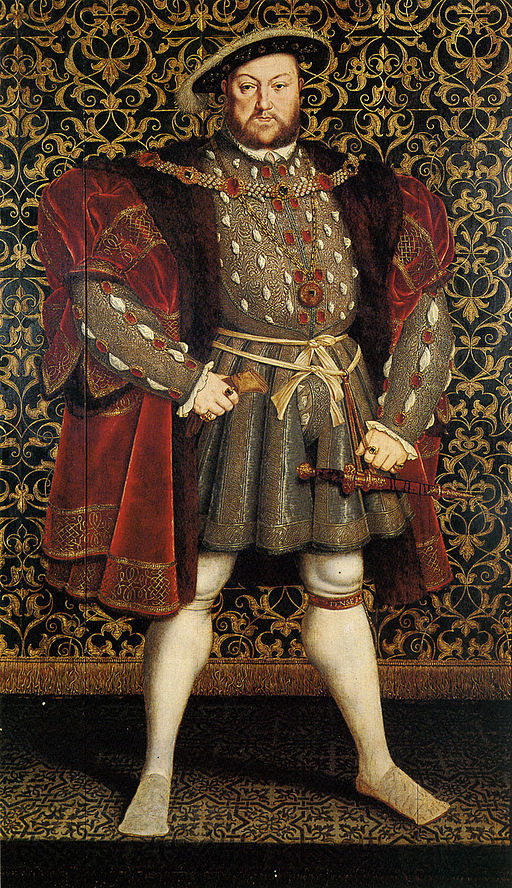 |
| Henry VIII |
Among Anne’s detractors there were rumours of jealous rivalry between Fitzroy and the Boleyns and whispers that she and her brother, Rochford, plotted to poison him. His death was more likely to have been due to consumption or possibly plague.
Fitzroy’s death in July, just two months after his stepmother, must have proved devastating for the King who, having disinherited both his daughters by this time was left temporarily heirless. But Henry VIII had a new wife and was pinning all his hopes on Jane, who was already pregnant, perhaps with a legitimate son this time. One that would live.
Henry Fitzroy was not given a state funeral as one might expect after his royal upbringing; the arrangements were left to his father in law, the Duke of Norfolk. He is believed to be interred at Thetford Priory with other members of the Howard family. After Fitzroy’s death it was decreed that, since the marriage was not consummated, the marriage was invalid, consequently stripping his widow of her benefits.
~~~~~~~~~~~~~
Judith Arnopp is the author of seven historical novels; three set in the medieval and four in the Tudor period. Details can be found here.

Illustrations
1. Henry Fitzroy http://upload.wikimedia.org/wikipedia/commons/0/02/Lucas_Horenbout_-_Henry_Fitzroy%2C_Duke_of_Richmond_and_Somerset_%281519-36%29_-_Google_Art_Project.png
2. The Duke of Richmond sometimes thought to be Edward of Middleham. http://upload.wikimedia.org/wikipedia/commons/4/44/DukeofRichmond1.gif
3. Henry VIII by Holbein http://upload.wikimedia.org/wikipedia/commons/0/07/Workshop_of_Hans_Holbein_the_Younger_-_Portrait_of_Henry_VIII_-_Google_Art_Project.jpg
4.http://upload.wikimedia.org/wikipedia/commons/5/50/Arms_of_Henry_FitzRoy%2C_1st_Duke_of_Richmond_and_Somerset.svg
Further reading:
Elizabeth Norton: Bessie Blount: Mistress to Henry VIII
Susannah Lipscombe: 1536: The year that changed Henry VIII
Amy Licence: In Bed With the Tudors


,_1er_Duc_de_Grafton.svg.png)


