Imagine, if you can, being a member of a fiercely proud island nation with a reputation for bleak weather and stubbornness, somewhere just off the forbidding Atlantic coast of mainline Europe. Factor in years of economic decline set against a background of anti-immigrant fear and a growing sense of dislocation from the rest of the civilised world. Now consider how it might feel to be facing an imminent break with the rest of the continent and all the financial and social uncertainty that such a fundamental change in government would bring...
Current residents of the UK may find this leap of empathy easier to make than other readers – the parallels between the modern day Brexit and the situation which confronted the Romano-British in the early 5th century CE are inescapable (even if slightly hyperbolically expressed above).
What do we know about the Britain that experienced this ancient precursor to Brexit?

As usual, from this distance, the evidence is patchy and mostly archaeological in nature. The buried hoards of coins, silver and gold objects and precious stones which have been discovered in recent decades across the east of England provide the best insight into the psychology of the time – or at least the psychology of the elite of the time. People were hiding enormous wealth and, from the very fact that it remained hidden for detectorists to find, were never in a position to recover it. From this we can infer brigandage, fear and the chaos of social breakdown in the waning years of Rome’s influence. That is, to me, what makes this little-covered period of history such a rich one for authors of fiction.
Several of these hoards stand out for what they tell us about the lives they must have touched. The Hoxne hoard (Suffolk) comprises the largest collection of Roman gold and silver objects ever found, many of which are the personal artefacts of real lives – make-up brushes, pepper pots, and lots and lots of silver spoons. It is estimated that the thousands of coins in the hoard would have represented around three years' pay for the province’s governor. No small change, and probably only the more portable parts of a larger fortune.
 |
| Hoxne Hoard Empress Pepper Pot - reproduced under Commons Licence |
The Mildenhall treasure, also found in Suffolk and also now in the British Museum, is remarkable for the grandeur of the enormous silver serving dish, exquisitely decorated with scenes of gods and maenads. It must have belonged to people with deep, historic ties to a mythology stretching back to classical Greece, in the context of a society where Christianity was the new orthodoxy. This evolving religious landscape is reflected in the Water Newton treasure (Cambridgeshire), which is made up of silver jugs, bowls and plaques (votive offerings, possibly) inscribed with the periods main Christian symbol, the chi-rho. Britannia was a country of religious diversity then as it is now.
 |
| The Mildenhall Treasure, British Museum reproduced under Commons Licence |
Textual evidence about this period is slight – there is a contested reference (it may actually be referring to similarly-named tribe in Italy rather than the Britons) from a 6th century report on Honorius's reign which has been read as the Emperor telling the island in 411 CE to "look to its own defence". The same source indicates that there was a management takeover at the very death, with the locals expelling the remaining Roman officials in 410.
Whilst we lack direct evidence, it can be assumed that no popular mandate ushered in the end of (undemocratic!) Roman Britain – the island was effectively abandoned by a retrenching Rome over decades, through the withdrawal of the troops which were the backbone of defence as well as law and order. Even at its economic zenith, Britannia carried a significant overhead due to the high cost of garrisoning the rebellious island when compared to the return it was capable of generating. Its geographical isolation and distance from the centre can only have further devalued the province in the minds of many emperors. By the 4th Century CE, maintaining it as part of the Empire had become an exercise in conspicuous munificence.
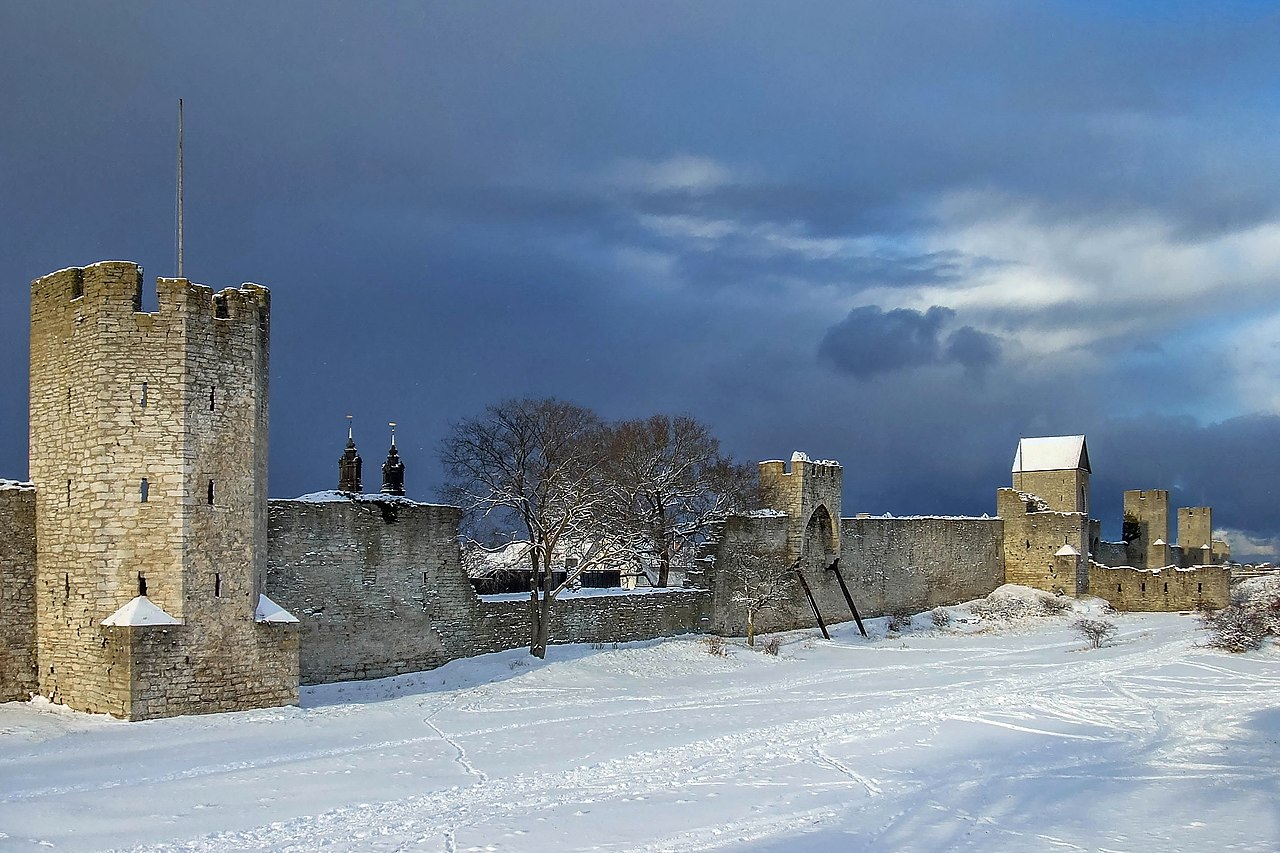
The entropy which was tearing at the Empire's fabric elsewhere began to unravel Britannia's defences, with a steady withdrawal of troops to support the claims of various usurpers (such as Magnus Maximus in 383 CE) and to defend Gaul and Italy against tribes from east of the Rhine. This is the opinion of Gildas, a monk writing a generation after the end of Roman Britain. Certainly, this slow weakening of human resources correlates with the building of physical barriers – the walls around towns and shore forts around the coast – as well as increased border incursions such as the Barbarian Conspiracy of 317 CE and the serious incursions of Picts in the late 390s. It seems that late Roman Britain faced growing external threats of military and migrant nature – Gildas paints a picture of a Saxon invasion, bravely resisted.
The factor which will have affected the most people most profoundly is financial: the country was getting poorer and poorer immediately before the break with Rome. Public building, once the pride of the local aristocracy, had ended by the late C4th – towns would have rapidly sunk into a state of disrepair. Some argue that the hoards point towards the polarisation of wealth, the creation of a super-rich elite controlling most of the remaining resources. Coinage provides some of the strongest evidence we have of Britannia's slide into destitution. Coin clipping (the practice of carefully shaving coin edges to harvest precious metal, whilst preserving the object as passable legal tender) becomes widespread in coin finds from the mid-4th Century CE, hinting at a scarcity of cash, both in physical and liquidity terms. Analysis of the finds shows that coinage reaching Britannia starts to decline in the 370s CE and the supply dries up entirely at the start of the 5th Century – indeed, the last coinage to reach the island from the imperial mints can be dated to 402. It seems likely that a lack of pay locally accelerated the army's withdrawal and a return to earlier methods of payment (barter, services) is likely.
 |
| Bredon Hoard - via Commons Licence |
Happily, for those of us wondering what 2017 will bring to a stand-alone Britain, we can draw reassurance that we live in a society where violent struggle for land and livelihood no longer threatens our stable and peaceful lives, regardless of the changing political backdrop.
Anyway, I'd better end this piece here, as it's getting dark and I need to go and dig a hole in my garden for something..
~~~~~~~~~~
Ed McWatt is a first time novelist from East Anglia in the UK. His novel 'The Silver Empress' is aimed at a young adult audience and tells the story of how the Hoxne hoard may have come to be buried. You can read an extract and find out how to buy the book at www.edmcwatt.com