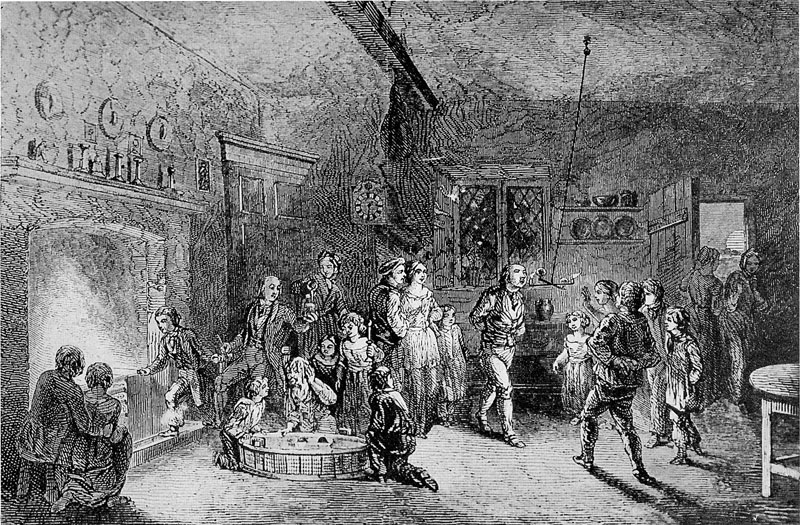
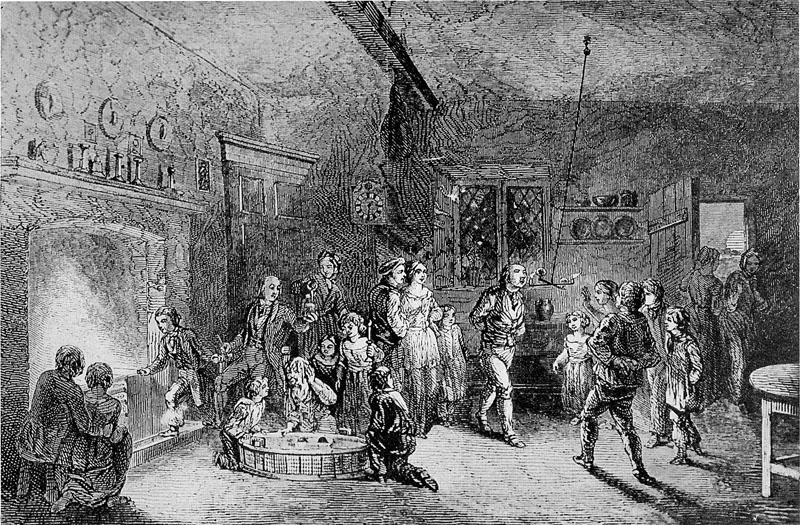
by David William Wilkin
And then there is the practice of giving flowers on a birthday:
Plutarch writes how Cleopatra threw an immense birthday celebration for Mark Antony. (They deserved some happiness before their tragic end.) A few Cleopatras before, though her husband Ptolemy gave her for a birthday present the dismembered body of their son. (Cleo II)
 Why not, our ancient Greek ancestors thought, put Cake and Birthday together. Philochorus writes that Artemis’ birthday was celebrated on the sixth day of each month with a large honey cake. That would be twelve birthday celebrations a year. The cake was even topped with lighted candles.
It was the Gods who were fortunate to have their birthdays celebrated monthly. Mere mortal women and children, no birthday party at all (chauvinism goes back a long way.) For the man of the house, though, the annual celebration there was nothing that was too lavish, even after death.
The reemergence was first called the Kinderfeste. It began at dawn. The birthday child was greeted with a cake with the candles already lit. And these candles were changed to stay lit the entire day. A full day of partying.
Mr. Wilkin writes Regency Historicals and Romances, Ruritanian (A great sub-genre that is fun to explore) and Edwardian Romances, Science Fiction and Fantasy works. He is the author of the very successful Pride & Prejudice continuation; Colonel Fitzwilliam’s Correspondence. He has several other novels set in Regency England including The End of the World and The Shattered Mirror. His most recent work is the humorous spoof; Jane Austen and Ghosts, a story of what would happen were we to make any of these Monsters and Austen stories into a movie.
And Two Peas in a Pod, a madcap tale of identical twin brothers in Regency London who find they must impersonate each other to pursue their loves.
 The links for all locations selling Mr. Wilkin's work can be found at the webpage and will point you to your favorite internet bookstore: David’s Books, and at various Internet and realworld bookstores including the iBookstore, Amazon, Barnes and Noble, Smashwords.
“It is the old girl's birthday, and that is the greatest holiday and reddest-letter day in Mr. Bagnet's calendar.” Charles Dickens, Bleak House Chapter 49, 1853.
This is not the only Dickensian reference we have to celebration of a birthday.
From Dickens the Pickwick Papers 1836-1837, we have this:
“ "Never mind that," said the old gentleman; "you're much too fond of punch, Tom."
Tom Smart was just on the point of protesting that he hadn't tasted a drop since his last birthday, “
 |
| Regency Tea Party |
And then there is the practice of giving flowers on a birthday:
“For instance, the recurrence of a birthday affords a suitable occasion for paying a compliment of a more marked character than mere words express. Birthday bouquets intended as offerings to young people, are most appropriate when composed of spring flowers-wild if possible.” Cassells Household Guide, New and Revised Edition (4 Vol.) c.1880.
 |
| Happy Birthday William Powell Frith |
Though Dickens writes just at the beginning of the Victorian era, we can extrapolate that things he observed when young (Charles lived from 1812 to 1870) were customs that were also in place when he was older. Especially as some customs relating to birthdays were practiced for several centuries by the time of the Regency.
As mentioned in previous posts, the time of the English Regency, when George the III was mad and his son George (who would be King George IV) oversaw the government for his father was from 1811 to 1820. The culture of the period though, fashion, art, extends from an earlier time, and does not change until Victoria has been on the throne for a little while. For simplicity, if we look at this from 1788 when George was first mad, to 1837, when his son William died, we have a fifty year period that Charles Dickens knew well.
One in which birthdays, as the character Tom Smart above found a way to celebrate with some punch, were honored.
Birthdays have been celebrated for a long time. First in ancient Egypt, 3000 BC (still celebrated in modern Egypt as well, I am willing to wager, despite the country going through regime change.) First in Egypt and then in Babylonia the birth of male royalty was what was celebrated. The practice began after Menes united the Upper and Lower Kingdoms. These were elaborate feasts in which slaves, servants, and freedmen all took part. Even prisoners could be released from the jails.
 |
| Walter Frederick Osborne The Birthday Party |
Plutarch writes how Cleopatra threw an immense birthday celebration for Mark Antony. (They deserved some happiness before their tragic end.) A few Cleopatras before, though her husband Ptolemy gave her for a birthday present the dismembered body of their son. (Cleo II)
After the invitation of the celebration of Birthdays by the Egyptians, we move on to ancient Greece. Often we think that the Romans took all that was Greek, but here we have the Greeks taking that which is Egyptian and Persian, it would seem. Persians made cakes. (In the Regency Era, Marie Antoinette would tell you that the French did as well.)

It was the Gods who were fortunate to have their birthdays celebrated monthly. Mere mortal women and children, no birthday party at all (chauvinism goes back a long way.) For the man of the house, though, the annual celebration there was nothing that was too lavish, even after death.
The Romans (remember, they steal everything) put a twist harkening back to the Egyptians. Important statesmen would find their Natal Day festivities national holidays. IN 44 BC Caesar rated an annual parade, circus performance, gladiators, a banquet and a play.

Then came Christianity. And birthday observances stopped.
Then came Christianity. And birthday observances stopped.
It was equating entering the world with Original Sin, and since that was the day of your birth, why mark it as special. (One day they might even come up with Temperance...)
What was celebrated instead was the death days (not the birthdays) of the saints. These became their feast days. A saint is born when he/she passes into heaven.
Before the fourth century, it was heresy to try and figure out when JC was born. But after, the church decided they wanted to know, and thus with much serious discussion, we have Christmas.
 |
| The Age of Augustus, the Birth of Christ Jean-Léon Gérôme |
By the 12th century, parish churches were recording the birth dates of women and children. Now families were celebrating with annual parties and the birthday cake, along with candles reemerged. (I won’t argue that this was now the end of the Dark Ages as light was reintroduced.)
 |
| John Lorimar Grandmother's Birthday |
The reemergence was first called the Kinderfeste. It began at dawn. The birthday child was greeted with a cake with the candles already lit. And these candles were changed to stay lit the entire day. A full day of partying.
Making a wish and blowing out the candles also comes from the Kinderfeste tradition. There was an old tradition, now gone of the Birthday Man. An elf who brought extra gifts to the birthday child.
Now bringing it to the Regency. Jane, for all our Janeites, does not mention Birthday celebrations I went through 17 sources on daily life in Georgian times, and again no mention of the activity. Writers up to now may not have cared. But we do have some examples as noted above in Dickens. Whether it is Tom Smart taking a nip at every birthday to acknowledge the occasion, or the old girl who made of it a great celebration each year.
That suggests to me (though as you have read, we don't have much that is definitive) that should you have the chance to celebrate, and the means to do so, why would you not want to have a lavish affair like Cleopatra and Marc Antony. Certainly the Ton of the Regency was always looking for entertainments and here was a reason for it.
Research (partial)
Charles Panati Panati’s Extraordinary Origins of Everyday Thing, 1987
Sally Mitchell Daily Life in Victorian England, 1996
Maggie Lane Jane Austen’s World, 1996
Daniel Pool, What Jane Austen Ate and Charles Dickens Knew, 1993
* * *
Editor's Choice: This post was originally posted on this blog, August 31, 2012.
Editor's Choice: This post was originally posted on this blog, August 31, 2012.

Mr. Wilkin writes Regency Historicals and Romances, Ruritanian (A great sub-genre that is fun to explore) and Edwardian Romances, Science Fiction and Fantasy works. He is the author of the very successful Pride & Prejudice continuation; Colonel Fitzwilliam’s Correspondence. He has several other novels set in Regency England including The End of the World and The Shattered Mirror. His most recent work is the humorous spoof; Jane Austen and Ghosts, a story of what would happen were we to make any of these Monsters and Austen stories into a movie.
And Two Peas in a Pod, a madcap tale of identical twin brothers in Regency London who find they must impersonate each other to pursue their loves.
 The links for all locations selling Mr. Wilkin's work can be found at the webpage and will point you to your favorite internet bookstore: David’s Books, and at various Internet and realworld bookstores including the iBookstore, Amazon, Barnes and Noble, Smashwords.
And he maintains his own blog called The Things That Catch My Eye where the entire Regency Lexicon has been hosted these last months as well as the current work in progress of the full Regency Timeline is being presented.
You also may follow Mr. Wilkin on Twitter at @DWWilkin
Mr. Wilkin maintains a Pinterest page with pictures and links to all the Regency Research he uncovers at Pinterest Regency-Era