This is a story of magic and monsters, of poets and parents, and writers with enormous dreams and very little money.
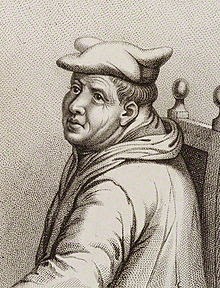
Picture this: Young Henry Howard, earl of Surrey, known as the "poet earl" for his brilliant literary innovations in the mid-16th century, wanders through Europe in great style, tended to by servants and accompanied by learned and amusing friends. Nonetheless, Surrey pines for his ravishing mistress, Geraldine, left behind in England.
 |
| Henry Howard, earl of Surrey |
In a sonnet, Surrey had written :
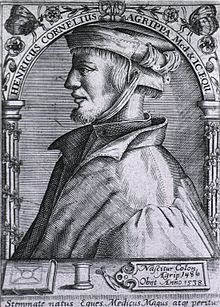
"Bright is her hue, and Geraldine she hight:One day, in Italy, the lovesick Surrey turned for a cure to one of his companions, German-born Cornelius Agrippa, who, besides being a scholar, physician and soldier, was an astrologer and student of the occult. Agrippa "was one of the most celebrated men of his time...but he was a man of the most violent passions and of great instability of temper."
Hampton me taught to wish her first for mine:
And Windsor, alas, doth chase me from her sight.
Her beauty of kind, her virtues from above;
Happy is he that can obtain her love."
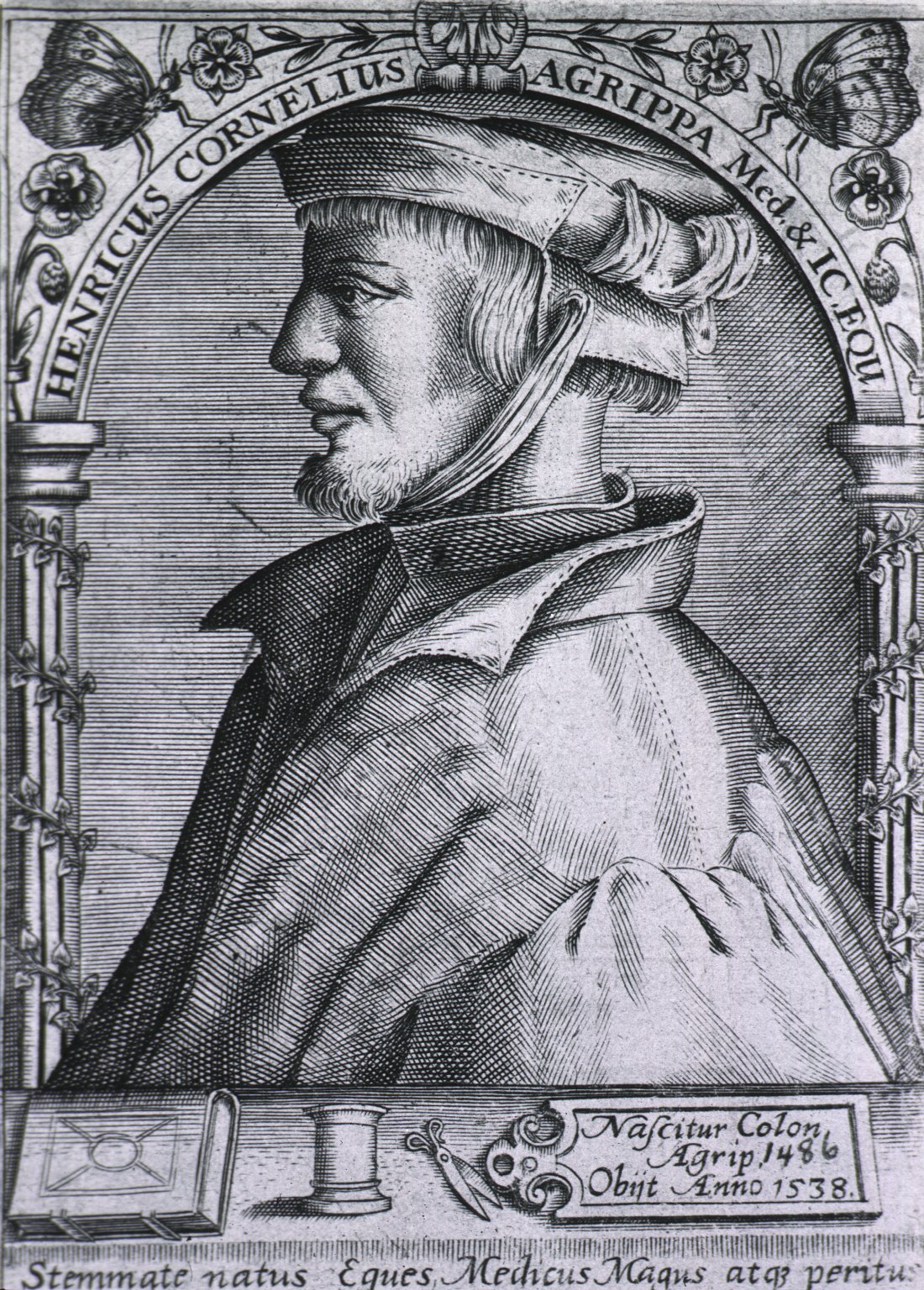 |
| Heinrich Cornelius Agrippa |
Agrippa possessed the ability to summon up apparitions for his friends, often displaying them in a crystal glass. One day, to please the Renaissance humanist Erasmus, he'd summoned an image of Tully, giving an oration in ancient Rome. For Sir Thomas More, Agrippa delivered "the whole destruction of Troy in a dream."
Surrey longed to see the faraway Geraldine, and Agrippa complied. In the "magical glass," Surrey saw the "beautiful dame, sick, weeping upon her bed, and inconsolable for the absence of her admirer." The Howard heir was distraught.
This is a story that appeared in a chapter devoted to Agrippa in William Godwin's Lives of the Necromancers, published in 1834. And ever since, puzzled historians and biographers and literary critics have tried to figure out if there is one true thing in it.
A necromancer is a wizard, a seer, someone who can conjure the spirits of the dead for purposes of magically revealing the future or influencing the course of events. Godwin's book begins with divination from the ancient times, moves through the Old Testament seers, Roman oracles and the "Arabian Nights," picks up speed in medieval times with Bacon and Magnus before concentrating on the Renaissance necromancers: Agrippa, Paracelsus, Faustus, John Dee, Nostradamus. Then it's time for the Lancashire witches and King James I's demonology before finishing up with the witches of New England. Whew.
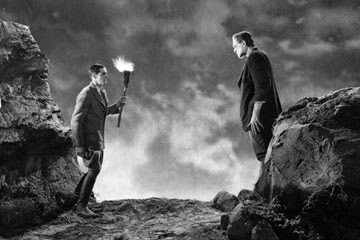
The fact that Godwin, the revered writer of the book Political Justice and the novel Caleb Williams, wrote a tome about centuries of necromancers is bizarre. But that's not the only strange and remarkable aspect. Godwin was the devoted father of Mary Shelley, author of Frankenstein. And in that famous horror novel, it is the 16th century writings of Agrippa that obsess a young student named Victor Frankenstein, leading him to create a living man from the parts of the dead.

Before we continue, it must be acknowledged: The story of Agrippa revealing Geraldine to Surrey is fishy. Not that they weren't real people. Surrey, the first cousin of Anne Boleyn and Catherine Howard, is famous in his own right: He and his friend Sir Thomas Wyatt were the first English poets to write in the sonnet form.
As for Agrippa, born in Cologne, he mastered six languages and studied medicine and law as well as the work of the Humanists. Alchemy was his passion, and he believed "magic comprises the most profound contemplation of the most secret things, their nature, power, quality, substance and virtues." He published De Occulta Philosophia, three volumes on magic. The lives of Agrippa and Surrey overlapped by 19 years, but the story of their meeting and traveling together in Italy is almost certainly not true. Moreover, Godwin may have known that ... but found it impossible to resist throwing it in the pot. More on Godwin later!
The facts: The charismatic Surrey was executed for treason in 1546. Henry VIII had grown acutely paranoid about the Howard family's pretensions to the throne. Surrey was the biggest threat because he had royal blood through his mother, Elizabeth Stafford, the oldest daughter of the third Duke of Buckingham, another arrogant charmer who lost his head to Bluff King Hal.
The sonnet "Description and Praise of His Love Geraldine" is one of Surrey's finest. Sir Walter Scott and Michael Drayton would later pay homage to its romantic power. But their being a real, devouring love behind the poem is also just too good to be true. The girl in the poem is thought to be based on a real female: Elizabeth Fitzgerald, daughter of Gerald Fitzgerald, ninth earl of Kildare. But when he wrote it, she was at most 10 years of age.
 |
| Elizabeth Fitzgerald, aka Geraldine, after marrying |
The aristocratic Fitzgerald family came from Ireland to London in 1533, when Elizabeth was six years old, and she and her brother became playmates to Henry VIII's children. Her father, however, was imprisoned in the Tower of London for corruption; he died there "of grief" in 1534. It is thought that a sympathetic Surrey wrote the sonnet in 1537 for the 10-year-old girl to improve her chances of someday making a good marriage.
So Surrey and Genevieve weren't really in love and Surrey never traveled through Italy. It's settled. Yet, nonetheless, Agrippa conjuring up Geraldine in a magic glass for Surrey is a story that kept showing up in art and letters. Watercolour painter Edward Corbould, favorite of Prince Albert, was the toast of London with his "The Earl of Surrey Beholding the Fayre Geraldine in the Magic Mirror."
 |
| Corbould's famous painting |
The origin of this story can be traced to a book written after Surrey's death, from the quill of another author of the 16th century, the sort of talented rapscallion that keeps surfacing in our narrative. Thomas Nashe, a parson's son, became a leading Elizabethan playwright, poet and satirical pamphleteer. In his book The Unfortunate Traveller, published in 1594, a man named Jack Wilton rollicks through Europe, surviving many adventures and meeting famous people as if he were a Tudor-era Zelig. Some of the stories in the novel are based on real events, such as the Peasant Revolt in Germany. One of the people Wilton meets is the Earl of Surrey, and while traveling together they encounter Agrippa and his magic crystal. Geraldine revealed!
Nashe, a friend of Ben Johnson's, is thought to be one of the contributors to Henry VI, Part 1, published under William Shakespeare's name. On the opposite end of the prestige spectrum, he wrote erotica such as the notorious The Choice of Valentines, about a trip to a brothel. In response to the outraged criticism over his writing the 50 Shades of its day, Nashe penned this: "When the bottom of my purse is turned downward and my conduit of ink will no flower flow for want of reparations, I am faine to let my Plow stand still in the midst of a furrow."
Nashe was dead by 1601. A friend's epitaph:
"Let all his faults sleepe with his mournful chest/And there forever with his ashes rest/His style was wittie, though it had some gall/Some things he might have mended, so may all/Yet this I say, that for a mother witt/Few men have ever seene the like of it."Surrey's stature grew in the pantheon of Renaissance literature over the next two hundred years ... and so did doubts about the Agrippa anecdote described by Nashe. One early Surrey biographer pointed out that, aside from Geraldine being nine years old when the sonnet was being composed, "it is unlikely Howard was ever in Italy because he never made any mention of it." In the 16th century--no surprise--traveling around Europe was difficult even if you had money. The promise of the Grand Tour dangled far in the future.
And so we come to the Godwin family.

William Godwin's early life was a bit like Nashe's. His austere Calvinist father was a Nonconformist minister in Norwich; Godwin was the seventh of thirteen children. He made his way to London in his twenties and, living hand to mouth, joined a circle of young philosophers, poets and revolutionaries such as William Blake and Thomas Paine. In 1793 he published Enquiry Concerning Political Justice and Its Influence on Morals and Happiness, an enormously influential book that decried government and urged people to use their own reason to plan their actions. Godwin is today considered the founder of political anarchism.
Godwin fell in love with a fellow author and spirited revolutionary, Mary Wollstonecraft, a passionate believer in the rights of women who had an illegitimate child and suicide attempts in her own past. She died days after giving birth to their only child, the future Mary Shelley.
As the death toll of the French Revolution became more known, those who called for anarchy became less popular. Godwin, remarried, saw sales of his books begin to decline. He started a publishing business but it failed, nearly sending Godwin, a hopeless businessman, to debtors' prison. Friends rescued him with loans.
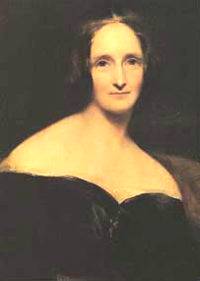 |
| Mary Godwin Shelley |
Through it all, he devoted himself to the education of his daughter. Mary not only studied literature and languages but was surrounded by her father's scientist friends, chemists and surgeons who were fascinated by the notion of "animal electricity," also known as "galvanism," the study of muscle contractions causing an electrical current.
Godwin was furious and heartbroken when Mary, 17, ran away with the married poet Percy Shelley. London gossip snickered that Godwin had courted Shelley, heir to a fortune, because he was desperate for a patron for his strained writing life, and "sold" his child to the dissolute young man. It was definitely untrue.
It's well known that when Mary, Shelley, Lord Byron and John Polidori gathered at the Villa Diodati in 1816, competing to see who could pen the best ghost story, the talk was of the occult, of alchemists and necromancers. In Frankenstein, Mary Shelley gave direct credit to Agrippa for setting things in motion. She wrote of her main character, a young student, coming across a book:
"Natural philosophy is the genius that has regulated my fate. I desire, therefore, in this narration, to state those facts which led to my predilection for that science. When I was thirteen years old, we all went on a party of pleasure to the Baths near Thoneo. The inclemency of the weather obliged us to remain a day confined to this inn. In this house I chanced to find a volume of the works of Cornelius Agrippa. I opened it with apathy; the theory which he attempts to demonstrate, and the wonderful facts which he relates, soon changed this feeling into enthusiasm. A new light seemed to dawn upon my mind..."The student's fate was set. One day Victor Frankenstein would use "natural philosophy" to create life.
In mid-April 1817, Mary Shelley finished her fair copy of the novel. Frankenstein: A Modern Prometheus was published in 1818, to mixed reviews. After her husband drowned in 1822, Mary returned to England. She became close again with her father, whose book sales foundered further as Frankenstein gained strength. Mary thrived as a writer and editor, and eventually helped to support her father financially. She wrote a friend in 1831 she was "full of disquietude for my father, who lives by his pen."
 |
| William Godwin, in later life |
Godwin, although he'd written more than a dozen books, did not have a publisher when he created Lives of the Necromancers. It took him two years to find one for it, even though Mary was exerting personal pressure on editors and publishers she knew. Everyone rejected it. Finally, an obscure London publisher, Andrew Mason, took the book in 1834. (In his chapter on Agrippa, Godwin conceded that the "sole authority" for the Surrey section was Nashe. The episode is followed by tales of black-cat familiars and dangerous potions.)
The book found fans on both sides of the Atlantic. Washington Irving and Edgar Allan Poe,in particular, enjoyed its treatment of magic and superstition.
Poe, who hated just about everything, praised Lives of the Necromancers in Southern Literary Messenger, saying, "No English writer with whom we have any acquaintance, with the single exception of Coleridge, has a fuller appreciation of the value of words." Poe continued:
"Unlike the work of Brewster, the Necromancy of Mr. Godwin is not a Treatise on Natural Magic. It does not pretend to show the manner in which delusion acts upon mankind — at all events, this is not the object of the book. The design, if we understand it, is to display in their widest extent, the great range and wild extravagancy of the imagination of man. It is almost superfluous to say that in this he has fully succeeded. His compilation is an invaluable work, evincing much labor and research, and full of absorbing interest."
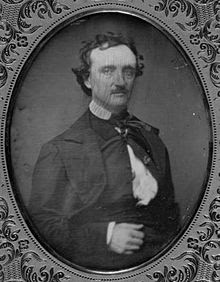 |
| Edgar Allan Poe |
(More recently, biographers have studied the book as proof of the shared interests of Mary Shelley and William Godwin. Some critics are rather baffled, trying to decide whether Godwin was mocking the gullible or celebrating mystical beliefs.)
Lives of the Necromancers was the last book written by William Godwin. In 1833, in recognition of his body of work, the Whig government granted him a pension of 200 pounds a year and a modest home in New Palace Yard. In April 1834, at the age of 80, he caught a cough and died, his daughter by his side. At his request, Godwin was buried next to his long-dead first wife, Mary Wollstonecraft.
The books of William Godwin, Mary Wollstonecraft and Mary Shelley have never gone out of print.
And neither have the books of magic written by Heinrich Cornelius Agrippa.
-------------------------------------------------------------------------------------
Nancy Bilyeau is the author of a trilogy of mysteries set in the 16th century: The Crown, The Chalice, and The Tapestry. for sale in North America, the United Kingdom, Germany and Spain. The Crown was an Oprah pick: "The real draw of this suspenseful novel is its juicy blend of murder, lust, conspiracy and betrayal." The Chalice won the RT Reviewers Award for Best Historical Mystery. The Tapestry was released in paperback in March 2016. For more information, go here.