by Maria Grace
Games are a universal to the human experience. Many have a very long life span. Many of the pass times our 18th century ancestors enjoyed would seem so familiar that contemporary children would not hesitate to join in the fun.
 Hopscotch is an ancient game. It may have originated in ancient Rome, but was certainly popular in the 17th century. In the game, players, both boys and girls, draw out a grid of numbered rectangles in a specified pattern. They toss a small object into the numbered spaces and hop or jump through the spaces to retrieve the object.

Similarly, children of both sexes enjoyed the game of battledore and shuttlecock, a predecessor of badminton. Drawings from ancient Greece suggest this game originated there over 2000 years ago. Players, armed with rackets, tried to bat a feathered shuttlecock back and forth, without a net, and keep it in play as long as possible
Lydia Maria Child in her book, Girl’s Own Book (1833), suggests: Little girls should not be afraid of being well tired (playing battledore and shuttlecocks) that will do them good but excessive fatigue should be avoided especially where it is quite unnecessary.
 Girls risked little fatigue with the game of lawn bowls, a game originating in the 13th century. In this game, the objective was to roll balls so they would stop close to a smaller ball. The game was prohibited by multiple monarchs including Edward III and Richard II for fear it might impinge on the practice of archery. Ironically archery was another common outdoor sport for our Georgian ancestors.
Other popular outdoor amusements included games of rounders, an ancestor of baseball played by boys and girls, variations of blindman’s bluff, tag, various kinds of races, all very similar to what goes on on playgrounds today.
Indoor games
 Children and adults played many games to keep themselves entertained during long evenings where the firelight was not strong enough to support other activities like reading or sewing. Many games were quite familiar to us. Chess, checkers (called draughts), backgammon, cribbage and other card games, and dominoes in forms very similar to the ones played today were common.
 Morris games including three, six, nine and twelve men versions have been played since 1400 BCE. This two player strategy game resembles tic-tac-toe in the three man version, where the object is to get three of your pieces in a row, but unlike tic-tac-toe, the men can move along the game board. The game’s complexity increases as the number of men and the size of the board grow.
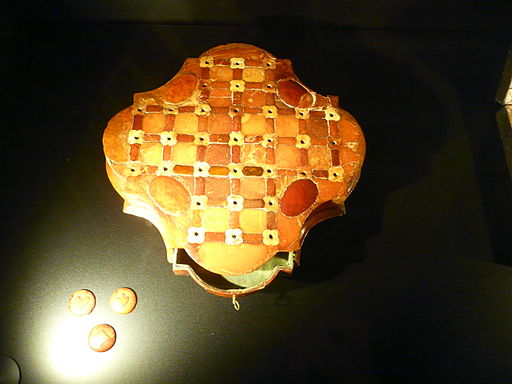 Other board games like 'race to the finish games' and fox and geese became popular for whole families. Fox and Geese was played with pegs or marbles on a cross shaped lattice board. Many versions existed, but the goal of the game was for the geese to surround the fox so it could not move or the single fox to capture enough geese that it could not be surrounded. The same board could be used to play a solitaire game in which the goal was to remove pieces by jumping them and end the game with a single piece in a designated space.
 More dexterous (and patient) players might enjoy the game of spillikins, an early version of pick-up-sticks and jack-straws. A pile of spillikins, which might be simple sticks or splinters or more elaborately carved pieces resembling tools and other objects, were dropped on a table. Players then tried to pick them up without moving any other piece in the pile. The player who picked up the most sticks won. In some versions different points might be assigned to different colors or shapes of sticks or another stick or hook might be available to help a player in their task. Evidence of this game has been found in 5th century BCE remains in India.
 Similarly, evidence of the game we know as jacks and its earlier version, knuckle bones suggest they were played in the ancient world over 2000 years ago. Small animal bones or pebbles were the first playing pieces. Over time, the Jack stone was replaced by first a wooden ball, then a rubber one. The other pieces were replaced by the metal jacks of today which are said to be reminiscent of the original animal knucklebones. A wide variety of games can be played with these pieces.
Marble games appeared to have developed during the same period. Marbles have been made of a variety of material including clay, stone, metal, and glass. Like jacks, a wide variety of games may be played with these prized objects. At Oxford and Cambridge, students had to be prohibited from playing marbles on the steps of the Bodleian Library and Senate House.
 Conkers resemble marbles a little, at least it does in my head. In France, the game was played with snail shells, in England, horse chestnuts were the medium of choice. The conker was strung on a string. Players would stretch out their string and take aim at another player’s conker and let it fly. The first to break his opponent’s conker won.
While many of these games are more associated with children, many parlor games were more appropriate for adults. Rachel Revel, spinster, published a book in 1825, ‘Winter Evening Pastimes or The Merry Maker’s Companion’ that offers guidelines for various amusements suitable for genteel company in the drawing room. Interestingly in the context of these games, normal, strict social conventions, like those restricting physical touch between the sexes, may be bent or even ignored for the sake of the play. Some examples include:
 Bullet pudding
Flour was piled into a high mound and a bullet placed on the top. Players cut slices out of the flour pile with a knife without dislodging the bullet. If the bullet fell, the player had to retrieve the bullet from the flour with their teeth.

Blind Man's Bluff and many variations thereof
Many variations of this game existed, including Hot Cockles, Are you there Moriarty, Buffy Gruffy, and Guess the Kiss (which needs no explanation). All the variations include one player being blindfolded and trying to guess the identity of another player who they have touched in some way. A great deal of cheating was generally involved, which only added to the sport.
For our next family reunion I am planning to print out some morris boards and a fox and geese lattice and teach those games to my sons and nieces. I have a feeling they will enjoy them as much as children did 2000 years ago.
References
Games are a universal to the human experience. Many have a very long life span. Many of the pass times our 18th century ancestors enjoyed would seem so familiar that contemporary children would not hesitate to join in the fun.
 Hopscotch is an ancient game. It may have originated in ancient Rome, but was certainly popular in the 17th century. In the game, players, both boys and girls, draw out a grid of numbered rectangles in a specified pattern. They toss a small object into the numbered spaces and hop or jump through the spaces to retrieve the object.
Similarly, children of both sexes enjoyed the game of battledore and shuttlecock, a predecessor of badminton. Drawings from ancient Greece suggest this game originated there over 2000 years ago. Players, armed with rackets, tried to bat a feathered shuttlecock back and forth, without a net, and keep it in play as long as possible
Lydia Maria Child in her book, Girl’s Own Book (1833), suggests: Little girls should not be afraid of being well tired (playing battledore and shuttlecocks) that will do them good but excessive fatigue should be avoided especially where it is quite unnecessary.
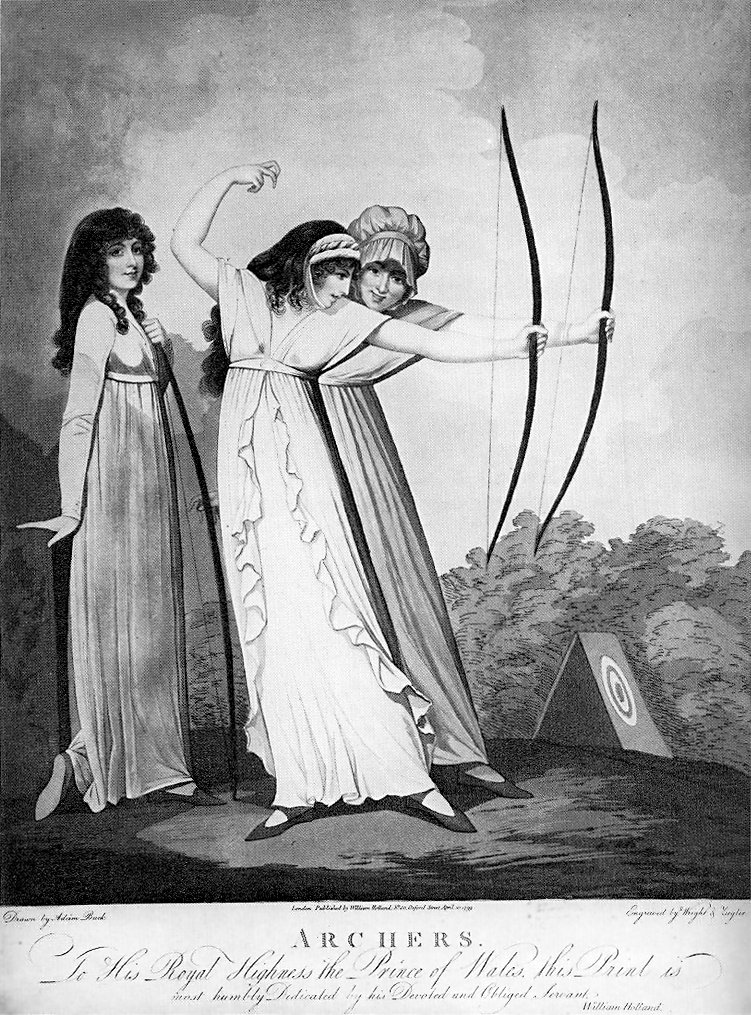 Girls risked little fatigue with the game of lawn bowls, a game originating in the 13th century. In this game, the objective was to roll balls so they would stop close to a smaller ball. The game was prohibited by multiple monarchs including Edward III and Richard II for fear it might impinge on the practice of archery. Ironically archery was another common outdoor sport for our Georgian ancestors.
 Other popular outdoor amusements included games of rounders, an ancestor of baseball played by boys and girls, variations of blindman’s bluff, tag, various kinds of races, all very similar to what goes on on playgrounds today.
Indoor games
 Children and adults played many games to keep themselves entertained during long evenings where the firelight was not strong enough to support other activities like reading or sewing. Many games were quite familiar to us. Chess, checkers (called draughts), backgammon, cribbage and other card games, and dominoes in forms very similar to the ones played today were common.
 Morris games including three, six, nine and twelve men versions have been played since 1400 BCE. This two player strategy game resembles tic-tac-toe in the three man version, where the object is to get three of your pieces in a row, but unlike tic-tac-toe, the men can move along the game board. The game’s complexity increases as the number of men and the size of the board grow.
 Other board games like 'race to the finish games' and fox and geese became popular for whole families. Fox and Geese was played with pegs or marbles on a cross shaped lattice board. Many versions existed, but the goal of the game was for the geese to surround the fox so it could not move or the single fox to capture enough geese that it could not be surrounded. The same board could be used to play a solitaire game in which the goal was to remove pieces by jumping them and end the game with a single piece in a designated space.
 More dexterous (and patient) players might enjoy the game of spillikins, an early version of pick-up-sticks and jack-straws. A pile of spillikins, which might be simple sticks or splinters or more elaborately carved pieces resembling tools and other objects, were dropped on a table. Players then tried to pick them up without moving any other piece in the pile. The player who picked up the most sticks won. In some versions different points might be assigned to different colors or shapes of sticks or another stick or hook might be available to help a player in their task. Evidence of this game has been found in 5th century BCE remains in India.
  Similarly, evidence of the game we know as jacks and its earlier version, knuckle bones suggest they were played in the ancient world over 2000 years ago. Small animal bones or pebbles were the first playing pieces. Over time, the Jack stone was replaced by first a wooden ball, then a rubber one. The other pieces were replaced by the metal jacks of today which are said to be reminiscent of the original animal knucklebones. A wide variety of games can be played with these pieces.
 Marble games appeared to have developed during the same period. Marbles have been made of a variety of material including clay, stone, metal, and glass. Like jacks, a wide variety of games may be played with these prized objects. At Oxford and Cambridge, students had to be prohibited from playing marbles on the steps of the Bodleian Library and Senate House.
 Conkers resemble marbles a little, at least it does in my head. In France, the game was played with snail shells, in England, horse chestnuts were the medium of choice. The conker was strung on a string. Players would stretch out their string and take aim at another player’s conker and let it fly. The first to break his opponent’s conker won.
While many of these games are more associated with children, many parlor games were more appropriate for adults. Rachel Revel, spinster, published a book in 1825, ‘Winter Evening Pastimes or The Merry Maker’s Companion’ that offers guidelines for various amusements suitable for genteel company in the drawing room. Interestingly in the context of these games, normal, strict social conventions, like those restricting physical touch between the sexes, may be bent or even ignored for the sake of the play. Some examples include:
Bullet pudding Flour was piled into a high mound and a bullet placed on the top. Players cut slices out of the flour pile with a knife without dislodging the bullet. If the bullet fell, the player had to retrieve the bullet from the flour with their teeth.
Blind Man's Bluff and many variations thereof
Many variations of this game existed, including Hot Cockles, Are you there Moriarty, Buffy Gruffy, and Guess the Kiss (which needs no explanation). All the variations include one player being blindfolded and trying to guess the identity of another player who they have touched in some way. A great deal of cheating was generally involved, which only added to the sport.
For our next family reunion I am planning to print out some morris boards and a fox and geese lattice and teach those games to my sons and nieces. I have a feeling they will enjoy them as much as children did 2000 years ago.
References
Boyle, Laura. Battledore and shuttlecock. Jane Austen.co.uk. June 13, 2013.
Boyle, Laura. Lawn Bowls. Jane Austen.co.uk. July 17, 2013.
Boyle, Laura. Spillikins. Jane Austen.co.uk. August 16, 2013
Davidoff, Leonore & Hall, Catherine. Family Fortunes: Men and Women of the English Middle Class 1780-1850. Routledge (2002)
Grose, Captain (Francis) Dictionary of the Vulgar Tongue, 1811 edition Ikon Classics (2004)
Lydia Maria Child. <>Girl’s Own Book (1833)
Manring, Lynne. Children's Amusements in the Early Nineteenth Century. Memorial Hall Museum Online, American Centuries. Martin, Joanna. Wives and Daughters. Hambledon Continuum (2004)
Rendell, Mike. Sir David Brewster, the man with kaleidoscope eyes. Georgian Gentleman. December 11, 2013.
Selwyn, David. Jane Austen and Children. Continuum Books (2010)
Selwyn, David. Jane Austen & Leisure. The Hambledon Press (1999)
Stone, Laurence. The Family, Sex & Marriage in England 1500-1800. Penguin Books (1979)
Toys and Games. History lives.
Waldock , Sarah J. Toys and games of Jane Austen’s time. Dec 13, 2011
Waugh, Johanna, Conkers and the games children played during the Regency. October, 2008.
~~~~~~~~~~~~