Showing posts with label bow street runners. Show all posts

Saturday, May 11, 2013

Victorian Violence: Repelling Ruffians (Part One)

by Terry Kroenung


 "The housebreaker freed one arm, and grasped his pistol. The certainty of immediate detection if he fired, flashed across his mind even in the midst of his fury; and he beat it twice with all the force he could summon, upon the upturned face that almost touched his own.

She staggered and fell: nearly blinded with the blood that rained down from a deep gash in her forehead; but raising herself, with difficulty, on her knees, drew from her bosom a white handkerchief--Rose Maylie's own--and holding it up, in her folded hands, as high towards Heaven as her feeble strength would allow, breathed one prayer for mercy to her Maker.

It was a ghastly figure to look upon. The murderer staggering backward to the wall, and shutting out the sight with his hand, seized a heavy club and struck her down."
    --- Oliver Twist, Charles Dickens

To judge by this disturbing scene (or, indeed, any episode of Ripper Street) it was as much as a man’s life was worth to walk the streets of Victorian London. Robbery and murder were commonplace, pickpockets were as ubiquitous as fleas on a mongrel, and as for an unaccompanied woman, well…

But was that true? Or were the news reports of that era just as slanted toward the sensational as are our own? ‘If it bleeds, it leads’ is the motto of modern media and certainly British journalism of the 19th century could hardly claim to be more scrupulous. The truth is that we do not know with any degree of certainty.

Then as now circumstances and geography dictated risk. Jack the Ripper’s outrages were committed in sordid Whitechapel, after all, and not in genteel Kensington. A critical mass of the poor and desperate has always led to increased criminality.

Wise ladies and gentlemen preferred to avoid dirty, ill-lit areas with foul reputations. Forewarned is forearmed and all that. Yet an assault could happen at any time and place. It was no respecter of persons, either. In 1862 a Member of Parliament was garroted and robbed in broad daylight in Pall Mall.

Earlier centuries may well have been worse. The gin-soaked gutters of Hogarth’s time, with none of Robert Peel’s bluebottles or even the Bow Street Runners to keep the peace, were likely a horror-show. A noticeable decrease in wretchedness did occur with the advent of the Metropolitan Police, though it took until the 1880’s for that force to gain wide-spread respect. Ennui was not a risk faced by the Peelers.

In a typical Dickensian year (1856) the force arrested over 73,000 people. And we would do well to remember that an enormous percentage of crimes went unreported or unrecorded. The citizenry did not trust its own officers, often with good reason. Particularly in the early days the policeman was often just as likely as the most hardened East Ender to be guilty of an offense.
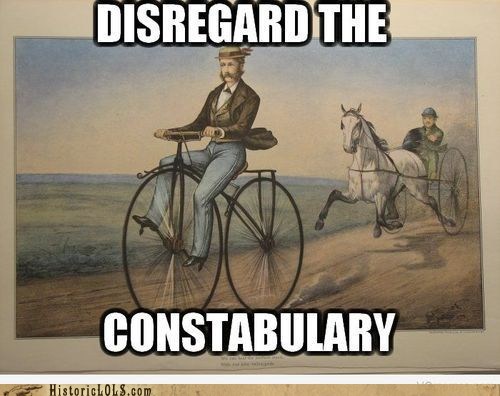

Even if the bobby was honest, many residents felt it a waste of time to make a complaint, since so many crimes were not solved. Let us give savagery the benefit of the doubt and presume that it was enough of a concern that measures had to be taken.

To this end most men of the middle and upper classes considered training in pugilism and singlestick to be an essential part of their education. When faced with a determined defender, many a hooligan would likely seek easier prey. Quite apart from such practical considerations, the manly arts also served to toughen the mind and spirit, preparing a fellow for the rugged vicissitudes of life. Instructional manuals abounded, all stressing this point:

"Physical education is indispensable to every well-bred man and woman. A gentleman should not only know how to fence, to box, to ride, to shoot and to swim, but he should also know how to carry himself gracefully, and how to dance, if he would enjoy life to the uttermost. A graceful carriage can best be attained by the aid of a drilling master, as dancing and boxing are taught. A man should be able to defend himself from ruffians, if attacked, and also to defend women from their insults."
     --- Our Deportment, 1879

Naturally certain of these skills were better-suited to the country house than the alleys of the metropolis. Be that as it may, expertise with stick and fist doubtless preserved many a life when faced with a resolute robber in a fetid corner of the Empire’s capital. At a minimum it would have enabled the victim to keep a cool head and react with grace under pressure.

In Part Two we shall investigate what techniques and tools would have been available to a gentleman, or lady, in such duress.

~~~~~~~~~~~~

Terry Kroenung is the author of Brimstone and Lily, a seriocomic fantasy novel set in 1862, and its sequel, Jasper’s Foul Tongue. Book 3 in the series, Jasper’s Magick Corset, will be available in September. Paragon of the Eccentric, his Steampunk prequel to War of the Worlds, is pending. He has also written dramas set in the 19th century, such as Gentle Rain and Coolness and Courage.

Sunday, April 7, 2013

Sir John Fielding, "The Blind Beak of Bow Street"

by Karen V. Wasylowski


Sir John Fielding, the younger half-brother of the great English novelist Henry Fielding, was one of the first, and one of the finest, of London policemen.  Born in 1721, his vision was lost through an accident by the age of nineteen.  There were no radios, no tapes—no known way for a blind person to be able to read.

So what did John Fielding do? He opened a business which he called the Universal Register Office. This was a combination labor exchange, travel agency, information office, real estate agency, and insurance company. John ran it single-handed. In his spare time, his brother Henry taught him law.

Big brother, Henry Fielding, when not writing novels such as Tom Jones, had become a magistrate with the power to investigate crimes, question suspects, and then either release them or order them held for trial. He was so successful that he was given the title of Chief Magistrate, head of law enforcement - except that London of the 1750's had no organized police force at all.

Imagine a city of over half a million people, terrible slums, a high crime rate, and no real police force. The few parish constables were chosen by lot, much as we choose juries today, to serve for one year. Most paid substitutes to take their place, and many of the substitutes were as dishonest as the criminals they were supposed to control. Most of the rest, along with the night watchmen, were too disorganized, too feeble, or too frightened of the powerful street gangs to be of any use.

Henry Fielding tried to change all this. He drew up plans for controlling crime, turned his house in Bow Street into a kind of police station, and hired a few of the best constables to serve as more or less permanent police officers—"Bow Street Runners" was the name by which they would soon be known.

In 1754 Henry's health began to fail him enough to force him into retirement, before he was able to put his plan into action.  His position, which would become known as Chief of the Metropolitan Police, was offered to his brother John, a position John held until his death in 1780. John immediately set out to put Henry's plans to work.

The Bow Street Runners were very effective, breaking up most of the gangs of London street robbers within two years.  After than John concentrated on organizing horse patrols to combat highwaymen, printed descriptions of wanted criminals and stolen goods.  He was at his best in questioning witnesses and suspects, weeding out the truth from the lies, allegedly being able to recognize three thousand criminals by the sounds of their voices.  He was the brains and his runners did the legwork.

In 1761 John was knighted for his services, becoming Sir John Fielding.  However, he was already respectfully known by another title - "The Blind Beak of Bow Street." ("Beak" was the 18th century slang for anyone in a position of authority.)

A contemporary described Sir John as wearing a black bandage over his eyes and carrying a switch, which he flicked in front of him as he entered or left his courtroom. He was strict with hardened criminals and was responsible for sending many men (and some women) to the gallows. But he was lenient with young people, especially first-time offenders.

However there were downsides to his reforms- and they are interesting to reflect upon. For example, scandals about Press coverage of cases didn't begin in Cambridge or in the United States, they began largely (though, of course, not exclusively) with Fielding's court.

He encouraged press coverage of cases to bring new accusers forward- but that led to the exploration of evidence in public by the press and the worry that trials might be retarded or even prejudiced. The words of the Attorney General, James Wallace, in 1780 warned (the words are from a contemporary press report):

"...that the PUBLIC examination[s] at Bow-street were productive of the most mischievous consequences to society. The injury done to individuals, who might be innocent, was such for which no possible compensation would be made; the evidence for the Crown was given up; the prisoner came to his trial without the possibility of a fair enquiry; the minds of the people were influenced; the jury prejudiced; and, where any possible guilt lodged, the prisoner hardly stood the chance of a fair acquittal."

What impresses me most is his concern for children.  With no social services network to protect children, they were probably the most vulnerable, the most mistreated and the most heartbreaking segment of that society, the boys turning to crime and the girls to prostitution in order to survive.   He helped organize charities to feed and clothe abandoned children, and institutions to teach them reading, writing, and some kind of a trade. As a police official, he saw that the best way to stop criminals was to get to them before they became criminals. In this he was almost two hundred years ahead of his time.

Years after Sir John Fielding's death London finally had an organized police force, born through his early efforts and his infamous "runners".   And, many of the procedures set up by Sir John Fielding are still used in  police manuals today.

~~~~~~~~~~~~

 John Dashney,

Visit her blog The League of British Artists or League of British Artists Pinterest