Showing posts with label Joanna Plantagenet. Show all posts

Friday, August 25, 2017

A dark Welsh lady

by Anna Belfrage

In 1230, Ralph Mortimer of Wigmore took a certain Gwladus Ddu as his wife. Ralph was a Marcher Lord, always intent on expanding his domains into Wales. His new wife was as Welsh as they came, daughter of Prince Llewellyn the Great.

While Gwladus’ paternity has never been up for discussion – she is Gwladus ferch Llewellyn when mentioned in records of the time – who her mother was is a substantially thornier issue. Was Gwladus the product of Llewellyn’s long-standing affair with a certain Tangwystl, mother of his eldest son Gruffydd, or was she a legitimate daughter, born to Llewellyn and his Angevin wife Joanna? Somewhat ironically given the discussions as to whether Gwladus was illegitimate or not, Joanna was most definitely illegitimate, the daughter of King John of England.

To sort out who was Gwladus’ mother, one could start by trying to pin down when Gwladus was born. Well, unsurprisingly, it’s not as if there’s a neat entry stating her date of birth. Instead, genealogists usually work backwards from what known facts there are, and one of those facts is that Gwladus’ marriage to Ralph was not her first: she’d been wed to Reginald de Braose already back in 1215.

This, according to some, means she must have been born at the latest around 1202, so as to be of marriageable age in 1215. And if Gwladus was born in 1202, she could not be Joanna’s daughter seeing as Joanna and Llewellyn were wed in 1205, ergo Ralph Mortimer married an illegitimate Welsh princess.

However, there are some doubts as to whether there was a real marriage in 1215. Maybe it was more of a betrothal. Besides, why would Reginald de Braose, a man pushing forty and with heirs to his body (among which a certain William de Braose whom Llewellyn would hang in 1230 for having engaged in adulterous relations with Llewellyn’s wife, Joanna. All very complicated, isn’t it?) want to marry the illegitimate daughter of Llewellyn? A second marriage in this case would have been entered out of political interests, and Gwladus was worth much, much more as a political pawn if she was the legitimate daughter of a Welsh prince and the granddaughter of an English king than if she were the daughter of Llewellyn and the irresistibly named Tangwystl.

It is also interesting to note that while Gwladus and Reginald were married for thirteen years there are no recorded children. Reginald was definitely fertile and with her second husband Gwladus would go on to prove that she was too which begs the question if this first marriage was ever consummated, thereby indicating (perhaps) that maybe the bride was very young in 1215, corresponding with a birthdate after 1205.

When King John gave his daughter in marriage to Llewellyn, he also had Llewellyn promise that it would be the children he had with Joanna who would be his heirs. This was not in accordance with Welsh custom which in general supported every child’s right to inherit from its father, no matter if the child was conceived within or without the marital bed. At the time of Llewellyn’s wedding to Joanna, he already had a son named Gruffydd, so by agreeing to John’s demands he was effectively disinheriting his boy. Did not go down well with Gruffydd.

Llewellyn with his sons
Eventually, Joanna did present Llewellyn with a son who was named Dafydd. In 1229, young Dafydd rode to London to visit with his young uncle, Henry III. He did this to present himself before the entire English court as Llewelyn’s recognised heir, thereby formally acquiring his uncle’s support against his half-brother’s claim.

Interestingly enough, Dafydd was accompanied on this little jaunt by none other than Gwladus, at the time recently widowed as Reginald passed away in 1228. Now, the fact that Gwladus chose to accompany her younger sibling may indicate nothing more than a case of wanderlust. But if Gwladus was Gruffydd’s full sister, wouldn’t she have hesitated in accompanying her half-brother on a trip that had as its purpose to permanently scotch Gruffydd’s hopes of inheriting Llewellyn’s lands?

It did not take long for Llewellyn to find a new husband for his widowed daughter. This time, Gwladus was dispatched to wed Ralph Mortimer of Wigmore, a man some years her senior who’d become heir to the Mortimer lands upon the death of his older brother. The Mortimers were as covetous and power-hungry as all the Marcher Lords and while Ralph definitely wanted heirs, he also wanted valuable alliances. I seriously doubt he’d have wanted Gwladus—no matter how beautiful she might have been—unless she was not only the daughter of Llewellyn but also the niece of Henry III.

Whatever the case, Ralph and Gwladus seem to have hit it off. Over the first nine years of married life, she gave birth to six known children, among them the very competent Roger Mortimer who would go on to become a loyal servant of the king, behead Simon de Montfort at Evesham and marry Maud de Braose, daughter of the man his Welsh grandfather once hanged for adultery.
In 1246, Ralph died, leaving Gwladus a widow. She never remarried, dying five years later while visiting with her uncle, Henry III, in Winchester.

Not only don’t we know for sure who Gwladus’ mother was. We know nothing about Gwladus herself, beyond who her father was, who her husbands were, who her children were. She is defined not by who she was but by what she was, daughter, wife, mother. We have no depiction of her, all we have is her epithet, Ddu, which is Welsh for black. I guess this probably means that Gwladus was dark rather than fair, and I picture her with long dark braids and eyes the colour of a deep forest tarn. For some reason, I imagine she was of a serious disposition – but that is entirely fanciful, and for all I know, Gwladus may have been the life and soul of any medieval party she might have been invited to.

Gwladus Ddu remains an enigmatic and anonymous lady who attracts more interest due to the uncertainties surrounding her mother than due to herself. That’s a bit sad. However, no matter who her mother was, through Gwladus the blood of the Royal House of Gwynedd would pass down the Mortimer line, the Welsh Dragon lying dormant until that very distant descendant of hers, Edward IV, claimed the throne. Through Edward’s daughter, Elizabeth of York, that rather diluted drop of Welsh blood has made it all the way down the line to the present Queen. Having cried my eyes out over the sad fate of Llewellyn’s grandson and namesake, Llewellyn the Last, I find some comfort in that. Some.


All pictures in public domain and/or licensed under Wikimedia Creative Commons

~~~~~~~~~~~

Had Anna Belfrage been allowed to choose, she’d have become a professional time-traveller. As such a profession does not exist, she became a financial professional with two absorbing interests, namely history and writing.

Presently, Anna is hard at work with The King’s Greatest Enemy, a series set in the 1320s featuring Adam de Guirande, his wife Kit, and their adventures and misfortunes in connection with Roger Mortimer’s rise to power. And yes, Edmund of Woodstock appears quite frequently. The first book, In The Shadow of the Storm was published in 2015, the second, Days of Sun and Glory, was published in July 2016, and the third, Under the Approaching Dark, was published in April 2017.

When Anna is not stuck in the 14th century, she's probably visiting in the 17th century, specifically with Alex(andra) and Matthew Graham, the protagonists of the acclaimed The Graham Saga. This is the story of two people who should never have met – not when she was born three centuries after him.


Saturday, October 4, 2014

The Capture of Messina, Sicily 4 October 1190

by Char Newcomb

Richard Couer d' lion
“And storm and slash with fearsome shout,
And wound and smite and lay about.
They had seized Messina long before
A priest had said his matins o’er.” - Ambroise.

King Richard I of England, the Lionheart, had taken the Cross in 1188 and within weeks of his coronation in September 1189 began planning for the crusade to re-capture Jerusalem from Salah al-Dīn. Richard and King Philip of France set aside their quarrels to join forces. After a meeting in Vézelay in July 1190, the two kings’ armies marched overland to Lyon. From there, the kings parted ways - Richard to Marseille, Philip to Genoa. They agreed to assemble their armies in Messina, Sicily, to prepare for the voyage to the Holy Land.

Richard expected to rendevouz with his fleet in Marseille, but his ships had been waylaid in Portugal. Hundreds of crewmen sat in Portuguese gaols after running rampant through Lisbon. Not aware of their fate, Richard hired a number of busses (cargo ships) and twenty well-armed galleys. He finally set sail for Messina in mid-August. The fleet stopped at Genoa where Richard found Philip ailing and in want of five of his ships. Richard offered three. Philip turned up his nose at the offer. It was the first of many incidents that surfaced old hates and rivalries. Would the territorial wars and the question of Richard’s long betrothal to Philip’s sister Alais wend their ways into the temporary peace the men had agreed to at Vézelay?

From Genoa, Richard’s fleet skirted the coastline, dropping anchor at numerous ports including Portofino, Naples, and Salerno. Whilst in Salerno, Richard learned his ships detained in Portugal were nearing Messina, so he set out to rendezvous with them.

Messina was a busy seaport. Philip had arrived a week earlier without fanfare. But Richard’s fleet, now comprised of more than a hundred galleys, busses, and esneccas (descendents of the Viking longship), must have been an awe-inspiring sight when it entered the harbour. The chronicler of the Itinerarium describes the scene:

“…the people rushed out in crowds, wanting to see [the king]. Pouring on to the shore, they struggled to stand where they could see him coming in. …the sound of war trumpets echoed in their ears… Galleys…adorned and laden…with weapons, with countless standards… The prows of the galleys were each painted differently, with shields glittering in the sun hung on each bow. You would have seen the sea boil as the great number of rowing oars approached.”


Richard I and Joan greeting Philip Augustus
Was that auspicious entrance meant to inspire or to send a warning? Tancred, the king of Sicily, had been granted the crown by Pope Clement III when William II had died the previous November. It had been a political move, which left Tancred with rebellious barons who supported the rightful heir, Constance. She was married to a German, Henry VI. (The Pope had no desire to be surrounded by Germans to the north and south of Rome.) Tancred made matters worse - William’s widow was Joan, Richard’s younger sister. At William’s death, Tancred had placed Joan under house arrest. He had refused to give Joan the money and property due her as dowager queen. William had been a staunch supporter of Richard’s father. His will had stipulated galleys, monies, and provisions to Henry II for the purpose of the crusade. Tancred was not so keen to follow his predecessor’s wishes - after all, Henry was dead. He felt no obligation to provide support to Richard. He did, however, agree to release Joan.

Tensions remained high. The local populace - a diverse people of Norman, Lombard, Greek and Muslim descent - felt overburdened by the imposition of two armies. Inflation was rampant. Tempers as well as food, drink, and goods were stretched to the limit, and fights erupted.

For the townsfolk. . .
Did heap upon our pilgrims scorn
Fingers to eyes, they mocked at us,
Calling us dogs malodorous.
They did us foulness every day:
Sometimes our pilgrims they did slay,
And their corpses in the privies threw.
Ambroise.


The locals weren’t entirely to blame. Richard’s men admired the Sicilian women, more to irritate their husbands than to seduce them according to Ambroise and other contemporary accounts. One of Richard’s men was nearly killed when a group attacked him for refusing to pay the price demanded for a loaf of bread. Richard sought calm and reason, which lasted a day. Matters escalated when Richard took over a monastery to house provisions from his ships. The locals feared they were staring a conqueror in the face.

Tancred von Lecce
By the third day of October, fights erupted anew “to such a pitch did the exasperation on both sides increase, that the citizens shut the gates of the city, and putting on their arms, mounted the walls.” Richard met with the kings, Philip and Tancred, and Messina’s governors to reach a peaceful solution, but when the home of one of his own barons was attacked, Richard had had enough and ordered his men to arms. Richard implored Philip to commit his own troops against the locals. Philip complained Richard’s army was to blame for the troubles and refused to lift a finger to help.

The locals “filled the ramparts of the city walls, throwing rocks, firing arrows and a rain of crossbow bolts, and attacking their besiegers in any way that they could.” Whilst his army attacked the main city gates, Richard led a small force of knights to a western postern he’d seen during an inspection of the city. It was not well guarded. The men climbed a steep hill and “boldly made a great charge through this gate and entered the city, broke down the city gates and let the rest of the army enter... The victors swept through it led by the king, who was first in every attack. He was first to enter the city; he was always at their head, giving his troops an example of courage and striking fear into the enemy.” The army plundered the town and burned the locals’ ships in the harbour until Richard called a halt to the pillaging. His banner was hoisted on the towers and city walls to the ire of the French king, prompting the author of the Itinerarium to claim “The king of France was so violently shaken by this that he conceived a lifelong hatred for the king of England,” which led to his later attacks on Normandy.

Philip argued the treaty signed by the two kings in Vézelay in July had stipulated all spoils of the crusade would be split in half. He insisted his own banner be erected over the city. Though Philip had not assisted in the taking of Messina, and despite his men’s accusations that the French helped the locals, Richard settled the disagreement by lowering his banner and placing the city under the Templar and Hospitaller knights. (The Itinerarium claims the banners of both kings flew over the city.) Richard and Philip met to iron out their differences. They enacted an agreement that included: the disposition of property of people who might die on the pilgrimage; rules for gambling by clerics, knights and nobles (common soldiers were forbidden to play); and provisions for the sale of certain foods, including fixing the price of bread at a penny per loaf.

Richard also sent terms of surrender to Tancred seeking compensation for the ills suffered by his troops and for Joan’s dower. His request contained a laundry list: a gilded chair for Joan, a gilded table twelve feet in length for his own use, a tent of silk large enough to seat 200, dishes, cups, corn, wine, and a hundred galleys - many items that had been promised by William II to Richard’s father. Messengers came and went between the kings, and again, the English claimed Philip was conspiring to convince Tancred to reject Richard’s demands.

Tancred recognized Richard’s superior military might, and realized he had few options if he wanted to keep his crown given the threats of a German invasion to secure the throne for Constance. Tancred needed to seek a peaceful solution rather than antagonize Richard. On the 6th day of October, two days after Messina’s capture, a peace was reached. Richard promised to defend Tancred’s territories “so long as we shall stay in your kingdom.” He offered Arthur, his nephew and heir (should he die without issue), in marriage to Tancred’s daughter. Tancred agreed to grant Joan 20,000 ounces of gold for her dower, and another 20,000 for his daughter’s dowry.

The agreement may well have inspired the peaceful co-existence that ensued until Richard sailed for the Holy Land the following April.


Sources

Image: "Richard coeur de lion" by Merry-Joseph Blondel - [1] (orginally: 1 avr 2004 à 20:42 . . Kelson (13505 octets) at fr.wikipedia). Licensed under Public domain via Wikimedia Commons http://commons.wikimedia.org/wiki/File:
Richard_coeur_de_lion.jpg

Image: "Richard I and Joan greeting Philip Augustus" by Unknown - Histoire d'Outremer, British Library Yates Thompson MS 12, fol. 188v. Licensed under Public domain via Wikimedia Commons - http://commons.wikimedia.org/wiki/
File:Richard_I_and_Joan_greeting_Philip_Augustus.jpg

Image: "Tancred von Lecce." Licensed under Public domain via Wikimedia Commons - http://commons.wikimedia.org/wiki/File:Tancred_von_Lecce.jpg

De Hoveden, R. The annals of Roger de Hoveden, comprising the history of England and of other countries of Europe from A. D. 732 to A. D. 1201. (Henry T. Riley, Trans.). London: H. G. Bohn, 1853. (Original work published 1201?)

Gillingham, J. Richard the Lionheart. New York: Times Books, 1978.

Ambroise. The crusade of Richard Lion-Heart. (Trans. by M.J. Hubert.) New York: Octagon, 1976.

Miller, D. Richard the Lionheart: the mighty crusader. London: Weidenfeld & Nicolson, 2003.

Chronicle of the third crusade : A translation of the itinerarium peregrinorum et gesta regis ricardi. Nicholson, H., & Stubbs, W., trans. Aldershot, Hants, England ; Brookfield, Vt.: Ashgate, 1997.

~~~~~~~~~~~~~

Charlene Newcomb is the author of Men of the Cross, book 1 of Battle Scars, a historical adventure set during the Third Crusade. It is a tale of war’s impact on a young knight serving Richard the Lionheart and of forbidden love. Book 2, For King and Country, will be published in spring 2015. For more information about Charlene, please visit her website, http://charlenenewcomb.com, find her on Facebook at CharleneNewcombAuthor, and on Twitter @charnewcomb.


Monday, May 5, 2014

Richard I’s Greatest Conquest

by Helena P. Schrader


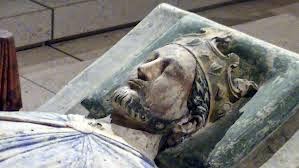
Tomb of Richard I in Fontevrault

Richard I has gone down in history as the “Lionhearted” because of his military prowess, but most of his victories were ephemeral. The bulk of the Angevin Empire was lost in the reign of his brother and successor John, and the Kingdom of Jerusalem that Richard salvaged from obliteration in 1191-1192 was wiped off the map roughly a century after his death. But one conquest, an almost incidental conquest, proved enduring:  it was the conquest of Cyprus in 1191. In just four weeks, Richard I seized control of the entire island, and within a year he had established a Latin kingdom that endured almost four hundred years until the second half of the 16th century.  

As so often with the Angevins, fact is far more dramatic than I would dare to make my fiction! Here is the story of how Richard came to conquer Cyprus.

In 1191, after a tempestuous winter on Sicily, Richard I of England and his assembled crusader army of vassals and mercenaries set sail for the Holy Land.  Philip II, also on crusade, had quarreled with Richard on Sicily and proceeded with his contingent of crusaders without the English/Angevin forces. Richard’s fleet set sail on April 1, but encountered a storm that blew the vessels off course and scattered the fleet.  

Richard’s galley eventually made safe harbor on the island of Rhodes on April 22, but the ship carrying his betrothed, Princess Berengaria of Navarre, and his sister Joanna, the widowed Queen of Sicily, was missing.  When Richard was well enough (he fell ill at Rhodes) and his ships were again seaworthy, he set out once more for the Holy Land collecting his fleet as he went.  He sailed deliberately for Cyprus, the largest of the islands in the eastern Mediterranean in the hope that many of his missing ships, including the one with his bride and sister, might have found refuge there.

And indeed they had, but their reception had been far from welcoming. The survivors of two large ships wrecked on Cyprus, far from receiving the charity expected of a Christian monarch (Cyprus was ruled at this time by a self-styled Byzantine “Emperor”) were – in Richard’s own words – “robbed and despoiled.”  

The ship carrying the royal ladies had avoided shipwreck, but in distress had taken refuge in the harbor of Limassol.  The knights aboard this vessel somehow received word of what had happened to their comrades, and Joanna of Plantagenet (a woman who deserves a novel of her own!) was clearly not buying the assurances offered by “Emperor” Isaac Comnenus about her safety.  She smelt a rat and stayed aboard her damaged vessel.

Thus when Richard sailed into Limassol harbor on the evening of May 5, he found his bride-to-be and sister in a precarious situation aboard an unseaworthy vessel running out of water but afraid of being held for ransom or worse if they went ashore.  Richard responded as could only be expected of the proud Plantagenet: he attacked.

The exact sequence of events varies according to which chronicle one follows.  One version has Richard order his galleys to break through a blockade of ships at the mouth of Limassol harbor and then storm ashore on foot, without waiting for horses to be off-loaded.  Another version claims he landed on a beach beyond Limassol harbor against opposition, and then took Limassol from landward, again without horses. 

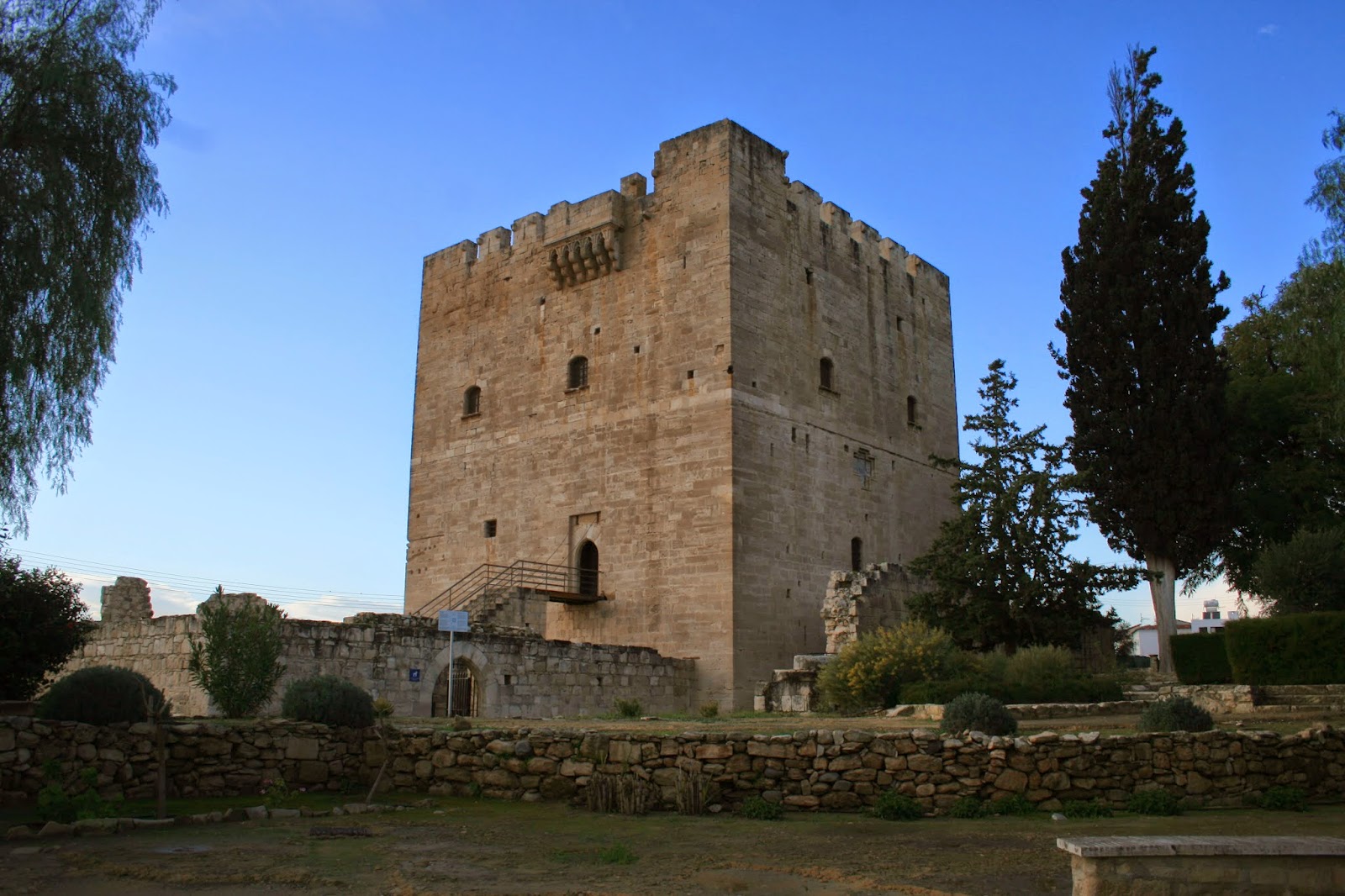
In either case,  Isaac Comnenus was not captured with the city, and so the English King and the Byzantine “Emperor” faced off in battle at a location sometimes identified as Kolossi, the later site of a lovely Hospitaller commandery.


 The Hospitaller Commandery at Kolossi

Where ever the battle was, Richard put the forces of Isaac Comnenus to flight with no casualties of his own because, as at the earlier engagements, the self-styled “Emperor” enjoyed little support among the population.  He had been appointed (if at all) by a Byzantine Emperor, who had himself since been deposed.  Furthermore, his despotic rule had earned him only the hatred of the native population. In short, Richard the Lionheart did not need much of his vaunted military skill to win a victory here. 

After Isaac had surrendered to him, Richard returned to Limassol and on May 12 married Berengaria and had her crowned Queen of England. The exact location is unknown, and several churches in Limassol claim the honor.


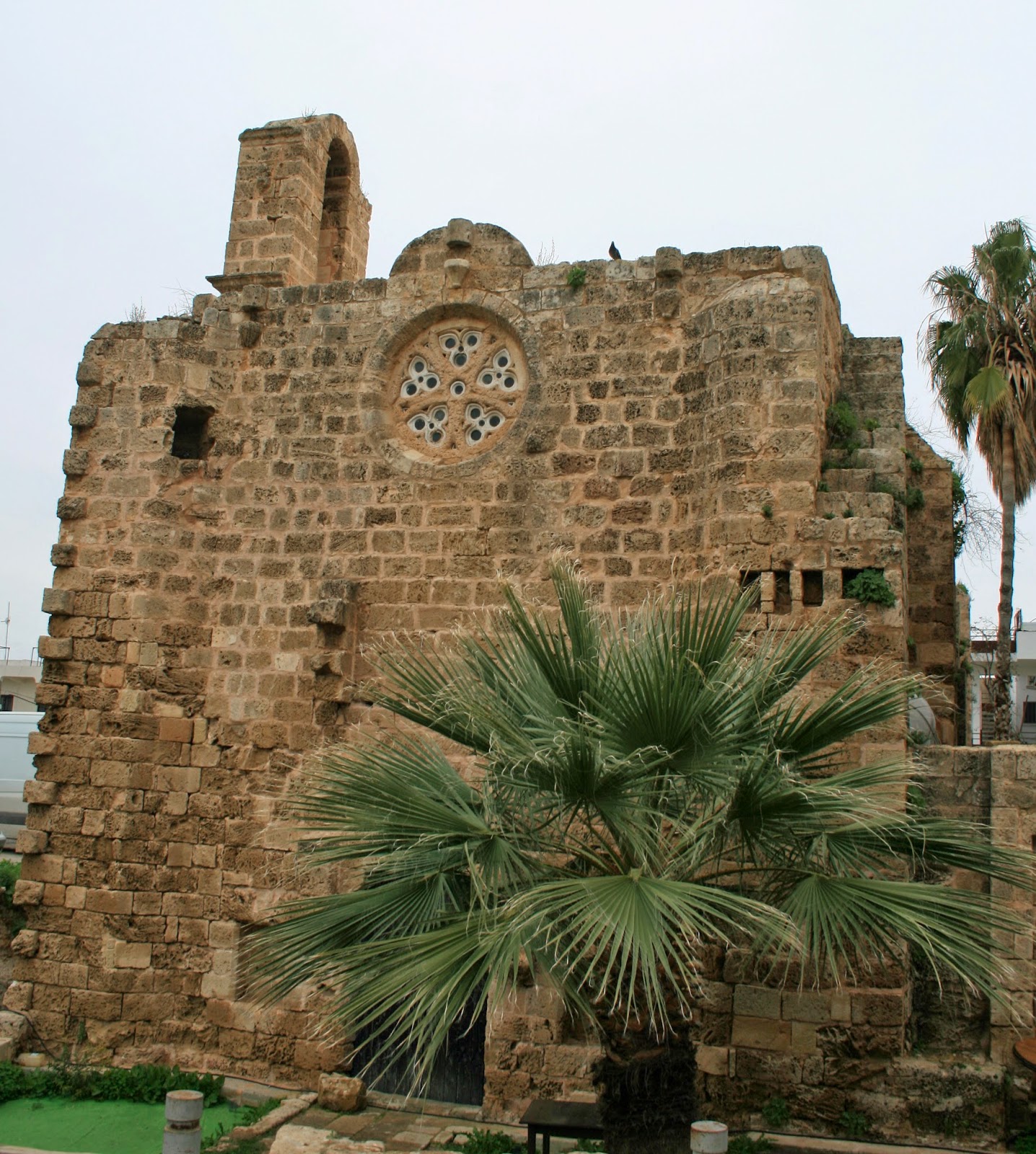
This Templar Church in Famagusta is of a later date, but incorporated some architectural features typical of the Byzantine churches on the island.

Since Richard was in a hurry to get to the Kingdom of Jerusalem, where only the city of Tyre remained in Christian hands although a Christian siege of Muslim held Acre was underway, he probably would have sailed shortly after this happy event if Isaac Comnenus had not made the mistake of breaking his promise to sail with Richard on crusade. In fact, Isaac fled to the mountains in a transparent attempt to re-establish his rule of the island, and Richard responded by an all-out campaign of conquest – which again took little time or effort because of the hostility of the population to Isaac Comnenus. 

After landing at Famagusta, Richard marched on Nicosia, handily defeated Isaac’s mercenaries in the field and continued on to the capital where he also took custody of Isaac’s only child, a girl, who has remained nameless in history.  By the end of May, Isaac Commenus had surrendered to Richard a second time – despite having three unassailable castles in which he might have sought refuge.  Apparently, he could not trust the garrisons of these castle or muster enough loyal men to replace the existing garrisons.


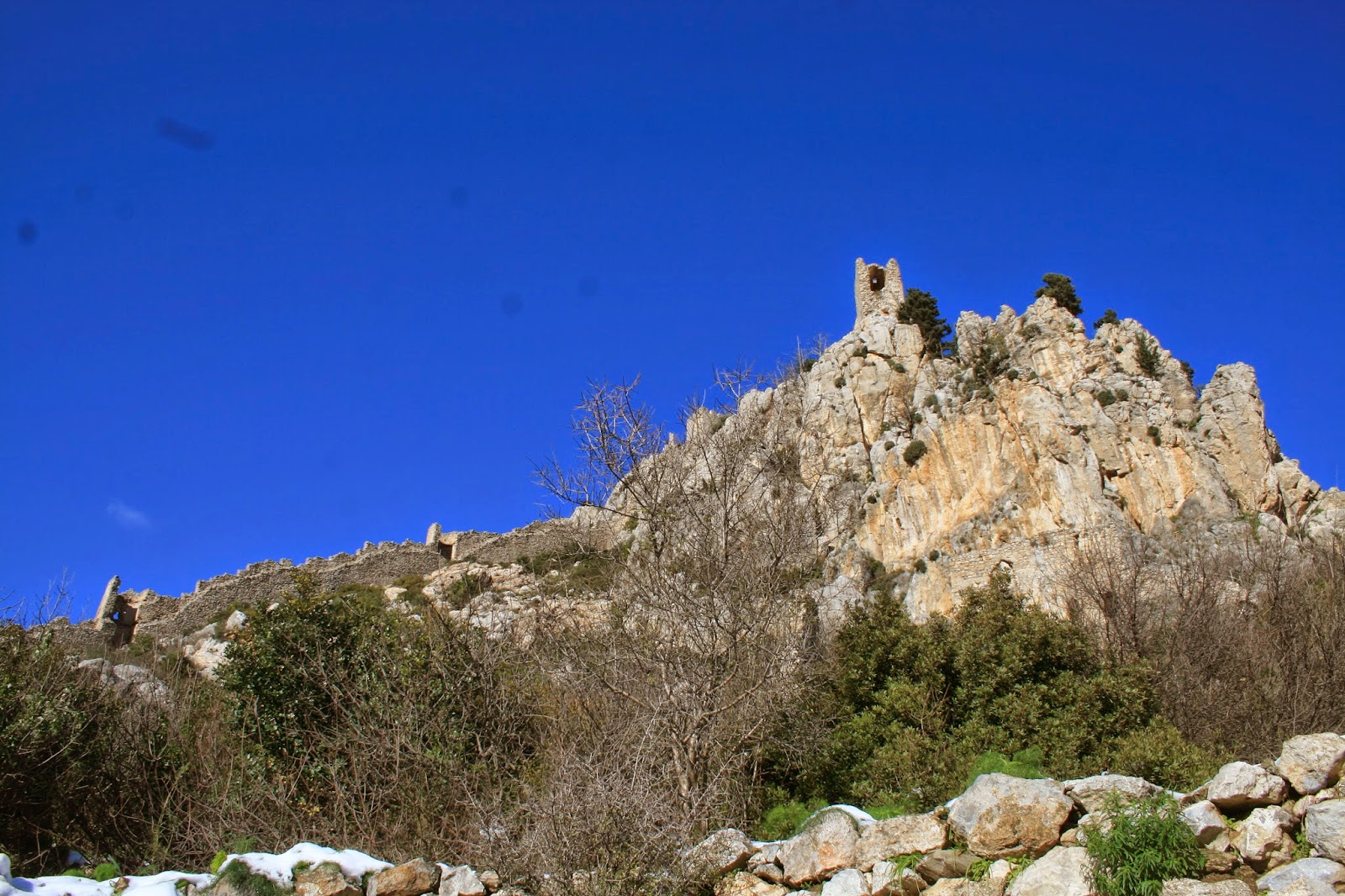
The still dramatic ruins of the Castle of St. Hilarion, one of the three castles built by the Byzantines.

Isaac set only one condition to his surrender: that he not be placed in irons.  Richard therefore had shackles made of silver especially for him.  He was to die three years later in Syria trying to incite the Sultan of Konya to attack the Byzantine Empire. 

Richard was still in a hurry to get to the Holy Land (and join the siege at Acre before his rival King Philip II of France could claim credit for victory), but he also saw the strategic importance of Cyprus to the crusader kingdoms.  The port of Famagusta is only 118 miles from Tripoli, the closest of the crusader cities, and just 165 miles from Acre, the economic heart of the Kingdom.  Furthermore, Cyprus was (and is) a fertile island capable of producing grain, sugar, olives, wine and citrus fruits in abundance.  

Although Richard recognized that he could not possibly rule Cyprus himself, he wanted to secure it as resource for the crusader states and a base for operations against the Saracens.  So, although he left Cyprus on June 4, 1191, exactly a month after he arrived, shortly afterwards Richard sold the island to the Knights Templar for 100,000 pieces of gold.

Unlike Richard, who had come to an agreement with the Greek nobility on the island to let them retain their laws and customs, the Templars allegedly sought to impose Latin rites and tax the population at excessive rates. Within six months the island was in rebellion against them, and the Templars were forced to face the fact that they did not have the manpower to quell this rebellion and fight for the Holy Land at the same time; they returned the Island to Richard.

Richard promptly sold it a second time, this time to his vassal and former King of Jerusalem, Guy de Lusignan.  Guy de Lusignan had a long and colorful past -- which included seducing a Princess (Sibylla of Jerusalem) and losing a Kingdom (on the Horns of Hattin above the Sea of Galilee), but he was now a landless widower.  Guy came to Cyprus in the spring of 1192, probably accompanied by other knights and barons from the once proud Kingdom of Jerusalem who had lost their lands to Salah ad-Din.  Two years later he was dead, and Cyprus passed to his elder brother, Aimery de Lusignan, who founded a stable, Latin dynasty that lasted three hundred years.


The Latin Castle at St. Hilarion and the Premonstratensian Monastery of Bellapais founded by the Lusignans.


~~~~~~~~~~~~~

Helena Schrader is writing a series of ten novels set in the Age of Chivalry. For more information visit her website: http://tales-of-chivalry.com or watch the video teaser Tales of Chivlary. Helena also has a blog about the crusader kingdoms: Defending the Crusader Kingdoms.
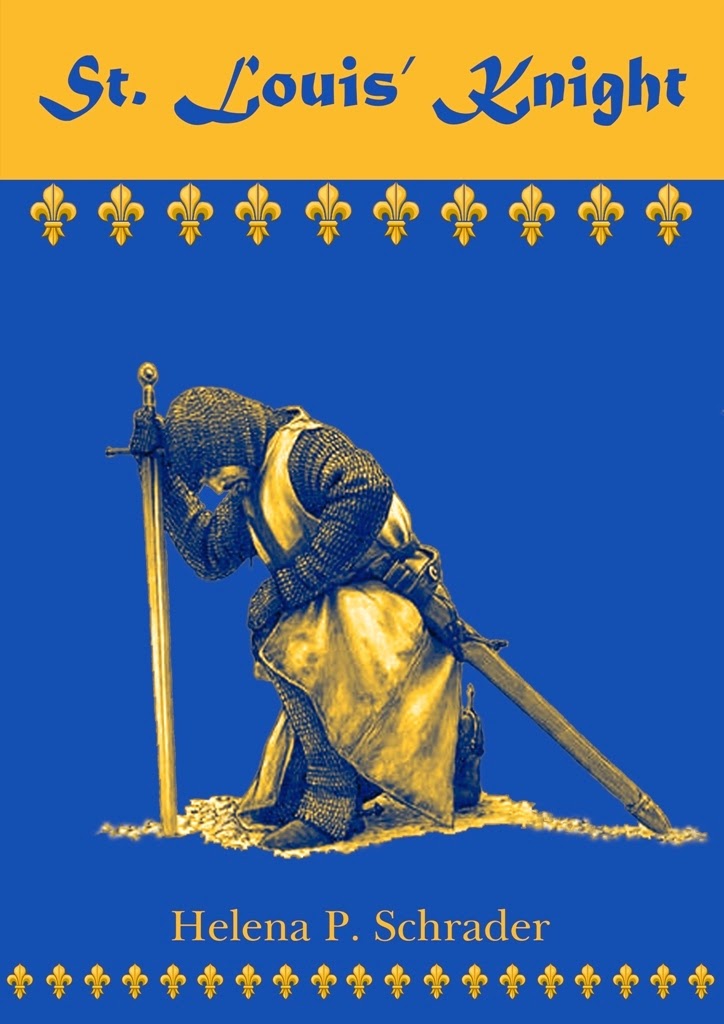
Four of these are set in part in the Kingdom of Cyprus, including St. Louis' Knight :

A crusader in search of faith --
A lame lady in search of revenge --
And a king who would be saint.

St. Louis' Knight takes you to the Holy Land in the 13th century, and a world filled with knights, nobles, prophets -- and assassins.