Showing posts with label Isabella of France. Show all posts

Thursday, March 30, 2017

Finding Love Among the Clauses - a Successful Medieval Marriage

by Anna Belfrage

Marriages in medieval times were rarely about love. Boys and girls born as heirs or heiresses to wealth and large estates had little say in who they married – it was up to their elders to arrange such matters. Marriages were seen as mutually beneficial contracts, and hopefully over time the couple would develop a fondness for each other and find contentment in their union. In most cases, they probably did.

In some cases, what began as a political union blossomed into more than fondness. Today’s post is about one of those love stories, so allow me to take you back to 1326 when a not yet fourteen-year-old boy was betrothed to a girl two years his junior. He was Edward, soon-to-be Edward III of England. She was Philippa, one of Guillaume of Hainaut’s four daughters. The betrothal cemented the alliance between Edward’s mother, Isabella of France, and Count Guillaume, whereby the count placed ships and men at Isabella’s disposal for the latter’s upcoming conquest of England.

There were certain anomalies in this arrangement. First of all, it was Edward’s mother, not his father, who negotiated the marriage. In fact, Edward II had repeatedly written to his son and forbidden him to enter into this marriage contract – or any other, unless approved by the king himself. Secondly, the political purpose of the marriage was not so much to cement the future relationship between England and Hainaut as it was to give Isabella the means with which to oust her husband and his favourite, Hugh Despenser.

In setting his name to the contracts, Edward defied his father’s will – even worse, he unwittingly contributed to his father’s eventual defeat. Not that the adolescent Edward had any choice: his mother would have him sign, and Isabella was not a lady who tolerated disobedience.

For those unfamiliar with the background to Isabella’s rebellion against her husband, Edward II and Isabella had fallen out over a couple of issues, such as the king depriving Isabella of her dower income and exiling her French retainers. Plus, Isabella resented Hugh Despenser’s influence over her husband and worried that the hated Despenser would jeopardise her son’s future ascension to the throne.

Isabella duped Edward II into believing she’d forgiven him for stealing her income and was sent to France to negotiate a peace treaty on Edward’s behalf. Once the treaty was in place, the French king required that Edward II do homage. Not a good idea as per Despenser, so Prince Edward was sent off to do homage in his father’s stead and was warmly welcomed by his mother. Isabella now had what she needed to launch an invasion: her son, heir to the throne. Plus she could now barter his hand in marriage for the wherewithal with which to crush Edward II.

Long before this, Edward II had also toyed with marrying his eldest to one of Count Guillaume’s daughters. He’d even sent his trusted man, Walter Stapledon, Bishop of Exeter, to inspect the goods. A description still survives, but it is unclear whether it refers to Philippa or to one of her sisters. The bishop describes a dark-haired girl with dark eyes, a full mouth and good teeth. All in all, the bishop found her pleasant enough, and one hopes young Edward agreed, that distant June day of 1326 when he first clapped eyes on the girl who was to become his wife.

We have no idea what Philippa looked like, but as she lived in the fourteenth century, she was burdened with a hairdo that is decidedly unflattering. If you look at her effigy in Westminster abbey, what you mostly see are those heavy arrangements of braids framing her face. Maybe she was a bit more daring in her youth – maybe there were days when she wore her hair loose and uncovered – but if so, that ended after she’d married Edward. Married women were supposed to keep their hair covered, as it was a well-known fact men went all gaga at the sight of curls billowing in the wind.

Philippa spent most of her childhood in Valenciennes, Guillaume’s principal city, but would also have been regular visitors at Le Quesnoy where Guillaume and his family enjoyed such noble pastimes as hunting and hawking. Her education was geared at preparing her for the role of a royal consort, even more so once the betrothal documents had been signed.

Isabella’s invasion was a success. The hated Despenser was executed, Edward II was imprisoned and forced to abdicate, and in February of 1327, Prince Edward was crowned Edward III. On the other side of the English Channel, preparations began for Philippa’s wedding.

Like many other young ladies of the time, Philippa was married twice: first by proxy, i.e. Edward sent over a man to stand in his stead, the second time in January of 1328 in York – this time the real thing in the half-finished cathedral with her young and handsome husband at her side. She was not quite fourteen, he was fifteen.

At the time of the wedding, Edward must have been in the grip of conflicting emotions: he’d recently seen his father buried (some people say Edward II didn’t die, but let us bypass that for now), his mother had awarded herself a huge income which seriously depleted the royal coffers, Roger Mortimer was effectively in charge of running the country (albeit with Isabella), and Edward was beginning to suspect neither Isabella nor Roger were all that keen on stepping down from their position of power. So what did that make him? A leashed lion? For a young man determined to become a perfect king, that was not an option.

He found a confidante in Philippa, someone as firmly in his own corner as he was. Philippa might initially have been intimidated by her mother-in-law, but she had every reason to side with her husband, starting with the fact that Queen Isabella showed little interest in ensuring her daughter-in-law was appropriately crowned. From where Isabella was standing, England was better off with one crowned king – her son – and one crowned queen – herself.

In 1330, Edward pushed through the coronation of his wife, by then pregnant with their first child. Mama Isabella was not entirely pleased, but public opinion was moving in the direction of Edward and Philippa, and when the little queen proudly presented her husband with a son and heir in June of 1330, Isabella should have realised power was slipping through her fingers. Edward III now had every reason to act – and act quickly – so as to retake control of his country. He did, which is how Mortimer ended up dead and Isabella ended up marginalised.
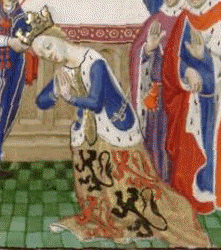
Philippa
Philippa was now queen not only in name but also in fact – and she did a good job, the perfect medieval consort who advised her husband in private, interceded on behalf of the weak, and oversaw the raising of their large family. She was his pillar of strength, the companion from his youth that became his companion through life, the person he could always trust to have his interests at heart.

Over a period of 25 years, Philippa gave birth at least thirteen times, which means she was just sixteen when the first baby was born, over forty when the baby of the family, Thomas of Woodstock, saw the light of the day. Edward clearly enjoyed her company – and vice-versa – which explains why she accompanied her bellicose husband on various of his campaigns – both to Scotland but also to France, where she forever earned the reputation of being a gentle and good queen when she begged Edward to spare the burghers of Calais.

A little background: In 1337, Edward III claimed the French crown, this based on the fact that his mother was born a French princess. The French king obviously disagreed, and so began the Hundred Years’ War. After crushing the French at the battle of Crecy in 1346, Edward turned north – to Calais.

This town was protected by impressive walls, and no matter how many men Edward threw at the town, the defences held. Months of this did not improve Edward’s temper, so in February of 1347, he effectively closed off all lines of supply into the town. The siege of Calais had begun.

The Siege of Calais

The stubborn townspeople refused to give up, hoping their king would come to their aid. Philippe of France did show up, but he was still smarting after the loss at Crecy, and he was severely outnumbered and “outstrategised” by Edward, which made Philippe decide it was best to retreat and fight another day. Abandoned by their king, in August of 1347 Calais surrendered.

By then, Edward was seriously angry with the town for holding out for so long – it put a major dent in his calendar. Plus, he had hoped to force the French king into a decisive battle outside Calais, but Philippe had evaded that trap. I dare say Edward was tempted to unleash his men on the town, but as Edward was in France claiming the French crown, he realised this would not endear him to his French subjects. Instead he offered the people of Calais a deal: if six of them would come before him and give themselves up unconditionally, he would spare the rest.

Those six brave Calais burghers had no illusions as to what fate awaited them, especially as Edward ordered that they wear nothing but their shirts and a noose round their neck – ready to hang, if you will. They prostrated themselves before the smouldering Edward and begged for their lives. He ordered their heads to be cut off – ASAP.

Philippa begging for the life of the burghers

This is when Philippa stepped forth from the shadows of history to hog the limelight. Heavily pregnant, she kneeled before her husband and begged him to show mercy, as she feared God would otherwise rob them of the child presently in her womb. Edward was not happy - at all. But he was fond of his wife, and was so touched by the sight of her on her knees that he reluctantly spared the six burghers and everyone lived happily ever after. Except that they didn’t – at least not the citizens of Calais who were evicted out of their town and replaced by Edward’s men. Neither did Philippa’s baby. A son, Thomas of Windsor, was born in 1347 but died within a year.

After the events at Calais, Philippa went back to being the mild wife she’d always been, never questioning her husband in public, however much she may have argued with him in private. Not that I think they did argue. I believe theirs was a happy and fulfilling marriage, one in which they enjoyed spending time together, sharing their thoughts with each other. In Philippa and their children Edward found the family he’d lost as a child when his mother and father ended up on opposite sides of a battlefield. In her, he had a loyal and devoted spouse. In him, she found a man who cherished and honoured her.

All good things come to an end. In the 1360s, Philippa fell ill, a wasting disease that had her growing weak and him desperate. This is when Edward began his association with Alice Perrers, his only known mistress, but his devotion for his wife and his distress at her continued illness were evident.
In July of 1369, Philippa sent for her husband. He rushed to her side and found her wan and pale in her bed. They held hands as she had him promise that once he died, he’d be buried beside her. Edward wept and gave her his word, gripping the hand of the woman who’d been his mainstay through life.

Philippa was all of fifty-five when she died, and had lived through the misfortune of seeing nine of her children die before her. Her husband never recovered from her death. Soon enough, he fell under the spell of Alice Perrers, even more so as his mind deteriorated, but in his heart I believe Philippa ruled uncontested – as she had always done.

All pictures in public domain and/or licensed under Wikimedia Creative Commons

~~~~~~~~~~~

Had Anna Belfrage been allowed to choose, she’d have become a professional time-traveller. As such a profession does not exist, she became a financial professional with two absorbing interests, namely history and writing.

Presently, Anna is hard at work with The King’s Greatest Enemy, a series set in the 1320s featuring Adam de Guirande, his wife Kit, and their adventures and misfortunes in connection with Roger Mortimer’s rise to power. The first book, In The Shadow of the Storm was published in 2015, the second, Days of Sun and Glory, was published in July 2016, and the third, Under the Approaching Dark, will be out in April 2017.

When Anna is not stuck in the 14th century, she's probably visiting in the 17th century, specifically with Alex(andra) and Matthew Graham, the protagonists of the acclaimed The Graham Saga. This is the story of two people who should never have met – not when she was born three centuries after him.

More about Anna on her website or on her blog!


Monday, July 4, 2016

The Bishop and the Bread-knife

by Anna Belfrage

In a feudal society, the first-born son generally hit the jackpot. His was the future title, his were his father’s lands, and not very much was left for his younger brothers – unless, of course, the mother had her own lands and titles that could be settled on a younger son. Alternatively, the younger son entered holy orders. The church, you see, offered an interesting and lucrative career path to the ambitious younger son. Not that the younger son was always given a choice: your medieval ambitious daddy saw the benefits in having a son or two high up the ecclesiastic hierarchy.

Obviously, not all bishops in medieval England were younger sons of noblemen. Take, for example, today’s protagonist, Walter Stapledon, Bishop of Exeter and loyal servant of Edward II. Mind you, Walter was a younger brother. Big brother Richard was to inherit some minor landholdings from their father, and little Walter was therefore destined for the church. The Stapledon family was not without means, seeing as both Richard and Walter were educated at Oxford. Richard would go on to become a lawyer and local judge, on top of his day-to-day management of his lands. Walter, on the other hand, made his way to Exeter, where he became a cathedral canon in 1301. By then, Walter was in his mid-thirties, a well-educated man who in 1305 became a doctor of canon and civil law, which qualified him for royal employment.

In 1307, the bishop of Exeter died, and Walter was chosen as his replacement. Not a unanimous vote, and there was a lot of quibbling back and forth before Walter’s backside was firmly welded to the bishop’s chair. But once there, Walter had arrived: as a bishop, not only did he have access to substantial means, but he was also a member of Parliament. And somewhere along the line, Bishop Walter found favour with the king, Edward II.

During his first decade as bishop, Walter not only organised his diocese and founded Stapledon Hall in Oxford (present day Exeter College). He also served Edward as an envoy to Gascony on several occasions. Things weren’t all that good in Gascony, with the French encroaching regularly on English land. From a French perspective, the land was French. From an English perspective, Gascony was what remained of the magnificent Angevin empire that had been built by Henry II and his wife, Eleanor of Aquitaine, and which started crumbling the moment Henry II died – albeit that his son Richard held it together for some more years. Gascony therefore had immense emotional value for the English – and Edward II was not about to let this last toe-hold on the continent slip away.

Supposedly, Edward II

Edward had problems closer to home. Due to his blatant favouritism of the Despensers, father and son, he had alienated most of his powerful barons, who felt he was in breach of his coronation oaths, whereby he was supposed to take counsel from a larger group of barons, not only the Despensers. When Edward II repeatedly turned a blind eye on the Despensers’ rapacious (and at times illegal) appropriation of land belonging to others, the barons were further enraged. When Hugh Despenser the younger took it upon himself to hang, draw and quarter a man without a trial, the barons had had enough. In 1321, the barons, led by Roger Mortimer and Thomas of Lancaster, rebelled, and Walter Stapledon was one of ten bishops who had their work more than cut out for them as they hastened back and forth between the king and the barons in an attempt to broker a peace.

Ultimately, the king was given no choice: The Despensers were exiled and Edward retreated to lick his wounds and plan vengeance. Stapledon retired to his diocese, resigning from the role of Treasurer he’d been given by Edward a year or so earlier (this appointment was one of the issues of contention with the barons; such appointments should be discussed with the baronial council). Maybe Walter felt an element of relief at this development, hoping to expend his considerable energy on his diocese. Alternatively, he was disappointed, seeing as he’d earned the reputation of increasing his own wealth due to his position, not above applying extortion when so required.

In the event, Edward II rose like a phoenix from the ashes. Clearly, the risk of never seeing Hugh Despenser sufficed to have the king act swiftly and resolutely, and by 1322 the tables had been turned on the barons, with Mortimer languishing in the Tower and Lancaster very dead. The Despensers were recalled, Stapledon was reinstated, and things were, in Edward’s opinion, good. Well: except for Gascony, where things had taken a turn for the worse.

Stapledon had his work cut out for him as Treasurer. The hostilities in Gascony, the skirmishes with Scotland – it all cost money. And when Mortimer escaped the Tower in August of 1323, money had to be expended on increased security for the king and his favourites. Stapledon was an efficient administrator, but money was scarce – the king was not given to parsimony, neither was dear Hugh – and in 1324 the king seized Queen Isabella’s dower lands to supplement his income. Some say this was Stapledon’s idea, but whether it was or not, the bulk of Isabella’s holdings lay in his diocese, so Stapledon was put in charge of doing the actual seizing. This did not go down well with Isabella, who was reduced to a meagre allowance and blamed Stapledon for her humiliation.

The political situation in England became increasingly volatile. Spurred on by Hugh Despenser, Edward turned England upside down in his search for potential allies to his rebellious barons – first and foremost Mortimer. Suspects were hauled before the assizes, in some cases deprived of their lands, in others imprisoned or executed. Tensions rode high, putting it mildly. In Gascony, the French under Charles de Valois routed the English. If Edward wanted to retain his Gascon lands, he had to act – which he did, by sending his queen to negotiate with her brother, the French king Charles IV. Isabella was successful, Charles IV was willing to be magnanimous, and all that remained was the thorny issue of homage.

Paris - back then 
Charles IV wanted Edward II to do homage – in Paris – for Gascony. This would mean leaving England in Hugh Despenser’s hands, and while Edward himself had no problem with this, Despenser most certainly did, convinced that the moment the king was gone, he’d be attacked and murdered by the disgruntled barons. Probably a legitimate fear, and so in September of 1325 Edward II despatched his son, Edward of Windsor, to do homage in his stead. The young prince was accompanied by Walter Stapledon who was charged with one further task: bring Queen Isabella home.

By then, Isabella had been in France for six months or so, and she showed no inclination whatsoever to return to her husband. Seeing as Roger Mortimer was at large on the continent, this made Edward decidedly uncomfortable – he was intelligent enough to realise that his disaffected and humiliated wife might entertain the notion of supporting the traitorous (as per Edward) baron. He had repeatedly ordered Isabella to return, and at her non-compliance had cut off her funds, hoping this would bring his wife to heel. The only thing that happened was that Isabella moved in with her brother, still stubbornly refusing to return to England.

The future Edward III, doing homage
Stapledon oversaw the homage ceremony, tried to corner Isabella into having a private conversation, and when that didn’t work he chose to stand up before the entire French court and tell her she had no option but to return home immediately, her husband would not tolerate any more excuses from his disobedient wife. Isabella stood and told Stapledon she would not go home – not as long as Hugh Despenser the younger was the third wheel in her marriage. Stapledon turned to the French king – a man-to-man demand that the king send his sister back to her husband. Charles, unsurprisingly, refused. Stapledon had no choice but to retire, utterly humiliated. Some days later, he chose to flee the court in disguise, convinced there was a plot afoot to assassinate him. Left behind in France was Prince Edward, now firmly under his mother’s control. The rebellion against Edward II had just acquired its figurehead – the heir to the throne.

Stapledon returned to an England in turmoil. Over the coming months, it became apparent that Isabella and Roger had joined forces – more than that, they’d embarked on a passionate relationship, openly cuckolding Edward II. In England, all those suffering under the double yoke of Despenser and Edward II organised themselves, while the king and his advisors concentrated on defence strategies. Stapledon was made responsible for defending his part of the country, and as the winter of 1325 became the spring of 1326, people waited. And waited. And waited.

In September of 1326, Isabella and her son, accompanied by Roger, landed in England. In a series of rousing speeches, Isabella declared that they were here only to safeguard England from the tyranny of the Despensers and the other evil counsellors of the king (I am sure she included Stapledon in this little club), and to ensure the rule of law was restored within the land. At every opportunity, she presented her handsome fourteen-year-old son, ensuring everyone got an eyeful of the heir – the future king.

Despenser urged the king to flee. Edward II did not lack personal courage, and with the funds in his treasury he could easily have fielded an army substantially larger than that of Isabella and Roger. But in view of Hugh’s abject terror, he did as his favourite asked him to and rode west, making for the relative safety of Ireland. London was left in control of Stapledon – a dangerous task, seeing as the Londoners were major Mortimer and Isabella fans.

On October 15, 1326, London exploded. Angry citizens decided to take justice in their own hands and the mayor (who, incidentally, was one of the men who condemned Roger Mortimer to death in 1321) was forced to sign the death sentences of two men: one was a purported Despenser spy, the other was none other than the hated Treasurer, Walter Stapledon. Now Walter was a bishop, and as such could only be tried by an ecclesiastic court, but the mob had gone beyond trials – they wanted blood, and they wanted it now. The Despenser spy was hunted down and dragged to Cheapside where he was beheaded. And then they went in search of the bishop.

Stapledon was not at home when the mob burnt down his doors, ransacked his house and carried off his precious belongings. But upon hearing that his house was being looted, the bishop donned armour and rode into the city, ignoring the advice to stay away. By the time he’d realised his error, it was too late, the mob baying for his blood as they chased Stapledon and his squires through the London streets. Desperately, Stapledon made for St Paul’s, hoping to claim sanctuary. At the north door, the crowd caught up with him, and he was pulled off his horse, screaming in fear as he was hauled towards Cheapside. There he was forced to his knees and his head was sawed off with a bread-knife. I can only imagine just how much time that took…

Depiction of Richard Stapledon's Monument (S A Hart)
The ecstatic Londoners sent Stapledon’s head as a gift to Isabella. It is to her credit that she was horrified – mostly because one should not saw off the head of bishops. On Isabella’s orders, the body (and head, one assumes) of Walter Stapledon were returned to Exeter, where he was buried before the high altar. His brother, Richard, is also buried in the Exeter Cathedral. Whether or not they meet up at night to chat about the distant past, I have no idea.

(All pictures in the public domain)

~~~~~~~~~~~~

Had Anna Belfrage been allowed to choose, she’d have become a professional time-traveller. As such a profession does not exist, she became a financial professional with two absorbing interests, namely history and writing.


Presently, Anna is hard at work with The King’s Greatest Enemy, a series set in the 1320s featuring Adam de Guirande, his wife Kit, and their adventures and misfortunes in connection with Roger Mortimer’s rise to power. And yes, Walter Stapledon and his poor head features in Days of Sun and Glory, published in July of 2016. The first book, In The Shadow of the Storm was published in 2015.

When Anna is not stuck in the 14th century, she's probably visiting in the 17th century, specifically with Alex and Matthew Graham, the protagonists of the acclaimed The Graham Saga. This is the story of two people who should never have met – not when she was born three centuries after him.


Thursday, May 26, 2016

The Favourite from Hell

by Anna Belfrage

There are few men in English history as vilified as Hugh Despenser the younger. This man, it would seem, was Satan come to earth, and it was his evil influence that indirectly caused the situation which led to Edward II being deposed and locked away in Berkeley Castle. Except, of course, that it was Edward II who was the king, not Despenser, and if Edward allowed Hugh to lead him about by a figurative ring through his nose, then how can that be Hugh’s fault?

Edward I and his son, Edward
Hugh Despenser was born in 1286, making him a couple of years younger than Edward of Caernarvon, Edward I’s fifth and only surviving son. Hugh’s father was another Hugh, and accordingly today’s protagonist usually goes by the name of Hugh Despenser the younger so as to differentiate from his father, Hugh Despenser the elder. These two gentlemen had more in common than their name, namely a rapacious greed that quickly made them extremely unpopular with everyone but their king, Edward II.

The Despensers came with something of a stain, seeing as our Hugh’s grandfather had died at Evesham, fighting for Simon de Montfort against the royal forces. Somewhat ironically, this Despenser (also a Hugh) was killed by a Mortimer (also a Roger) thereby laying the grounds to the implacable enmity between the Despensers and the Mortimers. In brief, all of this history resulted in two of Edward IIs most capable barons detesting each other.

Thanks to Hugh the younger’s paternal great-grandmother, all had not been lost to the Despensers after the debacle of Evesham. Hugh the elder worked hard to re-establish himself in Edward I’s favour, and his son was an intelligent and personable young man who found favour with the king – so much favour, in fact, that in 1307 Edward I did Hugh the younger the honour of giving him Eleanor de Clare as his wife. Eleanor was not only beautiful she was also Edward I’s granddaughter. Hugh Despenser the younger had thereby through his marriage become a member of the royal family.

In July of 1307, Edward I died. Rejoicing broke out in both Scotland and (I assume) in Wales, but the English knew they had lost a great king, and looked with some concern at his heir, the newly crowned Edward II. This second Edward was a handsome man, gifted with a vivid intelligence and physically agile and strong. He was brave, he had presence, and appeared to be everything a king should be – had it not been for his odd pastimes. The new English king enjoyed manual work and would happily spend his time in smithies or thatching. And then there was his faiblesse for handsome young men – and especially for Piers Gaveston, the Gascon knight who so easily twirled Edward II round his little finger.

As Piers is not the subject of the post, suffice it to say that this charismatic man effectively became the power behind the throne. This did not please the barons, and soon enough loud voices were calling for the favourite’s exile.

Piers and Edward, Marcus Stone (1876) 

Piers was not only the king’s favourite, he was also Hugh’s brother-in-law, having married Eleanor’s younger sister, Margaret, late in 1307. I’m not sure this endeared Piers to Hugh, and by 1310 or thereabouts Hugh was firmly in bed with the baronial opposition. Hugh the elder, meanwhile, stood by his king. Now and then I wonder if this was a tactic, the two Hughs sitting down and deciding it made sense to have one foot in each camp, so to say.

By 1312, Piers was dead, executed (murdered, some said, among them the distraught king) by the barons led by Thomas of Lancaster, first cousin to the king. Edward was never to forgive him for this. Hugh the younger was not in a position to comfort his distraught king – at least not initially, given his support for the barons – so the king consoled himself elsewhere. But bit by bit, Hugh wormed his way into the king’s confidence, no doubt helped by the fact that Edward was very fond of his niece, Eleanor de Clare.

Bannockburn (Scotichronicon, c:a 1440)
The Scots had been quick to capitalise on the unrest in England, and in 1314 the king decided it was time to show the Scots once and for all that the son of The Hammer of the Scots could do some hammering of his own. Well, we all know how well that worked out for Edward, don’t we? At the Battle of Bannockburn, the English hit the dust, and among the many, many men killed was Gilbert de Clare, Earl of Gloucester – and Hugh the younger’s brother-in-law.

Gilbert left no children, and so his huge estates were to be distributed between his three sisters. In the ensuing free-for-all, Hugh the younger showed his very rapacious side, having no qualms about hogging the lion’s share on behalf of his beloved wife. What Eleanor may have thought about all this is uncertain, but I I suppose she was as dynastic in her approach as her husband – after all, she had the future of her children to consider. Whatever the case, Hugh’s behaviour alienated his sisters-in-law and their husbands. But by now, Hugh was rising rapidly in Edward’s favour, so I dare say he wasn’t all that worried.

Soon enough, Hugh was a constant presence at the king’s side, hungry for more land, more power. The king was more than happy to give it to him, no matter that the barons grumbled. Edward shrugged and made Hugh his royal chancellor. Suddenly, Hugh controlled access to the king, making him the most powerful man around – well, with the exception of his easy-going royal master.

This is where we can return to my initial paragraph: Hugh did not take his power by force. It was freely given to him by the king, who chose to ignore the rumbling protests this caused. Edward had no desire to submerge himself in the details of running his kingdom and was more than happy to let Hugh handle the day-to-day. Besides, I suspect Edward enjoyed twisting the noses of his recalcitrant barons out of joint – and in particular that of Thomas of Lancaster who was predictably enraged at having someone like Hugh wielding power he felt should be his.

So instead of stopping Hugh when he appropriated land that did not belong to him – Edward even looked the other way when Hugh claimed land belonging to the king’s half-brothers, the earls of Norfolk and Kent – instead of curbing his favourites excesses, Edward sat back and enjoyed the ride. He didn’t even intercede when Despenser violated the law, as he did in the case of the Welshman Llewellyn Bren, whom Hugh had hanged, drawn and quartered, without a trial.

By 1321, the barons had had enough. Their attempts to reach an amicable solution with the king had failed, and consensus among them was that Hugh Despenser – both of them – had to go. The rebellious barons devastated Despenser land and marched in force against the king, throwing a cordon of armed men round the royal court. Led by Thomas of Lancaster, Humphrey de Bohun and Roger Mortimer, they demanded that the king exile his favourite – and Papa Hugh – that he allow himself to be counselled by his barons, and that order and the rule of law be restored within the realm. This last was a not-so-oblique reference to the unjust killing of Bren. The king was trapped and had no choice but to comply.

Hugh the younger and elder left – but they did not go far. For the coming months, they took up a career as Channel pirates, while in England the king plotted his revenge. For once, Edward II showed an impressive capacity for swift action, and come late autumn he had the tables turned on the victorious barons.

Had Lancaster ridden to Mortimer’s aid, the king might not have had such an easy win, but Lancaster preferred to stay in the north, thereby giving Edward the opportunity to pick his enemies off one by one. Mortimer ended up in the Tower, Lancaster was executed, and Hugh Despenser returned to his beloved king. And this time, Despenser and the king thought they had won for good.

Turns out they hadn’t. In 1323, Mortimer escaped from the Tower and fled to France, where he was warmly welcomed by Queen Isabella’s brother, King Charles.  Edward II and Despenser went into a frenzy. It became paramount to cleanse the realm of England of any potential traitors, a.k.a. Mortimer supporters, and so a large number of men were hauled before the assizes, in many cases subjected to crippling fines, but just as often found guilty of treason and executed. Family members of these traitors – wives, children – were confined or thrown out to starve. Dark, dark years for the English – and most blamed Hugh Despenser.

By now, Hugh had also earned the enmity of the queen, firstly by marginalising her at court, secondly by suggesting to the king that he take back her dower lands and exile her French household. Seeing as England was at war with France over Gascony, exiling potential French spies made some sense, but Isabella had been Edward’s loyal wife for sixteen years, and she took it badly. Very badly.

The war in France did not go well, and Edward saw no option but to send Isabella to negotiate with her brother. Which she did, brokering a peace treaty which called for Edward to do homage for his French lands – in France. Not a good idea, as per Hugh, because with the king gone, God knew what might happen to him, poor unprotected favourite left behind in England? Hmm, the king said, but he loved Hugh, and these last few years of tyranny had not endeared Hugh to the barons – rather the reverse.  So instead, Edward sent his son, the future Edward III to France.

In retrospect, Edward could just as well have tightened a noose around his own neck. Waiting for Prince Edward in France was not only the disgruntled queen, but also Roger Mortimer – and Mortimer had scores to settle, especially with his personal enemy, Hugh Despenser.

An artistic interpretation of Edward II's arrest
In 1326, Mortimer and Isabella returned to England, bringing with them a small invasion force – and the young prince. The people of England flocked to their banners, tired of living under the heavy Despenser yoke. The king could easily have raised an army to meet them, but Despenser panicked and suggested they flee west, make for Ireland before it was too late. Edward did as his favourite asked, but they never made it to Ireland. Instead, the king and his favourite were captured in Wales. Edward was hauled off to Kenilworth as a prisoner. Hugh Despenser was hauled off to Hereford, there to die.

On November 24, 1326, Hugh Despenser the younger stood some sort of trial in Hereford. The verdict was never in doubt, and the naked man was attached to four horses that dragged him towards the waiting gallows, built very high so that everyone could see how the king’s favourite, the rapacious and greedy Despenser, died. He was hanged, taken down while alive, castrated and disembowelled. Purportedly, Mortimer and Isabella sat watching the spectacle while partaking of food and wine. Hugh, they say, died well – whatever that means when you’re being tortured to death.


Following Despenser’s death, Queen Isabella had Despenser’s wife incarcerated in the Tower. Three of Hugh’s daughters were forcibly veiled as nuns (the oldest of them was about ten), and his sons were locked up. And as to Hugh, his bodily remains were quartered and hung from the city walls in York, Bristol, Dover and Carlisle, while his parboiled head adorned London Bridge. By then, of course, Hugh was no longer in a position to care.

Hugh Despenser was not a nice man. Once in power, he stopped at little to further his own interests, whether that meant disinheriting orphans and widows, or killing men without trial. But ultimately, he was a product of his king, a sovereign too weak to keep his favourite in check.

All images from Wikimedia Commons, Public Domain

~~~~~~~~~~~

Had Anna been allowed to choose, she’d have become a professional time-traveller. As such a profession does not exist, she became a financial professional with two absorbing interests, namely history and writing. 

Presently, Anna is hard at work with The King’s Greatest Enemy, a series set in the 1320s featuring Adam de Guirande, his wife Kit, and their adventures and misfortunes in connection with Roger Mortimer’s rise to power. And yes, Hugh Despenser plays a central role.

The first book In The Shadow of the Storm was published in 2015, the second, Days of Sun and Glory, will be published in July 2016.

When Anna is not stuck in the 14th century, she's probably visiting in the 17th century, specifically with Alex and Matthew Graham, the protagonists of the acclaimed The Graham Saga. This is the story of two people who should never have met – not when she was born three centuries after him. 

More about Anna on her website or on her blog! 


Tuesday, April 12, 2016

Leeds Castle, a Castle Fit for a Queen.

by Anne O'Brien
This post is an EHFA Editor's Choice. It was first published on 10/11/2012.

Or even six of them ...

Not only is Leeds Castle a romantic ruin in a superb setting - sometimes described as the loveliest castle in the world - and so a 'must-visit' spot on any tourist or historical itinerary, it has a particular attraction for me as a writer of medieval historical fiction. During its time as a medieval royal residence, Leeds Castle has been home to at least six queens of England.


Nigel Chadwick [CC BY-SA 2.0 (http://creativecommons.org/licenses/by-sa/2.0)],
via Wikimedia Commons

Why?  Because Leeds Castle became part of the Queen of England's dower, granted to her on her marriage to give her future security in the case of her husband the King predeceasing her.

Situated in Kent, near Maidstone, the original castle was probably a simple motte and bailey construction of wood and earth, but a more formidable stronghold was built in 1119 by Robert de Crevecoeur.

Its importance in history began when it fell into royal hands in 1278 when King Edward I took over.  It soon became - not surprisingly - one of his favourite residences and he made much investment there, creating the beautiful setting that it enjoys today.  It is thought that Edward was the man who created the lake which surrounds the castle, linking the three islands in the River Len with a causeway.  For the pleasure of his beloved wife Eleanor of Castile, he built a gloirette - a D shaped tower with residential apartments - on the smallest of the three islands, giving magnificent views of the surrounding countryside.  I am sure they enjoyed living there during the summer months although I imagine it would be incredibly damp in winter.


CC BY-SA 3.0, https://commons.wikimedia.org/w/index.php?curid=252262

So who were the Queens who spent time there?

Eleanor of Castile, wife of Edward I, for whom most of the early improvements were made.  She is the Eleanor of the crosses, marking her final journey in death from Lincoln to her burial in Westminster abbey.

Margaret of France, Edward I's second wife.  She was only 20 when she married him, and he was 60, but when she was widowed 8 year later she never remarried, saying 'when Edward died, all men died for me.'

Isabella of France, wife to Edward II.  After his death in 1327 and her fall from grace when her son Edward III took control of England, she lived primarily at Leeds castle.

Anne of Bohemia, the 15 year old bride of Richard II spent the winter of 1381 at the castle on her way to be married to the youthful king.

Henry VIII transformed the castle with much new building in 1519 for his first wife Catherine of Aragon.  They stayed at Leeds together, with the entire English Court, on their way to the Field of the Cloth of Gold to sign the treaty with Francis I of France.  The wood and plaster work here in the courtyard looks to be a Tudor addition but the stonework is old enough for the castle's medieval beginnings.


Lynda Poulter [CC BY-SA 2.0 (http://creativecommons.org/licenses/by-sa/2.0)],
via Wikimedia Commons

And my own particular interest in Leeds Castle?  It was the home of two of my favourite ladies, both of whom appear in my 2013 novel, The Forbidden Queen:

Joanna of Navarre, second wife to Henry IV and step mother to Henry V.

Katherine de Valois, wife to Henry V and Owen Tudor.

This room is set out at the Queen's room as it might have been in Katherine's day.  Isn't it magnificent? 


Richard Croft [CC BY-SA 2.0 (http://creativecommons.org/licenses/by-sa/2.0)],
via Wikimedia Commons

Joanna was imprisoned at Leeds for witchcraft - a spurious accusation for which there was no evidence but which enabled Henry to get his hands on her dower to pay for the increasingly expensive war in France.  This was not Henry at his best!  Joanna was released just before Henry's death.  I doubt that she enjoyed her enforced stay at Leeds.

As for Katherine, she was not always free to visit Leeds, condemned as she was to live in the household of her son, the boy king Henry VI, after her unwise association with Edmund Beaufort.  But after her demand for independence and her subsequent marriage to Owen Tudor, I imagine they spent much time together there in so idyllic a setting.


Richard Croft [CC BY-SA 2.0 (http://creativecommons.org/licenses/by-sa/2.0)],
via Wikimedia Commons

The Queen's bathroom.  What Queen could do without one?

What a rich sense of history this castle has.   Is it possible that the spirit of any of these  royal inhabitants still lingers in this lovely place?  Not than anyone has noticed.  But it is said that a large black dog haunts the ruins, a monstrous creature associated with Eleanor Cobham, Duchess of Gloucester, (married to the brother of Henry V) who was tried  and convicted of necromancy, witchcraft, heresy and treason.  She was held prisoner at Leeds for a short time before her trial.  Perhaps her unsettling presence caused the black dog to roam the ruins.

Black dogs notwithstanding, I like to think that the shades of Katherine and Owen still walk the ruins together on a summer evening, hand in hand.  Perhaps they even walk together through this splendid doorway ...


Richard Croft [CC BY-SA 2.0 (http://creativecommons.org/licenses/by-sa/2.0)],
via Wikimedia Commons


~~~~~~~~~~

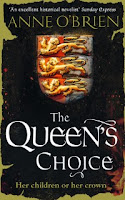
My novel of Joanna of Navarre, The Queen's Choice, already available in hardback and eBook, will be released in paperback in the UK on 19th May 2016. 

For regular updates, do drop into my website:
www.anneobrienbooks.com

Or join me on Facebook to keep in touch with my WIP and all things historical that interest me:
www.facebook.com/anneobrienbooks


Friday, December 18, 2015

The Myth of the Good Dictator

by Anna Belfrage

History has repeatedly shown us that absolute powers rarely bring out the best in a man – rather the reverse – and yet history is full of these dictators, men who somehow got hold of power and who, once enthralled by the trappings of total control, were incapable of letting go. In some cases, there is something tragic about these men. They saw, they won, they conquered – and the tribulations in their wake has left them with tarnished reputations, some of them so black no amount of polish can bring back as much as a glimmer of what was once light and good in them.

Many of these men are fascinating. Quite a few deserve a permanent residence in hell. Many were, to a point, a victim to circumstances. After all, once power has been usurped, relinquishing it tends to be the equivalent of suicide. Many of them acted alone. Some did not, but have been apportioned the entire blame by history. And quite a few did have the best of intentions – or believed they did.

Roger Mortimer and Queen Isabella
Well, after that rather massive preamble, I’m guessing you’ve worked out that somehow one of these power-hungry figures has influenced my writing. You are, of course, absolutely right. Today, I turn the limelight on Roger Mortimer, 14th century rebellious baron, lover of a queen, and ruler of a country – for a while, at least.

I must admit straight off that I find Mortimer a delicious mixture of opposites: capable and honourable, a loyal servant to the crown until his enmity with the king’s favourite forced him to rebel, Mortimer was well-educated, a skilled general and a man of taste. This was a man who sported white tunics embroidered with butterflies, who spent lavishly on his various homes, who bedded his mistress on sheets of red silk and relished intelligent discourse with men of God. He was also ruthless, greedy and, once he’d tasted the heady brew of power, determined to remain on top.

The Mortimers were a power to be reckoned with on the Welsh Marches, the proud Norman bloodline strengthened with the genes of none less than Llewellyn Fawr, whose illegitimate daughter married one of the Mortimers up Roger’s family tree. Not that the Mortimers ever felt particularly Welsh. It was a Mortimer, after all, who hacked off Llewellyn the Last’s head and presented it to Edward I. Cousin killing cousin, one could say.

By the time Roger was born, the Welsh had been brought brutally to heel by their English overlords. As a Marcher lord, Roger would probably have spoken Welsh and his household would have included a number of Welsh retainers, but he would never have defined himself as Welsh. No, Roger Mortimer was the heir to a sizeable chunk of land, one of the king’s loyal barons – and it was as a loyal servant to the English crown Roger Mortimer set out to carve himself a glorious career.

Edward II
Things went well at first. Had Edward II been a different man – a strong ruler who refused to be swayed by favourites – chances are Mortimer would never had made it beyond a footnote in history. But Edward was not a strong ruler. He was one of those unfortunates born to a destiny he did not want – but could not escape. So he consoled himself with handsome favourites, men who made him laugh and who more than gladly relieved him of the tedious task of managing the day-to-day of England.

Once such favourite was Piers Gaveston. For a while, the young Roger Mortimer was actually Pier’s ward, and he does not seem to have disliked this flamboyant Gascon who’d captured the royal heart and ear. By 1312, Gaveston was history, brutally killed by the rebelling barons led by Thomas of Lancaster and the Earl of Warwick. Edward II was forced to promise he would go back to ruling his kingdom together with a council of barons and magnates.

But Edward chafed under the yoke of his barons, and sometime around 1315-16, a new man began worming his way into the royal affections. Well, to be correct, TWO men – Hugh Despenser father and son. The younger Despenser was married to Edward’s niece, Eleanor de Clare, so chances are they’d have been hanging out a lot throughout the years – Edward was very fond of Eleanor. Whatever the case, Edward was soon as enamoured of Despenser as he’d been of Gaveston. For Mortimer, this was a major, major problem. He detested the Despensers – a feeling returned in full and then some. (Mortimer’s grandfather had killed Despenser’s while helping the then king defeat Simon Montfort)

The Despensers grew fat and happy, ever greedy for more land, more power. The king gladly gave them what they wanted, even if the lands in question belonged to someone else – like the king’s half-brothers. In the north, Thomas of Lancaster was mightily irate. In the west, Mortimer had had it. Elsewhere, the barons muttered and fidgeted. Enough was enough: the Despensers had to go. In early 1321, the barons rebelled, led by Lancaster, Mortimer and de Bohun. A cornered king was forced to sign a pardon for the rebelling barons and exile his favourites.

The humiliation rankled. For once in his life, Edward II showed initiative and drive. Some months later, the king had turned the tables on his barons, who one by one slipped off to hide, leaving at last only a beleaguered Mortimer – and the brooding Earl of Lancaster.

Against the full might of the king, Mortimer could not prevail – especially as Lancaster chose to stay in the north. In January of 1322, Mortimer submitted to the king and was thrown in the Tower. His death was considered imminent – in fact, he was condemned to death by the court, but for some reason Edward II stayed his hand. Maybe it was the low rumbling of protests at all the other executions in the wake of the rebellion. Or maybe Edward just had had enough of seeing men hung, drawn and quartered. In retrospect, not killing Mortimer was the biggest mistake Edward ever made.

The Wheel of Fortune is a fickle thing. In August of 1323, Mortimer managed an incredible escape from the Tower. Up a chimney, over the rooftops and over the walls – long before the drugged guards had realised he was gone, Mortimer was galloping for the south coast of England, from there to take a boat to France. There he was to meet up with Queen Isabella, Edward II’s disgruntled wife – as much a victim of Despenser’s scheming as Mortimer. Sparks flew, as they say, and what was to become one of the more notorious love stories of the time quickly grew into a blaze.

Queen Isabella was no passive companion in the events that were to unfold. As intelligent as she was beautiful, the queen was convinced she had to save England from the Despensers and her husband. She had to do so for her son, the future Edward III. But before she could do anything, she needed to get her hands on the young prince, presently safe in England with his father.

Now Edward II held lands in France - Gascony, to be precise. There'd been a lot of recent hostility, and so as to conclude the proposed peace treaty (negotiated by Isabella as Edward's representative in France)  the French king, Charles IV - coincidentally Isabella's brother - insisted Edward had to do homage for his lands. Through deviousness - unwittingly abetted by Despenser, who feared for his life should his king leave him behind in England while he went to France - Isabella convinced Edward II to send his son instead to do homage. The young boy arrived in 1325, was greeted warmly by his mother and uncle, and was talked out of returning home.

In 1326, Isabella led an invasive force into England. Well: she rode at its head, together with her son, but the military mastermind was her lover, Roger Mortimer.

Isabella besieging Bristol
The king was shocked. His wife and eldest son in the enemy camp, and even more, the people of England welcomed them joyously. So Edward fled instead of fighting, and in November of 1326, his luck ran out – as did the Despensers’. Hugh Despenser the elder was summarily tried and executed in Bristol. Hugh Despenser the younger was just as summarily tried – and executed in a most horrible fashion – in Hereford. Edward II was brought to Kenilworth a prisoner.

By February 1327, England had a new king, the recently crowned Edward III. His father languished in captivity, and the royal seal was firmly in the hands of Isabella – and Mortimer. Over the coming years, those two ruled England as if it were their own. Fat wardships ended up in Mortimer’s control, land and titles flew his way, and in 1328 he was even made an earl. As capable as ever, Mortimer quickly had the administration back to running as it should, appointing competent men throughout the kingdom – men loyal to him, rather than to the young king.

A network of spies kept Mortimer appraised of everything that went on in England, and as much as a whiff of deceit was sufficient for him to come down like a ton of bricks on the poor suspect. In the long run, Mortimer’s position was fragile, and being an intelligent man he must have realised that, which was why he took the precautions of arming himself with ever more land, ever more riches.

Isabella and her brothers & father (she is third from the left)
Queen Isabella was as grasping as her lover – once again, this was a tough lady who had as much a say as Mortimer, if not more, in how England was ruled on behalf of her son. As an example, upon her son’s coronation she sweetly informed Edward III that she had taken the liberty of giving herself a coronation gift, a token of his esteem for his mother. Effectively, she’d granted herself a third of the royal income.

Mortimer became the power behind the throne – in fact, he acted as if he were the king. Arrogance? Probably – but also fear. Mortimer had reached the top of the pinnacle, and was all too aware that there were a number of people just waiting for him to overbalance so as to tear him down – a bit like Ahab and the dogs in the Bible.

Edward III
Edward III, however, was not destined to be a puppet king. Mortimer’s high-handed ways, his absolute control over everything from sheriff appointments to taxes, frightened his contemporaries. A monster in the making, a power so mighty he could tread them all to dust – including the young king – he had to be stopped. Which was why, in the autumn of 1330 Mortimer was arrested, torn from his mistress’s arms in Nottingham Castle. Some weeks later, he was dead, hanged by the neck like a common criminal. His crime? Treason.

Easy come, easy go, one could say – except that there was nothing easy about Roger Mortimer’s rise to power. He fought his way to the top, driven to do so by a weak king and his unprincipled favourites. Testifying to his skills as an administrator – and the capabilities of those he’d appointed to office – Edward III made very few changes to the organisation put in place by Roger Mortimer. Some twenty years later, his attainder for treason was formally reversed and his descendants were restored to his lands (well, not all of them, seeing as he’d been too greedy in appropriating some of them). And, as some of you already know, in 1461 a descendant of our Roger became the King of England, when Edward IV, the great-great-great-great-great-grandson of Roger, ascended the throne.

I suppose one cannot write a post about Mortimer without touching upon that most burning question – what happened to Edward II? As per popular legend, Mortimer had him killed rather gruesomely in September of 1327. As per some historians, it is uncertain if Edward died in 1327 – some argue there is evidence that the erstwhile king was smuggled out of the country. Others maintain he did die – but not necessarily due to murder. My personal opinion is that while I do believe Mortimer was ruthless enough to take drastic measures to ensure Edward II never returned to rule, I do not see him as dishonourable enough to murder him.  But that, of course, may reflect what I want to believe rather than what is actually true – after all, I am rather taken by the determined and ambitious Roger Mortimer.

~~~~~~~~~~~~~

Presently, Anna is hard at work with The King’s Greatest Enemy, a series set in the 1320s featuring Adam de Guirande, his wife Kit, and their adventures and misfortunes in connection with Roger Mortimer’s rise to power. The first instalment, In the Shadow of the Storm, was published on November 1, 2015.

Anna Belfrage is also the author of the acclaimed  The Graham Saga. Set in 17th century Scotland, Virginia and Maryland, eight books tell the story of Matthew Graham and his wife, Alex Lind - two people who should never have met, not when she was born three centuries after him.

For more information about Anna and her books, please visit her website. If not on her website, Anna can mostly be found on her blog.


Sunday, October 20, 2013

Isabella: She Wolf or Cream Puff?

by Colin Falconer

Some have called her the She Wolf; playwrights, film makers and novelists have all shone light on her from different directions but all we ever see is a silhouette. Isabella of France continues to polarise opinion.

Was she a femme fatale and arch bitch; or just a misunderstood cream puff?

Those who take Isabella’s side paint her husband, Edward II, as a cruel and despotic monarch. They view her as a tragic figure, a bewitched princess trapped in a loveless marriage to a negligent husband, a passionate and intelligent woman driven to extreme measures by her situation.

Edward II
Photograph: Siebrand
But was Edward cruel and despotic? He was certainly incompetent. But not all kings are born to rule; some are ill suited for their destiny. But to paint him as the villain is surely too simplistic. A TV news style of historical reporting where there has to be a good guy and a bad guy does not give us the true picture.

Edward battled private demons. Although regal and handsome, his inner life was tormented; he had endured a strained relationship with his authoritarian father, ‘Longshanks,’ and had looked for affection elsewhere, usually in passionate attachments to certain 'favourites'.

His relationship with squires like Piers Gaveston led to violent quarrels between father and son, and eventually banishment for Piers.

But when Longshanks died, Edward could do as he pleased - and he did. He recalled Gaveston and made him Earl of Cornwall, a title previously reserved for the nobility, much to the outrage of his barons.


His marriage to Isabella was a political alliance, as all royal marriages were then. Isabella was just 12 years old. Edward was outrageously handsome, and she would grow up to be exceptionally beautiful. They were a Hollywood couple. Today they would have been the new Brangelina.

Perhaps we would have called them Edabella.

She was certainly no she-wolf then, just a bewildered and frightened girl in a foreign court. But she had been trained for her regal duties by one of Europe’s most adept and ruthless kings, and she had a natural talent for politics combined with a passionate heart. It put her and Edward on a collision course.

Historians have prevaricated over his sexuality. But today being gay is not really so shocking - and certainly not unusual. Plenty of gay men marry and have children, because they have to, not because they want to. You don’t have to be a king to find yourself in that situation. But his weakness was in his decision-making not in sexual orientation.

It is possible that Isabella was obedient and long suffering at first. But people change. A proud heart such as hers can take only so much submission.

If she had had a milder nature, perhaps she would have endured in silence all her life, content to remain in the background.

This she did for a while and earned sympathy from her contemporaries for her husband’s behaviour. But a different Isabella appeared later. Her behaviour during her exile in Paris was scandalous and forced even her own brother to distance himself from her.

She finally overthrew her husband with the help of her lover; but did she also collude in her husband’s death? We cannot know the extent of her involvement in the regicide. At the least she looked the other way.

The queen who invaded England was not the same obedient mouse who came to England in 1207 as Edward’s 12 year old bride.

Powder puff or she-wolf? The best way to decide is perhaps to think what we ourselves might have done in her situation.

Would you have been content to stay in the background and embroider with the ladies?

Or would you have had the guts - and the ruthlessness - to have wanted more?

For Isabella, daughter of one of France’s most ruthless kings, cream puff was never an option.

~~~~~~~~~~~~~

ISABELLA, Braveheart of France, available now from Amazon US and Amazon UK

And also available as POD from Cool Gus publishing.

Colin Falconer’s blog page

Colin Falconer on Twitter