Showing posts with label childhood. Show all posts

Friday, May 11, 2018

Changing Perspectives on Childhood

by Maria Grace


Today, most Western societies mark a distinct period of childhood beginning at birth and extending into adolescence, with full adult responsibilities not required until close to an individual’s second decade—and sometimes beyond that. We take it for granted that childhood is a unique and special period of life during which the child should play and be educated in the ways of their culture, essentially free from adult responsibilities.

The concept of childhood

Some historians have suggested that the modern conception of childhood developed during ‘long eighteenth century’ (c.1688-1832).  The concept of the ‘child’ sparked widespread debate causing society to reconsider its perception of childhood. Prior to the nineteenth century, children were viewed as fundamentally miniature adults, not much different from their parents. (Metz, Romanticism and the Child) But, as a result of the Enlightenment and other social influence during this period, people began to rethink children as impressionable, unformed beings; requiring much protection and attention from adult caretakers; inherently different from adults. The role of parent and guardian was similarly redefined to include a deep, affectionate regard for youngsters and a sense of nostalgia toward the childhood period. Historian J. H. Plumb characterized England during the latter half of the 18th century as a “new world of children.”  (O’Malley, 2005)

Some argue that it was not so much the concept of a unique period childhood that developed during this period, but rather a more copious expression in the interest in children, their maintenance, and their future prospects. Dissemination of Enlightenment thought and an emerging middle class seem to be at the root of these changes. (O’Malley, 2005) The notions of an ‘enlightened’ humanity suggested the possibility of a better world and future for the future generations and fueled enthusiasm and resourced to be martialed in efforts to improve the lot of children.

Towards a Unique Childhood

At the start of the Enlightenment, probably the most common view of children was the traditional Calvinist Christian view. A child was born with Original Sin and the only hope for overcoming it was strict subordination to authority. (Anyone ever faced with a room full of toddlers near naptime has probably ascribed to this view too—just saying.) Advances in sciences came to suggest a more biological view of children. The character and potentialities of the child were determined by inheritance at conception. Whether this came from genetics as we understand them today or from astrological influences could be debated, though.

 Philosophers contributed an altogether another way to view children. John Locke’s and Jean-Jacques Rousseau’s philosophies, although different from one another, regarded children as natural innocents whose feelings and wishes might be corrupted by his experience in society. (Stone, 1979)

Philosophers of Childhood

John Locke’s 1673 treatise, Some Thought Concerning Education proposed the notion of a lengthy, and in many ways leisurely childhood. However, it was not until the mid-eighteenth century that his recommendations about education were paid heed. Rousseau’s 1762 work, Emile: or On Education helped transform the fad for Locke’s ideas into lasting social change.

Locke

John Locke regarded the young mind as tabula rasa, a blank slate, without inborn knowledge or ideas. Society was then responsible for inscribing said slate with appropriate rational and moral precepts by the experiences a child took in with his five senses. To this end, Locke suggested children should be dressed in cool, loose clothing, fed simple diets, and kept safe from erroneous or detrimental influences and stimuli since what was initially written on these little blanks slates might well be indelible.

“Locke famously argued against the physical punishment of children for their little transgressions, except in cases where a child evinced a ‘manifest Perverseness of the Will.’ He suggested children would learn better and correct themselves when their behaviour was disciplined by a system of reward and shame, and while physical punishment was doubtless still widespread, most writers for and about children adopted Locke’s position.  For some critics and historians, Locke’s system provides the child with the kind of autonomy and self-discipline needed to become a successful and socially responsible modern individual; others see in Locke’s method of child-rearing an almost insidious internalization of authority designed to produce docile and compliant subjects.” (O’Malley, 2005)

Rousseau

In contrast, the French philosopher, Jean-Jacques Rousseau stressed the natural goodness and innocence of the child who was his own independent entity. His fictional account in Émile (1762) depicted his view of an ideal the “natural” education for the titular character. Though impractical, his natural education emphasized a separation of the innately good child from and corrupt society where the child (with his tutor) could learn experientially from interactions with nature to become a good and productive adult citizen.

Both Locke’s and Rousseau’s philosophies supported “the ideas of personal responsibility and of society not as a fixed hierarchy or ‘great chain of being,’ but as a ‘race fairly run,’ in which the individuals who worked hardest at improving themselves should succeed. Both of these ideas were central to an emerging middle-class ideology in the period. (They) … recognized in education … (the) potential not just for passing on old knowledge but for generating new ideas and technologies needed to reform and improve society.” (O’Malley, 2005)

Practical offshoots

These new views of childhood resulted in practical changes in parenting. The formality between children and parents prevalent in earlier periods was, on the whole, replaced by a more relaxed and affectionate kind of behavior within the family. Solicitude and indulgence towards children became far more common.

As children came to be regarded as individuals with their own unique and relevant likes and dislikes, their opinions, were taken into account, but were not necessarily the final word. Experts like Maria and Richard Edgeworth in “Practical Education” examined the influence of those who cared for children and recommended that the interactions between servants and children be limited. While they recognized that very young children needed the help of servants for some tasks, they insisted that the mother or governess (the governess was not a servant, but professional staff, a critical distinction) should be present during those times to minimize the talk between child and servant and thus minimize the impact the interaction could have on the impressionable young mind. (Selwyn, 2010)
Even the mode of children’s dress was influence by these philosophical changes. Locke, Rousseau and other writers attacked stiff and restrictive swaddling as an assault on human liberty and a means of depriving children of early affectionate contact, like cuddling. By the second half of the eighteenth century the practice was dying out in England (Selwyn, 2010).

Rousseau went even further, believing that young men’s innate goodness could be preserved by raising them in a more natural environment which included plain, comfortable clothes which allowed freedom of movement. Perhaps more significantly, for mothers of boys in particular, the change in philosophy that went along with the changes in garments meant that their young sons did not make the transition from infant boys to men the moment they donned male garments.  Instead of being immediately sent off to apprenticeships or boarding schools, boys could enjoy a slower initiation into the world of men. Fathers would begin spending more time with them, teaching them masculine activities. A tutor might be hired to educate him or he might be sent to study a few days a week with a local vicar, curate, or other resident scholar all while the boy remained close to hearth and home for a little while longer.

An astute reader may have noticed by now nearly all the references to the child in this article are masculine. This is not an oversight. As was typical in the period, it was the male who was counted as particularly relevant, while female education drew relatively little attention. While good for providing companionship for her mother, and becoming a mother (hopefully of boys) in the future, the female child did not receive a great deal of consideration in this era.

References

Davidoff, Leonore, and Catherine Hall. Family Fortunes: Men and Women of the English Middle Class, 1780-1850. Chicago: University of Chicago Press, 2002.
Fullerton, Susannah. Jane Austen and Crime. Sydney: Jane Austen Society of Australia, 2004.
Horn, Pamela. Flunkeys and Scullions: Life below Stairs in Georgian England. Stroud: Sutton, 2004.
Metz, Stephanie. “Can it be a song of joy? / And so many children poor?”: William Blake and the Child.” Romantic Politics. Accessed Feb. 18, 2018. http://web.utk.edu/~gerard/romanticpolitics/williamblake.htm
Metz, Stephanie. “Romanticism and the Child: Inventing Innocence “Romantic Politics. Accessed Feb. 18, 2018. http://web.utk.edu/~gerard/romanticpolitics/childhood.html>
O’Malley,  Andrew .”The Eighteenth-Century Child.” Representing Childhood. 2005. Accessed Feb. 18, 2018.  <http://www.representingchildhood.pitt.edu/eighteencent_child.htm
 Rovee, Christopher. “The Romantic Child, c.1780-1830.” Representing Childhood. 2005. Accessed Feb. 18, 2018.  <http://www.representingchildhood.pitt.edu/romantic_child.htm>
Selwyn, David. Jane Austen and children. London: Continuum, 2010.
Stone, Lawrence. The Family, Sex and Marriage in England, 1500-1800. New York: Harper & Row, 1979.


~~~~~~~~~~

Though Maria Grace has been writing fiction since she was ten years old, those early efforts happily reside in a file drawer and are unlikely to see the light of day again, for which many are grateful. 

After penning five file-drawer novels in high school, she took a break from writing to pursue college and earn her doctorate. After 16 years of university teaching, she returned to her first love, fiction writing.

Click here to find her books on Amazon. For more on her writing and other Random Bits of Fascination, visit her website. You can also like her on Facebook, or follow on Twitter.

Thursday, March 23, 2017

Teething: A leading cause of infant mortality?

by Maria Grace

Anyone who has dealt with young children knows the misery teething can bring, not just to the baby, but the entire household. Modern parents expect teething to begin at about five months, ushering in fussiness, sleep disruption and drooling, but nothing more difficult or dangerous than that.

Twenty four hundred years ago, though, Hippocrates warned parents of the fever, diarrhea and convulsions teething could produce. 18th century Scottish physician John Arbuthnot estimated one tenth of children died while teething. (Mims, 2005) Others estimated up to one third of infant mortality was due to teething. (Day, 2013)

Dreaded Dentition

18th century French physician Jean Baumes (1783) wrote “All experience teaches that dentition is to be dreaded.”

Why the dread? In layman’s terms, the irritation of the gums and possibility that teeth might fail to break through could upset a child’s fragile nervous system. Obviously, right? Such disruption could lead to convulsions or even death. Buchan (1838) suggested “These symptoms are in a great measure owing to the great delicacy and exquisite sensibility of the nervous system at this time of life, which is too often increased by an effeminate education. Hence it comes to pass, that children who are delicately brought up, always suffer most in teething, and often fall by convulsive disorders.”

In other words, it was probably mom’s fault. Of course.

Still some children cut teeth without significant issues. This Baumes attributed to healthy parents and good quality care of the child. A woman who “restrained her passions during pregnancy” and “retained a tranquil mind” helped insure her child would have successful teething. But errors of diet and “abuses of regimen” could lead to feebleness of constitution, an imbalance of fluids, and “organic disorders of bodily systems.”

According to period physicians, dentition contributed to two major groups of illnesses: digestive and nervous. Digestive ills included diarrhea (which killed many infants no matter what caused it) constipation, vomiting (also potentially deadly), cough, colic and hiccoughs. Even more dreaded were the nervous complications: restlessness and fitful sleep which could lead to exhaustion, derangement and convulsions. Cases of “dental paralysis”, especially upon the eruption of the canine teeth, were even reported. All of these could lead to death.

A Charm Against Teething Evils


Regency medicine was more medieval than modern, so superstition and ancient beliefs still held powerful influence over treatments. Medicinal amulets to ward off evil were every bit as reliable and quite possibly as effective as the doctors of the era. (And probably a good deal less dangerous … just saying.) Many relied upon the protective power of coral.

Belief in coral was steeped in centuries old traditions. Ancient Greeks and Romans believed coral would ward off a variety of infantile illnesses. Plato wrote of the value of wearing coral amulets and hanging them in cradles and nurseries. Ancient Egyptians believed coral would ease teething pain. By the 16th century, coral beads became a common christening gift among the wealthy classes.

(Total aside here, it is interesting to note that coral beads were a very fashionable accessory for young ladies of the Regency era. It does make one wonder about them as possibly infantilizing young women as well… but back to teething now…)

Coral teething sticks became popular as well. And then as now, whatever is popular tends to become fashion statements and, well just plain overdone.


Artisans designed elaborate teething rattles for their wealthiest of patrons. Usually fashioned out of silver and gold (both considered to have supernatural powers of course) these odd looking accessories would have a whistle on one end and the coral sticks on the other. Bells, silver ones in particular, would be hung around the base of the whistle, their pure tones repulsing evil spirits and drawing in good ones—and distracting the baby as well. A ribbon allowed them to be suspended from the baby’s neck or tied at the waist. (Yet another great idea, right?)

Less ornate teething ‘corals’ were also available, but not nearly the status symbols the elaborate ones were. Still though, they provided the same benefits. Corals provided a tough, but safe substance for babies to bite down on and gave parents the peace of mind they were doing something to protect their baby through a difficult and dangerous time.

Teething Treatments

When teething corals did not provide sufficient relief, physicians and superstitions had numerous treatments to offer. (And if you ask me, I think, in this case I’d go with the superstitions…)

Since babies drool during teething, saliva was though to soften the gums. If it was insufficient to the task, a number of preparations were available to help nature along. Parents were told to rub chicken grease or fresh hog’s lard lightly and frequently over infant’s gums. A somewhat less palatable alternative was to use hare’s brains for the same purpose. Yum.

When a family could not afford coral, ivory, wolves teeth or bone might be given to a child to bite on. If those were not available, a child might be given a dry bread crust, a lump of sugar wrapped in cloth, licorice sticks dipped in honey, carrot sticks or wax candles.

I just heard my dentist friends gnashing their teeth.

Baumes (1783) discouraged the uses of gum rubs as vulgar. Furthermore, he thought giving children hard substances to bite as they would harden and callous the gums, making teething harder rather than easier. I see you rolling your eyes, but wait, it gets better.

Instead he recommended standard era treatments including enemas, purgatives, emetics, bleeding, blistering, plasters, cauterization and leeching. Buchan (1838) gives us a sound scientific explanation why: “Difficult teething requires nearly the same treatment as an inflammatory disease. If the body be bound, it must be opened either by emollient clysters or gentle purgatives; as manna, magnesia alba, rhubarb, senna, or the like. The food should be light, and in small quantity; the drink plentiful, but weak and diluting, as infusions of balm, or of the lime-tree flowers; to which about a third or fourth part of milk may be added. If the fever be high, bleeding will be necessary; but this in very young children ought always to be sparingly performed….Purging, vomiting, or sweating, agree much better with them, and are generally more beneficial.”

Of course, this makes perfect sense. But wait, there’s more.

Under the most severe of circumstances, era surgeons might go so far as lancing an infant’s gums. Baumes (1783) warned though that a simple incision was not always enough. The gums needed to be lanced down to the teeth and skin flaps excised to fully liberate the teeth. In the most extreme cases, the tooth socket might be broken or tooth extracted.

Would you believe that it was only at the turn of the 20th century that medical science disavowed the use of lancing to treat teething?

A few medicinal preparations were available to soothe babies’ pain and help them sleep. The most basic was to give them a cloth soaked in brandy to chew or suck on. (Then again, after all this stress and worry, mom might be the one more in need of that.)

On a more commercial level, a number of preparations became available, like Mrs. Winslow’s Soothing Syrup. Most of the concoctions were solutions of alcohol and morphine, possibly with various herbal components. A few boasted calomel, a mercury-based compound, as well.

So let’s review, leeches, bleeding, lancing, alcohol, opiates and mercury versus lard and hare’s brains. There’s a reason I suggested superstition was a safer alternative for teething babies.

No wonder teething was such a cause of infant mortality!

References

Baumes, Jean Baptiste Timothée. A treatise on first dentition and the frequently serious disorders which depend upon it. Translated by Thomas Emerson Bond. New York: Raetas & Kelley, 1841.
(French version written by Jean Baptiste Timothee Baumes published in 1783).

Buchan, William. 1838. Domestic Medicine: Or, A Treatise on the Prevention and Cure of Diseases by Regimen and Simple Medicines: with Observations on Sea-bathing, and the Use of the Mineral Waters. To which is Annexed, a Dispensatory for the Use of Private Practitioners. J & B Williams, London.

Day, Nicholas. "Your Baby’s Teething? Rub a Minnow on It." Slate Magazine. April 17, 2013. Accessed March 16, 2017. http://www.slate.com/blogs/how_babies_work/2013/04/17/teething_in_history_folk_remedies_and_quack_science.html.

Hunter, Sonja. "Rethinking "Teething" Deaths." Rethinking “Teething” Deaths. March 01, 2013. Accessed March 10, 2017. https://kalamazoogenealogy.blogspot.com/2013/03/rethinking-teething-deaths.html

Kane, Kathryn. "Corals: Protection for Teething Babies." The Regency Redingote. January 09, 2014. Accessed March 6, 2017. http://regencyredingote.wordpress.com/2014/01/10/corals-protection-for-teething-babies/.

Mims, Robert. "S.L. DOCTOR EXAMINES THE MYSTERY OF PIONEER INFANTS' `TEETHING' DEATHS." DeseretNews.com. December 22, 1991. Accessed March 10, 2017. http://www.deseretnews.com/article/200511/SL-DOCTOR-EXAMINES-THE-MYSTERY-OF-PIONEER-INFANTS-TEETHING--DEATHS.html.

Stempniak, Marty. "TBT: In the 1800s, One Opium-Laced Drug Helped Moms Soothe the Pains of Teething Children." H&HN. March 31, 2016. Accessed March 16, 2017. http://www.hhnmag.com/articles/7085-tbt-in-the--s-one-opium-laced-drug-helped-moms-soothe-the-pains-of-teething-children.

~~~~~~~~~~

Though Maria Grace has been writing fiction since she was ten years old, those early efforts happily reside in a file drawer and are unlikely to see the light of day again, for which many are grateful. 

After penning five file-drawer novels in high school, she took a break from writing to pursue college and earn her doctorate. After 16 years of university teaching, she returned to her first love, fiction writing.

Click here to find her books on Amazon. For more on her writing and other Random Bits of Fascination, visit her website. You can also like her on Facebook, or follow on Twitter.


Monday, January 9, 2017

Childhood in Medieval London


By Kristin Gleeson

In Medieval London and throughout all England, parents were concerned about the rearing and education of their children, just as society is today. In the later Medieval period as guilds became more strict, professions were more formally established, among other things, parents worked hard to prepare their children to pass successfully into adulthood, something evident from the many manuals from that time that address these issues.

 The parents were right to be concerned with the many obstacles that faced a child before he reached adulthood. The specter of death hung over all children. There were high risks of infection from various diseases including the plague, the pox, sweating sickness, flux and various fevers, in addition to malnutrition. Any number of possible accidents could befall a child. He or she could get run down by a horse or fall into a hearth fire. A month-old girl, Joan, in Queenhithe, died after a sow entered the home and “mortally bit the right side” of the child’s head. It was disease, though, that caused the majority of childhood deaths in the Medieval period.

 London had a large population of foreigners, especially French, Flemish, Italian and German, but still, the parishes were small and people in each tended to know and protect one another. In that light the London children were probably the best supervised of the whole of the country. The streets were crowded with adults going about their business or pleasure and would notice any child at risk or a child seriously misbehaving.

The first years of a child’s life were usually spent in a cradle, the limbs tightly swaddled in cloth. By their second or third years they would be walking, learning to talk and being toilet trained. At that time the parent would shown them the "jakes" streets and latrines of London,  and in the wealthier families, the use of the chamber pot.

Contrary to some common understanding Medieval society did recognize childhood as something separate from adulthood. There were toys for children of varying quality, the more luxurious ones for the upper classes. Children’s clothes were sturdy and made to size and were not necessarily the adult clothes made smaller. One wax chandler had a little painted table and stool and silver beads and a crucifix for his child.

There were also many guides to raising children, especially in the later Medieval period, all of them filled with plenty of sage advice on best practices for the upper classes, but also for those in trade and other less well off people. Generally, a mother guided the daughters to adulthood while the fathers taught their sons. For the most part, training manuals were focused on the male children, but regardless of which gender it was directed towards, the common theme on child rearing present in all the books was the well known concept, “spare the rod, spoil the child.” A manual written for those who would earn a living cautioned against idleness as well. “You must eat what you get with your hands” it said, while another stated, “a man’s arms are for working as a bird’s wings are for flying.”

 A child’s day (if the manuals are to be believed) usually began by rising early and then attending prayers or some form of devotions, followed by sponging or brushing the day’s clothing, cleaning shoes, combing hair and washing the hands and face and then cleaning the teeth by washing them with an ivory or wooden stick. The manual advised, too, that a child should dress according to his rank in a neat manner with a napkin “for cleaning the nose of all filthiness.”

 After making his bed and a breakfast of meat and drink of small beer or milk, the boys would go off to school, or if school wasn’t an option, they might play in the streets. Schooling for boys was seen as very important in the late 14th and 15th centuries as the many guilds increasingly required functional literacy from anyone enrolling for an apprenticeship. .Daughters usually stayed at home with their mothers who were responsible for all aspects of their daughters’ education.

 Elementary schooling could be obtained from private individuals, a small establishment with just a few pupils, or even a school set up by the church. Some children attended at the expense of the parish. Some girls of the better classes attended the grammar schools for 4 or 5 years where they learned English, accounting, perhaps a little French and Latin. Generally, the male pupils were taught Latin, literacy in English and training in keeping accounts, all tasks needed for a successful working life. To guide the teaching many schools used primers, and each student would pack their satchel with books, pen, parchment or a wax tablet and stylus. Along with Latin and accounts they were taught respect towards their parents and to learn society’s etiquette to maintain their social positions, or to improve it if possible. The general outlook was to help the child achieve a sense of stability and level-headedness that would garner good will among the neighbours.

“If you be well at ease, and sit warm among your neighbours, do not get new-fangled ideas, or be   hasty to change or flit; for if ye do, ye lack wit and are unstable, and men will speak of it and say: ‘This fool can bide nowhere!’”

From: Science & Literature in Middle Ages
The reality was somewhat different from what the manuals would have us believe. Most educational programmes had limited success and many students never learned the required behavior. Most of the apprentices and servants came from the countryside and may or may not have had the recommended training before they arrived in the city. For many Londoners as well, fine manner and cleanliness weren’t always necessary or possible, especially among the lower classes. It is more likely that these children were loud and boisterous, played games in the street and drank too much beer, frequented taverns, tore their clothes and weren’t always polite. Upper class youths no doubt failed these standards on various occasions too. In one instance a goldsmith’s son, William, standing at the top of a lane near Cheap, urinated into a urinal and poured it into the shoe of another young man, and when the man complained, William struck him with his fist. A man standing nearby reprimanded him for his actions. William grabbed a staff and bashed the man on his head so hard that he died.

 After a morning of school, at midday, the youths would break from school, games, or whatever they were doing, and go home for the main meal. City taverns had numerous places to buy food so many Londoners would buy their beer and meat there and take it home for the meal. If not a meat pie, the food would often be served up in 4 day old bread carved into a trencher that acted as a plate or bowl. Diners ate in pairs sharing the beer or wine cup.

In the afternoon the boys returned to their games or schools and the girls to needlework or household chores. The evening meal was light and usually followed by leisure activities. Leisure activities for children took many forms. They might watch a cock fight or play ball in team with other scholars in London fields, play tag, run a race or play hoops. Older boys might go in for bear baiting, throwing javelins, sword practice, wrestling or knucklebones, or even go to the tavern. Occasionally boys would act as jockeys in horse races.

 By the time children reached their teens it was time for the next stage of their lives. For many it meant apprenticeship or service. In the early Medieval period the minimum age for apprenticeship was thirteen, but by the end of the 15th century it rose to sixteen years of age. Entry into university or legal training rose to the late teens by the end of the 14th century. The age to enter service could be as young as seven, but older children were preferred because they were more useful and generally more responsible. London provided many opportunities for temptation, something clearly evident from the terms of the various apprentice contracts. The apprentice contracts also tried to ensure that the teens behaved themselves by requiring them to refrain from late nights, gaming, visits to the theatre and taverns and consorting with prostitutes.

 The relationship between apprentices and masters was very complex. The living and training arrangements could often create misunderstandings. A master could be tempted to abuse his apprentice in matters of discipline because he held the balance of power. The apprentices ultimately could look forward to the day when they would be householders, hold a mastership and be guildsmen. Servants, in contrast, had no such potential achievements. Though they might live among those they served and have kind masters, their pay was much less.

Wheel of 10 Ages of Man, Psalter of Robert de Lisle
The age at which a youth was considered an adulthood rose throughout the Medieval period. The apprentice contract influenced the rise to some degree. A seven year contract for any apprentice meant that adulthood would be deferred to at least 25, or longer, if the apprenticeship exceeded the seven years. Some guilds required an apprentice to serve his master for a further few years. For girls, the picture is less clear. Schooling, if it did take place was shorter and more often than not she entered into marriage at a younger age and her value was in her potential as a wife, so her age for adulthood would be lower. By the time a youth reached adulthood, it was hoped that the boys would be “sad and wise,” prepared for their adulthood and the girls would be suitably skilled for their duties as a wife and mother.

In some ways the childhood of Medieval times differed little from today’s childhood. They were instructed by their parents, played games and got into trouble, and above all the parents hoped to instruct them to take their place in society. And like today, there were varying degrees of success. 

~~~~~~~~~~~~~

Originally from Philadelphia, Kristin Gleeson lives in Ireland, in the West Cork Gaeltacht, where she plays harp and runs a book club for the village library. She holds a Masters in Library Science and a Ph.D. in history, and for a time was an administrator of a national archives, library and museum in America. She has also worked as a public librarian in America and now works at a library in Ireland.You can read more about her books on her website.

 Kristin Gleeson’s novel, The Imp of Eye features a thirteen year old orphan boy in the streets of London in 1440.


Saturday, July 2, 2016

Little mothers and Proto-proletarians: Growing up in Mining

By Lesley Hulonce

Elizabeth was using the last of the daylight to finish mending her brother’s trousers. The job often kept her until the early hours of the morning because of the long hours the miners worked. She hated the thick moleskin that prevented him being injured in the mine as it was almost impossible to get her needle through, and her fingers were hurting. The needle and thread had to be waxed for nearly every stitch before she could get it into the moleskin. He felt differently, these were men's trousers, miners’ trousers which showed that he was now a man, a wage earner and had at last joined the masculine ranks at the pit. Alan Burge identifies boys’ first pair of moleskin trousers as a ‘totem of manhood’. Getting their first pair represented their entry into the ethos of adult ‘manhood’ within the pit.

    (Welsh miners' children)

The South Wales coalfield was one of the few locations in Britain which adhered to a separate spheres agenda.  Unlike most of the country where working-class women went out to work as a matter of course, in the coalfield boys were trained to be miners and girls to be mothers and housewives. They were ‘little mothers’ as soon as they could look after their siblings, they could be taken out of school in times of crisis and were primed to marry a miner, probably from the same village and restart the cycle with their own (numerous) children. While American feminist historian Joan Wallach Scott felt able to claim with confidence that the ‘call for a history of women’ had been comprehensively answered by 1983, Welsh women's historian Deirdre Beddoe argued in 1984 that Welsh women were written out of Welsh history and, ‘if a creature from outer space landed in Wales and worked through Welsh history, she would be perplexed as to how the Welsh procreated. They were all men!’ Within the historiography of Wales, a complete work dedicated to Welsh women’s history was not published until 1991.

The study of childhood in Wales is an under-investigated area of scholarship. The gender roles and expectations of adult life were grafted onto children via the stratification of play, household chores and education. Building on Alun Burge’s study of miners’ learning in the first half of the twentieth century, a gendered analysis of both boys’ and girls’ positioning within coalfield society enhances our understanding of the gender roles ingrained during their formative years. Boys were widely seen as proto-proletarian heroes, union stalwarts and hungry for learning. But not by their mothers who imagined a different future for their children, one which did not include working a mile underground or struggling on after 13 stillborn births. As Dot Jones argues ‘the unremitting toil of childbirth’ killed and debilitated untold numbers of women in the South Wales Coalfield. Burge argues that boys were socialised and trained into the colliery ‘around the fireplace’.  Dai Dan Evans recalled that ‘all the young lads…in the village were steeped in mining, the only conversation you could get in the community was about mining…Therefore we were what you might term, trained for the pit, and nothing else’. Girls, it appears were trained for domesticity and very little else.

 (pithead bathing)

Although elementary education of working-class girls was intended to produce good wives and domestic servants, there is insufficient exploration of the offensive that exacerbated this widely held construction of femininity. Reports such as the Inter-Departmental Committee on Physical 
Deterioration in 1906 set the tone for girls’ education as it thought that the ‘annual sacrifice of infants’ was not due to poverty but to the ignorance of mothers about hygiene and nutrition and it recommended the teaching of cookery, childcare and cleanliness in schools. ‘Schools for Mothers’ were also established which leant heavily on lectures on personal hygiene and the necessity to eliminate dirt from the home. Girls were trained to refute this charge of slovenliness in the home by becoming respectable and ‘tidy’ women.   

Amongst girls who attended and completed a grammar school education, entry into the teaching profession was regarded as an appropriate progression. Sian Rhiannon Williams highlights the limited occupational options of educated working-class women and men in an article that shows that teaching may have not been the girls’ first choice, but as teaching was held in high regard and considered an appropriate feminine profession, many young women were encouraged down this avenue by their parents. Williams has shown that this ‘feminisation’ of teaching from the late nineteenth century did not necessarily lead to a fall in the social standing of teachers.

 (waiting for news)

However, a more complex gendered exploration of why the profession was considered so suitable for women, could deepen our understanding of a coalfield society in which teaching was perceived as the primary ‘escape’ from the pit or domesticity.

Elizabeth Andrews didn't grow up to darn her own sons’ moleskin trousers as she and her husband did not have children themselves. She became the Labour Party’s Woman Organiser for Wales for 29 years and following her retirement in 1948 she equated her work to that of a missionary ‘preaching this new Gospel of Social Justice and a new way of life’. Her long career of political activism had also included campaigning for women’s suffrage and the establishment of several branches of the Women’s Co-operative Guild in the Rhondda. She was a leading figure in the campaigns for pithead baths and better housing for miners; pit head baths were considered vital if women were to be able to stop carrying heavy coppers of hot water to bathe their coal-stained husbands at home. The evidence she gave before the Sankey Coalmining Commission in 1919 raised awareness of a coalfield society in which the health and life expectancy of miners’ wives and daughters was as damaged and diminished by the demands of mining as the miners themselves.

  (Elizabeth Andrews)

These were ‘tidy women’ women whose career was homemaking and mothering; ‘an army of women trained to wash and scrub and polish as men trooped in and out’. Mrs Hughes reminisces about cleaning:

‘I used to wash the path – and our toilet was down the bottom of the garden – and I used to ‘wash the path – we had flagstones – used to wash the path from the back door right down to the toilet…And then the front, flagstones was in front then, and I used to wash the pavement from the front door, right past the window, right down to the drain. The pavement, I used to wash all that. Beautiful, lovely. 

‘Coal House’ was a reality TV series, in which three 2007 families lived and worked in the south Wales coalfield of 1927. http://news.bbc.co.uk/1/hi/wales/south_east/7086725.stm while the programme tried to follow the way life was in 1927, it was of course impossible to recreate the fear, worry and hardship that Welsh children and their families experienced on a daily basis. I was drawn to the way the women failed to keep the range up to a temperature for cooking and water for baths. Women in 1927 would never have let the range temperature drop – if they had done, their miner husbands would have come home dirty and hungry and been unable to bathe or eat; it was unthinkable.

(coal house)

A 1916 Local Government Report showed that some counties in Wales had more than double the average maternal death rate of England and Wales. Stillbirths in Wales were also over a 1/3 higher than England, and in Glamorgan and Monmouth maternal mortality had increased from 14.2% in 1929 to 42% in 1933. A damning report on Maternal Mortality in Wales in 1937 showed that maternal mortality had risen steadily and was over a 1/3 higher than England. Similarly In ‘Counting the Cost of Coal’, Dot Jones shows that in 25-44 age groups in Pontypridd, the female mortality rate was significantly higher than men.

Little girls were growing up to die in childbirth, and little boys were sent into mines where safety standards were low priorities. Mining companies in South Wales of the late nineteenth and early twentieth centuries took the children for the pits and lost them early to the killing fields of coal.
~~~~~~~~~~~
Select references:

For an insight into the pride taken by these ‘tidy women’ listen to http://www.museumwales.ac.uk/welsh_womans_history/9_weekly_routine/
Deirdre Beddoe, ‘Towards a Welsh Women’s History’ in Llafur, 3:2 (1981).

Alun Burge, ‘Swimming against the tide: gender, learning and advancement in South Wales, 1900-1939’, Llafur, 8, 3 (2002), 13-31

Joan Wallach Scott, ‘Women in History: The Modern Period’, Past and Present, 101 (1983), 141; 

Angela V. John, ed., Our Mother’s Land, Chapters in Welsh Women’s History, 1830-1939 (Cardiff: University of Wales Press, 1991).

Rosemary Crook, ‘Tidy women: women in the Rhondda between the wars’, Oral History Journal, 10 (1982), 40-6.

Neil Evans and Dot Jones, ‘“A blessing for the miner’s wife”: the campaign for pithead baths in the south Wales coalfield, 1908-1950’, Llafur, 6:3 (1994), 5-28.

Elizabeth Andrews (ed., Ursula Masson), A Woman’s Work is Never Done and Political Articles (Dinas Powys, Honno, 2006 edition).

Diana Gittins, Fair Sex: Family Size and Structure, 1900-39 (London, Hutchinson, 1982).

Francis and Dai Smith, The Fed: A History of the South Wales Miners in the Twentieth Century (London, L&W, 1980; UWP, 1998).

Carol White and Sian Rhiannon Williams (eds), Struggle or Starve: Women’s Lives in the South Wales Valleys Between the Two World Wars (Dinas Powys, Honno, 1998).

Graham Goode and Sara Delamont, ‘Opportunity denied: the voices of the lost grammar school girls of the inter-war years’, in Sandra Betts (ed.), Our Daughters’ Land: Past and Present (UWP, 1996), 103-24.

Dr Lesley Hulonce is a historian and lecturer in the College of Health and Human Sciences at Swansea University. She researches children, women, disabilities and prostitution and can be contacted at mailto:l.hulonce@swansea.ac.uk
She tweets at @LesleyHulonce and @histhealthcult and blogs at Workhouse Tales https://lesleyhulonce.wordpress.com
Her first monograph is available to preorder at Amazon for £2 (a pound of which goes to the Careleavers trust) Pre-order

Thursday, April 10, 2014

Come play with me-Part 2

by Maria Grace

Games are a universal to the human experience. Many have a very long life span. Many of the pass times our 18th century ancestors enjoyed would seem so familiar that contemporary children would not hesitate to join in the fun.


Duverger HopscotchHopscotch is an ancient game. It may have originated in ancient Rome, but was certainly popular in the 17th century. In the game, players, both boys and girls, draw out a grid of numbered rectangles in a specified pattern. They toss a small object into the numbered spaces and hop or jump through the spaces to retrieve the object.


Similarly, children of both sexes enjoyed the game of battledore and shuttlecock, a predecessor of badminton. Drawings from ancient Greece suggest this game originated there over 2000 years ago. Players, armed with rackets, tried to bat a feathered shuttlecock back and forth, without a net, and keep it in play as long as possible

Lydia Maria Child in her book, Girl’s Own Book (1833), suggests: Little girls should not be afraid of being well tired (playing battledore and shuttlecocks) that will do them good but excessive fatigue should be avoided especially where it is quite unnecessary.

Girls risked little fatigue with the game of lawn bowls, a game originating in the 13th century. In this game, the objective was to roll balls so they would stop close to a smaller ball. The game was prohibited by multiple monarchs including Edward III and Richard II for fear it might impinge on the practice of archery. Ironically archery was another common outdoor sport for our Georgian ancestors.

Other popular outdoor amusements included games of rounders, an ancestor of baseball played by boys and girls,  variations of blindman’s bluff, tag, various kinds of races, all very similar to what goes on on playgrounds today.

Indoor games

Children and adults played many games to keep themselves entertained during long evenings where the firelight was not strong enough to support other activities like reading or sewing. Many games were quite familiar to us. Chess, checkers (called draughts), backgammon, cribbage and other card games, and dominoes in forms very similar to the ones played today were common.

Nine Men's Morris with dice in Libro de los juegosMorris games including three, six, nine and twelve men versions have been played since 1400 BCE. This two player strategy game resembles tic-tac-toe in the three man version, where the object is to get three of your pieces in a row, but unlike tic-tac-toe, the men can move along the game board. The game’s complexity increases as the number of men and the size of the board grow.

Malbork July 2013 116Other board games like 'race to the finish games' and fox and geese became popular for whole families. Fox and Geese was played with pegs or marbles on a cross shaped lattice board. Many versions existed, but the goal of the game was for the geese to surround the fox so it could not move or the single fox to capture enough geese that it could not be surrounded. The same board could be used to play a solitaire game in which the goal was to remove pieces by jumping them and end the game with a single piece in a designated space.

American Jack StrawsMore dexterous (and patient) players might enjoy the game of spillikins, an early version of pick-up-sticks and jack-straws. A pile of spillikins, which might be simple sticks or splinters or more elaborately carved pieces resembling tools and other objects, were dropped on a table. Players then tried to pick them up without moving any other piece in the pile. The player who picked up the most sticks won. In some versions different points might be assigned to different colors or shapes of sticks or another stick or hook might be available to help a player in their task. Evidence of this game has been found in 5th century BCE remains in India.

Similarly, evidence of the game we know as jacks and its earlier version, knuckle bones suggest they were played in the ancient world over 2000 years ago. Small animal bones or pebbles were the first playing pieces. Over time, the Jack stone was replaced by first a wooden ball, then a rubber one. The other pieces were replaced by the metal jacks of today which are said to be reminiscent of the original animal knucklebones. A wide variety of games can be played with these pieces.

Marble games appeared to have developed during the same period. Marbles have been made of a variety of material including clay, stone, metal, and glass. Like jacks, a wide variety of games may be played with these prized objects. At Oxford and Cambridge, students had to be prohibited from playing marbles on the steps of the Bodleian Library and Senate House.

Strung conkerConkers resemble marbles a little, at least it does in my head. In France, the game was played with snail shells, in England, horse chestnuts were the medium of choice. The conker was strung on a string. Players would stretch out their string and take aim at another player’s conker and let it fly. The first to break his opponent’s conker won.

While many of these games are more associated with children, many parlor games were more appropriate for adults. Rachel Revel, spinster, published a book in 1825, ‘Winter Evening Pastimes or The Merry Maker’s Companion’ that offers guidelines for various amusements suitable for genteel company in the drawing room.  Interestingly in the context of these games, normal, strict social conventions, like those restricting physical touch between the sexes, may be bent or even ignored for the sake of the play. Some examples include:

Bullet pudding

Flour was piled into a high mound and a bullet placed on the top. Players cut slices out of the flour pile with a knife without dislodging the bullet. If the bullet fell, the player had to retrieve the bullet from the flour with their teeth.


Blind Man's Bluff and many variations thereof

Many variations of this game existed, including Hot Cockles, Are you there Moriarty, Buffy Gruffy, and Guess the Kiss (which needs no explanation). All the variations include one player being blindfolded and trying to guess the identity of another player who they have touched in some way. A great deal of cheating was generally involved, which only added to the sport.

For our next family reunion I am planning to print out some morris boards and a fox and geese lattice and teach those games to my sons and nieces. I have a feeling they will enjoy them as much as children did 2000 years ago.

References


Boyle, Laura. Battledore and shuttlecock. Jane Austen.co.uk. June 13, 2013.

Boyle, Laura. Lawn Bowls. Jane Austen.co.uk. July 17, 2013.

Boyle, Laura. Spillikins. Jane Austen.co.uk. August 16, 2013

Davidoff, Leonore & Hall, Catherine. Family Fortunes: Men and Women of the English Middle Class 1780-1850. Routledge (2002)

Grose, Captain (Francis) Dictionary of the Vulgar Tongue, 1811 edition Ikon Classics (2004)

Lydia Maria Child. <>Girl’s Own Book (1833)

Manring, Lynne. Children's Amusements in the Early Nineteenth Century. Memorial Hall Museum Online, American Centuries. Martin, Joanna. Wives and Daughters. Hambledon Continuum (2004)

Rendell, Mike. Sir David Brewster, the man with kaleidoscope eyes. Georgian Gentleman. December 11, 2013.

Selwyn, David. Jane Austen and Children. Continuum Books (2010)

Selwyn, David. Jane Austen & Leisure. The Hambledon Press (1999)

Stone, Laurence. The Family, Sex & Marriage in England 1500-1800. Penguin Books (1979)

Toys and Games. History lives.

Waldock , Sarah J. Toys and games of Jane Austen’s time. Dec 13, 2011

Waugh, Johanna, Conkers and the games children played during the Regency. October, 2008.


~~~~~~~~~~~~

 Maria Grace is the author of Darcy's Decision,  The Future Mrs. Darcy, All the Appearance of Goodness, and Twelfth Night at Longbourn.  Click here to find her books on Amazon. For more on her writing and other Random Bits of Fascination, visit her website. You can also like her on Facebook, follow on Twitter or email her.

Monday, March 10, 2014

Come play with me-part 1

by Maria Grace

Playthings of the Georgian and Regency eras

Boy HobbyHorse ca1815 byHenrySargent MFABostonPlay is a universal aspect of childhood, with toys and games found everywhere from prehistoric archeological sites to our living room floors as we avoid stepping on little bits of Lego and Barbie doll shoes. Knowing how children (and adults) played and what they played with paints a vivid picture for me of what life was like in an historical era. I feel a little transported to that era myself. That is the crux of world-building, a skill every writer must have whether they are creating their own fantasy world, or recreating an historical one. So I was thrilled when my most recent project found me writing about a group of children and I had to figure out how to play with them. How often do you get to research toys and get to call that work? What fun!

I was surprised to find that many of the Georgian era toys would be familiar to children and parents of today. While some have fallen out of common use, many playthings common to that period are tucked away in playrooms, bedrooms and living rooms of our own homes.

Our ancestors would either make toys at home, or, as became increasingly common into the late Georgian era, purchase them at a knack shop or a nicknackatory. I love that name!

The production of consumer goods vastly increased during the 18th century meaning a much greater variety of toys were available to children and their parents, beyond the simple wooden dolls, miniature animals or hobby-horses of earlier periods. Moreover, parents of this era did not commonly subscribe to the early philosophy of making children into miniature adults, but rather allowed them to be children and amuse themselves accordingly. So toys became increasingly available.

While toys were often expensive, poorer families could buy cheaper ones made out of paper - soldiers, dolls, rooms with figures to put in them, all to be cut out and made up by the children at home.

Outside Play

Children love to play outside. Many of the pastimes our 18th century ancestors enjoyed would seem so familiar that contemporary children would not hesitate to join in the fun.

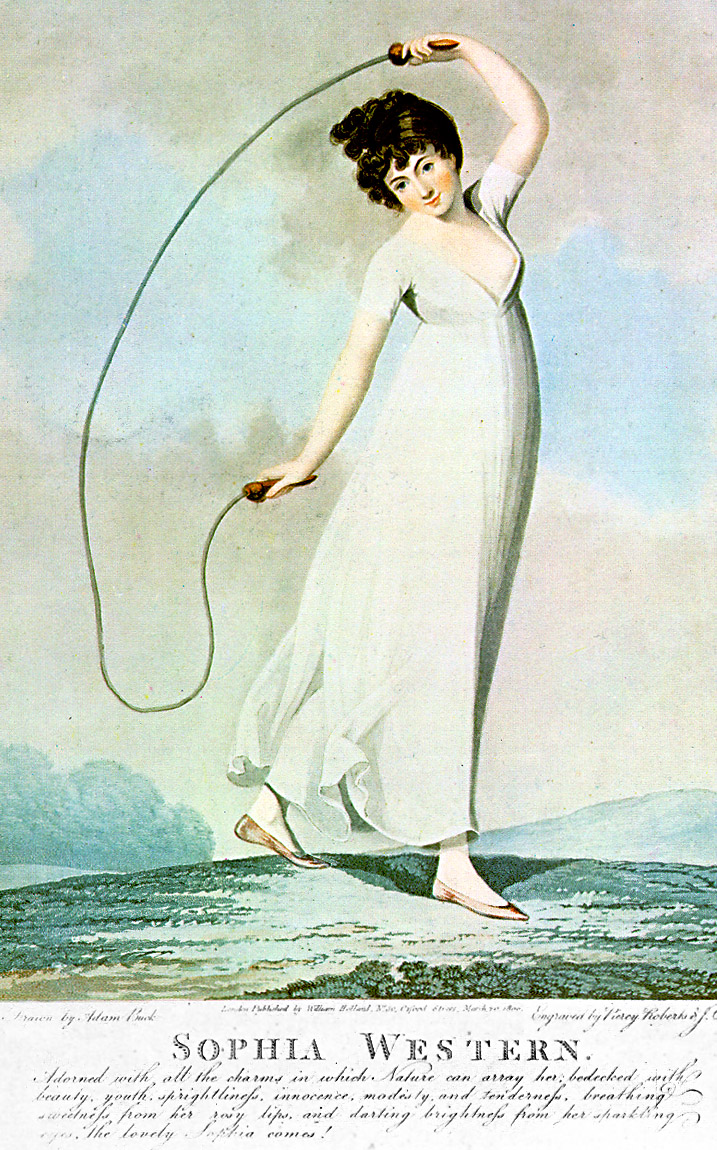
Skipping rope was a common pastime for both boy and girls. In fact, during the medieval era, only boys skipped rope as strenuous exercise was not considered healthy for girls. During the Regency era though, girls clearly enjoyed the sport as well.

Afonso 01 1846
Yes, this is a little boy.
Hoops of various sizes were popular among children. Boys would roll metal and wooden hoops, propelling them with another stick. Girls would play the more sedate game of graces. Girls would hold two slender sticks and catch a ribboned hoop on the sticks. They would then throw the hoop to another player by crossing the sticks, allowing the hoop to slide down, then rapidly pulling the sticks apart.

When a body of water was available, children could play ducks and drakes by skipping a flat stone across the surface to see how many time they could make it skip. I'm sure they also had great fun jumping and splashing in puddles, but I'm not so certain mothers and nursery maids were as fond of it as the children. Ice skating and swimming were also popular near the water. Only boys swam though.

Indoor toys

Although their caregivers have wished for it, children could not always play outside. When play took them inside, many of their toys bore a striking similarity to toys we ourselves have played with.

Rocking horses, then as now, were a staple of nurseries everywhere. My boys had one they loved for years. It is hard to imagine childhood without one!

Child with toy soldiers
Yes, this is also a little boy.
Lepeintre doll Toy soldiers for the boys and dolls and doll houses for the girls populated houses with children as well. Initially, most toy soldiers were made in Russia, Germany, Prussia or Turkey. They were stamped and painted pewter figures. The ‘flats’ were sold by the pound and were cheap enough that small boys could amass an impressive force of troops. More expensive, and consequently less popular, lead soldiers were produced in France. It does give a modern mother a bit of a shudder to think about intentionally giving her child lead toys to play with, but we won't go there right now.

Dollhouse of Petronella Ortman by Jacob AppelDolls with changeable clothes and houses, called baby houses, for them to ‘live’ in first appeared on the marked in the mid-18th century. Previously doll houses, really elaborate miniatures more for show than play, had been the province of adults. The illustration is of one of these grown-up amusements. Baby houses were more to be played with than admired.

My First Dollhouse
A baby house
Dolls could be made of paper, papier-mâché, rags, wax, wood, ivory or porcelain. Elaborate clothing and furniture for dolls could be made or purchased for a little girl's most beloved companion.

Toy theaters complete with doll house like stage and backdrops and metal or paper characters were also common. Children could act out familiar stories for their playmates or their families. Creative children might write their own stories or even draw or paint their own characters for their miniature stages. These remind me a great deal of some of my favorite toys from my boys’ childhood. They played with a castle complete with knights and jousting horses and a dragon and a pirate ship with pirates, an island, treasure and a giant ogre defending it. Shhh, don’t tell, but I never got rid of those!

Speaking of my favorite things, in 1817, one of my all-time favorites was invented, the kaleidoscope. The originator, David Brewster intended it as a serious scientific tool. But given that over 200,000 sold in the first months of it being patented, I’m sure children of the era found it as endlessly entertaining as I do!

Jean Siméon Chardin - Retrato de Auguste Gabriel Godefroy Spinning toys have always been popular. I remember a period when  tops were always underfoot in my kitchen, where the hard floor was more conducive to spinning than the carpet. Whirling toys made their appearance in English Literature as early as 1686 while at least 5 kinds of tops were known in the 15th century. Both boys and girls played with tops and buzzers; apparently noisy, dizzy things have a universal appeal.

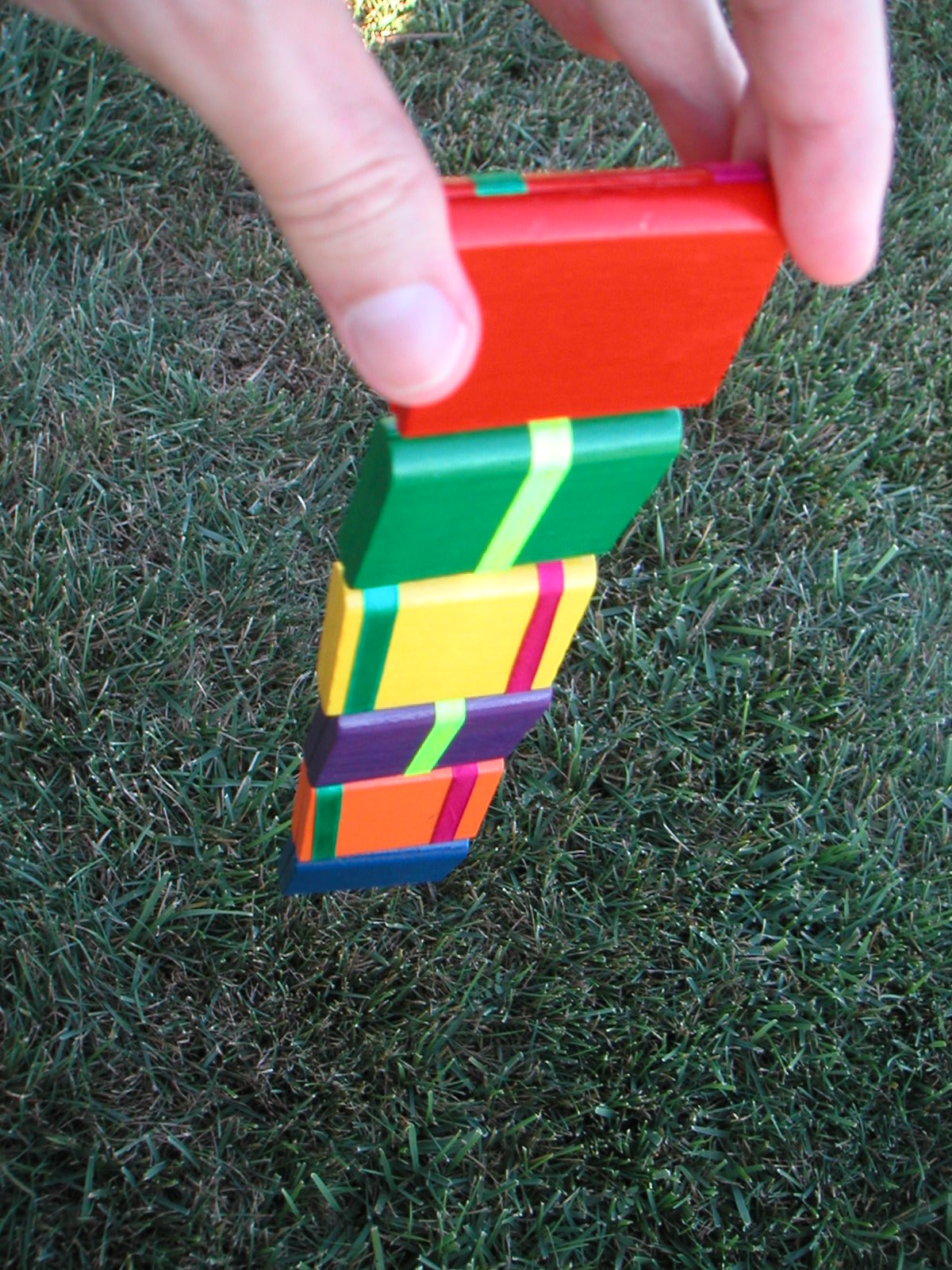
Similarly, the clacking, inexplicable Jacob’s Ladder constructed of wooden blocks and ribbons fascinates today’s children as much as it did yesterday’s. I’ve lost track of how many of these I have purchased through the years as gifts.

Bole Jeanne L Enfant Au Bilboquet
I'm not sure he's ever going to catch that ball on the tiny pin.
Bilboquet was another favorite toy. I remember the very first one of these ball and cup games I got as a kid. How hard I tried to get the knack of getting that little ball into the cup. I never did get very good at it, but it was a good way to occupy a dreary afternoon. No doubt many Georgian mothers and nursery maids thought the same thing. The game could be made easier with a larger cup in which to catch the ball, or could be made more challenging with a small cup or worse still, a tiny pin on which to catch the ball.

For our next family reunion I am planning to print instructions for making some of these toys for sons and nieces. I have a feeling they will enjoy constructing them as much as playing them.

References

Boyle, Laura. Battledore and shuttlecock. Jane Austen.co.uk. June 13, 2013.

Boyle, Laura. Lawn Bowls. Jane Austen.co.uk. July 17, 2013.

Boyle, Laura. Spillikins. Jane Austen.co.uk. August 16, 2013

Davidoff, Leonore & Hall, Catherine. Family Fortunes: Men and Women of the English Middle Class 1780-1850. Routledge (2002)

Grose, Captain (Francis) Dictionary of the Vulgar Tongue, 1811 edition Ikon Classics (2004)

Lydia Maria Child. Girl’s Own Book (1833)

Manring, Lynne. Children's Amusements in the Early Nineteenth Century. Memorial Hall Museum Online, American Centuries. Martin, Joanna. Wives and Daughters. Hambledon Continuum (2004)

Rendell, Mike. Sir David Brewster, the man with kaleidoscope eyes. Georgian Gentleman. December 11, 2013.

Selwyn, David. Jane Austen and Children. Continuum Books (2010)

Selwyn, David. Jane Austen & Leisure. The Hambledon Press (1999)

Stone, Laurence. The Family, Sex & Marriage in England 1500-1800. Penguin Books (1979)

Toys and Games. History lives.

Waldock , Sarah J. Toys and games of Jane Austen’s time. Dec 13, 2011

Waugh, Johanna, Conkers and the games children played during the Regency. October, 2008.

~~~~~~~~~~~~

 Maria Grace is the author of Darcy's Decision,  The Future Mrs. Darcy, All the Appearance of Goodness, and Twelfth Night at Longbourn.  Click here to find her books on Amazon. For more on her writing and other Random Bits of Fascination, visit her website. You can also like her on Facebook, follow on Twitter or email her.

Sunday, June 23, 2013

Medieval Games and Pastimes

by Octavia Randolph


An early Boogie-Woogie
Bugle Boy from Company B

ALL cultures, regardless of how arduous the times they live in, have some kind of sport, games, and pastimes to engage in during leisure hours, and thankfully children have always played. In Anglo-Saxon times (roughly 450 CE to 1100 CE) life was largely lived outdoors for most people, for the continuance of life was predicated on agricultural labour. The interiors of most buildings were dark, smoky, and often cramped, and many tasks whether for livelihood or leisure required the clear strong light of daylight.
Children played with many more natural objects than they do today; a later medieval sermon, which still holds true for the Anglo-Saxon era, mentions children playing

"with flowers...with sticks, and with small bits of wood, to build a chamber, buttery, and hall, to make a white horse of a wand, a sailing ship of broken bread, a burly spear from a ragwork stalk, and of a sedge a sword of war, a comely lady from cloth, and be right busy to deck it elegantly with flowers." (G.R. Owst, Literature and Pulpit in Medieval England, Oxford, 1961)

Grave finds from early heathen burials contain carved wooden toys such as horses and small wooden boats, tenderly laid to rest with their little owner. But childhood was short for the Anglo-Saxon girl or boy, and girls of five or six were already spending part of their day learning to spin wool, to card fleece, or help with the younger children in the family. Boys tended animals or helped in the fields. Boys also played with small spears and knives carved of wood, learning the arts of hunting and defense at a young age.

Miniature tools sized for a child's hand have been found, much like children's sized gardening implements today, but since a child would be more useful at an activity such as egg gathering or sheep tending perhaps such tools were meant as playthings rather than actual implements of labour for young hands. (Although no one pulls weeds better than an industrious six year old!)

Sometimes for adults work and play were mingled. In some villages plough races were held by the men on Plough Monday, the first Monday after Twelfth Night (Epiphany), the end of the Yuletide season.

Physical fitness was obviously of paramount importance to people of all classes - life was hard and demanding, and being physically able to cope with the realities of farming, tree-felling, and of course, battle, could mean the literal difference between life and death. Young men in particular held foot-races, participated in wrestling matches, and practiced the martial arts such as spear throwing, archery, and mock sword play. Those who were rich enough to own horses would have raced them to see whose was the fastest; the Old English epic Beowulf mentions young men doing just that:

"The warriors let their bay horses go/a contest for the best horse/galloping through whatever path looked fair."  (David Breeden translation)

Hunting was not purely sport, as it was relied upon to bring food to the table, but it could be very exciting and therefore enjoyable. Huge numbers of deer roamed the vast forests and marshes of Britain, and provided a good supply of game to those able to stalk and bring them down. Wolves too were hunted as a protection to the flocks of sheep on which so much depended. These intelligent predators nearly suffered the same fate as the bear, hunted to extinction on the island in the 10th century. Boar hunting was hunting of the most challenging kind, and many dogs, horses, and men were killed while trying to hunt this speedy, ferocious, and clever beast.

Not your average little piggy

Good hounds were cherished both as working animals and as companions, and the rich often times made gifts of such dogs. King Ælfred, greatest king of the Anglo-Saxon era and perhaps indeed of any other, sent a brace of fine hounds to the archbishop of Reims.

Nice doggie...nice doggie...down doggie!
Only the very richest lords kept falcons specially trained to bring down pigeons and starlings and the like. Riding out on horseback and releasing the falcon and watching it swoop down on its prey was a very aristocratic sport indeed. (Many of these falcons were from Viking traders who captured and trained them in Scandinavia, and then sold them to the rich in Britain, Northern Europe, and as far East as Arabia.)

Although most fish were captured in weirs set up in rivers, streams, and narrow ocean channels, line fishing was practiced, and was undoubtedly found to be as enjoyably frustrating as it is today.

The Anglo-Saxons had a great love of ornament on even everyday objects, and men and women spent long hours decorating the spines of wood, bone, and horn hair combs with drawings of animals, embellishing gowns and tunics with gaily coloured embroidery, and decorating leather goods by stamping them with metal dies and burning designs into the surface with heated pokers. The most utilitarian of items such as wooden buckets and dippers generally carried some decoration, even if only simple incised lines or dots around the perimeter. Many of these handcrafts would have been practiced out of doors to take advantage of the good light.

Darn,broke the teeth again....
Indoor pastimes included a variety of board games that used little clay and carved markers, and games using dice. Just as today almost everybody enjoyed such pastimes, and our modern word "game" comes from the Old English "gamen". Dice games were very popular (so popular that even clergy played them) and many die have been found. Betting played a large role in dice games, just as it does today.

The game of tæfl was played on a board using game pieces in opposition. The rules of early games probably varied quite a bit, but many of these games featured a piece which represented the "king" which needed to be protected by the other pieces.

Tæfl Board:Care to wager?
The stunning contents of a grave of an Anglo-Saxon prince or king (possibly of King Sabert who died in 616 CE) discovered near Southend in Essex in 2003 and known as the Prittlewell Find contained 57 gaming pieces carved of bone and two very large dice carved from antler. This shows us that games were important enough in the lives of the Anglo-Saxons that they accompanied their owners into the afterlife.

In the latter Anglo-Saxon period, from the 12th century onward, chess (a particular favourite of my own), originally created in India, was brought to Britain. With its war lords, warriors, and horsemen it echoed the battle-driven lives of the noblemen and women who played it. Two forms of chess were played, one quite similar to the challenging intellectual game we know today, and one simplified version which employed dice, and thus introduced an element of luck.

Storytelling, singing and dancing were also part of the long indoor Winter evenings.

Sutton Hoo Harp: Meant for an early Jimi Hendrix
Harps such as the beautiful one buried with the Sutton Hoo treasure (the burial goods of a great king from about 625 CE, now on display at the British Museum) were played by professional story tellers called scops, but small hide drums, wood pipes and whistles are easily made from everyday materials and were probably played by a wide variety of children and adults. Listening was an active art, and when the professional storyteller or scop began his tale, all turned attentively to him and listened raptly, picturing in their mind's eye the great heroes, battles, hunts, and religious episodes he sang of.

The love of word-play extended to riddles, and close to one hundred riddles of the Anglo-Saxon period have been recorded in The Exeter Book, a manuscript written about 975, and still kept at Exeter Cathedral Library. Here is one:

"A creature came slinking where men were sitting, many of them in council, men shrewd in mind. It had one eye and two ears and two feet, twelve hundred heads, a back and a belly and two hands, arms and shoulders, one neck and two sides. Say what I am called." (S.A.J. Bradley translation)

I wish I could Shimmy like my sister Kate...
Can you guess it? The answer is: A one eyed garlic seller.

There was also pleasure to be taken in the simple contemplation of unspoilt nature. A 14th century treatise on the duties and pleasures of a nobleman lists "Watching the snow fall" as an act worthy of his rank, and indeed during Winter when many agricultural duties were suspended and war rarely waged one can also imagine his earlier forbears doing the same.

~~~~~~~~~~~~

Octavia Randolph is the author of The Circle of Ceridwen Trilogy.  Book One is FREE today at amazon.com.  Claim your copy! (Amazon.co.uk click here)

Young women with courage. Swords with names. Vikings with tattoos. Warfare. Passion. Survival. Sheep. And Other Good Things...